
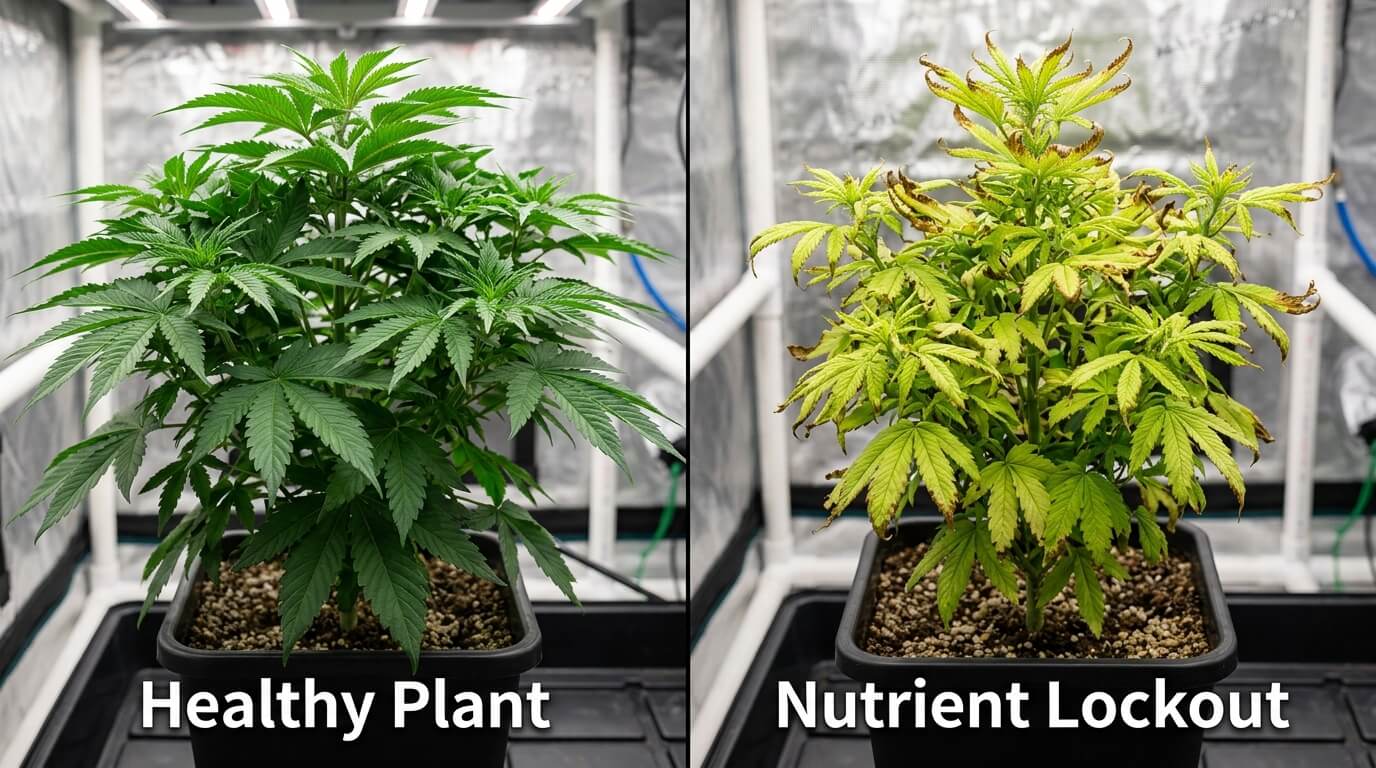
Autoflower Nutrient Lockout: Symptoms, Causes, Prevention and Recovery
Autoflower nutrient lockout is one of the most frustrating problems growers can face. You may be feeding your plants correctly and using quality nutrients, yet your autoflowers still show signs of deficiencies, slow growth, yellowing leaves, or poor bud development. In many cases, the issue is not a lack of nutrients but the plant’s inability to absorb them.
Because autoflowers have a shorter lifecycle and limited recovery time, nutrient lockout can affect plant performance much faster than many growers realise. Problems such as incorrect pH levels, salt buildup, overfeeding, poor water quality, and root zone imbalances can all restrict nutrient uptake and impact final yields if left unresolved.
In this guide, you’ll learn how to identify the symptoms of nutrient lockout in autoflowers, understand the most common causes, fix nutrient uptake problems, and prevent them from happening in future grows. Whether you’re growing in soil, coco coir, or hydroponics, understanding nutrient lockout is essential for producing healthy autoflowers from seedling through harvest.
What Is Autoflower Nutrient Lockout?
Nutrient lockout occurs when autoflower plants are unable to absorb and use essential nutrients, even when those nutrients are present in the growing medium. Instead of being caused by a lack of nutrients, lockout is usually the result of incorrect pH levels, salt buildup around the roots, excessive feeding, poor water quality, or nutrient imbalances.
When growing autoflowers, nutrient lockout can quickly become a serious problem. Unlike other cannabis plants, autoflowers have a short seed-to-harvest lifecycle and very little time to recover from stress. A nutrient uptake issue during early growth or flowering can slow development, reduce plant size, and ultimately impact bud production.
Many growers mistakenly assume that adding more nutrients will solve yellow leaves or slow growth. In reality, increasing nutrient strength often makes the problem worse. Before adding more feed, it is important to understand why the roots are unable to access the nutrients already available.
Understanding Autoflower Nutrient Lockout and How It Affects Nutrient Uptake
Think of nutrient lockout as a blockage between the roots and the nutrients your autoflower needs to grow. The growing medium may contain adequate nutrients, but if root zone conditions are not correct, those nutrients remain unavailable.
One of the most common issues we see when testing new autoflower lines is growers feeding more aggressively than the plants require. During breeding and phenotype evaluations, many autoflower cultivars perform best with moderate nutrient levels and stable root zone conditions. Excess nutrients can accumulate around the roots, increasing EC levels and restricting nutrient uptake before visible symptoms appear.
In many cases, growers respond to slow growth by increasing nutrient strength when the real problem is already occurring in the root zone. This often worsens nutrient lockout by increasing salt buildup and reducing nutrient availability.
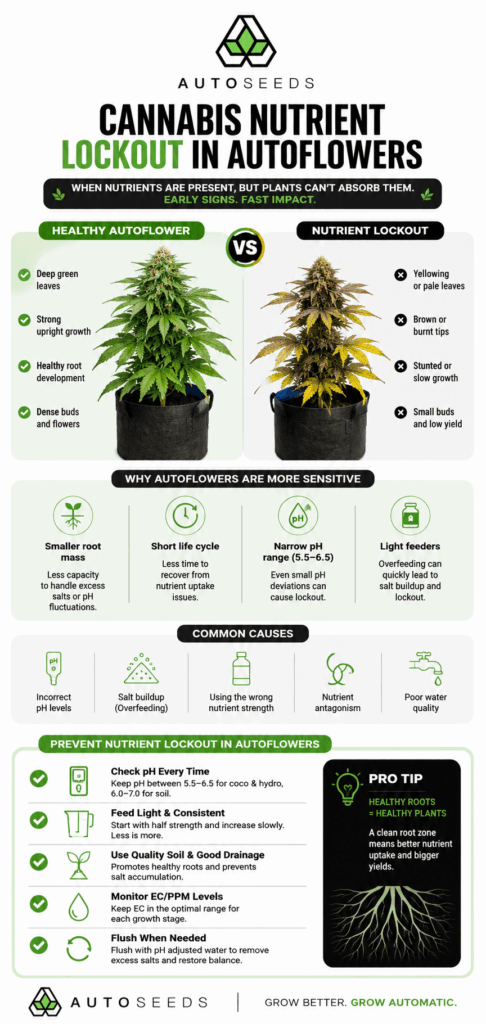
Common symptoms include yellowing leaves, burnt tips, pale foliage, slow growth, weak branching, and reduced flower development. Because autoflowers progress quickly through their lifecycle, these symptoms should be addressed as soon as they appear.
Healthy nutrient uptake depends on maintaining the correct pH, feeding at appropriate strengths, and supporting a healthy root environment throughout the grow cycle.
How pH Imbalance, Salt Buildup, Overfeeding, and Nutrient Antagonism Cause Cannabis Nutrient Lockout
Incorrect pH is the leading cause of nutrient lockout in autoflowers and often leads to symptoms that resemble common cannabis deficiencies. Even when nutrients are present, roots cannot absorb them efficiently if the pH falls outside the ideal range.
| Growing Medium | Ideal pH Range |
| Soil | 6.0 – 7.0 |
| Coco Coir | 5.5 – 6.5 |
| Hydroponics | 5.5 – 6.5 |
Which Nutrients Become Unavailable At The Wrong pH?
| Nutrient | Ideal Soil pH Availability |
| Nitrogen (N) | 6.0-7.0 |
| Phosphorus (P) | 6.2-7.0 |
| Potassium (K) | 6.0-7.0 |
| Calcium (Ca) | 6.2-7.0 |
| Magnesium (Mg) | 6.0-7.0 |
| Iron (Fe) | 5.5-6.5 |
This is why nutrient lockout can often mimic multiple deficiencies at once. Even when nutrients are present in the growing medium, incorrect pH can prevent roots from accessing them efficiently.
Salt buildup is another common cause of nutrient lockout. Every feeding leaves behind mineral salts, and repeated feeding without proper management can cause these salts to accumulate around the roots. This issue is particularly common when growers use full-strength nutrient schedules or multiple flowering additives on autoflowers.
Nutrient antagonism can also prevent nutrient uptake. This occurs when excessive amounts of one nutrient interfere with the absorption of another. For example, too much potassium during flowering can reduce calcium uptake and magnesium uptake, while excessive phosphorus may limit the availability of certain micronutrients.
Regular pH monitoring, balanced feeding practices, and routine EC checks are the most effective ways to prevent nutrient lockout and keep autoflowers growing vigorously from seedling to harvest.
Autoflower Nutrient Lockout Symptoms
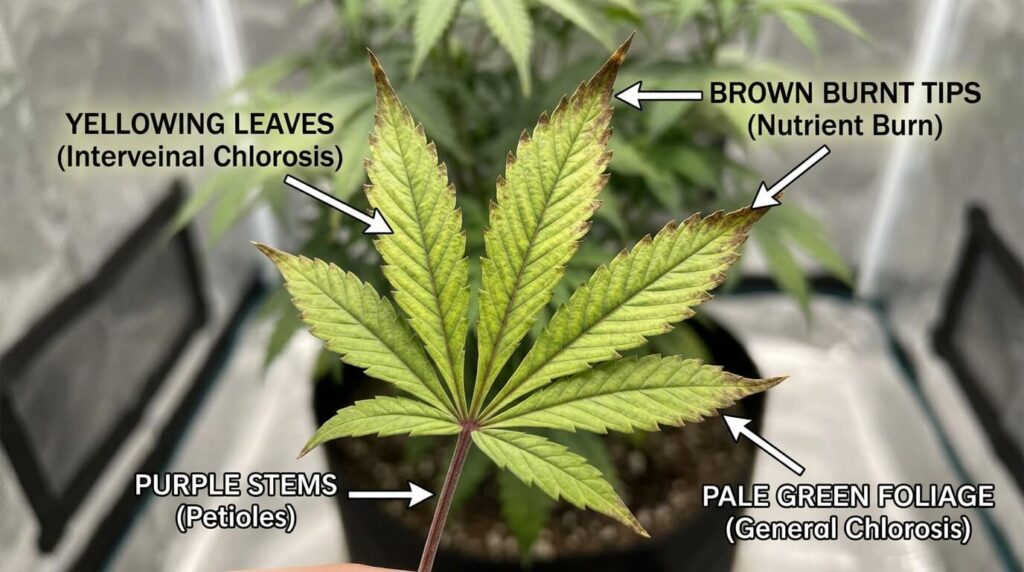
Autoflower nutrient lockout symptoms can appear quickly because autos move through each growth stage on a fixed timeline. If you are new to growing autoflowers, the early signs are often mistaken for simple nutrient deficiencies, overwatering, or natural leaf ageing. The key difference is that lockout usually creates multiple symptoms at once, even when the plant has already been fed.
With autoflowers, early diagnosis matters. A few days of restricted nutrient uptake during seedling growth, early bloom, or bud development can affect plant size, flower formation, and final yield. Regularly checking leaf colour, growth speed, stem condition, and bud development will help you spot problems before they become severe.
Common Autoflower nutrient lockout symptoms growers should watch for yellowing leaves, burnt tips, discoloration, and stunted growth
The most common autoflower nutrient lockout symptoms include yellowing leaves, brown or burnt tips, pale foliage, red or purple stems, slow vertical growth, and weak bud development. In the grow room, these symptoms often appear first on older fan leaves before spreading to newer growth if the problem continues.
Persistent yellowing leaves may suggest nitrogen uptake issues, while brown leaf tips can indicate excess salts or nutrient burn. Purple or red stems may point toward phosphorus uptake problems, especially during flowering. Pale green foliage usually shows that the plant is struggling to access a balanced supply of nutrients.
| Symptom | Possible Cause |
| Yellowing leaves | Nitrogen uptake issues |
| Brown leaf tips | Salt buildup or nutrient burn |
| Purple or red stems | Phosphorus lockout and symptoms commonly associated with phosphorus deficiency |
| Pale green foliage | General nutrient deficiency |
| Slow growth | Nutrient uptake restrictions |
| Small buds | Phosphorus and potassium lockout |
How symptoms vary during seedling, vegetative growth, and flowering stages
Nutrient lockout can affect autoflowers at any stage of growth, but the symptoms often change as the plant progresses from seedling to harvest. Recognising the warning signs early is especially important with autoflowers, as their short lifecycle leaves little room for recovery.
Nutrient Lockout Symptoms During the Seedling Stage
The seedling stage is when autoflowers are at their most vulnerable. In my experience, many cases of early nutrient lockout occur because growers introduce nutrients too soon or fail to check the pH of their water source. Young plants require very little nutrition, and even minor mistakes can restrict root development.
Common symptoms during the seedling stage include:
- Pale or yellowing leaves
- Slow growth after germination
- Weak stems
- Drooping foliage
- Poor root establishment
When nutrient uptake is restricted at this stage, seedlings often appear stalled and fail to develop the vigorous growth expected during their first two weeks. During our own autoflower testing, most cases of nutrient lockout occurred during weeks 2-4 when growers introduced nutrients too aggressively.
Nutrient Lockout Symptoms During the Vegetative Stage
As autoflowers enter the vegetative stage, growth starts to accelerate, and the plant needs a balanced supply of nutrients to support healthy leaf, stem, and branch development. Nutrient lockout at this stage can restrict overall plant size before flowering begins, which is particularly problematic because autoflowers have limited time to recover from setbacks.
Look for signs such as:
- Yellowing lower leaves
- Purple or red stems
- Burnt leaf tips
- Pale green foliage
- Reduced side branching
- Slower vertical growth
When assessing autoflower plants during breeding and testing, one of the earliest signs of nutrient lockout is often a noticeable loss of vigor rather than obvious leaf damage. Healthy autoflowers typically put on visible growth every day during vegetative development. If that growth suddenly slows or stalls while environmental conditions remain stable, it’s worth checking runoff pH and EC before assuming the plant needs additional nutrients.
A mistake we frequently see growers make at this stage is increasing feed strength too quickly in response to slower growth. In many cases, the issue is not a lack of nutrients but reduced nutrient uptake at the root zone. Most autoflowers perform better with a gradual feeding approach, and pushing nutrient levels too hard can lead to salt buildup around the roots, making the problem even worse.
Nutrient Lockout Symptoms During the Flowering Stage
During flowering, autoflowers demand higher levels of phosphorus, potassium, calcium, magnesium, and trace elements to support bud development and resin production. When nutrient uptake becomes restricted, symptoms often become more visible and can directly affect harvest quality.
Common flowering-stage symptoms include:
- Yellowing fan leaves
- Brown or burnt leaf tips
- Red or purple stems
- Slow bud development
- Airy flowers
- Reduced trichome production
From my own cultivation experience, nutrient lockout during early bloom is often the most damaging stage because autoflowers have limited time to recover. Even a short period of poor nutrient uptake can result in smaller buds and reduced yields by harvest time.
In our trials, phosphorus-related lockout during weeks 5-7 caused larger yield reductions than nutrient issues occurring earlier in the lifecycle.
Differences between nutrient lockout, nutrient deficiency, and nutrient burn symptoms
In reality, a nutrient lockout can cause plants to become nutrient-deficient or experience nutrient burn. To help you act quickly and easily diagnose a potential nutrient-related issue, the following explains the differences between them.
| Issue | Main Cause | Common Symptoms | Solution |
| Nutrient Lockout | Incorrect pH, salt buildup | Multiple deficiencies despite feeding | Flush and correct pH |
| Nutrient Deficiency | Lack of nutrients | Specific deficiency symptoms | Increase nutrient levels |
| Nutrient Burn | Overfeeding | Burnt leaf tips, dark leaves | Flush and reduce feeding |
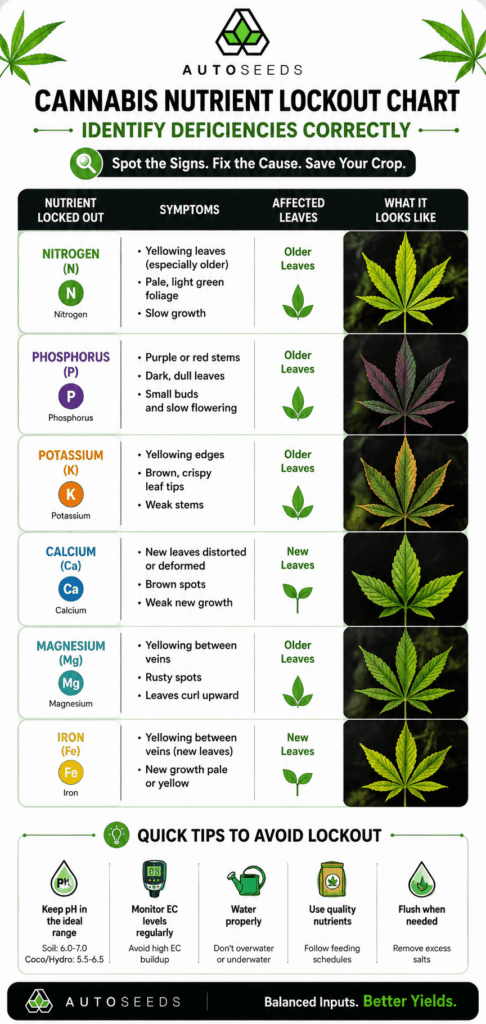
Using a cannabis nutrient lockout chart to identify deficiencies correctly
A cannabis nutrient lockout chart to identify nutrient deficiencies can be an absolute lifesaver, and the difference between fixing an issue or not. The more help and guidance you have in the grow room, the better, so we recommend keeping a printout or a nutrient lockout chart on your phone for quick, effective reference.
How To Fix Nutrient Lockout In Autoflowers
Nutrient lockout can look alarming in autoflowers, especially when leaves begin yellowing despite regular feeding. Fortunately, most cases can be corrected if action is taken quickly. Because autoflowers have a short lifecycle and limited recovery time, the focus should be on restoring nutrient uptake as soon as possible while avoiding additional stress.
Through autoflower testing and grower support, one pattern appears repeatedly: growers often increase nutrient strength when deficiency symptoms appear, assuming the plant needs more food. In many cases, the nutrients are already present, but the roots are unable to absorb them effectively.
How To Confirm Nutrient Lockout In Autoflowers
Before attempting any corrective action, confirm that nutrient lockout is actually the problem.
Start by reviewing your recent autoflower feeding schedule. If nutrient levels have been increased recently, flowering boosters have been introduced, or the plant has been fed heavily for several irrigations, nutrient lockout becomes more likely.
Next, check the runoff from your pots. A runoff pH outside the ideal range or an unusually high EC reading often indicates that nutrient uptake has been compromised.
How To Interpret Runoff EC Readings
| Runoff EC | What It Usually Means |
| Lower than feed EC | Plant is consuming nutrients efficiently |
| Similar to feed EC | Root zone is balanced |
| Slightly higher than feed EC | Normal salt accumulation |
| Significantly higher than feed EC | Salt buildup and possible nutrient lockout |
| Extremely high EC | Severe nutrient accumulation requiring corrective action |
Compare the symptoms on your plant with a nutrient deficiency chart and look for multiple deficiency symptoms appearing at the same time. This is often a strong indicator that the roots are unable to access nutrients properly.
Step 1: Stop Feeding Immediately
Once nutrient lockout has been identified, stop feeding your autoflowers with nutrients temporarily.
Continuing to add nutrients while the roots are struggling to absorb them usually increases salt accumulation and makes the situation worse. Instead, switch to pH-adjusted water while you assess the severity of the problem.
One of the most common mistakes I have seen in both small and large grow operations is attempting to force recovery through heavier feeding. In reality, autoflowers often recover faster when growers reduce inputs and allow the root zone to stabilize.
Step 2: Flush the Growing Medium
If nutrient lockout has been caused by overfeeding or excess salt buildup, flushing can help restore balance, but it’s important to know when to flush autoflowers.
Use clean water adjusted to the correct pH for your growing medium
| Medium | Range |
|---|---|
| Soil | 6.0–7.0 |
| Coco | 5.5–6.5 |
| Hydro | 5.5–6.5 |
Water slowly until runoff appears, allowing excess salts to be carried away from the root zone. After flushing, allow the growing medium to drain properly and avoid watering again until necessary.
Step 3: Monitor New Growth
Many growers make the mistake of watching damaged leaves for signs of improvement. Existing leaf damage rarely disappears.
Instead, focus on new growth. Healthy new leaves, improved color, stronger growth, and increased plant vigour are all positive indicators that nutrient uptake is returning to normal.
When evaluating recovery in autoflowers, new growth is usually the most reliable indicator that nutrient uptake is improving. Damaged leaves often remain discolored, but healthy new growth shows that root zone conditions are moving in the right direction.
Step 4: Reintroduce Nutrients Gradually
Once healthy new growth appears, nutrients can be reintroduced carefully.
Start at approximately 25-50% of your previous feeding strength and observe how the plant responds over several irrigations. Growers using autoflower seeds for beginners often achieve better results with lighter feeding schedules.
Gradual increases allow the roots to recover while reducing the risk of another nutrient imbalance.
How Long Do Autoflowers Take To Recover From Nutrient Lockout?
Recovery time depends on how quickly the problem was identified and the severity of the lockout.
| Severity | Recovery Time |
| Mild | 3–7 days |
| Moderate | 7–10 days |
| Severe | 10–21 days |
| Advanced cases | May not fully recover |
Recovery depends largely on when the problem is identified. In our experience, autoflowers affected during the seedling or vegetative stage often recover well when corrective action is taken quickly. Plants affected during flowering can still improve, but lost bud development is often difficult to fully recover.
How To Prevent Nutrient Lockout In Autoflowers
Preventing nutrient lockout is far easier than correcting it once growth has been affected. Because autoflowers have a short lifecycle, maintaining consistency throughout the grow is one of the best ways to keep plants healthy and productive.
In larger cultivation areas that I have managed, nutrient lockout was rarely caused by a lack of nutrients. More often, it resulted from growers making unnecessary adjustments, feeding too heavily, or failing to monitor the root zone properly. The healthiest autoflowers were usually grown using a simple and consistent routine.
Monitor pH and EC Regularly
Monitoring pH and EC is one of the most effective ways to prevent nutrient lockout and maintain proper NPK ratios. A digital pH pen and EC meter should be considered essential equipment for any autoflower grower.
Check the pH of your water or nutrient solution before every feed and monitor EC levels regularly to ensure nutrient concentrations remain within a suitable range. It is also beneficial to check runoff periodically, as this can reveal developing root zone issues before they affect plant growth.
Feed Autoflowers Conservatively
Autoflowers generally require less feeding than many growers expect. One of the most common mistakes is following aggressive nutrient schedules from the start of the grow, particularly schedules designed for larger photoperiod plants.
Start seedlings with water only or very light feeding and gradually increase nutrient strength as the plant develops. Across autoflower testing and grow reports from customers, plants that receive moderate, progressive feeding typically experience fewer nutrient-related issues than those pushed with heavy nutrient programs early in life.
A pattern we regularly see is growers increasing nutrient strength whenever growth slows, assuming the plant needs more food. In reality, many autoflowers perform best when nutrient levels are adjusted according to plant response rather than strictly following a manufacturer’s feeding schedule. While some cultivars can tolerate heavier feeding, gradual increases in nutrient strength usually produce healthier root development and significantly reduce the risk of nutrient lockout.
Maintain Proper Watering Practices
Healthy roots are essential for efficient nutrient uptake. Overwatering can limit oxygen availability around the root zone and create conditions that contribute to nutrient-related problems.
Rather than watering on a fixed schedule, follow an appropriate autoflower water schedule, allow the growing medium to dry appropriately between irrigations. Monitoring pot weight is often one of the simplest ways to determine when an autoflower genuinely requires watering.
Use a Consistent Nutrient Program
Frequently changing nutrient brands, introducing multiple additives, or constantly adjusting feed schedules can create unnecessary nutrient imbalances.
Choose a quality nutrient line, follow a structured feeding plan, and avoid making changes unless there is a genuine reason to do so. Consistency almost always produces better results than chasing rapid growth through excessive supplementation.
My Autoflower Nutrient Lockout Prevention Checklist
To minimize the risk of nutrient lockout:
- Check pH before every feed.
- Monitor EC levels at least once per week.
- Start seedlings with light feeding.
- Increase nutrient strength gradually.
- Allow the growing medium to dry between irrigations.
- Check runoff pH periodically.
- Introduce flowering boosters cautiously.
- Avoid mixing multiple nutrient brands.
- Keep feeding and watering routines consistent.
| Mistake | Result |
| Overfeeding | Salt accumulation |
| Incorrect pH | Nutrient lockout |
| Not checking EC | Nutrient burn |
| Mixing nutrient brands | Nutrient imbalance |
| Poor soil quality | Weak root development |
| Overwatering | Root zone stress |
From my experience managing larger cultivation areas, the growers who experienced the fewest nutrient lockout problems were not necessarily the most experienced. They were the most consistent. Monitoring pH, feeding moderately, and maintaining stable root zone conditions prevented most issues long before they had the chance to affect plant performance.
Why Does Nutrient Lockout Happen in Different Growing Media?
Autoflowers can be grown successfully in soil, coco coir, or hydroponic systems, but each growing medium behaves differently when it comes to nutrient uptake and root zone management. As a result, the risk of nutrient lockout can vary significantly depending on the medium you choose.
In larger cultivation areas that I have managed, the speed at which nutrient lockout developed often depended on the growing medium rather than the nutrient program itself. Some systems provide a buffer against mistakes, while others react almost immediately to changes in pH, EC, or reservoir conditions.
Understanding how each medium behaves can help autoflower growers identify problems sooner and maintain healthier plants throughout the growing cycle.
Nutrient Lockout in Autoflower Hydroponic Systems
Hydroponic systems offer complete control over nutrient delivery, making them popular among experienced growers looking to maximize growth rates and yields. However, this level of control also means there is less room for error.
Unlike soil, hydroponic systems provide very little buffering capacity. Small fluctuations in pH, EC, or water temperature can quickly affect nutrient availability and root health.
Some of the most common causes of nutrient lockout in hydroponic autoflowers include:
- Reservoir pH drifting outside the ideal range
- Excessively high EC levels
- Poor reservoir maintenance
- Water temperatures that are too high or too low
- Nutrient imbalances caused by over-supplementation
In my experience managing larger hydroponic cultivation facilities, daily monitoring of pH and EC was essential. Even minor changes could develop into nutrient uptake issues within a short period if left unchecked.
Managing Reservoir Conditions in Hydroponics
Successful hydroponic growing relies on maintaining a stable root environment.
Whether using deep water culture (DWC), nutrient film technique (NFT), flood-and-drain systems, or recirculating deep water culture (RDWC), regular monitoring is essential. Checking reservoir pH, EC, and water temperature daily helps identify potential problems before plant performance is affected.
For autoflowers, consistency is particularly important because they have limited time to recover from environmental stress.
Nutrient Lockout in Coco-coir autoflowers
Growers comparing coco and soil should consider how different growing media affect nutrient availability because it provides excellent root aeration and supports fast growth. However, it requires closer monitoring than soil and can develop nutrient problems more quickly if feeding is not managed properly.
Because coco contains very few nutrients of its own, plants rely entirely on the nutrient solution you provide. Small mistakes with pH or feeding strength can affect nutrient uptake faster than they would in soil.
When testing autoflower cultivars in coco, one issue we see regularly is growers feeding heavily without monitoring runoff. Over time, excess nutrients can build up around the roots, making it harder for plants to absorb the nutrients they need.
Calcium and magnesium can also become problematic in coco if they are not supplied correctly. This often causes symptoms that look like nutrient deficiencies, even when nutrients are present in the growing medium.
To reduce the risk of nutrient lockout, check pH and runoff EC regularly, feed consistently, and avoid increasing nutrient strength too quickly. In most cases, autoflowers perform better in coco when nutrient levels are increased gradually as the plant develops.
Nutrient Lockout in Soil-Grown Autoflowers
Soil remains one of the most forgiving growing mediums for outdoor autoflowers and indoor plants alike because it naturally buffers fluctuations in nutrient availability. This buffering capacity can help protect plants from sudden changes that might cause nutrient lockout in more reactive systems.
However, soil is not immune to problems. Poor-quality growing media, compacted root zones, and prolonged watering issues can still create conditions that affect nutrient uptake.
When growing autoflowers in soil, monitoring runoff periodically can provide useful insight into root zone conditions and help identify developing issues before they become severe.
How Water Quality Influences Nutrient Availability
Water quality is often overlooked, yet it can have a significant impact on nutrient management.
Hard water contains elevated levels of dissolved minerals, which contribute to the overall EC of the nutrient solution before nutrients are added. This reduces the amount of nutrient growers can safely introduce without pushing EC levels too high.
| Water Type | Typical EC | Suitability |
| Reverse Osmosis (RO) | 0.0–0.2 | Excellent |
| Soft Water | 0.2–0.4 | Good |
| Moderate Water | 0.4–0.8 | Acceptable |
| Hard Water | 0.8+ | Can contribute to lockout |
In larger cultivation environments that I have managed, reverse osmosis water was often used to create a consistent starting point for nutrient mixing. This allowed nutrient levels to be adjusted more accurately and reduced the risk of unwanted mineral accumulation over time.
Ultimately, the best way to minimize nutrient lockout is to understand how your chosen growing medium behaves and adapt your management practices accordingly. Autoflowers perform best when root zone conditions remain stable from seedling through harvest.
Frequently Asked Questions About Autoflower Nutrient Lockout
What Causes Nutrient Lockout in Autoflowers?
Autoflower nutrient lockout is most commonly caused by incorrect pH levels, excessive nutrient buildup around the roots, overfeeding, poor water quality, or nutrient imbalances. When nutrient uptake is restricted, plants can develop deficiency symptoms even when nutrients are present in the growing medium.
How Do I Know If My Autoflower Has Nutrient Lockout?
Common signs of nutrient lockout in autoflowers include yellowing leaves, burnt leaf tips, pale foliage, red or purple stems, slow growth, and reduced bud development. Multiple deficiency symptoms appearing at the same time despite regular feeding is often a strong indication of nutrient lockout.
Can Autoflowers Recover From Nutrient Lockout?
Yes, autoflowers can recover from nutrient lockout when the issue is identified and corrected early. Recovery time depends on the severity of the problem and the stage of growth. Mild cases may recover within a few days, while more severe cases can take several weeks.
How Long Does It Take an Autoflower To Recover From Nutrient Lockout?
Most autoflowers recover from mild nutrient lockout within 3-7 days. Moderate cases typically require 7-10 days, while severe lockout can take up to 21 days. Recovery is usually measured by healthy new growth rather than improvements to damaged leaves.
Should I Flush an Autoflower With Nutrient Lockout?
If nutrient lockout has been caused by excess nutrient salts or overfeeding, flushing can help restore nutrient uptake by reducing salt buildup around the roots. However, flushing should only be performed when there is a clear reason to do so, as unnecessary flushing can create additional stress.
What pH Is Best for Autoflowers?
The ideal pH depends on the growing medium. Autoflowers grown in soil generally perform best between pH 6.0 and 7.0, while coco coir and hydroponic systems typically perform best between pH 5.5 and 6.5.
Can Overfeeding Cause Nutrient Lockout in Autoflowers?
Yes. Overfeeding is one of the most common causes of nutrient lockout in autoflowers. Excess nutrients can accumulate around the root zone, making it difficult for plants to absorb water and essential nutrients efficiently.
Are Autoflowers More Sensitive to Nutrient Lockout?
Autoflowers are often more sensitive to nutrient-related issues because they have a shorter lifecycle and less time to recover from stress. This is why many growers use lighter feeding schedules and closely monitor pH and EC levels throughout the grow.
Can Hard Water Cause Nutrient Lockout in Autoflowers?
Hard water can contribute to nutrient lockout by increasing the EC of the nutrient solution before nutrients are added. Over time, excess dissolved minerals can interfere with nutrient management and increase the risk of nutrient imbalances.
What Is the Best Way To Prevent Nutrient Lockout in Autoflowers?
The best way to prevent nutrient lockout is to maintain stable root zone conditions. Regularly monitor pH and EC levels, avoid overfeeding, allow the growing medium to dry appropriately between irrigations, and follow a consistent nutrient program from seedling through harvest.


