
Autoflower Seedling Problems: Signs, Causes and How to Fix Them
Most autoflower seedling problems start with subtle warning signs before serious damage occurs. Drooping leaves, slow growth, stretching, or pale discoloration can quickly lead to a stunted autoflower seedling if environmental conditions are not corrected early.
The first two weeks after germination are critical because autoflower seedlings are establishing their root systems and adapting to their environment. Mistakes with watering, light intensity, temperature, humidity, or airflow can slow development and affect future growth.
Fortunately, autoflower seedlings often show clear signs of stress. Overwatered plants may stop growing, insufficient light can cause stretching, and excessive heat or light intensity can alter leaf posture before visible damage appears.
This guide explains what healthy autoflower seedlings should look like, the most common seedling problems and their causes, how to identify stress through leaf symptoms, and the practical steps growers can take to prevent and fix issues before they impact long-term growth.
Article Insights
- Most autoflower seedling problems develop within the first 10–14 days after germination.
- Overwatering is one of the most common causes of slow growth and seedling stress.
- Stretched autoflower seedlings are usually caused by insufficient light intensity or excessive light distance.
- Healthy autoflower seedlings generally perform best between 68–77°F (20–25°C) and 65–75% relative humidity.
- Nutrient burn often begins as yellow leaf tips before progressing to brown leaf edges.
- Preventing stress during the seedling stage reduces the risk of a stunted autoflower seedling later in the grow cycle.
- Healthy autoflower seedlings should display steady new growth, vibrant green leaves, and strong stem development.
What Healthy Autoflower Seedlings Should Look Like
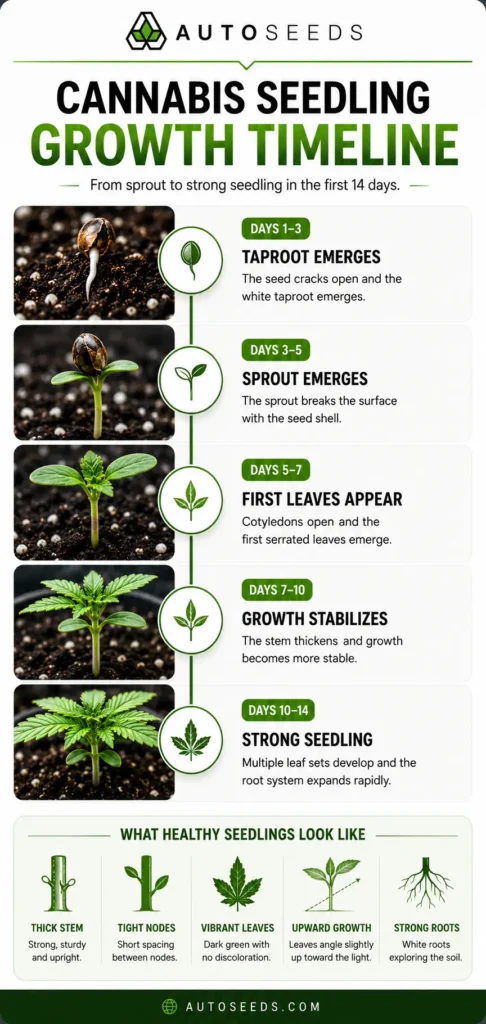
Healthy autoflower seedlings develop quickly when given stable environmental conditions. During the first two weeks after germinating autoflower seeds, growth should remain compact, leaves should appear vibrant green, and new growth should emerge consistently. Because autoflowers grow according to age rather than changes in the light cycle, understanding the correct light schedule for autoflowers from the start is especially important. Significant stress during early development can slow growth and affect the plant’s overall size and productivity.
Understanding normal autoflower seedling development makes it much easier to identify problems before they become severe, especially for growers starting with autoflower seeds for beginners. While growth rates vary slightly between genetics, healthy autoflower seedlings generally follow a predictable pattern during the first 14 days.
When evaluating new autoflower crosses, steady development is often a better indicator of seedling vigor than size alone. Some seedlings grow more compactly than others during the first two weeks, but consistent new growth, healthy leaf color, and strong root development are usually more reliable indicators of long-term performance.
Cannabis Seedlings Day by Day (Autoflower Timeline)
Days 1–3: Germination and Emergence
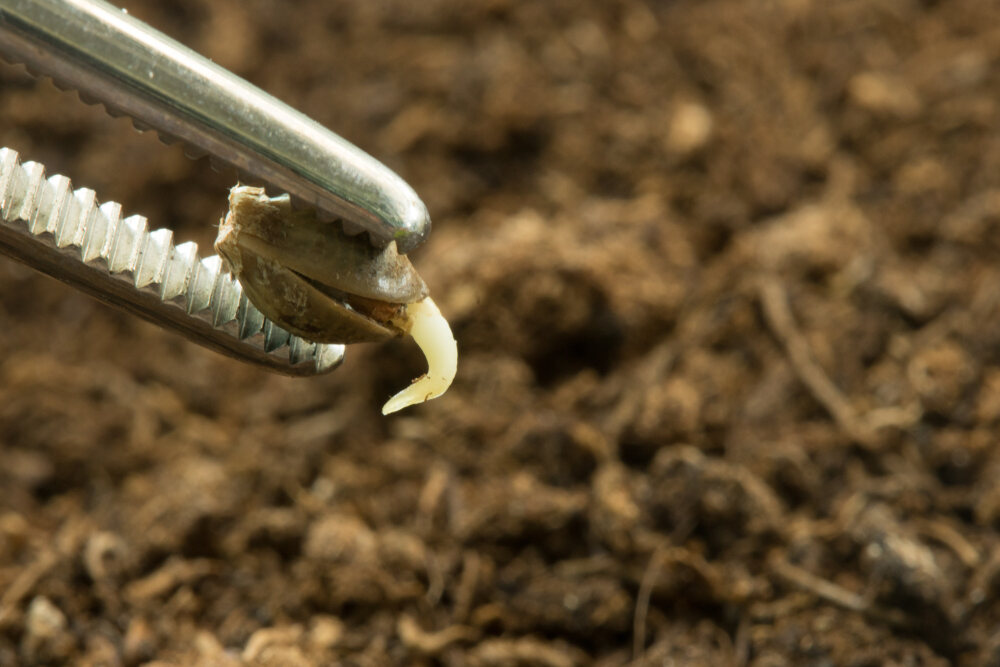
After absorbing moisture, the seed cracks open and a white taproot emerges. The seedling then pushes through the growing medium and begins unfolding its cotyledons, commonly known as seed leaves.
Healthy signs include:
- Bright white taproot
- Upright stem
- Even emergence above the growing medium
- Cotyledons beginning to open
During this stage, autoflower seedlings require only light watering and gentle light intensity while roots establish below the surface.
Days 3–7: Cotyledons and First True Leaves
The cotyledons fully open and begin powering growth through photosynthesis. Shortly afterwards, the first serrated cannabis leaves emerge from the centre of the plant.
A healthy autoflower seedling should display:
- Bright green cotyledons
- Symmetrical leaf development
- Short, sturdy stem growth
- Upright posture without support
Excessive stem elongation at this stage often indicates insufficient light intensity or grow lights positioned too far from the canopy.
Days 7–14: Root Expansion and Vegetative Growth
During the second week, root growth accelerates rapidly and the seedling begins producing additional sets of true leaves. Healthy autoflower seedlings should remain compact with tight node spacing and a thickening stem.
By day 14, most seedlings will have:
- Multiple sets of healthy leaves
- Strong stem development
- Consistent new growth
- Uniform green coloration
- Well-established roots
While plant size varies between cultivars, steady growth is a better indicator of seedling health than height alone.
Healthy Autoflower Seedling Growth Timeline
| Seedling Age | Healthy Development |
| Days 1–3 | Taproot emerges and sprout breaks the surface |
| Days 3–5 | Cotyledons fully open |
| Days 5–7 | First serrated leaves develop |
| Days 7–10 | Stem thickens and root growth increases |
| Days 10–14 | Multiple leaf sets and vigorous growth |
Early Warning Signs of Autoflower Seedling Problems
Most cannabis seedling problems begin with subtle symptoms before serious damage occurs. Learning to recognise these early warning signs allows growers to correct environmental issues before growth becomes permanently affected.
| Symptom | Early Signs | Advanced Signs |
| Overwatering | Slight drooping and slow growth | Yellowing leaves and stalled development |
| Stretching | Increased stem length | Weak, unstable growth |
| Nutrient Burn | Yellow leaf tips | Brown, crispy leaf margins |
| Heat Stress | Mild upward leaf curling | Dry, taco-shaped leaves |
| Root Stress | Slowed growth | Pale foliage and stunted development |
Overwatering is one of the most common causes of slow seedling growth. Young autoflower roots require both moisture and oxygen, so constantly saturated growing media can restrict healthy root development. Early symptoms typically include drooping leaves and reduced growth before yellowing appears.
Stretching develops when seedlings do not receive adequate light intensity. Healthy autoflower seedlings should remain compact during the first two weeks. Tall, thin stems usually indicate that the plant is searching for stronger light.
Heat stress and excessive light intensity can sometimes produce similar symptoms, including upward leaf curling. However, heat stress is more likely to cause dry leaf texture, while excessive light often results in pale upper growth or bleaching.
Can Stunted Autoflower Seedlings Recover?
Many stunted autoflower seedlings recover successfully once environmental conditions improve. Recovery is most likely when problems are identified early and growers avoid making multiple changes at once.
Positive signs of recovery include:
- Faster new growth
- Improved leaf color
- Stronger stem development
- Increased leaf production
Rather than reacting aggressively, focus on maintaining consistent watering practices, appropriate light intensity, stable temperatures, and good airflow. Autoflower seedlings respond best to gradual corrections and a stable growing environment.
Common Autoflower Seedling Problems and How to Fix Them
Autoflower seedlings are generally easy to grow when environmental conditions remain stable, but they are less forgiving of prolonged stress than photoperiod plants. Because autoflowers develop according to age rather than changes in the light cycle, problems during the first two weeks can reduce growth potential and increase the risk of a stunted autoflower seedling.
The good news is that most autoflower seedling problems show clear warning signs before serious damage occurs. Learning to identify symptoms early allows growers to make corrections before growth stalls.
Overwatered Autoflower Seedlings
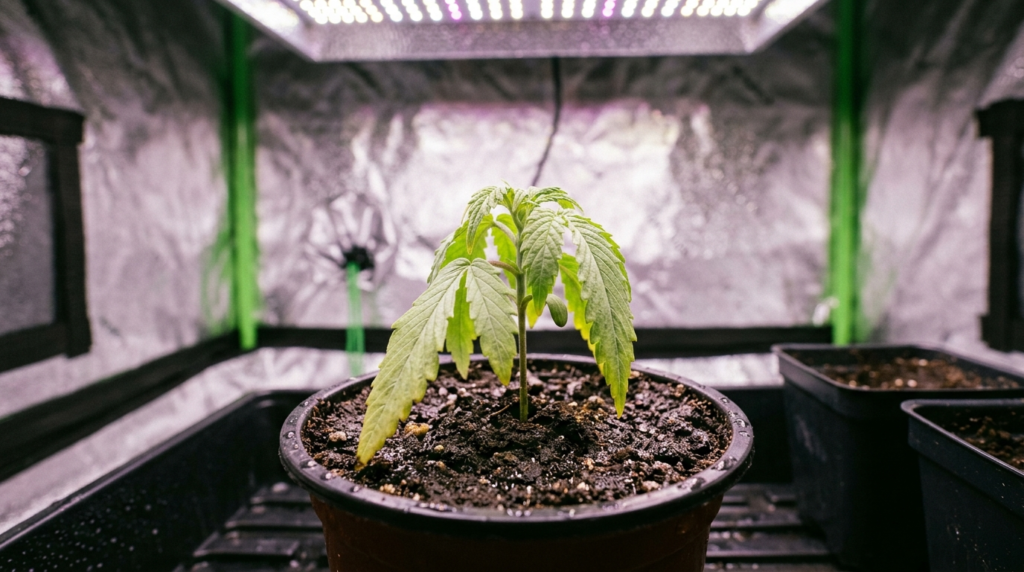
Overwatering is one of the most common causes of slow growth in autoflower seedlings. Young roots need access to both water and oxygen, and constantly saturated growing media can restrict healthy root development.
One of the most common mistakes reported by new autoflower growers is watering on a fixed schedule. Seedlings often grow faster when the medium is allowed to partially dry between waterings because developing roots have access to more oxygen.
Common symptoms include:
- Slight leaf drooping despite moist soil
- Slow or stalled growth
- Heavy containers that remain wet for several days
- Swollen or overly soft leaves
As root oxygen levels decrease, some seedlings may develop pale lower leaves, reduced vigor, and eventually symptoms associated with nutrient lockout.
One pattern we see repeatedly when diagnosing seedling problems is that overwatered seedlings are often mistaken for underwatered plants because both can appear droopy. Checking the moisture level of the growing medium before watering again is usually more reliable than judging leaf posture alone.
How to Fix Overwatered Autoflower Seedlings
- Allow the growing medium to partially dry before watering again
- Improve airflow around containers
- Water only around the root zone during early growth
- Check container weight before watering
Many growers accidentally water on a schedule rather than according to plant needs. Lifting pots before watering is often one of the most reliable ways to avoid overwatering.
Underwatered Autoflower Seedlings
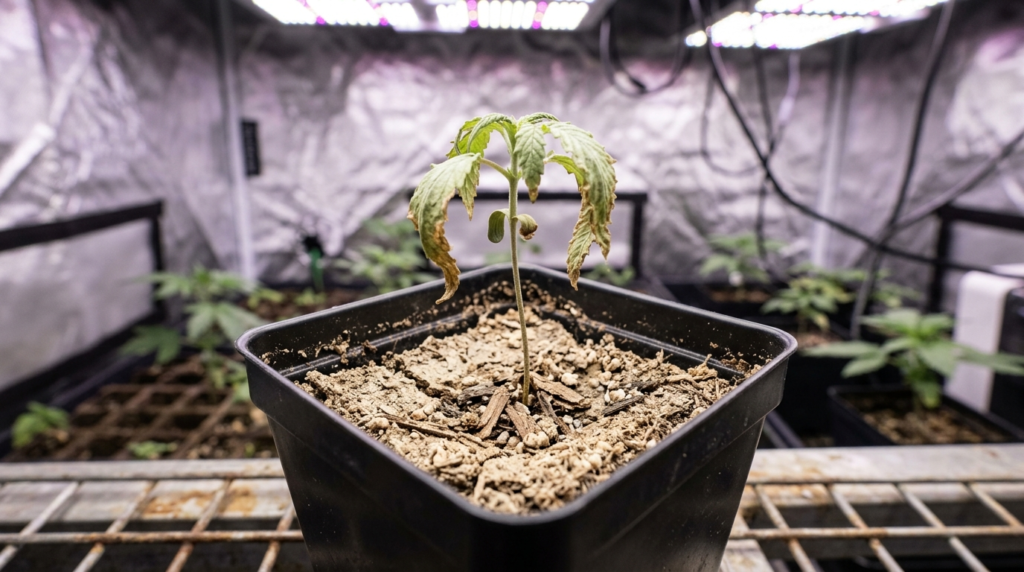
Underwatered seedlings look very different from overwatered plants. Instead of appearing swollen, leaves become thin, limp, and dehydrated.
Common signs include:
- Soft drooping leaves
- Dry growing media
- Lightweight containers
- Slower growth
As dehydration worsens, leaf edges may curl upward and become brittle.
How to Recover Underwatered Seedlings
Avoid flooding severely dry containers immediately. Gradually rehydrating the growing medium is often less stressful on developing roots and allows moisture to distribute more evenly.
Why Autoflower Seedlings Stretch
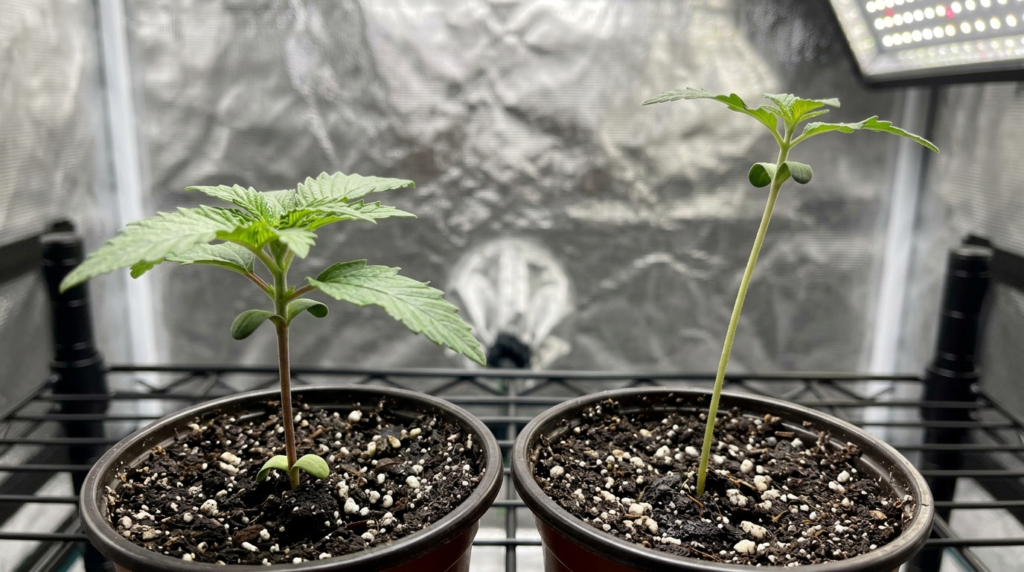
Stretching occurs when seedlings receive insufficient light intensity or when grow lights are positioned too far above the canopy. Instead of developing a compact structure, the stem elongates as the plant searches for stronger light.
Signs of stretching include:
- Tall, thin stems
- Wide spacing between nodes
- Leaning towards the light source
- Reduced stem strength
If left uncorrected, stretched seedlings may struggle to support future growth.
How to Fix Stretched Autoflower Seedlings
- Lower grow lights gradually
- Increase PPFD carefully
- Provide gentle airflow to strengthen stems
- Support severely stretched seedlings if necessary
Most autoflower seedlings perform well under approximately 150–300 PPFD during the first two weeks of growth, depending on genetics and environmental conditions. During cultivar testing, we often see stretching caused by lights being positioned too far from the canopy rather than insufficient fixture power. Before increasing intensity, verify that the light is positioned at the manufacturer’s recommended distance for seedlings.
Damping Off Disease
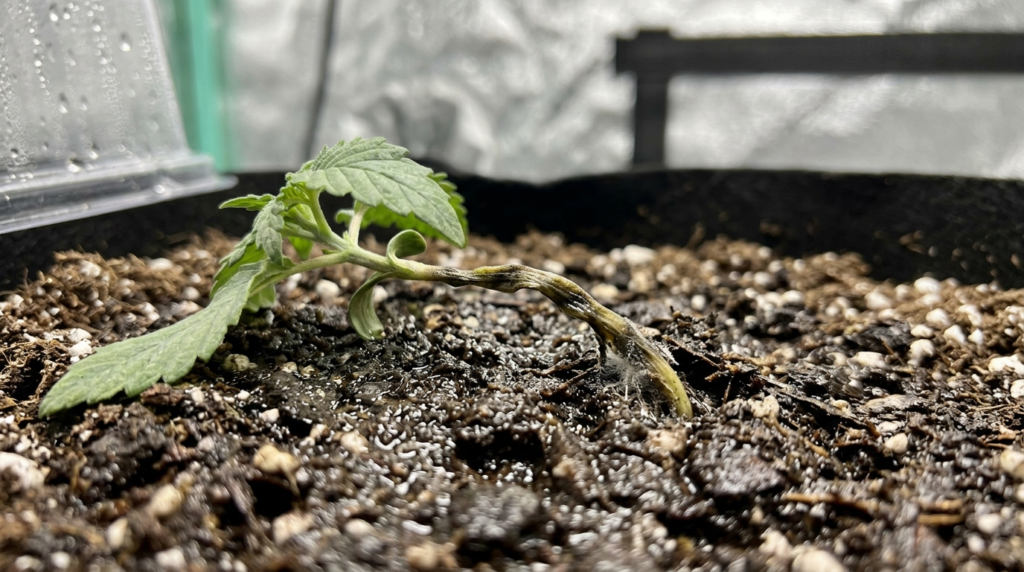
Damping off is a fungal disease that affects young seedlings, particularly in overly wet environments with poor airflow. It can develop quickly and is often fatal once severe symptoms appear.
Early symptoms include:
- Dark or narrowed stem tissue near the soil line
- Sudden wilting
- Loss of stem strength
As the disease progresses, the stem may collapse completely.
How to Prevent Damping Off
- Avoid oversaturated growing media
- Maintain gentle airflow
- Use clean containers and growing media
- Remove humidity domes once seedlings establish
Prevention is significantly more effective than attempting treatment after symptoms develop.
Heat Stress and Light Stress
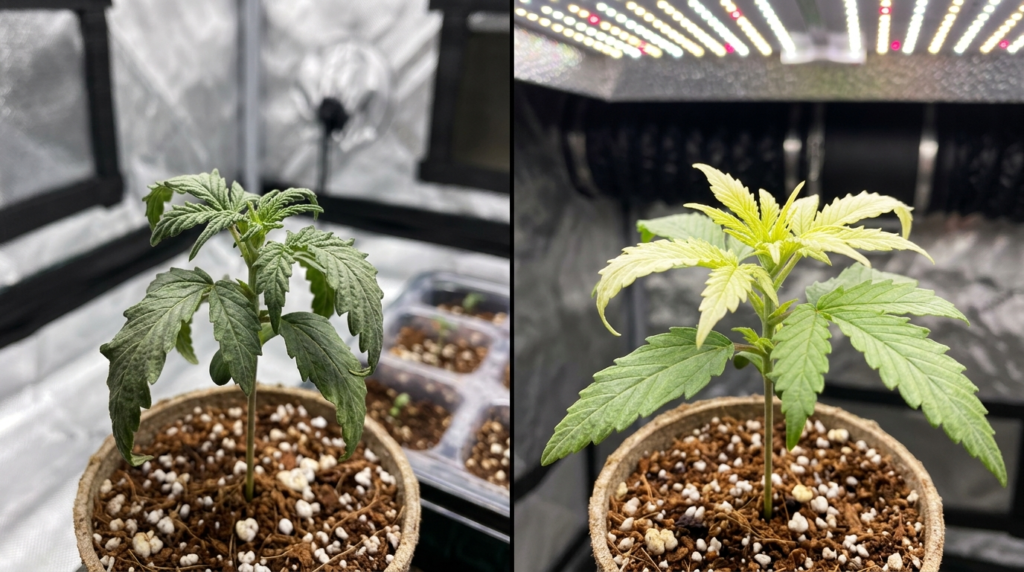
Heat stress and light stress are frequently confused because both can affect leaf posture and color.
Heat stress commonly causes:
Maintaining the correct environment is one of the best ways to avoid these issues, which is why growers often monitor temperature and humidity for autoflowers throughout the seedling stage.
- Upward leaf curling
- Dry or wrinkled leaf texture
- Increased water loss
Light stress is more likely to cause:
- Pale upper growth
- Faded coloration
- Bleaching beneath powerful LEDs
Young autoflower seedlings are particularly sensitive to excessive light intensity, especially when environmental conditions fall outside the ideal autoflower VPD chart ranges. because they have limited leaf mass and developing root systems.
Autoflower seedlings are often more sensitive to excessive light than growers expect. During early development, increasing PPFD too aggressively can slow growth even when leaves show only mild stress symptoms.
During lighting trials, mild light stress often appears before obvious bleaching develops. Seedlings may stop gaining size at their normal rate even though the leaves still appear relatively healthy, which is why monitoring new growth is often more useful than relying on leaf color alone.
How to Fix Heat Stress
- Improve air circulation
- Increase exhaust ventilation
- Raise grow lights if they are producing excess heat
- Maintain temperatures between 68–77°F (20–25°C)
How to Fix Light Stress
- Reduce PPFD gradually
- Increase the distance between the canopy and the light source
- Monitor new growth for signs of recovery
What Causes a Stunted Autoflower Seedling?
A stunted autoflower seedling is usually the result of environmental stress rather than genetics alone. Common causes include:
- Overwatering
- Root zone stress
- Nutrient burn
- Excessive light intensity
- Poor drainage
- Temperature extremes
Can Transplanting Stunt Autoflower Seedlings?
Yes, transplanting can stunt autoflower seedlings if the roots are damaged or stressed. Because autoflowers have a short vegetative stage, any setback during early growth can affect their final size and yield.
Common signs of transplant shock include:
- Slow or stalled growth
- Temporary drooping
- Smaller new leaves
- Delayed development
The risk is highest when seedlings become rootbound or the root ball breaks apart during transplanting. To reduce stress, many growers start autoflower seeds in their final container.
If you do transplant, do so before roots begin circling the container and handle the root ball as little as possible. Water lightly beforehand and maintain stable temperature, humidity, and light levels afterward.
While healthy autoflowers can tolerate careful transplanting, breeders and experienced growers often start seeds in their final container because it removes one potential source of early stress during the plant’s limited vegetative period.
How to Recover a Stunted Autoflower Seedling
Successful recovery depends on identifying the underlying cause. In most cases, seedlings respond best when growers focus on stabilising environmental conditions rather than making multiple corrections at once.
Positive signs of recovery include:
- Faster new growth
- Improved leaf colour
- Stronger stem development
- Increased leaf production
Autoflower seedlings can recover from many early problems, but consistent watering, appropriate light intensity, stable temperatures, and good airflow provide the best foundation for healthy growth.
Nutrient Burn in Autoflower Seedlings
Many growers feed autoflower seedlings too early. In quality potting soils, seedlings often require little or no additional nutrition during the first 10–14 days.
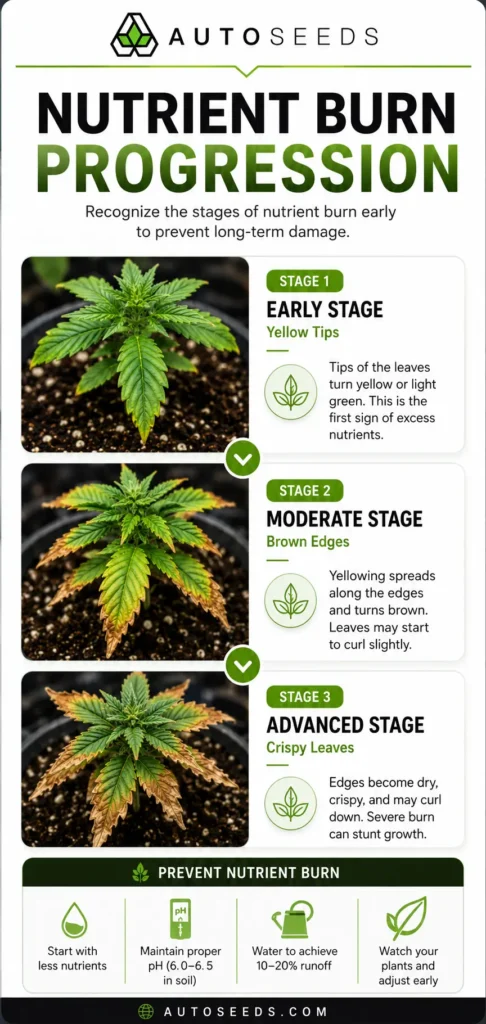
Nutrient burn typically begins at the leaf tips and progresses as nutrient concentrations increase.
Common symptoms include:
- Yellow leaf tips
- Brown leaf edges
- Crispy margins
- Downward clawing
Growing medium plays an important role. Soil-grown seedlings usually need minimal feeding initially, while seedlings grown in coco coir or hydroponic systems often require a mild nutrient solution much sooner.
In customer grows, nutrient burn is often caused by attempting to accelerate early growth rather than correcting a deficiency. Healthy seedlings frequently require less feeding than growers expect, particularly when grown in quality soil mixes.
How to Prevent Nutrient Burn
- Avoid strong nutrient concentrations
- Follow feeding recommendations for your growing medium
- Monitor EC when growing in coco or hydroponics
- Increase nutrient strength gradually
Many healthy seedlings naturally appear lighter green during early growth. Feeding too aggressively often causes more damage than waiting a few extra days.
Cannabis Seedling Leaf Problems Explained
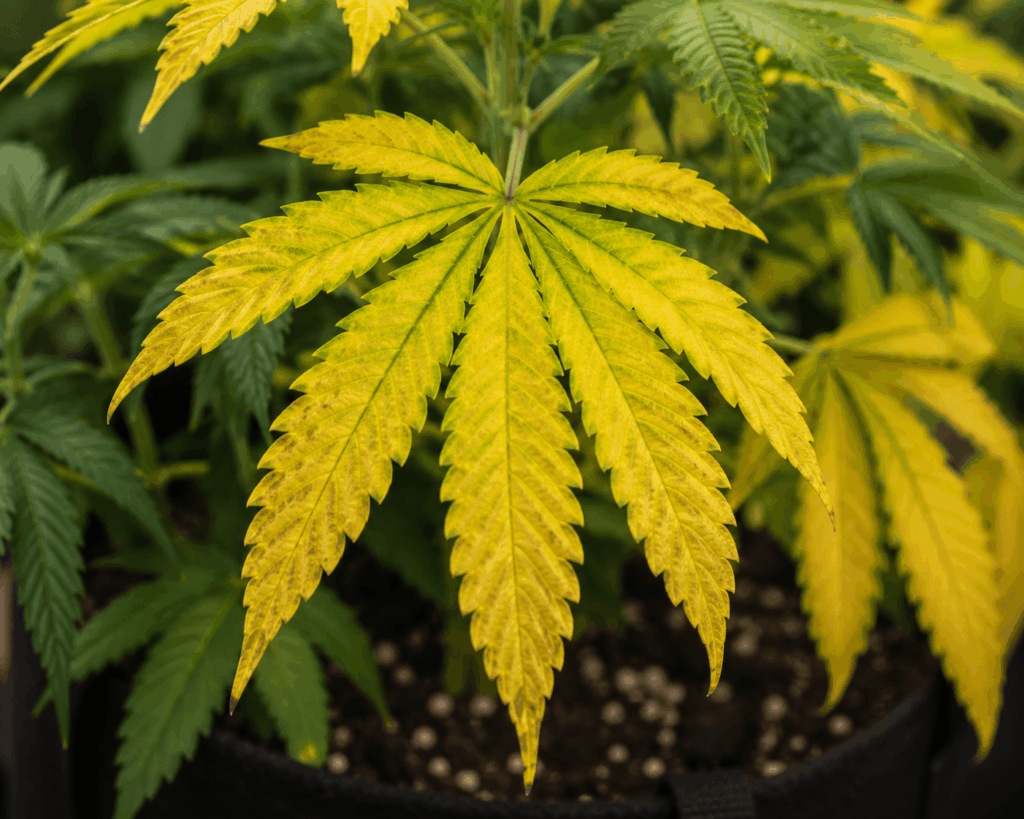
Autoflower seedlings often show signs of stress through their leaves before growth noticeably slows. Learning to interpret changes in leaf colour, shape, and posture can help growers identify problems early and reduce the risk of a stunted autoflower seedling.
While leaf symptoms provide useful clues, no single symptom should be used to diagnose a problem on its own. Environmental conditions, watering habits, root health, and growing medium all influence how autoflower seedlings respond to stress.
Why Autoflower Seedling Leaves Turn Yellow
Yellowing leaves can indicate several different issues depending on the pattern and stage of growth, including nitrogen deficiency in cannabis, root stress, or watering problems.
| Yellowing Pattern | Possible Causes |
| Lower leaves or cotyledons | Natural aging, overwatering, root stress |
| Entire seedling appears pale | Nutrient imbalance, poor root development |
| Yellow spots or speckles | Pest damage, pH-related calcium nutrient uptake issues |
| Patchy yellowing | Environmental or root zone stress |
When yellowing spreads to new growth, growers should inspect environmental conditions before increasing nutrient levels.
Curling, Clawing, and Twisted Leaves
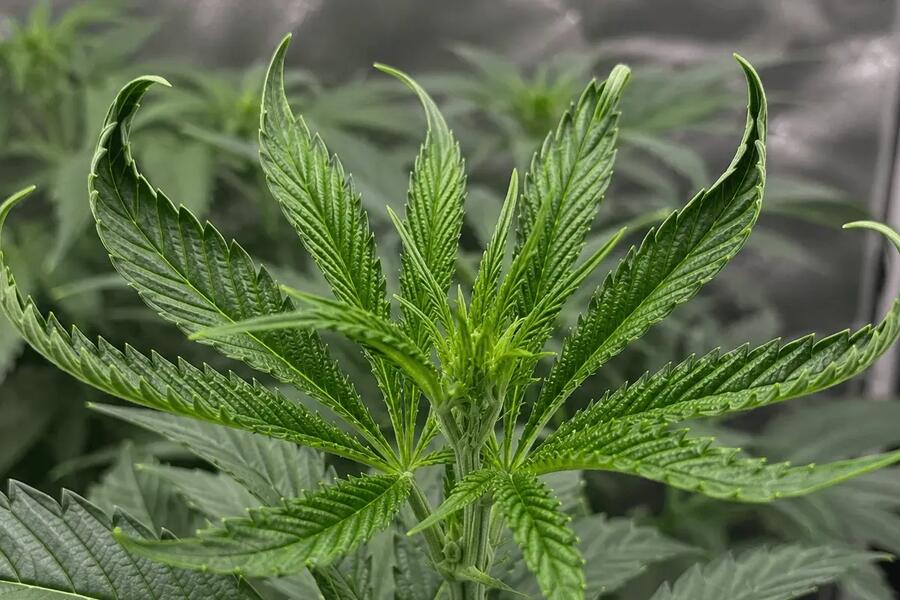
Leaf shape often reveals stress before significant discoloration develops.
| Leaf Symptom | Common Causes |
| Upward taco curling | Heat stress or excessive light intensity |
| Downward clawing | Excess nutrients or root zone stress |
| Twisted new growth | pH fluctuations or environmental instability |
Persistent leaf distortion combined with slowed growth may indicate conditions that can contribute to a stunted autoflower seedling. Monitoring new growth is often more useful than focusing on older leaves, as healthy new growth is one of the clearest signs that an autoflower seedling is recovering successfully.
Most Common Seedling Misdiagnoses
Many growers misidentify seedling problems because symptoms initially look similar.
Overwatering vs Underwatering
| Symptom | Overwatering | Underwatering |
| Leaf texture | Puffy and swollen | Thin and limp |
| Soil appearance | Wet and dark | Dry and pale |
| Progression | Yellowing and slow growth | Crispy dry foliage |
Stretching vs Damping Off
| Symptom | Stretching | Damping Off |
| Stem color | Healthy green | Dark brown base |
| Progression speed | Gradual | Rapid |
| Stem texture | Thin but firm | Soft and collapsing |
Accurate diagnosis matters because the wrong correction often worsens the issue.
How to Prevent Autoflower Seedling Problems
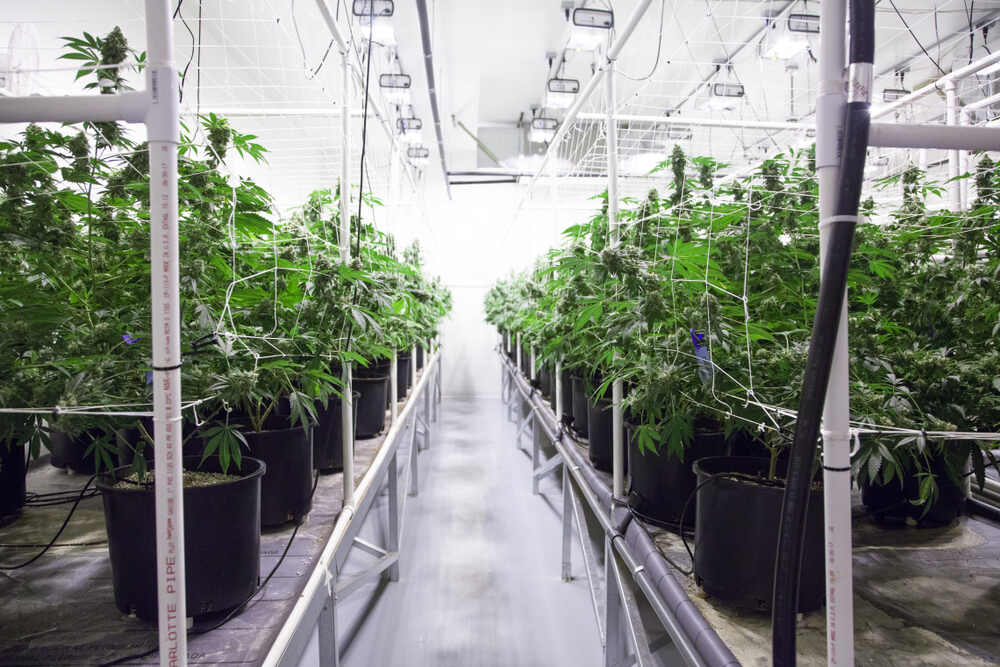
Most autoflower seedling problems can be avoided by creating a stable environment from the moment seeds germinate. Unlike photoperiod plants, autoflowers have a limited vegetative period, which means lost growth during the seedling stage cannot always be recovered later. The goal is not to create perfect conditions, but to avoid major fluctuations that place unnecessary stress on young plants.
Create a Stable Seedling Environment
Healthy autoflower seedlings develop best when temperature, humidity, and light levels remain consistent throughout the day.
| Environmental Factor | Recommended Range |
| Temperature | 68–77°F (20–25°C) |
| Relative Humidity | 65–75% |
| Soil pH | 6.0–6.5 |
| Coco pH | 5.8–6.2 |
| Seedling PPFD | 150–300 |
Many growers focus heavily on feeding schedules while overlooking environmental stability. In practice, maintaining consistent conditions often prevents more problems than adding supplements or making frequent adjustments.
Prioritise Root Health Early
Most autoflower seedling issues begin below the surface before symptoms appear on leaves. Healthy roots require oxygen, moisture, and adequate drainage to develop properly.
To support strong root growth:
- Allow the growing medium to partially dry between waterings.
- Use a light, well-aerated growing medium.
- Ensure containers drain freely.
- Avoid compacting the soil around young seedlings.
Strong early root development helps autoflower seedlings establish faster and reduces the likelihood of slow growth later in the grow cycle.
Minimise Unnecessary Stress
Autoflower seedlings generally perform best when left undisturbed. Frequent environmental changes can slow development and make recovery more difficult.
Best practices include:
- Increase light intensity gradually.
- Avoid excessive handling of young plants.
- Maintain gentle airflow rather than strong direct fans.
- Make one adjustment at a time when correcting issues.
- Avoid feeding unless the growing medium requires it.
Many growers unintentionally stress seedlings by constantly changing watering schedules, nutrient levels, or lighting distances in response to minor symptoms.
Preventing a Stunted Autoflower Seedling
A stunted autoflower seedling is often the result of accumulated stress rather than a single mistake. Overwatering, poor drainage, unstable temperatures, excessive light intensity, and root disturbance are among the most common causes of slowed development.
The most effective prevention strategy is consistency. Autoflower seedlings typically respond better to stable conditions maintained over several days than repeated attempts to optimise every environmental variable.
Signs Your Seedling Is Developing Normally
Healthy development is usually indicated by:
| Positive Sign | What It Suggests |
| Consistent new growth | Active development |
| Upright leaf posture | Good environmental balance |
| Steady growth rate | Healthy root function |
| Uniform green colour | Stable growing conditions |
Rather than focusing on minor imperfections, monitor new growth and overall development. Healthy autoflower seedlings often outgrow small setbacks when environmental conditions remain stable and stress is kept to a minimum.
Frequently Asked Questions About Autoflower Seedlings
Why is my autoflower seedling growing so slowly?
Slow growth is often caused by environmental stress rather than genetics. Common causes include overwatering, poor root development, low temperatures, excessive light intensity, or insufficient light. Healthy autoflower seedlings should produce consistent new growth throughout the first two weeks after germination.
What does a healthy autoflower seedling look like?
A healthy autoflower seedling should have vibrant green leaves, a short sturdy stem, and compact growth. During the first 10–14 days, seedlings typically develop multiple sets of true leaves while maintaining tight node spacing and steady growth.
Why are my autoflower seedling leaves turning yellow?
Yellowing leaves can have several causes, including overwatering, root stress, nutrient imbalances, or natural aging of the cotyledons. The location and pattern of yellowing often provide important clues about the underlying issue.
What light schedule is best for autoflower seedlings?
Most growers use an 18/6 or 20/4 light schedule for autoflower seedlings. Because autoflowers flower based on age rather than changes in day length, they do not require a switch to a 12/12 flowering schedule.
How much light do autoflower seedlings need?
Autoflower seedlings can be grown successfully under 18/6, 20/4, or 24/0 lighting because they flower according to age rather than day length. In most cases, light intensity is more important than the specific schedule. Providing approximately 150–300 PPFD during the first two weeks helps promote compact growth and reduces the risk of stretching.
When should I transplant autoflower seedlings?
Many growers start autoflower seeds directly in their final container to avoid root disturbance. If transplanting is necessary, it is usually best done early, before roots become established around the edges of the container.
Can a stunted autoflower seedling recover?
Yes, many stunted autoflower seedlings recover when environmental conditions improve. New leaf growth, stronger stems, and a faster growth rate are often positive signs that the plant is recovering from stress.
How often should I water autoflower seedlings?
There is no fixed watering schedule that works for every grow. Autoflower seedlings should be watered according to the moisture level of the growing medium rather than a calendar. Allowing the medium to partially dry between waterings helps promote healthy root development.
Why is my autoflower seedling stretching?
Stretching usually occurs when light intensity is too low or grow lights are positioned too far away from the canopy. Stretched seedlings develop tall, thin stems as they search for stronger light.
What temperature and humidity are best for autoflower seedlings?
Most autoflower seedlings perform best at temperatures between 68–77°F (20–25°C) with relative humidity levels around 65–75%. Stable environmental conditions help support healthy root growth and reduce seedling stress.


