
Autoflower Nutrient Burn: Signs, Causes, Prevention & Recovery
Autoflower nutrient burn is one of the most common feeding mistakes growers encounter, particularly during the seedling and early vegetative stages. While nutrients are essential for healthy growth and flower production, overfeeding can quickly lead to burnt leaf tips, dark green foliage, leaf clawing, and stunted development. Because autoflowers have a shorter lifecycle than photoperiod plants, they often have less time to recover from nutrient-related stress, making early diagnosis especially important.
The good news is that nutrient burn is usually preventable and, in many cases, reversible when identified early. Understanding how autoflowers respond to nutrient strength, pH levels, and environmental conditions can help you avoid common feeding mistakes and maintain healthy growth throughout the entire lifecycle.
In this guide, you’ll learn how to identify autoflower nutrient burn, distinguish it from nutrient deficiencies, understand the most common causes of overfeeding, and discover the best ways to prevent and correct nutrient toxicity without compromising plant health or flower quality.
What Is Autoflower Nutrient Burn?
Autoflower nutrient burn is a common growing problem caused by overfeeding nutrients. It occurs when excessive fertilizer salts accumulate around the root zone, forcing autoflowering cannabis plants to absorb more nutrients than they can effectively use.
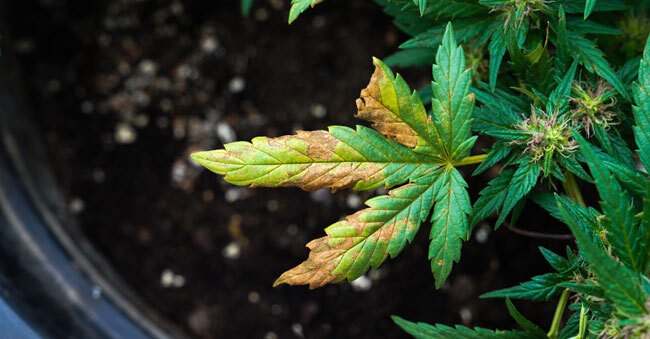
The first signs of autoflower nutrient burn usually appear as yellow, bronze, or brown leaf tips. As excess salts continue to build up, the damage can spread along the leaf edges, leading to nutrient lockout, reduced growth, and lower yields.
Unlike nutrient deficiencies, which occur when a plant cannot access enough nutrients, nutrient burn is caused by an excess of nutrients in the growing medium.
Autoflower nutrient burn can affect plants grown in:
- Soil
- Coco coir
- Hydroponic systems
However, autoflowers are often less forgiving than photoperiod plants when overfed. Because autoflowers have a short vegetative stage and flower according to age rather than light cycle, they have less time to recover from stress. In my experience, even mild overfeeding during the early stages of growth can slow development and impact final plant size.
Common Signs of Autoflower Nutrient Burn
The severity of nutrient burn can vary depending on the growth stage, nutrient strength, and growing medium. Early detection is important because autoflowers have limited time to recover from stress.
| Severity | Common Symptoms |
| Early | Yellow or brown leaf tips, slightly darker green leaves |
| Moderate | Burnt leaf edges, leaf clawing, slowed growth |
| Severe | Crispy leaves, nutrient lockout, stunted growth, reduced yields |
How Excess Nutrients Damage Autoflowers
Autoflower roots absorb water and nutrients from the growing medium. When nutrient levels become too high, excess salts create an imbalance around the roots, making it harder for the plant to absorb water efficiently and creating symptoms that can resemble overwatered autoflower plants
This can result in:
- Burnt leaf tips
- Dark green foliage
- Nutrient lockout
- Slower growth
- Reduced vigour
- Smaller harvests
One of the most common mistakes I see growers make is assuming that more nutrients will produce larger autoflowers. In reality, autoflowering strains often perform best when nutrients are introduced gradually and adjusted according to the plant’s stage of growth.
Why Autoflowers Are Sensitive to Overfeeding
Young autoflowers require relatively light feeding compared to mature plants. Many cases of autoflower nutrient burn occur when seedlings are planted into heavily fertilised soil or fed bottled nutrients too early, when growers overlook common seedling problems during early development.
Because autoflowers transition into flowering based on age rather than changes in the light cycle, any stress during early growth can have a lasting impact on plant development. Unlike photoperiod plants, growers cannot simply extend the vegetative stage to allow additional recovery time.
One pattern we’ve observed while testing different autoflower cultivars is that nutrient demand can vary significantly between genetics. Some cultivars remain relatively light feeders from seed to harvest, while others tolerate higher EC levels without issue. This is one reason why feeding schedules should be treated as starting points rather than fixed rules.
Common Causes of Autoflower Nutrient Burn
| Cause | Description |
| Overfeeding | Applying nutrients at higher concentrations than the plant requires |
| Hot Soil | Growing in heavily fertilised soil mixes that contain excessive nutrients for seedlings |
| Feeding Too Early | Introducing bottled nutrients before the plant needs supplemental feeding |
| High EC Levels | Nutrient solution strength exceeds the plant’s ability to absorb nutrients efficiently |
| Salt Build-Up | Fertilizer salts accumulate in the root zone over time, especially without adequate runoff |
Monitoring Nutrient Levels in Autoflowers
To avoid nutrient burn, I prefer to increase nutrient strength gradually while monitoring:
- Leaf colour
- Leaf posture
- EC levels
- Runoff readings
- Growth rate
Tracking these indicators helps identify potential problems before visible damage becomes severe.
During cultivar testing, we rarely increase feed strength based solely on plant age or a manufacturer’s schedule. Instead, we monitor growth rate, leaf color, and overall vigor before making adjustments. Two autoflower cultivars grown under identical conditions can respond very differently to the same nutrient concentration.
General EC Guidelines for Autoflowers
Nutrient requirements vary between strains, growing environments, and cultivation methods. However, many growers find success by starting with lower nutrient strengths and increasing gradually as the plant develops.
| Growth Stage | Typical EC Range |
| Seedling | 0.4–0.8 |
| Early Vegetative Growth | 0.8–1.2 |
| Late Vegetative Growth | 1.0–1.4 |
| Early Flowering | 1.2–1.6 |
| Mid to Late Flowering | 1.4–1.8 |
These values should be treated as general guidelines rather than fixed targets, as individual autoflower strains can vary significantly in their nutrient requirements.
In my experience, careful nutrient management is one of the most important factors in producing healthy autoflowers with strong growth and productive harvests. Starting with lighter feedings and adjusting based on plant response is often far more effective than trying to maximise nutrient levels from the beginning.pay attention carefully.
Common Signs of Nutrient Burn in Cannabis
Identifying autoflower nutrient burn early is one of the best ways to prevent long-term damage. Mild nutrient burn is usually recoverable, but severe overfeeding can stunt growth, reduce flower development, and lower final yield.
Because autoflowers have a shorter lifecycle than photoperiod plants, they have less time to recover from stress. Spotting the early warning signs quickly is especially important during the seedling and early vegetative stages.
Yellow or Brown Leaf Tips
The earliest sign of autoflower nutrient burn is usually burnt leaf tips.
The very ends of the leaves may become:
- Pale yellow
- Bronze
- Rust-coloured
- Brown
- Crispy
This is commonly known as “tip burn.” At first, only a few millimetres of the leaf tip may appear discolored. If overfeeding continues, the damage can spread along the leaf edges and become more noticeable across the plant.
In my experience, this is the stage where growers should act quickly. Mild tip burn does not always ruin an autoflower, but ignoring it can allow nutrient toxicity to progress.
Dark Green and Glossy Leaves
Autoflowers suffering from nutrient toxicity often develop unusually dark green foliage. This is especially common when nitrogen levels are too high.
Excess nitrogen may cause:
- Thick leaves
- Waxy or glossy foliage
- Dark green colouration
- Downward leaf clawing
Many beginner growers mistake very dark green leaves for strong, healthy growth. However, in autoflowers, overly dark and glossy leaves can be an early warning sign that the plant is receiving more nutrients than it can use.
Leaves Curling Downward
Leaf clawing is another common sign of nutrient burn in autoflowers.
The leaf tips may curl downward like claws while the leaves appear swollen, rigid, or heavy. This symptom is often linked with:
- Excess nitrogen
- Overfeeding
- Overwatering
- Poor root oxygenation
When clawing appears alongside burnt leaf tips, it strongly suggests the autoflower is under feeding-related stress.
Crispy and Brittle Leaves
As nutrient burn becomes more severe, damaged leaf tissue begins to dry out and lose flexibility.
Affected areas may become:
- Dry
- Brittle
- Crispy
- Paper-thin
- Brown around the edges
This happens because excess fertilizer salts interfere with water uptake and damage plant tissue. Once leaves become badly burnt, they will not fully recover, so focus on whether new growth appears healthier after correcting the issue.
Slow Growth and Reduced Vigor
One of the most damaging effects of autoflower nutrient burn is stunted growth.
A badly overfed autoflower may:
- Stretch less
- Produce smaller leaves
- Develop weaker branches
- Form smaller buds
- Show reduced vigour
- Produce lower yields
This matters more with autoflowers because growers cannot simply extend the vegetative stage to give the plant extra recovery time. If nutrient burn happens early, lost growth time can affect the final size and productivity of the plant.
In my experience, careful observation is the best way to avoid serious problems. If an autoflower shows burnt tips, clawing, and unusually dark green leaves at the same time, reduce nutrient strength and check EC, pH, and runoff before feeding again.
Nutrient Burn vs Deficiency
One of the biggest mistakes autoflower growers make is confusing nutrient burn with nutrient deficiencies. Because autoflowers have a shorter lifecycle and less recovery time than photoperiod plants, an incorrect diagnosis can quickly lead to stunted growth, reduced vigour, and smaller harvests.
When nutrient burn is mistaken for a deficiency, growers often increase nutrient strength in an attempt to correct the problem. In reality, this can worsen salt build-up around the roots, increase plant stress, and accelerate nutrient lockout.
Key Differences Between Nutrient Burn and Deficiency
| Nutrient Burn | Nutrient Deficiency |
| Burnt leaf tips | Pale yellow leaves |
| Dark green foliage | Light green foliage |
| Crispy edges | Soft fading tissue |
| Clawing leaves | Weak drooping leaves |
| Excess nutrients | Lack of nutrients |
| Rapid symptom progression | Slower symptom progression |
How to Identify Nutrient Burn Correctly
Nutrient burn in autoflowers usually appears first on the leaf tips and outer edges of the foliage. These areas are often the first to show damage when excess fertilizer salts build up around the roots.
In the seedling and early vegetative stages, even mild overfeeding can cause visible tip burn quickly. This is why early detection is especially important with autoflowers, as they have limited time to recover before flowering begins.
Common signs of nutrient burn include:
- Yellow, bronze, or brown leaf tips
- Crispy leaf edges
- Dark green foliage
- Downward leaf clawing
- Slowed growth
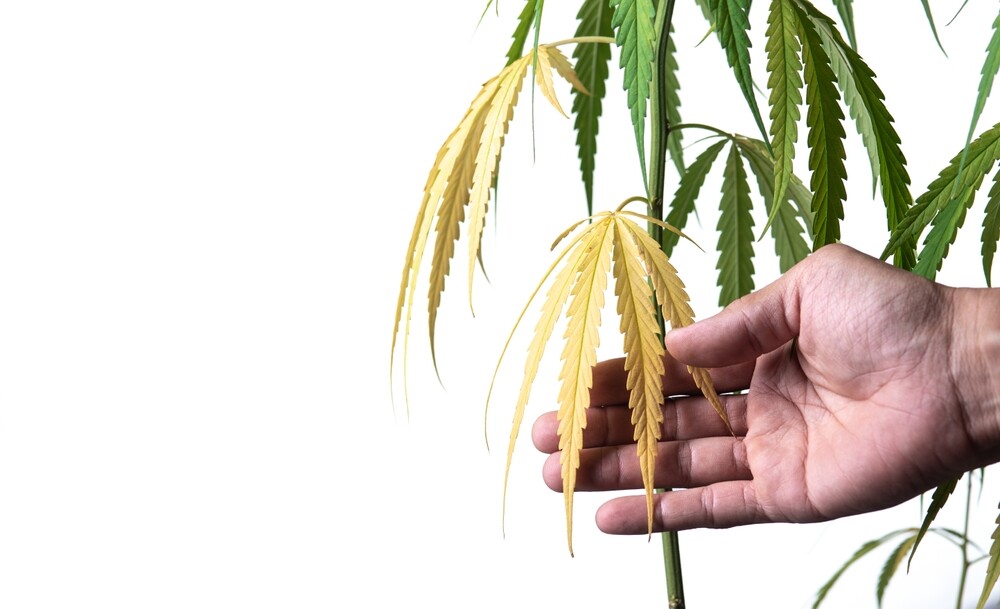
Nutrient deficiencies often look different. They are more likely to appear as pale fading, yellowing between the leaf veins, or symptoms that begin on older lower leaves first.
From my experience, many growers mistake dark green autoflower leaves for healthy growth. However, when dark green foliage appears alongside burnt tips, clawing, or slowed development, it usually suggests the plant is receiving too many nutrients rather than too few.
Why Incorrect Diagnosis Makes Problems Worse
Misdiagnosing nutrient burn as a deficiency is one of the fastest ways to make the problem worse. When yellowing leaves or poor growth appear, the natural reaction is often to add more nutrients. However, if the plant is already suffering from nutrient burn, increasing feed strength only adds more fertilizer salts to the root zone and places additional stress on the plant.
For autoflowers, the consequences can be even greater. Because they flower according to age rather than light cycle, they have a limited window to recover from stress. A feeding mistake that lasts for several days can affect growth, plant size, and ultimately yield.
Continuing to feed an overfertilised plant may lead to:
- Higher EC levels
- Excess salt build-up in the root zone
- Increased root stress
- Nutrient lockout
- Slower growth and reduced vigour
Before increasing nutrient strength, I always recommend checking:
- Runoff EC
- pH levels
- Current feeding rates
- Watering practices
Taking a few minutes to assess these factors can help identify the real cause of the problem and prevent unnecessary stress on your autoflowers.
Why Nutrient Burn Happens in Autoflowers
Nutrient burn occurs when autoflowers receive more nutrients than they can effectively use. As excess fertilizer salts accumulate around the roots, nutrient uptake becomes unbalanced, increasing the risk of toxicity, root stress, and reduced growth.
While nutrient burn can occur at any stage, autoflowers are particularly vulnerable because they have a limited lifecycle and less time to recover from cultivation mistakes. In my experience, most cases of autoflower nutrient burn can be traced back to overly aggressive feeding practices rather than a lack of nutrients.
Overfeeding During Different Growth Stages
Young autoflowers require surprisingly little nutrition during their first few weeks of growth. One of the most common mistakes is introducing bottled nutrients too early or planting seedlings into heavily fertilized “hot” soil mixes.
As autoflowers develop, nutrient requirements gradually increase. However, feeding more nutrients than the plant can utilise often leads to salt accumulation in the root zone. This is especially common when environmental conditions, such as light intensity, temperature, or root health, limit the plant’s ability to process nutrients efficiently.
During flowering, it is common to increase nutrient strength in an attempt to maximize bud production. While autoflowers require additional phosphorus and potassium during bloom, excessive feeding can quickly result in burnt leaf tips, nutrient lockout, and unnecessary plant stress.
One of the most common feeding mistakes I see from newer autoflower growers is introducing bottled nutrients too early. In many cases, seedlings growing in quality soil already have sufficient nutrition for the first couple of weeks, and additional feeding simply increases the risk of early nutrient burn.
Following Feeding Schedules Too Aggressively
Many commercial nutrient schedules are designed to be used as general guidelines rather than strict feeding instructions. In my experience, some autoflower cultivars perform best when fed at lower strengths than the manufacturer’s recommendations.
Increasing nutrient concentrations too quickly or applying multiple additives simultaneously can create an excess of dissolved salts around the roots. Over time, this can lead to nutrient toxicity and reduced plant performance.
Poor pH balance and nutrient lockout are contributing factors
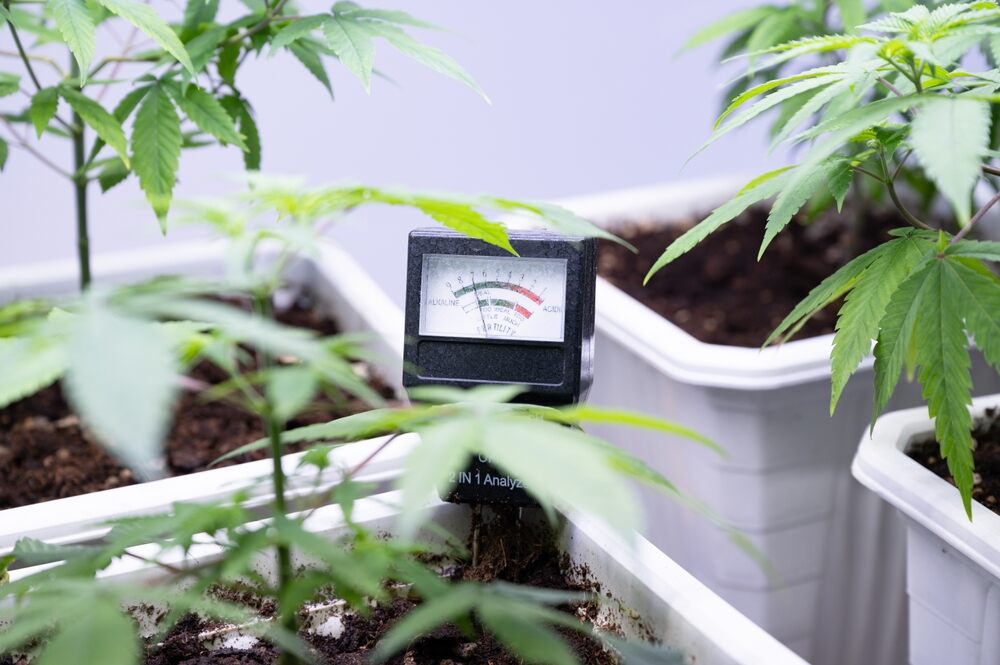
Maintaining the correct pH is essential for healthy nutrient uptake. Even when nutrient levels are appropriate, an incorrect pH can restrict nutrient availability and create symptoms that resemble deficiencies or nutrient burn.
As a general guide:
- Soil-grown autoflowers typically perform best between pH 6.0 and 7.0
- Coco and hydroponic systems are commonly maintained between pH 5.5 and 6.5
Regularly monitoring both pH and EC levels can help identify potential issues before visible symptoms appear and reduce the likelihood of nutrient-related problems later in the grow cycle.
How to Fix Nutrient Burn in Autoflowers
The sooner you address nutrient burn in autoflowers, the easier it is to prevent long-term damage. While mild overfeeding is often recoverable, prolonged stress can reduce growth, delay development, and impact final yields.
In my experience, one of the biggest mistakes growers make is trying to fix nutrient burn too aggressively. Autoflowers generally respond better to gradual adjustments and stable root zone conditions than constant intervention.
Stop Feeding and Assess the Situation
When I suspect nutrient burn, the first step is to stop adding nutrients temporarily and evaluate the condition of the plant.
Take time to assess:
- The severity of the damage
- Recent feeding levels
- Runoff EC readings
- pH levels
- Overall plant health
Avoid introducing additional supplements or boosters during this stage. Stressed autoflowers benefit from consistency, and adding multiple products often makes troubleshooting more difficult.
Flush Autoflowers Carefully
Flushing can help remove excess nutrients from the growing medium when nutrient levels have become excessively high. However, not every case of nutrient burn requires an aggressive flush.
For severe overfeeding, I prefer to flush slowly using pH-adjusted water while monitoring runoff EC levels. The goal is to reduce excess nutrient concentrations around the roots without creating additional stress.
When flushing:
- Use pH-adjusted water
- Apply water gradually
- Monitor runoff EC
- Avoid waterlogging the medium
- Allow adequate drainage
In my experience, slow and controlled flushing is often more effective than attempting to force large volumes of water through the container in a short period of time.
Reintroduce Nutrients Gradually
Once new growth begins to appear healthy, nutrients can be reintroduced at a lower strength.
I typically restart feeding at:
- 25–50% of the previous nutrient strength
- Lower EC levels than before the burn
- Balanced nutrient ratios
From there, nutrient levels can be increased gradually based on how the plant responds.
When monitoring recovery, focus on:
- New growth quality
- Leaf posture
- Growth rate
- Runoff EC trends
Damaged leaves rarely return to their original condition, so it is far more useful to evaluate fresh growth than older burnt foliage.
Remove Only Severely Damaged Leaves
Leaves that are completely dead or heavily damaged can be removed to improve airflow and reduce unnecessary stress on the plant.
Suitable candidates for removal include:
- Fully necrotic leaves
- Crispy foliage
- Severely damaged fan leaves
However, avoid heavy defoliation during recovery. Healthy leaves still play an important role in supporting photosynthesis and overall plant development.
I prefer removing damaged foliage gradually rather than all at once, particularly when recovering stressed autoflowers.
Optimise the Growing Environment
Environmental conditions can have a major influence on recovery speed. Even after nutrient levels have been corrected, poor growing conditions can slow progress significantly.
During recovery, I focus on:
- Stable temperatures
- Consistent humidity
- Good airflow
- Appropriate light intensity
- Healthy root zone conditions
If light intensity is particularly high, slightly reducing PPFD can help minimise additional stress while the plant recovers.
In my experience, healthy autoflowers recover fastest when nutrient levels, environmental conditions, and watering practices remain consistent. Small adjustments made methodically are usually far more effective than making multiple major changes at the same time.
How to Fix Nutrient Burn in Flowering Autoflowers
Nutrient burn during flowering requires a more cautious approach than during vegetative growth. At this stage, autoflowers are directing most of their energy towards flower production, and significant stress can affect bud development, resin production, and overall flower quality.
The goal is not to force rapid recovery but to stabilise the plant while allowing flower development to continue with minimal disruption.
Protect Flower Development
One of the most common causes of nutrient burn during bloom is excessive use of flowering additives and bloom boosters. Many growers assume that increasing phosphorus and potassium will automatically produce larger buds, but overfeeding often creates the opposite effect.
In flowering autoflowers, excessive nutrient levels may contribute to:
- Burnt pistils
- Reduced flower swelling
- Lower trichome production
- Foxtailing
- Weaker terpene development
Over the years, I have found that many autoflower cultivars produce excellent resin and terpene levels without being pushed to the highest nutrient concentrations suggested on commercial feeding charts. Maintaining consistency is usually more beneficial than chasing aggressive feeding targets.
Some high yield autoflower seeds can be particularly demanding during bloom, making careful nutrient management especially important.
Avoid Additional Stress
Flowering autoflowers have limited time to recover from environmental or cultivation mistakes. Once nutrient burn has been identified, avoid making multiple changes at once.
I prefer to maintain stable:
- Temperature
- Humidity
- Light intensity
- Watering practices
A consistent environment allows the plant to focus its energy on flower production rather than adapting to unnecessary stress.
Monitor Bud Formation
During recovery, pay close attention to how the flowers continue to develop.
Healthy flowering autoflowers should continue producing:
- New pistil growth
- Expanding calyxes
- Visible resin production
- Strong aroma development
If bud development continues normally, mild nutrient burn often has little impact on final quality. However, prolonged stress can affect both yield and flower density.
Support Root Zone Recovery
Healthy roots remain essential throughout flowering. In some growing systems, beneficial microbes, mycorrhizae, and enzyme products may help support root-zone health and nutrient cycling during recovery.
In my experience, flowering autoflowers recover most successfully when growers focus on stability rather than aggressive corrections. Small, measured adjustments are often all that is needed to get the plant back on track while preserving flower quality.y.
How to Prevent Nutrient Burn in Autoflowers
Preventing nutrient burn is far easier than correcting it later. Because autoflowers have a relatively short lifecycle, avoiding early mistakes can have a significant impact on plant health, growth rate, and final yield.
In my experience, most cases of autoflower nutrient burn are preventable with a consistent feeding routine, careful observation, and a willingness to start with less rather than more.
If you’re still learning how to manage feeding schedules, choosing seeds for beginners can help reduce the risk of common cultivation mistakes during your first few grows.
Start With Lower Nutrient Strength
One of the most common mistakes new growers make is feeding autoflowers too heavily during the early stages of growth.
Young autoflowers typically require less nutrition than many growers expect, particularly when growing in quality soil that already contains nutrients. Starting with lower feed strengths allows you to monitor how the plant responds before making adjustments.
I generally prefer increasing nutrient levels gradually rather than following aggressive feeding schedules from the start. It is usually much easier to correct a mild deficiency than recover from severe overfeeding.
Avoid Nutrient-Rich Soil for Seedlings
Many autoflower seedlings struggle when planted directly into heavily fertilised growing media.
So-called “hot soils” can contain more nutrients than young roots can comfortably handle, increasing the risk of early stress and nutrient toxicity. Starting seedlings in a lighter growing medium often provides greater control over nutrient availability during the first few weeks of growth.
Use Autoflower-Specific EC and pH Guidelines
Monitoring nutrient strength and pH regularly helps prevent many common feeding mistakes.
As a general guide:
| Autoflower Growth Stage | Typical EC Range |
| Seedling | 0.4–0.8 |
| Early Vegetative Growth | 0.8–1.2 |
| Flowering | 1.2–1.8 |
For pH management:
- Soil-grown autoflowers typically perform best between pH 6.0–7.0
- Coco and hydroponic systems are commonly maintained between pH 5.5–6.5
These ranges should be viewed as guidelines rather than fixed targets, as nutrient requirements vary between cultivars and growing environments.
Check Runoff Before Increasing Feed
Before increasing nutrient strength, I always prefer checking runoff EC levels first.
Runoff readings provide valuable insight into what is happening around the root zone and can help identify nutrient accumulation before visible symptoms appear. If runoff EC is significantly higher than the input solution, increasing feed strength further may be unnecessary.
Adjust Feeding Based on Cultivar Response
Not all autoflowers feed the same way. Some cultivars tolerate higher nutrient levels, while others perform best with a lighter feeding approach.
Over the years, I have found that observing plant response is often more valuable than strictly following a feeding chart. Healthy growth, consistent development, and stable environmental conditions usually provide the best indication that nutrient levels are appropriate.
By increasing nutrients gradually and allowing the plant to guide feeding decisions, growers can significantly reduce the risk of nutrient burn throughout the entire autoflower lifecycle.
Nutrient Burn Pictures and Symptom Progression
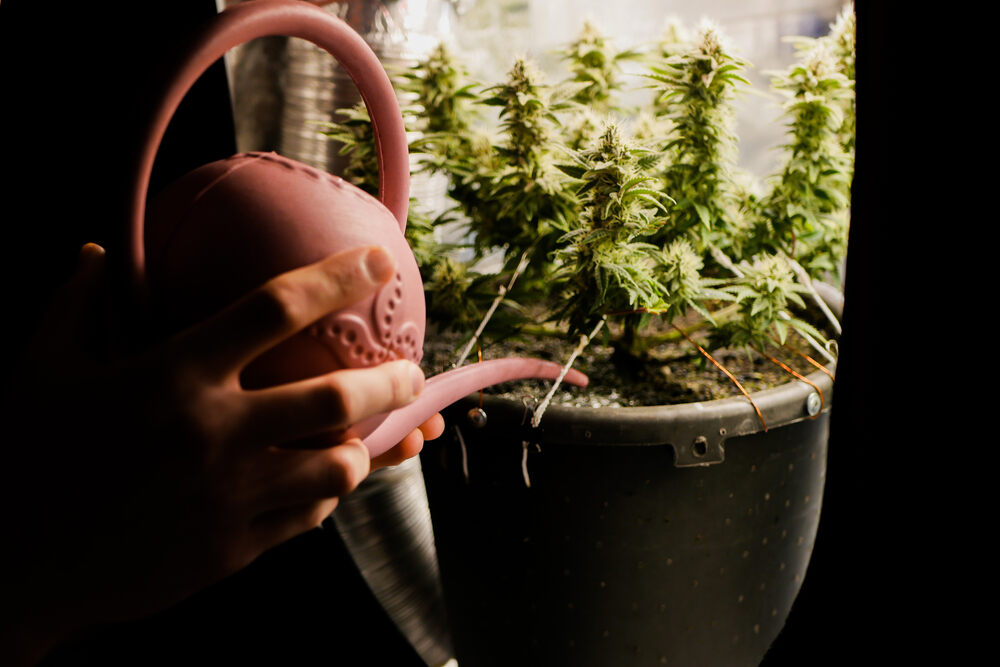
Understanding how cannabis nutrient burn progresses allows you to diagnose problems early before severe toxicity damages your yields, terpene production, and overall plant health. In most cases, nutrient burn starts mildly at the leaf tips before gradually spreading throughout the canopy as excess salts continue accumulating around the root zone.
| Nutrient Burn Stage | Common Symptoms | Plant Appearance | Recovery Difficulty | Recommended Action |
| Early Stage Nutrient Burn | Slight yellow or bronze leaf tips, tiny burnt edges, mild darkening of foliage | Plants still appear mostly healthy with minor discoloration limited to leaf tips | Easy to recover | Reduce nutrient strength slightly, monitor EC levels, and avoid increasing feedings further |
| Moderate Nutrient Burn | Burnt edges spread across leaves, clawing foliage, glossy dark leaves, slowed growth rates | Visible stress appears across the canopy while leaves begin curling downward and becoming rigid | Moderate recovery difficulty | Flush the growing medium with pH-balanced water and lower EC levels gradually |
| Severe Nutrient Burn | Large necrotic patches, crispy brittle leaves, severe clawing, stunted flower growth, major yellowing | Plants appear heavily stressed with widespread foliage damage and poor bud development | Difficult recovery | Perform aggressive flushing, stabilize environmental conditions, and remove severely damaged foliage carefully |
As nutrient burn worsens, cannabis plants become increasingly vulnerable to:
- Nutrient lockout
- Root zone stress
- Reduced resin production
- Poor terpene development
- Lower final yields
I always recommend acting quickly at the first signs of burnt leaf tips because early-stage nutrient burn is far easier to correct than severe toxicity during late flowering.
Frequently Asked Questions about Nutrient Burn
Are autoflowers more sensitive to nutrient burn?
Yes, many autoflower cultivars are more sensitive to nutrient burn than photoperiod plants. Because autoflowers have a shorter lifecycle and limited recovery time, overfeeding during the seedling or early vegetative stage can affect growth and final yield more significantly than it would in a photoperiod grow.
What are the first signs of autoflower nutrient burn?
The earliest signs of autoflower nutrient burn are usually yellow, bronze, or brown leaf tips. As the problem progresses, leaves may become dark green, glossy, or begin clawing downward. Identifying these symptoms early can help prevent more serious growth issues later in the grow cycle.
Can autoflowers recover from nutrient burn?
Yes, autoflowers can recover from nutrient burn if the issue is identified and corrected early. Mild nutrient burn often has little impact on the final harvest, while severe overfeeding can cause stunted growth and reduced flower production. Recovery is usually most successful when nutrient levels are adjusted gradually and environmental conditions remain stable.
What causes nutrient burn in autoflowers?
The most common causes of autoflower nutrient burn include overfeeding, using heavily fertilised “hot” soil, introducing nutrients too early, and following feeding schedules that are too strong for a particular cultivar. Excess fertilizer salts can accumulate around the roots and create an imbalance that affects nutrient uptake.
Should I flush an autoflower with nutrient burn?
Flushing may help when nutrient levels have become excessively high, particularly if runoff EC readings indicate significant salt accumulation in the root zone. However, not every case of nutrient burn requires a heavy flush. Mild cases can often be corrected by reducing nutrient strength and monitoring plant response closely.
What EC level is best for autoflowers?
Nutrient requirements vary between cultivars, growing methods, and environmental conditions. As a general guide, many growers maintain EC levels around 0.4–0.8 for seedlings, 0.8–1.2 during vegetative growth, and 1.2–1.8 during flowering. These ranges should be used as starting points rather than fixed targets, as some autoflowers require lighter or heavier feeding than others.