
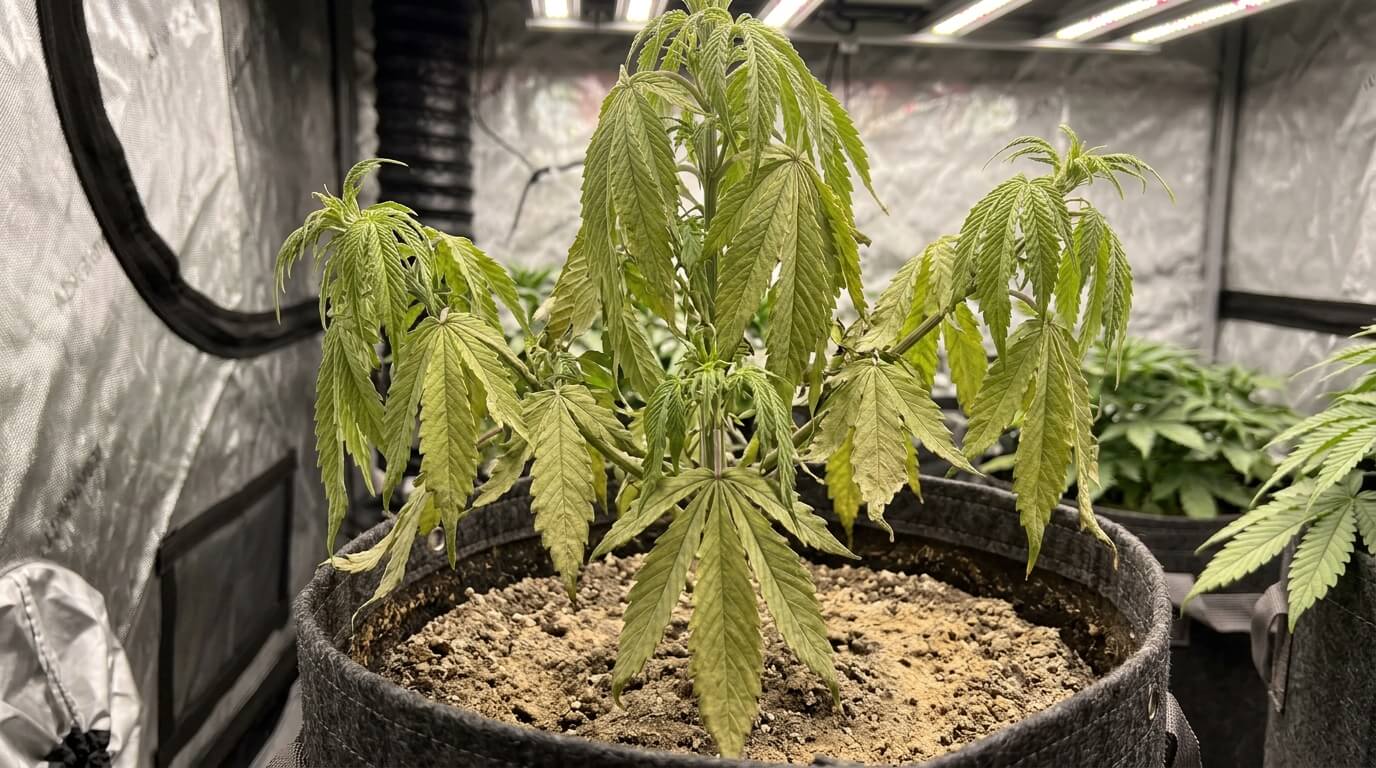
Overwatered vs Underwatered Autoflower Cannabis Plants: Signs, Differences and How to Fix Them
Watering cannabis plants correctly means finding the perfect balance between under- and overwatering. You do not want to give your plants too little water, causing them to go thirsty, or overwater them, resulting in a soggy growing medium.
In this article, I will break down everything you need to know about how to fix overwatering and underwatering, the key differences between the two, the signs and visual clues to look out for, and how to fix and prevent over- and underwatering to achieve optimal plant health.
- Understanding Cannabis Overwatering and Underwatering
- Overwatered vs Underwatered Cannabis Plants
- Signs of Overwatered Cannabis Plants
- Signs of Underwatering Cannabis Plants
- How to Fix Overwatered and Underwatered Cannabis Plants
- How to Prevent Cannabis Overwatering and Underwatering
- Why Watering Mistakes Are More Serious for Autoflower Cannabis Plants
- Frequently Asked Questions
| Feature | Overwatered Plant | Underwatered Plant |
| Leaves | Puffy and drooping | Dry and drooping |
| Soil | Wet and heavy | Dry and light |
| Root Health | Root rot risk | Root dehydration |
| Recovery Method | Allow soil to dry | Gradually rehydrate |
| Most Common Cause | Watering too often | Not watering enough |
Understanding Cannabis Overwatering and Underwatering
If you are new to growing cannabis or experimenting with autoflower seeds for beginners, then you may be wondering what exactly the right amount of water is to give your plants. Knowing what under- and overwatering means will be beneficial when finding the balance. Below covers why proper watering is critical, the differences between both and how water affects root health, nutrient uptake and plant growth.
Why Proper Watering Is Critical for Healthy Cannabis Growth
Cannabis plants will use water present in the growing medium and transport water upwards from the roots, through stems and through tiny pores (stomata) on the undersides of the leaves. This process, known as transpiration, is how plants regulate their temperature, deliver nutrients to the roots through the vacuum created by the stomata, and absorb carbon dioxide.
Providing your plants with enough water directly affects how water is transported from the roots to the rest of the plant. Without the correct amount of water present, cannabis plants will struggle to perform basic plant functions such as carbon dioxide uptake, temperature regulation, nutrient absorption and distribution. If you think of transpiration as plants sweating, you will better understand how critical proper water is.
The Difference Between Overwatered Cannabis and Underwatered Cannabis
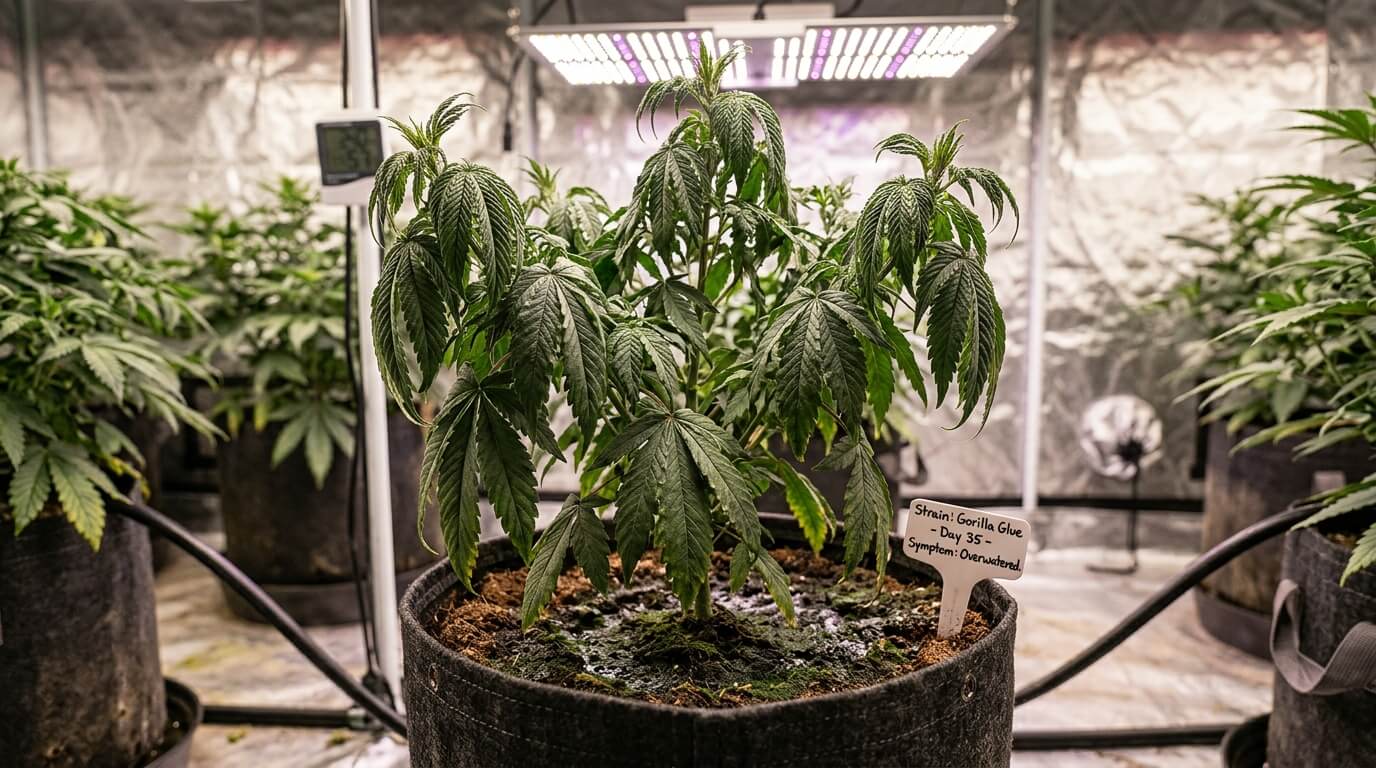
Overwatering:
- Giving the plants too much water causes a heavy, soggy and waterlogged medium
- Soil can take 2-3 days to dry out before overwatered plants stop wilting
- Over time, overwatering can cause soil to produce aerobic harmful bacteria
- Overwatering is one of the most common mistakes a beginner grower can make
Underwatering:
- Too little water causes the soil or growing medium to become dry
- Plants can become dry, brittle and appear weak
- Underwatering results in slow growth and often nutrient deficiencies
- Plants cannot transpire properly, causing reduced growth and development
How Water Affects Root Health, Nutrient Uptake, and Plant Growth
The roots of your cannabis plants are responsible for what happens above soil level. Water is an essential element that plants require to transpire, creating a vacuum that allows the leaves to breathe, absorb carbon dioxide, and transport nutrients via the roots and stems.
Plant growth and development rely heavily on the correct balance of water, nutrient uptake, carbon dioxide, and the plant’s ability to photosynthesise with full efficiency. Overwatering and underwatering will restrict plants from transporting moisture through the stems and leaves, resulting in wilting, slow root development, and weak root cells.
Overwatered vs Underwatered Cannabis Plants
Without experience, it can be challenging to determine the correct volume of water to give your plants and how often to saturate them. The following explains the main differences between over- and underwater plants and how to tell the difference.
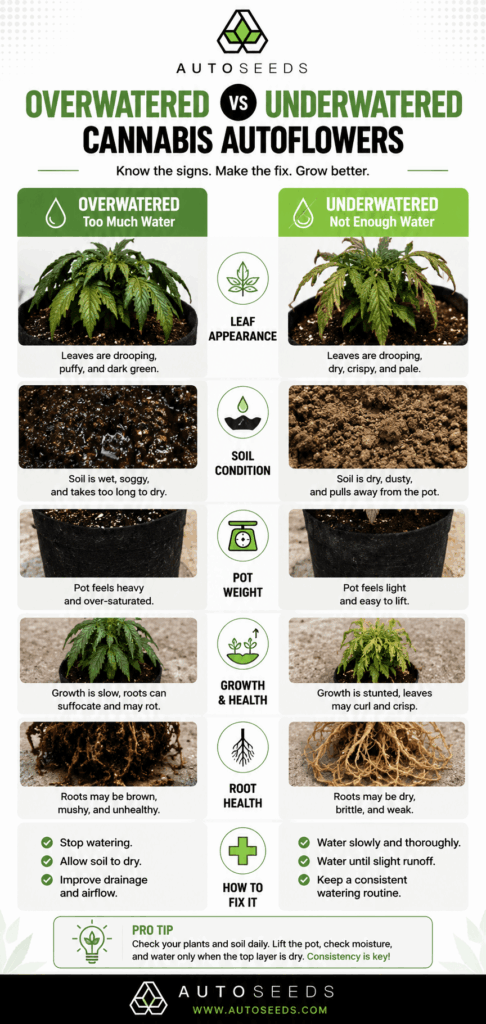
| Symptom | Overwatered Cannabis Plant | Underwatered Cannabis Plant |
| Leaf Appearance | Drooping, swollen, puffy leaves | Drooping, dry, crispy leaves |
| Soil Condition | Wet, soggy, waterlogged | Dry, dusty, pulling away from pot |
| Pot Weight | Heavy | Very light |
| Growth Rate | Slow growth | Stunted growth |
| Root Health | Risk of root rot | Dry, weak roots |
| Leaf Colour | Yellowing from nutrient lockout | Yellowing from dehydration |
| Recovery Time | Several days after drying out | Often recovers within hours of watering |
| Common Cause | Excess watering frequency | Insufficient watering frequency |
Key Differences Between Overwatering and Underwatering Symptoms
Regardless of whether you under- or overwater your plants, both will produce wilting leaves. The only way you can tell is to feel the weight of the pot and see if the soil feels dense, compact, and heavy, or airy, light, and dusty.
| Visual Clue | Overwatering | Underwatering |
| Leaves Curl Downward | Yes | Yes |
| Leaves Feel Puffy | Yes | No |
| Leaves Feel Crispy | No | Yes |
| Soil Produces Puddles | Yes | No |
| Soil Pulling From Pot | No | Yes |
| Fungus Gnats Present | Often | Rarely |
| Root Rot Risk | High | Low |
| Pot Difficult to Lift | Yes | No |
How to Tell if Drooping Leaves Need More or Less Water
So how do you actually tell if a drooping plant has received too much or too little? A telltale sign is to inspect the soil or growing medium. Below are the questions to ask to determine if the plant needs less water. If the answer is yes, then you need to lay off watering for at least 48 hours, before the soil is close to dry and the plants are no longer wilting.
- Is the soil waterlogged, and does it produce small puddles when touched?
- Are the pots heavy to lift off the ground?
- Are the roots wet, mushy and discolored?
- Does the soil take days to fully dry out?
If you are not sure whether your plants need more water and risk underwatering, ask yourself the following questions: if the answer is yes, increase the volume of water and potentially the watering frequency.
- Do the leaves feel dry, crispy and lack a waxy vibrancy?
- Can you easily lift the pot off the floor because the medium is dry?
- Are the leaves showing any signs of yellowing?
- Do the roots appear thin, dry and break apart easily?
Why Cannabis Roots Need Oxygen and Moisture Balance
Cannabis roots love an oxygen-rich growing medium. The reason is that root fibres search through the pots for tiny crevices and air pockets, seeking air and moisture. Soil microbiology is also dependent on aerobic bacteria, which encourage a harmonious relationship with roots and help to protect against pathogens and plant disease.
- Low moisture levels can affect root development and cellular development
- Too much water restricts oxygen levels, creating an environment for bad bacteria to form
- Aeroponic systems produce an enormous root mass due to high dissolved oxygen levels
- A plant regulates its temperature through transpiration based on the moisture balance
Signs of Overwatered Cannabis Plants
Now you know that accidentally over- or under-watering can result in wilting plants unable to transpire water, and being able to tell the difference will be highly advantageous. Below covers all the signs of overwatered plants to look out for.
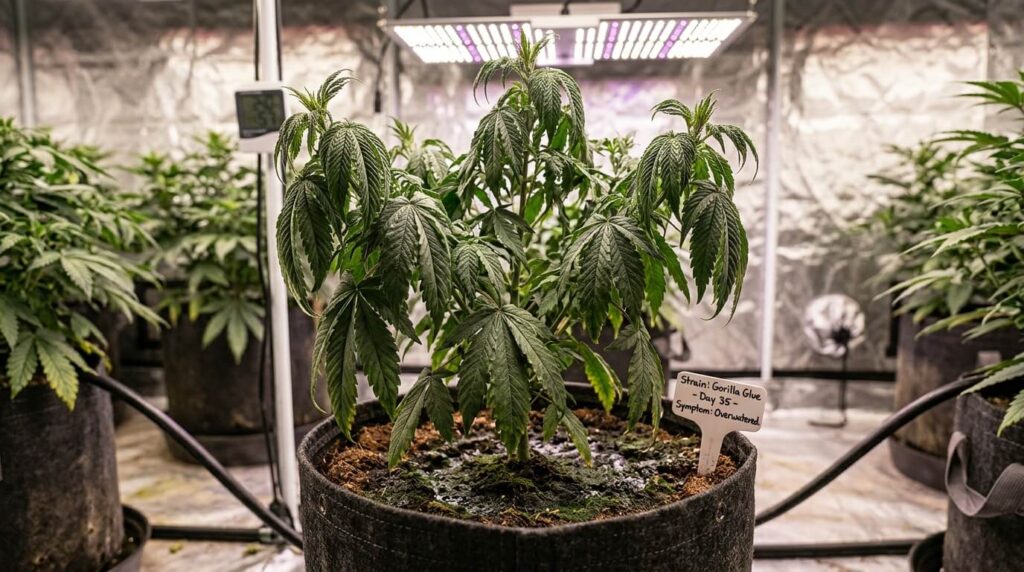
Drooping Leaves and Heavy, Puffy Foliage
Fan leaves will wilt and curl downwards. The foliage can appear puffy and swollen due to excessive water between the root zone and the stomata.
Yellowing Leaves and Slowed Growth
Yellowing leaves are usually a telltale sign of a nutrient lockout, indicating that the plants cannot absorb nitrogen. Older leaves donate nitrogen to new growth. During this time, you may notice your plants are growing slowly.
Wet Soil, Root Rot, and Fungus Gnats
Constantly oversaturating the soil from overwatering creates an environment that encourages harmful pathogens, such as Pythium (root rot) and Fusarium (damping off). This will also attract fungus gnats and create an undesirable low-oxygen environment.
Signs of Overwatered Cannabis Seedlings and Young Plants
Even though you may think overwatering only occurs when giving your plants large amounts of water, seedlings and young plants are also vulnerable to it. You can tell a young plant needs to be left to dry out again by the leaves curling inwards, causing the leaf tips to face down.
- Poor drainage can be a common cause of overwatering seedlings and young plants
- Young plants have a small root base, so they only require small amounts of water
- Leaves may turn yellow, develop brown crispy edges or become discolored, particularly during the early stages of growth when cannabis seedling problems are most common.
- The pots do not dry out within 24-48 hours after watering
- Soil feels thick and dense, and drops of water appear when lightly squeezed
Signs of Underwatering Cannabis Plants
Underwatering your plants does not create as many potential issues as overwatering; however, a slight mistake in the watering department can cause leaves to become dry, crispy, and wilt. Below breaks down the different signs of underwatering and what to look out for.
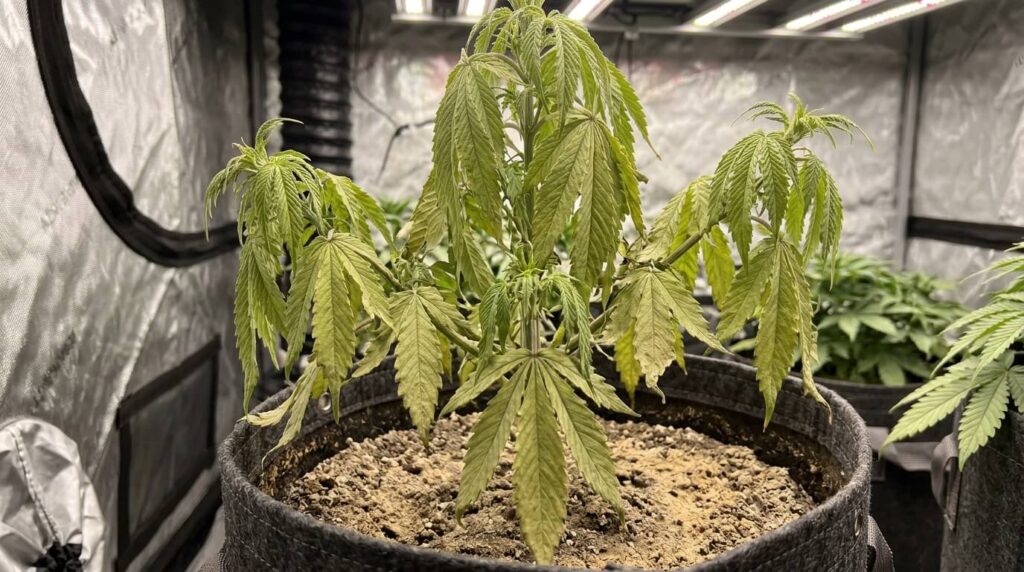
Dry, Crispy Leaves and Wilting Symptoms
A healthy, vibrant cannabis plant that receives the optimal amount of water will produce metallic, shiny green foliage with a waxy sheen. Underwatered plants create dry, crispy leaves that lack the waxy shine and vibrancy. The leaves will wilt downward, and in hot conditions can begin to lose their structure, appearing lifeless and sickly.
How an Underwatered Cannabis Plant Looks Compared to Overwatered Plants
- The leaves of your plants are not perked up and appear to be wilted
- The leaves, when touching, have a paper-thin, dry and almost crispy feel
- Growth appears slower and stunted during vegetation, which is one of the most common reasons growers wonder why their autoflower is growing small.
- The oldest fan leaves can shift from green to yellow
- The edges of the leaves can exhibit symptoms of cal mag deficiency
- The soil has become dry and dusty, and the pots are very light to lift
Stunted Growth and Soil Pulling Away From the Pot
Soil pulling away from the sides of the container is typically a sign of prolonged underwatering and shrinkage of the growing medium. The soil of underwater cannabis plants can appear to shrink due to long-term underwatering. Soil that is pilling away from the pot is a clear indicator that the soil and roots are dry, and have lost their volume, shape and structure.
Common Causes of Underwatering Cannabis Plants
Many variables can impact whether a cannabis plant is underwatered. These are explained below.
- Plants demand more water as they mature and produce more foliage and roots
- High temperatures above 25 degrees Celsius will negatively affect transpiration and may eventually contribute to symptoms associated with heat stress.
- Low humidity levels below 40% can cause cannabis plants to dry out faster
- Not watering the plant frequently enough over a 24-72-hour period.
- Light intensity can determine transpiration levels and nutrient uptake.
How to Fix Overwatered and Underwatered Cannabis Plants
Even though under- or overwatering your plants is not the end of the world, it is good practice to know how to address potential issues before they arise. Below breaks down, step by step, how to fix overwatered plants, the importance of proper drainage, how to safely rehydrate an under-watered plant, and when to transplant after experiencing watering issues.
How to Fix an Overwatered Cannabis Plant Step by Step
Below is a 5-step guide you can follow if you think you overwatered your plants.
Step 1:
Lift the pot to feel how heavy a fully saturated pot of soil feels. This will be your guide for when to water again; however, the goal now is to let the soil naturally dry out.
Step 2:
After 24-48 hours, you can insert your finger down the side of the pot to check moisture levels. If you notice your finger is slightly wet, try again and check every 12-24 hours until it is dry.
Step 3:
Lift the pot off the ground, and if it feels light and airy, and the soil feels dry and dusty, you are now ready to add water or a nutrient solution.
Step 4:
Using a measuring jug, fill it with half the amount of water you originally used. Then slowly pour the water from the jug around the edges of the pot. You will find that doing so allows the soil to easily absorb and retain moisture.
Step 5:
Wait another 12-24 hours before adding more water to the soil, again slowly pouring around the edge. Avoid pouring water directly in the centre of the pot, and after watering, feel the weight of the pots to determine how much moisture is retained in the soil.
Improving Drainage and Soil Aeration for Autoflower Cannabis Plants
Proper drainage and root-zone oxygenation are especially important when growing autoflowers. Unlike photoperiod plants, autoflowers have a limited vegetative period and very little time to recover from root stress caused by overwatering. Creating a light, airy growing medium helps roots expand quickly, improving nutrient uptake, plant vigour, and final yields.
One of the most effective ways to prevent overwatering is to use a well-aerated soil mix that allows excess moisture to drain freely while retaining enough water for healthy growth.
- Add 20–30% perlite to your soil mix to improve drainage, increase oxygen availability, and reduce the risk of waterlogged roots.
- Mix coco coir with soil to create a fibrous, moisture-retentive growing medium that maintains excellent air-to-water balance.
- Use fabric pots or air pots whenever possible, as they promote air pruning and increase oxygen exposure around the root zone.
- Avoid placing young autoflower seedlings into excessively wet, oversized containers. Water only the area surrounding the root zone during the first few weeks of growth.
- Raising pots slightly off the ground using pot risers or grids improves drainage and airflow beneath the container, helping roots stay healthy.
- Ensure all containers have adequate drainage holes to prevent standing water from accumulating at the base of the pot.
Healthy autoflower roots thrive when the growing medium cycles between moist and slightly dry rather than remaining constantly saturated. Maintaining this balance encourages rapid root development during the critical early stages of growth, helping plants reach their full genetic potential.
How to Rehydrate an Underwatered Cannabis Plant Safely
In the same way that you slowly nurse an overwatered plant back to life once the soil has dried and the pots feel light, the same process applies when rehydrating an underwater plant! The rule of thumb is that less is more. The last thing you want to do is give the plant too much water, so start with half the usual amount and slowly pour it around the edges of the pots.
Good quality soil has good drainage and aeration, but it also has the capacity to hold large amounts of water. I would recommend lightly watering the plants, then watering them again 6-12 hours later.
When to Transplant Autoflower Cannabis Plants After Watering Issues
If your autoflower continues to wilt or grow slowly after you’ve corrected your watering routine, the issue may be the growing medium rather than the amount of water you’re giving it. Heavy, poorly draining soil can limit oxygen around the roots, making it harder for plants to recover from overwatering or underwatering.
In my experience, persistent watering problems are often caused by dense soil that stays wet for too long. Since autoflowers have a short life cycle, healthy root development is essential from the start.
Before transplanting, allow the growing medium to dry out slightly. This makes the root ball easier to handle and reduces the risk of root damage. However, only transplant an autoflower if it’s absolutely necessary, as root disturbance can slow growth and affect yields.
If you do need to transplant, move the plant into a light, well-aerated mix containing perlite and coco coir. This improves drainage, increases oxygen around the roots, and encourages healthy new growth.
With the right growing medium and watering practices, stressed autoflowers can often recover quickly and return to vigorous growth.
How to Prevent Cannabis Overwatering and Underwatering
If you know how to prevent cannabis over and underwatering, then you will never need to worry! Below explains how often to water at each growth stage, the best pots, soil mixes and drainage, environmental factors, water quality for plants and simple watering techniques to follow.
How Often to Water Autoflower Cannabis Plants in Different Growth Stages
Autoflower cannabis plants do not need a fixed watering schedule. The right watering frequency depends on plant size, pot size, growing medium, temperature, humidity, airflow, and how quickly the root zone dries out. In my experience, the most reliable method is to judge watering by pot weight and soil moisture rather than watering every day by habit.
Because autoflowers have a short life cycle, watering mistakes during the first few weeks can permanently affect plant size, root development, and final yield. The goal is to keep the growing medium evenly moist but never waterlogged.
| Autoflower Growth Stage | Typical Watering Frequency | Water Demand | Main Risk |
| Seedling | Every 24–48 hours, only small amounts | Low | Overwatering |
| Early Vegetative | Every 24–48 hours, depending on pot size | Moderate | Overwatering |
| Late Vegetative / Pre-flower | Every 12–24 hours if the plant is drying quickly | High | Inconsistent watering |
| Flowering | Every 12–24 hours, depending on plant size and environment | High | Overwatering or drying out too far |
| Late Flowering | Monitor pot weight closely | Moderate to high | Root stress and moisture swings |
Seedling Stage
Autoflower seedlings need very little water because they have a small root system and limited foliage. During this stage, transpiration is low, so the plant cannot use large amounts of moisture. Overwatering seedlings is one of the most common reasons autoflowers become stunted early.
Water lightly around the seedling rather than soaking the entire pot. This is especially important if the autoflower has been planted directly into its final container.
- Keep the area around the young root zone lightly moist, not saturated.
- Avoid soaking large pots before the seedling has developed enough roots to use the moisture.
- Allow the top layer of the growing medium to begin drying before watering again.
- A slightly drier medium encourages young roots to search outward and develop faster.
- Too much water can create a dense, low-oxygen root zone and slow early growth.
Vegetative and Pre-Flower Stage
Autoflowers move quickly from seedling growth into vegetative growth and pre-flower. As the plant develops more leaves and roots, it will begin using water faster. However, because autoflowers cannot be held in the vegetative stage like photoperiod plants, avoiding stress during this period is critical.
Only water when the pot feels noticeably lighter and the growing medium is approaching dryness. In warm environments or with larger plants, this may mean watering every 24 hours. Smaller autoflowers or plants in cooler rooms may need much less frequent watering.
- Larger root systems use water more quickly.
- Bigger, bushier autoflowers may need watering every 12–24 hours.
- Use a measuring jug to track how much water each plant receives.
- Avoid switching between very wet and very dry conditions, as this can stress autoflowers.
- Good drainage and oxygen around the roots are essential for strong growth before flowering.
Flowering Stage
Autoflowers begin flowering based on age, not a 12/12 light cycle. Most growers keep autoflowers under 18/6, 20/4, or even 24/0 lighting from seed to harvest. During flowering, water demand often increases because the plant is supporting bud production, root activity, and higher nutrient uptake.
In my experience, large flowering autoflowers in warm, well-lit grow rooms may need watering every day, and occasionally more often in fast-draining media such as coco. However, soil-grown autoflowers should still be watered based on pot weight and moisture level rather than a strict schedule.
- Do not assume flowering autoflowers need watering twice a day.
- Water only when the pot feels light and the medium is no longer wet.
- Avoid letting the root zone stay saturated, as this can reduce oxygen and slow bud development.
- Avoid letting the medium become bone dry for long periods, especially during heavy flowering.
- Consistent moisture supports steady bud growth, nutrient uptake, and healthier roots.
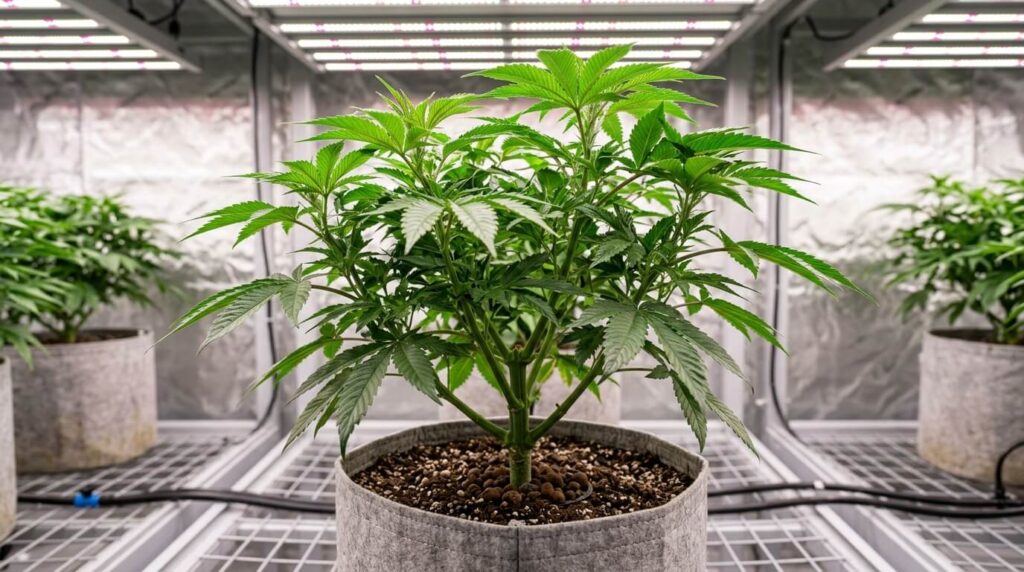
The best watering routine for autoflowers is consistent but responsive. Check the pot weight, feel the top few centimetres of the medium, and watch the plant’s leaves. Healthy autoflowers should look upright, vigorous, and evenly hydrated without drooping from either excess water or drought stress.
Best Pots, Soil Mixes, and Drainage Methods for Cannabis
As for pots, I recommend using either felt pots or air pots. The reason is that these two pots are designed to prune the roots and create a high-oxygen environment for root development.
If you want a complete soil that is ready to go and will provide your plants with enough nutrients from seed to harvest, then buying soil from a well-known industry brand is advised. Avoid cheap soil that drains poorly and lacks nutrients.
There are several ways that you can improve the drainage of your growing medium:
- Mixing hydroton clay balls with soil and coco coir
- Adding a 2-inch layer of hydroton clay balls to the base of your pot
- Add 30-50% perlite to the soil to improve drainage and speed up drying time
Environmental Factors That Affect Cannabis Watering Needs
Cannabis plants require specific temperature and humidity conditions to thrive without issue or environmental stress. Cold and hot temperatures will reduce the amount of water a plant can transpire.
| Environmental Factor | Effect on Water Usage |
| High Temperature (>25°C) | Increases water demand |
| Low Humidity (<40%) | Increases transpiration |
| High Light Intensity | Increases water uptake |
| CO₂ Supplementation | Increases transpiration |
| Poor Airflow | Reduces transpiration efficiency |
| Cold Root Zone (<16°C) | Reduces water uptake |
| Large Root System | Increases water demand |
| Small Seedling Root Zone | Requires minimal water |
How Water Quality Affects Cannabis Plant Health
- Water plays a crucial role in photosynthesis and nutrient uptake
- Root and soil health will be determined by the quality of water used
- Bad quality water may cause nutrient lockout or nutrient toxicity
- Bad quality water may contain heavy metals, harmful bacteria and pathogens
- Plants can become stunted and grow slowly if the water quality is poor
- A well-watered and well-maintained soil culture can produce an excellent harvest
Simple Watering Techniques to Avoid Future Watering Problems
I have found that following the 10% rule has worked wonders for me over the years. All you need to do is use a measuring jug and fill it with only 10% of the pot size. Your growing medium will absorb the water, creating the ideal balance of air and moisture around the roots. Below is a step-by-step guide.
- Step 1 – Fill a measuring jug with 10% volume of the pot size (10L = 1L of water)
- Step 2 – Check the pH of the water is between 6.0 and 7.0 when growing with soil
- Step 3 – Slowly pour water around the edge of the pot, evenly saturating the soil.
- Step 4 – Wait 30-60 seconds for a small amount of runoff water to exit the base
- Step 5 – Wait until the pot feels light to lift and the soil is almost dry before watering again
Why Watering Mistakes Are More Serious for Autoflower Cannabis Plants
Unlike photoperiod cannabis plants, autoflowers operate on a predetermined life cycle and begin flowering based on age rather than changes in the light cycle. This means they have a limited amount of time to recover from environmental stress, including overwatering and underwatering.
When a photoperiod plant experiences watering issues, growers can often extend the vegetative stage and allow additional time for recovery. Autoflowers do not have this luxury. A week of slow growth caused by poor watering practices can permanently reduce plant size, bud production, and overall yield.
Autoflowers vs Photoperiods: Recovery From Watering Stress
| Factor | Autoflower Cannabis Plants | Photoperiod Cannabis Plants |
| Flowering Trigger | Age-based | Light cycle-based |
| Recovery Time Available | Limited | Can be extended during vegetative growth |
| Impact of Early Stress | Often permanent | Usually recoverable |
| Yield Reduction Risk | High | Moderate |
| Root Development Importance | Critical during early growth | Important but more forgiving |
| Ability to Delay Flowering | No | Yes |
| Tolerance to Watering Mistakes | Lower | Higher |
Why Overwatering Can Stunt Autoflower Growth
Autoflowers, especially modern high yield autoflower seeds, rely on rapid root development during the first few weeks after germination. Excessively wet soil can slow root expansion by reducing oxygen availability around the root zone. As a result, young autoflowers may remain small and fail to reach their full genetic potential.
Because autoflowers transition into flowering automatically, any reduction in early vegetative growth can directly impact the final harvest.
The Importance of Root Development in Autoflowers
A healthy root system is one of the biggest factors influencing autoflower performance. Strong roots support nutrient uptake, water transport, and vigorous plant growth.
Many experienced growers intentionally allow the growing medium to approach dryness before watering again. This encourages roots to search deeper throughout the container, producing a larger and more efficient root mass.
Choosing the Right Pot Size for Autoflowers
Container size can significantly influence watering practices when growing autoflowers. Large pots filled with wet soil can remain saturated for extended periods, particularly when plants are young and have not yet established a large root zone.
For this reason, growers should pay close attention to moisture levels during the first few weeks of growth and avoid treating young seedlings as if they are mature plants with high water demands.
Why Autoflowers Benefit From Consistent Moisture Levels
Autoflowers generally perform best when exposed to stable growing conditions throughout their life cycle. Frequent swings between extremely wet and extremely dry soil can create unnecessary stress and slow development.
Maintaining a consistent balance of moisture and oxygen within the root zone helps support steady growth, healthy root development, and maximum flowering potential from seed to harvest.
Frequently Asked Questions
Can an Overwatered Cannabis Plant Recover?
Yes, an overwatered cannabis plant can recover if the issue is identified early. Allow the growing medium to dry out before watering again and ensure the roots have access to oxygen. Most plants will regain their vigour within a few days once the soil moisture returns to an appropriate level.
How Long Does It Take an Overwatered Cannabis Plant to Recover?
Recovery time depends on the severity of the overwatering. Mild cases may improve within 2–5 days, while plants suffering from root rot or severe oxygen deprivation can take several weeks to recover fully.
What Does an Underwatered Cannabis Plant Look Like?
An underwatered cannabis plant will typically have drooping leaves that feel dry, thin, and crispy to the touch. The growing medium will appear dry and dusty, and the pot will feel noticeably lighter than usual.
How Often Should I Water Cannabis Plants?
There is no fixed watering schedule that works for every grow. Watering frequency depends on the plant’s growth stage, pot size, temperature, humidity, and growing medium. As a general rule, only water when the soil is close to dry and the pot feels light when lifted.
What Is the Difference Between Overwatered and Underwatered Cannabis Plants?
Both conditions can cause leaves to droop, making them difficult to distinguish. The easiest way to tell the difference is by checking the growing medium. Overwatered plants have wet, heavy soil, while underwatered plants have dry, dusty soil and lightweight pots.
Can Overwatering Cause Root Rot?
Yes, consistently overwatering cannabis plants can lead to root rot. Waterlogged soil restricts oxygen around the roots and creates favourable conditions for pathogens such as Pythium, which can damage or destroy the root system.
Should I Water Cannabis Plants Every Day?
Not necessarily. Some large plants in the vegetative or flowering stage may require daily watering, while seedlings and smaller plants can go several days between waterings. Always check soil moisture and pot weight before watering.
Why Are My Cannabis Leaves Drooping After Watering?
Drooping leaves immediately after watering are often a sign of overwatering. Excess moisture reduces oxygen availability around the roots, preventing the plant from functioning efficiently. Allow the growing medium to dry before watering again.
Can Cannabis Plants Recover From Underwatering?
Yes, cannabis plants are generally resilient and can recover quickly from mild underwatering. Gradually rehydrate the growing medium rather than flooding it with water, and most plants will show signs of recovery within 24 hours.
What Is the Best Way to Prevent Overwatering and Underwatering?
The most reliable method is to monitor pot weight and soil moisture before each watering. Using well-draining soil, adding perlite, maintaining proper environmental conditions, and watering based on plant demand rather than a strict schedule will help prevent watering issues.