
Why Are My Autoflower Leaves Turning Yellow? Common Causes and Solutions
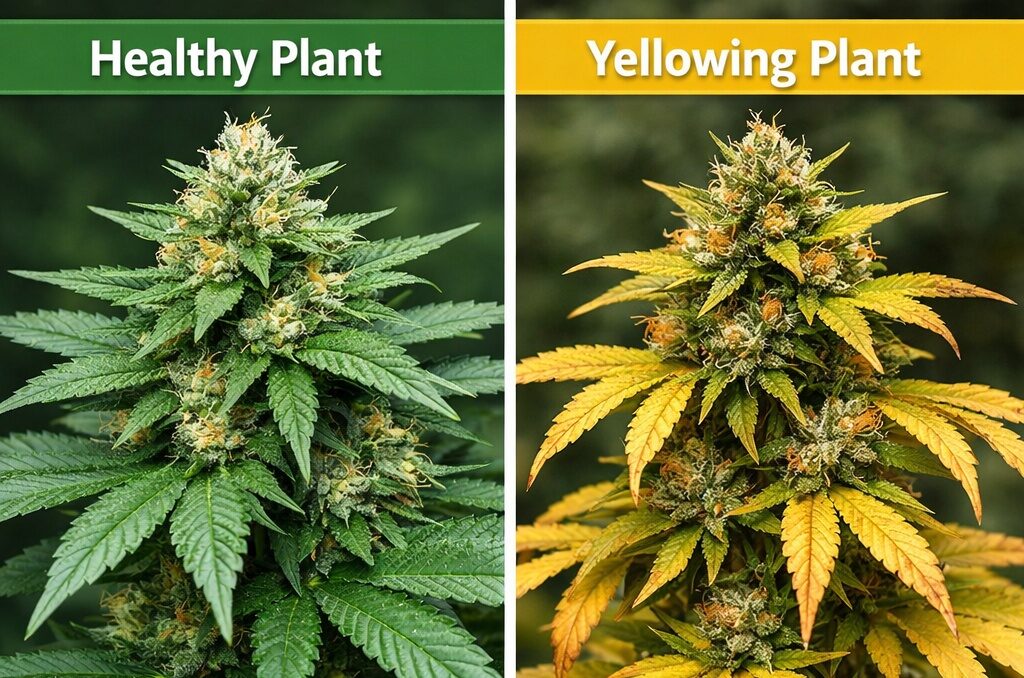
Yellow leaves are one of the most common issues you’ll encounter when growing autoflowers. In some cases, yellowing is completely normal and simply reflects the plant’s natural aging process. In others, it can be an early warning sign of nutrient deficiencies, watering problems, root-zone stress, pH imbalances, or environmental issues that may affect growth and final yields.
One of the challenges with diagnosing yellow leaves is that several different problems can produce similar symptoms. Over the years, I’ve found that the location of the yellowing, the stage of growth, and how quickly the discoloration spreads often reveal far more than the color itself. A few yellow fan leaves late in flowering may be nothing to worry about, while widespread yellowing during vegetative growth usually requires closer attention.
This guide explains the most common reasons autoflower leaves turn yellow, how to identify the cause based on visible symptoms, and the practical steps you can take to correct the issue and keep your plants healthy from seed to harvest.
- Why Are My Autoflower Leaves Turning Yellow? Understanding the Basics
- Common Causes of Yellow Leaves on Autoflowers
- Cannabis Root and Plant Health Issues That Lead to Yellowing
- Autoflower Leaves Turning Yellow During Flowering: What’s Normal?
- How to Fix Yellow Leaves on Autoflower Cannabis Plants
- Frequently Asked Questions
Article Insights
- Correct diagnosis is more important than adding nutrients. Growth stage, leaf location, and the pattern of yellowing often reveal the underlying cause.
- Yellow leaves are often linked to nutrient uptake issues, but overwatering, root stress, pH imbalances, and environmental conditions can produce similar symptoms.
- The location of yellowing is one of the most useful diagnostic clues. Lower leaves often point to nitrogen deficiency or root-zone issues, while upper-leaf yellowing may indicate heat, light, or micronutrient-related stress.
- Overwatering is one of the most common causes of yellowing in young autoflowers, often creating deficiency-like symptoms even when nutrients are present in the growing medium.
- pH levels outside the optimal range can lead to nutrient lockout, preventing plants from absorbing essential nutrients and causing visible deficiency symptoms.
- Some yellowing during the final weeks of flowering is completely normal as autoflowers redirect stored nutrients toward flower development.
Why Are My Autoflower Leaves Turning Yellow? Understanding the Basics
Yellowing leaves can be frustrating because the same symptom can be caused by several different issues. In some cases, yellowing is a normal part of the plant’s lifecycle. In others, it may indicate a nutrient imbalance, root-zone problem, watering issue, or environmental stress that requires attention.
To understand why cannabis leaves turn yellow, it helps to know what gives them their healthy green colour. Cannabis leaves contain chlorophyll, a pigment responsible for photosynthesis. Through photosynthesis, autoflower plants convert light into energy that fuels root development, leaf production, stem growth, and flower formation. When chlorophyll levels decline, leaves begin to lose their green colour and gradually turn yellow.
There are several reasons why autoflower leaves yellow, ranging from natural ageing to nutrient deficiencies, environmental stress, root problems, and watering mistakes. Identifying the cause early can help prevent stunted growth, reduced yields, and unnecessary plant stress.
Yellow leaves are one of the most common issues you’ll encounter when growing autoflowers, especially if you’re new to growing cannabis.
When Yellow Leaves Are Normal in Autoflowers
Not all yellowing is a sign of poor plant health. As autoflower plants approach harvest, it is normal for older fan leaves to fade from green to yellow. This process, known as senescence, occurs when the plant redirects stored nutrients from older leaves into developing flowers.
Autoflower leaves turning yellow during flowering is often expected during the final few weeks before harvest, especially when yellowing starts on the lowest fan leaves and gradually moves upward. In these cases, the plant is simply reaching the end of its natural lifecycle.
When Yellow Leaves Indicate a Problem
If yellowing appears early in the grow cycle or spreads rapidly across the plant, it may indicate an underlying issue that requires attention.
Common causes include:
- Nitrogen deficiency
- Magnesium deficiency
- Calcium deficiency
- Overwatering
- Underwatering
- pH imbalance and nutrient lockout
- Root zone problems
- Heat stress
- Light stress
- Pest infestations
The pattern of yellowing can often reveal the source of the problem. For example, autoflower bottom leaves turning yellow may suggest a nitrogen deficiency, root restriction, or overwatering issue. Autoflower fan leaves turning yellow near the top of the canopy may point to excessive light intensity or heat stress.
How Growth Stage Affects Yellowing in Autoflowers
Unlike photoperiod cannabis plants, autoflowers do not require a change in light schedule to begin flowering. Instead, they transition automatically from vegetative growth into flowering based on age as part of their natural autoflower life cycle. Because autoflowers have a short life cycle, identifying the cause of yellow leaves early can help prevent stress and support healthy development.
The table below provides a quick comparison of what yellowing leaves may indicate during each stage of an autoflower’s life cycle.
| Growth Stage | Typical Duration | Is Yellowing Normal? | Most Common Causes | Action Required |
| Seedling Stage | Days 1–14 | No, yellowing is rarely normal | Overwatering, poor drainage, incorrect pH, cold temperatures, poor growing media | Check watering practices, root health, and environmental conditions |
| Vegetative Stage | Weeks 2–5 | No, healthy leaves should remain green | Nitrogen deficiency, magnesium deficiency, calcium deficiency, pH issues, watering problems, root restriction | Identify nutrient or root-zone issues and correct them quickly |
| Flowering Stage | Weeks 5–12+ (varies by strain) | Yes, in late flowering only | Natural senescence, nitrogen deficiency, potassium deficiency, magnesium deficiency, heat stress, light stress, pH lockout | Determine whether yellowing is natural fading or a sign of a deficiency or environmental problem |
Seedling Stage
The seedling stage typically lasts for the first 10–14 days after germination. During this time, autoflowers focus on establishing roots and producing their first sets of true leaves.
Seedlings should remain healthy and green. Yellowing at this stage is usually caused by environmental or root-zone issues rather than nutrient deficiencies.
Common causes of yellow leaves during the seedling stage include:
- Overwatering and waterlogged soil
- Poor drainage
- Incorrect pH levels
- Cold temperatures or environmental stress
- Low-quality growing media
Since seedlings require very little nutrition, watering practices and root health are often the first areas to investigate when yellowing appears.
Vegetative Stage
During the vegetative stage, autoflowers grow rapidly, developing roots, branches, stems, and fan leaves. This period generally lasts between weeks 2 and 5, depending on genetics.
Nitrogen plays a key role during this stage by supporting chlorophyll production and healthy foliage growth. When nutrient uptake is disrupted, yellowing often begins on older leaves before spreading further.
Common causes of yellow leaves during the vegetative stage include:
- Nitrogen deficiency
- Magnesium deficiency
- Calcium deficiency
- pH imbalance and nutrient lockout
- Overwatering or underwatering
- Root restriction from small containers
If you notice autoflower bottom leaves turning yellow during vegetation, it may indicate a nutrient imbalance, watering issue, or restricted root development that should be addressed before flowering.
Flowering Stage
Once flowering begins, autoflowers direct more energy toward bud production. Their nutrient requirements shift toward higher levels of phosphorus and potassium, while moderate amounts of nitrogen remain important for maintaining healthy foliage.
Autoflower leaves turning yellow during flowering is often normal in the later stages of bloom. As harvest approaches, older fan leaves naturally fade as the plant redirects stored nutrients into developing flowers.
Yellowing that appears early in flowering or progresses rapidly throughout the plant is more likely to indicate an underlying issue.
Common causes of yellow leaves during flowering include:
- Nitrogen deficiency
- Magnesium deficiency
- Potassium deficiency
- pH-related nutrient lockout
- Light stress
- Heat stress
- Root-zone problems
Autoflower fan leaves turning yellow late in flowering is typically part of the natural aging process. In contrast, widespread yellowing during early or mid-flower may affect plant health and reduce yields.
Quick Diagnosis by Growth Stage
| Symptom | Seedling Stage | Vegetative Stage | Flowering Stage |
| Lower leaves turning yellow | Uncommon; often caused by overwatering or root stress | Common sign of nitrogen deficiency or root issues | Often normal during late flowering |
| Upper leaves turning yellow | Usually environmental stress or pH problems | May indicate micronutrient deficiencies or pH lockout | Can indicate light stress, heat stress, or nutrient deficiencies |
| Yellowing between leaf veins | Rare | Often magnesium deficiency | Common sign of magnesium deficiency or nutrient lockout |
| Yellow leaves with brown spots | Possible pH issue or poor growing media | Often calcium deficiency or nutrient lockout | Calcium deficiency, potassium deficiency, or root-zone problems |
| Entire plant turning yellow | Severe root or environmental issue | Significant nutrient deficiency or root problem | Advanced deficiency, root damage, or end-of-life senescence |
The timing and location of yellow leaves provide valuable clues when diagnosing plant problems. By distinguishing natural aging from nutrient, environmental, or root-related issues, you can make informed adjustments and keep autoflowers healthy from seed to harvest.
Common Causes of Yellow Leaves on Autoflowers
Yellow leaves on autoflower cannabis plants can appear for several reasons, including nutrient deficiencies, watering problems, pH imbalance, root stress, pests, disease, or natural aging during late flowering. Because autoflowers have a shorter life cycle than photoperiod plants, problems can progress quickly if they are not diagnosed early.
Autoflower leaves turning yellow should always be assessed by looking at three things: where the yellowing starts, how fast it spreads, and which growth stage the plant is in. Lower leaves turning yellow may point to nitrogen deficiency, overwatering, or root restriction, while yellow spots on cannabis leaves may suggest calcium deficiency, pest damage, or pH-related nutrient lockout.
Nutrient Deficiencies
Nutrient deficiencies are one of the most common causes of yellow leaves on autoflower cannabis plants. Although autoflowers typically require less feeding than photoperiod varieties, they still need a balanced supply of nitrogen, calcium, magnesium, phosphorus, potassium, and trace minerals to support healthy growth.
In our experience, autoflowers often perform best with lighter nutrient schedules, frequently requiring less nutrition than standard photoperiod feeding recommendations.s. As a result, overfeeding is often just as common as underfeeding. In particular, excess nitrogen can cause dark green foliage, clawing leaves, nutrient imbalances, and nutrient lockout, which may produce symptoms that resemble deficiencies.
Common deficiency symptoms include:
- Nitrogen deficiency: Older lower leaves fade from green to pale yellow.
- Magnesium deficiency: Yellowing appears between leaf veins, often on older fan leaves.
- Calcium deficiency: Yellow or rust-coloured spots develop on leaves.
- Potassium deficiency: Leaf edges yellow, brown, or appear burnt.
- Iron deficiency: New growth turns pale yellow while veins remain greener.
Autoflower bottom leaves turning yellow often points to nitrogen deficiency or root-zone stress, especially during vegetative growth and early flowering. However, we’ve found that growers often mistake the natural fading of older fan leaves during early flowering for a deficiency that requires more nutrients. As the plant shifts its energy toward flower production, some yellowing of older leaves can be normal.
Before increasing feed levels, check whether yellowing is limited to older leaves or affecting new growth. Keep in mind that incorrect pH, overwatering, compacted soil, and damaged roots can all restrict nutrient uptake and cause deficiency-like symptoms.
Because autoflowers have a shorter lifecycle than photoperiod plants, nutrient issues can affect development more quickly. Problems that occur during early growth or flowering leave less time for recovery and may impact overall plant performance. Before increasing nutrient levels, it is best to check pH, watering practices, and root health to ensure the plant can absorb available nutrients effectively.
Overwatering and underwatering issues
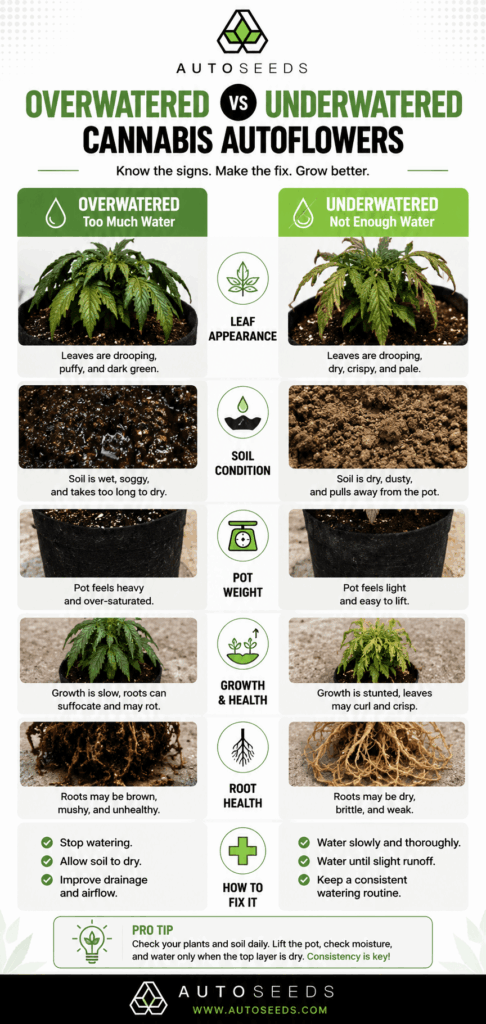
How you water your autoflowers plays a crucial role in how many nutrients they can access and use. There will be times when you accidentally under- or overwater your plants.
Underwatered cannabis plants restrict nutrient uptake and, as a result, are forced to use the available nitrogen from fan leaves. This is why you will see the leaves at the bottom of the plant turn yellow first, compensating for the new growth at the top.
Overwatering creates an oversaturated growing medium that limits oxygen around the roots and slows healthy root development. When roots cannot breathe properly, they struggle to absorb nutrients even when those nutrients are already present in the soil or growing medium.
Based on customer grow reports, overwatering is one of the most common causes of yellowing in young autoflowers. Many new growers see yellow leaves and assume the plant needs more nutrients, but increasing feed levels can make the problem worse if the root zone is already stressed. In many cases, excessive watering causes deficiency-like symptoms before a true nutrient deficiency develops.
As nutrient uptake becomes restricted, nitrogen may become unavailable to the plant. The plant may then begin drawing stored nitrogen from the lowest leaves to support newer growth, causing the bottom leaves to yellow first.
pH imbalance and nutrient lockout explained.
A pH imbalance can prevent autoflower cannabis plants from absorbing nutrients, even when those nutrients are present in the growing medium. This is known as nutrient lockout.
When pH is too high or too low, the plant may show deficiency symptoms such as yellow leaves, yellow spots, pale new growth, or weak development.
As a general guide:
- Soil growers should usually keep pH around 6.0–7.0
- Coco and hydro growers should usually keep pH around 5.5–6.5
If several deficiency symptoms appear at the same time, pH should be checked before increasing nutrients.
Overfeeding and Nutrient Burn
Autoflowers are often more sensitive to heavy feeding than photoperiod plants. Giving too many nutrients can damage the roots, cause nutrient lockout, and lead to yellowing leaves, which are common symptoms of nutrient burn.
Early signs of overfeeding include:
- Dark green leaves
- Burnt leaf tips
- Curling leaf edges
- Yellowing caused by lockout
- Slowed growth
Many autoflower growers start with lighter feeding levels and increase gradually based on plant response. One common mistake I see is treating autoflowers like photoperiod plants when following feeding schedules. In many cases, yellowing that appears after increasing nutrient strength is not caused by a deficiency at all, but by nutrient stress or lockout. Starting with lighter feed levels and increasing gradually is often easier than correcting the effects of overfeeding later in the grow.
While nutrient requirements vary between growers, the table below provides a general guide to feeding intensity throughout the autoflower lifecycle.
| Growth Stage | Recommended Feeding Intensity | Notes |
| Seedling (Week 1–2) | Very Light (25–50% strength) | Seedlings require minimal nutrition and are easily overfed. Many quality soils contain enough nutrition for the first 1–2 weeks. |
| Early Vegetative Growth | Light (50–75% strength) | Increase feeding gradually as root development and leaf production accelerate. |
| Late Vegetative Growth | Moderate (60–80% strength) | Monitor leaf color and growth rate before increasing nutrient levels further. |
| Early Flowering | Moderate (60–80% strength) | Maintain some nitrogen while introducing bloom nutrients to support the transition into flowering. |
| Mid Flowering | Moderate to Full Strength (75–100%) | Nutrient demand is often highest during peak flower development, but many autoflowers still perform well below full-strength schedules. |
| Late Flowering | Light to Moderate (50–75% strength) | Nutrient requirements often decrease as plants approach harvest and natural leaf fading begins. |
Light stress, heat stress, and environmental factors
Autoflower fan leaves turning yellow near the top of the plant may be caused by too much light, excessive heat, or poor airflow. Leaves closest to the grow light may fade, curl upward, become dry, or develop pale yellow patches.
Common signs include:
- Yellowing at the top of the canopy
- Crispy leaf edges
- Leaves praying sharply upward or curling
- Dry, brittle foliage
- Heat-damaged upper fan leaves
Improving airflow, reducing light intensity, or increasing the distance between the canopy and grow light can help reduce stress.
Natural Yellowing During Late Flowering
Autoflower leaves turning yellow during flowering can be normal when it happens late in bloom. As harvest approaches, older fan leaves may fade as the plant redirects stored nutrients toward bud development.
Late-flower yellowing is usually normal when:
- It starts on older lower fan leaves
- The plant is close to harvest
- Buds are still developing normally
- Yellowing happens gradually
Yellowing is more concerning when it appears early in flowering, spreads quickly, affects new growth, or appears with brown spots, curling, wilting, or slow bud development.
Cannabis Root and Plant Health Issues That Lead to Yellowing
Healthy roots are essential for healthy autoflowers. Every nutrient and drop of water the plant uses must first pass through the root zone. When root health is compromised, nutrient uptake becomes less efficient, growth slows, and leaves may begin turning yellow even when adequate nutrients are available in the growing medium.
Because autoflowers have a short life cycle, root-related problems can affect plant development quickly. Identifying the underlying cause early can help prevent unnecessary stress and protect overall plant performance.
Root Restriction, Transplant Stress, and Root Rot
One of the most common causes of yellowing in autoflowers is root stress. Healthy roots are essential for water absorption, nutrient uptake, and steady growth. When roots become restricted or damaged, plants can quickly show signs of stress, including yellowing lower leaves, drooping foliage, and slowed development.
Root restriction often occurs when containers are too small, the growing medium becomes compacted, or roots cannot expand freely. This limits access to oxygen, water, and nutrients, which can lead to weak growth and yellow leaves.
Autoflowers are especially sensitive to root-zone stress because they flower based on age rather than light cycle changes. Unlike photoperiod plants, they cannot extend their vegetative stage to recover from setbacks. Through growing and testing autoflower cultivars, we’ve consistently found that plants establish stronger early growth when roots are allowed to develop without interruption. While successful transplants are certainly possible, unnecessary root disturbance during the first few weeks can slow development at a stage when autoflowers have very little time to recover before flowering begins. Even minor transplant shock can reduce nutrient uptake, slow root expansion, and ultimately affect plant size and yield.
Root rot is another serious cause of yellowing. It is commonly linked to pathogens such as Pythium, Fusarium, and Phytophthora, which thrive in waterlogged, low-oxygen media.
Common symptoms include yellowing lower leaves, stunted growth, wilting despite moist soil, drooping foliage, and reduced flower development. Healthy roots should be white or cream-colored and firm, while diseased roots often appear brown, soft, or slimy.
Pest Damage and Plant Diseases
In some cases, yellow leaves are caused by pests feeding directly on plant tissue. Damage from insects can interfere with photosynthesis and leave visible discoloration across the leaf surface.
Common pests include:
- Aphids, which feed on plant sap and weaken foliage
- Thrips, which create silvery streaks that may turn yellow or bronze
- Whiteflies, which often leave pale yellow patches on leaves
- Spider mites, which cause tiny yellow speckles across the leaf surface
Diseases can produce similar symptoms. Fusarium wilt disrupts water movement within the plant, while Botrytis (bud rot) damages flowers and may cause nearby leaves to yellow. powdery mildew can also weaken plant health if left untreated.
Regular inspection of leaves and stems is one of the best ways to identify pest or disease problems before they become severe.
How Growing Media Affects Root Health
The structure of the growing medium plays a major role in root development. Autoflowers perform best in light, well-draining media that allow roots to access both moisture and oxygen.
Dense or compacted soil can restrict root growth, limit oxygen availability, and create conditions that favor harmful pathogens. This often leads to slower growth, weaker plants, and reduced nutrient uptake.
Many growers improve soil aeration by incorporating materials such as perlite, pumice, or compost into the growing medium. Creating a healthy root environment from the start helps support vigorous growth and reduces the risk of yellowing leaves throughout the autoflower life cycle.
Autoflower Leaves Turning Yellow During Flowering: What’s Normal?
Seeing autoflower leaves turn yellow during flowering can be worrying, but it is not always a sign that something is wrong. In my experience, gradual yellowing of older fan leaves during the final few weeks before harvest is often a natural part of the plant’s lifecycle. As buds mature, the plant begins redirecting stored nutrients from older leaves into flower production, causing those leaves to fade from green to yellow over time.
The timing of yellowing is what matters most. If it starts late in flowering and progresses slowly from the lower leaves upward, it is usually nothing to be concerned about. However, yellowing that appears during early or mid-flowering deserves closer attention.
Because autoflowers have a short lifecycle and flower according to age, they have limited time to recover from nutrient deficiencies, root-zone issues, overwatering, or environmental stress. I’ve found that problems that develop during early bloom can affect plant size, bud development, and overall yield much more quickly than many growers expect.
If yellowing spreads rapidly, affects newer growth, or appears alongside symptoms such as brown spots, curled leaves, wilting, or stalled bud development, it is usually a sign that the plant is under stress rather than naturally approaching harvest. Identifying the cause early gives autoflowers the best chance to maintain healthy flower development and reach their full potential before harvest.
Why Yellow Leaves During Flowering Can Be Expected
As autoflowers move deeper into flowering, their energy shifts from leaf and stem growth toward bud production. Older fan leaves may slowly lose color as the plant uses stored nutrients to support ripening flowers.
This is most common in the final few weeks before harvest. If the buds are developing well, the yellowing is gradual, and the newer growth remains healthy, some fading is usually part of the natural life cycle.
Late-flower yellowing is more likely to be normal when:
- It starts on older lower fan leaves
- It progresses slowly
- Bud growth remains strong
- Newer leaves stay mostly healthy
- The plant is close to harvest
A fully green plant at harvest can also be normal, especially when nutrition and root health remain stable throughout flowering.
When Yellowing During Flowering Signals a Problem
Yellowing becomes more concerning when it appears too early, spreads quickly, or affects the whole plant. Autoflower fan leaves turning yellow in early or mid-flower may indicate a deficiency, pH-related nutrient lockout, root stress, or environmental pressure.
Warning signs include:
- Rapid yellowing across multiple leaves
- Yellowing during early flowering
- Pale new growth
- Yellow leaves with brown or rust-colored spots
- Wilting, curling, or crispy leaf edges
- Slowed bud development
Lower leaves turning yellow can suggest nitrogen deficiency, root restriction, or overwatering. Yellowing between leaf veins often points to magnesium deficiency, while yellow spots on cannabis leaves may be linked to calcium deficiency, pest damage, or pH imbalance.
How Nutrient Needs Change During Flowering
During flowering, autoflowers need more phosphorus and potassium to support bud formation, but they still require moderate nitrogen for healthy leaf function and continued growth. Completely cutting off nitrogen too early can cause premature yellowing and may reduce plant performance.
A better approach is to gradually reduce nitrogen as flowering progresses while maintaining a balanced bloom feed. Autoflowers are often sensitive to heavy feeding, so many growers use lighter nutrient strengths and increase only when the plant shows it can handle more.
The goal is not to force yellow leaves, but to keep the plant healthy while flowers mature. Gradual fading near harvest can be normal; widespread yellowing too early usually means the plant needs closer attention.
How to Fix Yellow Leaves on Autoflower Cannabis Plants
Autoflower leaves turning yellow can often be corrected once the underlying cause is identified. While some yellowing during late flowering is a natural part of the plant’s life cycle, yellow leaves that appear during the seedling stage, vegetative growth, or early flowering usually indicate a problem that needs attention.
The most important step is accurate diagnosis. Yellowing can result from watering issues, nutrient deficiencies, pH-related nutrient lockout, root-zone stress, environmental conditions, pests, or disease. Because many of these problems produce similar symptoms, it is important to identify the root cause before making changes to your feeding or growing routine.
How to Diagnose Yellow Leaves
Before taking corrective action, ask yourself:
- Which leaves are turning yellow first?
- Did the yellowing appear suddenly or gradually?
- Is the plant in the seedling, vegetative, or flowering stage?
- Are there spots, discoloration, or signs of pest damage?
- Have there been any recent changes to watering, nutrients, temperature, or lighting?
One mistake we frequently see from newer growers is reacting to the yellow color itself rather than the pattern of yellowing. The location of the affected leaves often provides more useful information than the color alone. Whether yellowing starts on lower leaves, upper growth, leaf margins, or between veins can dramatically narrow down the possible causes before any corrective action is taken.
For example, autoflower bottom leaves turning yellow often points to nitrogen deficiency, overwatering, or root stress. Yellow spots on cannabis leaves are more commonly associated with pests, calcium deficiency, or pH imbalance.
Common Causes of Yellow Leaves and How to Fix Them
| Problem | Common Symptoms | How to Fix It |
| Overwatering | Drooping leaves, slow growth, yellow lower leaves | Allow the growing medium to dry between waterings and improve drainage. |
| Underwatering | Dry, limp leaves, slow growth, yellowing foliage | Water more consistently while avoiding waterlogged conditions. |
| pH Imbalance | Multiple deficiency symptoms, widespread yellowing | Maintain pH between 6.0–7.0 in soil and 5.5–6.5 in coco or hydro. |
| Nitrogen Deficiency | Older leaves yellow first, pale foliage | Increase nitrogen during vegetative growth and early flowering if needed. |
| Heat or Light Stress | Yellowing near the canopy, curled or brittle leaves | Improve airflow, lower temperatures, or adjust light intensity and distance. |
| Root Problems | Stunted growth, wilting, yellow leaves despite feeding | Use well-aerated media, avoid transplant stress, and ensure proper drainage. |
| Root Rot | Wilting in wet soil, brown roots, declining vigor | Reduce overwatering and improve oxygen levels around the root zone. |
| Pests | Yellow spots, speckling, damaged leaf tissue | Inspect leaves regularly and treat infestations early with appropriate controls. |
Why Root Health Matters for Autoflowers
Autoflowers are particularly sensitive to root-zone problems because they have a limited vegetative period. Root restriction, transplant stress, poor drainage, or root rot can reduce nutrient uptake and cause leaves to yellow quickly. Unlike photoperiod plants, autoflowers have less time to recover from root damage before flowering begins.
Using appropriately sized containers, a light and well-aerated growing medium, and proper watering practices helps support healthy root development throughout the grow cycle.
Can Yellow Autoflower Leaves Turn Green Again?
In some cases, yellow leaves can partially recover if the underlying issue is corrected quickly. However, severely damaged leaves rarely regain their original color. Instead of focusing on older leaves, monitor new growth.
Healthy green new leaves are usually the best sign that the problem has been resolved and that your autoflower is growing normally again.
Adjusting Nutrients, Watering, and pH Levels
Once you identify the cause of yellow leaves, correcting your feeding, watering, and pH practices can help restore healthy growth. Autoflowers are particularly sensitive to stress, so even minor mistakes can affect plant health and development.
When selecting autoflower nutrients, use the nutrient manufacturer’s recommendations as a starting point, but adjust based on how the plant responds. Many autoflower varieties require lighter feeding than photoperiod plants, especially during the seedling and early vegetative stages.
For optimal nutrient uptake:
- Maintain a pH range of 6.0–7.0 in soil.
- Maintain a pH range of 5.5–6.5 in coco or hydroponic systems.
- Use a calibrated pH meter for accurate readings.
- Monitor EC or PPM levels in hydroponic setups.
- Increase or decrease nutrient strength gradually while following an autoflower feeding schedule that matches the plant’s stage of growth.
Proper watering is equally important. Overwatering can reduce oxygen around the roots, while underwatering limits nutrient transport. A simple method is to water when containers feel noticeably lighter than they do immediately after irrigation.
Improving Light, Temperature, and Airflow
Environmental stress is a common cause of autoflower leaves turning yellow. Excessive light intensity, high temperatures, and poor airflow can all contribute to discoloration and reduced growth.
If upper leaves appear faded, curled, or brittle, the grow light may be too intense or positioned too close to the canopy. Adjusting light height or intensity can often resolve the issue.
Good airflow helps regulate temperature, strengthen stems, and reduce the risk of fungal diseases. To improve growing conditions:
- Maintain stable temperatures.
- Use oscillating fans to circulate air.
- Ensure adequate ventilation and fresh air exchange.
- Avoid overcrowding plants.
- When to Remove Yellow Leaves
Not all yellow leaves should be removed immediately. Leaves that still contain green tissue can continue supporting the plant by storing and moving nutrients.
However, fully yellow, brown, damaged, or diseased leaves can be removed to improve airflow and reduce the risk of pests and pathogens.
Consider removing leaves that are:
- Fully yellow or brown
- Dry and brittle
- Touching the growing medium
- Restricting airflow
- Showing signs of disease or severe pest damage
Avoid removing large amounts of healthy foliage at once, especially during flowering when autoflowers have limited time to recover from stress.
Frequently Asked Questions
Why are my autoflower leaves turning yellow?
Autoflower leaves can turn yellow for several reasons, including nutrient deficiencies, overwatering, underwatering, pH imbalance, root-zone stress, pests, or natural aging during late flowering. Identifying which leaves are affected and when the yellowing started is the best way to determine the cause.
Is it normal for autoflower leaves to turn yellow during flowering?
Yes, some yellowing during late flowering is normal. As harvest approaches, older fan leaves often fade as the plant redirects stored nutrients toward flower development. However, rapid yellowing during early or mid-flowering may indicate a nutrient, root, or environmental issue that requires attention.
Why are the bottom leaves on my autoflower turning yellow?
Autoflower bottom leaves turning yellow is commonly caused by nitrogen deficiency, overwatering, root restriction, or natural aging. If the plant is still in vegetative growth or early flowering, the yellowing is more likely related to nutrient uptake or root health rather than natural senescence.
What causes yellow spots on cannabis leaves?
Yellow spots on cannabis leaves are often linked to spider mites, thrips, calcium deficiency, magnesium deficiency, or pH-related nutrient lockout. Inspect the leaves closely for signs of pests and check that your pH levels are within the correct range for your growing medium.
Can yellow cannabis leaves turn green again?
Mild yellowing may improve if the underlying problem is corrected quickly. However, leaves that are completely yellow or heavily damaged rarely regain their original color. Healthy new growth is usually the best indicator that the issue has been resolved.