
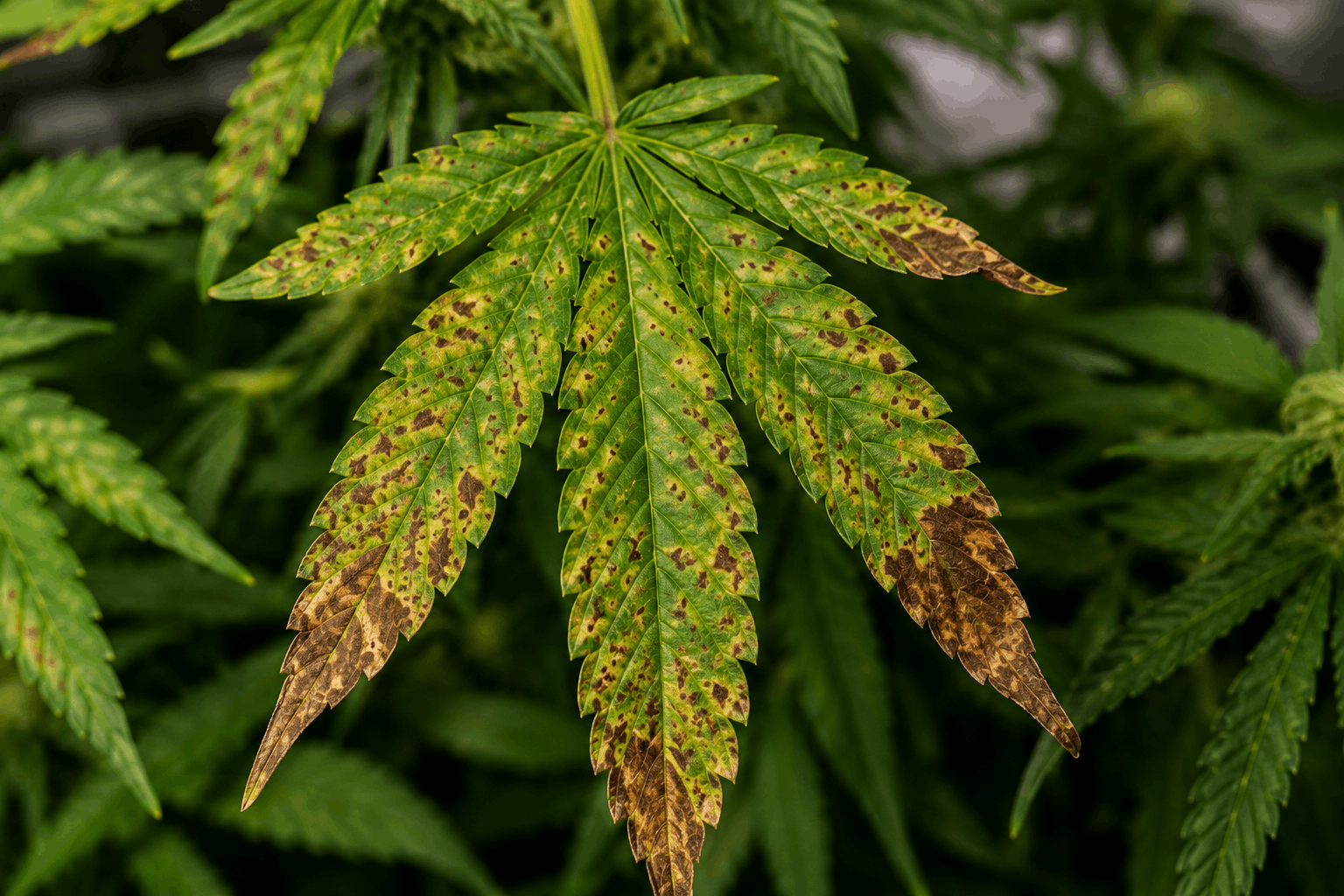
Brown Spots on Autoflower Leaves: Causes, Symptoms, Fixes, and Prevention
Brown spots on autoflower leaves are often an early sign that something is affecting your plant’s health. While a few spots may seem harmless, they can spread quickly if the underlying issue is not addressed. Common causes include nutrient deficiencies, pH imbalances, overwatering, environmental stress, pests, and disease.
For autoflower growers, early diagnosis is especially important. Unlike photoperiod plants, autoflowers have a shorter lifecycle and less time to recover from stress. Problems during the seedling or vegetative stage can slow growth, reduce plant size, and impact final yields.
One challenge is that brown spots can have several different causes. Similar symptoms may result from calcium deficiencies, nutrient lockout, light stress, watering mistakes, or pest damage. Identifying the correct cause is key to applying the right solution.
In this guide, you’ll learn the most common causes of brown spots on autoflower leaves, how to diagnose them accurately, and the best ways to fix and prevent them.
Article Insights
- Brown spots on autoflower leaves are most commonly caused by nutrient deficiencies, pH imbalances, overwatering, light stress, pests, or disease.
- Autoflowers are less forgiving than photoperiod plants, making early diagnosis essential to prevent reduced growth and lower yields.
- Calcium, magnesium, and potassium deficiencies can all cause brown spotting, but the location and pattern of damage often reveal the underlying issue.
- Brown spots that develop during the seedling stage can have a greater impact on autoflowers due to their shorter vegetative period and limited recovery time.
- Healthy new growth is the best sign of recovery. Existing brown spots will not disappear, but correcting the root cause should prevent further damage.
What Do Brown Spots on Cannabis Leaves Mean?
Brown spots on cannabis leaves are often one of the first visible signs that a plant is under stress. In some cases, what appears to be a brown spot may simply be dried nutrient residue left behind after foliar spraying or feeding. If the mark wipes away easily, there is usually no cause for concern. However, when brown spots develop within the leaf tissue itself, they typically indicate that the plant is struggling with nutrient uptake, environmental conditions, pest activity, or disease.
For autoflower growers, these symptoms should never be overlooked. Unlike photoperiod plants, autoflowers have a shorter vegetative stage and less time to recover from setbacks. Identifying leaf damage early can help prevent minor issues from affecting plant growth, flowering performance, and final yields.
What Brown Spots Can Tell You About Plant Health
The appearance and location of brown spots can provide important clues about a plant’s health. While an occasional spot is not always a concern, spotting that spreads or appears on multiple leaves usually indicates an underlying issue.
Brown spots rarely develop in isolation. Slower growth, reduced vigor, pale foliage, or slight leaf distortion often appear first. Rather than focusing on the spots themselves, view them as a symptom that something in the root zone, feeding program, or growing environment needs attention.
Brown Spots, Yellow Leaves, and Rust Spots: What’s the Difference?
Leaf discoloration can appear in several forms, and understanding the differences can help narrow down the source of the problem.
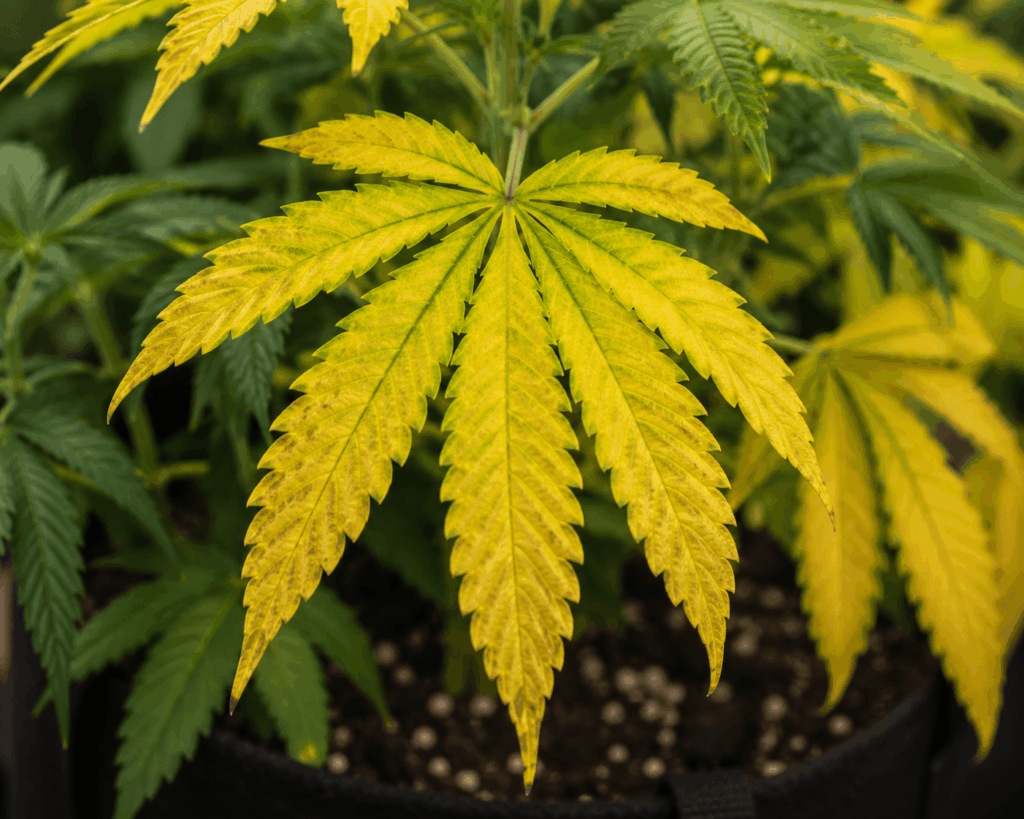
Yellow Leaves with Brown Spots
When yellowing develops alongside brown spotting, the issue often affects the plant’s ability to absorb or use nutrients efficiently. The yellowing usually appears first before brown lesions begin forming across the affected leaf surface.
Autoflower leaves turning yellow with brown spots is a common symptom growers notice during periods of rapid growth, when nutrient demand increases and underlying issues become more visible.
Brown Spots
Brown spots typically appear as small dots, patches, or lesions scattered across the leaf surface. They may remain isolated or gradually expand as the underlying problem progresses. The shape, size, and distribution of these spots can vary significantly depending on the cause.
Rust Spots
Rust spots usually have a darker orange-brown appearance and often resemble tiny specks of corrosion across the leaf tissue. These spots tend to stand out more clearly against green foliage and are frequently mistaken for standard brown spotting during the early stages of development.
How to Identify Early and Advanced Leaf Damage
Regular leaf inspections are one of the simplest ways to catch problems before they spread throughout a crop. This is especially important when growing autoflowers, where recovery time is limited.
The table below highlights the key differences between early and advanced leaf damage, making it easier to determine how serious the issue has become.
| Early Signs of Leaf Damage | Advanced Signs of Leaf Damage |
| Small discolored specks appearing on individual leaves | Large brown patches spreading across the leaf surface |
| Tiny rust-colored markings that were not present previously | Leaves becoming dry, brittle, or crispy to the touch |
| Slight yellowing around leaf edges or between veins | Multiple leaves displaying identical symptoms |
| Minor browning at the tips of leaflets | Dark lesions with clearly defined edges |
| Reduced leaf vibrancy compared to healthy growth | Drooping foliage accompanied by widespread spotting |
In the early stages, damage is usually localized and easier to correct. As the problem progresses, symptoms become more widespread and recovery becomes more difficult.
Once leaf tissue turns brown, it will not return to its original color. The goal is to stop the damage from spreading and encourage healthy new growth.
Common Causes of Brown Spots on Cannabis Leaves
Once brown spots begin appearing on cannabis leaves, the next step is determining what is causing them. While the symptoms may look similar at first glance, the underlying cause can vary significantly. Nutrient deficiencies, pH imbalances, watering mistakes, and environmental stress can all produce brown spotting, but each issue develops differently and requires a different solution.
One of the most effective ways to diagnose brown spots on cannabis leaves is to look beyond the spots themselves. The age of the affected leaves, the location of the damage, the growing environment, and recent feeding or watering practices often provide more useful clues than the spots alone.
Nutrient Deficiencies Causing Brown Spots on Cannabis Leaves
Nutrient deficiencies are among the most common reasons growers notice brown spots on cannabis leaves. While several nutrients can contribute to leaf damage, calcium, magnesium, and potassium deficiencies are responsible for a large percentage of cases.
Calcium Deficiency
Calcium plays an important role in cell development and healthy new growth. When calcium becomes unavailable, small brown spots often appear on younger leaves first. New growth may also become twisted, distorted, or develop irregular edges.
Brown spots on autoflower leaves are frequently linked to calcium availability rather than a complete lack of calcium in the growing medium. Fast-growing autoflowers can quickly outpace nutrient uptake if root conditions, pH levels, or watering practices are not optimal.
In our experience testing autoflower genetics, calcium-related issues are far more common than true calcium deficiencies. We regularly see growers increase Cal-Mag supplementation when the real problem is root-zone pH, inconsistent watering, or poor root development. Before increasing calcium levels, it is worth confirming that the plant can actually access the nutrients already present in the growing medium.
Magnesium Deficiency
Magnesium is essential for chlorophyll production and healthy photosynthesis. When levels become insufficient, leaves often begin to lose their green colour before developing brown or rust-coloured spots.
In many cases, autoflower leaves turning yellow with brown spots is an indication that magnesium uptake has been restricted. Older fan leaves are usually affected first, as the plant redirects available magnesium towards new growth.
One issue we frequently encounter during troubleshooting is growers treating yellowing leaves and rust spots as a calcium deficiency when magnesium uptake is actually the problem. Looking at which leaves are affected first often provides a faster diagnosis than increasing nutrient levels and hoping the symptoms improve.
Potassium Deficiency
Potassium supports water regulation, nutrient movement, and flower development. Deficiencies typically appear around the leaf margins, where the edges begin to yellow before turning brown and crispy.
This issue is more commonly seen during flowering when nutrient demand increases. Autoflower plants entering bloom can develop potassium deficiencies quickly if feeding schedules are not adjusted to support flower production.
Nutrient Deficiency Comparison Table
| Deficiency | Where Symptoms Appear First | Common Symptoms | Most Common Growth Stage |
| Calcium | New growth and upper leaves | Small brown spots, distorted leaves, irregular growth | Vegetative growth and early flowering |
| Magnesium | Older fan leaves | Yellowing between veins, rust spots, brown patches | Mid to late vegetative growth |
| Potassium | Leaf edges and margins | Yellowing edges, brown crispy tips, scorched appearance | Flowering stage |
This comparison can help narrow down the cause of brown spots on cannabis leaves before making changes to your feeding programme. Looking at which leaves are affected first is often one of the quickest ways to distinguish between nutrient deficiencies.
pH Imbalance and Nutrient Lockout
It is easy to assume that brown spots mean nutrients need to be added. In reality, nutrients are often present but unavailable due to incorrect pH levels.
When the root zone falls outside the ideal pH range, certain nutrients become difficult for the plant to absorb. This process, known as nutrient lockout, can create symptoms that closely resemble a deficiency even when nutrients are readily available in the soil or nutrient solution.
For healthy nutrient uptake:
- Soil-grown cannabis performs best between pH 6.0 and 7.0
- Hydroponic systems generally require pH 5.5 to 6.5
- Digital pH meters provide the most reliable readings
Because autoflowers have a shorter life cycle, prolonged nutrient lockout can impact development much faster than it would in photoperiod plants. Small pH fluctuations that might only slow a photoperiod crop can quickly result in autoflower brown spots and stalled growth.
pH Imbalance Symptoms Comparison
| pH Issue | Likely Result | Visible Symptoms | Impact on Autoflowers |
| pH too low | Reduced calcium, magnesium, and phosphorus uptake | Brown spots, yellowing leaves, slow growth | Rapid symptom development due to shorter lifecycle |
| pH too high | Reduced iron, manganese, and phosphorus uptake | Pale new growth, nutrient deficiencies, brown spotting | Can quickly affect flowering performance |
| Fluctuating pH | Inconsistent nutrient availability | Multiple deficiency symptoms appearing at once | Increased risk of stunted growth and reduced yields |
A pH problem can often mimic several nutrient deficiencies at the same time. Before increasing nutrient strength, it is always worth checking the pH of the root zone to rule out nutrient lockout.
Overwatering, Underwatering, and Root Stress
Healthy roots are responsible for supplying water, oxygen, and nutrients to every part of the plant. When root health declines, leaf symptoms often appear soon afterwards.
Overwatered cannabis plants often develop symptoms that resemble nutrient deficiencies because oxygen availability around the roots becomes restricted.. Excess moisture fills the air pockets within the growing medium, reducing oxygen levels around the roots. As root function slows, nutrient uptake becomes less efficient and brown spotting may begin to develop.
Autoflowers are particularly vulnerable because they spend less time recovering from stress. Repeated overwatering during the early stages of growth can limit root development and affect the plant throughout its entire lifecycle.
Underwatering can create similar problems for different reasons. When roots repeatedly experience dry conditions, nutrient transport slows and growth becomes restricted. Plants may appear weak, leaves can lose their healthy sheen, and brown spotting may develop as deficiencies begin to appear.
One pattern we frequently see from growers contacting us for support is that early overwatering is often mistaken for a nutrient deficiency. The leaves begin developing spots, growth slows, and nutrients are added unnecessarily. In many cases, allowing the root zone to dry properly between irrigations resolves the issue without changing the feeding program.
A healthy watering routine should encourage both moisture retention and oxygen availability within the root zone.
Overwatering vs Underwatering Comparison
| Issue | Leaf Appearance | Growing Medium | Plant Growth |
| Overwatering | Drooping leaves that feel heavy or swollen, brown spots may develop | Constantly wet, dense, and slow to dry | Slow growth, poor nutrient uptake, increased risk of root disease |
| Underwatering | Thin, limp leaves that feel dry and brittle | Dry, lightweight, and pulling away from container edges | Stunted growth, nutrient deficiencies, reduced vigour |
| Healthy Watering | Upright leaves with good colour and structure | Moist but well-aerated between waterings | Consistent growth and healthy nutrient uptake |
For autoflower growers, establishing a consistent watering routine early is especially important. Healthy root development during the first few weeks is essential for vigorous growth later in the lifecycle and plays a major role in determining final plant size and productivity.
Light Burn and Environmental Stress
Environmental stress can also cause brown spots to develop, especially on leaves closest to the light source.
Modern LED grow lights are capable of producing extremely high light intensity levels. When plants receive more light than they can effectively utilise, the upper leaves may begin to show signs of stress, including yellowing, bleaching, and brown spotting.
One pattern often seen in indoor gardens is that damage remains concentrated near the top of the canopy while lower growth appears healthy. This usually points towards excessive light intensity rather than a nutrient issue.
Heat stress can worsen the problem further. High temperatures increase transpiration rates, placing additional pressure on nutrient uptake and water movement throughout the plant.
Maintaining stable environmental conditions helps reduce the risk of stress-related damage:
- Keep canopy temperatures within an appropriate range for the growth stage
- Maintain consistent airflow throughout the grow space
- Position grow lights according to manufacturer recommendations
- Monitor humidity levels to support healthy transpiration
When environmental conditions remain stable, autoflower plants are far less likely to develop stress-induced brown spots on their leaves.
During indoor testing, we often find that light-related spotting is first noticed on the highest leaves while the rest of the plant remains healthy. This can easily be mistaken for a nutrient issue, but checking canopy distance and light intensity usually resolves the problem faster than adjusting the feeding program.
Autoflower Seedling Brown Spots: Causes and Early-Stage Issues
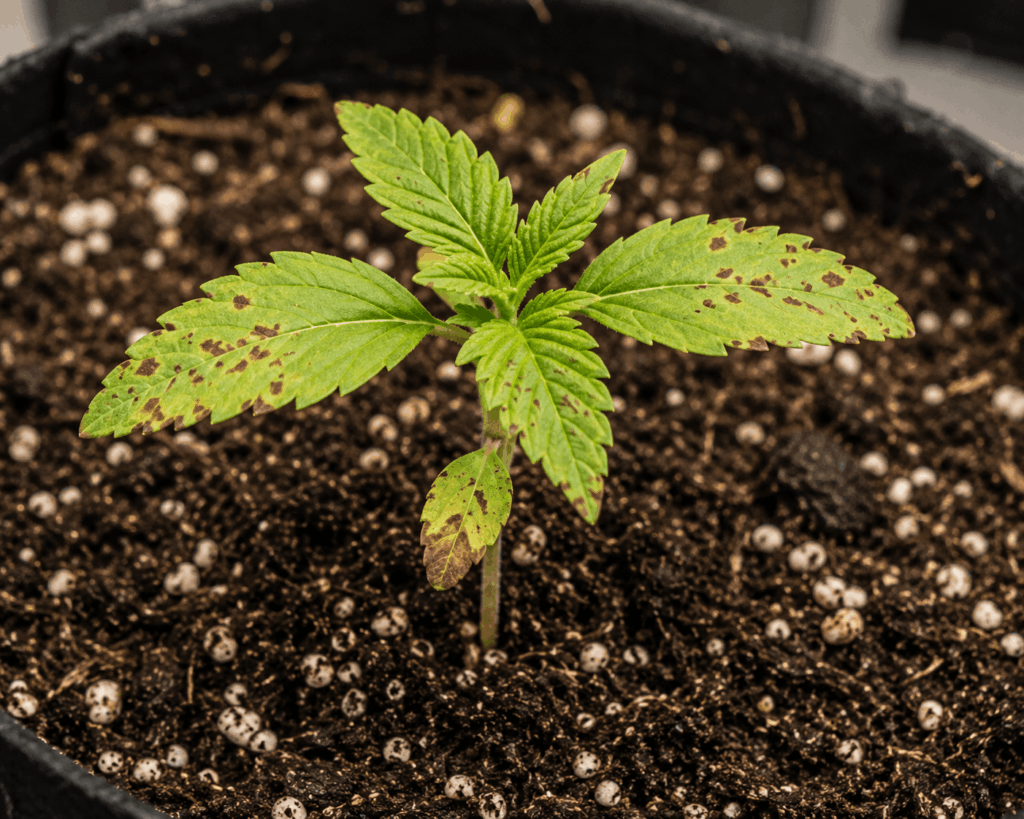
Brown spots can appear at any stage of a cannabis plant’s lifecycle, but they are often more concerning when they develop on seedlings. Young plants have small root systems, limited nutrient reserves, and less tolerance for stress than mature plants, which is why many growers choose easy autoflower strains when learning to grow autos.
For autoflower growers, early problems are particularly important. Because autoflowers flower according to age rather than light schedule, lost growth during the seedling stage can reduce overall plant size and yield potential.
During cultivar testing, we have found that seedlings generally recover well from minor spotting when the cause is corrected quickly. The biggest losses tend to come from prolonged stress during the first two to three weeks of growth, when root development is establishing the foundation for the plant’s entire lifecycle.
Brown Spots at Different Growth Stages
| Growth Stage | Most Common Causes | Why It Matters |
| Seedling | Overwatering, overfeeding, incorrect pH, excessive light intensity | Can slow root development and stunt early growth |
| Vegetative | Calcium or magnesium deficiencies, pH fluctuations, root stress | Rapid growth increases nutrient demand |
| Flowering | Potassium deficiencies, nutrient lockout, environmental stress | Can affect bud development and overall plant health |
Why Seedling Brown Spots Need Attention
Cannabis seedling brown spots are often caused by environmental or root-zone stress rather than a true nutrient deficiency. At this stage, seedlings require very little feeding, making overwatering and overfeeding two of the most common mistakes.
Healthy root development during the first few weeks is essential for vigorous growth later in the lifecycle. When stress limits root expansion, plants may struggle to reach their full potential.
Can Autoflower Seedlings Recover?
In most cases, yes. Once the underlying issue has been corrected, healthy new growth should appear within a few days. Existing spots will not disappear, but they should stop spreading.
How to Fix Brown Spots on Autoflower Leaves and Prevent Them
Once brown spots begin appearing on autoflower leaves, the priority is to identify and correct the underlying issue before it affects healthy new growth. Existing brown spots will not disappear, but new leaves should emerge without symptoms once the problem has been resolved.
One mistake growers often make is trying to fix multiple issues at the same time. Increasing nutrients, adjusting pH, changing watering schedules, and moving lights all at once can create additional stress and make it difficult to identify what was actually causing the problem. For autoflowers, gradual corrections are usually the safest approach.
How to Fix Brown Spots on Autoflower Leaves
Before making any adjustments, work through the checklist below.
| Check | What to Look For | Recommended Action |
| pH Levels | Root zone outside the correct range | Correct pH before increasing nutrients |
| Nutrient Strength | Recent feeding increases or nutrient burn | Reduce feed strength and monitor new growth |
| Watering Habits | Constantly wet or extremely dry growing medium | Adjust watering frequency |
| Light Intensity | Brown spots only on upper leaves | Raise the light or reduce intensity |
| Pest Activity | Spots, trails, or insects on leaves | Treat pests before they spread |
| Environment | High temperatures or poor airflow | Improve ventilation and air circulation |
Rather than focusing on damaged leaves, monitor the newest growth. Healthy new leaves are usually the first sign that your autoflower is recovering.
When troubleshooting brown spots, we generally recommend changing one variable at a time whenever possible. Many growers respond by increasing nutrients, adjusting pH, changing watering schedules, and moving lights simultaneously. While well-intentioned, this often makes diagnosis more difficult because it becomes impossible to identify which change actually solved the problem.
Fixing Common Causes of Brown Spots on Autoflower Leaves
| Cause | Autoflower Solution |
| Calcium Deficiency | Add a calcium supplement or Cal-Mag product and maintain stable pH levels |
| Magnesium Deficiency | Increase magnesium availability and monitor older fan leaves |
| Nutrient Lockout | Correct the root-zone pH and allow nutrient uptake to stabilise |
| Overwatering | Allow the growing medium to dry properly before watering again |
| Light Stress | Increase the distance between the canopy and the grow light |
| Heat Stress | Improve airflow and maintain stable grow room temperatures |
| Pest Damage | Identify the pest and apply the appropriate treatment |
Autoflowers generally respond best to small adjustments rather than aggressive corrective measures. Avoid dramatically increasing nutrient strength unless a deficiency has been clearly identified.
Preventing Brown Spots on Autoflower Leaves
Prevention is often easier than correction. Most cases of brown spots on autoflower leaves can be avoided by maintaining consistent growing conditions from seedling to harvest, whether growing indoors or with outdoor autoflower seeds.
In our experience, most cases of brown spotting are not caused by a single major mistake. They usually develop from small issues that compound over time, such as inconsistent watering, drifting pH, or environmental fluctuations that gradually reduce nutrient uptake.
| Prevention Method | Why It Matters |
| Monitor pH regularly | Prevents nutrient lockout and deficiency symptoms |
| Avoid overfeeding | Autoflowers often require lighter feeding than photoperiod plants |
| Water consistently | Supports healthy root development and nutrient uptake |
| Maintain stable temperatures | Reduces environmental stress |
| Provide adequate airflow | Helps prevent heat stress and fungal issues |
| Inspect plants regularly | Allows problems to be caught before they spread |
| Use quality genetics and growing media | Creates a stronger foundation for healthy growth |
Preventing Brown Spots During Each Autoflower Growth Stage
| Growth Stage | Prevention Focus |
| Seedling | Avoid overwatering, overfeeding, and excessive light intensity |
| Vegetative Growth | Maintain stable pH and monitor calcium and magnesium demand |
| Flowering | Adjust feeding schedules to support bloom development and potassium uptake |
Many cases of autoflower brown spots can be traced back to small inconsistencies that develop over time. Maintaining stable watering habits, balanced nutrition, and a healthy growing environment will significantly reduce the likelihood of brown spots appearing throughout the grow cycle.
Frequently Asked Questions About Brown Spots on Autoflower Leaves
Why does my autoflower have brown spots on its leaves?
Brown spots on autoflower leaves are most commonly caused by calcium deficiencies, magnesium deficiencies, pH imbalances, overwatering, or environmental stress. The location of the spots and the stage of growth can often help determine the underlying cause.
Can brown spots on autoflower leaves recover?
The damaged areas of the leaf will not return to their original colour. However, once the underlying issue has been corrected, healthy new growth should develop without additional spotting. The best sign of recovery is the appearance of healthy new leaves rather than improvement in damaged foliage.
Are brown spots on autoflower leaves a nutrient deficiency?
In many cases, yes. Calcium and magnesium deficiencies are among the most common causes of autoflower brown spots, particularly during rapid vegetative growth when nutrient demand increases quickly.
Why are my autoflower leaves turning yellow with brown spots?
Autoflower leaves turning yellow with brown spots is often a sign of nutrient lockout, magnesium deficiency, or root-zone stress. Incorrect pH levels and overwatering are two common reasons why these symptoms develop.
Can overwatering cause brown spots on autoflower leaves?
Yes. Overwatering reduces oxygen availability around the roots, making it harder for the plant to absorb nutrients efficiently. Over time, this can lead to deficiencies and brown spotting on the leaves.
Why do autoflower seedlings get brown spots?
Cannabis seedling brown spots are often caused by overwatering, overfeeding, excessive light intensity, or incorrect pH levels. Because autoflower seedlings have a limited vegetative period, correcting these issues early is important for maintaining healthy growth.
What pH is best for preventing brown spots on autoflower leaves?
Autoflowers grown in soil generally perform best within a pH range of 6.0 to 7.0. In hydroponic systems, a pH range of 5.5 to 6.5 is typically recommended. Maintaining a stable pH helps prevent nutrient lockout and improves nutrient availability.
Should I remove autoflower leaves with brown spots?
Leaves that are severely damaged, dry, or completely necrotic can be removed. However, partially healthy leaves should usually remain on the plant, as they can still contribute to photosynthesis and energy production.
Can LED grow lights cause brown spots on autoflower leaves?
Yes. Excessive light intensity or lights positioned too close to the canopy can cause yellowing, browning, and burnt-looking spots on upper leaves. Light stress is often accompanied by symptoms appearing primarily on the top of the plant.
How do I prevent brown spots on autoflower leaves?
The best way to prevent brown spots on autoflower leaves is to maintain stable pH levels, avoid overwatering, follow a consistent feeding schedule, provide adequate airflow, and inspect plants regularly for early signs of stress, pests, or nutrient imbalances.