
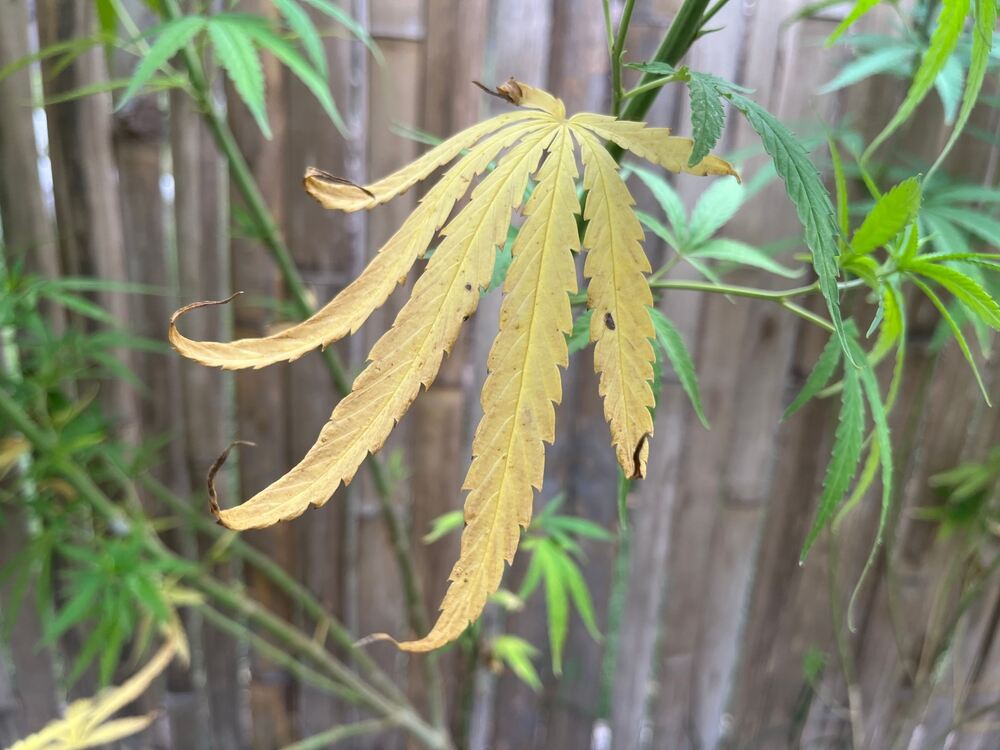
Calcium Deficiency in Autoflowers: Signs, Causes and How to Fix It
Calcium deficiency is one of the most common nutrient problems growers encounter when growing autoflowers, particularly in coco coir, with reverse osmosis (RO) water, or under high-powered LED grow lights. These growing conditions can either increase calcium demand or reduce calcium availability, making deficiencies more likely to develop.
The issue typically appears as brown spots on leaves, weak stems, twisted new growth, and slowed plant development. If left unresolved, calcium deficiency can reduce plant vigour, limit growth potential, and affect overall yields.
For autoflower growers, early detection is especially important. Because autoflowers have a fixed lifecycle, they continue progressing through their growth stages regardless of stress. Unlike photoperiod plants, you cannot simply extend the vegetative stage to allow additional recovery time. As a result, deficiencies that develop during early growth can continue affecting plant development throughout the rest of the grow cycle.
In this guide, you’ll learn how to identify the signs of calcium deficiency, what commonly causes it, how it affects autoflowers differently, and the steps you can take to correct and prevent the issue.
Article Insights
- Stable pH, balanced feeding, and healthy root conditions are commonly observed to reduce calcium deficiency issues.
- Calcium deficiency commonly affects new cannabis growth first, often causing brown spots, curled leaves, weak stems, and slowed development.
- Autoflowers can be more affected by calcium deficiency because their fixed lifecycle gives them less time to recover from early nutrient stress.
- Incorrect pH levels are one of the leading causes of calcium lockout in soil, coco coir, and hydroponic systems.
- Coco coir and RO water setups typically require additional Cal-Mag supplementation to maintain healthy growth.
- Existing leaf damage usually does not recover, but healthy new growth is often a sign that treatment is working.
- Cannabis plants grown under strong LED lighting may require higher calcium intake due to increased transpiration rates.
Understanding Calcium Deficiency in Cannabis
Calcium deficiency in cannabis plants is a nutrient disorder that occurs when your plant cannot absorb enough calcium to support healthy growth. This issue can happen because there is not enough calcium present in your feeding schedule, while also commonly appearing due to pH imbalance or nutrient lockout.
Unlike mobile nutrients such as nitrogen or magnesium, calcium is semi-immobile within the plant. This means the plant struggles to move calcium from older growth into newer growth. As a result, the newest leaves usually display symptoms first.
Calcium deficiency is one of the most common cannabis deficiencies growers encounter during both vegetative growth and flowering.
Why Calcium Deficiency Is More Serious in Autoflowers
Unlike photoperiod cannabis plants, autoflowers have a fixed lifecycle, meaning you cannot simply extend the vegetative stage while they recover from a calcium deficiency. Most autoflowers spend only 2-4 weeks in vegetative growth before transitioning into the flowering stage automatically.
This shorter lifecycle gives you a lot less time to identify and correct nutrient deficiencies before they begin affecting your flowers. In some cases, a calcium deficiency that starts during the seedling or vegetative stage can continue into flowering, making it harder for your plant to reach its full potential.
With photoperiod plants, you can often keep your plants in the vegetative stage until they have fully recovered. Autoflowers do not offer the same flexibility. If your autoflower develops a calcium deficiency early in its lifecycle, it may begin flowering before it has fully recovered, which can cause slow growth, and ultimately affect your final yield.
For this reason, spotting the early signs of calcium deficiency and correcting the problem quickly is especially important when growing autoflowers.
It can be particularly problematic in autoflowering cannabis plants because they have a fixed life cycle and limited recovery time. Unlike photoperiod strains, which can remain in the vegetative stage for longer if problems occur, autoflowers continue progressing through their growth stages regardless of stress. This means deficiencies that develop early can have a greater impact on overall plant size and final yields.
What Calcium Does for Cannabis Plants
Calcium is responsible for structural strength inside the cannabis plant. It helps build and maintain cell walls, supports root expansion, and allows healthy nutrient transport throughout the plant.
When I grow cannabis in coco or hydroponics, I pay close attention to calcium because fast-growing plants consume large amounts of it during vegetative growth. Strong stems, healthy leaves, vigorous roots, and dense flower development all depend on stable calcium uptake.
This is especially important when growing autoflowers, as their rapid growth rate leaves less room for error. Healthy root development during the first few weeks of growth is critical, and calcium plays a major role in establishing the strong root systems and stem structure needed to support vigorous growth and heavy flowering later in the plant’s life cycle.
Calcium also works alongside magnesium and potassium to regulate nutrient balance. If one nutrient becomes excessive, it can interfere with calcium absorption and trigger deficiency symptoms even when calcium is present in your nutrient solution.
How Calcium Deficiency Affects New Growth
You will often notice:
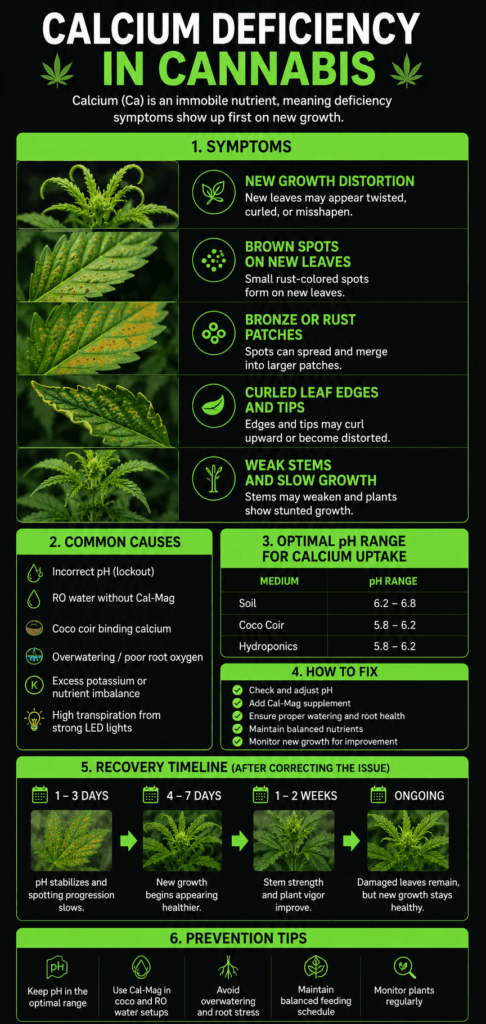
- Small rust-colored spots
- Twisted or distorted leaves
- Crinkled leaf edges
- Weak or thin stems
- Slowed vertical growth
This also commonly appears during periods of explosive growth when your plant suddenly demands more calcium than your feeding schedule can provide.
For autoflower growers, identifying these symptoms early is particularly important. Calcium deficiencies that develop during weeks 2–5 can slow vegetative growth during one of the most important stages of an autoflower’s life cycle. Because autoflowers cannot simply remain in vegetative growth to recover, unresolved deficiencies can permanently limit plant development before flowering begins.
Calcium Deficiency vs Nutrient Lockout in Cannabis
Many growers assume deficiency always means underfeeding, but that is not always true. In many cases, your cannabis plant already has enough calcium available, but incorrect pH levels prevent proper uptake.
This is known as nutrient lockout.
In soil, calcium absorbs best between pH 6.2 and 6.8. In coco and hydroponics, the sweet spot is usually between 5.8 and 6.2. When pH drifts outside these ranges, calcium uptake slows dramatically.
This is one of the most common causes of calcium deficiency in autoflowers grown in coco coir, where pH fluctuations can quickly affect nutrient availability. Before increasing nutrient levels, it is always worth checking whether the issue is being caused by lockout rather than a true calcium shortage.
I always tell beginner growers to check pH before adding more nutrients. Throwing extra Cal-Mag at a lockout issue is like trying to fill a bucket with a blocked hose.
Why Calcium Is Essential for Strong Stems and Healthy Leaves
Cannabis plants grow rapidly, especially under high-intensity LED lighting. This fast growth demands strong structural support, and calcium is one of the key building blocks responsible for maintaining healthy tissue.
Weak stems, floppy branches, and damaged new growth often signal calcium problems early on. During flowering, this becomes even more important because heavy buds place additional stress on stems and branches.
For autoflower growers using modern LED grow lights, maintaining adequate calcium levels is particularly important. Increased transpiration rates under powerful LEDs can increase calcium demand, while fast-growing autoflower genetics often have little time to recover if deficiencies develop. Ensuring a consistent supply of calcium throughout both vegetative growth and flowering helps support healthy development from seed to harvest.
A healthy calcium supply helps your plants remain resilient while also improving resistance to environmental stress and disease pressure.
What are the Symptoms of Calcium Deficiency in Cannabis Plants?
Calcium deficiency symptoms can appear quickly once the issue develops. The earlier you catch the issue, the easier recovery becomes.
While calcium deficiency affects both autoflowering cannabis plants, early detection is especially important when growing autoflowers. Because autoflowers have a limited vegetative period and cannot simply be kept in veg longer to recover, nutrient deficiencies can affect plant development more quickly if left unresolved.
How to Tell If Your Cannabis Plant Has Calcium Deficiency
The clearest sign is spotting rusty brown lesions on newer leaves while older foliage remains relatively healthy. Symptoms usually begin near the top of the plant because that is where active growth demands the most calcium.
I usually inspect:
- Upper fan leaves
- Fresh shoots
- Stem strength
- Leaf texture
- Growth speed
If new growth appears twisted, spotted, or fragile, calcium deficiency is often the culprit.
For autoflower growers, slowed growth can sometimes appear alongside leaf symptoms. If a healthy autoflower suddenly loses vigour during early vegetative growth, calcium availability may be worth investigating, particularly when growing in coco coir or using RO water.
| Symptom | What Growers Commonly Observe |
| Brown spots on leaves | Small rust-colored spots forming on new growth |
| Bronze patches | Dry bronze or brown areas spreading across fan leaves |
| Weak stems | Thin stems struggling to support heavy growth |
| Curled leaves | Twisted, curled, or crinkled leaf edges |
| Slow growth | Reduced vigor during vegetative growth |
| Flowering issues | Smaller bud development and weaker branch support |
Brown Spots on Cannabis Leaves and Early Warning Signs
These spots usually:
- Start small
- Appear rusty or bronze
- Spread slowly outward
- Form around leaf edges or between veins
The tissue surrounding the spots may remain green initially before becoming dry and brittle later.
Under LED grow lights, calcium deficiency can develop faster because increased transpiration drives higher calcium demand.
Fast-growing autoflowers under powerful LED lighting may be particularly susceptible if calcium intake does not keep pace with growth. This is one reason calcium deficiencies are commonly reported in high-performance coco and hydroponic grows.mand.
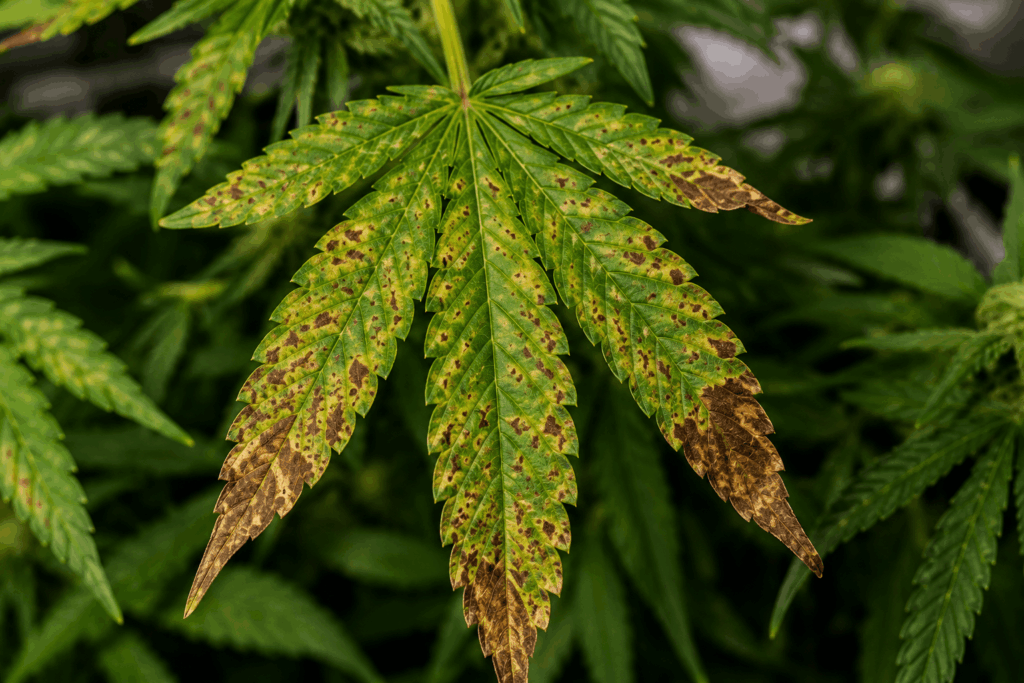
Bronze or Brown Patches on Fan Leaves
This stage is where many growers confuse calcium deficiency with fungal infections or leaf septoria. The difference is calcium deficiency typically appears alongside distorted new growth and weak structural development.
I always examine growth patterns before assuming disease is present.
Some growers initially mistake calcium deficiency for phosphorus deficiency cannabis problems because both can involve dark spots and slowed growth.
Weak Stems and Slow Plant Development
Branches may bend easily while also struggling to support heavy foliage or developing buds.
You may also notice:
- Slowed vertical growth
- Reduced branching
- Small leaves
- Delayed flowering development
When plants stop growing aggressively during vegetative growth, calcium deficiency is often hiding behind the scenes.
This can be particularly problematic when growing high yield autoflower seeds, as nutrient stress during the first few weeks of growth can reduce plant size, branching, and overall yield potential. Because autoflowers continue progressing through their lifecycle regardless of stress, early deficiencies may have a greater impact on final yields than they would in photoperiod plants.
Curled Leaves, Crinkled Growth, and Leaf Damage
Leaves may:
- Curl upward
- Twist sideways
- Crinkle unevenly
- Develop irregular edges
This symptom becomes more severe when combined with poor environmental conditions like excessive humidity or root stress.
Because calcium is essential for developing new plant tissue, these deformities usually appear on fresh growth before spreading elsewhere on the plant.


Calcium Deficiency During Flowering
If deficiency develops during flowering, you may notice:
- Weak bud sites
- Thin stems
- Reduced flower density
- Increased leaf spotting
I always maintain moderate Cal-Mag supplementation during bloom because many bloom boosters reduce calcium availability unintentionally.
Many growers assume calcium is only important during vegetative growth, but cannabis plants continue requiring calcium throughout flowering. If calcium deficiency appears after bloom has started, it is usually still worth correcting the issue rather than assuming it is too late.
For autoflower growers, maintaining stable calcium availability throughout flowering is particularly important because there is little time available for recovery before harvest. Focus on preventing symptoms from spreading and encouraging healthy new growth rather than expecting damaged leaves to recover completely.
Severe nutrient stress during early bloom may also contribute to autoflower not flowering problems or reduced flower development in sensitive genetics.
Calcium Deficiency During Different Autoflower Growth Stages
Seedling Stage
Calcium is essential for root development and new growth. Deficiencies at this stage can cause twisted growth, slow development, and poor root establishment.
Vegetative Growth
Calcium deficiency is most common during vegetative growth, when autoflowers are rapidly developing roots, stems, and branches. Deficiencies can result in smaller plants, weaker stems, and reduced yield potential.
Flowering Stage
Autoflowers continue requiring calcium throughout flowering, particularly during the early bloom stretch. If deficiency develops, focus on maintaining proper pH and calcium availability to prevent symptoms from spreading and support healthy flower development.
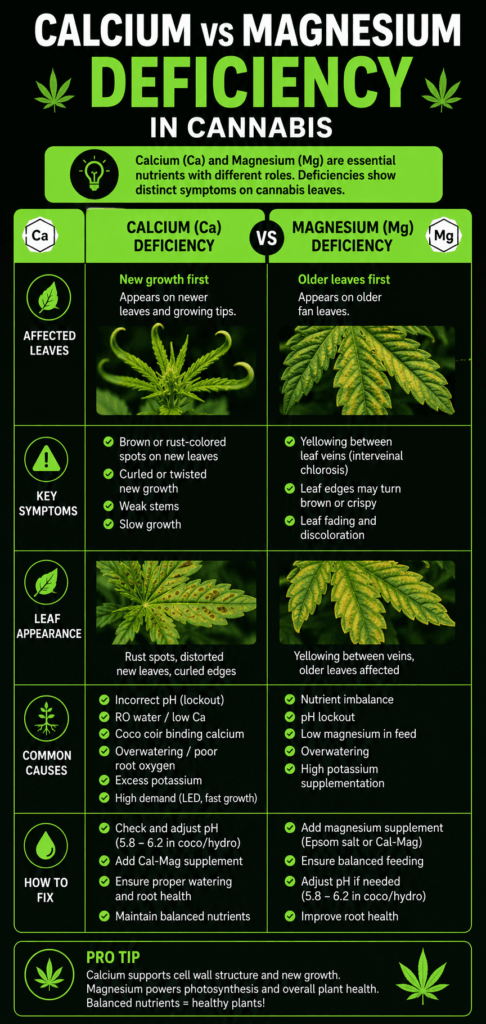
Calcium Deficiency vs Magnesium Deficiency Symptoms
Growers often confuse calcium deficiency with magnesium deficiency because both can involve leaf discoloration.
The easiest distinction is where symptoms appear.
Understanding this difference helps you avoid correcting the wrong nutrient issue.
| Calcium Deficiency | Magnesium Deficiency |
| Affects new growth first | Affects older leaves first |
| Brown rust-colored spots | Yellowing between leaf veins |
| Weak stems and distorted growth | General leaf fading and discoloration |
| Curled or twisted new leaves | Older fan leaves turn pale |
| Common in coco and RO water setups | Often linked to feeding imbalance |
| Leaf damage appears patchy | Yellowing spreads evenly across leaves |
Correctly identifying the deficiency is particularly important for autoflower growers, as applying the wrong treatment can waste valuable recovery time during a relatively short lifecycle.
What Causes Calcium Deficiency in Cannabis Plants?
Calcium deficiency rarely happens randomly. There is almost always an underlying environmental, feeding, or root-zone issue involved.
This is especially true for autoflowers because their fast growth and short lifecycle can expose nutrient problems quickly. A small imbalance during early growth can become more noticeable once the plant begins stretching or moving into flower.
| Cause | How It Affects Calcium Uptake |
| Incorrect pH | Causes nutrient lockout and poor calcium absorption |
| RO water | Removes natural calcium and magnesium minerals |
| Coco coir | Absorbs calcium from the nutrient solution |
| Overwatering | Reduces oxygen around roots and slows nutrient uptake |
| Excess potassium | Competes with calcium absorption |
| LED grow lights | Increases calcium demand during rapid growth |
Calcium issues are especially common when growing autoflowers in coco coir, using RO water, or running powerful LED grow lights. These conditions can all increase calcium demand or reduce calcium availability at the root zone.
Incorrect pH Levels and Calcium Lockout
Improper pH is one of the biggest causes of calcium deficiency in cannabis plants.
Even when calcium exists in the root zone, plants cannot absorb it effectively outside optimal pH ranges. This causes nutrient lockout, poor nutrient balance, and sometimes salt buildup around the roots.
Overfeeding bloom nutrients can also contribute to nutrient burn cannabis symptoms while creating nutrient lockout issues that restrict calcium uptake.
For autoflowers, pH problems can be especially damaging because there is limited recovery time. If lockout occurs during early vegetative growth or the early flowering stretch, the plant may continue progressing through its lifecycle before the issue is fully corrected.
I always recommend checking runoff pH regularly because many growers only test feeding water while ignoring root-zone conditions entirely.
Why Calcium Deficiency Is Common in Coco Coir
Coco coir naturally binds calcium and magnesium, making deficiencies extremely common without proper supplementation.
This is why most experienced coco growers use Cal-Mag from the beginning of the grow cycle. Without supplementation, coco can strip calcium away from your nutrient solution before roots absorb it.
Buffered coco helps reduce this problem, although supplementation is still usually necessary.
This is particularly important for autoflowers grown in coco because they often grow quickly from the seedling stage into early flower. If calcium availability is inconsistent during this period, symptoms such as brown spots, weak stems, and slowed growth can appear quickly.
Early calcium deficiency symptoms are often mistaken for other cannabis seedling problems, particularly when new growth appears twisted or stunted.
Can RO Water Cause Calcium Deficiency?
Reverse osmosis water removes minerals, including calcium and magnesium. While RO water gives you complete nutrient control, it also creates deficiencies quickly if you do not supplement properly.
While many indoor growers use RO water, growers running outdoor autoflower seeds often rely on local water sources, making it important to understand the mineral content of your water before adjusting your feeding programme.
I personally add Cal-Mag to RO water before mixing base nutrients because cannabis plants require a stable mineral foundation to thrive.
Using pure RO water without supplementation is one of the fastest ways to trigger calcium problems.
For autoflower growers, RO water should usually be treated as a blank starting point. If calcium and magnesium are not added back into the feed, deficiencies can appear early and may affect root development, plant size, and later flower production.
Overwatering and Root Zone Problems
Healthy roots are responsible for nutrient uptake. When roots become stressed from overwatering or poor oxygen availability, calcium absorption slows significantly.
Signs of root stress include:
- Drooping leaves
- Slow growth
- Damp growing medium
- Weak nutrient uptake
Overwatered plants often display deficiency symptoms even when nutrients are present in the root zone.
This matters with autoflowers because early root stress can limit the size and strength of the entire plant. Since autoflowers cannot be kept in vegetative growth longer to recover, poor root development during the first few weeks can have lasting effects.
Poor Nutrient Balance and Feeding Mistakes
Excess potassium, sodium, or magnesium can interfere with calcium uptake. This nutrient competition creates imbalance while also contributing to lockout issues. This can sometimes make it difficult to distinguish between calcium issues and potassium deficiency symptoms.
I see this often when growers overfeed bloom nutrients or combine multiple supplements without understanding nutrient ratios.
Sometimes the solution is not adding more calcium. Sometimes it is reducing the nutrients blocking calcium absorption.
This is especially important during autoflower flowering. Growers often switch heavily into bloom nutrients once pistils appear, but bloom feeds can be high in potassium. If calcium is reduced too much or potassium becomes excessive, calcium uptake may suffer even though the plant still needs calcium during flowering.
In some cases, symptoms that appear to be deficiencies may actually be caused by nutrient toxicity, which interferes with normal nutrient uptake.
LED Grow Lights and Increased Calcium Demand
Modern LED grow lights increase photosynthesis and transpiration rates. While this boosts growth, it also increases calcium demand dramatically.
Plants under strong LEDs often require:
- Additional Cal-Mag
- More stable watering routines
- Better environmental control
If you switched from HID to LEDs recently and suddenly see brown spots appearing, increased calcium demand may be the reason.
Autoflowers grown under high-powered LEDs can be particularly sensitive to this because they often grow rapidly from seed to harvest without much downtime. When light intensity, temperature, humidity, or watering are not balanced, calcium demand can rise faster than the feeding schedule provides.











How to Fix Calcium Deficiency in Cannabis Plants
Once you identify calcium deficiency correctly, recovery is usually straightforward. The key is addressing the underlying cause rather than simply adding more nutrients.
For autoflower growers, acting quickly is particularly important. Unlike photoperiod plants, autoflowers cannot remain in vegetative growth longer to recover from nutrient stress. The sooner the issue is corrected, the less impact it is likely to have on plant development and final yields.
| Recovery Stage | What Growers Commonly Observe |
| 1–3 days | pH stabilises and spotting progression slows |
| 4–7 days | New growth begins appearing healthier |
| 1–2 weeks | Stem strength and plant vigour improve |
| Ongoing | Damaged leaves remain, but new growth stays healthy |
How to Correct pH Levels for Better Calcium Uptake
I always start by checking pH before changing nutrients.
Correct pH ranges are:
- Soil: 6.2–6.8
- Coco/hydro: 5.8–6.2
If pH drift caused lockout, correcting the root zone often resolves the problem within several days.
Flush heavily salted media if runoff EC is extremely high while also restoring balanced feeding afterwards.
Many calcium deficiencies are actually nutrient lockout issues rather than true calcium shortages. Before increasing nutrients, confirm that the root-zone pH is allowing proper calcium uptake.
| Growing Medium | Recommended pH Range |
| Soil | 6.2–6.8 |
| Coco Coir | 5.8–6.2 |
| Hydroponics | 5.8–6.2 |
Using Cal-Mag Supplements to Treat Deficiency
Cal-Mag supplements are one of the most common solutions for cannabis calcium deficiency, particularly when growing in coco coir, hydroponic systems, or using reverse osmosis (RO) water.
Most products contain:
- Calcium
- Magnesium
- Trace minerals such as iron
I usually begin with a moderate dose rather than overfeeding aggressively. Damaged leaves rarely recover fully, but healthy new growth is often a sign that treatment is working.
Consistency matters more than dumping excessive nutrients into your reservoir.
It is also important to remember that not every calcium deficiency is caused by a lack of calcium in the feeding schedule. In many cases, pH imbalance, nutrient lockout, overwatering, or root-zone stress can prevent plants from absorbing calcium that is already present.
For growers using coco coir, hydroponics, RO water, or very soft water, Cal-Mag supplementation is often an important part of maintaining healthy growth throughout the grow cycle. However, growers using hard water or nutrient programmes that already contain sufficient calcium may not require additional supplementation.
Before increasing Cal-Mag, always confirm that pH levels, root health, and overall nutrient balance are within the appropriate range.
What To Do If Your Autoflower Has Calcium Deficiency During Flowering
Many growers assume calcium is only important during vegetative growth, but cannabis plants continue requiring calcium throughout flowering, particularly during the early bloom stretch.
If your autoflower develops calcium deficiency during flowering:
- Maintain the correct pH range.
- Continue supplying calcium through a balanced feeding schedule.
- Use Cal-Mag if your growing method requires it.
- Focus on healthy new growth rather than damaged leaves.
- Monitor whether symptoms continue spreading.
Avoid dramatically increasing nutrient strength in an attempt to force a recovery, as overfeeding can create additional lockout issues.
While damaged leaves rarely recover, correcting the deficiency can help prevent further spread and support healthy flower development through to harvest.
Best Calcium Sources for Cannabis Plants
Several calcium sources can help prevent or correct deficiencies, although some are more effective than others when dealing with an active problem.
Cal-Mag Supplements
The fastest and most reliable option for correcting active calcium deficiencies. Most growers rely on Cal-Mag products when immediate supplementation is needed.
Dolomite Lime
A popular choice for soil growers. Dolomite lime provides both calcium and magnesium while also helping stabilise pH over time.
Gypsum
Provides calcium without significantly affecting pH. This can be useful when calcium levels need increasing but pH is already within the desired range.
Oyster Shell
A slow-release calcium source commonly used as a preventative soil amendment.
Crushed Eggshells
Eggshells contain calcium carbonate but break down slowly. While they can contribute calcium over time, they are not a fast solution for correcting an active deficiency.
One of the most common misconceptions among growers is that crushed eggshells will quickly fix calcium deficiency symptoms. In reality, they work far more effectively as a preventative amendment than as a treatment.
How to Fix Calcium Deficiency Fast and Help Plants Recover
If you need fast recovery:
- Correct pH immediately.
- Add Cal-Mag supplementation if appropriate.
- Improve root oxygenation.
- Reduce environmental stress.
- Monitor runoff regularly.
- Maintain a consistent feeding schedule.
Recovery usually appears in new growth first. Existing spots often remain permanently damaged.
Healthy recovery signs include:
- Fresh green growth
- Improved stem strength
- Faster leaf expansion
- Reduced spotting
For autoflower growers, successful recovery should be measured by healthy new growth rather than the appearance of damaged leaves. Existing leaf damage may never disappear, but if new growth is healthy and symptoms stop spreading, the deficiency is usually under control.
How to Prevent Calcium Deficiency in Cannabis Plants
While calcium deficiency can usually be corrected when caught early, avoiding the problem altogether is far less stressful for both the grower and the plant. This is especially true for autoflowers, which have a limited lifecycle and less time to recover from nutrient deficiencies.
A consistent feeding schedule, stable pH, healthy roots, and adequate calcium availability are the foundations of preventing calcium deficiency throughout the grow cycle.

Maintaining the Correct pH Range Throughout Growth
Stable pH prevents most calcium uptake issues before they begin.
I recommend:
- Testing every feed
- Monitoring runoff regularly
- Calibrating pH pens frequently
- Avoiding dramatic nutrient swings
- Tracking root-zone conditions rather than only feed water
Consistent root-zone management keeps nutrient uptake stable throughout the grow cycle.
For cannabis plants, calcium uptake is generally best within the following ranges:
| Growing Medium | Recommended pH Range |
| Soil | 6.2–6.8 |
| Coco Coir | 5.8–6.2 |
| Hydroponics | 5.8–6.2 |
In coco and hydroponic systems, many growers aim for around pH 5.8–6.0 and allow minor fluctuations within the recommended range to support overall nutrient availability.
Preventing Calcium Deficiency in Coco and Hydroponics
Coco and hydro growers should proactively manage calcium levels rather than waiting for symptoms to appear.
Using:
- Buffered coco coir
- Quality base nutrients
- Stable EC levels
- Proper irrigation timing
- Consistent calcium supplementation when required
can help prevent deficiencies before they develop.
Because coco naturally binds calcium and magnesium, many growers use Cal-Mag from the beginning of the grow. This is particularly common when growing autoflowers in coco under LED lighting, where rapid growth can increase calcium demand quickly.
Fast-growing hydroponic cannabis plants also consume calcium rapidly, especially under powerful LEDs.
Choosing the Right Water Source and Feeding Schedule for Cannabis Plants
Your water source directly impacts calcium availability.
Hard water may already contain useful levels of calcium and magnesium, while reverse osmosis (RO) water removes these minerals almost entirely.
Understanding your water quality allows you to build a more accurate feeding schedule and avoid unnecessary supplementation.
If you use RO water, adding calcium and magnesium back into your feeding programme is often necessary to prevent deficiencies from developing later.
I also avoid overfeeding because nutrient excess often causes lockout problems that mimic deficiencies.
Preventing Calcium Deficiency in Autoflowers
Whether you’re growing your first crop or experimenting with autoflower seeds for beginners, preventing nutrient deficiencies is usually far easier than correcting them once symptoms appear.
Many experienced autoflower growers focus on:
- Maintaining stable pH levels
- Avoiding overwatering during early growth
- Monitoring runoff regularly
- Using buffered coco when growing in coco coir
- Supplementing calcium when using RO water
- Avoiding sudden nutrient increases
- Maintaining stable environmental conditions under LED lighting
Because autoflowers cannot extend their vegetative stage to recover from stress, preventing deficiencies is usually far easier than correcting them once symptoms appear.
My Autoflower Has Calcium Deficiency – What Should I Check First?
If you suspect calcium deficiency, work through the following checklist before increasing nutrient levels.
Growing in Coco Coir?
- Check pH is between 5.8 and 6.2
- Confirm regular calcium or Cal-Mag supplementation
- Check runoff EC
Using RO Water?
- Ensure calcium and magnesium are being added back into the feed
- Review your nutrient schedule
Growing in Soil?
- Check root-zone pH
- Avoid assuming more nutrients are automatically needed
Using Powerful LED Grow Lights?
- Consider increased calcium demand
- Monitor plant growth and transpiration rates
Working through these checks often identifies the underlying cause before unnecessary nutrient adjustments are made.
A balanced feeding schedule, stable pH, healthy roots, and consistent calcium availability remain the most effective ways to prevent calcium deficiency long term.
Frequently Asked Questions
What does calcium deficiency look like in cannabis plants?
Calcium deficiency commonly appears as small brown or rust-colored spots on newer leaves, along with curled edges, distorted growth, weak stems, and slowed development.
Why are there brown spots on my cannabis leaves?
Brown spots are often a sign of calcium deficiency, but they can also be caused by nutrient lockout, pH imbalance, pests, or disease. Calcium-related spotting usually appears on newer growth first.
Can cannabis plants recover from calcium deficiency?
Yes, if the underlying cause is corrected. Existing leaf damage usually remains, but healthy new growth is a sign that recovery is underway.
What causes calcium deficiency in cannabis plants?
The most common causes are incorrect pH, nutrient lockout, overwatering, poor root health, and insufficient calcium supplementation in coco coir or RO water grows.
Why is calcium deficiency common in coco coir?
Coco coir naturally binds calcium and magnesium, which can reduce availability around the root zone. This is why many growers supplement with Cal-Mag when growing in coco.
What pH is best for calcium uptake in cannabis?
Calcium is generally absorbed best at pH 6.2–6.8 in soil and pH 5.8–6.2 in coco coir and hydroponic systems.
Can LED grow lights increase calcium deficiency?
Yes. High-powered LEDs can increase growth and transpiration rates, which may also increase calcium demand and expose deficiencies more quickly.