
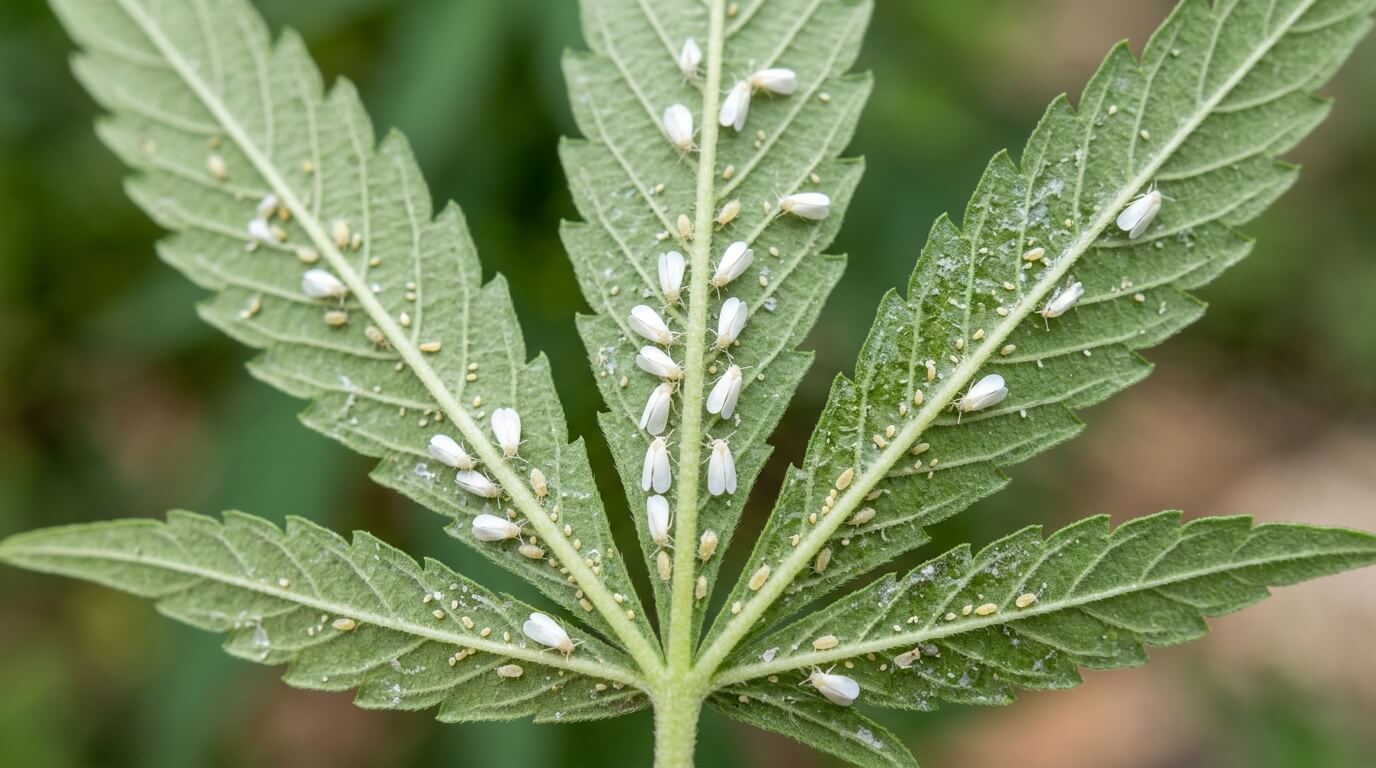
Whiteflies on Autoflowers: How to Identify, Treat & Prevent
Whiteflies can quickly become a serious issue on cannabis plants, especially autoflowers. These sap-feeding insects weaken growth, reduce vigour, and leave behind sticky honeydew that can lead to mold. Because autoflowers have limited recovery time, early infestations can significantly impact final yields.
Whiteflies reproduce rapidly, often multiplying unnoticed beneath leaves. Many growers only spot them when disturbed plants release a cloud of tiny white insects. Early detection is critical, as feeding during the first few weeks can slow development before flowering begins.
The good news is that whiteflies are manageable with consistent monitoring, proper airflow, and targeted treatments. Acting early helps prevent infestations from spreading and reduces plant stress.
Article Insights
- Whiteflies reproduce rapidly in warm grow environments and can spread through an indoor cannabis grow in just a few weeks.
- Early signs of cannabis whiteflies include yellowing leaves, sticky honeydew residue, and small white insects gathering underneath fan leaves.
- Neem oil, insecticidal soap, sticky traps, and beneficial insects are commonly used to control whiteflies naturally.
- Severe infestations may require treatments containing spinosad or pyrethrins, especially during vegetative growth.
- Cannabis autoflowers often require gentler treatment methods because their shorter lifecycle gives plants less time to recover from stress.
- Regular inspections, proper airflow, and integrated pest management practices help reduce the risk of future whitefly infestations.
What Are Whiteflies on Cannabis and Why They’re a Problem
Whiteflies are tiny winged insects that feed on cannabis plants by piercing leaf tissue and sucking out nutrient-rich sap. Although they look like miniature moths, they are actually more closely related to aphids and mealybugs. Cannabis whiteflies are considered one of the most common cannabis pests because they spread quickly and thrive in the exact warm, humid conditions many growers create for healthy plant growth.
What makes whiteflies especially frustrating is how quickly their population explodes. A small infestation can turn into hundreds or even thousands of insects in a short period of time. This also means many growers do not notice the problem until visible plant damage has already started.
Whiteflies on cannabis plants are not just annoying insects flying around your grow room. They are active plant parasites that weaken growth, reduce photosynthesis, and create conditions for mold development.
What Are Whiteflies and How They Infest Cannabis Plants
Whiteflies are tiny insects with pale yellow bodies and powdery white wings. Adult whiteflies usually gather underneath fan leaves where they feed and lay eggs. When disturbed, they fly upward in small white clouds that are easy to spot once populations increase.
The lifecycle of cannabis whiteflies is one reason they become difficult to control. They move through several stages:
- Egg
- Nymph
- Pupa
- Adult
The nymph stage is where much of the plant damage occurs. Nymphs attach themselves to the underside of leaves and feed continuously on sap. Unlike adults, they do not move around much once attached.
In my experience, most whitefly infestations enter grow spaces through:
- Contaminated clones
- Infected seedlings
- Outdoor exposure
- Poor grow room hygiene
- Shared gardening equipment
- Open ventilation systems
This also explains why quarantine practices are so important for cannabis growers.
Why Whiteflies on Plants Spread Quickly in Indoor and Outdoor Grows
Cannabis whiteflies thrive in warm and stable environments where they can reproduce continuously without major environmental disruption. Indoor grow rooms often create ideal breeding conditions because temperatures remain consistent while dense foliage provides shelter for feeding, egg laying, and rapid population growth. Whiteflies can be particularly problematic for autoflowers because infestations often occur during the first few weeks of growth when plants are establishing roots and building structure. Unlike photoperiod cannabis, autoflowers cannot remain in vegetative growth longer to recover from pest damage. Even a minor infestation during weeks 2–4 can reduce final plant size and limit yield potential.
Outdoor cannabis gardens are equally vulnerable during warm weather, and in many cases even more exposed to whiteflies because nearby vegetables, ornamental plants, and weeds often act as host plants before pests migrate onto cannabis crops. Outdoor growing conditions also make it harder to fully control insect exposure compared to indoor setups.
A single female whitefly can lay hundreds of eggs during her lifespan. Under ideal conditions, the lifecycle completes in as little as two to three weeks, which is exactly why infestations become overwhelming so quickly if left untreated.
I always tell beginner growers that whiteflies are one of those pests you never want to underestimate. If you delay treatment for even a week or two, the infestation can spread throughout your entire grow space before you fully realize how serious the problem has become.
How to Identify Whiteflies on Cannabis Plants Early
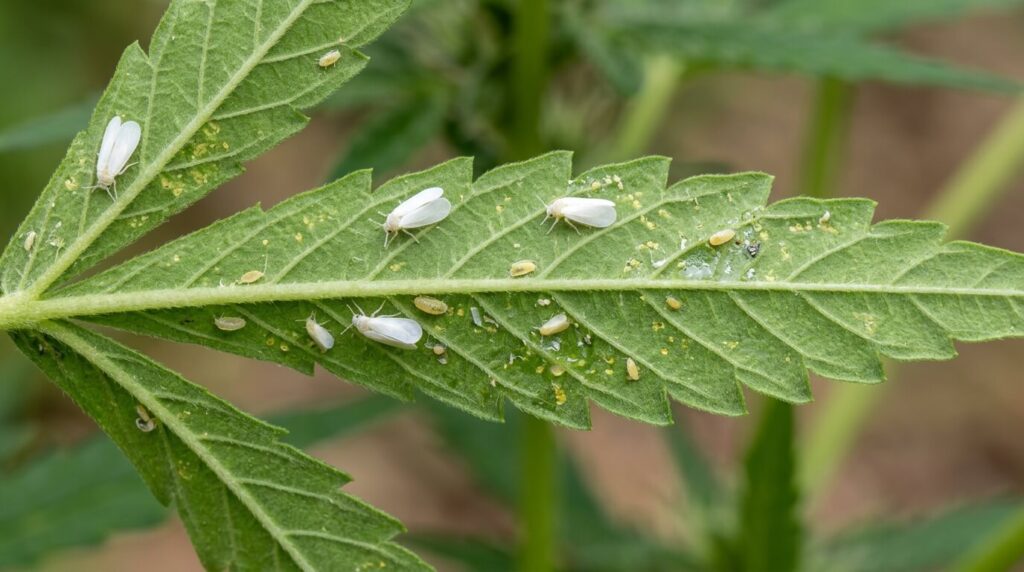
Early detection is the best weapon you have against whiteflies on cannabis plants. The sooner you identify the infestation, the easier it becomes to control without damaging your plants or relying heavily on chemical treatments.
When I inspect my cannabis plants, I always pay attention to the undersides of fan leaves because this is where whiteflies prefer to hide and reproduce.
Visual Signs of Whiteflies on Cannabis Leaves and Stems
One of the most obvious signs of cannabis whiteflies is seeing tiny white insects fly into the air when you touch or shake the plant. However, there are several other early warning signs growers should watch for.
Common symptoms of whiteflies on cannabis include:
- Small white insects underneath leaves
- Sticky honeydew residue on foliage
- Pale yellow spotting on leaves
- Curling or drooping fan leaves
- Reduced plant vigor
- Slower vegetative growth
- Black sooty mold developing on leaves
Honeydew is one of the easiest indicators to identify early. This sticky substance coats leaves and nearby surfaces while also attracting mold growth.
I personally use a small magnifying loupe during inspections because whitefly eggs and nymphs are much easier to spot under magnification.
Differences Between Whiteflies, Aphids, and Other Common Pests
Beginner growers often confuse cannabis whiteflies with aphids, fungus gnats, or thrips. While these pests share similarities, there are important differences.
Whiteflies have visible wings and actively fly when disturbed. Aphids usually crawl slowly across stems and leaves, while fungus gnats remain closer to the soil surface.
Here is a simple comparison:
| Pest | Appearance | Common Location | Main Damage |
| Whiteflies | Tiny white winged insects | Underside of leaves | Sap feeding |
| Aphids | Green, black, or brown soft-bodied insects | Stems and new growth | Sap feeding |
| Fungus Gnats | Small dark flies | Soil surface | Root damage |
| Thrips | Thin elongated insects | Leaves and buds | Tissue scraping |
Knowing which pest you are dealing with is important because treatment methods vary depending on the infestation.
Cannabis Whitefly Lifecycle and Reproduction Timeline
Understanding the whitefly lifecycle helps you interrupt reproduction before infestations spiral out of control.
| Whitefly Stage | Description | Average Duration |
| Egg | Tiny pale eggs attached underneath leaves | 5–7 days |
| Nymph | Immobile sap-feeding stage causing most damage | 2–3 weeks |
| Pupa | Transitional stage before adulthood | 5–7 days |
| Adult | Flying reproductive whitefly | 1–2 months |
Warm temperatures accelerate the lifecycle significantly. In hot indoor grow rooms, cannabis whiteflies can reproduce continuously, which is why regular monitoring is so important.
Damage Caused by Whiteflies on Cannabis Plants
Whiteflies on cannabis plants often cause more damage than growers expect because infestations build gradually before symptoms become obvious. Although the insects themselves are tiny, their constant sap-feeding activity slowly weakens plant health while also creating secondary problems like sticky honeydew buildup and black sooty mold development.
As populations increase, cannabis plants commonly show slower growth, weaker vigor, reduced flower production, and lower overall yields. Beginner growers are often caught off guard by how quickly whiteflies spread indoors, which is one reason many choose beginner autoflower strains with manageable plant structures and resilient genetics that are easier to inspect, maintain, and monitor throughout the grow cycle.
How Whiteflies Feed and Weaken Plant Health
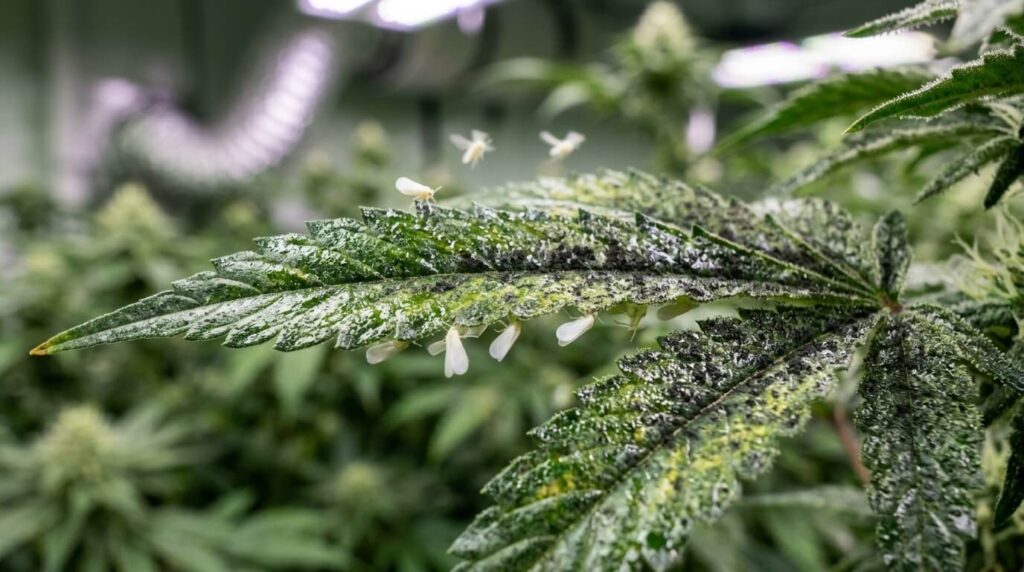
Whiteflies feed by piercing cannabis leaves and extracting sap from plant tissue. This sap contains nutrients, sugars, and moisture that the plant needs for healthy growth.
As whiteflies continue feeding, your cannabis plants begin losing energy and vitality.
You may notice:
- Yellowing leaves
- Slower growth rates
- Weak stems and branches
- Reduced terpene production
- Smaller buds
- Lower cannabinoid content
In severe infestations, cannabis plants become stressed to the point where flowering performance declines noticeably.
I have personally seen heavily infested plants struggle to stack buds properly during bloom. Instead of dense flower sites, the plants produced airy buds with weak resin production.
This also makes plants more vulnerable to other environmental stresses and diseases.
Secondary Issues Like Mold, Honeydew, and Reduced Yields
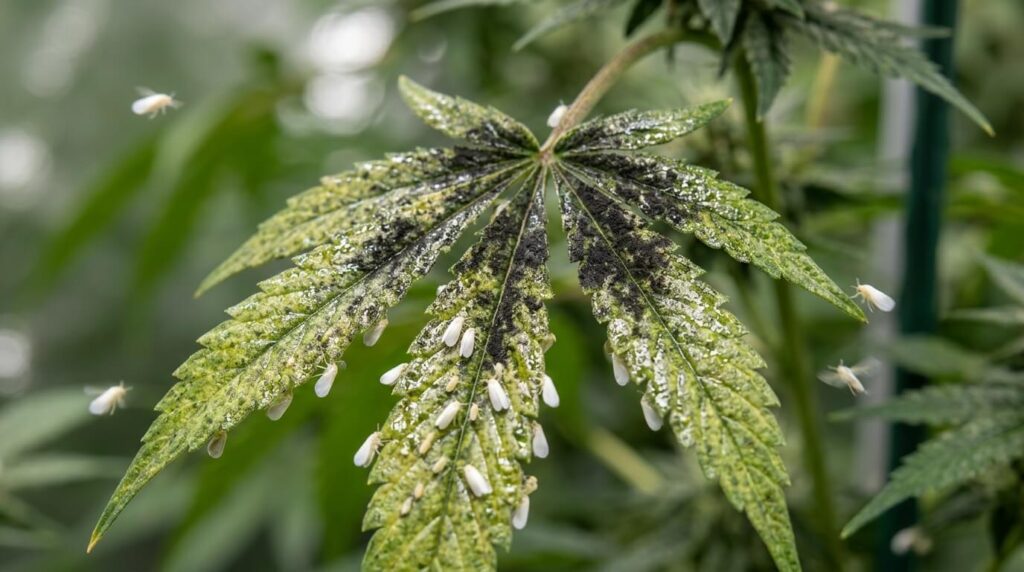
One of the biggest issues associated with cannabis whiteflies is the honeydew they leave behind.
Honeydew is a sticky sugary secretion produced while whiteflies feed. As this residue accumulates on leaves, it creates the perfect environment for black sooty mold.
The progression usually looks like this:
- Whiteflies feed on leaves
- Honeydew accumulates
- Sooty mold develops
- Light penetration decreases
- Photosynthesis drops
- Growth slows significantly
This chain reaction severely impacts cannabis yields because the plant loses its ability to efficiently absorb light and convert energy.
While also reducing photosynthesis, mold growth creates poor airflow conditions around the canopy, especially in dense indoor grows.
How to Get Rid of Whiteflies: Proven Treatment Methods
If you are searching for how to get rid of whiteflies on cannabis, the best approach is always a layered treatment strategy. I never rely on one single method because whiteflies reproduce too quickly.
The goal is to interrupt their lifecycle repeatedly while also reducing adult populations and preventing eggs from hatching.
Natural and Organic Solutions for Controlling Whiteflies on Cannabis
Organic whitefly control methods are often the safest option for cannabis growers, especially during flowering.
I usually begin treatment by physically removing as many whiteflies as possible. Spraying plants with water helps knock adults and nymphs off leaves while also disrupting feeding activity.
After that, I rotate several organic treatment methods.
Neem Oil for Cannabis Whiteflies
Neem oil is one of the most common organic pesticides used in cannabis cultivation.
It works by:
- Repelling adult whiteflies
- Interrupting reproduction
- Disrupting larval development
- Reducing feeding activity
When applying neem oil, I always spray during lights-off periods to avoid leaf burn.
Neem oil works best during vegetative growth. I avoid heavy neem applications during late flowering because strong oils can affect bud aroma and flavor.
Insecticidal Soap
Insecticidal soaps are highly effective against soft-bodied insects like whiteflies.
The soap breaks down the insect’s outer protective layer, causing dehydration.
Benefits of insecticidal soap include:
- Fast action
- Minimal residue
- Safe use on cannabis when applied correctly
- Effective contact killing
This also works well alongside sticky traps and beneficial insects.
Beneficial Insects and Biological Controls
One of my favorite long-term whitefly control methods is introducing beneficial insects into the grow space.
Natural predators include:
- Ladybugs
- Lacewings
- Predatory wasps
- Encarsia formosa
- Beauveria bassiana fungi
These predators help control whitefly populations naturally while also reducing reliance on chemical sprays.
In indoor grows, I have often had excellent results combining beneficial insects with environmental control and sticky traps.
Yellow Sticky Traps
Yellow sticky traps are simple but surprisingly effective.
Whiteflies are strongly attracted to yellow surfaces. Once trapped, adults cannot reproduce further.
Sticky traps help:
- Monitor infestation levels
- Reduce adult populations
- Detect outbreaks early
- Track treatment progress
I usually place traps slightly above canopy level throughout the grow room.
Best Whitefly Treatments for Autoflower Plants
Different whitefly control methods work best at different stages of growth. Choosing the right treatment at the right time helps reduce pest populations while minimising stress and protecting flower quality.
| Growth Stage | Typical Timing | Recommended Treatments | Effectiveness | Notes |
| Seedling | Week 1-2 | Sticky traps, leaf inspections, improved airflow | Moderate | Focus on prevention and early detection |
| Early Vegetative Growth | Week 2-4 | Neem oil, insecticidal soap, sticky traps | High | Best time to stop whiteflies before populations establish |
| Late Vegetative Growth / Pre-Flower | Week 4-6 | Beneficial insects, insecticidal soap, environmental control | High | Continue reducing populations before flowering begins |
| Early Flower | Week 5-8 | Sticky traps, beneficial insects, canopy management | High | Avoid heavy oil-based sprays once flowers start forming |
| Mid to Late Flower | Week 8+ | Beneficial insects, airflow management, monitoring | Moderate to High | Prioritise low-residue treatments to protect buds |
| Severe Infestations | Any Stage | Spinosad or targeted insecticides (where appropriate) | High | Best used before flowering and according to product instructions |
Timings are based on typical autoflower growth cycles and may vary slightly between cultivars and environmental conditions.
No single treatment will completely eliminate whiteflies on its own. The most effective approach combines monitoring, environmental control, biological controls, and targeted treatments to interrupt the whitefly lifecycle at multiple stages.
In most cases, catching an infestation during weeks 2-4 is the difference between a minor setback and a grow-wide outbreak. Early intervention allows plants to maintain healthy growth while reducing the likelihood of carrying whiteflies into flowering.
What Is the Best Insecticide for Whiteflies and How to Use It Safely
Severe infestations sometimes require stronger intervention. When organic treatments fail to control rapidly growing populations, targeted insecticides may become necessary.
The best insecticide for whiteflies on cannabis typically contains:
- Spinosad
- Pyrethrins
- Horticultural oils
These treatments target both adult whiteflies and immature nymphs.
However, cannabis growers should always use insecticides carefully.
When I apply stronger treatments, I follow several rules:
- Spray during lights-off periods
- Cover leaf undersides thoroughly
- Follow dosage instructions carefully
- Rotate products to avoid resistance
- Avoid spraying mature flowers
Chemical overuse is one of the biggest mistakes beginner growers make. More product does not always mean better results.
I have seen growers damage healthy cannabis plants by overapplying sprays while chasing whiteflies around the grow room like they are fighting tiny airborne ninjas.
Patience and consistency always work better.
How to Get Rid of Whiteflies on Cannabis Naturally at Every Growth Stage
The most effective way to control whiteflies is to adjust your approach based on the plant’s growth stage. Early action is key—small infestations are much easier to manage than established populations.
Natural Whitefly Control for Cannabis Seedlings
Seedlings are sensitive and can be slowed by even minor pest pressure. Focus on prevention and gentle control methods.
Recommended Seedling Treatments
| Treatment Method | Effectiveness | Notes |
| Yellow sticky traps | High | Detects adult whiteflies early |
| Manual leaf inspections | High | Identifies eggs and nymphs before they spread |
| Improved airflow | Moderate | Makes conditions less favorable for pests |
| Gentle water spray | Moderate | Removes small numbers of adults |
Natural Whitefly Control During Vegetative Growth
Plants are more resilient during this stage, making it the best time to actively reduce whitefly populations before flowering.
Recommended Vegetative Stage Treatments
| Treatment Method | Effectiveness | Notes |
| Neem oil | High | Best during early to mid-vegetative growth |
| Insecticidal soap | High | Kills exposed adults and nymphs |
| Beneficial insects | High | Provides ongoing biological control |
| Sticky traps | Moderate | Monitors and reduces adult populations |
| Environmental control | High | Improves airflow and limits breeding conditions |
Always spray the undersides of leaves where whiteflies are most active.
Natural Whitefly Control During Flowering
Flowering plants require a lighter approach to avoid affecting bud quality. Focus on low-residue methods and environmental control.
Recommended Flowering Stage Treatments
| Treatment Method | Effectiveness | Notes |
| Yellow sticky traps | High | Captures adult whiteflies |
| Beneficial insects | High | Safe and effective long-term control |
| Gentle water sprays | Moderate | Helps reduce populations early in flowering |
| Environmental control | High | Reduces pest pressure and mold risk |
| Light insecticidal soap applications | Moderate | Use cautiously in early flowering only |
Avoid heavy use of neem oil or other oils once buds begin forming, as residues can remain trapped in dense flowers.
Why Airflow Matters During Flowering
Whiteflies produce honeydew, which can lead to mold if it builds up on leaves. Good airflow helps:
- Reduce humidity pockets
- Keep leaf surfaces dry
- Lower mold risk
- Limit whitefly activity
Pay close attention to dense or lower canopy areas where airflow is restricted.
Best Natural Whitefly Treatments by Growth Stage
| Growth Stage | Best Treatment Strategy |
| Seedling | Monitoring, sticky traps, airflow |
| Vegetative Growth | Neem oil, insecticidal soap, beneficial insects |
| Early Flower | Sticky traps, biological controls, environmental management |
| Mid to Late Flower | Beneficial insects, airflow, monitoring |
Early detection and consistent monitoring make whiteflies much easier to control and prevent from spreading.
How to Get Rid of Whiteflies on Cannabis Autoflowers
Whiteflies can be particularly disruptive on autoflowering cannabis plants because growth lost during the early stages is difficult to recover later. Once an autoflower begins transitioning into flower, the plant continues progressing through its lifecycle regardless of pest pressure, making early detection and prevention especially important.
Rather than relying on aggressive treatments, I focus on keeping whitefly populations low from the beginning of the grow. A preventative approach is usually far more effective than trying to eliminate a severe infestation once plants are already flowering.
Best Whitefly Control Strategy for Autoflowers
The most reliable approach combines monitoring, environmental control, and targeted treatments before populations become established.
| Growth Stage | Recommended Approach |
| Seedling | Sticky traps, regular leaf inspections, strong airflow |
| Vegetative Growth | Neem oil, insecticidal soap, beneficial insects |
| Early Flower | Sticky traps, biological controls, canopy management |
| Mid to Late Flower | Beneficial insects, monitoring, airflow optimisation |
One of the biggest advantages of early intervention is that treatment options become more limited once flowers begin developing. Controlling whiteflies during the vegetative stage is far easier than managing an infestation in late flower.
Preventing Whiteflies on Autoflowers
In my experience, prevention consistently produces better results than reactive treatments. Routine inspections often reveal eggs, nymphs, or adult whiteflies long before visible plant damage appears.
To reduce the risk of infestation:
- Inspect leaf undersides regularly
- Install sticky traps early in the grow cycle
- Maintain strong airflow throughout the canopy
- Remove heavily infested leaves when necessary
- Keep the grow area clean and free from plant debris
- Quarantine new plants before introducing them to the grow space
Dense foliage can create sheltered areas where whiteflies reproduce unnoticed. Regular canopy maintenance and good ventilation make it more difficult for populations to establish themselves.
Why Early Whitefly Control Matters
A small whitefly population may not seem serious at first, but these insects reproduce rapidly under favourable conditions. A few adults hidden beneath leaves can quickly develop into a much larger infestation capable of reducing plant vigour, slowing growth, and increasing the risk of honeydew buildup and mold.
The most successful whitefly management strategy is simple: monitor plants regularly, act at the first sign of activity, and prevent populations from gaining momentum. Consistent inspections combined with stage-appropriate treatments will usually keep whiteflies from becoming a serious threat to plant health or harvest quality.
Preventing Whiteflies on Cannabis Plants in Future Grows
Prevention is always easier than eliminating an active infestation. Once you deal with cannabis whiteflies firsthand, you quickly realise how important proper grow room hygiene becomes.
A clean environment dramatically lowers your chances of future outbreaks.
Environmental Control and Grow Room Hygiene Best Practices
Whiteflies thrive in warm, humid, stagnant environments.
Creating a less favorable environment makes it harder for pests to establish stable populations.
I follow several preventative grow room habits:
- Maintain strong cannabis ventilation airflow with oscillating fans
- Keep humidity under control
- Remove dead leaves immediately
- Sanitize tools and containers
- Quarantine new plants
- Avoid overcrowding the canopy
- Inspect leaves regularly
This also improves overall plant health while reducing disease pressure.
Proper airflow beneath the canopy is especially important because whiteflies prefer calm protected areas underneath dense foliage.
Ongoing Monitoring and Integrated Pest Management Strategies
Integrated Pest Management, often called IPM, is the long-term system I use to prevent recurring infestations.
Cannabis IPM combines:
- Prevention
- Monitoring
- Environmental control
- Biological predators
- Organic treatments
- Early intervention
Sticky traps help monitor pest populations before infestations become severe.
I also inspect plants daily because catching whiteflies early is the difference between a manageable nuisance and a major grow room disaster.
One thing I always remind new growers is this: healthy cannabis plants resist stress better. Strong roots, balanced nutrients, and stable environmental conditions make your plants less vulnerable to pest outbreaks overall.
Conclusion
Whiteflies on cannabis plants are one of the most common pest problems growers face, but they are also highly manageable when identified early and treated consistently.
These tiny sap-feeding insects weaken cannabis plants by draining nutrients, reducing photosynthesis, and creating secondary issues like sticky honeydew and mold growth. Left untreated, cannabis whiteflies can reduce yields, slow flowering development, and compromise overall bud quality.
The best way to get rid of whiteflies on cannabis is by combining multiple treatment methods together. Organic solutions like neem oil, insecticidal soap, sticky traps, and beneficial insects work extremely well when used consistently. Severe infestations may require targeted insecticides, but careful application is always important to protect plant health and final flower quality.
I have learned through years of growing cannabis that prevention always beats reaction. Daily inspections, proper airflow, clean grow practices, and integrated pest management strategies keep infestations under control before they become serious problems.
Whether you are growing photoperiod plants indoors or managing cannabis autoflowers outdoors, staying proactive is the key to maintaining healthy plants and heavy harvests. If you monitor your plants carefully and act quickly at the first signs of whiteflies, you can protect your grow and keep your cannabis thriving from seedling to harvest.
Frequently Asked Questions
What are the first signs of whiteflies on cannabis plants?
The first signs of whiteflies on cannabis plants usually include tiny white insects flying upward when the plant is disturbed, sticky honeydew residue on leaves, and pale yellow spots forming across fan leaves. In my experience, the underside of leaves is always the best place to inspect first because this is where whiteflies gather and reproduce.
How fast do cannabis whiteflies spread?
Cannabis whiteflies spread extremely quickly in warm indoor grow environments. A single female can lay hundreds of eggs, while also producing several generations within a short period of time. Under ideal conditions, infestations can become severe in only a couple of weeks.
How do you get rid of whiteflies on cannabis naturally?
To get rid of whiteflies on cannabis naturally, I usually combine neem oil, insecticidal soap, sticky traps, and beneficial insects together. Using several methods at once works far better than relying on a single treatment because whiteflies reproduce rapidly and can become difficult to control.
What is the best insecticide for whiteflies on cannabis?
The best insecticide for whiteflies on cannabis often contains spinosad or pyrethrins because these ingredients target both adult insects and immature nymphs. However, growers should always apply insecticides carefully and avoid spraying mature buds during late flowering.
Can whiteflies damage cannabis yields?
Yes, whiteflies can significantly reduce cannabis yields by weakening the plant and reducing photosynthesis. Heavy infestations often lead to slower growth, weaker flower development, and lower terpene and cannabinoid production.
Are whiteflies worse for cannabis autoflowers?
Whiteflies can be especially problematic for cannabis autoflowers because autoflowering strains have shorter lifecycles and less recovery time. Even minor pest stress during early growth stages can impact final yields, which is why early prevention is so important with autos.
Can whiteflies survive after treatment?
Yes, whiteflies often survive incomplete treatments because eggs and immature nymphs may remain hidden underneath leaves. This is why repeated treatments and ongoing monitoring are important until the infestation is completely eliminated.
How can you prevent whiteflies from returning to your cannabis plants?
The best way to prevent whiteflies from returning is by maintaining clean grow conditions, inspecting plants regularly, improving airflow, quarantining new clones, and using integrated pest management techniques. Healthy cannabis plants grown in stable environments are generally less vulnerable to severe infestations.