
Powdery Mildew on Autoflowers: Causes, Symptoms, and Prevention
Powdery mildew is one of the most common fungal diseases affecting cannabis plants, and if left untreated, it can reduce plant vigor, lower yields, and contaminate developing buds. The good news is that powdery mildew on cannabis is often manageable when identified early and addressed with the right environmental controls and treatment methods. Whether you grow indoors or outdoors, understanding what causes this disease, how to spot the first signs, and the most effective prevention strategies can help protect your crop throughout the growing cycle. This guide explains everything you need to know to identify, treat, and prevent cannabis powdery mildew.
What Is Powdery Mildew on Cannabis and Why Is It a Problem?
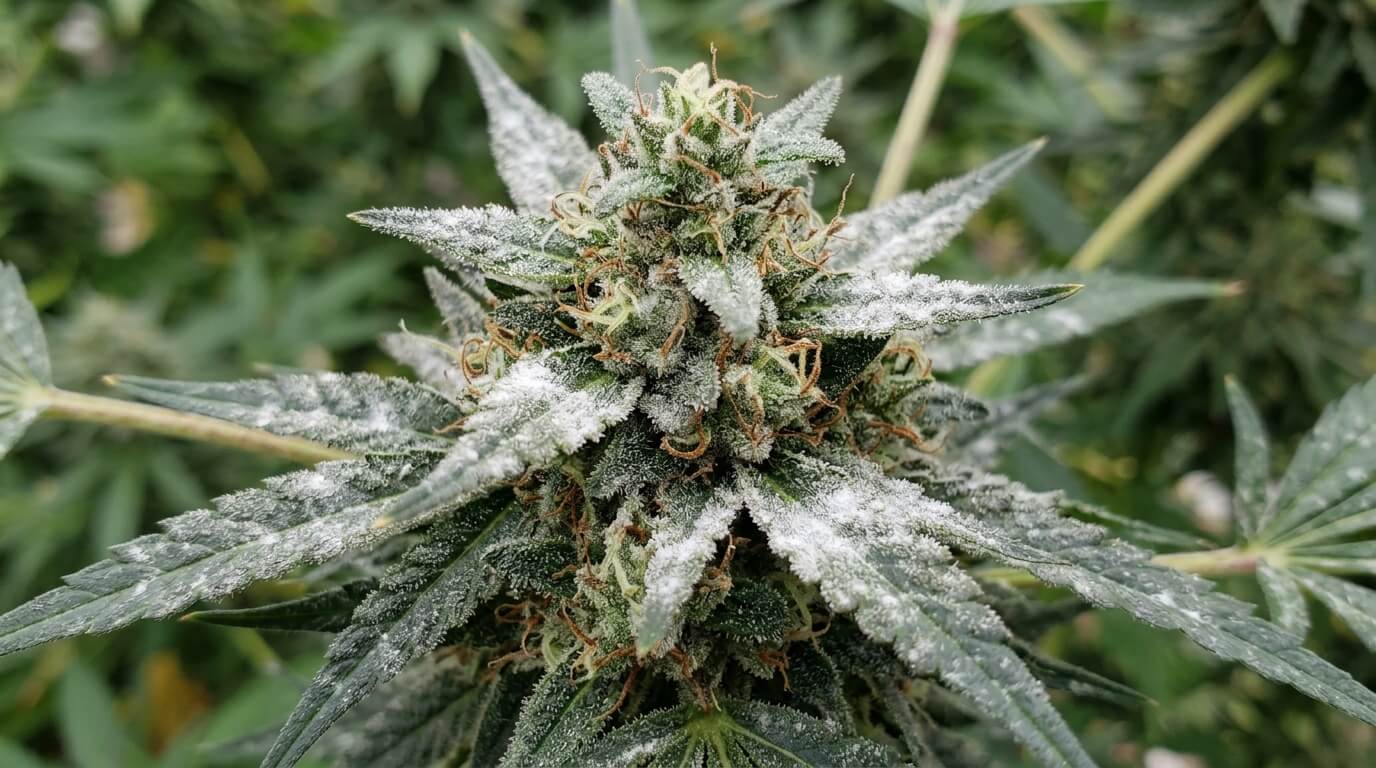
Powdery mildew is a fungal disease that affects a wide variety of plants, including cannabis, and is one of the most common forms of mold on cannabis encountered by growers.. The disease appears as a white or gray powder-like substance that develops on leaves, stems, and sometimes flowers. Unlike many fungal diseases that require standing water, powdery mildew can thrive even when plant surfaces appear dry.
Cannabis growers often underestimate how aggressive this disease can become. Once spores establish themselves in your grow space, they can spread rapidly through the air and infect neighboring plants.
Understanding Powdery Mildew Cannabis Infections
A powdery mildew cannabis infection begins when fungal spores land on plant tissue and find suitable environmental conditions to grow. These microscopic spores germinate and form colonies on the surface of the plant.
Unlike root pathogens that attack beneath the soil, such as those responsible for root rot on cannabis, powdery mildew remains largely on the exterior of plant tissue, powdery mildew remains largely on the exterior of plant tissue. However, this does not make it harmless. The fungus steals resources from the plant and interferes with normal photosynthesis.
As the colony expands, the familiar powdery coating becomes more visible. Left untreated, entire sections of foliage can become covered.
How Cannabis Powdery Mildew Spreads
Cannabis powdery mildew spreads primarily through airborne spores. This makes it particularly difficult to control once it becomes established.
Spores can spread through:
- Fans and ventilation systems
- Clothing and gardening tools
- Insects and pests
- Wind currents outdoors
- Contaminated plant material
I often compare powdery mildew spores to cannabis pollen. Both are lightweight, both travel easily, and both can reach plants surprisingly far away from their original source.
The Impact of Powdery Mildew on Yield, Potency, and Plant Health
Powdery mildew reduces a plant’s ability to perform photosynthesis efficiently. When leaves become covered, they absorb less light and produce less energy.
This can lead to:
- Slower vegetative growth
- Reduced flower production
- Smaller buds
- Lower cannabinoid production
- Increased plant stress
During flowering, the consequences become even more serious. Infected buds can become unsuitable for consumption, resulting in significant crop losses.
What Causes Powdery Mildew on Cannabis Plants?
Powdery mildew is rarely caused by a single factor. Instead, it develops when multiple environmental conditions create an ideal habitat for fungal growth.
Understanding these causes allows you to prevent problems before they begin.
Environmental Conditions That Encourage Powdery Mildew
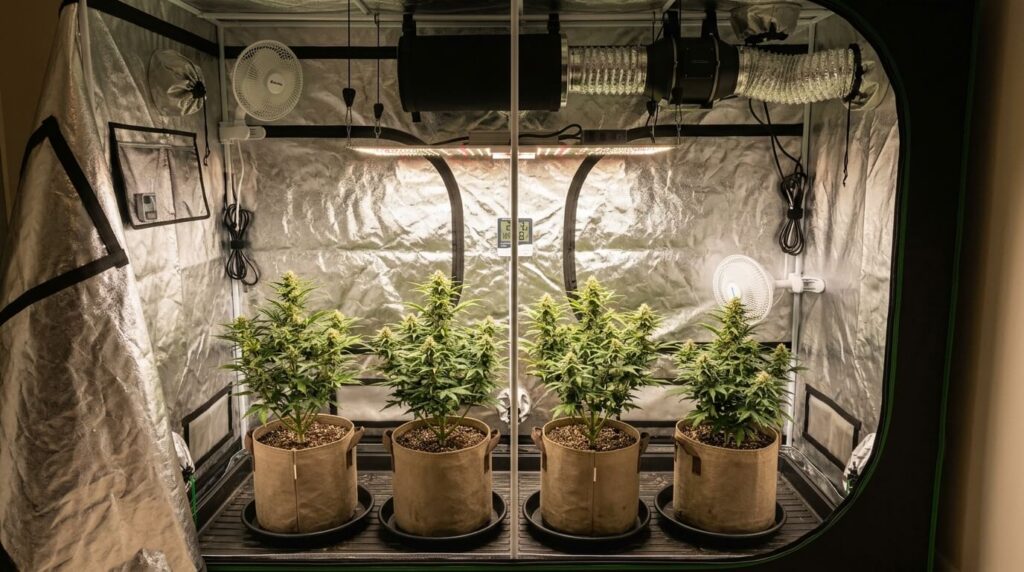
Powdery mildew thrives when environmental conditions allow fungal spores to reproduce and spread. While Many growers assume high humidity alone causes powdery mildew, but environmental stressors such as heat stress can also weaken plants and increase disease pressure.
The table below shows the environmental factors most commonly associated with powdery mildew outbreaks in cannabis grows.
| Environmental Factor | Low Risk Conditions | High Risk Conditions |
| Relative Humidity | 40-55% | Above 60% |
| Airflow | Strong circulation throughout canopy | Stagnant air pockets |
| Plant Spacing | Adequate spacing between plants | Overcrowded canopy |
| Temperature Stability | Consistent temperatures | Large day/night fluctuations |
| Grow Room Hygiene | Regular cleaning and sanitising | Accumulated plant debris |
When several high-risk factors occur together, powdery mildew can spread rapidly throughout a grow room or outdoor garden.
Poor Airflow, Humidity, and Temperature Fluctuations
Poor airflow is one of the most common causes of powdery mildew on cannabis.
When stagnant air develops around leaves, moisture remains trapped within the canopy. This creates microclimates where fungal spores can thrive.
I always pay close attention to:
- Oscillating fan placement
- Ventilation efficiency
- Canopy density
- Temperature consistency
A grow room that experiences warm days and cool nights can create ideal conditions for powdery mildew development.
Overcrowding, Plant Stress, and Contaminated Grow Spaces
Plants that are overcrowded receive less airflow and less light penetration. Dense foliage creates hidden areas where humidity accumulates.
Plant stress also increases vulnerability, particularly when plants are already dealing with cannabis deficiencies or pest pressure:
Stress can result from nutrient deficiencies such as nitrogen deficiency or calcium deficiency, improper watering, pest infestations, root problems, and excessive pruning.
Contaminated grow spaces present another risk. Spores can survive on walls, equipment, pots, and even old plant debris.
Indoor vs Outdoor Risk Factors
Indoor growers face challenges related to ventilation, humidity control, and sanitation. Because indoor environments are enclosed, spores can circulate repeatedly if not removed.
Outdoor growers face different risks because fungal spores can enter the garden from surrounding vegetation, neighboring crops and common cannabis pests. This is one reason many growers carefully select outdoor autoflower seeds that can finish quickly before prolonged periods of unfavorable weather.
Outdoor powdery mildew sources include:
- Nearby vegetation
- Windborne spores
- Seasonal weather changes
- Morning dew
- Dense garden environments
While indoor growers control more variables, outdoor growers often benefit from natural airflow.
When Cannabis Is Most Vulnerable to Powdery Mildew
Cannabis plants can become infected at any stage of growth, but some stages are more vulnerable than others. As foliage becomes denser and flowers begin to develop, airflow naturally decreases around plant tissue.
The following table highlights the risk level during each stage of growth.
| Growth Stage | Powdery Mildew Risk | Reason |
| Seedling | Low | Limited foliage and strong airflow around plants |
| Early Vegetative | Low to Moderate | Increasing leaf production |
| Late Vegetative | Moderate | Dense canopy begins forming |
| Early Flowering | High | Reduced airflow around developing buds |
| Mid to Late Flowering | Very High | Dense flowers create humid microclimates |
For this reason, I increase monitoring frequency during mid-to-late bloom. This becomes even more important when growing 60 day autoflower seeds because plants have a limited window to recover from fungal infections before harvest.
How to Identify Powdery Mildew on Cannabis
| Symptom | Early Stage | Advanced Stage |
| Leaf Spots | Small white patches | Large connected colonies |
| Stem Infection | Rare | Common |
| Bud Infection | Usually absent | Possible |
| Plant Growth | Unaffected | Slowed growth |
| Yield Impact | Minimal | Significant |
Early Signs of Powdery Mildew on Cannabis Leaves
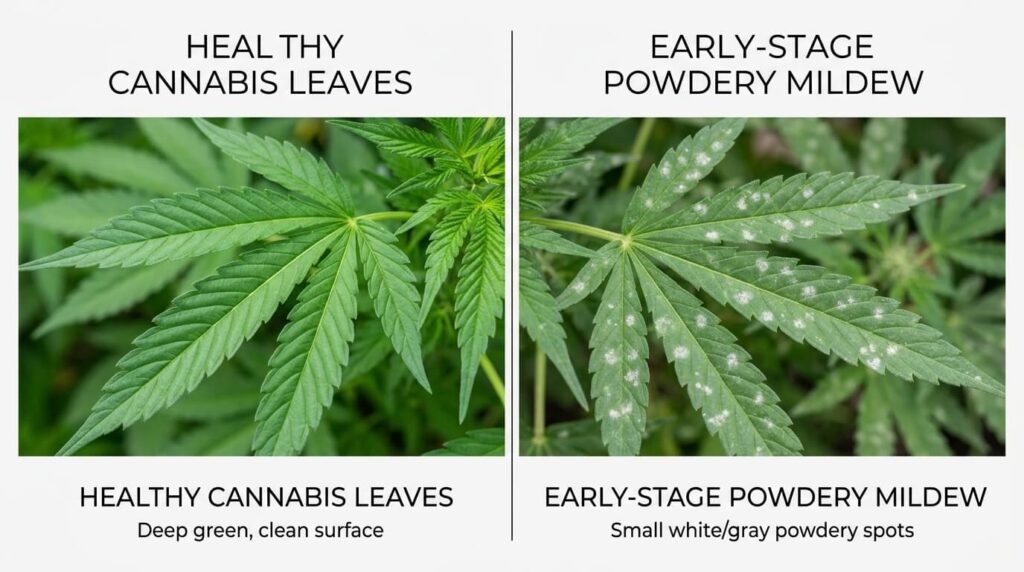
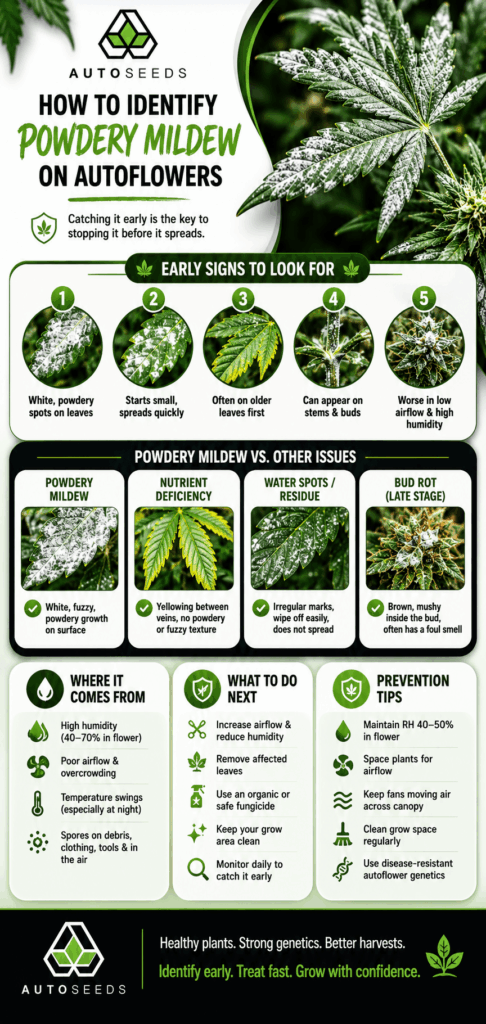
The first sign is usually a small white circular patch on a leaf surface.
These patches may appear:
- Dusty
- Powdery
- Chalk-like
- Slightly fuzzy
Initially, you may notice only a few spots. As the infection progresses, these spots merge together and form larger colonies.
The upper leaf surface is often affected first, although undersides can also become infected.
Powdery Mildew on Cannabis Buds and Stems
Powdery mildew does not limit itself to leaves.
Advanced infections can spread onto:
- Branches
- Petioles
- Stems
- Buds
When flowers become infected, treatment becomes significantly more difficult.
Infected buds may display white powdery growth hidden deep within flower clusters. This contamination raises concerns regarding safety and product quality.
Powdery Mildew vs Bud Rot: Key Differences
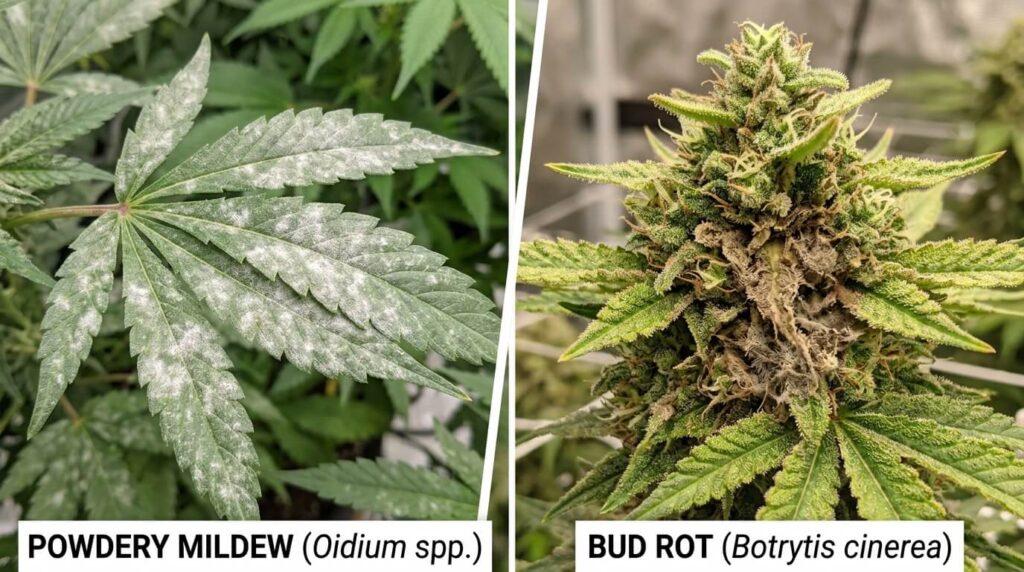
Powdery mildew and bud rot are two of the most common fungal diseases affecting cannabis, although understanding what does bud rot look like can help growers distinguish between the two. New growers often confuse them because both can damage flowers and reduce yields. However, they present very different symptoms and require different management strategies.
Use the table below to identify which disease may be affecting your plants.
| Characteristic | Powdery Mildew | Bud Rot |
| Appearance | White powdery coating | Brown, grey, or dead flower tissue |
| Initial Location | Leaf surfaces and stems | Inside dense buds |
| Texture | Dry and dusty | Wet, mushy, or decaying |
| Spread Method | Airborne spores | High humidity and trapped moisture |
| Early Detection | Usually visible on leaves | Often hidden inside buds |
| Impact on Flowers | Surface contamination | Internal flower destruction |
Accurate diagnosis is important because treating powdery mildew will not stop bud rot, and vice versa.
How to Differentiate Powdery Mildew From Other Cannabis Plant Issues
Several conditions resemble powdery mildew.
These include:
- Dust accumulation
- Spray residue
- Mineral deposits
- Beneficial fungal products
- Dense trichome coverage
A simple inspection often reveals the difference. Powdery mildew wipes away easily but usually returns quickly. Trichomes remain attached and sparkle under light.
If you are uncertain, examine the area closely with a magnifying lens.
What Happens if Powdery Mildew Is Left Untreated?
Untreated powdery mildew rarely disappears on its own. In severe outbreaks, entire crops can become compromised. Prolonged fungal pressure can also create conditions that favor other harmful pathogens, including fusarium, penicillium, and aspergillus, making early intervention even more important.
Instead, the infection generally:
- Expands across the canopy
- Produces additional spores
- Weakens plant growth
- Reduces yields
- Contaminates flowers
In severe outbreaks, entire crops can become compromised.
The longer you wait, the more difficult treatment becomes.
Powdery Mildew Treatment Cannabis Growers Can Use
Successful powdery mildew treatment cannabis strategies focus on both eliminating existing infections and preventing future spread.
Speed is important. Early intervention provides the best results.
Immediate Steps for Treating Powdery Mildew on Cannabis
The first step is isolating affected plants whenever possible.
I typically begin by:
- Removing heavily infected leaves
- Increasing airflow
- Lowering humidity
- Inspecting neighboring plants
- Cleaning grow equipment
These actions reduce spore production and limit further spread.
Organic and Natural Treatment Methods
Many growers prefer organic solutions, especially during flowering.
Popular natural options include:
- Potassium bicarbonate sprays
- Hydrogen peroxide solutions
- Biological fungicides
- Beneficial microbes
These treatments disrupt fungal growth while minimizing chemical exposure.
Always follow product instructions and test sprays on a small area first.
Best Homemade Sprays for Powdery Mildew on Cannabis
Homemade treatments can provide temporary control when infections are mild.
Common options include:
- Baking soda solutions
- Milk sprays
- Diluted hydrogen peroxide
- Potassium bicarbonate mixtures
While these treatments may reduce fungal populations, they are generally most effective when combined with proper environmental management.
Remember that homemade remedies are not magic bullets. If environmental conditions remain favorable for fungal growth, powdery mildew often returns.
Commercial Fungicides and Advanced Treatment Options
When powdery mildew becomes widespread, commercial fungicides may provide a more effective solution than homemade remedies. In my experience, the most effective powdery mildew treatment cannabis strategy depends on both the severity of the outbreak and the stage of growth. A treatment that works well during vegetative growth may not be suitable once flowers begin developing. For this reason, I always evaluate the infection level, flowering stage, and harvest timeline before selecting a product.
The table below outlines the most commonly used treatment categories.
| Treatment Type | How It Works | Best Used For |
| Potassium Bicarbonate | Alters leaf surface pH and disrupts fungal growth | Mild to moderate infections |
| Biological Fungicides | Introduces beneficial microbes that compete with fungi | Preventative programs |
| Sulfur-Based Products | Prevents spore development | Vegetative growth stages |
| Hydrogen Peroxide Products | Oxidises fungal cells | Spot treatments |
| Commercial Systemic Fungicides | Targets fungal infections internally | Severe outbreaks |
Sulfur-based products can be highly effective during vegetative growth, but I avoid them during flowering because residue can remain on buds. Potassium bicarbonate products are often a safer option later in the grow cycle, while biological fungicides work best when used proactively before major outbreaks occur.
Regardless of the treatment selected, I always combine spraying programs with environmental improvements. Treating powdery mildew without correcting airflow or humidity problems is like mopping up water while leaving the leak untouched.
Can Cannabis Buds Be Saved After Infection?
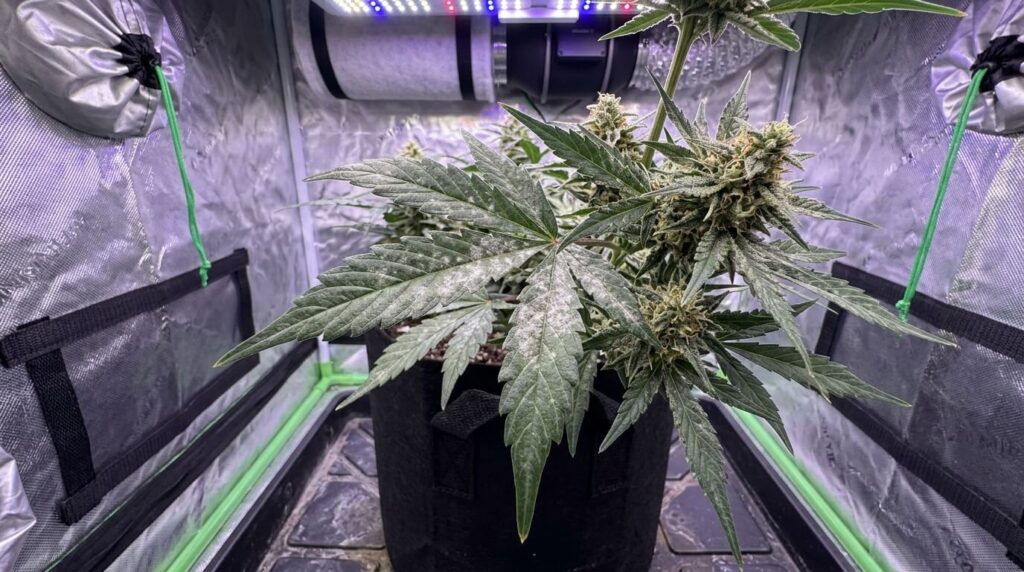
This is one of the most common questions growers ask.
The answer depends on the severity of infection.
Light infections caught early may allow some flowers to be preserved. However, heavily infected buds often require disposal.
As a grower, I never recommend consuming cannabis flowers that contain visible fungal contamination. Health and safety should always come first.
How to Prevent Powdery Mildew on Cannabis
Prevention is far easier than treatment.
The best growers focus on creating conditions where powdery mildew struggles to survive.
Creating the Ideal Grow Environment
Environmental control is your strongest defense.
Target conditions include:
- Proper airflow
- Stable temperatures
- Appropriate humidity levels
- Adequate plant spacing
When these factors remain balanced, powdery mildew becomes far less likely to establish itself.
Cleaning and Sanitising Your Grow Space
Sanitation removes spores before they become a problem.
I routinely clean:
- Grow tents
- Trays
- Containers
- Fans
- Tools
- Floors
Removing plant debris also reduces fungal hiding places.
A clean grow room is a healthier grow room.
Best Practices for Long-Term Disease Prevention
Long-term prevention requires consistency.
Key practices include:
- Monitoring humidity daily
- Pruning dense foliage
- Inspecting plants regularly
- Maintaining strong airflow
- Quarantining new plants
Small preventive actions performed regularly often prevent major outbreaks later.
Choosing Healthy Genetics and Resistant Strains
Some cannabis cultivars demonstrate greater resistance to powdery mildew than others. When growing outdoors, many cultivators look for hardy outdoor autoflowers with strong resistance to environmental stress and fluctuating weather conditions.
While no strain is completely immune, selecting vigorous genetics can reduce risk.
When evaluating genetics, look for:
- Strong disease resistance
- Open canopy structures
- Proven outdoor performance
- Reliable breeder information
Healthy genetics combined with good cultivation practices create the strongest defense against fungal disease.
Frequently Asked Questions About Powdery Mildew on Autoflowers
Can You Smoke Autoflower Buds With Powdery Mildew?
No, it is generally not recommended to smoke autoflower buds with visible powdery mildew. Autoflowers move through flowering quickly, so infections that reach the buds can become a serious harvest-quality issue fast. Some growers try bud washing or trimming away affected areas, but visible fungal growth on flowers is a strong warning sign. If powdery mildew has spread through the buds, disposal is usually the safest option.
Does Powdery Mildew Kill Autoflower Cannabis Plants?
Powdery mildew rarely kills autoflower cannabis plants outright, but it can seriously reduce performance. Autoflowers have a fixed life cycle, which means they have less recovery time than photoperiod plants. A severe infection can reduce photosynthesis, slow growth, stress the plant, and lead to smaller buds or lower final yield. Early action matters because an autoflower cannot simply be kept in veg longer to recover.
What Is the Fastest Way to Get Rid of Powdery Mildew on Autoflowers?
The fastest approach is to correct the grow environment and treat the infection at the same time. Improve airflow, lower excess humidity, remove heavily infected leaves, and apply a suitable treatment for the plant’s growth stage. With autoflowers, be careful during flowering because some sprays can leave residue on developing buds. Catching powdery mildew early gives you the best chance of protecting the plant before its short flowering window is affected.
Will Powdery Mildew Return After Treatment?
Yes, powdery mildew can return if the grow conditions stay the same. Autoflowers are often grown in compact spaces, small tents, or dense canopies, where poor airflow and humidity swings can allow spores to spread again. Treatment may remove visible mildew, but spores can remain on tools, pots, tent walls, and plant debris. Long-term prevention depends on ventilation, spacing, humidity control, and regular cleaning.
Can Powdery Mildew Spread to Other Autoflower Plants?
Yes, powdery mildew spreads through microscopic airborne spores and can move quickly between autoflower plants. This is especially important in small autoflower grows where plants often sit close together. One infected plant can spread spores through fans, handling, or natural airflow. Isolate affected plants where possible, inspect the rest of the crop, and clean the grow area before the outbreak becomes a full tent problem.
Can Powdery Mildew Grow During Autoflower Flowering?
Yes, powdery mildew can grow during autoflower flowering, and this is often the most worrying stage. Autoflowers begin flowering automatically based on age rather than light cycle, so you have limited time to correct problems before harvest. As buds become denser, airflow decreases and moisture can sit inside the canopy. Regular inspections during early, mid, and late flower help you catch infections before they contaminate buds.
Is Powdery Mildew More Common on Indoor or Outdoor Autoflowers?
Powdery mildew can affect both indoor and outdoor autoflowers. Indoor autoflowers are more likely to develop it from poor airflow, high humidity, overcrowding, or weak ventilation in a tent. Outdoor autoflowers face risks from morning dew, rainfall, nearby infected plants, and windborne spores. Neither setup is immune, but autoflowers benefit from consistent conditions because their short life cycle gives you less room for mistakes.
Can Powdery Mildew Live in Soil Used for Autoflowers?
Powdery mildew mainly survives on living plant tissue, infected debris, and airborne spores rather than deep in the soil itself. However, old leaves, contaminated pots, grow trays, fabric pots, and unclean tent surfaces can carry spores into the next autoflower run. Because autoflowers dislike stress and transplant shock, starting each grow in a clean container and fresh medium is one of the simplest ways to reduce disease risk.