
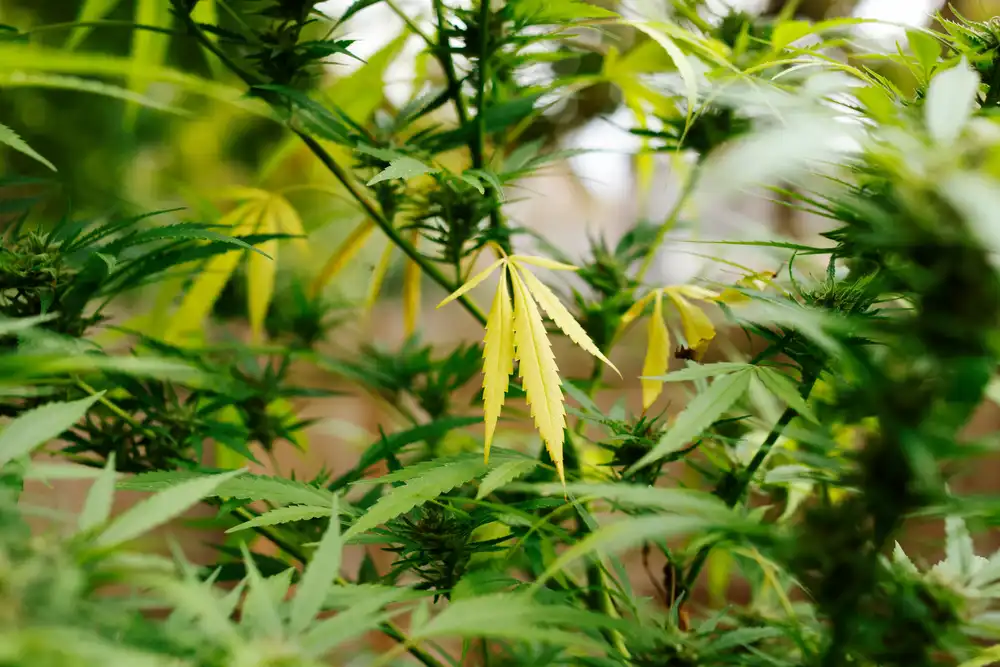
Sulfur Deficiency in Autoflowers: Symptoms, Causes & Fixes
Sulfur deficiency is a relatively uncommon but important nutrient problem in cannabis plants. It typically appears as pale yellow new growth, slowed development, weak stems, and reduced flower production. Because sulfur deficiency can look similar to nitrogen deficiency, it is often misdiagnosed, leading growers to make unnecessary feeding adjustments while the underlying issue continues to affect plant health.
In autoflowers, identifying sulfur deficiency early is especially important. Unlike photoperiod plants, autoflowers have a limited vegetative window and less time to recover from nutrient stress before flowering begins. If left uncorrected, sulfur deficiency can reduce plant size, limit terpene production, and impact overall flower quality.
This guide explains how to identify sulfur deficiency symptoms, distinguish them from other common nutrient issues, understand the most common causes, and restore healthy growth. You’ll also learn how sulfur supports chlorophyll production, terpene development, root health, and overall plant performance throughout the grow cycle.
Article Insights
- Sulfur deficiency usually appears first in new growth near the top of the plant.
- Pale yellow leaves, slowed growth, weak stems, and reduced flower development are common symptoms.
- pH imbalance, overwatering, root stress, and nutrient lockout are among the most common causes.
- Sulfur deficiency is frequently mistaken for nitrogen deficiency because both can cause yellowing foliage.
- Most plants begin showing healthier new growth within 3–7 days after sulfur levels and pH are corrected.
- Epsom salt, gypsum, and potassium sulfate are commonly used to restore sulfur availability.
- Sulfur plays a key role in chlorophyll production, terpene development, amino acid synthesis, and healthy flower formation.
Beginner growers often prefer growing resilient beginner autoflower strains because they are generally easier to manage under changing environmental conditions. If you’re looking for fast and low-maintenance genetics can explore our collection of autoflower cannabis seeds.
What Is Sulfur Deficiency in Autoflower Cannabis Plants?
Sulfur deficiency in autoflower cannabis plants occurs when roots cannot absorb enough sulfur to support healthy growth, photosynthesis, and flower development. While sulfur is a secondary nutrient, it is essential for chlorophyll production, amino acid synthesis, and terpene development.
Because autoflowers have a fixed life cycle, sulfur deficiencies can reduce plant size, yield, and flower quality if not corrected quickly.
| Sulfur Deficiency Symptoms in Autoflowers | Impact |
| Pale yellow new growth | Reduced photosynthesis |
| Slow vegetative growth | Smaller plants |
| Weak stems and branches | Reduced support for buds |
| Lower terpene production | Less aroma and flavor |
| Reduced flower development | Lower yields |
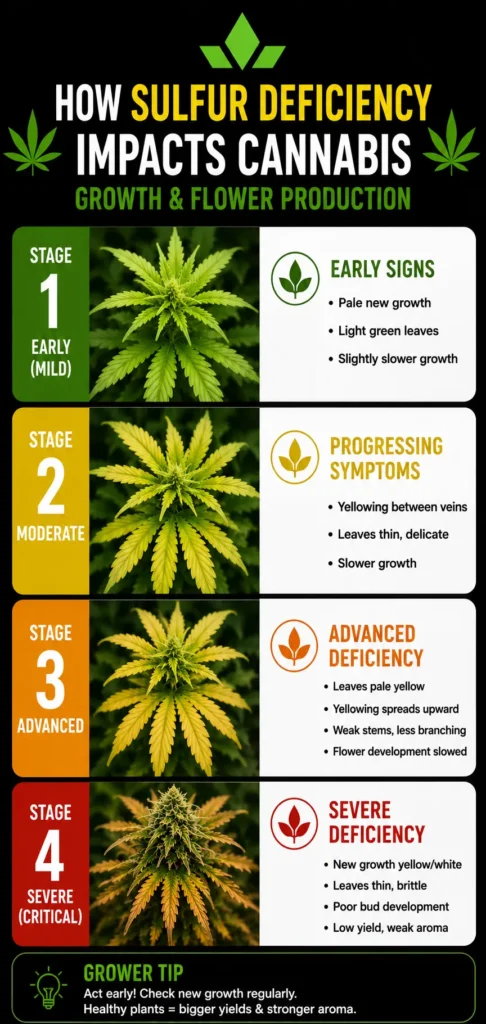
Unlike nitrogen deficiency, sulfur deficiency typically appears first in the newest growth near the top of the plant.
Why Sulfur Is Essential for Autoflower Growth and Terpene Production
Sulfur helps autoflowers produce amino acids, proteins, and terpenes that drive healthy growth and resin production. It also contributes to the pungent aromas found in many skunky, diesel, and fuel-forward cannabis cultivars.
When sulfur levels are low, plants often produce weaker aromas, less resin, and lower-quality flowers.
| Sulfur Function | Benefit to Autoflowers |
| Amino acid production | Stronger growth |
| Protein synthesis | Healthy plant development |
| Terpene production | Better aroma and flavor |
| Resin development | Improved flower quality |
In breeding and phenotype selection runs, sulfur deficiencies are often easiest to spot during flowering. Plants may still produce acceptable-looking buds, but aroma intensity frequently drops before growers notice major yield losses. We’ve seen sulfur deficient plants develop noticeably flatter terpene profiles compared to healthy plants grown under the same conditions, particularly in fuel, skunk, and chem-forward cultivars.
How Sulfur Supports Photosynthesis and Healthy Autoflower Development
Sulfur is required for chlorophyll production, allowing autoflowers to convert light into energy through photosynthesis.
When sulfur becomes deficient, new leaves often turn pale green or yellow, reducing the plant’s ability to generate energy. Since autoflowers have limited recovery time, prolonged deficiencies can permanently reduce growth and final yield.
| Sulfur Deficiency | Nitrogen Deficiency |
| Starts in new growth | Starts in older leaves |
| Pale top canopy | Yellow lower leaves |
| Common in young shoots | Common in mature foliage |
Why Sulfur Deficiency Reduces Autoflower Yield, Aroma, and Flower Quality
Sulfur deficiency affects both vegetative growth and flowering. Plants become weaker, flower sites remain smaller, and terpene production declines.
Common effects include:
| Effect | Result |
| Reduced bud density | Smaller harvests |
| Lower resin production | Less potency and bag appeal |
| Weak branch development | Reduced flower support |
| Dull terpene profiles | Less aroma and flavor |
| Slower growth | Reduced plant size |
Because autoflowers transition into flowering automatically, prolonged sulfur deficiency can have lasting effects on yield potential.
I would correct sulfur deficiency by restoring proper pH and using sulfur-rich supplements such as Epsom salt, gypsum, or potassium sulfate. Once corrected, healthy new growth often appears within a few days.
Signs and Symptoms of Sulfur Deficiency in Autoflower Cannabis Plants
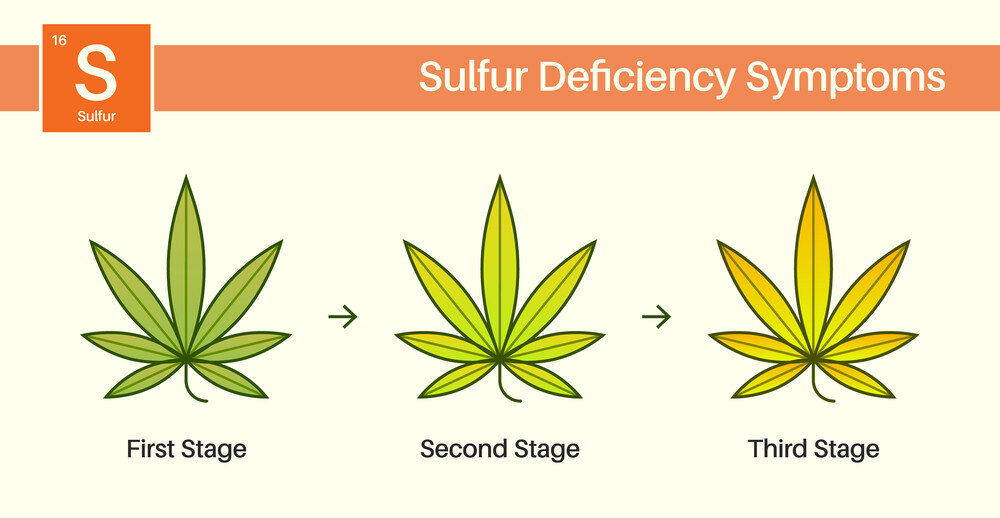
The symptoms of sulfur deficiency in autoflower cannabis plants are relatively easy to identify once you know what to look for. The challenge is that sulfur deficiency is often confused with nitrogen deficiency because both can cause yellowing foliage. In autoflowers, identifying the issue early is especially important because plants have less time to recover before flowering begins.
The location of the symptoms is the biggest clue. In most cases, sulfur deficiency can be identified by observing where yellowing begins and how symptoms progress through the plant.
Yellow New Growth and Early Sulfur Deficiency Symptoms in Cannabis Plants
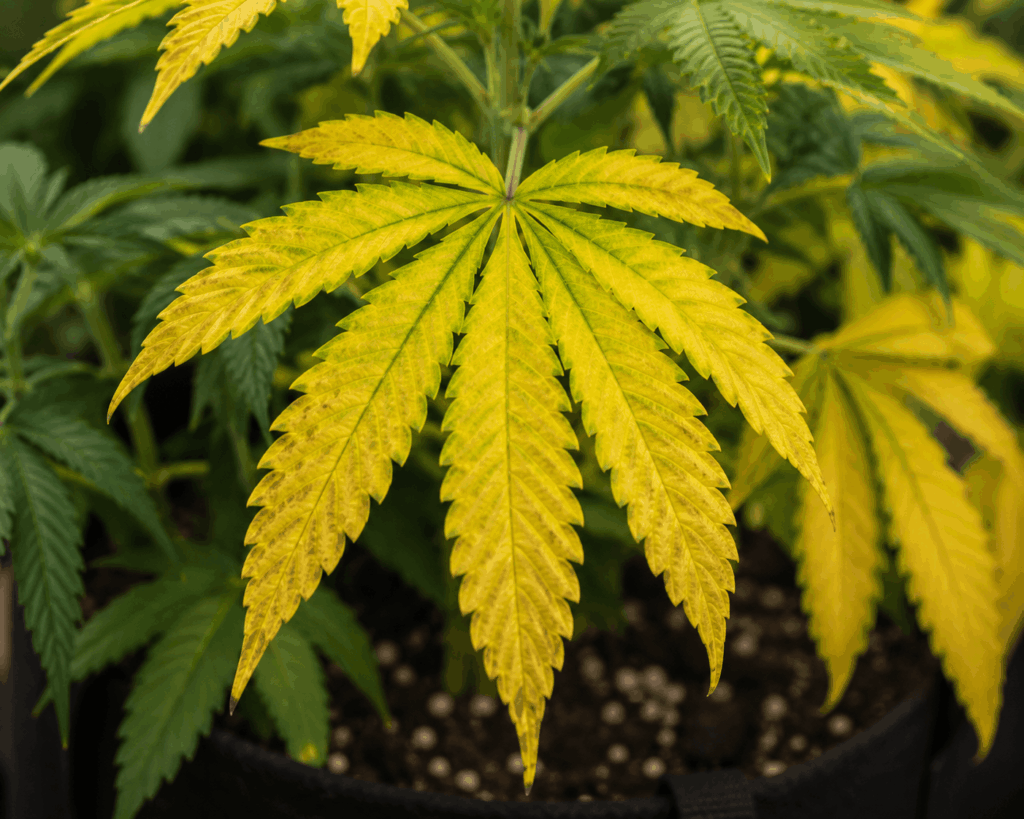
One of the earliest signs of sulfur deficiency in autoflower cannabis plants is pale yellow new growth near the top of the canopy. Young leaves lose their healthy green color while appearing thinner, weaker, and less vigorous than normal growth.
In autoflowers, early sulfur deficiency can slow vegetative development and reduce overall plant size before flowering begins, which may impact final yields.
This yellowing usually starts evenly across the leaf surface rather than appearing as isolated spots or burns. The veins may remain slightly greener during the early stages, but the overall leaf color becomes noticeably lighter.
You may also notice:
- Slower vertical growth
- Smaller leaves
- Delayed branching
- Weak side shoot development
- Reduced stem flexibility
I often describe sulfur deficiency as a “washed-out” appearance. The plant does not always look heavily damaged at first, but it loses its healthy vigor and color quickly.
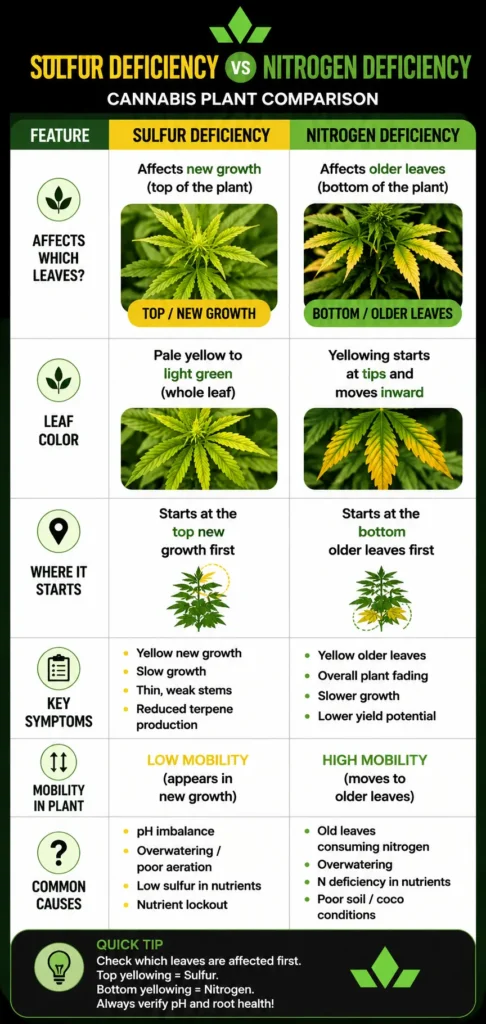
Sulfur Deficiency vs Nitrogen Deficiency in Cannabis Plants
This is where many beginner growers get tripped up.
Nitrogen deficiency affects older leaves first because nitrogen is highly mobile within the plant. Sulfur deficiency, on the other hand, appears in newer growth because sulfur moves less efficiently through cannabis tissue.
Here is the simplest way I explain it:
| Sulfur Deficiency | Nitrogen Deficiency |
| Starts in new growth | Starts in older leaves |
| Pale yellow top leaves | Yellow lower fan leaves |
| Slower bud formation | General fading throughout plant |
| Weak aroma production | Reduced overall vigor |
If your top canopy is turning pale while the bottom leaves remain relatively healthy, sulfur deficiency is often the culprit.
One pattern we often see from growers who contact us for help is repeated nitrogen feeding when the real issue is sulfur availability. If the newest growth continues emerging pale despite additional nitrogen, it is worth checking root-zone pH and reviewing whether your nutrient line supplies adequate sulfur.
Yellow Leaves, Weak Stems, and Slow Bud Development
As sulfur deficiency worsens, the symptoms spread throughout the plant. Leaves become increasingly yellow while stems may appear thin and fragile.
During flowering, bud production slows noticeably. Autoflower plants can be particularly vulnerable because they continue progressing through their life cycle regardless of nutrient availability, leaving less time to recover from deficiencies before harvest.
You may also see:
- Increased internodal spacing
- Weak branches
- Reduced trichome development
- Delayed flower maturation
- Poor stretch during transition
Some growers describe sulfur-deficient plants as looking “tired” or “lazy.” That description is surprisingly accurate.
How Sulfur Deficiency Impacts Autoflower Growth and Flower Production
Sulfur deficiency can affect autoflower cannabis plants at every stage of growth. Because autoflowers have a shorter life cycle, nutrient problems that develop early can reduce plant size, flower production, and overall harvest quality.
Sulfur Deficiency Symptoms in Autoflower Seedlings
Sulfur deficiency is uncommon in seedlings, but when it occurs, new growth may appear pale green or yellow. Seedlings can also develop thin stems, slow growth, and weaker root systems.
| Seedling Symptoms | Potential Impact |
| Pale new growth | Reduced chlorophyll production |
| Slow growth | Delayed establishment |
| Thin stems | Reduced structural strength |
| Weak roots | Poor nutrient uptake |
Sulfur Deficiency During the Vegetative Stage
During vegetative growth, sulfur supports chlorophyll production and rapid plant development. Deficiency symptoms usually appear first in the newest leaves near the top of the canopy.
Common symptoms include:
- Pale new growth
- Slower growth
- Smaller leaves
- Weak stems and branches
- Reduced side branching
Because autoflowers have a short vegetative period, prolonged deficiencies can limit plant size and future bud sites.
| Vegetative Symptoms | Potential Impact |
| Pale upper leaves | Reduced photosynthesis |
| Slow growth | Smaller plants |
| Weak branches | Reduced flower support |
| Reduced branching | Fewer bud sites |
Sulfur Deficiency During Flowering
Common symptoms include:
- Reduced bud density
- Lower resin production
- Weaker aromas
- Smaller flower clusters
- Delayed maturation
Severe sulfur deficiency during flowering can permanently reduce yield and flower quality because autoflowers have limited time to recover before harvest.
Sulfur Deficiency by Growth Stage
| Growth Stage | Primary Symptoms | Main Impact |
| Seedling | Pale growth, thin stems | Reduced vigor |
| Vegetative | Yellow new growth, weak branches | Smaller plants and fewer bud sites |
| Flowering | Reduced resin, weaker aromas, smaller buds | Lower yields and flower quality |
Healthy genetics can also help plants handle temporary nutrient stress. Many growers choose high THC autoflower seeds for vigorous growth, strong resin production, and consistent flower development.
What Causes Sulfur Deficiency in Cannabis Plants?
Sulfur deficiency in autoflower cannabis plants usually comes from poor nutrient availability, pH imbalance, or root-zone stress rather than a complete lack of sulfur in the feed. Because autoflowers grow quickly and move through each life stage automatically, small issues in the root zone can affect growth, flower development, and final yield faster than many growers expect.
pH Imbalance and Nutrient Lockout
Improper pH is one of the most common causes of sulfur deficiency. Even when sulfur is present in the growing medium or nutrient solution, roots may struggle to absorb it if the pH drifts outside the ideal range.
For most cannabis grows:
| Growing Medium | Ideal pH Range |
| Soil | 6.0–7.0 |
| Coco/Hydro | 5.5–6.2 |
When pH moves too far outside these ranges, sulfur uptake can slow down and issues such as iron deficiency in cannabis may also begin to appear.
Overwatering, Root Stress, and Poor Root Oxygen Levels
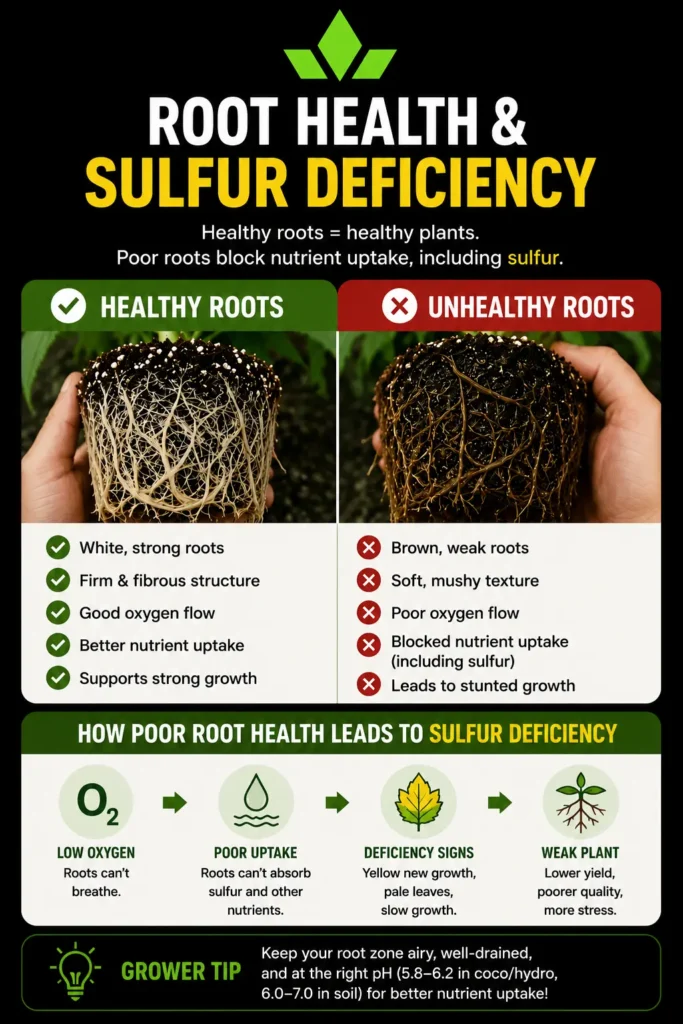
Overwatering is another common trigger. When the root zone stays too wet for too long, oxygen levels drop and nutrient uptake slows. This can make the plant look deficient even when the nutrients are already present.
When troubleshooting sulfur deficiency reports from growers, we often find that the nutrient programme is not the primary issue. The plant is receiving sulfur, but root uptake has slowed because the medium remains saturated for too long. Before adding more nutrients, it’s worth checking whether the root zone is getting enough oxygen between waterings.
Poor root conditions can lead to:
| Root-Zone Issue | Potential Result |
| Low oxygen levels | Slower nutrient uptake |
| Root rot | Weak, damaged roots |
| Salt buildup | Nutrient lockout |
| Anaerobic conditions | Poor microbial balance |
Sulfur deficiency often appears after root stress has already started. If the medium remains constantly saturated, the plant cannot absorb nutrients efficiently, no matter how balanced the feeding schedule looks.
Healthy roots should appear white, active, and well oxygenated. Stressed roots struggle to support fast autoflower growth, especially during the transition into flowering.
Sulfur Deficiency in Soil, Coco Coir, and Hydroponic Cannabis Systems
In soil, sulfur deficiency is more likely when the medium is depleted, reused, or lacking mineral amendments. Living soil and compost-based mixes often buffer nutrient availability better, but they still need balanced pH and healthy microbial activity.
In coco coir, deficiencies can appear when secondary nutrients are underfed or when salt buildup develops in the root zone. Coco often requires consistent support to prevent calcium deficiency, magnesium deficiencies, and sulfur-related nutrient problems.
In hydroponic systems, sulfur deficiency can show quickly when reservoir pH, EC, or nutrient balance becomes unstable. Hydro plants respond rapidly to changes, so small reservoir problems can cause visible symptoms within a short period.
Common Grower Mistakes That Cause Sulfur Deficiency
Several common mistakes can lead to sulfur deficiency symptoms, especially in fast-growing autoflowers:
| Mistake | Why It Causes Problems |
| Using reverse osmosis water without minerals | Removes natural calcium, magnesium, and sulfur sources |
| Reusing depleted soil | Leaves fewer available nutrients for new plants |
| Ignoring runoff pH and EC | Allows lockout or salt buildup to go unnoticed |
| Overfeeding nitrogen-heavy nutrients | Can create nutrient imbalance |
| Letting coco or hydro systems accumulate salts | Reduces nutrient availability |
| Keeping the root zone too wet | Limits oxygen and slows uptake |
Another common issue we see is growers feeding autoflowers too lightly during vegetative growth because they are worried about overfeeding. Caution is sensible, especially with young plants, but consistently underfeeding can gradually create deficiencies in secondary nutrients such as sulfur. This is particularly common in coco-based grows, where plants rely more heavily on regular, balanced feeding.
Most sulfur deficiencies are caused by imbalance rather than simple starvation. Autoflowers can be resilient, but they perform best when pH, root health, moisture levels, and feeding strength remain consistent throughout the grow.
We also see growers switch between several nutrient products when trying to correct yellowing leaves. This often makes diagnosis harder because the root zone keeps changing. In many cases, stabilising the feeding programme, checking pH, and correcting the underlying uptake issue produces better results than repeatedly adding new supplements.
Best Ways to Fix Sulfur Deficiency in Autoflower Cannabis Plants
Fixing sulfur deficiency in autoflower cannabis plants is about more than adding a sulfur supplement and hoping for the best. In my experience, the fastest and most reliable recoveries happen when growers identify the root cause first, whether that’s pH imbalance, root-zone stress, overwatering, or an actual lack of sulfur in the feeding program.
Because autoflowers grow faster, early intervention is important. A deficiency that lingers for several weeks can reduce plant size, slow flower development, and ultimately impact yield and quality at harvest.
Best Sulfur Supplements for Autoflower Cannabis Plants
Several sulfur-containing products can help restore healthy growth, depending on your growing medium and cultivation style.
| Supplement | Primary Benefit |
| Epsom Salt | Fast-acting sulfur and magnesium source |
| Gypsum | Slow-release sulfur and calcium |
| Potassium Sulfate | Sulfur and potassium support during flowering |
| Compost and Organic Amendments | Improves long-term nutrient availability |
| Sulfate-Based Nutrients | Balanced feeding for hydro and coco systems |
For soil growers, gypsum and organic amendments are often effective long-term solutions. In coco and hydroponic systems, sulfate-based nutrients typically provide faster results because nutrients are immediately available to the roots.
Using Epsom Salt, Gypsum, and Potassium Sulfate
Over the years, Epsom salt has remained one of the most reliable sulfur supplements I’ve used because it supplies both sulfur and magnesium in a form that plants can absorb quickly. Typical application rates are around 1 teaspoon per gallon of water for root feeding and 1 tablespoon per gallon for foliar applications, although overapplying any supplement should be avoided.
Typical application rates include:
| Application Method | Suggested Rate |
| Root Feeding | 1 teaspoon per gallon of water |
| Foliar Spray | 1 tablespoon per gallon of water |
Gypsum works more gradually but provides the added benefit of supplying calcium while helping improve soil structure over time, making it particularly useful in living soil and organic growing systems. Potassium sulfate can also be a valuable option during flowering for growers looking to avoid potassium deficiency while supporting healthy bud development, as it supplies sulfur alongside additional potassium to support healthy bud development and flower production.
Whatever supplement you choose, avoid the temptation to overcorrect. Excess sulfur can create new nutrient imbalances and slow recovery rather than accelerate it. One thing we’ve consistently observed is that sulfur-deficient autoflowers often regain healthy color in new growth before their growth rate fully returns to normal. It’s easy to assume the problem has been solved as soon as the plant greens up, but continued monitoring is important because underlying root-zone issues can still be limiting nutrient uptake and overall development. Healthy new growth is a positive sign, but sustained vigour and normal growth patterns are the best indicators that the deficiency has truly been resolved.
Correcting pH for Better Sulfur Uptake
One of the most overlooked causes of sulfur deficiency is improper pH. I’ve seen many growers including myself increase nutrient strength when the real issue was nutrient lockout caused by an unstable root-zone environment.
Even when sulfur is present in the medium, roots may struggle to absorb it if pH falls outside the optimal range.
| Growing Medium | Ideal pH Range |
| Soil | 6.2–6.8 |
| Coco/Hydro | 5.7–6.1 |
Once pH is corrected, plants often begin showing signs of improvement within a few days.
To maintain consistent nutrient availability:
- Calibrate pH meters regularly
- Monitor runoff pH and EC
- Check reservoir stability daily in hydroponic systems
- Avoid sudden changes in nutrient strength
Healthy roots in a stable environment will always outperform heavily fed plants growing under poor root-zone conditions.
Foliar Feeding vs Root Feeding
Foliar feeding can provide quick relief because nutrients are absorbed directly through the leaves. This method is especially useful when deficiency symptoms are progressing rapidly or when root uptake has been compromised by environmental stress.
However, foliar sprays should be viewed as a short-term solution rather than a complete fix.
Root feeding addresses the underlying issue by restoring sulfur availability within the growing medium and supporting long-term plant health.
We often advise that you should use both approaches together this often produces the fastest recovery.
| Method | Primary Purpose |
| Foliar Feeding | Rapid symptom relief |
| Root Feeding | Long-term correction |
When used correctly, this combination often produces the fastest and most consistent recovery.
Recovery Timeline for Autoflower Cannabis Plants
Recovery time varies depending on the severity of the deficiency, the health of the root system, and how quickly the underlying problem is corrected. While damaged leaves may remain discolored, healthy new growth is usually the clearest sign that the plant is recovering.
A typical recovery timeline looks like this:
| Time After Correction | Expected Response |
| 2–3 Days | New growth begins showing healthier color |
| 5–7 Days | Improved vigor and stronger development |
| 10–14 Days | Growth returns to normal patterns |
When evaluating recovery, focus on the newest growth rather than damaged leaves. Existing yellow leaves often remain discoloured permanently, but healthy green growth emerging from the top of the plant is usually the clearest sign that sulfur uptake has improved.
Patience is also important. Plants rarely recover overnight, but when the root cause has been addressed, healthy new growth will often tell you that you’re moving in the right direction.
How to Prevent Sulfur Deficiency in Autoflower Cannabis Plants
Preventing sulfur deficiency is far easier than correcting it once growth begins to slow. In most cases, autoflowers receive enough sulfur when nutrition, pH, and root-zone conditions remain balanced throughout the grow cycle.
Because autoflowers have limited time to recover from nutrient stress, prevention is often the most effective strategy for maximizing growth, flower production, and overall plant performance.
Building a Balanced Feeding Schedule
A well-designed feeding program provides all the nutrients plants need without creating excesses that can lead to nutrient lockout or uptake issues.
Your feeding schedule should include:
| Nutrient Type | Purpose |
| Macronutrients | Support growth and flower development |
| Secondary Nutrients | Provide calcium, magnesium, and sulfur |
| Micronutrients | Support plant metabolism and health |
| Proper EC Management | Prevent overfeeding and nutrient stress |
One of the most common mistakes I see is growers chasing bigger yields by increasing nutrient strength too aggressively. Healthy plants respond best to consistency, not excess.
Monitoring Plant Health Throughout the Grow Cycle
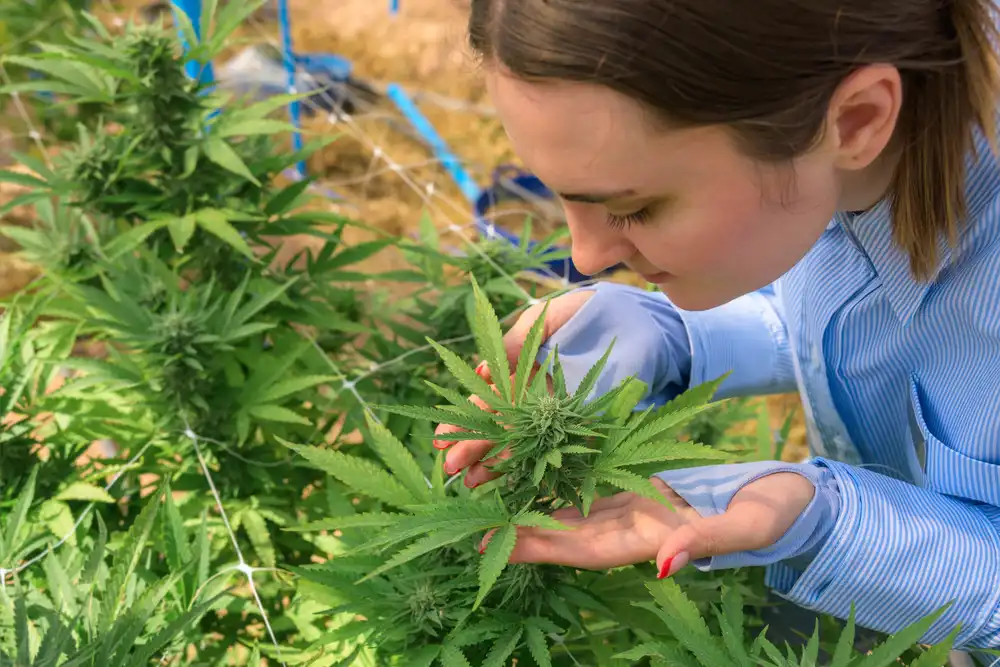
Regular inspections allow growers to identify minor issues before they affect plant development.
During daily checks, I typically monitor:
- Leaf color and overall vigor
- New growth development
- Stem and branch strength
- Growth rate
- Root-zone moisture levels
- Runoff pH and EC
Small changes often appear long before major deficiency symptoms develop. Catching problems early gives you time to make adjustments before growth or flower production is affected. Catching sulfur deficiency early often means correcting it before growth slows significantly.
Maintaining Healthy Root-Zone Conditions
Healthy roots are the foundation of healthy plants. Even the best nutrient program will struggle to perform if roots are stressed or unable to absorb nutrients efficiently.
To support strong root development:
| Best Practice | Benefit |
| Avoid overwatering | Improves oxygen availability |
| Use well-draining growing media | Supports healthy root growth |
| Maintain proper airflow around containers | Reduces excess moisture |
| Prevent nutrient salt accumulation | Improves nutrient uptake |
| Monitor watering frequency | Reduces root stress |
If you are using living soil or other organic growing methods, beneficial microbes can improve nutrient cycling and help make sulfur and other nutrients more available to the root zone.
Preventing Recurring Nutrient Deficiencies
Long-term success comes from maintaining a stable growing environment rather than constantly reacting to problems after they appear.
Experienced growers typically focus on:
- Maintaining stable pH levels
- Following a balanced feeding schedule
- Monitoring runoff regularly
- Avoiding root-zone stress
- Re-amending reused soil when necessary
- Keeping detailed feeding and watering records
Keeping your roots healthy, feeding consistently, and maintaining stable growing conditions can help prevent sulfur deficiency and other common nutrient problems.
Conclusion
Sulfur deficiency in autoflower cannabis plants is usually easy to manage when caught early. Although it can resemble nitrogen deficiency, pale new growth, reduced vigor, and slower development are common signs that help distinguish it.
Sulfur supports chlorophyll production, amino acid synthesis, terpene development, and flower growth. When levels become too low, plants may produce smaller yields, less resin, and weaker aromas.
Because autoflowers have a limited recovery window, early intervention is important. Correcting pH, improving root health, and supplying a sulfur source such as Epsom salt, gypsum, or potassium sulfate can often restore healthy growth within days.
In my experience, preventing nutrient issues comes down to maintaining balance. Healthy roots, stable pH, proper watering, and consistent feeding help prevent many common autoflower deficiencies before they affect growth and flower production. Pay attention to changes in growth and foliage, act quickly when problems appear, and your plants will reward you with healthy, productive harvests.
Frequently Asked Questions About Sulfur Deficiency in Autoflower Cannabis Plants
What are the first signs of sulfur deficiency in autoflower cannabis plants?
The earliest signs of sulfur deficiency are usually pale green or yellow new growth near the top of the plant. Young leaves may appear lighter in color, while overall growth becomes slower and less vigorous than normal.
How do I know if my autoflower has sulfur deficiency or nitrogen deficiency?
The easiest way to tell the difference is by looking at where symptoms appear. Sulfur deficiency typically affects new growth first, while nitrogen deficiency usually starts in older leaves near the bottom of the plant.
What causes sulfur deficiency in autoflower cannabis plants?
Sulfur deficiency is commonly caused by pH imbalance, nutrient lockout, overwatering, root stress, depleted growing media, or inconsistent feeding practices. In many cases, sulfur is present but unavailable to the roots due to poor growing conditions.
What is the fastest way to fix sulfur deficiency?
The fastest approach is to correct pH levels and provide a readily available sulfur source such as Epsom salt, gypsum, or potassium sulfate. Foliar feeding can provide temporary relief while root-zone conditions are being corrected.
How long does it take autoflowers to recover from sulfur deficiency?
Most plants begin showing signs of improvement within 3–7 days after the underlying issue is corrected. While damaged leaves may not recover completely, healthy new growth is usually the first indication that the plant is recovering.
Can sulfur deficiency reduce yield?
Yes. If left untreated, sulfur deficiency can reduce plant size, slow flower development, and decrease overall harvest weight. Early correction helps minimize long-term effects.


