
Cannabis Seedling Problems: Signs, Causes & How to Fix Them
Most cannabis seedlings show warning signs days before serious damage develops. A slightly drooping leaf, stretched stem, or pale discoloration can quickly turn into permanent stunting if environmental conditions stay unchecked. The seedling stage is where growers make the majority of early mistakes, especially with watering, lighting intensity, humidity, and airflow.
The good news is that cannabis seedlings usually communicate stress very clearly once you know what to look for. Overwatered seedlings develop thick swollen leaves long before root problems appear. Light-starved plants stretch upward searching for intensity. Heat stress creates upward curling edges before leaves become dry and brittle.
This guide breaks down the most common cannabis seedling problems, how symptoms progress over time, what healthy seedlings should look like, and the practical fixes growers use to recover stressed plants before long-term damage occurs.
Article Insights
- Most cannabis seedling problems appear within the first 10–14 days after sprouting.
- Overwatering is the most common cause of drooping cannabis seedlings.
- Stretching usually develops from insufficient PPFD or improper grow light distance.
- Cannabis seedlings generally perform best between 68–77°F and 65–75% humidity.
- Nutrient burn often begins as tiny yellow leaf tips before progressing into brown crispy edges.
- Autoflower seedlings are more sensitive to stress because recovery time is limited.
- Healthy seedlings should display compact growth, tight node spacing, and vibrant green leaves.
Many growers notice that some autoflower genetics recover from early stress more effectively than others. Stable autoflower seeds for beginners are commonly bred for resilience, compact growth, and easier environmental tolerance during the seedling stage, which can help reduce common issues like stretching, overwatering stress, and slow early development.
What Healthy Cannabis Seedlings Should Look Like
Healthy cannabis seedlings grow surprisingly fast under stable conditions. During the first two weeks, the plant should remain compact, upright, and steadily produce new leaf growth every few days.
Growers who understand normal seedling development can usually identify problems before major stress develops.
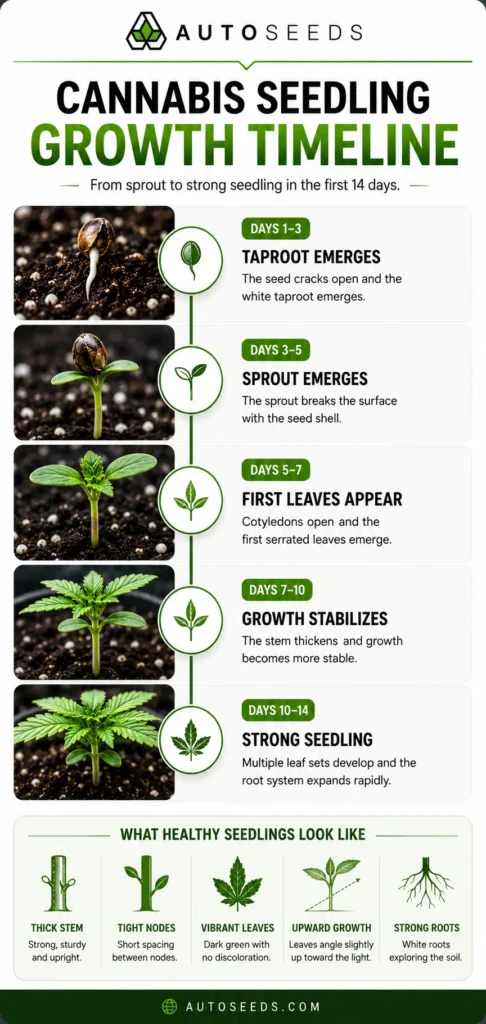
Cannabis Seedling Growth Timeline (First 14 Days)
Days 1–3
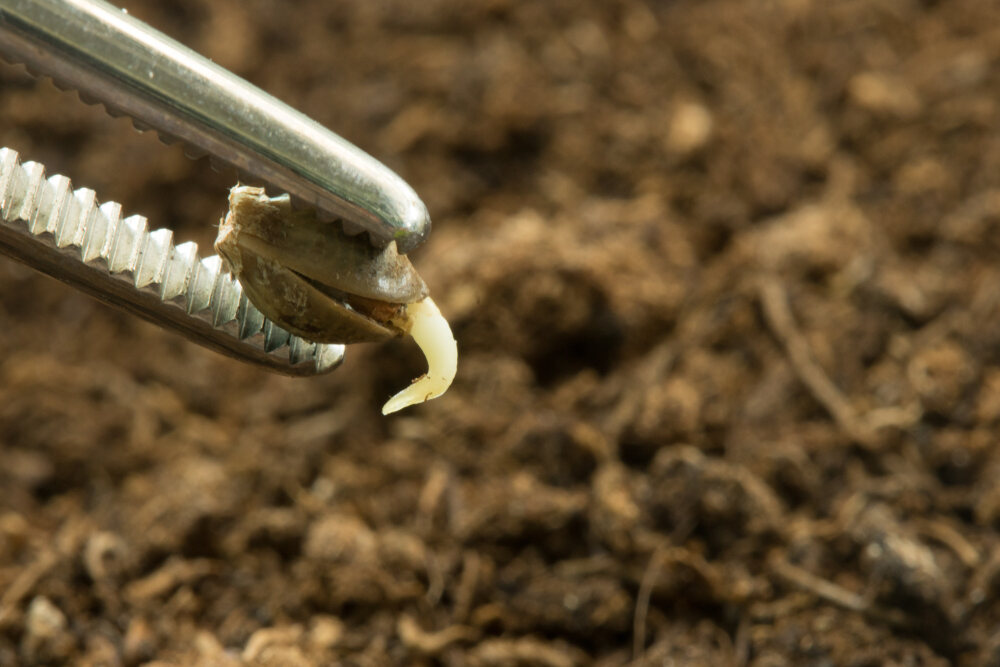
The seed cracks open and the white taproot emerges. Shortly afterward, the sprout breaks through the soil surface carrying the seed shell.
Healthy signs:
- White taproot
- Upright sprout
- Fast emergence
Days 3–5
The cotyledons unfold beneath the grow light and begin photosynthesis.
Healthy cotyledons should appear:
- Bright green
- Symmetrical
- Smooth and fully opened
Days 5–7
The first serrated cannabis leaves emerge from the center of the plant.
At this stage:
- stems should remain short and sturdy
- growth should look compact
- leaves should point slightly upward toward the light
Days 10–14
Healthy seedlings begin producing multiple leaf sets while root growth expands rapidly below the surface.
By the second week:
- stems should thicken noticeably
- node spacing should stay tight
- the plant should support itself easily
| Seedling Age | Healthy Appearance |
| Days 1–3 | White taproot and upright sprout |
| Days 3–5 | Cotyledons open evenly |
| Days 5–7 | First serrated leaves emerge |
| Days 7–10 | Stem thickens and stabilizes |
| Days 10–14 | Multiple healthy leaf sets appear |
Early Warning Signs of Cannabis Seedling Problems
Most cannabis seedling issues begin subtly before becoming severe. Small visual changes often appear several days before major damage develops.
Learning symptom progression is one of the most valuable diagnostic skills growers can develop.
| Visual Symptom | Early Stage | Advanced Stage |
| Overwatering | Slight drooping | Yellow swollen leaves |
| Stretching | Taller stem | Weak unstable growth |
| Nutrient burn | Yellow leaf tips | Crispy brown margins |
| Heat stress | Slight upward curl | Dry taco-shaped leaves |
For example:
- Overwatered seedlings usually look heavy and swollen before yellowing begins.
- Underwatered seedlings become thin and limp before leaves dry out.
- Stretched seedlings often start with only mild elongation before becoming unstable.
Many growers accidentally worsen problems because they react too aggressively during the early stages.
Common Cannabis Seedling Problems and How to Fix Them
Overwatered Cannabis Seedlings
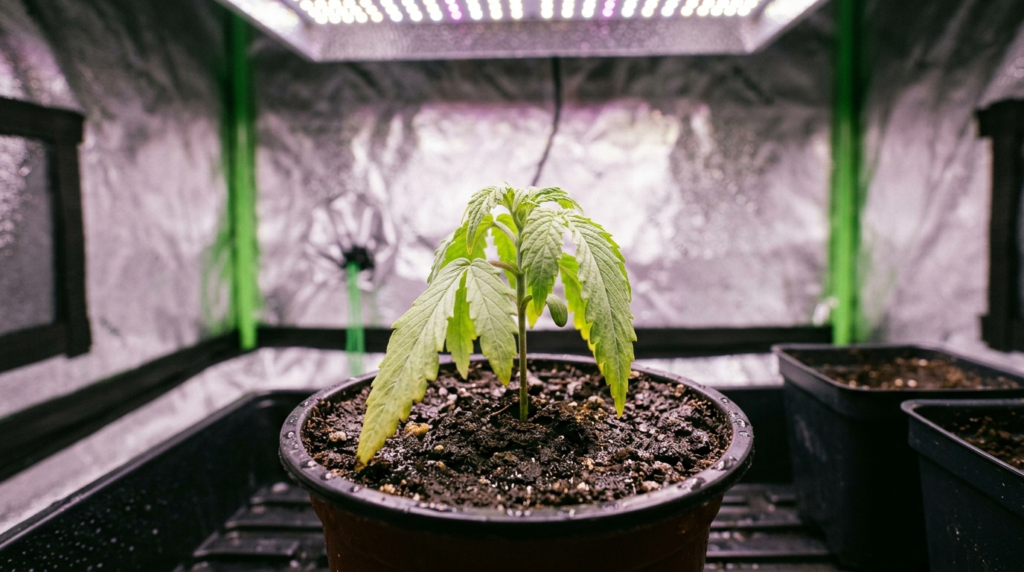
Overwatering is the single most common seedling problem, especially among beginner growers.
Cannabis seedlings require very little water during early root development. Constantly saturated soil reduces oxygen availability around the roots and slows growth dramatically.
Early Symptoms of Overwatering
The first signs are often deceptive because the leaves still appear hydrated.
Typical early symptoms:
- slight downward drooping
- swollen leaf texture
- dark wet soil
- slow growth
As root oxygen decreases:
- lower leaves begin turning pale yellow
- stems weaken
- growth stalls
| Overwatering Progression | Appearance |
| Early stage | Slight drooping |
| Moderate stage | Puffy swollen leaves |
| Advanced stage | Yellowing and root stress |
How to Fix Overwatered Seedlings
- Allow the growing medium to partially dry before watering again Increase airflow with our ventilation guide around containers
- Avoid watering the entire pot repeatedly
- Water only near the root zone during early growth
One of the easiest ways to judge watering needs is container weight. Dry pots feel dramatically lighter than saturated ones.
Underwatered Cannabis Seedlings
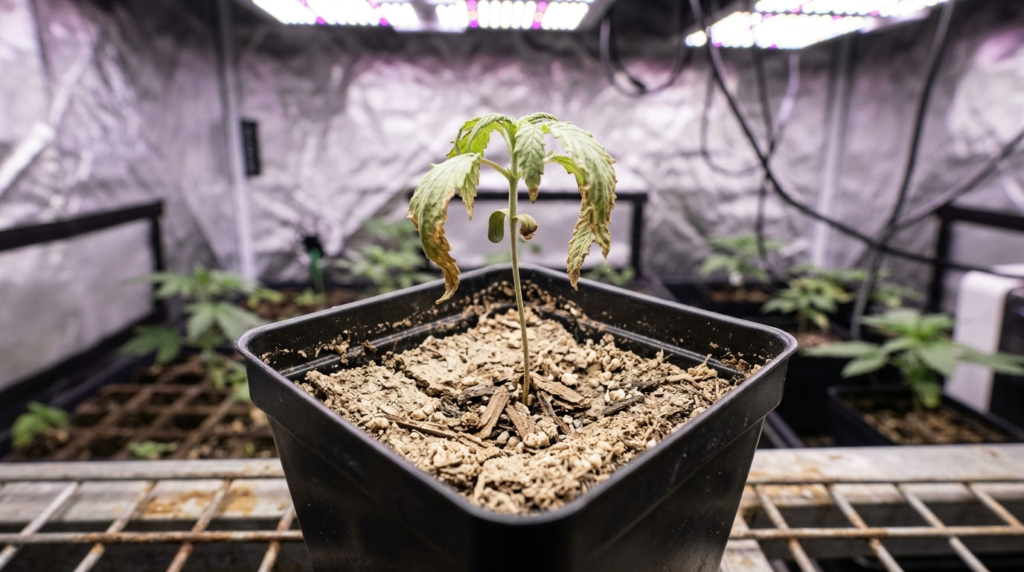
Underwatered seedlings progress differently than overwatered plants.
Instead of looking swollen and heavy, the leaves become thin, weak, and limp.
Symptoms of Underwatering
Early signs:
- soft drooping leaves
- lightweight containers
- dry pale soil
As dehydration worsens:
- leaf edges curl upward
- foliage becomes crispy
- growth slows rapidly
| Underwatering Progression | Appearance |
| Early stage | Thin drooping leaves |
| Moderate stage | Curling dry edges |
| Advanced stage | Crispy brittle foliage |
How to Recover Dry Seedlings
Avoid flooding severely dry containers immediately. Gradual rehydration usually produces better recovery and reduces additional root stress.
Cannabis Seedlings Stretching From Weak Lighting
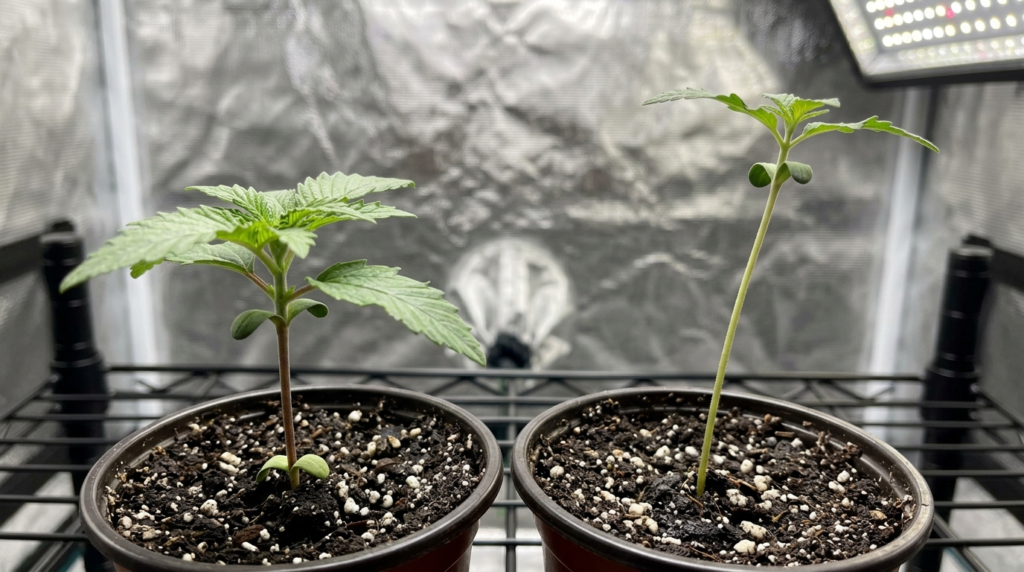
Stretching happens when seedlings search for stronger light intensity.
Under weak LEDs or lights positioned too far away, stems elongate aggressively while becoming thinner and weaker.
Early Signs of Stretching
The first indication is usually:
- taller-than-normal growth
- wider node spacing
- slight leaning toward the light source
Severely stretched seedlings often resemble a thin green thread supporting two small leaves.
| Healthy Seedling | Stretched Seedling |
| Compact structure | Tall thin stem |
| Tight node spacing | Wide spacing |
| Thick stem | Weak unstable stem |
| Upright posture | Leaning growth |
How to Fix Stretching
- Lower the grow light gradually
- Increase PPFD carefully
- Add gentle airflow to strengthen stems
- Support severely stretched seedlings if necessary
Cannabis seedlings generally perform best around 200–300 PPFD during early development.
Damping Off Disease
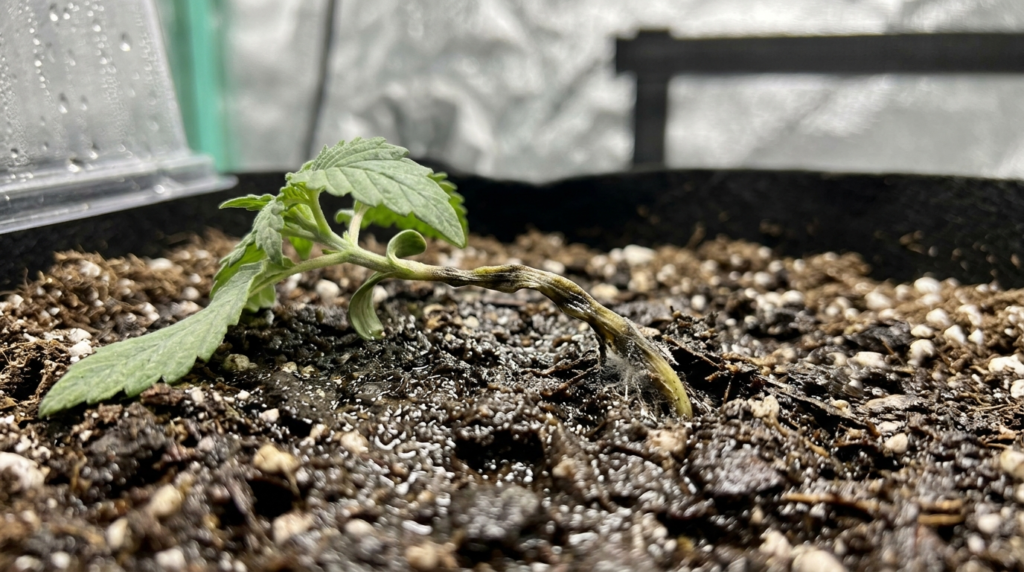
Damping off is one of the most serious cannabis seedling diseases because it develops quickly and is usually fatal once advanced.
This fungal problem typically appears in overly wet environments with poor airflow.
Symptoms of Damping Off
The first sign is usually a thin dark section near the soil line.
As infection progresses:
- stems soften
- seedlings wilt suddenly
- the stem collapses completely
| Damping Off Stage | Visual Symptoms |
| Early stage | Thin dark stem base |
| Moderate stage | Wilting and instability |
| Advanced stage | Complete stem collapse |
Common Causes
- excessive moisture
- stagnant airflow
- oversaturated soil
- high humidity
Once collapse occurs, recovery is unlikely. Prevention is far more effective than treatment.
Heat Stress and Light Stress in Cannabis Seedlings
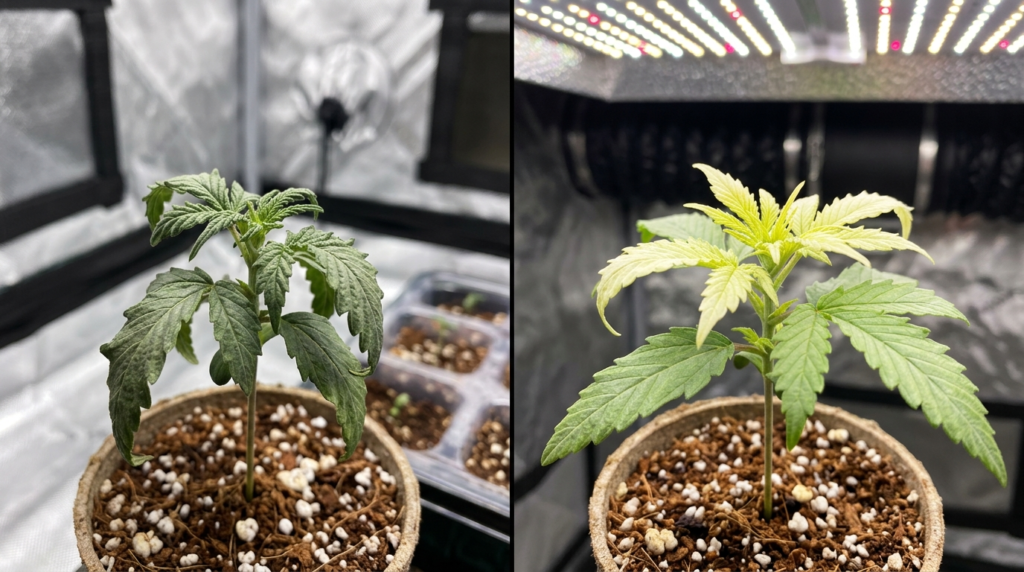
Heat stress and excessive light intensity are commonly confused because both affect leaf posture and color.
Heat Stress Symptoms
Heat stress usually develops first as:
- upward leaf curling
- dry wrinkled texture
- taco-shaped leaves
As temperatures remain high:
- leaves thin out
- growth slows
- moisture loss increases rapidly
Light Stress Symptoms
Excessive PPFD under powerful LEDs creates different symptoms:
- pale upper growth
- faded coloration
- upward edge curling
- bleaching directly beneath the light
| Symptom | Heat Stress | Light Stress |
| Leaf texture | Dry and thin | Pale and faded |
| Main cause | Excessive heat | Excessive PPFD |
| Common appearance | Taco curling | Bleaching |
Ideal Environmental Conditions
| Environmental Factor | Recommended Range |
| Temperature | 68–77°F |
| Humidity | 65–75% |
| Seedling PPFD | 200–300 PPFD |
| Soil pH | 6.0–6.5 |
Nutrient Burn in Cannabis Seedlings
Seedlings usually require very little nutrition during the first two weeks, especially in quality soil mixes.
Overfeeding often damages seedlings faster than mild deficiencies.
Early Signs of Nutrient Burn
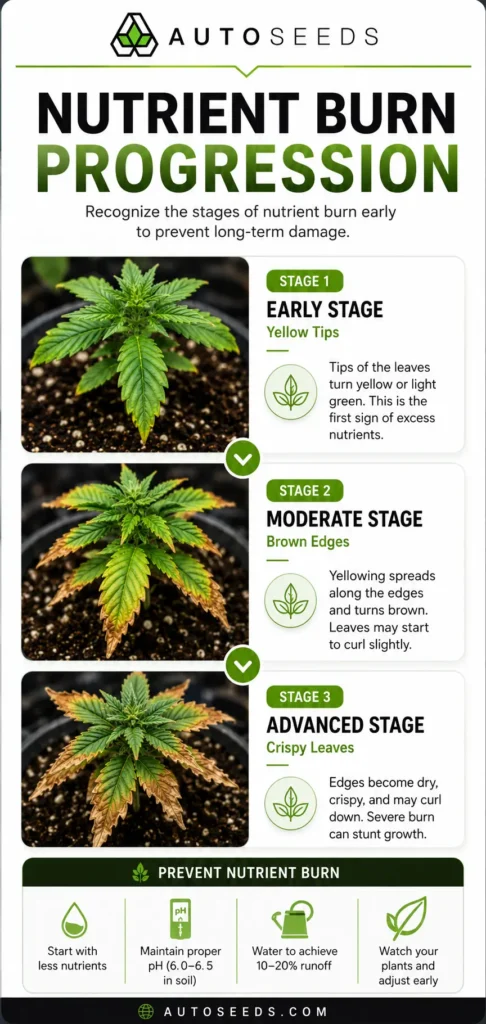
Nutrient burn almost always begins at the leaf tips.
Typical progression:
- tiny yellow leaf tips
- rusty brown edges
- crispy margins
- downward clawing
| Nutrient Burn Stage | Appearance |
| Early stage | Yellow tips |
| Moderate stage | Brown leaf edges |
| Advanced stage | Crispy clawing leaves |
How to Prevent Seedling Nutrient Burn
- avoid strong nutrient concentrations
- use lightly amended seedling soil
- feed only after vigorous growth develops
- monitor runoff EC if growing in coco
Many beginner growers mistake healthy pale-green seedlings for nutrient deficiencies and feed far too early.
Autoflower Cannabis Seedling Problems
Autoflower seedlings are less forgiving than photoperiod plants because they develop according to age rather than light cycle.
Some of the strongest autoflower strains and high yield autoflower seeds naturally develop thicker stems and more vigorous early root growth, although healthy seedlings still depend heavily on proper watering, lighting intensity, and stable temperatures during the first two weeks.
Stress during early growth can permanently reduce size and yield.
Why Autoflowers Are More Sensitive
Common stressors:
- overwatering
- transplant shock
- root stress
- weak lighting
- nutrient burn
Photoperiod plants can recover by extending the vegetative stage. Autoflowers do not have that luxury.
Autoflower seedlings are generally less forgiving than photoperiod strains because they grow on a fixed timeline. Growers who are new to autos should also understand how lighting schedules, watering frequency, and root development differ throughout the full autoflower life cycle in a detailed autoflower grow guide in the seedling stage.
| Autoflower Problem | Common Symptoms |
| Overwatering | Puffy drooping leaves |
| Stretching | Tall weak stems |
| Nutrient burn | Burnt tips and clawing |
| Transplant shock | Sudden stalled growth |
| Root stress | Pale leaves and slow growth |
Should You Transplant Autoflower Seedlings?
Many growers avoid transplanting autoflowers entirely.
Starting seeds directly in the final container often reduces:
- root disturbance
- stalled growth
- transplant shock
Cannabis Seedling Leaf Problems Explained
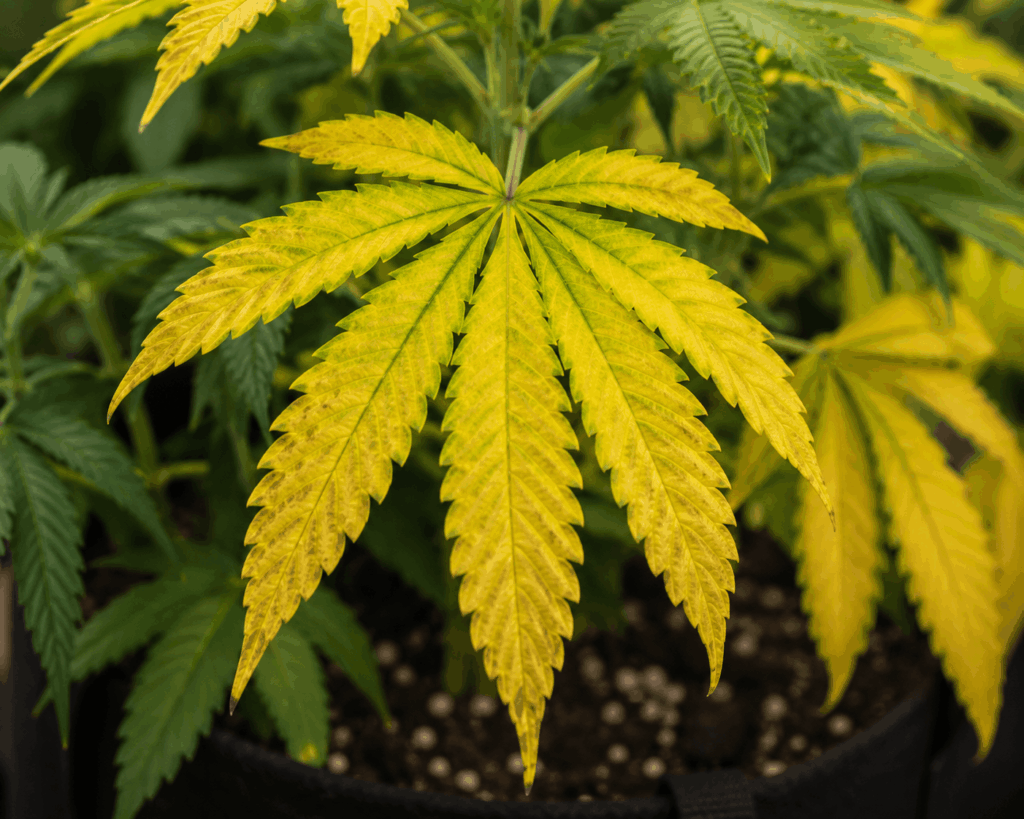
Leaves are one of the earliest indicators of environmental stress.
Understanding how leaf symptoms evolve makes diagnosis much easier.
Some nutrient deficiencies can initially resemble overwatering or root stress during early growth. Learning how different deficiencies affect cannabis leaves over time can make diagnosing seedling problems much easier using a detailed cannabis nutrient deficiency guide.
Why Cannabis Seedling Leaves Turn Yellow
Yellowing patterns often reveal the underlying cause.
| Yellowing Pattern | Likely Cause |
| Lower leaf yellowing | Overwatering |
| Entire plant pale green | Nitrogen deficiency |
| Yellow spotting | Pest activity |
| Patchy discoloration | Root stress |
Overwatered seedlings usually yellow from the bottom upward because saturated roots struggle to absorb oxygen efficiently.
Curling, Clawing, and Twisted Leaves
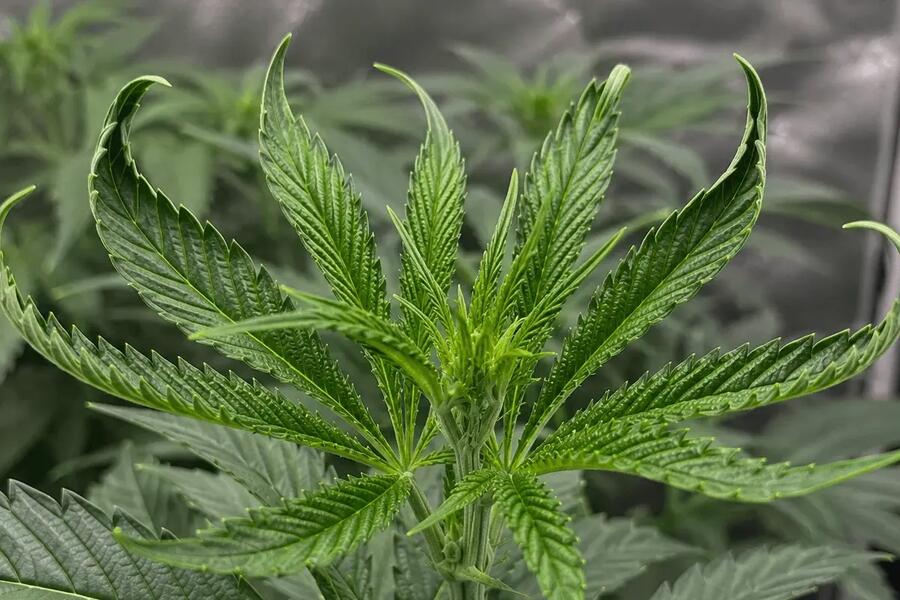
Different leaf shapes point toward different stress sources.
| Leaf Shape | Common Cause |
| Upward taco curl | Heat stress |
| Downward clawing | Nitrogen toxicity |
| Twisting growth | pH imbalance or root stress |
Environmental stress often changes leaf posture before color changes appear.
Most Common Seedling Misdiagnoses
Many growers misidentify seedling problems because symptoms initially look similar.
Overwatering vs Underwatering
| Symptom | Overwatering | Underwatering |
| Leaf texture | Puffy and swollen | Thin and limp |
| Soil appearance | Wet and dark | Dry and pale |
| Progression | Yellowing and slow growth | Crispy dry foliage |
Stretching vs Damping Off
| Symptom | Stretching | Damping Off |
| Stem color | Healthy green | Dark brown base |
| Progression speed | Gradual | Rapid |
| Stem texture | Thin but firm | Soft and collapsing |
Accurate diagnosis matters because the wrong correction often worsens the issue.
How to Prevent Cannabis Seedling Problems
Most seedling issues are preventable with stable environmental control.
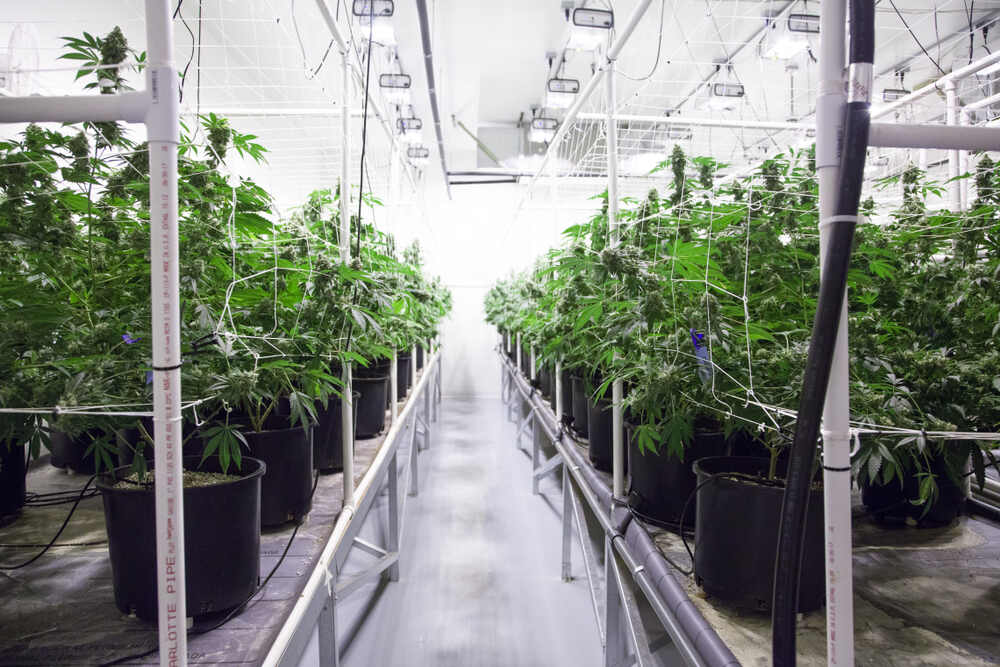
Best Conditions for Healthy Seedlings
| Factor | Ideal Range |
| Temperature | 68–77°F |
| Humidity | 65–75% |
| Soil pH | 6.0–6.5 |
| Coco pH | 5.8–6.2 |
| Seedling PPFD | 200–300 PPFD |
Stable humidity levels are especially important during the seedling stage because young cannabis plants absorb moisture through their leaves while root systems are still developing. Many growers also use a temperature and humidity guide to maintain more balanced transpiration rates during early growth.
Best Practices
- water lightly around the root zone
- avoid saturated soil
- maintain gentle airflow
- use aerated seedling mixes
- increase light intensity gradually
- avoid feeding too early
Healthy roots require oxygen-rich growing media with proper drainage.
Can Stunted Cannabis Seedlings Recover?
Many stressed seedlings recover surprisingly well once environmental conditions stabilize.
Positive Recovery Signs
- improved leaf color
- stronger stems
- steady new growth
- faster leaf development
Recovery Strategy
When recovering stressed seedlings:
- reduce watering frequency
- improve airflow
- stabilize temperatures
- pause nutrients temporarily
- avoid multiple changes at once
Seedlings recover best when conditions become consistently stable rather than constantly adjusted.
Healthy genetics play a major role in seedling performance. Many growers choose outdoor autoflower seeds or indica autoflower strains for their stronger environmental resistance, while others prefer faster-growing super autoflower strains for larger plant size and aggressive early vigor under stable growing conditions.
Conclusion
The seedling stage determines the foundation of the entire cannabis grow cycle. Strong roots, stable temperatures, proper watering habits, and balanced lighting create healthier plants throughout vegetative growth and flowering.
Most cannabis seedling problems begin with small visual warnings before progressing into severe stress. Overwatering starts as slight drooping before turning into swollen yellow foliage. Stretching begins with mild stem elongation before becoming unstable weak growth.
Once growers learn how cannabis seedlings visually communicate stress, diagnosing problems becomes dramatically easier. Healthy seedlings should remain compact, vibrant green, upright, and consistently produce new growth every few days.
Frequently Asked Questions About Cannabis Seedling Problems
Why are my cannabis seedlings drooping?
Drooping seedlings are usually caused by overwatering or underwatering. Overwatered seedlings appear swollen and heavy, while underwatered seedlings look thin and limp.
Why are my cannabis seedling leaves turning yellow?
Yellow leaves commonly indicate overwatering, root stress, or early nutrient imbalance. Lower leaf yellowing is often linked to excess moisture.
What causes cannabis seedlings to stretch?
Stretching happens when seedlings search for stronger light. Weak lighting causes tall thin stems and unstable growth.
Can overwatered cannabis seedlings recover?
Yes, overwatered seedlings often recover once watering frequency is reduced and airflow improves.
What does nutrient burn look like on cannabis seedlings?
Nutrient burn usually begins as yellow leaf tips before progressing into brown crispy edges and downward clawing leaves.
What humidity level is best for cannabis seedlings?
Cannabis seedlings generally perform best between 65–75% relative humidity during early growth.