
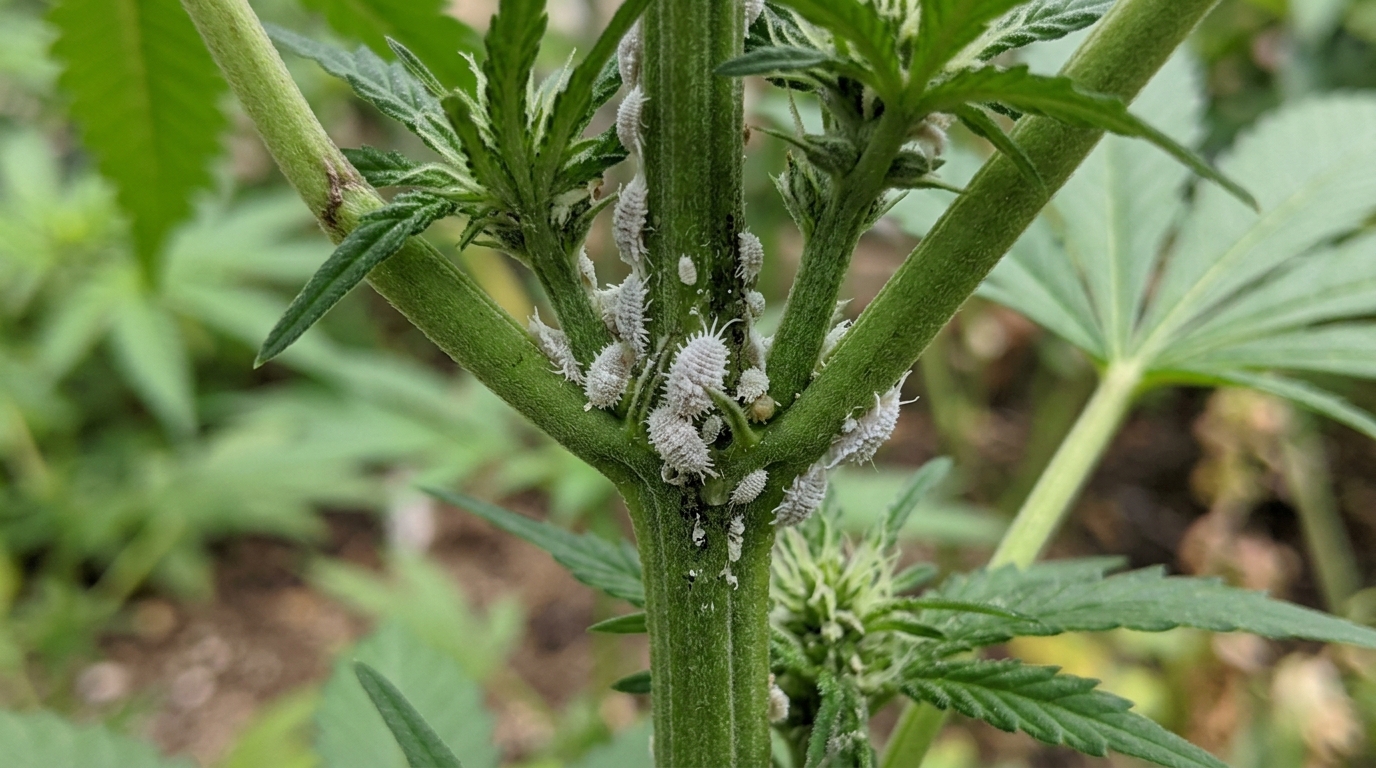
Mealybugs on Cannabis: How to Identify, Treat, and Prevent These White Cottony Pests
Mealybugs on cannabis are small white sap-sucking insects that can weaken plants, slow growth, and increase the risk of mold if left untreated. These cotton-like pests commonly hide around stems, nodes, and leaf undersides, where they feed on plant sap and spread quickly through indoor grow spaces. Early infestations are usually manageable with consistent treatment and proper environmental control, while severe outbreaks can contaminate buds and reduce overall plant health. In this guide, you will learn how to identify mealybugs on cannabis plants, understand the damage they cause, and apply practical treatment and prevention methods before the infestation spreads further.
Article Insights
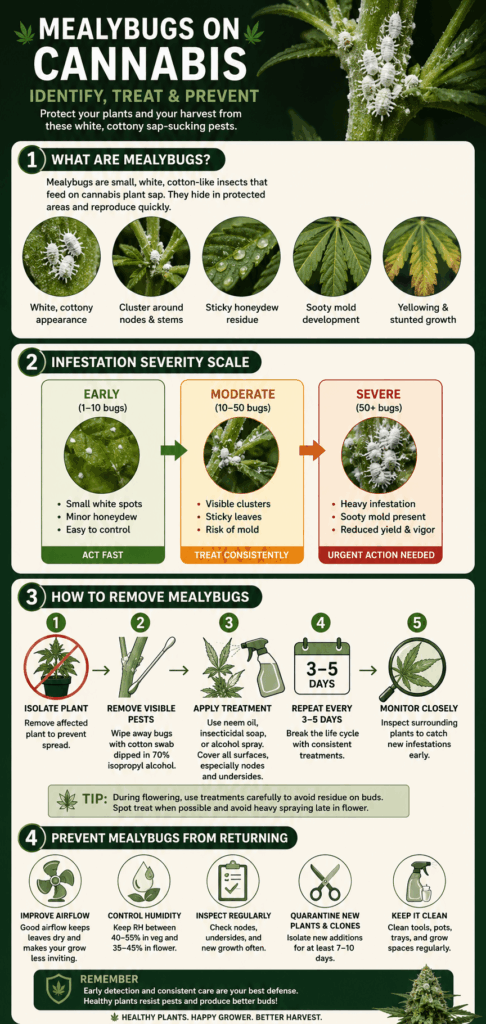
- Mealybugs are white, cotton-like insects that feed on cannabis plant sap and commonly gather around nodes, stems, and hidden crevices.
- Early infestations often show as sticky residue and small white clusters, while severe infestations can lead to yellowing leaves, mold growth, and reduced vigor.
- Most growers treat mealybugs using repeated applications of neem oil, insecticidal soap, or diluted isopropyl alcohol every 3–5 days.
- Flowering cannabis plants are harder to treat because many sprays can affect bud quality, trichomes, and terpene production.
- Root mealybugs can damage nutrient uptake below the soil surface and are commonly identified through stunted growth and poor plant health.
- Warm temperatures, crowded canopies, and poor airflow typically increase the risk of mealybug infestations spreading indoors.
- Article Insights
- What Are Mealybugs and Why They’re a Problem for Cannabis Plants
- Mealybug Damage on Cannabis: How They Harm Plant Health and Yield
- How to Identify Mealybugs on Cannabis Plants
- How Mealybugs Damage Cannabis During Flowering
- Understanding the Mealybug Life Cycle on Cannabis
- Killing Mealybugs on Cannabis: Effective Removal Methods
- Root Mealybugs on Cannabis Plants
- Preventing Mealybugs on Cannabis from Returning
- Frequently Asked Questions About Mealybugs on Cannabis
- Conclusion
What Are Mealybugs and Why They’re a Problem for Cannabis Plants
Mealybugs are small white insects covered in a waxy, cotton-like coating that protects them from environmental stress and some pest treatments. These pests belong to the scale insect family and thrive in warm, humid environments where cannabis plants grow densely together.
Unlike fast-moving pests such as spider mites, mealybugs move slowly. This often tricks beginner growers into underestimating how quickly an infestation can spread. While they may appear harmless at first, they reproduce rapidly and hide in tight areas around stems, branch joints, and under leaves where growers rarely inspect closely.
Cannabis plants are especially vulnerable because mealybugs target soft plant tissue rich in nutrients. Once they establish themselves, they weaken plant vigor, reduce nutrient uptake, and interfere with healthy growth during both vegetative and flowering stages.
What Are Mealybugs? Understanding These White Cottony Pests
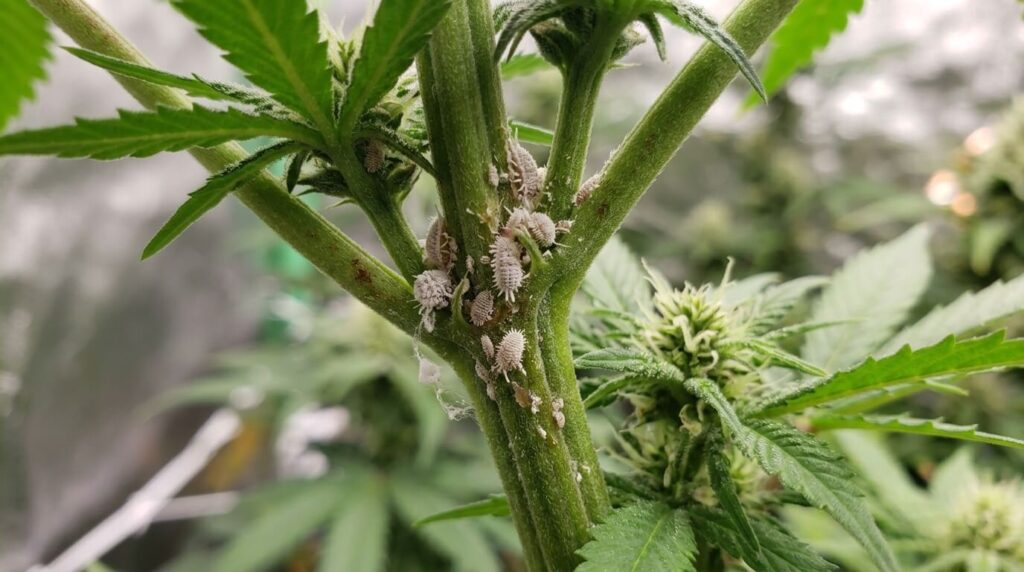
Mealybugs are oval-shaped insects with soft bodies and a white powdery coating that resembles cotton or mildew. Adult females are the most commonly visible stage and are usually found clustered around nodes, stems, and hidden crevices.
The wax coating acts as armor, which is why water alone rarely removes them completely. This also explains why infestations often survive weak treatment attempts.
You will usually notice them in these locations:
- Leaf undersides
- Branch joints and nodes
- Main stems
- Around developing buds
- Near the root zone in severe infestations
Root mealybugs are another dangerous variation. These pests attack the root system directly, damaging nutrient absorption while often remaining hidden beneath the soil surface.
Why Mealybugs on Cannabis Spread Quickly in Grow Environments
Cannabis grow spaces naturally create conditions that mealybugs enjoy. Warm temperatures, dense foliage, moderate humidity, and limited airflow all help populations multiply quickly.
I often see infestations begin from:
- Infected clones
- Contaminated tools
- Outdoor plants brought indoors
- Dirty grow tents or trays
- Shared irrigation equipment
This also becomes more problematic in perpetual harvest setups where plants constantly move in and out of the grow room.
Female mealybugs lay eggs inside cotton-like sacs that protect developing young. Once the eggs hatch, the tiny crawlers spread rapidly between plants searching for fresh feeding sites.
Mealybug Damage on Cannabis: How They Harm Plant Health and Yield
Mealybugs damage cannabis plants in two major ways: direct feeding damage and secondary fungal problems.
The direct damage happens when they drain sap from the plant. This weakens stems, reduces vigor, slows photosynthesis, and interferes with nutrient transport throughout the plant.
The indirect damage is often worse. Mealybugs secrete honeydew, which coats the leaves and buds with sticky residue. Sooty mold commonly develops on this layer, reducing light absorption while also contaminating flowers.
Common symptoms include:
- Yellowing leaves
- Curling foliage
- Weak branch development
- Slowed growth
- Sticky plant surfaces
- Black mold formation
- Reduced bud production
In severe infestations, cannabis plants can become stunted and highly stressed, especially during flowering when energy demands are highest.
How to Identify Mealybugs on Cannabis Plants
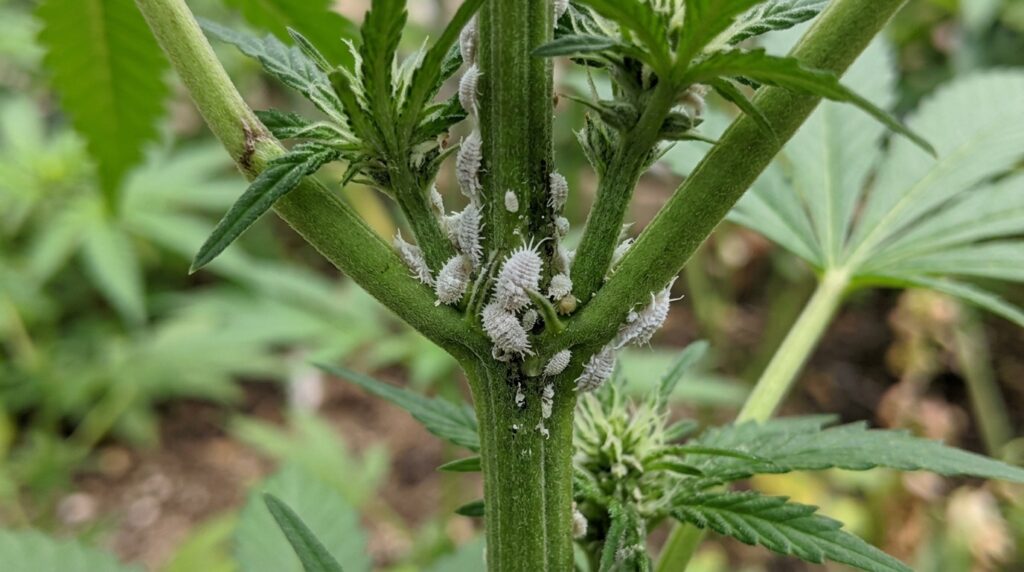
Correct identification is one of the most important steps in controlling mealybugs effectively. Many beginner growers mistake them for powdery mildew, nutrient residue, or harmless debris.
The difference is that mealybugs move slowly and cluster together in protected areas.
Visible Signs of Mealybugs on Cannabis Leaves and Stems
The most obvious sign is the appearance of white cottony masses attached to stems or leaf joints. You may also notice shiny sticky residue coating nearby leaves.
When I inspect cannabis plants, I focus heavily on hidden growth areas because mealybugs prefer protected locations with limited airflow.
Look for:
- White fuzzy clusters
- Sticky leaves
- Small oval insects
- Honeydew residue
- Tiny egg sacs
- Ant activity near plants
Ants often protect mealybugs because they feed on the honeydew. If ants suddenly appear in your grow room, it can signal a hidden infestation nearby.
Early vs Severe Cannabis Mealybugs Infestations
Early infestations usually appear isolated and manageable. You may only find a few insects near one branch or node.
Severe infestations become much more obvious and destructive.
| Infestation Stage | Common Signs | Risk Level |
| Early Infestation | Small white spots, slight stickiness, isolated pests | Low |
| Moderate Infestation | Multiple colonies, yellowing leaves, slowed growth | Medium |
| Severe Infestation | Heavy mold, bud contamination, drooping plants | High |
Once mealybugs spread into flowering buds, treatment becomes far more difficult because sprays can affect terpene quality and trichome development.
Mealybugs vs Spider Mites vs Aphids on Cannabis
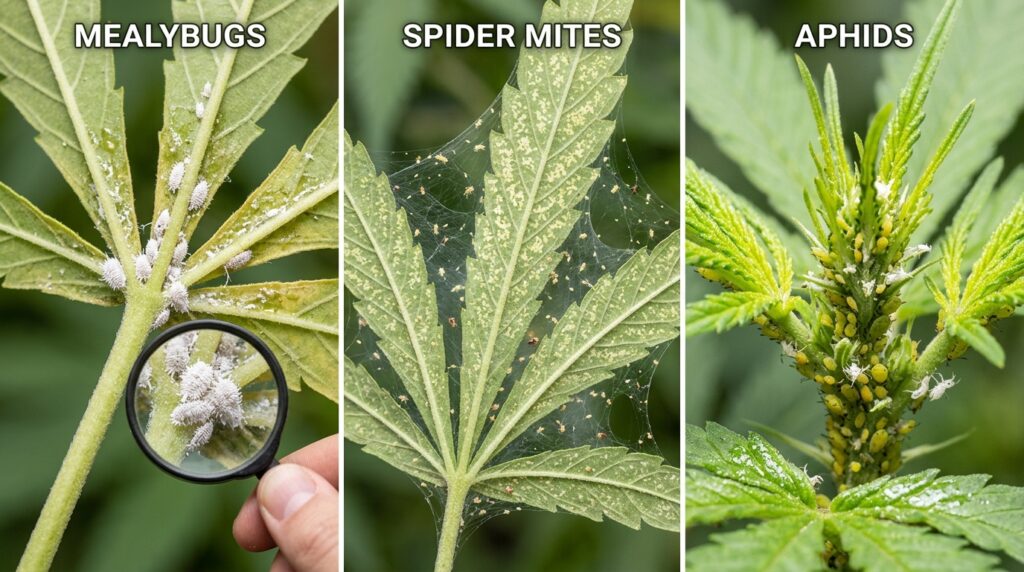
Many cannabis pests cause similar symptoms, which is why proper identification matters.
| Pest | Appearance | Main Damage | Webbing | Sticky Residue |
| Mealybugs | White cotton-like insects | Sap loss and mold growth | No | Yes |
| Spider Mites | Tiny moving dots | Leaf stippling and webbing | Yes | No |
| Aphids | Pear-shaped insects | Sap loss and curling leaves | No | Yes |
Spider mites often create webbing around buds and leaves, while mealybugs produce thicker cotton-like clusters.
Common Mistakes When Identifying Mealybug Cannabis Issues
One common mistake is confusing mealybugs with powdery mildew. Powdery mildew spreads like dust across the leaf surface, while mealybugs appear as concentrated insect clusters.
Another mistake is ignoring the root zone. Root mealybugs hide beneath the soil and cause symptoms similar to nutrient deficiencies.
I always inspect:
- Drainage trays
- Root crowns
- Lower stems
- Soil surfaces
- Fabric pot edges
This also helps detect infestations before they spread into the canopy.
How Mealybugs Damage Cannabis During Flowering
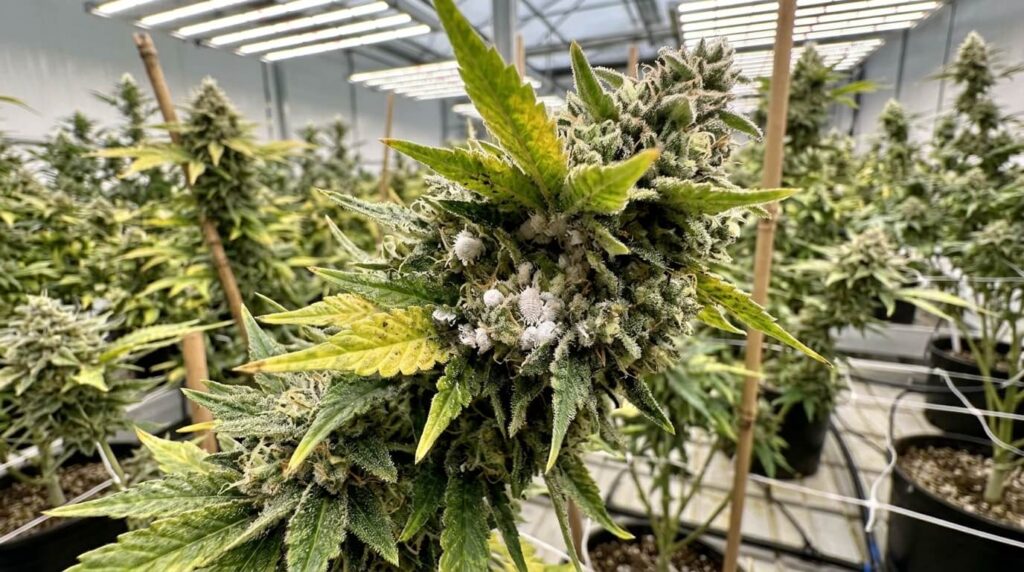
Flowering cannabis plants are particularly vulnerable because dense buds create humid microclimates where pests and mold thrive.
Why Flowering Plants Are More Difficult to Treat
During flowering, many pest control products become unsafe because they leave residue on buds. Cannabis flowers absorb sprays easily, which can affect flavor, aroma, and smoke quality.
I avoid heavy oil-based sprays late in flower because they can damage pistils and trap moisture inside developing buds.
Can You Smoke Cannabis Affected by Mealybugs?
You should avoid smoking cannabis heavily contaminated with mealybugs, mold, or honeydew residue.
While small infestations may not completely ruin a harvest, severe contamination creates several risks:
- Mold spores on buds
- Pest residue inhalation
- Reduced terpene quality
- Harsh smoke
- Increased risk of bud rot
Some growers attempt bud washing after harvest, but heavily infested flowers often lose quality regardless.
Best Treatments for Mealybugs During Flowering
During flowering, I focus on low-residue treatments and manual removal methods.
The safest options usually include:
- Spot treatment with diluted alcohol
- Manual wiping
- Beneficial insects
- Improved airflow
- Removing heavily infested leaves
I avoid systemic pesticides entirely during flowering.
Understanding the Mealybug Life Cycle on Cannabis
Understanding the pest lifecycle helps you break infestations more effectively.
Egg Stage
Female mealybugs lay eggs inside white cotton-like sacs hidden near stems and nodes. These eggs remain protected from many contact sprays.
Crawler Stage
The crawler stage is the most mobile and vulnerable phase. Tiny young mealybugs move between plants searching for feeding sites.
This is usually the best time for treatment because the wax coating has not fully developed yet.
Adult Stage
Adult mealybugs feed continuously while reproducing rapidly. Mature females become harder to kill because their wax coating resists treatment.
This is why repeated applications every few days are necessary.
Killing Mealybugs on Cannabis: Effective Removal Methods
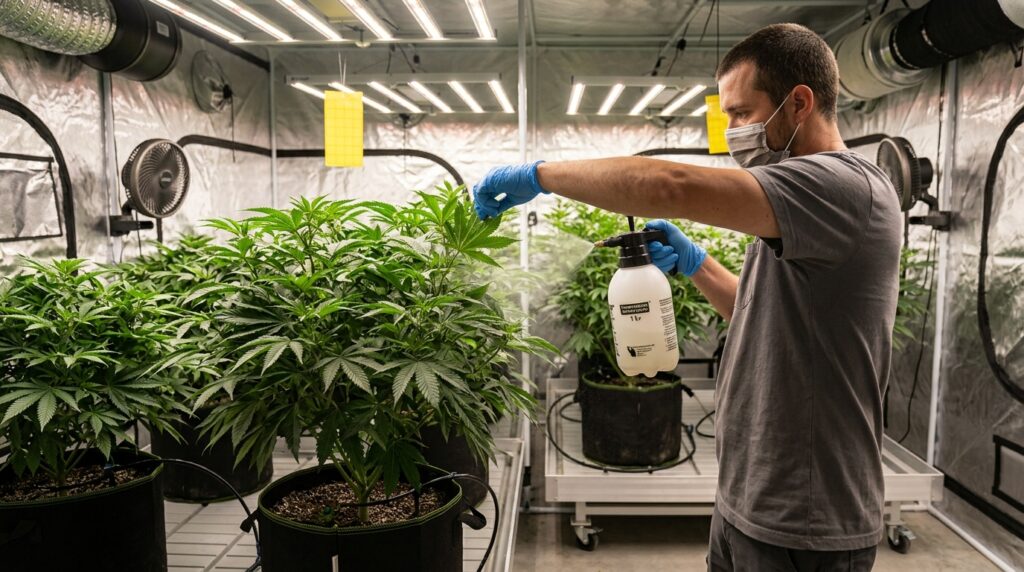
Successful treatment requires consistency. One spray rarely solves the problem completely.
Natural and Organic Solutions for Mealybugs and Cannabis Plants
I prefer starting with organic approaches whenever possible, especially during early infestations.
Neem Oil
Neem oil disrupts feeding and reproduction while also helping suppress future generations.
I apply neem oil:
- During lights-off periods
- With full leaf coverage
- Under leaves and around nodes
- Every 3–5 days initially
Insecticidal Soap
Insecticidal soap breaks down the protective coating covering mealybugs.
This treatment works through direct contact, which means complete coverage matters.
Isopropyl Alcohol
Diluted isopropyl alcohol is one of the fastest methods for killing visible mealybugs instantly.
I use cotton swabs or soft cloths to wipe affected areas carefully.
Chemical Treatments for Severe Cannabis Mealybugs Infestations
Severe infestations sometimes require stronger control methods during the vegetative stage.
| Treatment Type | Best Used During | Main Benefit | Main Risk |
| Neem Oil | Vegetative growth | Organic control | Leaf burn if overused |
| Insecticidal Soap | Early infestation | Safe contact treatment | Requires repeat sprays |
| Systemic Insecticide | Severe veg infestations | Long-lasting control | Unsafe during flowering |
I only use systemic insecticides before flowering begins.
Step-by-Step Process for Removing Mealybugs from Cannabis Safely
Step 1: Isolate the affected plant
I immediately separate infected plants from healthy cannabis plants to stop spreading.
Step 2: Remove visible pests manually
I wipe away visible insects using diluted alcohol or soft cloths.
Step 3: Apply treatment thoroughly
I spray the entire plant carefully, including hidden crevices and leaf undersides.
Step 4: Inspect nearby plants
Mealybugs rarely stay isolated. I inspect every nearby plant thoroughly.
Step 5: Repeat treatment cycles
I repeat treatments every 3–5 days for at least two weeks to interrupt the lifecycle completely.
Fast-growing plants can become difficult to manage when pests appear late in flower, particularly in compact indoor setups. Growers using autoflower seeds for beginners often choose hardy, low-maintenance genetics because stable growth and shorter life cycles can make pest management easier for newer growers.
Root Mealybugs on Cannabis Plants
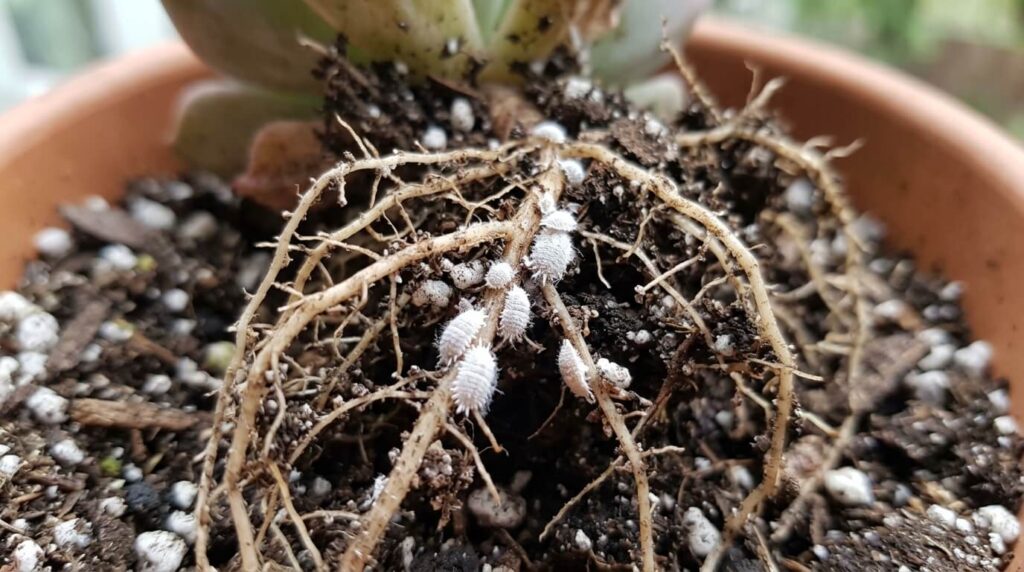
Root mealybugs are one of the most frustrating cannabis pests because they remain hidden beneath the soil surface.
Signs of Root Mealybugs
Root mealybug infestations often mimic nutrient deficiencies.
Common symptoms include:
- Wilting despite watering
- Slow growth
- Yellowing leaves
- Weak stems
- Poor nutrient uptake
You may notice white cotton-like material near drainage holes or root crowns.
How I Treat Root Mealybugs
I usually begin by isolating infected plants immediately.
Treatment methods include:
- Soil drenches
- Beneficial nematodes
- Transplanting into fresh medium
- Cleaning grow containers thoroughly
Severe infestations sometimes require discarding heavily contaminated soil entirely.
Preventing Mealybugs on Cannabis from Returning
Prevention is always easier than treatment.
Environmental Controls to Stop Mealybugs in Cannabis Grows
Mealybugs thrive in warm, stagnant environments.
I maintain:
- Strong airflow
- Moderate humidity
- Clean grow tents
- Proper plant spacing
- Stable temperatures
This also makes conditions less favorable for fungal growth and secondary infections.
Mealybugs are especially common in warm, crowded indoor grow rooms where dense canopies create ideal hiding spots for pests. Many growers running high yield autoflower seeds focus heavily on airflow, spacing, and regular canopy inspections to reduce the risk of infestations spreading during flowering.
Best Practices for Keeping Cannabis Plants Pest-Free
My prevention routine includes strict sanitation and quarantine practices.
I always:
- Clean tools regularly
- Inspect clones carefully
- Quarantine new plants
- Remove dead plant matter
- Sterilize trays and containers
Most infestations enter the grow room from outside sources.
Outdoor cannabis plants are commonly exposed to pests through surrounding vegetation, contaminated soil, and nearby garden plants. Many growers running outdoor autoflower seeds use preventative inspections and strong environmental control practices early in the season to help reduce mealybug pressure before flowering begins.
Monitoring Techniques to Catch Mealybugs Early
Routine inspection is one of the best defensive strategies.
I inspect:
- Nodes
- Lower stems
- Leaf undersides
- Root zones
- New growth tips
Sticky traps also help monitor general pest pressure inside indoor cannabis grow spaces.
Frequently Asked Questions About Mealybugs on Cannabis
What kills mealybugs on cannabis instantly?
Diluted isopropyl alcohol kills visible mealybugs quickly through direct contact.
Can neem oil kill mealybugs on weed plants?
Yes. Neem oil disrupts feeding and reproduction while also helping reduce future generations.
Do mealybugs spread quickly indoors?
Yes. Indoor grow rooms often provide ideal temperatures and humidity for rapid infestation growth.
Are mealybugs worse during flowering?
Yes. Flowering plants are harder to treat safely because buds can absorb sprays and retain residue.
Can hydrogen peroxide kill mealybugs?
Hydrogen peroxide may help clean surfaces, but it is generally less effective than alcohol or insecticidal soap for direct control.
Conclusion
Mealybugs on cannabis are persistent pests that can damage plant health, contaminate buds, and reduce overall yields if left untreated. While these white cottony insects reproduce quickly, they are manageable when you identify them early and apply consistent treatment methods.
I always approach cannabis pest management with a combination of prevention, monitoring, environmental control, and targeted treatment. This balanced approach keeps infestations under control while also protecting flower quality and terpene production.
The key is staying proactive. When you inspect your cannabis plants regularly, maintain a clean grow environment, and react quickly to early warning signs, mealybugs become far less intimidating. Even experienced growers encounter these pests occasionally. What separates successful growers from struggling ones is how quickly they recognize the problem and respond with a proper treatment plan.