
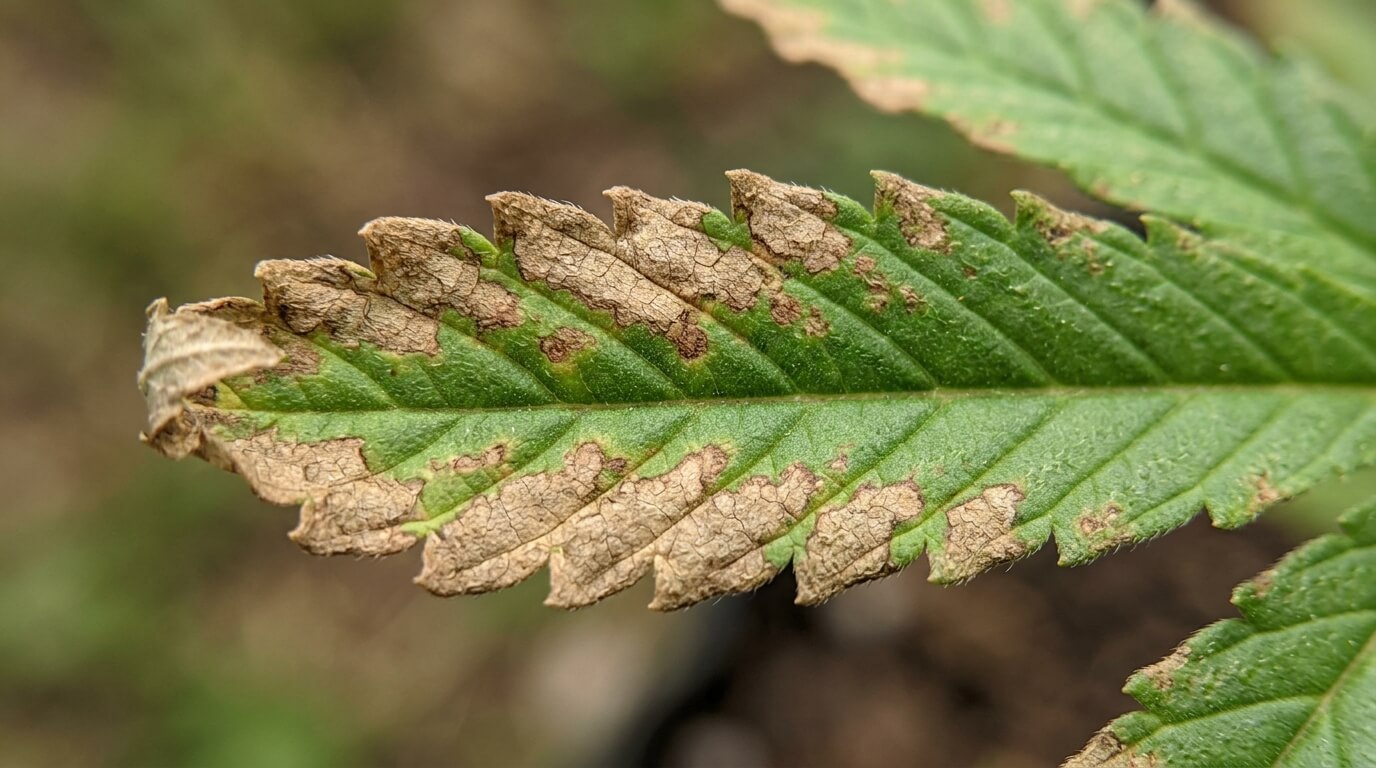
Wind Burn on Cannabis: Signs, Fixes, and Tips
Wind burn on cannabis is a common environmental issue that can quietly damage your plants if airflow is not properly controlled. It typically shows up as curling leaves, dry edges, and uneven growth, often leading growers to confuse it with nutrient or heat stress. Left unchecked, it can slow development and reduce overall yield. The good news is that wind burn is easy to identify and correct once you understand the signs and causes. In this guide, you will learn how to spot cannabis wind burn early, fix it effectively, and adjust your setup to prevent it from happening again.
Article Insights
- Wind burn is caused by excessive or direct airflow, often from fans placed too close to cannabis plants.
- Symptoms usually appear on the side facing the wind and include leaf curling, dryness, and browning edges.
- Mild wind burn can stabilize within a few days once airflow is corrected, but damaged leaves often do not fully recover.
- Persistent wind burn can slow growth and lead to smaller, less dense buds over time.
- Gentle, indirect airflow that causes slight leaf movement is generally ideal for healthy cannabis growth.
What Is Weed Wind Burn and What Causes It?
Wind burn on cannabis is a form of physical stress caused by excessive or improperly directed airflow. It is not a disease, and it is not caused by pathogens. It is mechanical damage that results from leaves being pushed, dried, or overstimulated by constant wind pressure.
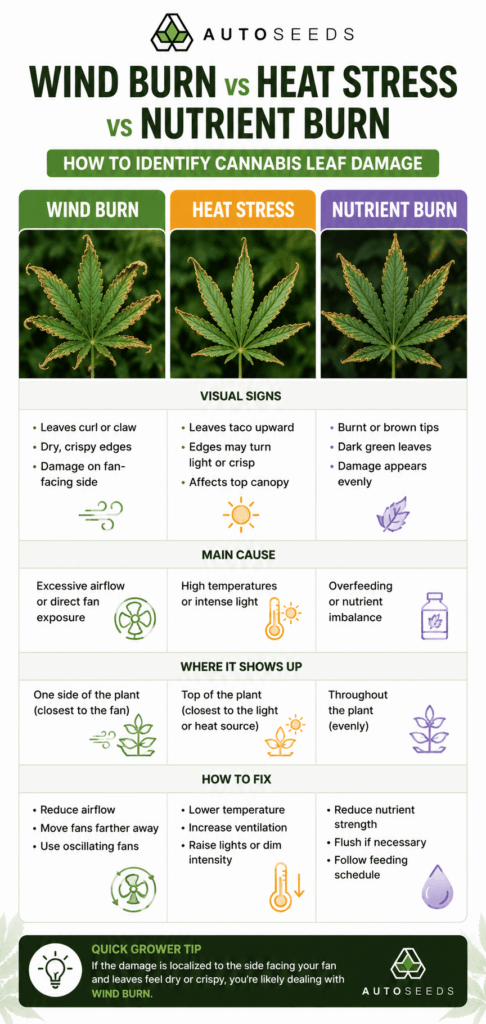
What is weed wind burn and how it affects cannabis plants
Weed wind burn is damage to cannabis leaves caused by strong or constant airflow. This airflow strips moisture from the leaf surface while also forcing the plant to overcompensate. The result is stress, dehydration, and visible leaf damage.
When I see wind burn, the first thing I notice is how the leaves react. They curl, they claw, and they twist in unnatural ways. This also reduces the plant’s ability to photosynthesize properly. Less photosynthesis means slower growth, weaker stems, and reduced yields.
How much wind does cannabis need for healthy growth
Cannabis needs airflow, but it needs the right type of airflow. I always aim for gentle, indirect movement that causes leaves to slightly rustle, not flap aggressively.
Here is how I judge airflow in my grow:
- Leaves should gently sway, not fold or curl under pressure
- Air should circulate across the canopy, not blast one area
- Fans should create movement, not resistance
Too little airflow leads to stagnant air and mold risk. Too much airflow leads to cannabis wind burn. The sweet spot is consistent, light air movement.
Common causes of cannabis wind burn in indoor and outdoor setups
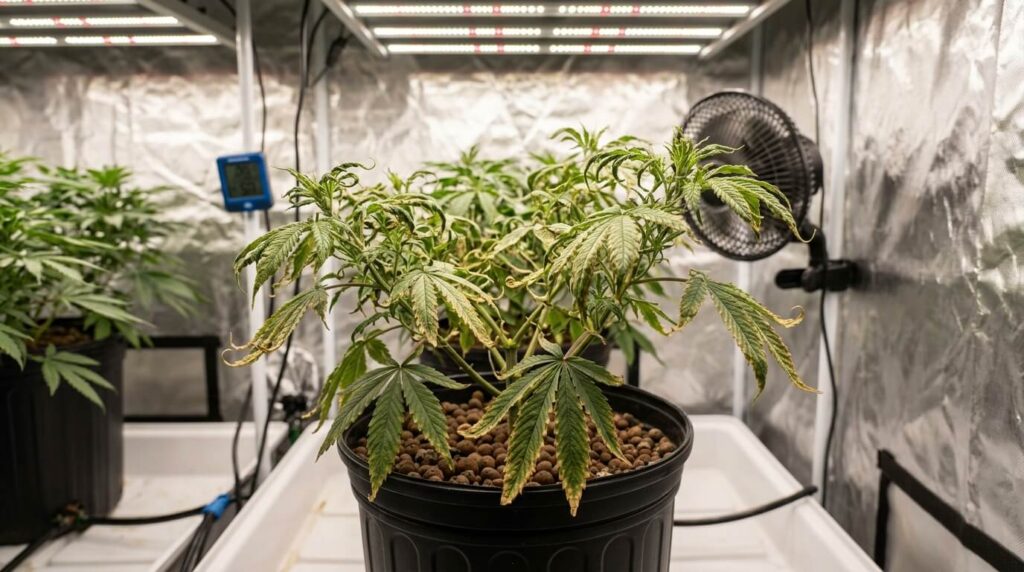
In indoor grows, wind burn usually comes from poor fan placement. A fan pointed directly at a plant at high speed is the most common mistake I see. This is especially important when learning how to grow autoflowers in a grow tent, where limited space and concentrated airflow can quickly stress plants if fans are positioned incorrectly. Proper airflow management is essential for maintaining healthy growth and preventing environmental issues indoors.
In outdoor grows, strong natural winds or exposed grow sites can create similar damage. This is especially important for growers learning how to grow autoflowers outdoors, since autoflowers have shorter life cycles and less time to recover from environmental stress caused by excessive wind exposure.
If you are growing outdoors, choosing the right genetics also plays a major role in preventing environmental stress. Many growers prefer outdoor autoflower seeds because they are resilient, fast-growing, and easier to manage in changing weather conditions. Selecting the best outdoor autoflower strains for your climate can help improve resistance to wind, temperature fluctuations, and other outdoor stress factors while still producing strong yields and healthy growth.
The most common causes include:
- Fans positioned too close to plants
- High-speed fans without oscillation
- Wind tunnels in grow tents
- Outdoor exposure without wind barriers
What Does Wind Burn Look Like on Cannabis Leaves?
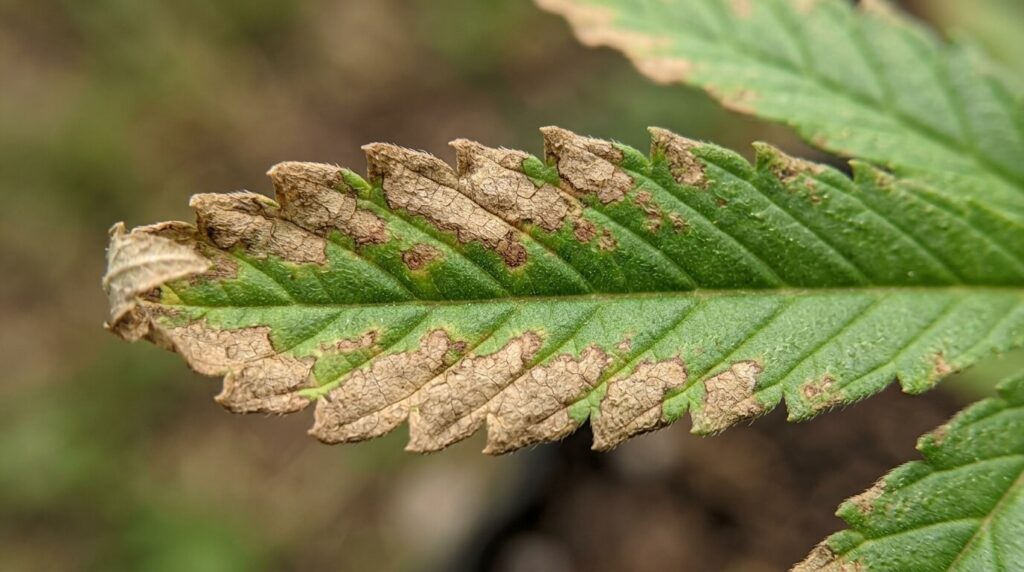
Wind burn has a distinct appearance once you know what to look for. It often starts subtly, then becomes more pronounced as the stress continues.
| Stage | Symptoms | Recovery |
| Early | Slight curl, dry edges | Fast |
| Moderate | Crispy tips, yellowing | Good |
| Severe | Brown brittle leaves | Partial |
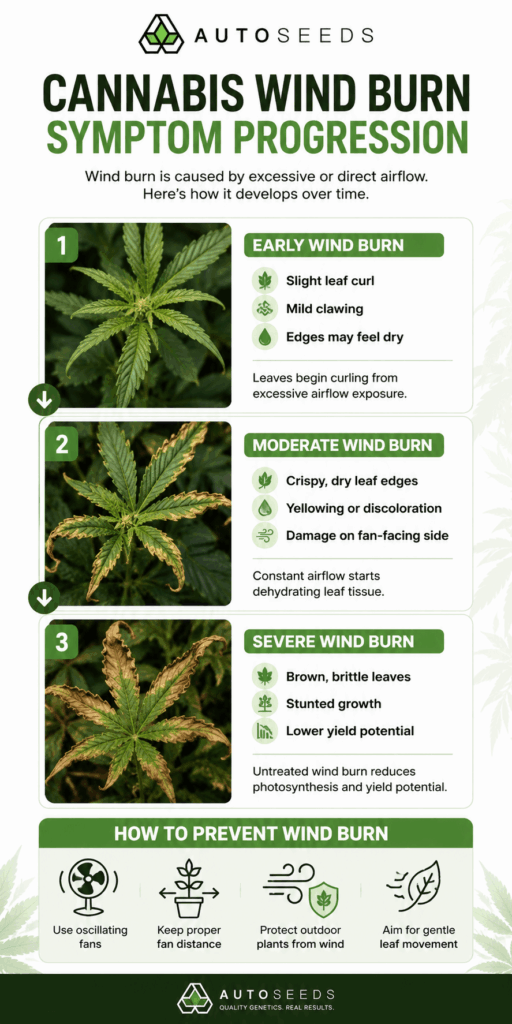
Early cannabis wind burn symptoms: curling, clawing, and leaf edge damage
In the early stages, you will notice leaves curling at the edges. This curling is the plant trying to protect itself from moisture loss. The leaves may also claw downward, which can look similar to nitrogen toxicity at first glance.
I always check airflow first when I see:
- Slight leaf curl upward or downward
- Edges that look dry or tight
- Leaves that appear “wind-swept”
This stage is reversible if you act quickly.
Advanced symptoms of weed wind burn: browning, dryness, and brittle leaves
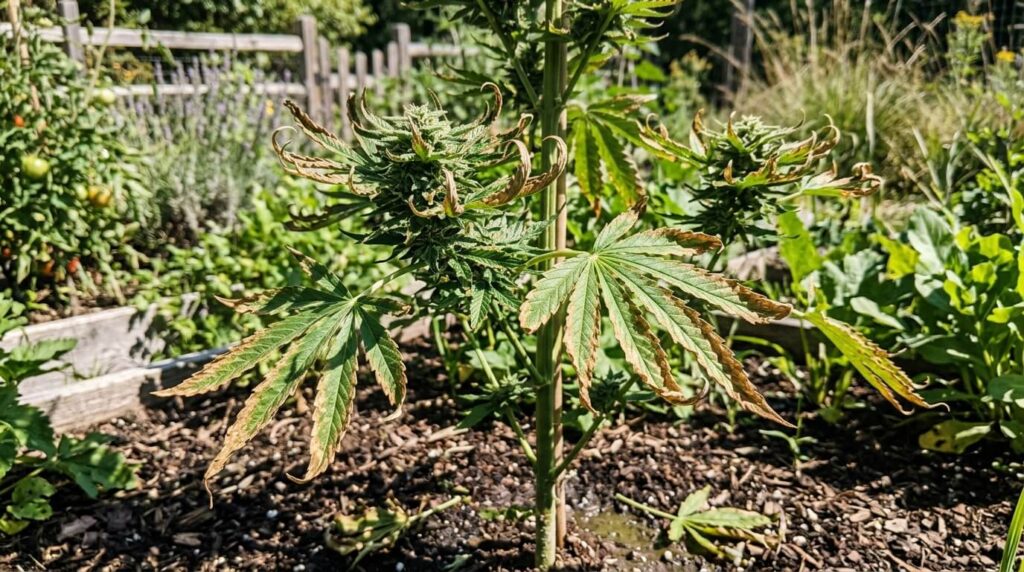
If wind burn continues, the damage becomes more severe. Leaves begin to dry out and develop brown, crispy edges. In some cases, entire sections of the leaf die off.
This is where the plant starts losing efficiency. The damaged leaves cannot recover fully, and the plant diverts energy to survival instead of growth.
You may see:
- Brown or yellow leaf tips
- Dry, papery texture
- Brittle leaves that snap easily
How to distinguish wind burn cannabis plant damage from nutrient burn or heat stress
This is where many growers get tripped up. Wind burn, nutrient burn, and heat stress can look similar, but there are key differences.
Wind burn usually affects the side of the plant facing the fan. Nutrient burn appears more evenly across the plant. Heat stress often causes leaves to taco upward, while wind burn creates irregular curling and dryness.
I always ask myself three questions:
- Is the damage localized to one area?
- Is there a fan or wind source nearby?
- Are environmental conditions otherwise stable?
If the answer points to airflow, you are likely dealing with cannabis wind burn.
| Issue | Main Sign | Difference |
| Wind Burn | Curling + dry edges | One side near fan |
| Nutrient Burn | Burnt leaf tips | Even across plant |
| Heat Stress | Taco leaves | Top canopy affected |
| Light Stress | Bleached leaves | Closest to light |
Symptoms of Weed Wind Burn and How Long They Last
Wind burn has several identifiable symptoms, but these can easily be confused with other plant issues like nutrient burn or heat stress. I always tell growers to first look at where the damage is happening. Indoors, the leaves closest to your fans will show the worst signs. Outdoors, it is the side facing the prevailing wind that takes the hit. If the symptoms are spread evenly across the plant, you are likely dealing with a different problem altogether.
Symptoms of weed wind burn and their progression over time
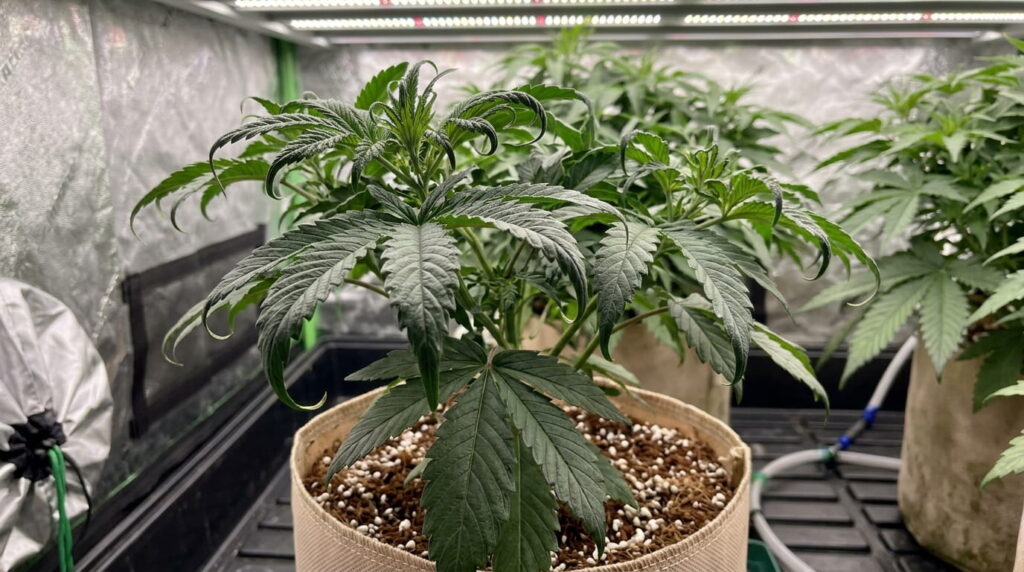
Clawing leaves
Healthy cannabis leaves usually extend outward in a flat, open shape to maximize light absorption. When exposed to excessive wind, the leaves begin to curl downward into what growers call “clawing.” The leaf tips hook down, giving them a talon-like appearance.
This happens because constant airflow causes structural fatigue in the leaf tissue. While a gentle breeze strengthens plants through micro-stress, too much wind overwhelms the leaf’s ability to maintain its form. I see this most often when fans are fixed in one direction instead of oscillating.
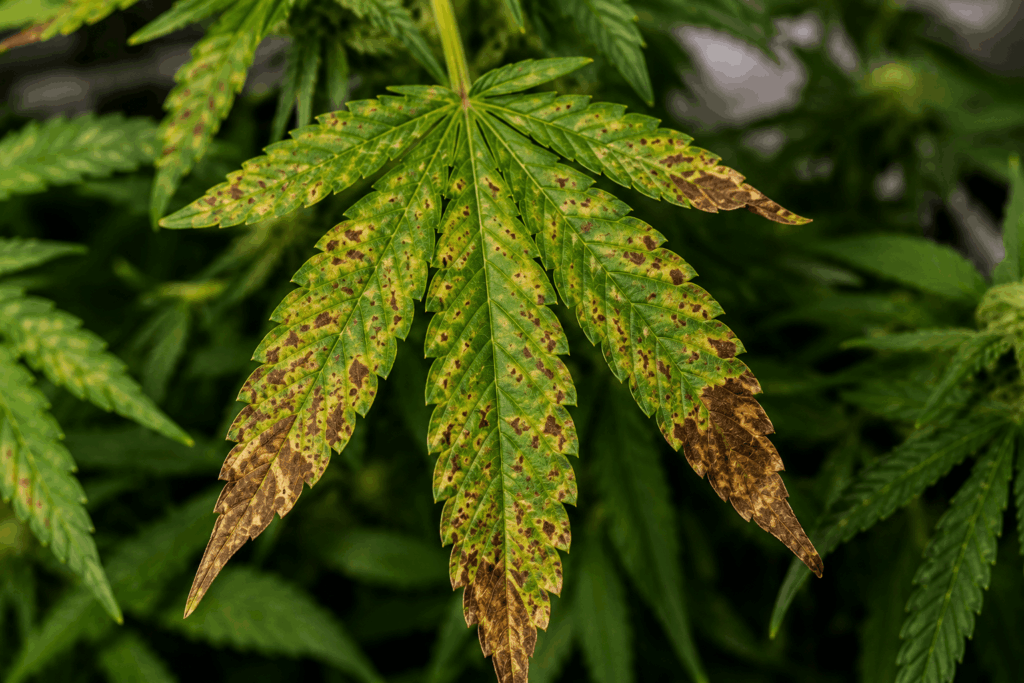
Yellow, brown, and bronze spots on leaves
Discolouration is another common symptom of cannabis wind burn, but it is also where many growers misdiagnose the issue. The key difference is location and pattern.
When wind burn is the cause, the spotting tends to appear on the leaves directly facing the airflow source. The damage does not follow a uniform pattern like nutrient deficiencies often do. Instead, it can show up randomly across the leaf surface, including edges and tips.
I always compare both sides of the plant. If one side looks worse than the other, airflow is usually the culprit.
Burnt leaves
As the condition progresses, discolouration turns into full-on burn. Leaves become dry, curled, and crispy to the touch. At this stage, the plant is no longer just stressed—it is actively losing functional leaf tissue.
Once leaves reach this point, they will not recover. I typically leave them in place unless they are severely damaged, as they can still contribute slightly to the plant’s overall energy balance.
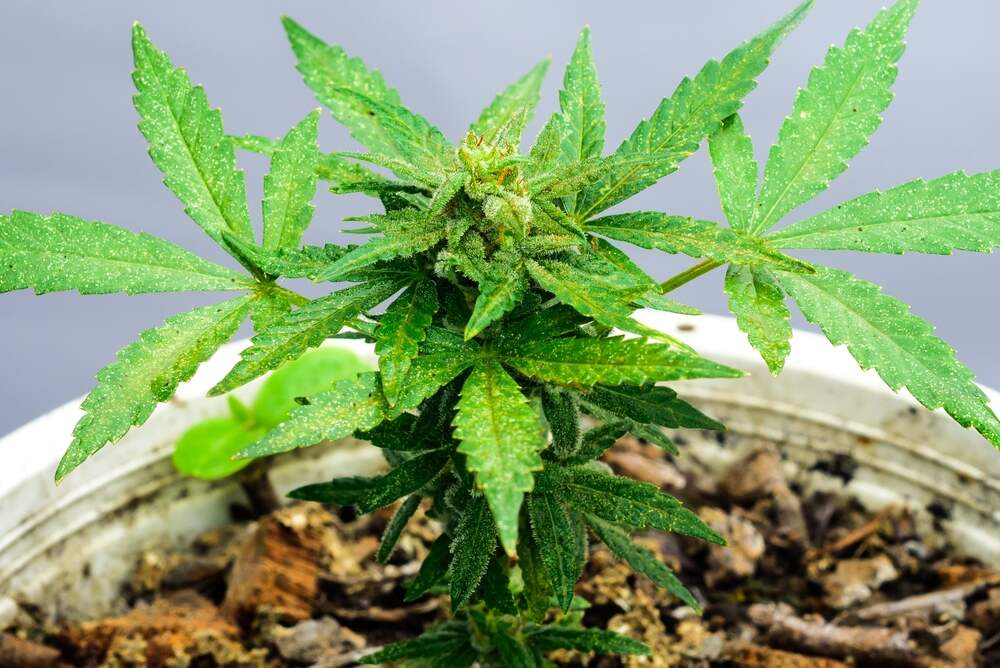
Stunted growth
Prolonged exposure to excessive wind will eventually slow down your plant’s growth. This is because the plant shifts its energy toward repairing damaged tissue instead of producing new leaves or expanding its canopy.
You may notice slower vertical growth, smaller fan leaves, and an overall lack of vigor. This also becomes more noticeable during the vegetative stage, where growth should normally be rapid.
Smaller buds
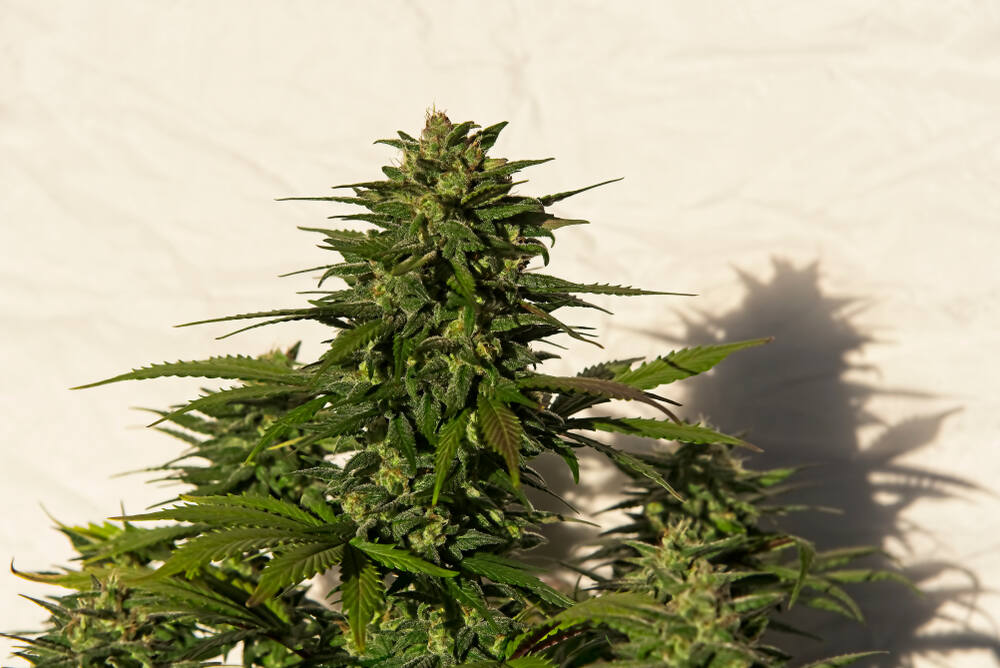
Wind burn does not just affect leaves—it impacts your final yield. When plants are stressed over time, bud development suffers. Energy that should go into flower production gets redirected toward survival and repair.
This results in smaller, less dense buds with reduced resin production. In my experience, this is where growers really feel the cost of ignoring wind burn.
How long do the symptoms of wind burn last on cannabis plants
The duration of wind burn symptoms depends on how quickly you correct the issue. Mild cases can stabilize within a few days once airflow is adjusted. However, the visible damage on affected leaves may remain for the rest of the plant’s life.
New growth is what I focus on. If new leaves are coming in healthy, you have solved the problem. If new growth continues to show signs of stress, then your environment still needs adjustment.
In more severe cases, recovery can take one to two weeks, especially if the plant experienced stunted growth. During this time, I avoid making additional changes and allow the plant to regain its balance.
| Time | Plant Response |
| 24 hrs | Damage stops worsening |
| 2–3 days | Healthy new growth |
| 1 week | Plant regains vigor |
| 2 weeks | Growth stabilizes |
Long-term impact of untreated cannabis wind burn symptoms on yield and growth
If left unchecked, wind burn will compound over time. The plant loses photosynthetic capacity as more leaves become damaged. This reduces energy production while also weakening overall structure.
Over the long term, you can expect:
- Reduced plant size
- Lower bud density
- Decreased cannabinoid and terpene development
This is why I always treat airflow as part of my core environmental control. When you get it right, your plants grow stronger. When you get it wrong, the damage adds up quickly.
How to Treat Wind Burn on Cannabis
Treating wind burn is straightforward once you identify the cause. The key is to remove the stress and support recovery.
How to treat wind burn on cannabis with proper airflow adjustments
The first thing I do is adjust my fans. I either reduce speed, increase distance, or redirect airflow. Oscillating fans are my go-to because they prevent constant pressure on one spot.
You want airflow that circulates, not dominates. I often bounce airflow off tent walls instead of pointing it directly at plants.
How to fix a broken cannabis stem caused by strong wind or fan stress
Strong airflow can sometimes snap weaker stems, especially in young plants. When this happens, I treat it like a minor injury.
Here is how I fix it:
- Align the broken stem back into position
- Use plant tape or a soft tie to secure it
- Support the stem with a stake if needed
Cannabis is resilient. In many cases, the stem heals within a week and becomes even stronger.
Supporting recovery: watering, nutrients, and environmental corrections
After fixing airflow, I focus on recovery. I avoid overfeeding, as stressed plants do not process nutrients efficiently.
I keep things simple:
- Maintain consistent watering
- Avoid drastic environmental changes
- Monitor humidity and temperature
This also helps the plant regain balance while also encouraging healthy new growth.
Cannabis Wind Burn: Prevention Is Best
Prevention is always easier than treatment. Once you understand airflow dynamics, wind burn becomes easy to avoid.
How to prevent wind burn on cannabis plants in indoor grows
In indoor grows, proper fan setup is everything. I always use oscillating fans and position them above or beside the canopy, not directly at it.
Good practices include:
- Keeping fans at a moderate speed
- Ensuring even airflow across the space
- Avoiding direct blasts on any single plant
Outdoor strategies to protect cannabis from excessive wind exposure
Outdoor growers have less control, but there are still effective strategies. I use natural barriers like fences or companion plants to break strong winds.
You can also:
- Choose sheltered grow locations
- Use windbreak netting
- Train plants to grow stronger stems early
Choosing strong genetics is one of the easiest ways to reduce environmental stress outdoors. Many growers prefer premium autoflower seeds because modern autoflower strains are bred for faster growth, improved hardiness, and better resistance to outdoor conditions like wind, rain, and temperature swings. Selecting resilient outdoor autoflowers seeds can help plants recover faster from stress while still producing quality yields.
Ideal fan placement and airflow techniques to avoid cannabis wind burn
The ideal setup is one where air moves in layers. I like to have one fan circulating air below the canopy and another above it. This creates a balanced environment.
The goal is simple. You want air movement that supports the plant, not fights it. When done right, airflow strengthens stems, reduces pests, and improves overall plant health without causing stress.
For beginner growers, autoflower seeds are often one of the easiest ways to grow cannabis successfully outdoors. Many modern autoflower strains are compact, fast-finishing, and naturally resilient, making them well-suited for growers dealing with unpredictable weather or exposed outdoor grow spaces. Choosing beginner autoflower seeds can make managing environmental stress like wind burn much easier throughout the growing season.
Conclusion
Wind burn on cannabis is a common issue, but it is also one of the easiest to fix once you understand it. The key is recognizing the signs early and adjusting your environment before the damage spreads. I always tell growers that airflow is a tool, not a weapon. When used correctly, it strengthens your plants and improves your grow. When misused, it creates stress and reduces your results.
If you take one thing from this guide, let it be this: observe your plants daily. They will tell you when something is off. When you dial in your airflow and maintain balance, your cannabis plants will reward you with healthy growth, strong structure, and high-quality yields.
Frequently Asked Questions
What does wind burn look like on cannabis leaves?
Wind burn typically shows as curling or clawing leaves, dry or crispy edges, and uneven damage on the side of the plant facing the airflow. In more advanced cases, leaves may develop brown spots and become brittle to the touch.
Can cannabis plants recover from wind burn?
Cannabis plants can recover from mild wind burn once the airflow issue is corrected. New growth will usually appear healthy within a few days, although damaged leaves may not fully return to normal.
How do I know if it’s wind burn and not nutrient burn?
Wind burn usually affects specific areas exposed to airflow, while nutrient burn tends to appear more evenly across the plant. If only one side or the top of the plant is affected near a fan, it is more likely wind burn.
How far should fans be from cannabis plants?
Fans should be positioned far enough away that leaves gently sway rather than bend or curl under pressure. This distance varies by setup, but airflow should feel indirect rather than forceful.
Is wind burn worse in indoor or outdoor grows?
Wind burn is more common indoors due to improper fan placement, but it can also occur outdoors in areas with strong, constant wind exposure. Both environments require controlled airflow to prevent stress.
Can too much wind stunt cannabis growth?
Yes, excessive wind can slow growth by forcing the plant to focus on repairing damage rather than developing new leaves or buds. Over time, this can reduce plant size and final yield.
Should I remove leaves damaged by wind burn?
You should only remove severely damaged leaves. Slightly affected leaves can still contribute to photosynthesis, so it is often better to leave them until the plant produces healthy new growth.
What is the ideal airflow for cannabis plants?
The ideal airflow is gentle and consistent, causing leaves to lightly move without constant pressure. Oscillating fans are commonly used to distribute air evenly and avoid creating stress points on the plant.