
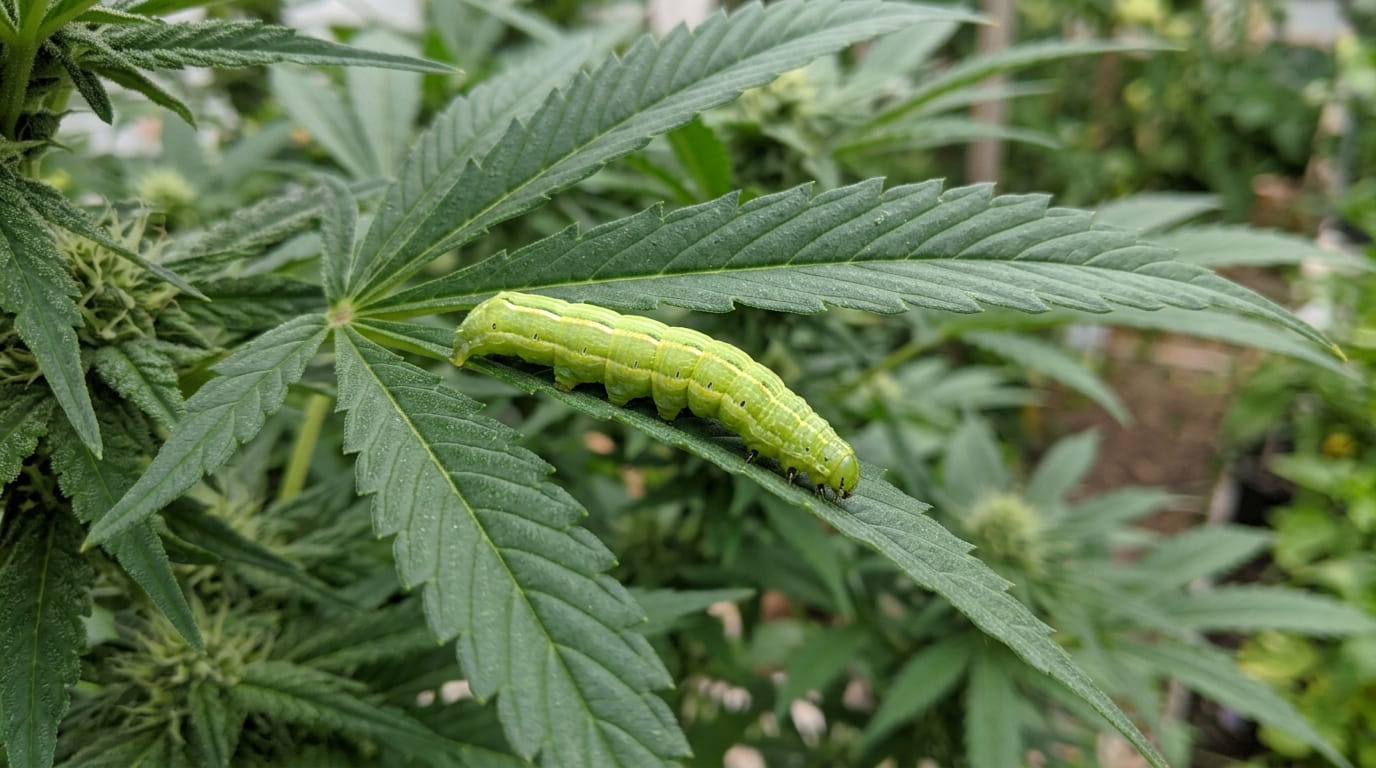
How to Get Rid of Caterpillars on Cannabis Plants: Causes, Damage and Prevention
Caterpillars are among the most destructive pests found on outdoor cannabis plants because they can damage leaves, stems, and developing buds in a short period of time. While a few chewed leaves may not seem serious at first, caterpillar activity can quickly lead to reduced plant vigor, lower flower quality, and an increased risk of bud rot during flowering. Understanding how to identify caterpillars early, recognize the signs of infestation, and apply effective control methods can help minimize damage and protect your harvest. In this guide, you’ll learn how caterpillars affect cannabis plants and the most common ways growers manage and prevent infestations.
Article Insights
- Caterpillars commonly appear on outdoor cannabis plants after moths or butterflies lay eggs on leaves, stems, or flowers.
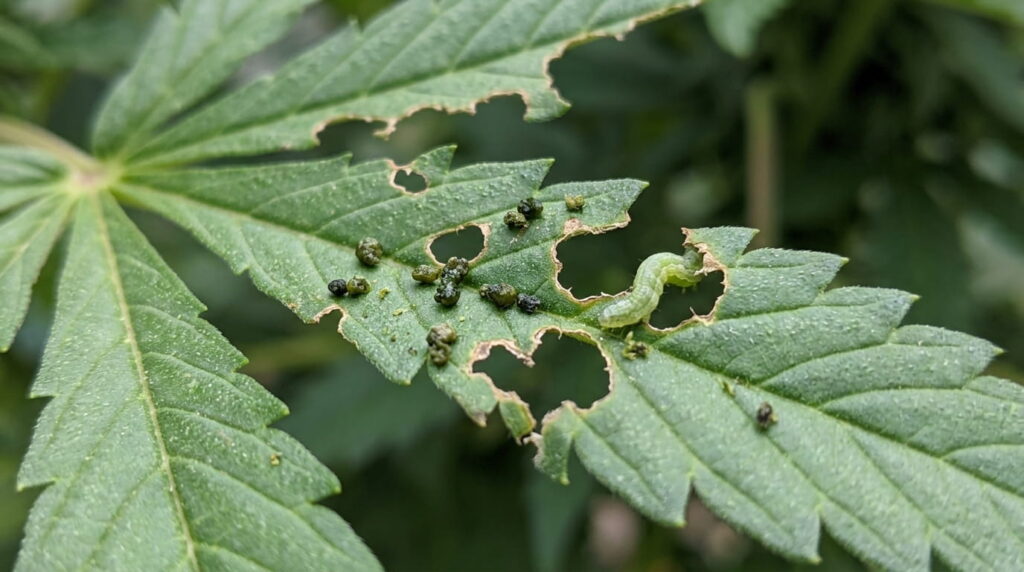
- Small black droppings known as frass are often one of the earliest signs of a caterpillar infestation.
- Caterpillars can tunnel into developing buds, increasing the risk of mold and bud rot during flowering.
- Bacillus thuringiensis (Bt) is a commonly used biological control that targets caterpillar larvae after they feed on treated plant material.
- Daily plant inspections help growers identify caterpillars early before significant damage occurs.
- Prevention methods such as mesh barriers, beneficial insects, and early intervention are often more effective than treating severe infestations.
What Causes Caterpillars on Cannabis Plants?
Caterpillars appear on cannabis plants after moths or butterflies lay eggs on leaves, stems, or developing flowers. Once the eggs hatch, the larvae begin feeding on plant tissue, creating holes in leaves, damaging buds, and increasing the risk of bud rot. Outdoor cannabis plants are particularly vulnerable because they are constantly exposed to flying insects throughout the growing season.
Caterpillar Damage at a Glance
| Problem | Risk Level |
| Leaf Damage | Moderate |
| Stem Damage | High on Seedlings |
| Bud Damage | Very High |
| Bud Rot | Severe |
| Yield Loss | High |
Understanding Caterpillars on Cannabis Plants
Caterpillars are the larval stage of moths and butterflies. Adult moths locate suitable host plants and deposit eggs on leaves, stems, and flowering sites. Once the eggs hatch, the larvae begin feeding immediately.
Outdoor cannabis plants face the highest risk because they are exposed to the natural environment. Indoor growers rarely encounter caterpillars unless pests are introduced through contaminated clones, soil, or plant material.
During the larval stage, caterpillars consume large amounts of plant material to fuel rapid growth. Cannabis plants provide an ideal food source because they offer shelter, moisture, and nutrient-rich foliage.
Outdoor growers often deal with multiple environmental challenges throughout the season, from pest pressure and humidity to changing weather conditions. If you’re growing outdoors for the first time, our how to grow autoflower cannabis outdoors guide covers everything you need to know about protecting plants from common outdoor threats.
Common Types of Caterpillars That Attack Cannabis
Several species are known to attack cannabis plants. While species vary by region, their feeding behavior and damage patterns are often similar.
| Caterpillar Type | Primary Damage |
| Tobacco Budworm | Tunnels into buds and flowers |
| Corn Earworm | Feeds on developing colas |
| Cabbage Looper | Creates irregular leaf holes |
| Armyworm | Rapid foliage destruction |
| Cutworm | Cuts seedlings and young stems |
| Hemp Borer | Tunnels through stems and branches |
The larger these larvae become, the more damage they can inflict. This is why early identification is so important.
Life Cycle of Caterpillars and How They Infest Cannabis
The caterpillar lifecycle consists of four stages:
- Egg
- Larva
- Pupa
- Adult Moth or Butterfly
The larval stage is responsible for all significant plant damage. Adult moths lay eggs on cannabis plants, usually underneath leaves or near developing flower sites. Once the eggs hatch, the larvae begin feeding immediately and continue eating until they enter the pupal stage.
During flowering, caterpillars often migrate into buds where they remain hidden while feeding. This behavior makes infestations difficult to detect and significantly increases the risk of bud rot.
How to Identify Caterpillar Infestations
Early detection is one of the most effective ways to limit damage. I recommend inspecting outdoor cannabis plants daily throughout the growing season, paying particular attention during flowering.
Caterpillar damage typically appears suddenly. A healthy plant can show obvious signs of feeding damage within a single night.
Early Signs and Symptoms on Leaves and Buds
| Sign | What You Will Notice |
| Leaf Holes | Jagged or uneven chewing damage |
| Frass | Small black droppings on leaves and buds |
| Windowing | Transparent patches on leaf tissue |
| Stem Damage | Chewed or weakened stems |
| Bud Damage | Holes or tunnels inside flowers |
| Bud Rot | Brown, damp, or moldy buds |
One of the clearest signs is frass, which consists of tiny black droppings left behind as caterpillars feed. If you discover frass on a flower, inspect the surrounding bud carefully because a caterpillar is often hidden nearby.
Differentiating Caterpillar Damage From Other Pests
Many cannabis pests damage foliage, but caterpillar damage is generally easier to recognize.
| Pest | Typical Damage |
| Caterpillars | Large holes, frass, bud tunneling |
| Aphids | Sticky residue and curled leaves |
| Thrips | Silver streaks and surface scarring |
| Spider Mites | Yellow speckles and webbing |
Unlike sap-sucking pests such as aphids and spider mites, caterpillars physically remove plant tissue. Missing sections of leaves are often the biggest clue.
Visual Indicators: Holes, Frass, and Bud Rot
Three visual indicators consistently point toward caterpillar activity:
- Jagged holes in leaves
- Black frass deposits
- Brown or moldy sections within buds
Bud rot is particularly concerning because it can spread rapidly through dense flowers. If you notice brown sugar leaves protruding from a bud, investigate immediately.
The Risks Caterpillars Pose to Cannabis Growth
Caterpillars impact cannabis plants differently depending on the growth stage.
| Growth Stage | Main Risk |
| Seedling | Stem chewing and collapse |
| Vegetative | Leaf destruction and slowed growth |
| Early Flowering | Caterpillars entering buds |
| Mid Flowering | Internal flower damage |
| Late Flowering | Bud rot and mold outbreaks |
While vegetative plants can recover from moderate leaf damage, flowering plants are much more vulnerable because bud quality is directly affected.
Impact on Plant Health and Photosynthesis
Cannabis leaves function as solar panels. They capture light energy and convert it into usable energy through photosynthesis.
When caterpillars consume foliage, the plant loses photosynthetic capacity. Reduced leaf surface area means less energy is available for:
- Root development
- Branch growth
- Resin production
- Flower formation
Heavy infestations can significantly reduce plant vigor and final yields.
How Caterpillars Cause Bud Damage and Rot
When caterpillars tunnel into buds, they create wounds that trap moisture and reduce airflow. At the same time, they leave behind frass and damaged tissue.
Dense flowers damaged by caterpillars can trap moisture and create ideal conditions for bud rot. Growers in humid climates often choose outdoor autoflowers that are known for vigorous growth, strong outdoor performance, and improved resistance to environmental stress.
These conditions create an ideal environment for fungal pathogens.
Signs of Bud Rot Caused by Caterpillars
| Symptom | Description |
| Brown Sugar Leaves | Early warning sign |
| Damp Flower Tissue | Excess moisture inside buds |
| Gray Mold Growth | Active fungal infection |
| Hollow Bud Sections | Internal caterpillar feeding |
| Unpleasant Odor | Rotting plant material |
Once bud rot becomes established, affected flowers should be removed immediately.
Effective Methods for Removing Caterpillars
The most effective way to remove caterpillars from cannabis plants is to combine manual removal, biological controls, and preventative monitoring. Many growers make the mistake of relying on a single solution, but integrated pest management consistently produces better results.
The goal is simple: reduce existing caterpillar populations while preventing new larvae from becoming established.
When dealing with flowering cannabis plants, I always recommend avoiding harsh chemical pesticides. Cannabis flowers are consumed directly, so maintaining clean buds should remain a priority throughout the growing cycle.
Manual Removal: When and How to Do It
Manual removal remains one of the safest and most effective methods for controlling small caterpillar infestations.
Inspect your plants carefully each day, paying close attention to:
- Leaf undersides
- Stem junctions
- Branch intersections
- Developing flowers
- Dense colas
Caterpillars often hide in areas that provide shade and protection. During flowering, they frequently burrow into buds where they remain concealed while feeding.
When you find a caterpillar, remove it immediately by hand or with tweezers. Dispose of it well away from your grow area.
The advantage of manual removal is that it provides instant results without affecting beneficial insects or leaving residues on flowers.
Biological Controls: Bt, Beneficial Insects, and Natural Predators
Bacillus thuringiensis (Bt) is widely considered one of the most effective biological controls available for caterpillars.
Bt is a naturally occurring soil bacterium that specifically targets caterpillar larvae. Once ingested, it disrupts their digestive system and stops feeding activity.
Benefits of Bt include:
- Targeted action against caterpillars
- Organic growing compatibility
- Minimal impact on beneficial insects
- Safe use on cannabis plants when applied correctly
For best results, apply Bt during the early stages of infestation before larvae become large and deeply established inside flowers.
Natural predators can also help maintain long-term control.
| Predator | Benefit |
| Lacewings | Feed on eggs and young larvae |
| Assassin Bugs | Attack soft-bodied insects |
| Praying Mantises | Consume larger caterpillars |
| Birds | Reduce outdoor caterpillar populations |
A healthy outdoor ecosystem often provides significant natural pest suppression.
Organic and Homemade Insecticides
Many growers prefer natural deterrents rather than commercial pesticides.
Popular homemade options include:
- Garlic spray
- Peppermint extract
- Lavender oil
- Hot pepper spray
- Mild insecticidal soap
These products may help discourage feeding and reduce egg-laying activity. However, they generally work best as preventative measures rather than solutions for severe infestations.
Always test homemade sprays on a small section of the plant first and avoid spraying dense buds during late flowering.
Preventing Caterpillars on Cannabis Plants
Preventing caterpillars is significantly easier than treating a major infestation.
Once caterpillars move inside flowers, removal becomes more difficult and the risk of bud rot increases substantially.
Successful prevention relies on early detection, environmental management, and consistent monitoring.
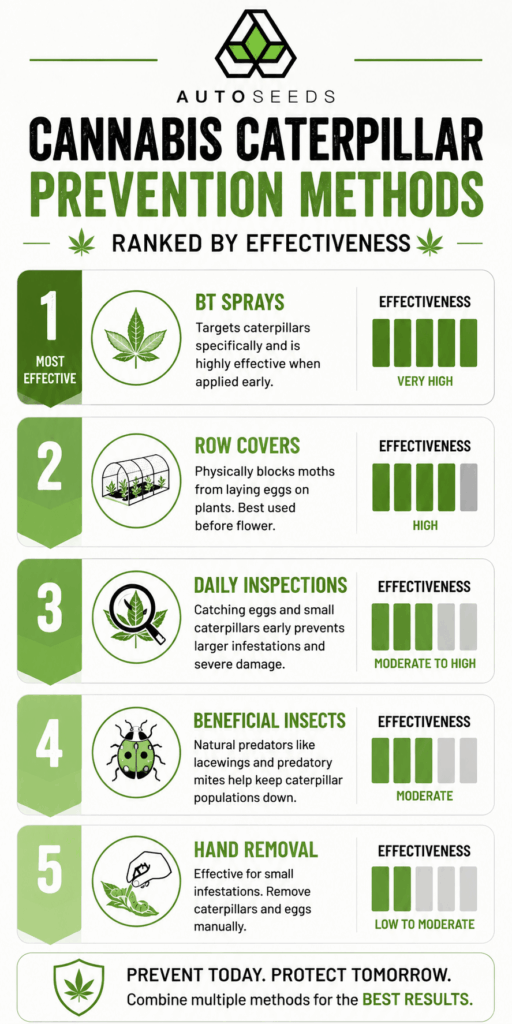
Prevention Methods at a Glance
| Prevention Method | Benefit |
| Daily Inspection | Detect infestations early |
| Bt Applications | Controls feeding larvae |
| Mesh Covers | Prevent egg laying |
| Beneficial Insects | Natural population control |
| Egg Removal | Stops infestations before they start |
| Improved Airflow | Reduces mold and pest pressure |
Daily inspections remain the most valuable preventative strategy available to cannabis growers.
Outdoor Grow Practices to Reduce Caterpillars
Outdoor plants are naturally exposed to moths and butterflies throughout the growing season. While prevention methods such as Bt sprays and regular inspections can significantly reduce caterpillar pressure, genetics also play an important role. Many growers prefer 45 day autoflower strains because they finish earlier in the season, reducing exposure to late-summer moth populations, prolonged rainfall, and the conditions that often encourage bud rot.
Several practices can dramatically reduce risk:
- Inspect plants every day
- Remove visible eggs immediately
- Improve spacing between plants
- Remove weeds around the grow site
- Install fine mesh barriers where practical
- Apply preventative Bt treatments during high-risk periods
- Encourage beneficial insect populations
Maintaining an open canopy can make pest inspections easier while improving airflow throughout the plant. Strategic pruning techniques discussed in our defoliating autoflowers guide can help reduce humid conditions that often contribute to both pest and disease problems.
Overcrowded cannabis plants create shaded, humid conditions that favor both caterpillars and fungal pathogens. Proper airflow helps reduce pest pressure while also lowering mold risk during flowering.
If you grow inside a greenhouse or polytunnel, use insect screening on vents and entrances whenever possible.
Monitoring and Regular Plant Inspection
Monitoring is your first line of defense against caterpillar damage.
Training techniques can also make routine inspections easier. By opening up the canopy, methods such as low stress training can help growers spot pests earlier and improve airflow around developing flowers.
I prefer inspecting plants in natural daylight because damage patterns are easier to spot.
Pay close attention to:
- Fresh chewing damage
- Frass deposits
- Egg clusters
- Brown sugar leaves
- Discolored flowers
- Folded leaves
- Hidden larvae
During flowering, inspect buds carefully without over-handling them.
A small patch of discoloration may be the first indication that a caterpillar has entered the flower.
Early intervention often prevents major losses later.
Managing Caterpillars During Flowering and Harvest
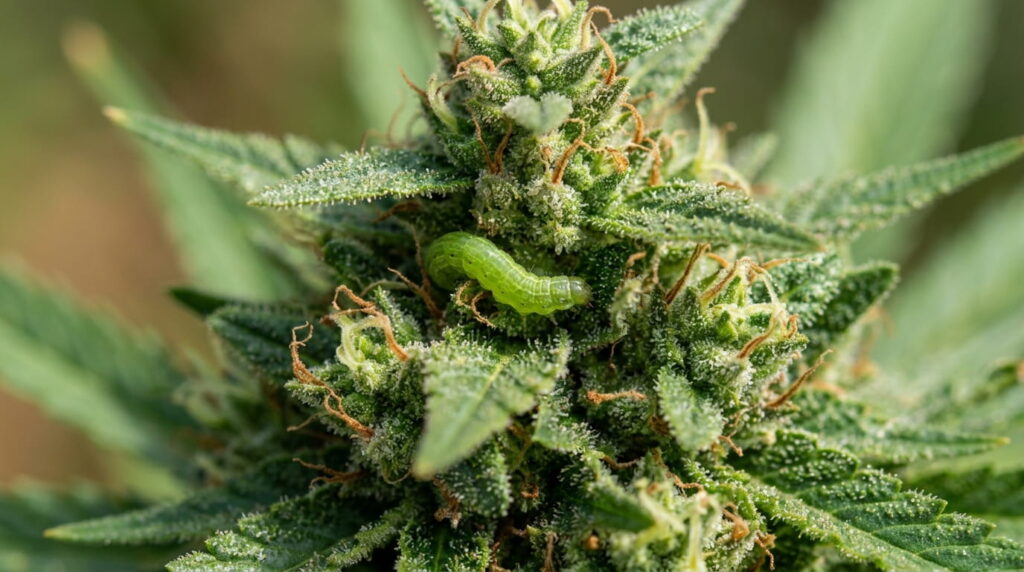
Flowering is the stage when caterpillar damage becomes most costly.
At this point, your cannabis plants have already invested months of growth into flower production. Protecting those buds becomes the primary objective.
Because dense flowers trap moisture, late-flowering pest management requires a cautious approach.
Best Caterpillar Control Methods
| Control Method | Effectiveness |
| Hand Removal | Excellent for small infestations |
| Bacillus thuringiensis (Bt) | Excellent biological control |
| Beneficial Insects | Good long-term management |
| Mesh Barriers | Excellent prevention |
| Homemade Sprays | Moderate deterrent effect |
| Plant Monitoring | Essential for early detection |
Combining multiple methods generally provides the best results.
Safe Strategies Near Harvest Time
As harvest approaches, avoid excessive spraying whenever possible.
Additional moisture trapped inside flowers can increase the likelihood of mold development.
Instead, focus on:
- Manual caterpillar removal
- Daily bud inspections
- Improving airflow
- Removing damaged flowers
- Keeping plants dry after rainfall
- Harvesting vulnerable plants before rot develops
If you discover bud rot, remove the affected section immediately using sterilized scissors.
Clean tools between cuts to prevent spreading fungal pathogens.
Post-Harvest Inspection and Pest Elimination
Harvest day does not necessarily mean the caterpillar problem is over.
Larvae can remain hidden inside large flowers and only become visible during trimming.
Inspect harvested buds for:
- Frass deposits
- Brown tissue
- Mold growth
- Hollow tunnels
- Hidden larvae
- Unusual odors
Any flower showing signs of mold should be discarded immediately.
Do not attempt to cure or consume contaminated buds.
After harvest, clean the growing area thoroughly by removing plant debris, fallen leaves, and any remaining organic material that may shelter pests or eggs.
Frequently Asked Questions
How do caterpillars get onto cannabis plants?
Caterpillars appear after moths or butterflies lay eggs on cannabis plants. Once the eggs hatch, the larvae begin feeding on leaves, stems, and flowers.
Are caterpillars more common on outdoor cannabis plants?
Yes. Outdoor cannabis plants are exposed to flying insects throughout the season, making them far more vulnerable than indoor plants.
What are the first signs of caterpillars on cannabis plants?
The earliest signs include irregular leaf holes, black frass deposits, transparent windowing damage, and sudden chewing damage appearing overnight.
Can caterpillars damage cannabis buds?
Absolutely. Caterpillars often tunnel into developing flowers where they consume plant tissue and increase the risk of bud rot.
What is the best way to get rid of caterpillars on cannabis plants?
The most effective approach combines manual removal, daily inspections, and Bacillus thuringiensis (Bt) applications.
Is Bt safe for cannabis plants?
Bt is commonly used by organic growers because it specifically targets caterpillars while having minimal impact on the plant itself.
Can beneficial insects help control caterpillars?
Yes. Lacewings, assassin bugs, praying mantises, parasitic wasps, and birds can all help reduce caterpillar populations naturally.
How can you prevent caterpillars during flowering?
Inspect plants daily, remove eggs when found, maintain good airflow, and apply preventative Bt treatments before caterpillar populations become established.
Can caterpillars destroy an entire cannabis harvest?
In severe cases, yes. Heavy infestations combined with bud rot can cause significant flower loss, particularly during late flowering.
Do caterpillars prefer indica or sativa cannabis plants?
Most caterpillars are not attracted to a specific cannabis type. They are more influenced by environmental conditions, plant accessibility, and local insect populations.
When are caterpillars most active on cannabis plants?
Caterpillar activity is generally highest during warm weather when moth populations are active and laying eggs.
Can rain increase caterpillar problems?
Yes. Rain and high humidity can worsen the effects of caterpillar damage by increasing the risk of bud rot and fungal infections.
Conclusion
Caterpillars are among the most destructive pests that outdoor cannabis growers encounter. Their ability to damage leaves, weaken stems, tunnel into flowers, and encourage bud rot makes them a serious threat throughout the growing season.
Fortunately, caterpillar infestations are manageable when caught early. Daily inspections, preventative practices, biological controls, and timely intervention can dramatically reduce the risk of severe damage.
As a grower, I rely on a combination of observation, prevention, and targeted treatment rather than reacting after problems become established. This approach protects plant health while also preserving flower quality.
By learning to recognize the warning signs, understanding how caterpillars operate, and maintaining a consistent monitoring routine, you can keep your cannabis plants healthy from seedling to harvest.
The sooner you identify a problem, the easier it becomes to solve. Stay vigilant, inspect your plants regularly, and your chances of producing clean, high-quality cannabis flowers increase dramatically.