
How to Get Rid of Caterpillars on Autoflowers Before They Ruin Your Harvest
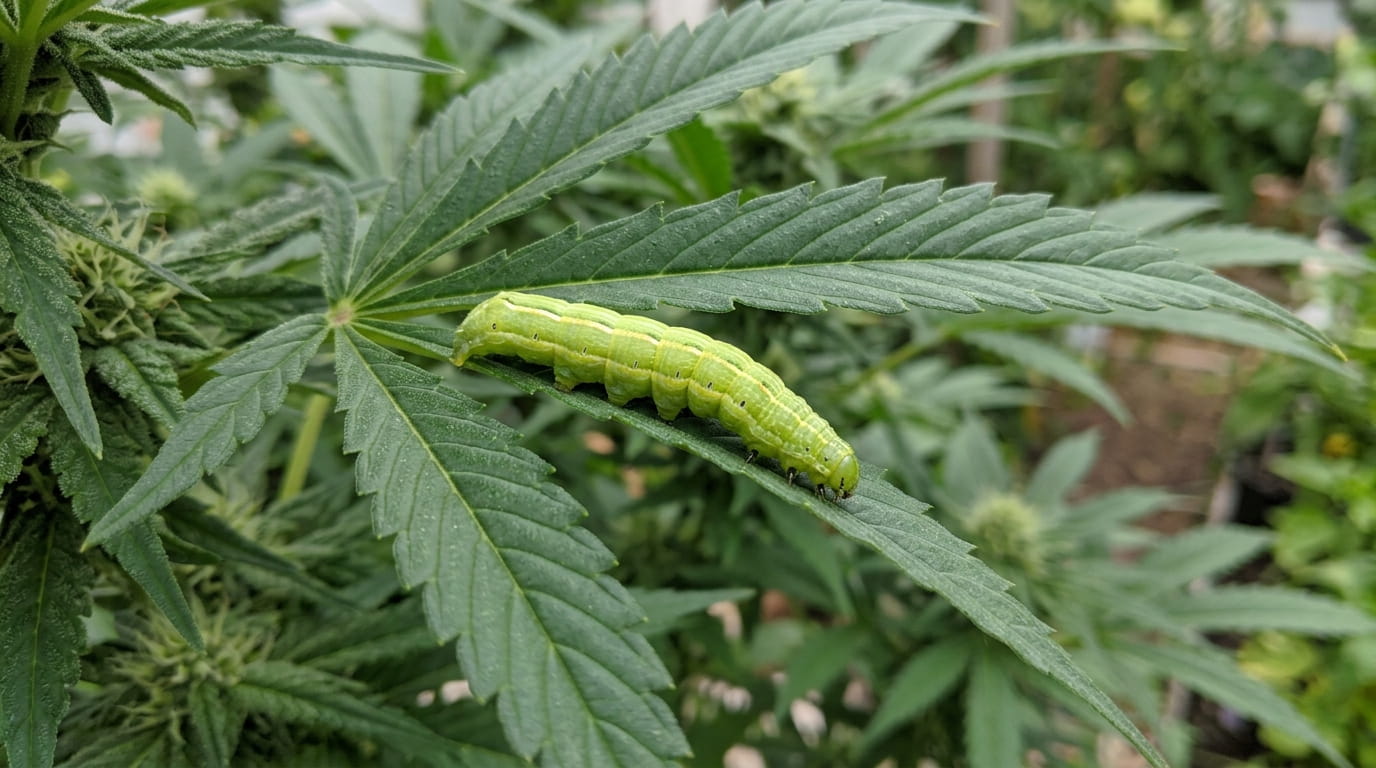
Caterpillars are one of the most damaging pests outdoor autoflower growers can face. While minor leaf damage may seem insignificant at first, these pests can quickly progress to tunnelling into developing buds, where they become harder to detect and remove. For autoflower cannabis plants, this is especially problematic because their short lifecycle leaves little time to recover from pest-related stress before harvest.
In my experience growing autoflowers outdoors, early detection and prevention are far more effective than dealing with infestations during flowering. Knowing what attracts caterpillars, how to spot early warning signs, and which control methods are most effective can help protect both flower quality and final yields.
In this guide, you’ll learn what causes caterpillars on autoflower cannabis plants, how to identify infestations, and the practical steps growers use to manage and prevent damage throughout the growing season.
Article Insights
- Outdoor autoflowers often enter flowering during peak moth activity.
- Frass is usually the earliest sign of caterpillar activity on autoflowers.
- Fast-finishing autoflower genetics can reduce exposure to late-season infestations.
- Caterpillars hidden inside buds are significantly harder to manage during flowering.
- Preventing egg-laying is often easier than treating established infestations.
- Flowering autoflowers have limited time to recover from pest damage.
What Causes Caterpillars on Autoflower Cannabis Plants?
Caterpillar pressure is often higher when growing autoflowers outdoors, where plants are naturally exposed to local moth populations throughout the season. While the larvae are responsible for the visible damage, the underlying causes of infestations are usually linked to environmental conditions, grow-site management, and seasonal insect activity.
In my experience growing autoflowers outdoors, caterpillar problems rarely occur by chance. Most infestations can be traced back to factors that make plants more attractive or accessible to egg-laying moths. Understanding these causes is often the difference between preventing an infestation and discovering one after significant damage has already occurred.
Common Causes of Caterpillars on Autoflowers
| Cause | Why It Increases Risk |
| High Moth Activity | More adult moths increase egg-laying opportunities |
| Nearby Vegetation | Provides breeding and shelter areas for moths |
| Dense Plant Canopies | Creates protected environments for larvae |
| Warm Summer Weather | Encourages moth reproduction and feeding activity |
| Flowering Plants | Developing buds attract certain caterpillar species |
| Poor Monitoring | Allows eggs and young larvae to remain undetected |
One of the most common causes is the presence of nearby vegetation. Fields, hedgerows, unmanaged gardens, and wild plants often serve as breeding grounds for moth populations, making pest prevention especially important for growers running outdoor autoflower seeds. Once adult moths become active, cannabis plants can quickly become targets for egg-laying.
Weather also plays an important role. Warm temperatures accelerate moth breeding cycles and increase overall pest pressure. In many regions, caterpillar populations peak during the same period that outdoor autoflowers enter flowering, creating ideal conditions for infestations to develop.
One pattern we’ve seen repeatedly in outdoor autoflower trials is that caterpillar pressure often increases when plants begin stacking flowers during mid to late summer. Even healthy plants growing in otherwise ideal conditions can attract egg-laying moths once dense flower sites start developing. Growers are often surprised to find caterpillars on plants that showed no signs of pest activity during vegetative growth.
Autoflower cannabis plants face a unique challenge because of their fixed lifecycle. Unlike photoperiod plants that can remain in the vegetative stage for extended periods, autoflowers transition into flowering based on age. This means they often produce buds during peak summer insect activity, when moth populations are at their highest.
Caterpillar Damage Risk at a Glance
| Problem | Risk Level |
| Leaf Damage | Moderate |
| Stem Damage | High on Young Plants |
| Flower Damage | Very High |
| Bud Rot Risk | Severe |
| Yield Reduction | High |
Why Caterpillars Are a Serious Threat to Autoflowers
Caterpillars are the larval stage of moths and butterflies and are considered one of the more destructive cannabis pests outdoor growers can encounter. During this growth phase, they consume large amounts of plant material to support rapid development.
For autoflower growers, the timing of an infestation can be particularly damaging. A photoperiod plant may have time to recover from foliage loss before flowering begins, but an autoflower has a much shorter window to replace damaged growth. Even moderate feeding can reduce plant energy, limit flower development, and affect final yields.
Larger caterpillars often move deeper into the canopy as they grow, feeding on leaves before targeting developing flowers. This hidden behaviour allows populations to expand unnoticed if plants are not inspected regularly.
Common Caterpillar Species Found on Cannabis
| Caterpillar Type | Primary Damage |
| Tobacco Budworm | Tunnels into flowers and buds |
| Corn Earworm | Feeds on developing colas |
| Cabbage Looper | Creates irregular leaf holes |
| Armyworm | Rapid foliage destruction |
| Cutworm | Damages seedlings and young stems |
| Hemp Borer | Tunnels through stems and branches |
Although species vary by region, the result is usually the same: reduced plant health, lower flower quality, and increased harvest losses if infestations are left unmanaged.
How Caterpillars Infest Autoflower Cannabis Plants
Understanding the timing of infestations is easier when viewed alongside the wider autoflower life cycle, particularly as plants move from vegetative growth into flowering.
- Egg
- Larva
- Pupa
- Adult Moth
The larval stage is responsible for virtually all plant damage. Adult moths typically lay eggs on the underside of leaves or close to developing flower sites. After hatching, the larvae begin feeding immediately and continue until they reach maturity.
As flowering progresses, many caterpillars move into dense buds where they gain protection from predators and environmental exposure. Because they remain concealed while feeding, infestations can become established before growers notice any obvious signs of damage.
How to Identify Caterpillar Infestations on Autoflower Cannabis Plants
Identifying caterpillars early is one of the most effective ways to protect autoflower cannabis plants from serious damage. Because autoflowers have a short vegetative period and limited recovery time, even a small infestation can become problematic if left unnoticed.
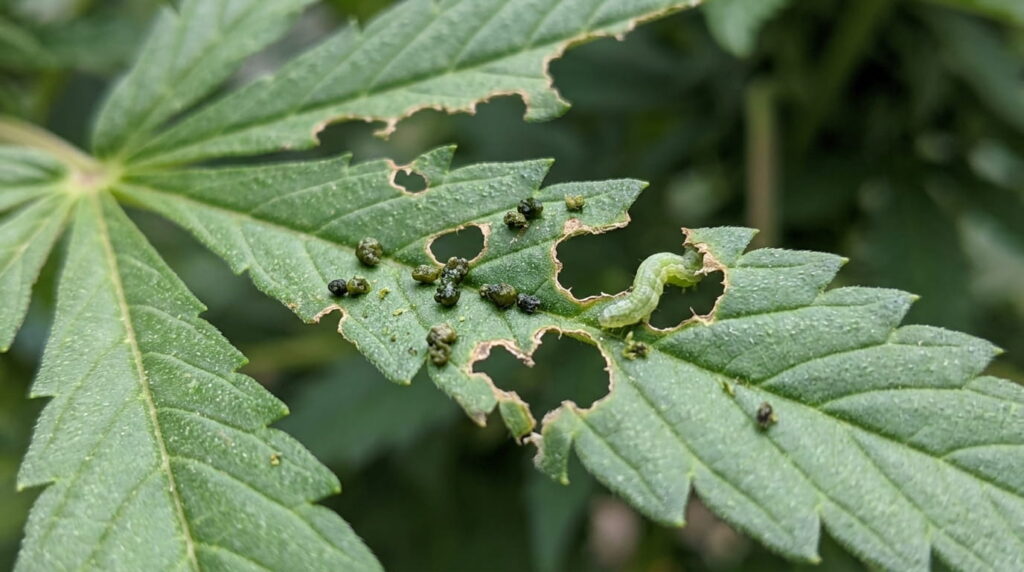
In my outdoor autoflower grows, the first sign of caterpillar activity is rarely the caterpillar itself. More often, I notice fresh feeding damage or black droppings before spotting any larvae. Regular inspections allow growers to detect infestations before caterpillars move into developing flowers where they become much harder to find.
Early Warning Signs
Several visual clues can indicate caterpillar activity before significant damage occurs.
| Sign | What You Will Notice |
| Leaf Holes | Irregular chewing damage on leaves |
| Frass | Small black droppings on foliage or flowers |
| Windowing | Thin, transparent patches on leaf tissue |
| Stem Damage | Chewed areas on young stems or branches |
| Folded Leaves | Sheltered hiding places for larvae |
| Flower Damage | Small feeding marks on developing buds |
Frass is often the most reliable indicator of an active infestation. These small black pellets are produced as caterpillars feed and are commonly found on leaves, sugar leaves, or inside flower clusters.
Where Caterpillars Hide on Autoflowers
Caterpillars rarely remain exposed for long periods. Their natural camouflage allows them to blend into foliage, making them surprisingly difficult to spot during routine inspections.
Focus your attention on:
- The underside of fan leaves
- Dense interior canopy growth
- Branch junctions
- Folded or curled leaves
- Developing flower sites
- Large colas during flowering
Young caterpillars are particularly difficult to detect because they are small and often match the colour of surrounding plant tissue.
Caterpillar Damage vs Other Cannabis Pests
Several common cannabis pests damage leaves, but caterpillar feeding patterns are usually easy to distinguish once you know what to look for.
| Pest | Typical Damage Pattern |
| Caterpillars | Missing plant tissue, frass, feeding holes |
| Aphids | Sticky residue and curled growth |
| Thrips | Silver streaks and surface scarring |
| Spider Mites | Yellow speckling and webbing |
| Leaf Miners | Visible tunnels inside leaves |
Unlike sap-sucking insects, caterpillars physically remove sections of plant tissue. Large irregular holes combined with black frass deposits are often the clearest signs of caterpillar activity.
Inspecting Autoflower Buds During Flowering
Flowering autoflowers require extra attention because caterpillars often move into developing buds where they can feed while remaining hidden from view.
When inspecting flowering plants, carefully examine:
- Sugar leaves emerging from buds
- Dense flower clusters
- The base of large colas
- Areas containing frass deposits
- Small openings or feeding tunnels within flowers
Pay particular attention to buds showing unusual discoloration or visible feeding damage. One of the earliest signs we look for during flowering isn’t the caterpillar itself but fresh frass appearing on sugar leaves beneath otherwise healthy-looking buds. In many cases, the droppings become visible before the caterpillar is found inside the flower. Early discovery is critical because caterpillars hidden inside flowers are significantly more difficult to remove than those feeding openly on leaves.
A thorough inspection every few days throughout flowering can help identify problems before they spread throughout the plant.
Effective Methods for Removing Caterpillars From Autoflower Cannabis Plants
The most effective way to get rid of caterpillars on autoflower cannabis plants is to combine immediate control measures with long-term prevention strategies. In my experience growing outdoor autoflowers, relying on a single treatment rarely solves the problem for long. Moths can continue laying eggs throughout the season, which means new larvae may appear even after existing caterpillars have been removed.
For the best results, focus on eliminating active caterpillars first, then reducing the chances of future infestations becoming established.
Manual Removal
Manual removal is often the fastest and safest way to control small caterpillar infestations on autoflowers.
When inspecting plants, pay close attention to:
- The underside of fan leaves
- Branch junctions
- Folded foliage
- Developing flower sites
- Dense colas
When a caterpillar is found, remove it by hand or with tweezers and dispose of it away from the grow area.
In outdoor autoflower grows, it’s common to remove one visible caterpillar only to find additional larvae elsewhere on the same plant a few days later. Whenever we find a caterpillar during flowering, we inspect every cola on the plant rather than treating it as an isolated problem.
Advantages
- Immediate results
- No chemical residues
- Safe for beneficial insects
- Ideal for flowering plants
Limitations
- Time-consuming on larger grows
- Easy to miss small larvae
- Does not prevent new eggs from hatching
Manual removal works best when only a few caterpillars are present. If you continue finding new larvae during inspections, additional control methods are usually necessary.
Bacillus thuringiensis (Bt)
Bt is widely considered one of the most effective biological controls for caterpillars on cannabis plants.
This naturally occurring soil bacterium targets caterpillar larvae after they consume treated plant material. Once ingested, it disrupts their digestive system and stops further feeding.
In my experience, Bt delivers the best results when applied as soon as the first signs of feeding damage appear rather than waiting until caterpillars become established inside dense buds.
In our outdoor grows, Bt tends to be most effective when applied before caterpillars reach dense flower clusters. Once larvae have moved deep into large colas, control becomes much more difficult because treated surfaces may no longer be reached consistently.
Advantages
- Highly effective against caterpillar larvae
- Suitable for organic cultivation
- Minimal impact on beneficial insects
- Easy to apply during vegetative growth and early flowering
Limitations
- Must be ingested to work
- Does not kill eggs
- Less effective against caterpillars already hidden deep inside flowers
For autoflower growers, early application is particularly important because flowering progresses quickly and opportunities for intervention become more limited as harvest approaches.
Beneficial Insects and Natural Predators
Natural predators can help reduce caterpillar populations and lower the number of eggs that survive to maturity.
Common beneficial predators include:
| Predator | Primary Benefit |
| Lacewings | Consume eggs and young larvae |
| Assassin Bugs | Feed on soft-bodied insects |
| Praying Mantises | Capture larger caterpillars |
| Birds | Reduce outdoor caterpillar populations |
Advantages
- Provides ongoing pest suppression
- Supports a balanced outdoor ecosystem
- Can reduce future infestations
Limitations
- Results are not immediate
- Predator populations vary by location
- Rarely eliminate infestations on their own
Natural predators are most effective when combined with regular inspections and other control methods rather than being relied upon as a standalone solution.
Natural Deterrents and Homemade Sprays
Some growers use natural sprays to discourage moth activity and reduce feeding pressure around autoflower plants.
Popular options include:
- Garlic spray
- Peppermint extract
- Lavender oil
- Hot pepper spray
- Mild insecticidal soap
Advantages
- Easy to make or purchase
- May discourage egg-laying activity
- Useful as part of a preventative strategy
Limitations
- Results can vary significantly
- Often require repeated applications
- Less effective against established infestations
While natural sprays may help reduce pest pressure, they are generally best viewed as supplementary prevention tools rather than primary treatment methods.
Caterpillar Control Methods Compared
| Method | Effectiveness | Best For | Main Limitation |
| Manual Removal | High | Small infestations | Labour intensive |
| Bt | Very High | Active infestations and early intervention | Must be ingested |
| Natural Predators | Moderate | Long-term population control | Slower results |
| Natural Deterrents | Low to Moderate | Prevention and support | Limited control of established infestations |
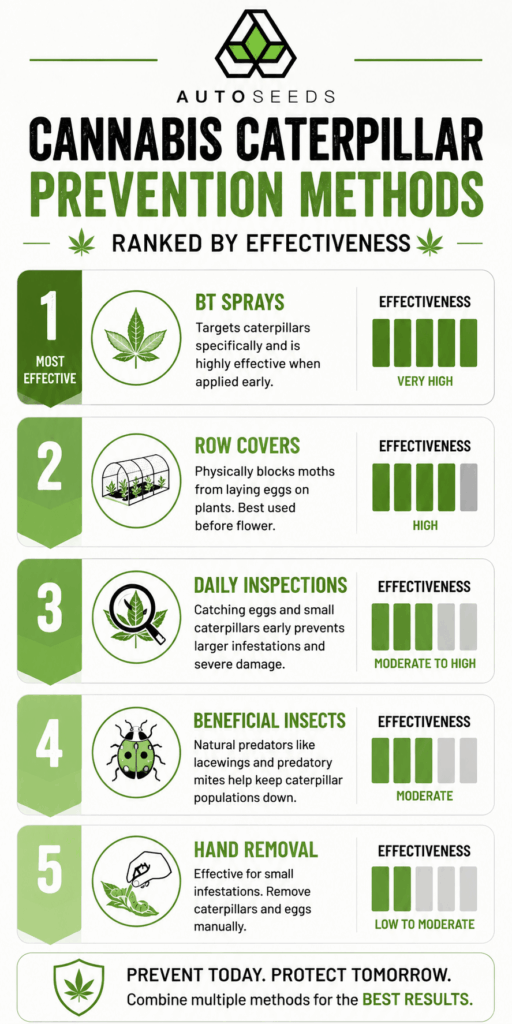
For most autoflower growers, the most reliable approach is a combination of manual removal and early Bt applications, supported by natural predators and good monitoring practices. This integrated strategy provides immediate control while helping prevent new infestations from developing throughout the growing season.
How to Prevent Caterpillars on Autoflower Cannabis Plants
Preventing caterpillars is far easier than dealing with an established infestation, especially once larvae begin feeding inside developing buds. In my experience growing outdoor autoflowers, the most effective prevention strategy is to stop moths from laying eggs in the first place and create an environment that makes it difficult for caterpillars to establish themselves.
Because autoflower cannabis plants have a fixed lifecycle and limited recovery time, preventative action is often more valuable than treatment. A plant that loses flower development to pest damage cannot simply remain in the vegetative stage longer to recover.
Prevention Methods at a Glance
| Prevention Method | Primary Benefit |
| Egg Removal | Stops infestations before larvae hatch |
| Mesh Barriers | Prevents moth access to plants |
| Open Canopy Management | Improves airflow and visibility |
| Beneficial Insects | Provides natural pest suppression |
| Fast-Finishing Autoflowers | Reduces exposure to peak moth activity |
| Greenhouse Screening | Prevents moth entry into protected grows |
Prevent Moths From Laying Eggs
Every caterpillar infestation starts with an adult moth depositing eggs on a plant. Preventing egg-laying is often the most effective way to avoid future problems.
During vegetative growth, inspect the undersides of fan leaves every 2–3 days. Once flowering begins, inspect plants daily if possible, as this is when developing flowers become more attractive to certain caterpillar species.
Pay particular attention to:
- Undersides of fan leaves
- Stem junctions
- New growth tips
- Developing flower sites
If you find egg clusters, remove them immediately by hand before they hatch.
Where practical, install fine insect mesh around outdoor plants or over small grow areas. Physical barriers can significantly reduce moth access without affecting airflow or sunlight exposure.
Make Your Grow Site Less Attractive to Caterpillars
Grow-site conditions play a major role in pest pressure.
Adult moths are more likely to remain active around areas containing dense vegetation, unmanaged weeds, and plant debris. These locations provide shelter during the day and alternative breeding sites throughout the growing season.
To reduce risk:
- Remove weeds within 1–2 metres of your grow area
- Clear fallen leaves and plant debris regularly
- Maintain adequate spacing between autoflowers
- Avoid overcrowding plants
Keeping the growing area clean and open reduces the number of places where pests can establish themselves.
Improve Airflow Through Canopy Management
One of the simplest ways to reduce caterpillar pressure is to create an open canopy that is easy to inspect.
As autoflowers enter flowering, dense foliage can hide eggs, larvae, and feeding damage. I have found that plants trained with low stress training are often easier to monitor because flower sites are more exposed and airflow is significantly improved.
To improve airflow:
- Tie branches outward using low stress training
- Remove a small number of fan leaves blocking the plant centre
- Avoid excessive foliage buildup around developing buds
- Maintain good spacing between neighbouring plants
An open canopy not only makes inspections easier but also helps reduce humid conditions that can encourage secondary problems later in flowering.
Use Autoflower Genetics and Timing to Your Advantage
Genetics can influence how long plants remain exposed to pest pressure.
Many outdoor growers choose fast-finishing autoflower strains because they complete flowering before late-summer moth populations reach their highest levels. Earlier harvests can significantly reduce exposure to both caterpillars and the environmental conditions that often accompany them.
While no autoflower strain is completely resistant to caterpillars, vigorous outdoor genetics are often better equipped to handle environmental stress throughout the season.
Protect Greenhouses and Polytunnels
Greenhouses and polytunnels provide valuable protection from weather, but they can also trap pests if moths gain access.
Before plants enter flowering:
- Install insect screening on vents
- Repair gaps around doors and openings
- Keep entrances closed whenever possible
- Remove plant debris from inside the structure
Preventing moths from entering is far easier than dealing with caterpillars once eggs have been laid inside an enclosed growing space.
Autoflower Caterpillar Prevention Schedule
| Growth Stage | Prevention Task |
| Seedling | Check leaves weekly for eggs and feeding damage |
| Vegetative Growth | Inspect plants every 2–3 days |
| Early Flowering | Begin daily inspections of leaves and flower sites |
| Mid Flowering | Check buds, sugar leaves, and colas for eggs or larvae |
| Late Flowering | Inspect flowers carefully and remove any suspicious tissue immediately |
Successful prevention relies on consistency rather than reaction. By reducing moth access, maintaining a clean growing environment, improving airflow, and choosing suitable autoflower genetics, growers can dramatically lower the risk of caterpillar infestations throughout the growing season.
Managing Caterpillars During Flowering and Harvest
Flowering is the stage when caterpillar damage becomes most costly for autoflower growers. By this point, plants have invested most of their energy into flower production, and there is very little time remaining for recovery before harvest.
Unlike photoperiod plants, autoflowers cannot simply be kept in the vegetative stage to replace damaged growth. Any loss of flower tissue during bloom can directly affect final yield, bud quality, and harvest value.
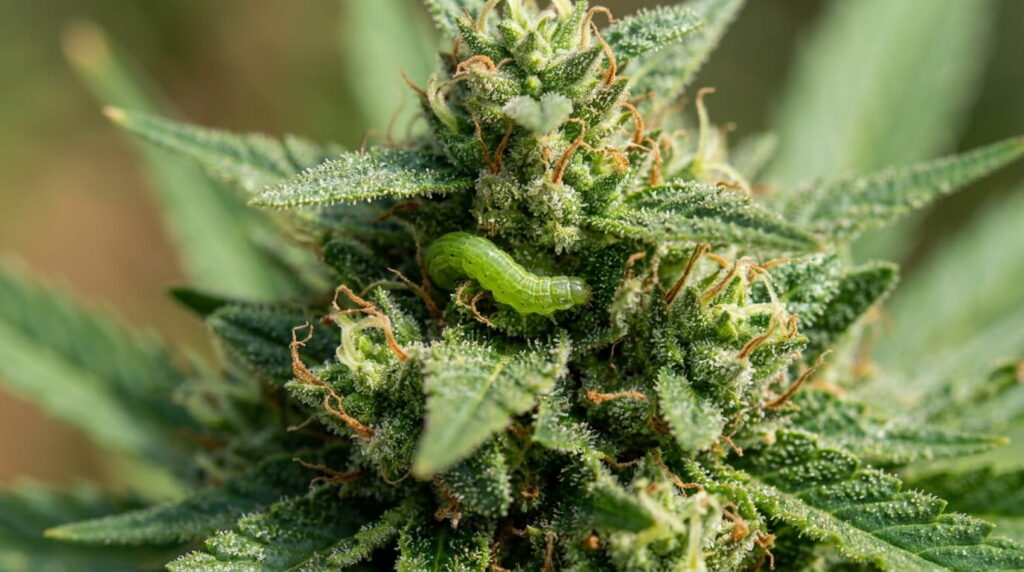
In my experience growing outdoor autoflowers, caterpillars that reach the flowering stage are often more difficult to manage because they move into dense buds where they remain hidden while feeding. At this point, the goal shifts from preventing infestations to protecting flower quality and minimizing harvest losses.
In our outdoor test grows, the plants that suffer the most damage are rarely those with the highest caterpillar numbers early in the season. The biggest losses usually occur when a few caterpillars go unnoticed inside dense flowering colas, where feeding damage can spread for days before it is discovered. This is why inspection becomes even more important once buds begin to tighten and mature.
What to Do If You Find Caterpillars in Buds
Discovering caterpillars inside developing flowers requires immediate action.
If a caterpillar is visible:
- Carefully remove it by hand or with tweezers.
- Inspect the surrounding bud for feeding damage.
- Check nearby flowers for additional larvae.
- Remove any heavily damaged plant material.
- Continue monitoring the plant over the following days.
Caterpillars rarely travel alone. If one larva is found inside a cola, there is often a higher chance that additional eggs or larvae are present elsewhere on the plant.
Pay particular attention to:
- Dense flower clusters
- Large colas
- Sugar leaves protruding from buds
- Areas containing frass deposits
- Sections showing unusual discoloration
The sooner caterpillars are removed, the lower the risk of secondary problems such as mold on cannabis developing inside the flower.
Safe Caterpillar Management Near Harvest
As harvest approaches, caution becomes increasingly important.
Many growers make the mistake of applying excessive sprays during late flowering. While controlling pests is important, introducing unnecessary moisture into dense flowers can create additional problems and increase the risk of mold development.
During the final weeks before harvest, focus on:
- Careful manual removal of larvae
- Regular bud inspections
- Maintaining strong airflow around plants
- Removing damaged flower material promptly
- Protecting plants from prolonged moisture exposure
If heavy rainfall occurs during flowering, inspect buds as soon as conditions dry. Excess moisture can create conditions favorable for both flower diseases and issues such as root rot on cannabis. Damp flowers that have already been damaged by caterpillars are significantly more vulnerable to further deterioration.
When to Remove, Save, or Discard Buds
Not every damaged bud needs to be discarded, but growers should assess flowers carefully before harvest.
| Condition | Recommended Action |
| Minor feeding damage | Remove affected tissue and continue monitoring |
| Small feeding tunnels | Trim damaged areas and inspect surrounding flower |
| Active caterpillars present | Remove larvae and assess the extent of damage |
| Visible mold growth | Remove and discard affected flower immediately |
| Soft, damp, or foul-smelling buds | Discard affected sections |
| Extensive internal damage | Remove the entire bud if necessary |
When removing damaged flowers, always use clean scissors and sanitize tools between cuts. This helps prevent contamination from spreading to healthy plant material.
Post-Harvest Inspection and Cleanup
Harvest day does not always mark the end of a caterpillar infestation.
During trimming, inspect every bud carefully for:
- Frass deposits
- Hidden larvae
- Hollow feeding tunnels
- Brown plant tissue
- Unusual odors
- Signs of mold
Large colas deserve extra attention because caterpillars often remain hidden deep within dense flower clusters until trimming begins.
Any bud showing clear signs of mold should be discarded immediately. Attempting to dry, cure, or consume contaminated flower is not recommended.
After harvest, remove all plant debris, fallen leaves, and remaining organic material from the grow area. Cleaning the site thoroughly reduces the number of pests and eggs that may survive into the next growing season.
For autoflower growers, careful management during flowering and harvest often determines whether a minor caterpillar problem remains manageable or develops into a significant loss of flower quality. Consistent inspections and quick intervention are usually the difference between saving a harvest and sacrificing valuable buds.
Conclusion
Caterpillars can be a significant challenge for outdoor autoflower growers, particularly once plants enter flowering and developing buds become vulnerable to hidden feeding damage. While these pests are capable of reducing flower quality and affecting final yields, successful management is usually determined by preparation rather than reaction.
Throughout my outdoor grows, I have found that the most reliable results come from combining preventative practices, regular inspections, and early intervention before caterpillars reach dense flower sites. Creating an open canopy, reducing moth access, and monitoring plants consistently often prevents minor issues from becoming serious infestations.
Autoflowers present unique challenges because their short lifecycle leaves little time to recover from pest-related setbacks. For that reason, prevention should always be the priority.
By understanding why caterpillars appear, how to identify them early, and how to protect flowering plants effectively, growers can greatly improve their chances of producing clean, healthy, high-quality autoflower harvests.
Frequently Asked Questions
Can caterpillars destroy an entire autoflower harvest?
Yes. Severe infestations can cause extensive flower damage, particularly when caterpillars remain hidden inside buds during flowering. If feeding damage leads to mold development, large sections of the harvest may need to be discarded.
Do caterpillars prefer indica, sativa, or autoflower cannabis plants?
Most caterpillars are not attracted to a specific cannabis type. Infestations are usually influenced by environmental conditions, local moth populations, plant accessibility, and the timing of flowering rather than plant genetics alone.
When are caterpillars most active on outdoor cannabis plants?
Caterpillar activity is typically highest during warm weather when moths are actively breeding and laying eggs. In many regions, populations increase throughout summer and peak during late summer or early autumn.
Can rain make caterpillar problems worse?
Yes. Rain and prolonged humidity can increase the impact of caterpillar damage by creating damp conditions inside flowers. Damaged buds are often more vulnerable to mold and other moisture-related issues after periods of wet weather.
Can you smoke cannabis buds damaged by caterpillars?
Minor feeding damage can sometimes be removed during trimming, but any bud showing signs of mold, rot, contamination, or extensive internal damage should be discarded. Compromised flowers should never be dried, cured, or consumed.
Are caterpillars more dangerous during flowering?
Yes. During flowering, caterpillars often move inside developing buds where they are harder to detect and can directly affect flower quality. Damage at this stage can also increase the risk of mold developing before harvest.
Do indoor autoflower growers need to worry about caterpillars?
Indoor infestations are uncommon, but they can occur if eggs or larvae are introduced on clones, contaminated plant material, or outdoor-grown companion plants brought into the grow space.
What attracts moths to cannabis plants?
Moths are attracted to suitable host plants where their larvae can feed after hatching. Dense foliage, flowering plants, nearby vegetation, and favourable weather conditions can all increase the likelihood of moth activity around a grow site.