
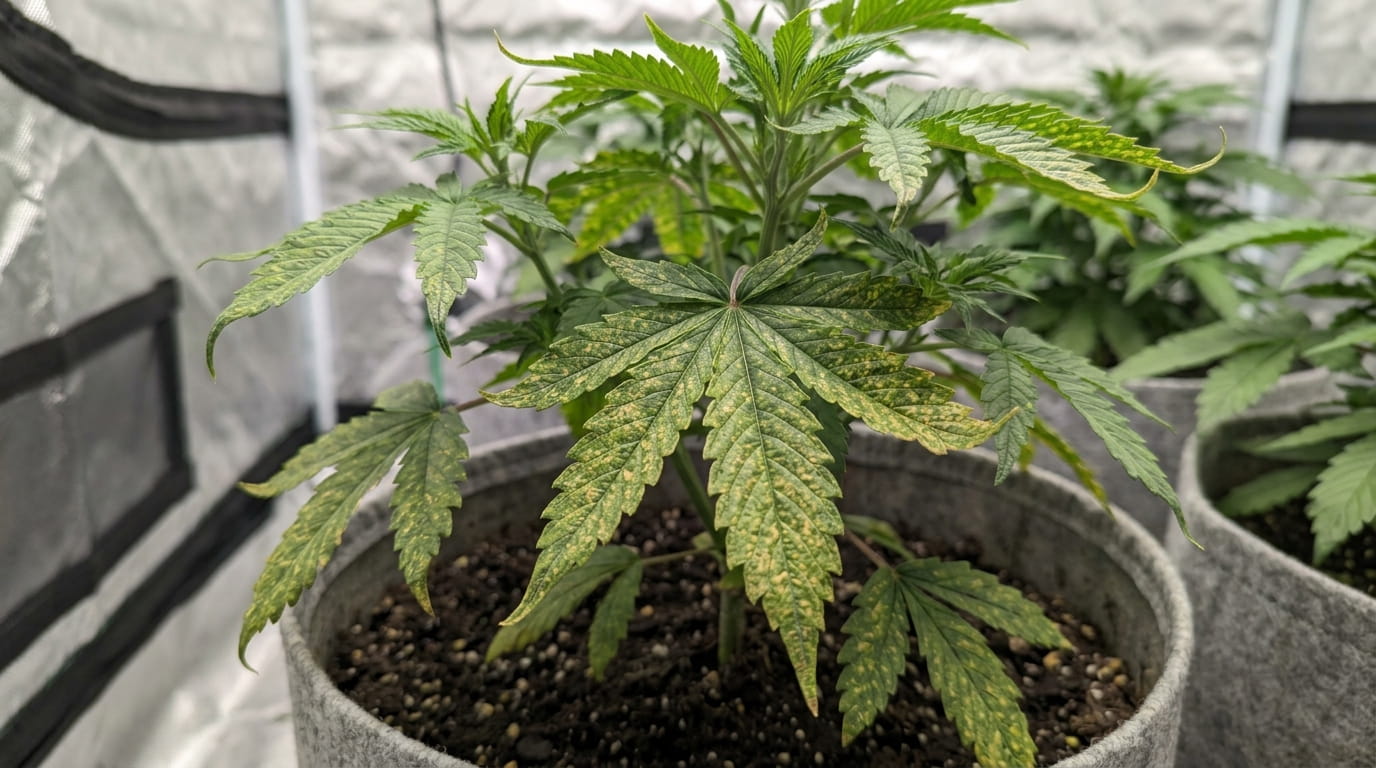
Molybdenum Deficiency in Cannabis: Rare Signs, Causes & Fixes
Molybdenum deficiency in cannabis is a rare but often confusing issue that can cause unusual leaf discoloration and slow growth, even when your feeding routine seems correct. Many growers misidentify it as nitrogen deficiency because the symptoms overlap, which can lead to incorrect fixes and further stress on the plant. This guide explains how to recognize the distinct signs, understand the underlying causes such as pH imbalance, and apply practical solutions to restore healthy growth. By the end, you will know how to identify, fix, and prevent this issue with confidence, setting the stage for the detailed breakdown that follows.
Article Insights
- Molybdenum deficiency in cannabis is uncommon and is most often caused by pH imbalance rather than lack of nutrients.
- Early signs include yellowing on lower leaves along with mottled spots and discoloration that can spread to middle leaves.
- Leaf edges may turn red or show discoloration moving inward, which helps distinguish it from nitrogen deficiency.
- Optimal pH ranges are typically 6.0–7.0 in soil and 5.8–6.5 in hydro or coco to maintain proper nutrient uptake.
- Recovery usually begins within a few days after correcting pH, with healthy new growth appearing within 1–2 weeks.
- Consistent monitoring of pH, temperature, and nutrient balance helps prevent this issue from developing.
- Article Insights
- What Is Molybdenum Deficiency in Cannabis?
- Early Signs of Molybdenum Deficiency in Cannabis
- Causes of Molybdenum Deficiency in Cannabis Plants
- How to Fix Molybdenum Deficiency in Cannabis
- How to Prevent Molybdenum Deficiency in Cannabis
- Molybdenum Deficiency in Autoflower Cannabis Plants
- Conclusion
- Frequently Asked Questions
What Is Molybdenum Deficiency in Cannabis?
Molybdenum deficiency occurs when cannabis plants cannot absorb or utilize enough molybdenum, a trace mineral essential for nitrogen metabolism.
Although cannabis only requires tiny amounts of molybdenum, the nutrient plays a major role in converting nitrate into usable nitrogen. Without it, plants struggle to process nutrients properly, even when feeding schedules appear correct.
Why Molybdenum Matters for Cannabis Growth
Molybdenum activates enzymes responsible for transforming nitrate nitrogen into ammonium nitrogen, which cannabis roots can absorb and use for growth.
Think of it this way:
| Nutrient Process | Role |
| Nitrogen | Fuel for plant growth |
| Molybdenum | Unlocks nitrogen usage |
| Without Molybdenum | Nitrogen remains unusable |
This is why molybdenum deficiency often looks similar to nitrogen deficiency. The nutrients are present, but the plant cannot process them efficiently.
Why Molybdenum Deficiency Is Rare
Most modern cannabis nutrient lines already contain trace amounts of molybdenum. True molybdenum shortages are uncommon.
In most grows, the issue is actually nutrient lockout caused by:
- Incorrect pH
- Cold root zones
- Excess nutrient buildup
- Overfeeding certain minerals
This makes molybdenum deficiency more of an environmental imbalance than a feeding problem.
Early Signs of Molybdenum Deficiency in Cannabis
Spotting symptoms early prevents long-term stress and reduced yields, especially in autoflower cannabis plants where recovery time is limited. Fast-growing autoflowers can react quickly to nutrient lockout, making early diagnosis extremely important for maintaining healthy growth and strong final harvests.
Growers cultivating high yield autoflower seeds or high THC autoflower strains should pay particularly close attention to nutrient stability during vegetative growth, since deficiencies at this stage can reduce both potency and production later in flowering.
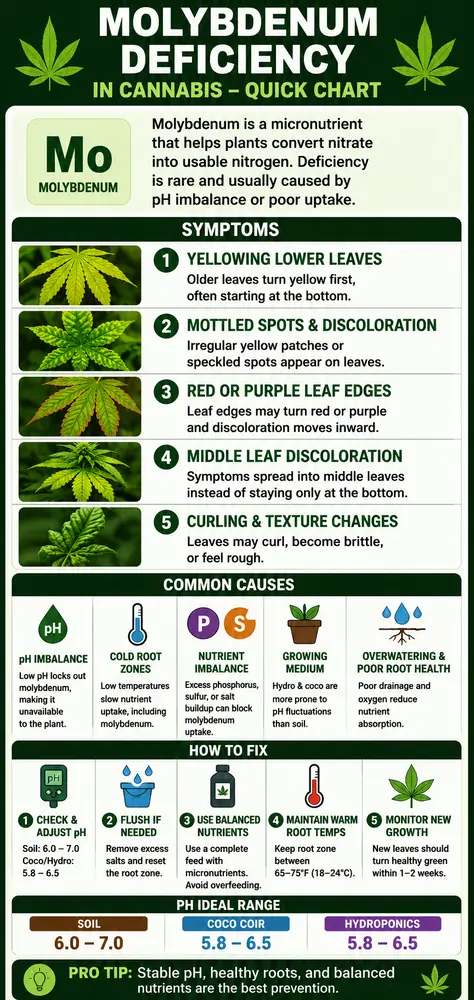
1. Yellowing Lower Leaves
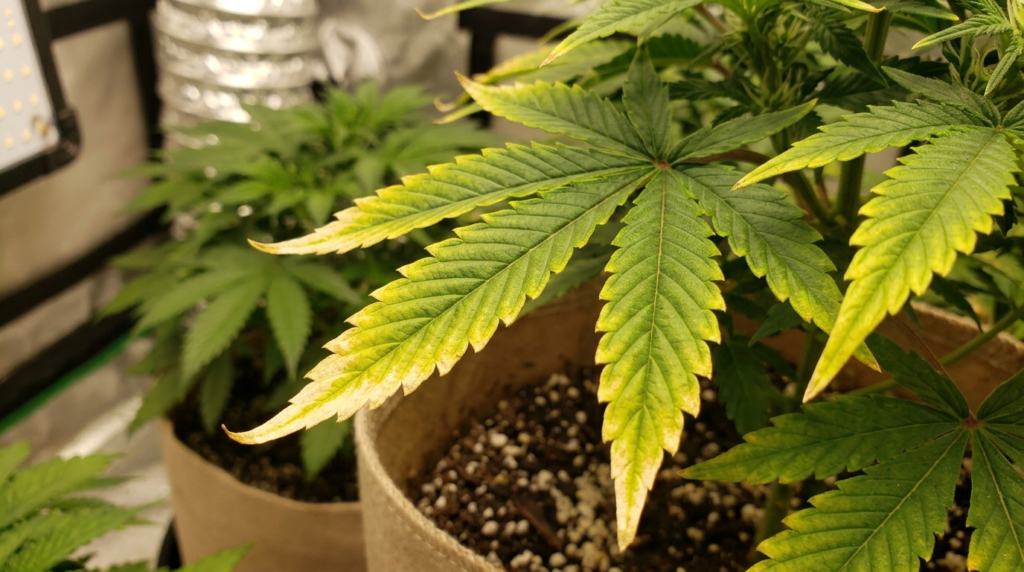
One of the first symptoms is yellowing on older lower leaves.
However, unlike nitrogen deficiency, molybdenum deficiency may spread upward unevenly into the middle of the plant.
Key Difference vs Nitrogen Deficiency
| Symptom | Nitrogen Deficiency | Molybdenum Deficiency |
| Leaf Yellowing | Uniform fade | Patchy discoloration |
| Progression | Bottom upward | Lower + middle leaves |
| Leaf Pattern | Even yellowing | Mottled spotting |
| Edge Discoloration | Rare | Common |
2. Mottled Spots and Irregular Discoloration
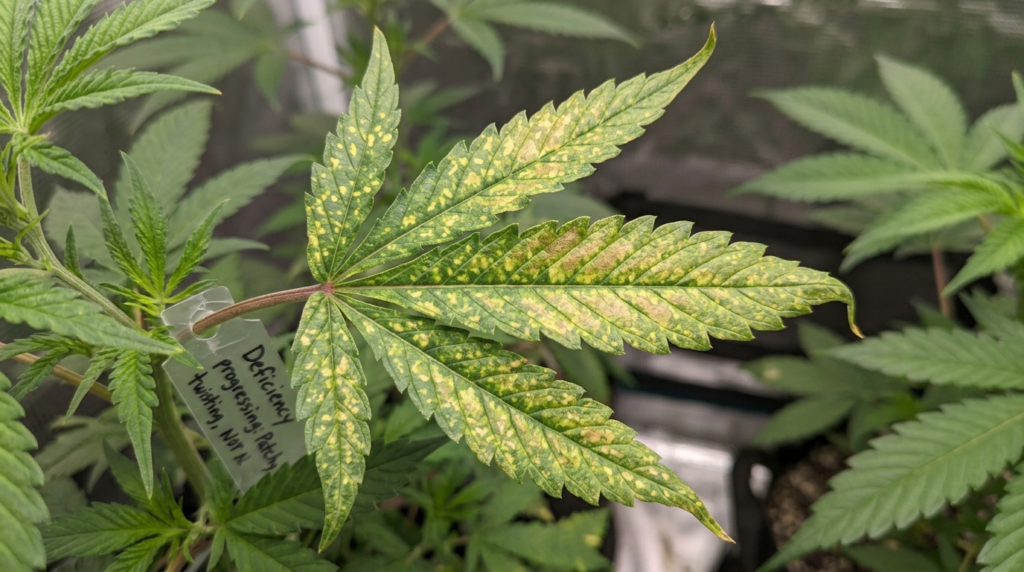
As the deficiency progresses, leaves may develop:
- Speckled yellow spots
- Patchy discoloration
- Uneven fading
- Slight twisting or curling
The irregular appearance is one of the biggest clues that the issue is not simple nitrogen deficiency.
3. Red or Purple Leaf Edges
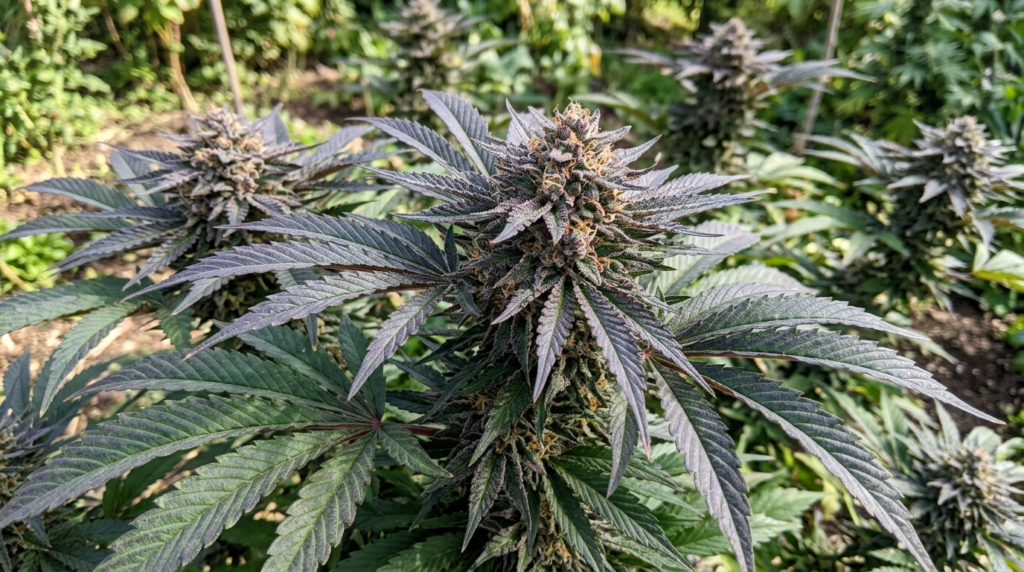
Another common symptom is reddish or purplish discoloration along leaf margins.
The discoloration often begins at the edges and slowly moves inward.
Typical Leaf Edge Symptoms
| Symptom | Appearance |
| Red Edges | Margins turn reddish or purple |
| Curling | Slight upward or downward curling |
| Texture Changes | Brittle or rough leaves |
| Edge Fade | Discoloration spreads inward |
4. Middle Leaf Discoloration
Nitrogen deficiency typically affects the lowest leaves first.
Molybdenum deficiency often spreads unpredictably into middle foliage, creating unusual color patterns throughout the plant canopy.
This inconsistent progression is one of the clearest identifying signs.
Causes of Molybdenum Deficiency in Cannabis Plants
Understanding the root cause is essential because simply adding more nutrients usually will not solve the issue.
pH Imbalance (Most Common Cause)
Low pH is the leading cause of molybdenum deficiency in cannabis.
When the root zone becomes too acidic, molybdenum becomes unavailable to the plant.
Ideal pH Ranges for Cannabis
| Growing Medium | Recommended pH |
| Soil | 6.0–7.0 |
| Coco Coir | 5.8–6.5 |
| Hydroponics | 5.8–6.5 |
Once pH drops below these ranges, nutrient lockout begins and deficiency symptoms appear.
Cold Root Zone Temperatures
Cold roots reduce nutrient uptake efficiency.
When root temperatures become too low, cannabis plants struggle to absorb micronutrients, including molybdenum. Outdoor growers may encounter this more frequently during colder nights, heavy rainfall, or unstable spring conditions.
This is one reason why many growers choose resilient outdoor autoflower seeds bred for variable climates and environmental stress resistance. Healthy roots and stable soil conditions play a major role in preventing nutrient lockout outdoors.
Ideal Root Zone Temperatures
| Environment | Recommended Temperature |
| Soil Roots | 65–75°F (18–24°C) |
| Hydro Reservoir | 65–70°F (18–21°C) |
Cold roots combined with low pH dramatically increase the risk of nutrient deficiencies.
Nutrient Imbalances and Salt Buildup
Overfeeding can create nutrient antagonism, where excess minerals block the uptake of others.
High levels of these nutrients may interfere with molybdenum absorption:
- Sulfur
- Phosphorus
- Excess salts from nutrient buildup
This is why increasing feed strength often makes the issue worse.
Growing Medium Differences
Different growing systems respond differently to micronutrient imbalances.
| Growing Medium | Risk Level | Why |
| Soil | Low | Buffers nutrients naturally |
| Coco Coir | Medium | pH fluctuates more easily |
| Hydroponics | High | Nutrient changes happen rapidly |
Hydro growers tend to encounter molybdenum-related problems more frequently because systems react quickly to pH drift.
How to Fix Molybdenum Deficiency in Cannabis
Correcting molybdenum deficiency is usually straightforward once the underlying cause is identified.
1. Correct the pH Immediately
The first step is restoring proper pH levels.
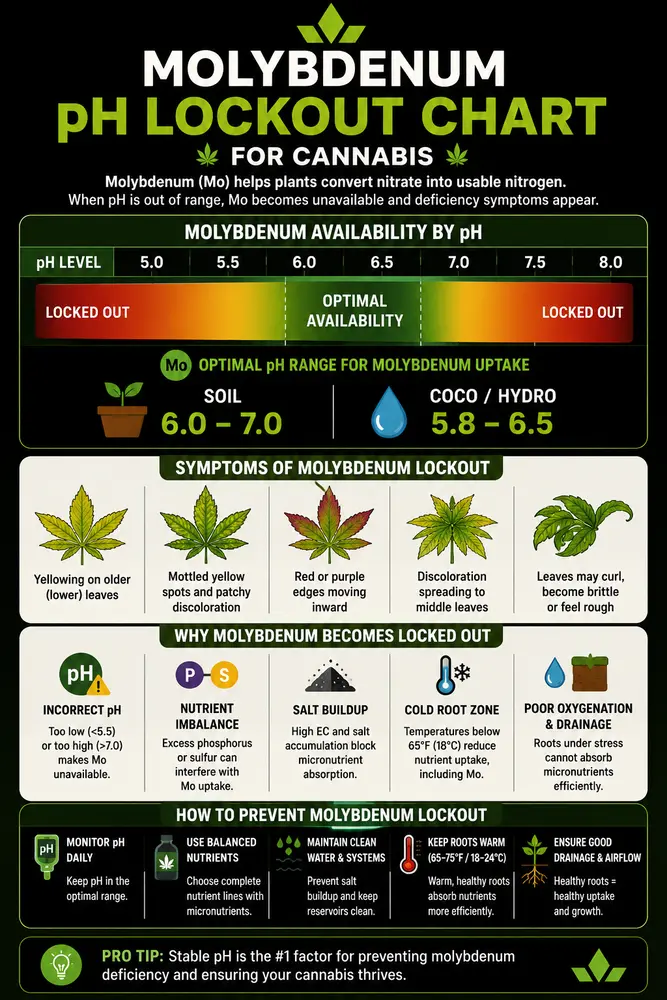
Target pH Ranges
| Medium | Correct Range |
| Soil | 6.0–7.0 |
| Coco | 5.8–6.5 |
| Hydro | 5.8–6.5 |
Always test both:
- Nutrient solution input
- Runoff or reservoir pH
Stable pH often resolves the issue without additional supplements.
2. Flush Excess Nutrients
If salt buildup or overfeeding is suspected, flush the medium using pH-balanced water.
This helps remove excess minerals that may be blocking nutrient uptake.
After flushing:
- Reintroduce balanced nutrients
- Avoid overfeeding
- Monitor runoff EC and pH
3. Use Micronutrient Supplements Carefully
If symptoms continue, use a balanced micronutrient supplement containing molybdenum.
Avoid isolated molybdenum products unless absolutely necessary.
Best Practice
| Recommendation | Why |
| Use complete nutrient lines | Prevents imbalance |
| Avoid overcorrecting | Excess micronutrients can cause toxicity |
| Start with low doses | Cannabis needs very little molybdenum |
Recovery Timeline for Cannabis Plants
Damaged leaves usually do not recover fully, but healthy new growth should appear quickly after correcting the problem.
Growers running high yield autoflower strains should focus on restoring nutrient uptake as early as possible, since prolonged deficiencies during vegetative growth can permanently reduce plant size and final flower production.
Typical Recovery Expectations
| Timeframe | Expected Results |
| 2–5 Days | Symptoms stop spreading |
| 1 Week | Healthy new growth appears |
| 2–3 Weeks | Full recovery and stable growth |
Focus on the condition of new growth rather than old damaged leaves.
How to Prevent Molybdenum Deficiency in Cannabis
Prevention is especially important because autoflowers have little time to recover from stress. Fast-growing strains can quickly become stunted if pH instability or nutrient lockout develops early in the cycle.
Many growers using autoflower seeds for beginners prefer resilient genetics that tolerate minor feeding inconsistencies and environmental fluctuations more effectively. Choosing stable, easy-to-grow autoflower strains can reduce the likelihood of nutrient-related stress while helping newer growers maintain healthier plants overall.
Maintain Proper pH Consistently
Regular pH monitoring is the best prevention strategy.
Recommended Monitoring Routine
| Grow Type | pH Check Frequency |
| Soil | Every few waterings |
| Coco | Daily |
| Hydro | Daily or continuous |
Use Balanced Cannabis Nutrients
Choose reputable nutrient lines that include:
- Trace minerals
- Chelated micronutrients
- Stable formulations
Balanced feeding prevents micronutrient shortages and nutrient antagonism.
Watch for Early Symptoms
Pay close attention to:
- Yellow lower leaves
- Red leaf edges
- Mottled spotting
- Patchy middle-leaf discoloration
Early detection prevents serious plant stress.
Maintain Healthy Root Conditions
Healthy roots absorb nutrients efficiently.
Root Health Best Practices
| Factor | Best Practice |
| Temperature | Keep roots warm and stable |
| Watering | Avoid overwatering |
| Oxygenation | Ensure proper drainage and airflow |
| Cleanliness | Prevent salt buildup and pathogens |
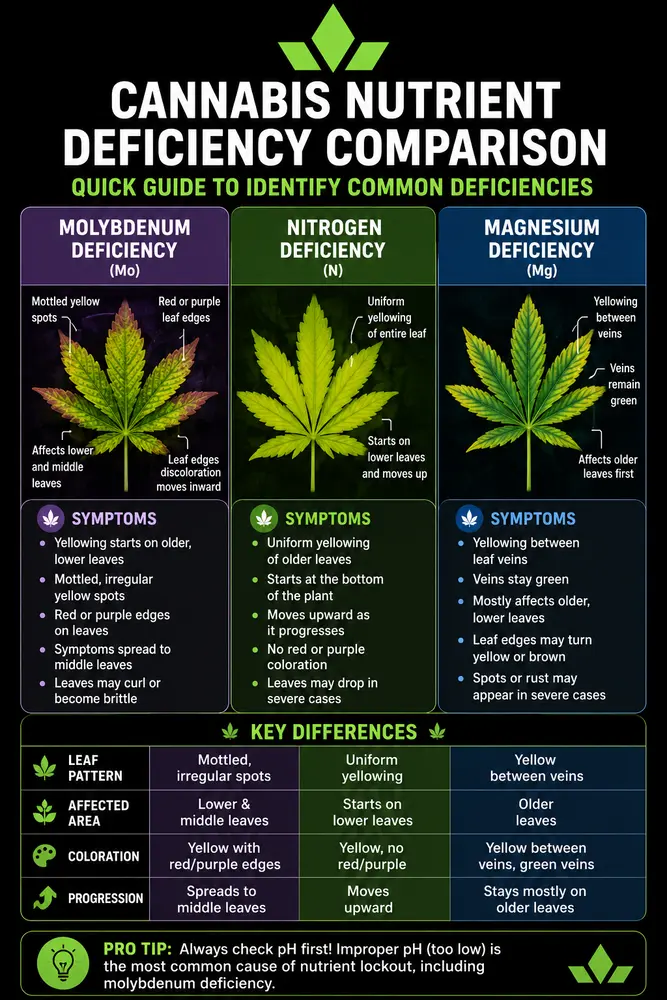
Molybdenum Deficiency vs Other Cannabis Deficiencies
| Deficiency | Main Symptoms | Key Difference |
| Nitrogen | Uniform yellowing | No red edges or mottled spots |
| Magnesium | Interveinal chlorosis | Veins remain green |
| Sulfur | Yellow new growth | Starts at top of plant |
| Molybdenum | Patchy yellowing, red edges | Affects lower + middle leaves |
Molybdenum Deficiency in Autoflower Cannabis Plants
Autoflower cannabis plants can develop molybdenum deficiency faster than photoperiod strains because of their shorter life cycle and accelerated growth rate. Since autoflowers move from seedling to flowering automatically within a few weeks, nutrient issues can quickly reduce overall plant size and final yields if not corrected early.
Unlike photoperiod plants, autoflowers have less recovery time. This means even a minor nutrient lockout can affect development permanently.
Why Autoflowers Are More Sensitive to Molybdenum Deficiency
Autoflowers tend to react more aggressively to environmental stress because they grow rapidly under a fixed genetic timeline.
Several factors increase the risk of molybdenum-related issues in autoflowers:
| Risk Factor | Why It Matters |
| Smaller root systems | Nutrient fluctuations affect plants faster |
| Rapid growth | Higher nutrient processing demand |
| Sensitive genetics | Less tolerance for pH swings |
| Overfeeding risk | Autoflowers require lighter feeding |
| Coco/hydro popularity | Faster pH instability |
Because molybdenum is directly tied to nitrogen metabolism, even slight nutrient lockout can quickly slow vegetative growth in autoflowers.
Common Symptoms in Autoflower Cannabis
Symptoms are similar to photoperiod plants but usually appear earlier and spread faster.
Early Warning Signs
- Yellowing lower leaves
- Pale middle foliage
- Red or purple leaf edges
- Slow vertical growth
- Small or underdeveloped leaves
Advanced Symptoms
| Symptom | Effect on Autoflowers |
| Mottled discoloration | Reduced photosynthesis |
| Leaf curling | Increased plant stress |
| Stunted growth | Smaller final harvest |
| Weak flowering sites | Lower bud production |
Because autoflowers have limited vegetative time, prolonged deficiencies can permanently reduce yield potential.
Best pH Range for Autoflower Nutrient Uptake
Autoflowers perform best when pH remains highly stable.
| Growing Medium | Ideal pH Range |
| Soil | 6.2–6.8 |
| Coco Coir | 5.8–6.2 |
| Hydroponics | 5.8–6.3 |
Even small pH drops below these ranges can reduce molybdenum availability and trigger nutrient lockout symptoms.
How to Fix Molybdenum Deficiency in Autoflowers
The safest approach is gradual correction. Autoflowers are sensitive to aggressive feeding changes.
Recommended Recovery Steps
- Test and correct pH immediately
- Flush excess salts if nutrient buildup exists
- Resume feeding at lighter nutrient strength
- Maintain warm root zone temperatures
- Monitor new growth for improvement
Important Tip for Autoflower Growers
Avoid overfeeding micronutrients. Autoflowers generally require lower EC levels than photoperiod cannabis plants, and excessive nutrients can worsen lockout problems.
Preventing Molybdenum Deficiency in Autoflowers
Prevention is especially important because autoflowers have little time to recover from stress.
Best Prevention Practices
| Prevention Method | Benefit |
| Stable pH monitoring | Prevents nutrient lockout |
| Light nutrient feeding | Reduces salt buildup |
| Proper root temperatures | Improves nutrient uptake |
| Balanced micronutrients | Prevents hidden deficiencies |
| Avoid overwatering | Protects root health |
Keeping autoflowers in a stable environment is the best way to prevent molybdenum deficiency and maintain vigorous growth throughout the entire cycle.
Conclusion
Molybdenum deficiency in cannabis is uncommon, but it can seriously affect plant health when left untreated. Because the symptoms closely resemble nitrogen deficiency, many growers mistakenly add more nutrients instead of fixing the real problem.
In most cases, the issue comes down to pH imbalance, nutrient lockout, or poor root conditions rather than an actual lack of molybdenum.
By maintaining stable pH levels, balanced feeding schedules, and healthy root environments, you can prevent molybdenum deficiency before it affects growth or yields.
The key is understanding that cannabis nutrition is about nutrient availability, not simply nutrient quantity.
Frequently Asked Questions
What is molybdenum deficiency in cannabis?
Molybdenum deficiency is a micronutrient issue that prevents cannabis plants from properly processing nitrogen, usually due to pH-related nutrient lockout.
What are the first signs of molybdenum deficiency?
Early symptoms include yellow lower leaves, mottled spots, red leaf edges, and uneven discoloration spreading into middle foliage.
What causes molybdenum deficiency in cannabis plants?
The most common cause is low pH. Cold roots, excess nutrient buildup, and mineral imbalances can also reduce molybdenum uptake.
How do you fix molybdenum deficiency in cannabis?
Correct the pH, flush excess salts if necessary, restore balanced nutrients, and monitor new growth for improvement.
Can molybdenum deficiency kill cannabis plants?
Molybdenum deficiency rarely kills cannabis plants directly, but severe untreated cases can seriously reduce growth, weaken flowering, and lower yields. Because the deficiency disrupts nitrogen metabolism, plants may gradually decline if the underlying pH or nutrient lockout issue is not corrected.
Is molybdenum deficiency more common in hydroponic cannabis grows?
Yes, molybdenum deficiency is more common in hydroponic and coco grows because pH fluctuations happen faster in these systems. Even small drops in pH can reduce molybdenum availability and trigger nutrient lockout symptoms within a short period.
What does molybdenum deficiency look like in cannabis leaves?
Molybdenum deficiency often causes yellowing lower leaves, mottled discoloration, red or purple leaf edges, and patchy fading that spreads into middle foliage. Unlike nitrogen deficiency, symptoms usually appear uneven and irregular across the plant.
Can incorrect pH cause molybdenum deficiency in cannabis?
Yes. Low pH is the most common cause of molybdenum deficiency in cannabis plants. When the root zone becomes too acidic, molybdenum becomes unavailable for uptake even when nutrients are present in the growing medium.
Does flushing help fix molybdenum deficiency?
Flushing can help if nutrient buildup or salt accumulation is causing nutrient lockout. After flushing with pH-balanced water, growers should resume feeding with balanced nutrients containing trace minerals to restore proper uptake.
Can overfeeding nutrients cause molybdenum deficiency?
Yes. Excess nutrients, especially sulfur and phosphorus, can interfere with molybdenum absorption. Overfeeding may create nutrient antagonism that blocks micronutrient uptake even when molybdenum is present in the nutrient solution.
How long does it take cannabis plants to recover from molybdenum deficiency?
Most cannabis plants begin showing improvement within a few days after correcting pH and nutrient balance. Healthy new growth typically appears within 1–2 weeks, while full recovery may take several weeks depending on severity.
What is the difference between nitrogen deficiency and molybdenum deficiency?
Nitrogen deficiency usually causes uniform yellowing that starts at the bottom of the plant. Molybdenum deficiency creates more irregular symptoms, including mottled spots, red leaf edges, and discoloration that spreads unevenly into middle foliage.
Can cold temperatures cause molybdenum deficiency in cannabis?
Yes. Cold root zone temperatures slow nutrient uptake and reduce the plant’s ability to absorb micronutrients like molybdenum. This can contribute to deficiency symptoms even when nutrients are present.
Are autoflower cannabis plants more sensitive to molybdenum deficiency?
Autoflower cannabis plants can be more sensitive because they grow quickly and have less recovery time. Nutrient lockout during early growth stages may permanently reduce plant size and final yields.