
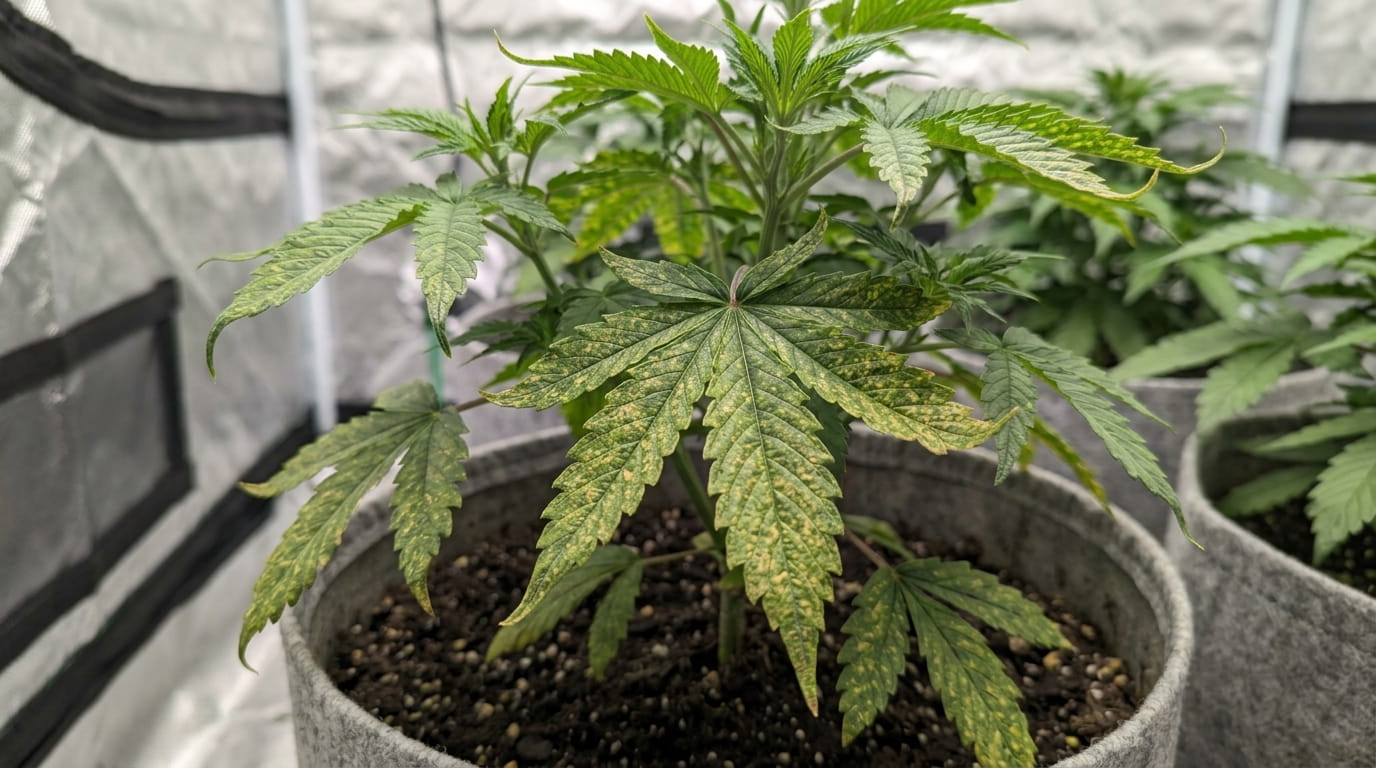
Molybdenum Deficiency in Autoflower Cannabis: Signs, Causes & Fixes
Molybdenum deficiency in cannabis is a rare but often confusing nutrient issue that can cause unusual leaf discoloration, yellowing foliage, and slowed growth even when your feeding routine appears correct. Because the symptoms closely resemble nitrogen deficiency, many growers mistakenly increase nutrient levels when the real problem is often pH-related nutrient lockout.
Although cannabis plants only require trace amounts of molybdenum, this essential micronutrient plays a vital role in nitrogen metabolism and healthy plant development. When molybdenum becomes unavailable, plants struggle to utilize available nitrogen efficiently, leading to deficiency symptoms despite adequate nutrient levels in the growing medium.
This guide explains how to identify the early signs of molybdenum deficiency, understand the most common causes, including pH imbalance and nutrient lockout, and apply practical solutions to restore healthy growth. You’ll also learn how to prevent molybdenum deficiency in autoflower cannabis plants by maintaining proper pH, balanced nutrition, and healthy root-zone conditions throughout the grow cycle.
Article Insights
- Molybdenum deficiency is rare in cannabis and is most often caused by pH-related nutrient lockout rather than a true lack of molybdenum.
- Common symptoms include yellowing lower leaves, mottled spotting, red or purple leaf edges, and patchy discoloration that can spread into middle foliage.
- Because molybdenum supports nitrogen metabolism, its deficiency is frequently mistaken for nitrogen deficiency.
- Autoflower cannabis plants are more vulnerable to nutrient stress because their short vegetative stage leaves limited time for recovery.
- Low pH, cold root temperatures, nutrient buildup, and overfeeding are the most common triggers of molybdenum deficiency symptoms in autoflowers.
- Most cases can be corrected and prevented by maintaining proper pH, avoiding nutrient lockout, using balanced nutrition, and supporting healthy root-zone conditions.
What Is Molybdenum Deficiency in Cannabis?
Molybdenum deficiency occurs when cannabis plants cannot absorb or utilize enough molybdenum, a trace mineral that plays a critical role in nitrogen metabolism and healthy plant development.
Although cannabis requires only tiny amounts of molybdenum, this essential micronutrient helps convert nitrate nitrogen into forms the plant can use for growth. When molybdenum becomes unavailable, cannabis plants may struggle to process nutrients efficiently, even when feeding schedules and nutrient levels appear correct.
For autoflower cannabis plants, maintaining proper molybdenum availability is particularly important during early growth. Autoflowers have a short vegetative period and a fixed lifecycle, meaning nutrient uptake problems can affect plant development before there is sufficient time to recover. If molybdenum deficiency or nutrient lockout occurs during this critical stage, plants may experience reduced vigor, slower growth, and lower yield potential later in flowering.
Why Molybdenum Matters for Cannabis Growth
Molybdenum activates enzymes responsible for converting nitrate nitrogen into a usable form that cannabis plants can absorb and utilize. Without adequate molybdenum, nitrogen remains unavailable to the plant despite being present in the root zone.
Think of it this way:
| Nutrient Process | Role |
| Nitrogen | Supports vegetative growth, leaf development, and overall plant health |
| Molybdenum | Enables the plant to utilize available nitrogen |
| Without Molybdenum | Nitrogen uptake becomes inefficient, leading to deficiency symptoms |
This is why molybdenum deficiency is frequently mistaken for nitrogen deficiency. The nutrients may be present in the growing medium, but the plant cannot process them effectively.
When growing autoflowers, this distinction is especially important. Because autoflowers transition into flowering automatically regardless of plant size, prolonged nutrient lockout during the vegetative stage can permanently limit plant development and reduce final yields.
Why Molybdenum Deficiency Is Rare
True molybdenum deficiency is uncommon in modern cannabis cultivation. Most high-quality cannabis nutrients already contain sufficient levels of molybdenum and other essential micronutrients.
In the majority of cases, symptoms develop because molybdenum becomes unavailable due to nutrient lockout rather than an actual shortage of the nutrient itself.
Common causes include:
- Incorrect root-zone pH
- Cold root temperatures
- Excess nutrient buildup
- Salt accumulation in the growing medium
- Overfeeding certain minerals
For autoflower cannabis plants, pH-related nutrient lockout is the most common trigger. Because many autoflowers grow rapidly and are often cultivated in coco coir or hydroponic systems, small pH fluctuations can quickly reduce micronutrient availability and lead to deficiency symptoms.
This makes molybdenum deficiency less of a feeding problem and more of a root-zone management issue. Maintaining stable pH, balanced nutrition, and healthy root conditions is usually the most effective way to prevent molybdenum-related problems in autoflower cannabis plants.
Early Signs of Molybdenum Deficiency in Cannabis
Recognizing molybdenum deficiency early is essential for maintaining healthy growth and preventing long-term stress. While this micronutrient deficiency is relatively uncommon, it can quickly affect plant performance by disrupting nitrogen metabolism and reducing the plant’s ability to utilize available nutrients.
One challenge with molybdenum deficiency is that growers, particularly those just starting growing begineer autoflowers, often misdiagnose it as a nitrogen deficiency during the early stages. Before increasing nutrient strength, check root-zone pH and review recent feeding practices. In many cases, the plant already has access to nitrogen, but cannot utilize it efficiently because molybdenum uptake has been disrupted.
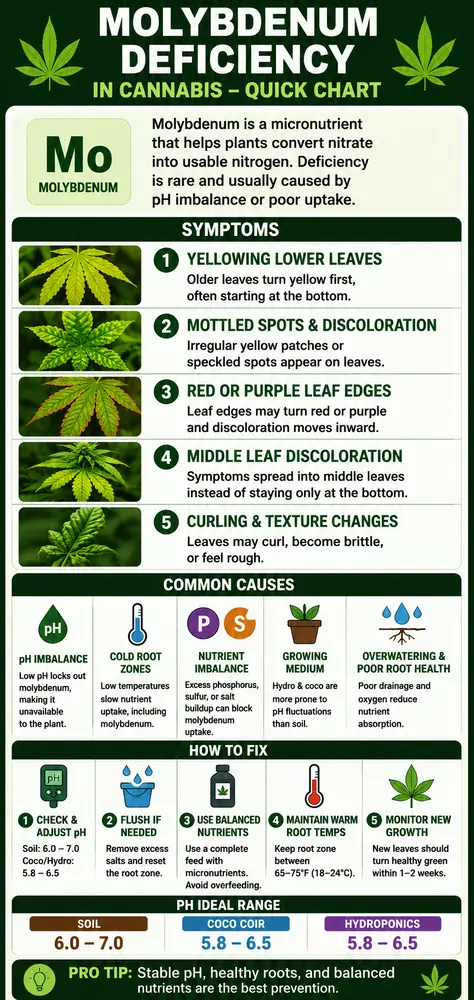
1. Yellowing Lower Leaves
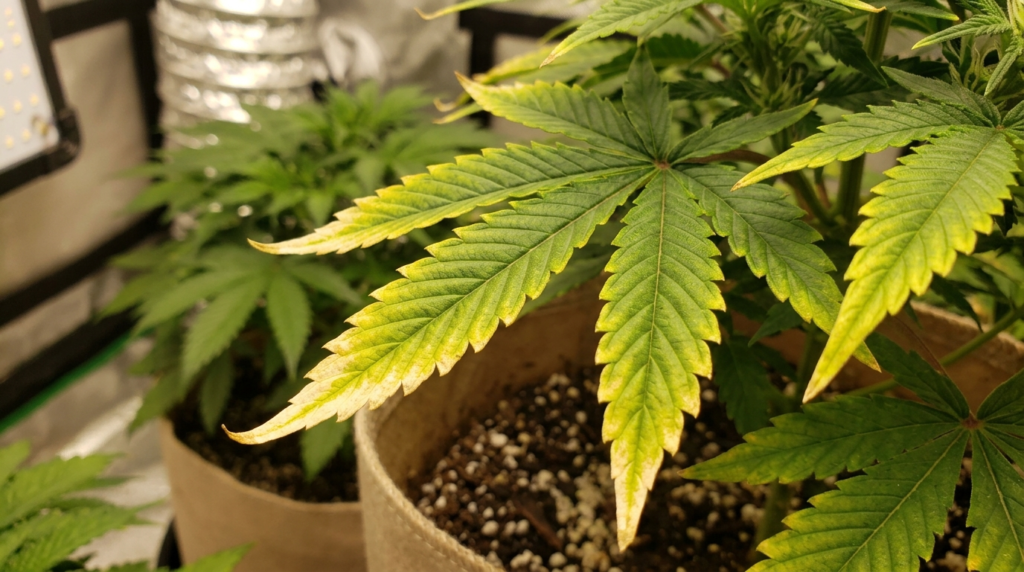
One of the earliest signs of molybdenum deficiency is yellowing on older, lower leaves.
Because molybdenum is a mobile nutrient, the plant will move available reserves from older growth to support newer foliage. This causes lower leaves to lose color first, often appearing pale green before turning yellow.
Unlike a typical nitrogen deficiency, however, molybdenum deficiency often progresses unevenly and may begin affecting middle leaves sooner than expected.
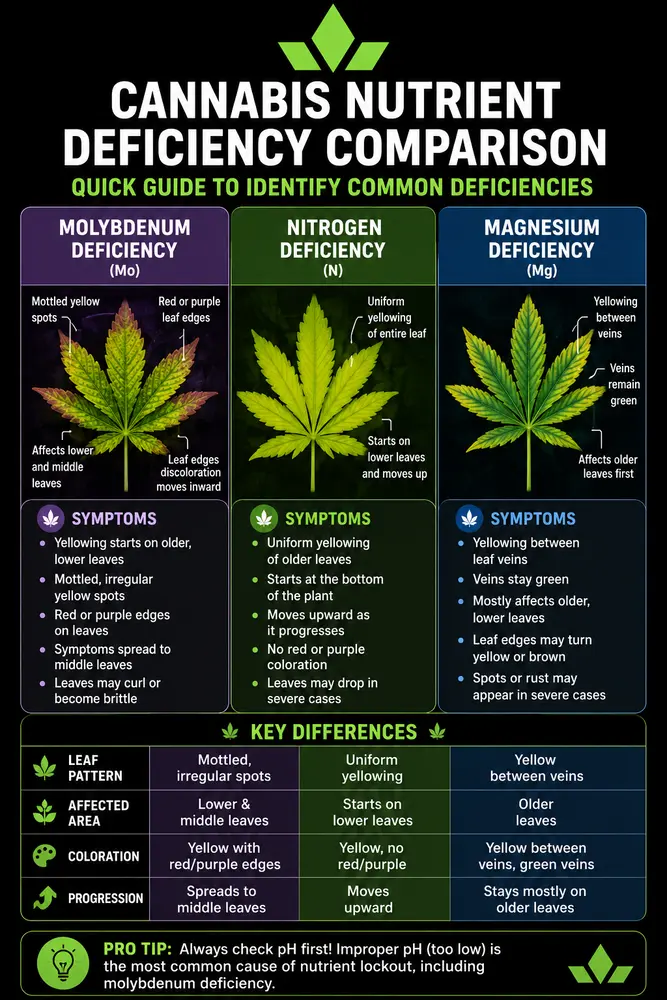
Key Difference vs Nitrogen Deficiency
| Symptom | Nitrogen Deficiency | Molybdenum Deficiency |
| Leaf Yellowing | Uniform fade | Patchy discoloration |
| Progression | Bottom upward | Lower + middle leaves |
| Leaf Pattern | Even yellowing | Mottled spotting |
| Edge Discoloration | Rare | Common |
2. Mottled Spots and Irregular Discoloration
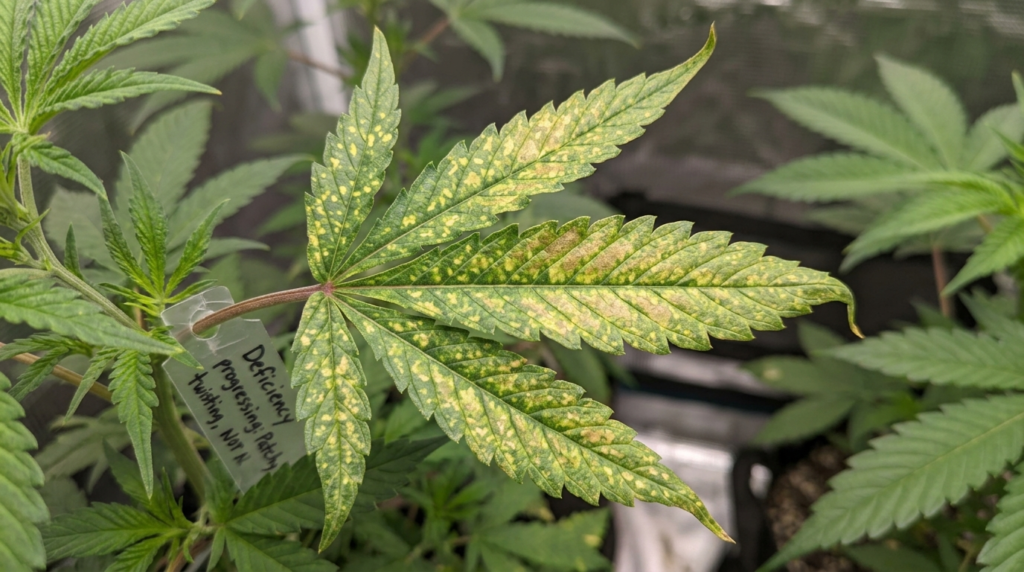
As the deficiency progresses, affected leaves often develop an uneven appearance that helps distinguish molybdenum deficiency from other nutrient problems.
Common symptoms include:
- Speckled yellow spots
- Patchy discoloration
- Uneven fading across the leaf surface
- Slight twisting or curling
- Mixed yellow, green, and reddish coloration
This irregular pattern is one of the strongest indicators that the problem may be related to micronutrient availability rather than a simple nitrogen shortage.
3. Red or Purple Leaf Edges
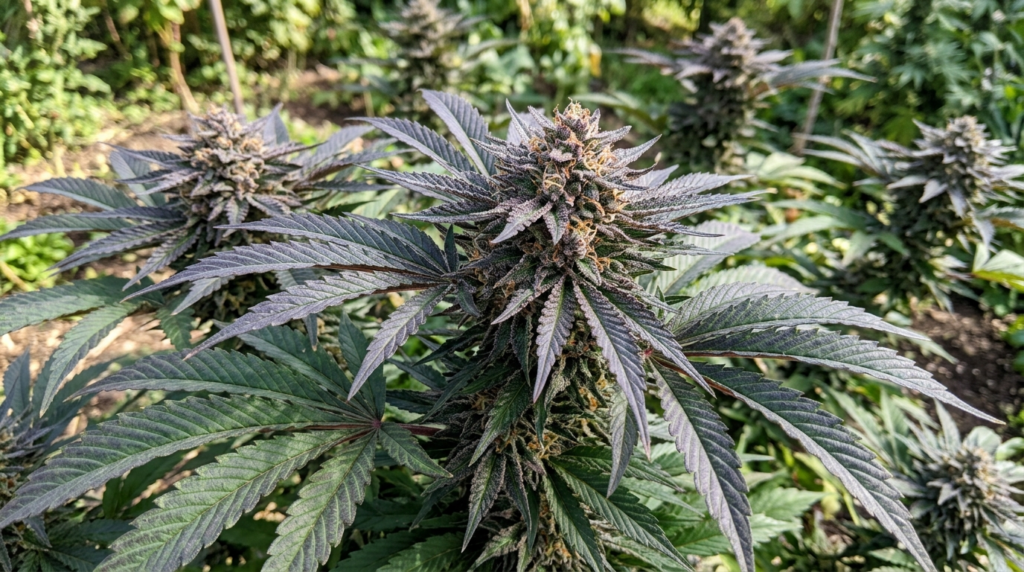
Another common symptom is reddish or purplish discoloration developing along leaf margins.
The color change often starts at the edges before gradually moving inward toward the center of the leaf. In some cases, affected leaves may also become brittle or develop a rough texture.
Typical Leaf Edge Symptoms
| Symptom | Appearance |
| Red Edges | Margins turn reddish or purple |
| Curling | Slight upward or downward curling |
| Texture Changes | Brittle or rough leaves |
| Edge Fade | Discoloration spreads inward |
While red or purple coloration can sometimes occur naturally in certain genetics, especially autoflower strains with anthocyanin-rich traits, discoloration combined with yellowing and mottled spotting may indicate an underlying nutrient uptake issue.
4. Middle Leaf Discoloration
Nitrogen deficiency typically remains concentrated in the oldest leaves during the early stages.
Molybdenum deficiency often behaves differently by spreading unpredictably into middle foliage, creating unusual color patterns throughout the plant canopy. This inconsistent progression is one of the clearest signs that growers may be dealing with molybdenum-related nutrient lockout rather than a standard nitrogen deficiency.
In our experience, when discoloration begins spreading beyond older foliage and into the middle canopy, the issue is often more than a simple nitrogen shortage. This pattern frequently points growers toward root-zone pH problems or micronutrient lockout rather than a lack of fertilizer. Monitoring new growth closely and addressing pH issues early can help prevent symptoms from spreading throughout the plant.
Causes of Molybdenum Deficiency in Cannabis Plants
Understanding the root cause of molybdenum deficiency is essential because simply adding more nutrients rarely solves the problem. In most cases, cannabis plants are not lacking molybdenum in the growing medium. Instead, environmental conditions or nutrient lockout prevent the roots from absorbing and utilizing the micronutrient properly.
When identifying the cause quickly is particularly important. Because autoflowers have a limited vegetative period, prolonged nutrient lockout can reduce growth before flowering begins, affecting overall plant size, vigor, and final yields.
pH Imbalance (Most Common Cause)
Low root-zone pH is the leading cause of molybdenum deficiency in cannabis plants.
When the growing medium becomes too acidic, molybdenum availability decreases significantly, even when sufficient nutrients are present. As pH drops outside the optimal range, nutrient lockout occurs and deficiency symptoms begin to appear.
Ideal pH Ranges for Cannabis
| Growing Medium | Recommended pH |
| Soil | 6.0–7.0 |
| Coco Coir | 5.8–6.5 |
| Hydroponics | 5.8–6.5 |
If you are growing autoflowers in coco coir or hydroponic systems, regular pH monitoring is especially important. These growing methods can experience rapid pH fluctuations, allowing micronutrient deficiencies to develop quickly if conditions are not corrected.
In cultivation trials, we rarely see true molybdenum shortages caused by a lack of nutrients in the feed itself. Most cases that resemble molybdenum deficiency trace back to root-zone pH drifting too low, particularly in coco grows where nutrient availability can change quickly. Correcting pH often resolves the issue without adding any additional micronutrient supplements.
Many growers are surprised to discover that their nutrient mix tests perfectly while runoff pH reveals a completely different picture. In coco especially, root-zone conditions can drift out of range long before visible symptoms appear on the leaves.
If pH issues persist, growers often notice symptoms that resemble multiple autoflower deficiencies appearing at the same time.
Cold Root Zone Temperatures
Cold root temperatures reduce nutrient uptake efficiency and can contribute to molybdenum deficiency.
When roots become too cold, cannabis plants struggle to absorb micronutrients effectively, even when nutrient levels are adequate. This issue is commonly seen in outdoor grows during early spring, after prolonged rainfall, or during periods of fluctuating temperatures.
Outdoor autoflower growers may encounter this problem more frequently because many cultivators start plants early in the season to maximize daylight hours and harvest windows. Young autoflowers exposed to cold, wet conditions often experience slower root development and reduced nutrient uptake.
Ideal Root Zone Temperatures
| Environment | Recommended Temperature |
| Soil Roots | 65–75°F (18–24°C) |
| Hydro Reservoir | 65–70°F (18–21°C) |
Cold roots combined with low pH can significantly increase the likelihood of nutrient lockout and micronutrient deficiencies.
Nutrient Imbalances and Salt Buildup
Overfeeding is another common cause of molybdenum-related problems.
Excess nutrients can create nutrient antagonism and eventually lead to cannabis nutrient toxicity or nutrient lockout, where high concentrations of one element interfere with the uptake of another. Rather than correcting the problem, increasing feed strength often worsens nutrient lockout.
Nutrients that may interfere with molybdenum availability include:
- Excess sulfur
- Excess phosphorus
- High EC levels
- Salt buildup from repeated feeding
This issue is particularly common among newer autoflower growers who use feeding schedules designed for photoperiod cannabis plants. Because many autoflower cultivars thrive on lighter nutrient concentrations, excessive feeding can quickly lead to root-zone imbalances and reduced micronutrient availability.
Growing Medium Differences
The risk of molybdenum deficiency can vary depending on the growing medium being used.
| Growing Medium | Risk Level | Why |
| Soil | Low | Buffers nutrients naturally |
| Coco Coir | Medium | pH fluctuates more easily |
| Hydroponics | High | Nutrient changes happen rapidly |
Hydroponic and coco systems generally encounter molybdenum-related issues more frequently because they respond rapidly to changes in pH and nutrient concentrations.
Soil-grown autoflowers often have a greater margin for error due to the buffering capacity of organic matter and microbial activity. However, regardless of the growing medium, maintaining stable pH, balanced nutrition, and healthy root conditions remains the most effective way to prevent molybdenum deficiency in cannabis plants.
How to Fix Molybdenum Deficiency in Cannabis
Once you identify the cause of molybdenum deficiency, fixing it is usually fairly simple. In most cases, the issue isn’t that your cannabis plants are missing molybdenum altogether. Instead, a pH problem or nutrient lockout is preventing the roots from absorbing and using the nutrient properly.
1. Correct the pH Immediately
The first step is restoring proper pH levels.
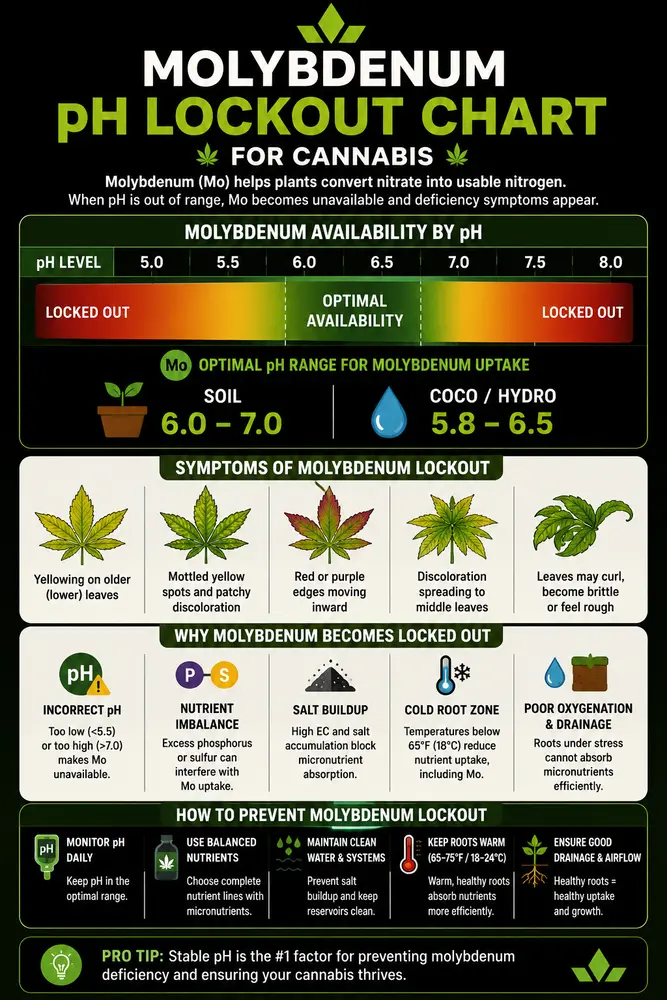
Target pH Ranges
| Medium | Correct Range |
| Soil | 6.0–7.0 |
| Coco | 5.8–6.5 |
| Hydro | 5.8–6.5 |
Make sure you test:
- Nutrient solution pH
- Runoff pH (soil and coco)
- Reservoir pH (hydroponic systems)
Many growers only check the pH of their nutrient mix, but the root zone is where nutrient uptake actually happens. Testing runoff or reservoir water often reveals hidden pH issues that can lead to nutrient lockout.
This is especially important when growing autoflowers. Their rapid growth rate leaves little room for error, and even a brief period of nutrient lockout can affect plant size, vigor, and overall yield potential.
In many cases, simply bringing the pH back into the correct range is enough to stop the deficiency from progressing.
2. Flush Excess Nutrients
If you’ve been feeding heavily or notice signs of salt buildup, flushing the growing medium may help restore proper nutrient uptake.
Use pH-balanced water to wash away excess salts and minerals that could be blocking molybdenum and other micronutrients.
One common mistake we encounter when diagnosing nutrient issues is increasing feed strength as soon as yellowing appears. In many cases, this actually compounds the problem because the root zone already contains excess salts. After correcting runoff EC and pH, plants frequently resume healthy growth without needing additional nutrients.
After flushing:
- Reintroduce nutrients gradually
- Feed at a moderate strength
- Monitor runoff EC and pH
- Watch new growth for signs of improvement
If runoff EC remains elevated after several feedings, excess salts may be accumulating around the root zone. Correcting the buildup often restores micronutrient availability more effectively than adding additional supplements. Many autoflower genetics perform best with lighter nutrient concentrations than photoperiod plants, so following aggressive feeding schedules can create more problems than it solves.
3. Use Micronutrient Supplements Carefully
If symptoms continue after correcting pH and addressing nutrient buildup, you may want to use a balanced micronutrient supplement that contains molybdenum.
However, avoid adding large amounts of molybdenum on its own unless you’re certain it’s needed. Cannabis plants require only trace amounts of this micronutrient, and too much can create new nutrient imbalances.
Best Practices for Micronutrient Supplementation
| Recommendation | Why It Matters |
| Use complete nutrient lines | Helps maintain balanced micronutrient levels |
| Avoid overcorrecting | Excess micronutrients can cause toxicity or lockout |
| Start with low doses | Cannabis requires very little molybdenum |
| Monitor plant response | New growth is the best sign of recovery |
Experienced growers typically focus on correcting pH and improving root-zone conditions before reaching for supplements, since those factors are responsible for most molybdenum-related issues.
Recovery Timeline for Cannabis Plants
It’s important to understand that damaged leaves rarely return to their original healthy appearance. Instead, look at the condition of new growth to determine whether the problem has been resolved.
When dealing with autoflowers, timing can make a significant difference. When evaluating recovery, focus on leaves that developed after the correction was made. Existing damage rarely disappears, but healthy new growth indicates the underlying uptake issue has been resolved. Any lost growth during the early stages of development can affect the plant for the rest of its lifecycle.
Typical Recovery Expectations
| Timeframe | Expected Results |
| 2–5 Days | Symptoms stop spreading |
| 1 Week | Healthy new growth appears |
| 2–3 Weeks | Normal growth resumes |
| Full Grow Cycle | Yield impact depends on severity and timing |
If the deficiency occurred during the seedling stage or early vegetative growth, plants may still end up slightly smaller than expected. However, correcting the issue quickly can greatly reduce its impact on overall growth, flower production, and final yields.
When assessing recovery, focus on the newest leaves rather than older damaged foliage. Healthy new growth with improved color, vigor, and leaf development is the clearest sign that molybdenum uptake has returned to normal.es.
How to Prevent Molybdenum Deficiency in Cannabis
Because true molybdenum deficiency is uncommon, prevention is usually focused on maintaining conditions that support consistent nutrient uptake rather than adding extra micronutrients.
In most cannabis grows, molybdenum-related symptoms develop when pH drifts out of range, salts accumulate around the roots, or environmental conditions interfere with nutrient absorption. By maintaining a stable root-zone environment, growers can prevent most cases before symptoms appear.
Maintain Stable pH
Low root-zone pH is the most common trigger for molybdenum deficiency symptoms. Regular monitoring helps prevent nutrient lockout and ensures micronutrients remain available throughout the grow cycle.
| Grow Type | pH Check Frequency |
| Soil | Every few waterings |
| Coco Coir | Daily |
| Hydroponics | Daily or continuous |
Growers using coco coir or hydroponic systems should pay particularly close attention to pH stability, as nutrient availability can change quickly when conditions drift outside the optimal range.
Feed Moderately and Avoid Salt Buildup
Most quality cannabis nutrient lines already contain sufficient molybdenum along with other essential micronutrients. In our experience, nutrient lockout caused by overfeeding is far more common than a true molybdenum shortage.
Across multiple autoflower cultivars, we’ve consistently observed that lighter feeding programs often produce healthier root zones and fewer micronutrient uptake issues than aggressive feeding schedules. When nutrient concentrations are pushed too hard, salt accumulation tends to become a more common problem than actual nutrient shortages.
To reduce the risk of nutrient imbalances:
- Increase feed strength gradually
- Monitor runoff EC regularly
- Avoid excessive use of additives
- Watch for signs of salt accumulation
- Periodically check runoff pH
Many autoflower cultivars perform well with lighter feeding levels than growers expect, making moderate nutrient programs a safer long-term approach.
Maintain Healthy Root Conditions
Healthy roots are essential for efficient nutrient uptake. Environmental stress can reduce micronutrient availability even when nutrient levels are adequate.
| Factor | Best Practice |
| Temperature | Keep root zones warm and stable |
| Watering | Avoid overwatering and waterlogged media |
| Oxygenation | Ensure good drainage and airflow |
| Cleanliness | Prevent salt buildup and root-zone pathogens |
Monitor Plants Regularly
Routine inspections help identify nutrient issues before they become severe. Watch for unusual yellowing, mottled leaf discoloration, or red leaf margins, particularly when symptoms appear alongside otherwise adequate feeding practices.
In most cases, stable pH, balanced nutrition, and healthy root conditions are all that’s needed to prevent molybdenum deficiency and keep cannabis plants growing vigorously from seedling to harvest.
Molybdenum Deficiency vs Other Cannabis Deficiencies
| Deficiency | Main Symptoms | Key Difference |
| Nitrogen | Uniform yellowing | No red edges or mottled spotting |
| Magnesium | Interveinal chlorosis | Veins remain green |
| Sulfur | Yellow new growth | Starts on newer leaves |
| Molybdenum | Patchy yellowing, red edges, mottled spotting | Often affects lower and middle leaves |
By maintaining stable pH, balanced feeding, and healthy roots, most growers can prevent molybdenum deficiency and keep autoflower cannabis plants growing vigorously from seedling to harvest.
Conclusion
Molybdenum deficiency is uncommon in cannabis, but it can still impact growth when nutrient uptake is restricted. In most cases, the problem is caused by pH-related nutrient lockout, salt buildup, or poor root-zone conditions rather than a lack of molybdenum itself.
For autoflower cannabis plants, early detection is important because their short lifecycle leaves little time to recover from nutrient stress. Fortunately, correcting pH, maintaining healthy roots, and avoiding overfeeding will usually restore normal growth.
The best prevention strategy is simple: monitor pH regularly, use balanced nutrients, and maintain stable growing conditions. By supporting healthy nutrient uptake from seed to harvest, growers can keep their autoflowers vigorous, productive, and on track for strong yields.
Frequently Asked Questions
Are autoflower cannabis plants more sensitive to molybdenum deficiency?
Autoflower cannabis plants can be more sensitive to nutrient deficiencies because they have a shorter vegetative stage and less time to recover from stress. If molybdenum deficiency develops early in the grow cycle, nutrient uptake issues may slow growth and reduce the plant’s overall size before flowering begins.
Can molybdenum deficiency reduce autoflower yields?
Yes. Molybdenum deficiency can affect autoflower yields by disrupting nitrogen metabolism and slowing vegetative growth. Because autoflowers transition into flowering automatically, any growth lost during the early stages of development may reduce final plant size and flower production.
What causes molybdenum deficiency in autoflower cannabis plants?
The most common cause is pH-related nutrient lockout rather than a lack of molybdenum in the growing medium. Low pH, nutrient buildup, overfeeding, cold root temperatures, and salt accumulation can all reduce molybdenum availability in autoflower cannabis plants.
How quickly can autoflowers recover from molybdenum deficiency?
Most autoflowers begin showing signs of improvement within a few days after pH and nutrient uptake issues are corrected. Healthy new growth often appears within one to two weeks, although recovery time depends on the severity of the deficiency and the plant’s stage of growth.
Can overfeeding cause molybdenum deficiency in autoflowers?
Yes. Excess nutrients can create salt buildup and nutrient antagonism, which may prevent autoflower roots from absorbing molybdenum efficiently. Many autoflower strains prefer lighter feeding schedules than photoperiod cannabis plants, making overfeeding a common cause of nutrient lockout.