
Cannabis Pests: Identification Guide to Common Cannabis Bugs and Infestations
Cannabis pests can affect plants at every stage of growth, from young seedlings to mature flowering crops. Common pests such as aphids, spider mites, thrips, whiteflies, and fungus gnats can weaken plant health, slow development, and reduce overall performance if left unchecked. The good news is that most infestations can be identified early by recognizing specific symptoms such as leaf damage, discoloration, webbing, or distorted growth. This guide explains how to identify the most common cannabis pests, understand the signs they leave behind, and take practical steps to help protect your plants throughout the growing cycle.
Article Insights
- Spider mites, thrips, aphids, and whiteflies are among the most commonly reported cannabis pests in indoor and outdoor grows.
- Early warning signs often include yellowing leaves, white speckling, curled growth, sticky residue, or visible webbing.
- Fungus gnats and root aphids can damage root systems and slow plant development without obvious signs above the growing medium.
- Regular plant inspections help identify infestations before pest populations become established.
- A jeweler’s loupe or handheld microscope is often useful for detecting broad mites, russet mites, and other microscopic pests.
- Preventative practices such as sanitation, environmental control, and routine monitoring can help reduce the risk of pest outbreaks.
- Article Insights
- Cannabis Pests: An Overview
- Why Cannabis Pest Identification Matters
- Cannabis Insect Pests
- Cannabis Mites and Microscopic Pests
- Cannabis Pests That Damage Roots, Leaves, and Buds
- Cannabis Pest Identification by Symptoms
- Preventing Cannabis Pests and Bugs
- Frequently Asked Questions About Cannabis Pests
- Conclusion
Cannabis Pests: An Overview
Cannabis pests are insects, mites, and other organisms that feed on cannabis plants or use them as a habitat. While some pests cause only minor cosmetic damage, others can significantly reduce plant vigour, slow development, and affect final yields.
Different pests target different areas of the plant. Some species feed on leaves, while others attack roots beneath the growing medium. Certain pests focus on new growth, while others damage flowers during the flowering stage. Understanding these differences is one of the first steps towards effective pest identification.
Most cannabis pests thrive in specific environmental conditions. Warm temperatures, stagnant air, excessive humidity, and poor sanitation can all contribute to population growth. This is one reason why experienced growers pay close attention to environmental control as part of their overall cultivation strategy.
I often tell new growers that pest management starts long before you see an insect. Good cultivation practices, regular inspections, and a clean growing environment create the foundation for successful prevention. Healthy plants also tend to tolerate pest pressure better than stressed plants, making overall plant health an important part of pest management.
The good news is that most cannabis pests leave clues behind. Feeding damage, leaf discolouration, distorted growth, and visible insects all help you identify problems before they become severe.
Why Cannabis Pest Identification Matters
Cannabis pest identification is one of the most valuable skills you can develop as a grower. Before you can choose an appropriate treatment or prevention strategy, you need to know exactly what is affecting your plants.
Many pests create similar symptoms. A beginner may mistake spider mite damage for a nutrient deficiency or confuse broad mite damage with environmental stress. Applying the wrong treatment often wastes time while allowing the infestation to continue growing.
Proper identification provides several advantages:
- Faster intervention
- More targeted treatments
- Reduced crop losses
- Better long-term plant health
- Improved harvest quality
When I inspect my cannabis plants, I always focus on both the symptoms and the source of the damage. Looking only at damaged leaves without finding the pest responsible can lead to incorrect conclusions.
Regular inspections should become part of your growing routine. I recommend examining:
- Leaf surfaces
- Undersides of leaves
- Stem junctions
- New growth tips
- Root zones
- Developing flowers
Many pests prefer hidden locations where they remain protected from predators and environmental disturbances. The undersides of leaves, in particular, are a favourite hiding place for several common cannabis pests.
Investing in a jeweller’s loupe or handheld microscope can also make a significant difference. Some of the most damaging cannabis pests are almost impossible to see with the naked eye, especially during the early stages of an infestation.
Cannabis Insect Pests
Cannabis insect pests are among the most commonly encountered problems in cultivation. These insects damage plants by feeding on sap, chewing foliage, or weakening plant tissues through repeated feeding activity.
| Pest | Common Symptoms | Where Found | Severity |
| Aphids | Curled leaves, honeydew, sticky residue | New growth, stems | Moderate |
| Whiteflies | Yellow leaves, sticky residue | Underside of leaves | High |
| Thrips | Silver streaks, black specks | Leaf surfaces | High |
| Leafhoppers | White stippling, yellowing leaves | Leaf surfaces | Moderate |
| Scale Insects | Yellowing leaves, reduced growth | Stems and branches | Moderate |
| Grasshoppers | Large holes in leaves | Outdoor grows | Moderate |
| Crickets | Chewed leaves and seedlings | Outdoor grows | Low |
| Stink Bugs | Discoloured feeding spots | Leaves and buds | Low |
| Planthoppers | Yellowing and stunted growth | Leaves and stems | Moderate |
| Fourlined Plant Bug | Dark feeding spots on leaves | Leaf surfaces | Low |
Aphids
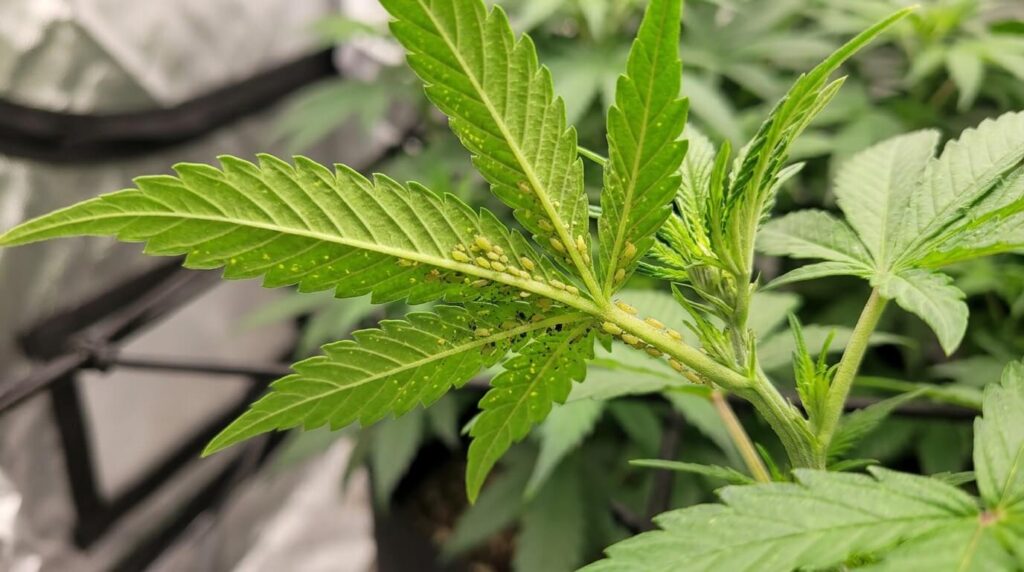
Aphids are small, soft-bodied insects that feed by piercing plant tissue and extracting sap. They commonly appear in green, yellow, black, brown, or red colours and often gather in clusters around fresh growth.
One of the easiest ways to identify aphids is by their tendency to congregate on tender shoots and developing leaves. As they feed, leaves may curl, twist, or become distorted.
Aphids also produce a sticky substance known as honeydew. This residue can coat leaves and attract additional pests while making plants appear shiny or sticky.
Common signs of aphids include:
- Curled leaves
- Yellowing foliage
- Sticky residue
- Visible insect clusters
- Reduced plant vigour
Although aphids rarely kill healthy cannabis plants, large infestations can significantly weaken growth if left unmanaged.
Whiteflies
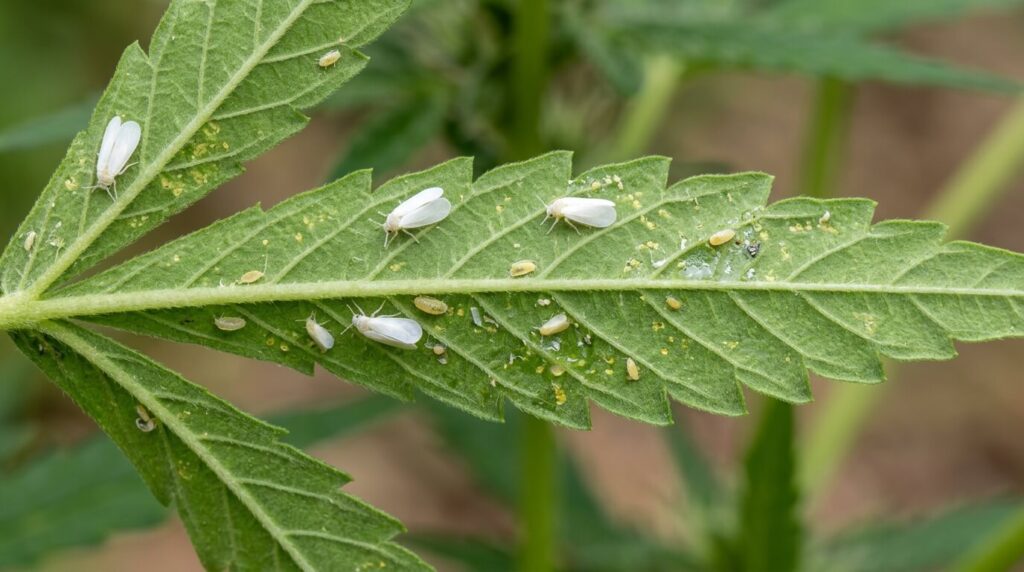
Whiteflies are tiny winged insects that often live on the undersides of cannabis leaves. Despite their name, they are not true flies. They belong to a group of sap-feeding insects closely related to aphids.
When disturbed, whiteflies typically rise into the air in small clouds, making them relatively easy to spot during inspections.
Like aphids, whiteflies feed on plant sap and produce honeydew. This feeding activity weakens the plant while reducing photosynthetic efficiency.
Common symptoms include:
- Yellow leaves
- Reduced growth
- Sticky residue
- White insects beneath leaves
- Premature leaf decline
Whiteflies reproduce rapidly, which means even a small population can become a larger problem within a short period.
Read our complete guide to whiteflies on cannabis and learn how to identify the signs of an infestation early.
Thrips
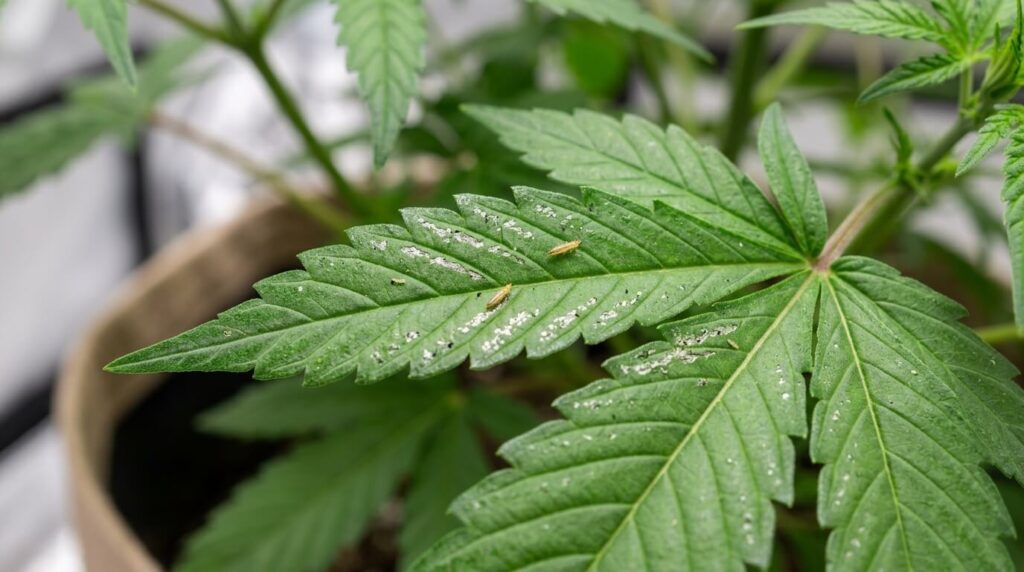
Thrips are among the most widespread cannabis pests found in indoor gardens, greenhouses, and outdoor grows. These slender insects damage plants by scraping leaf surfaces and feeding on plant fluids.
Their feeding creates distinctive silver or bronze streaks across cannabis leaves. Small black specks of waste often accompany visible damage.
Thrips can affect plants throughout the entire growing cycle, from seedlings to flowering plants. While individual insects cause relatively minor damage, large populations can reduce plant performance considerably.
Signs of thrips include:
- Silver streaks on leaves
- Surface scarring
- Black specks of waste
- Reduced photosynthesis
- Distorted growth
Because thrips reproduce quickly, early identification often makes control significantly easier.
Leafhoppers
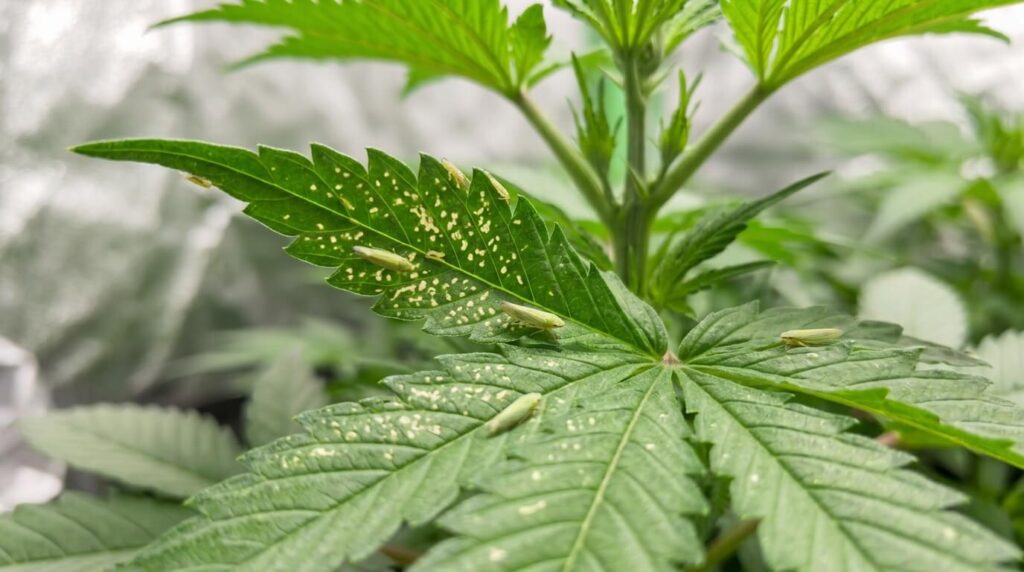
Leafhoppers are small wedge-shaped insects that feed on cannabis leaves using piercing mouthparts. Their feeding creates numerous pale spots known as stippling.
As populations increase, affected leaves may lose colour, become stressed, and exhibit reduced photosynthetic performance.
Outdoor cannabis gardens are more likely to experience leafhopper infestations because these insects naturally inhabit many agricultural and wild plant species.
Common symptoms include:
- White stippling
- Pale leaf surfaces
- Yellowing foliage
- Reduced plant vigour
Although leafhoppers are not always the most destructive cannabis pest, their feeding activity can become problematic when populations grow unchecked.
Scale Insects
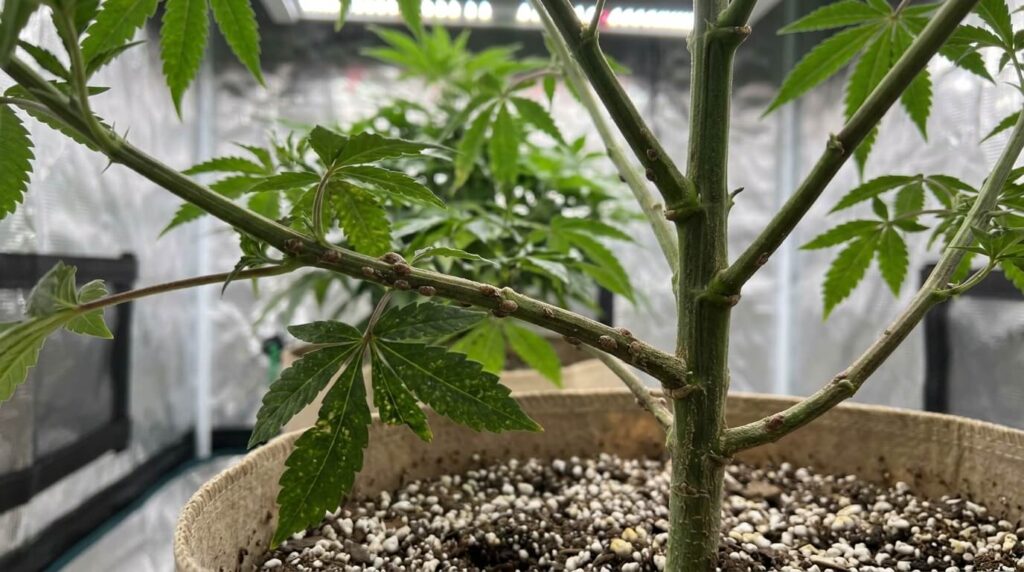
Scale insects are unusual pests because mature individuals attach themselves to stems and branches while remaining largely immobile.
Many growers initially mistake scale insects for bumps, growths, or plant abnormalities. Their protective outer coating makes them appear more like plant tissue than insects.
As scale insects feed, they remove sap from the plant and gradually weaken growth.
Typical signs include:
- Yellowing leaves
- Reduced vigour
- Slow development
- Small shell-like structures on stems
Because they remain fixed in place, routine inspections are often the best way to detect scale infestations before they spread.
Visit our complete guide to scale insects on cannabis for a closer look at identification and prevention strategies.
Grasshoppers
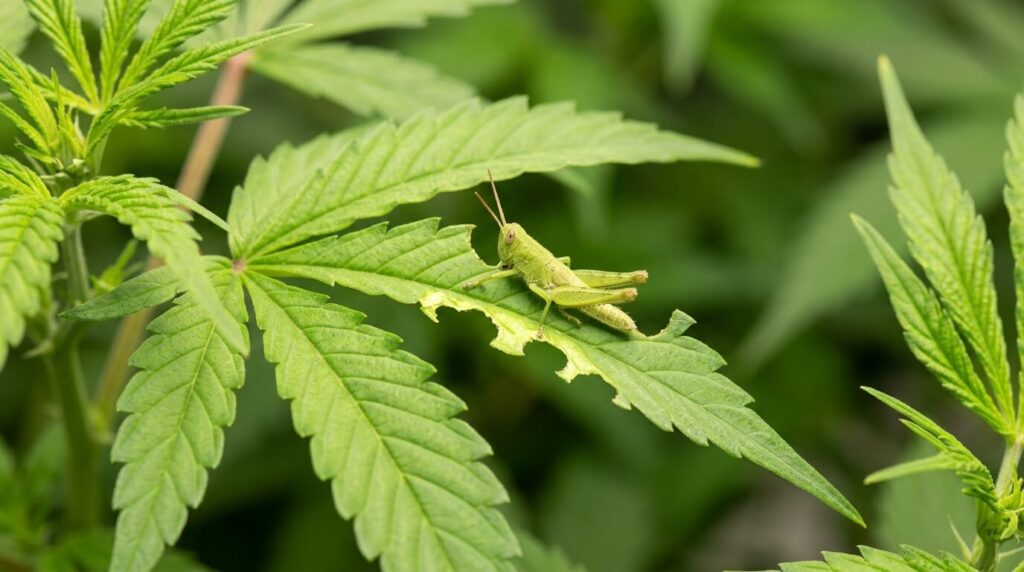
Grasshoppers are primarily an outdoor cannabis pest. Unlike sap-feeding insects, grasshoppers consume plant tissue directly.
Large grasshoppers can remove significant amounts of foliage within a short period. Seedlings and young plants are especially vulnerable because they have limited leaf mass available for recovery.
Common signs include:
- Large holes in leaves
- Missing leaf tissue
- Damaged seedlings
- Chewed foliage
Fortunately, grasshopper damage is usually easy to identify because the feeding patterns are highly visible.
Cannabis Mites and Microscopic Pests
While insect pests are often visible during routine inspections, microscopic pests present a different challenge. Many cannabis growers do not realise they have a mite infestation until plants begin showing obvious symptoms. By that point, populations may already be well established.
This is why I always recommend keeping a jeweller’s loupe or handheld microscope in your cultivation toolkit. The ability to inspect leaves at high magnification can help you identify problems long before they become severe.
Spider Mites
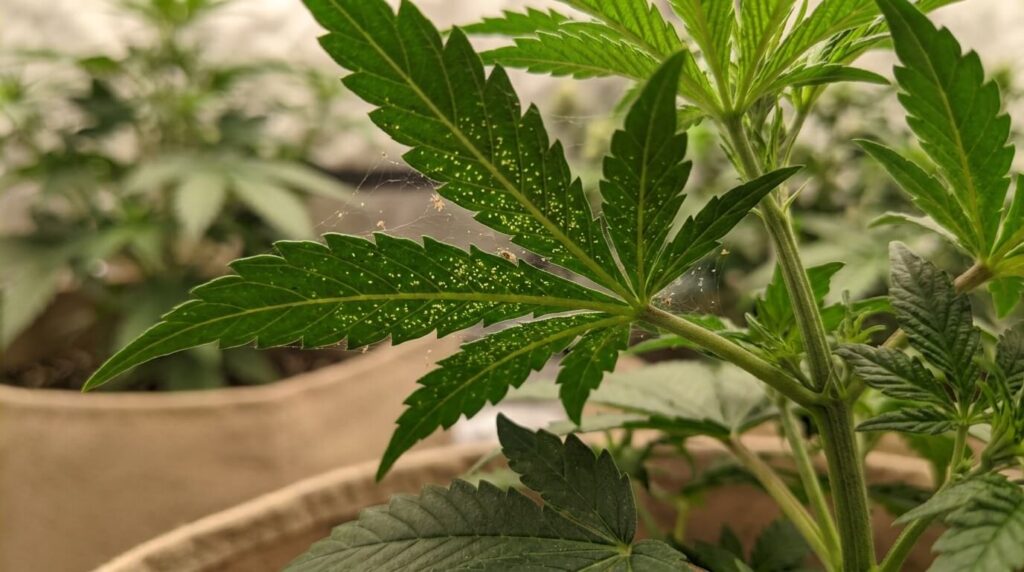
Spider mites are widely considered one of the most destructive cannabis pests. Although they are technically arachnids rather than insects, they can spread through a grow room at an alarming rate.
Spider mites feed by puncturing plant cells and extracting their contents. This feeding activity creates tiny white or yellow feeding spots that gradually spread across leaf surfaces.
As populations increase, symptoms become more obvious. Leaves begin to lose colour, photosynthesis declines, and fine silk webbing may appear between leaves and stems.
Common signs of spider mites include:
- Tiny white feeding spots
- Yellow speckling
- Fine webbing
- Declining leaf health
- Reduced plant vigour
Warm, dry environments encourage rapid reproduction, which is why indoor growers frequently encounter spider mite problems during hotter periods of the year.
Broad Mites
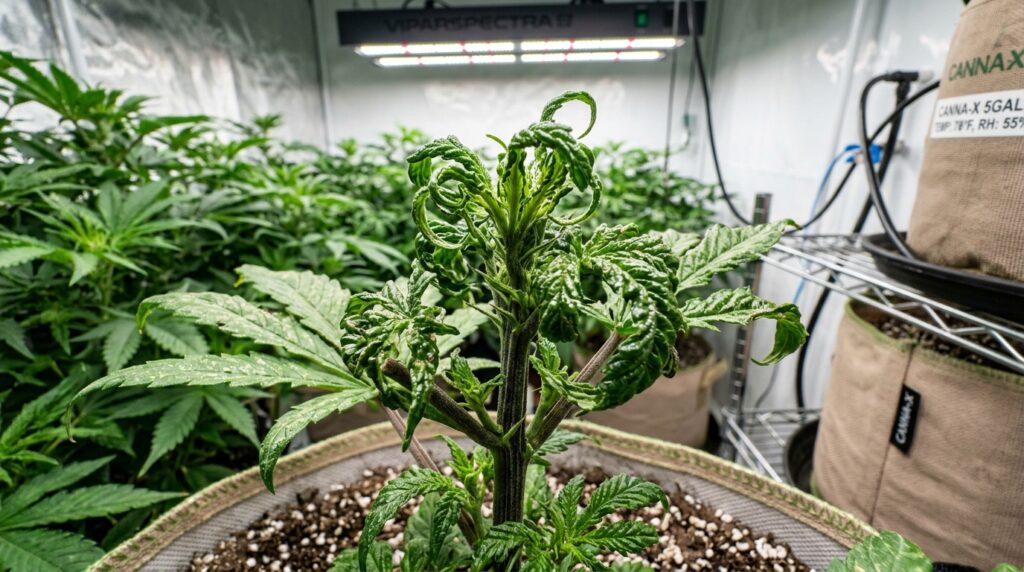
Broad mites are among the most difficult cannabis pests to identify because they are almost invisible without magnification.
Unlike spider mites, broad mites do not create visible webbing. Instead, they attack new growth and inject toxins into plant tissue while feeding. These toxins interfere with normal development and cause distorted growth patterns.
Symptoms often include:
- Twisted leaves
- Curling growth tips
- Stunted development
- Thickened foliage
- Deformed flowers
One reason broad mites create confusion is that their symptoms often resemble nutrient deficiencies or environmental stress. I have seen growers spend weeks adjusting feeding schedules when the real problem was a hidden broad mite infestation.
Explore our detailed guide to broad mites on cannabis and learn how to recognise symptoms before infestations spread.
Russet Mites
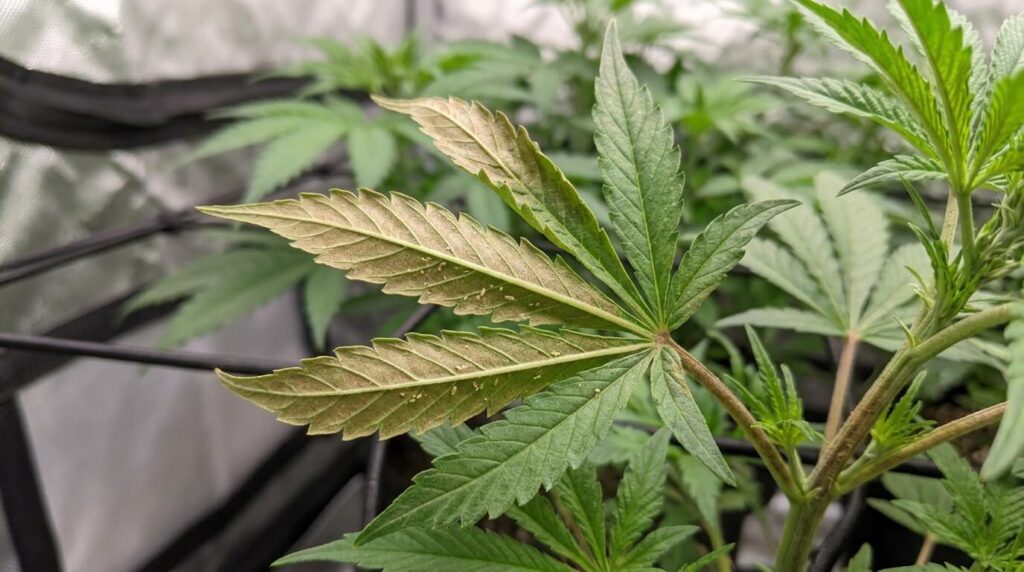
Russet mites are even smaller than broad mites and are considered one of the most difficult cannabis pests to detect.
These microscopic pests typically attack stems, petioles, and developing growth. Their feeding activity weakens plant tissues and can significantly reduce overall performance.
Signs of russet mite activity include:
- Bronze-coloured leaves
- Curling foliage
- Reduced resin production
- Weak flowering development
- General decline in plant health
Because russet mites are so difficult to see, many growers only discover them after noticeable damage has already occurred.
Mealybugs
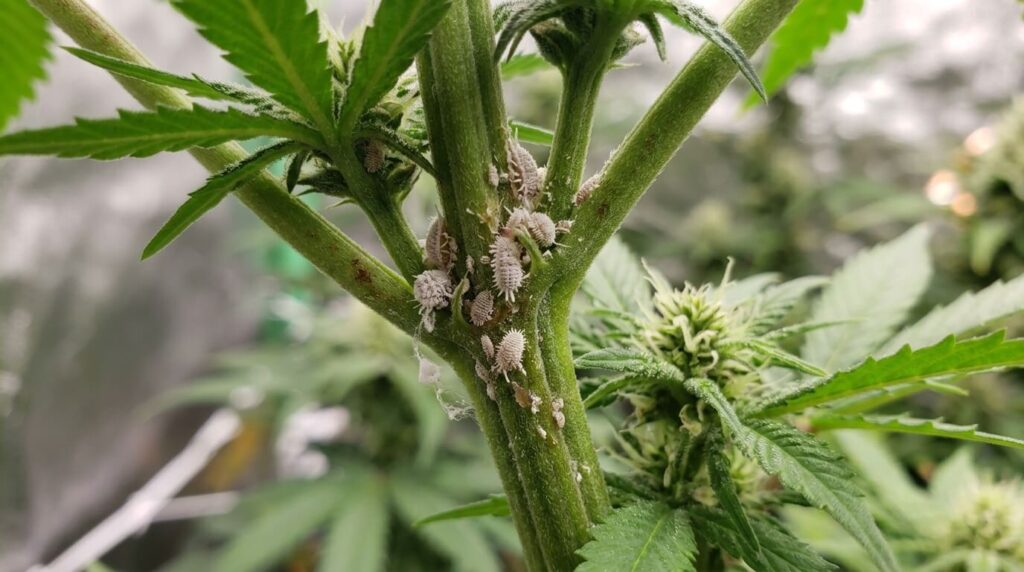
Mealybugs are easier to identify than most microscopic pests because they appear as white, cotton-like clusters attached to stems, leaves, and branch junctions.
Like aphids and whiteflies, mealybugs feed on plant sap. This feeding activity weakens the plant while also producing sticky honeydew.
Common symptoms include:
- White cotton-like masses
- Sticky residue
- Yellowing leaves
- Reduced growth
- Increased pest pressure
Although mealybugs can become problematic, their distinctive appearance usually makes early identification much easier than other pest species.
Learn how to identify and manage mealybugs on cannabis in our comprehensive pest guide.
Cannabis Pests That Damage Roots, Leaves, and Buds
Not every cannabis pest lives on leaf surfaces. Some species attack root systems below the growing medium, while others feed directly on flowers and developing buds. These pests often remain hidden until visible symptoms begin appearing throughout the plant.
Root Aphids
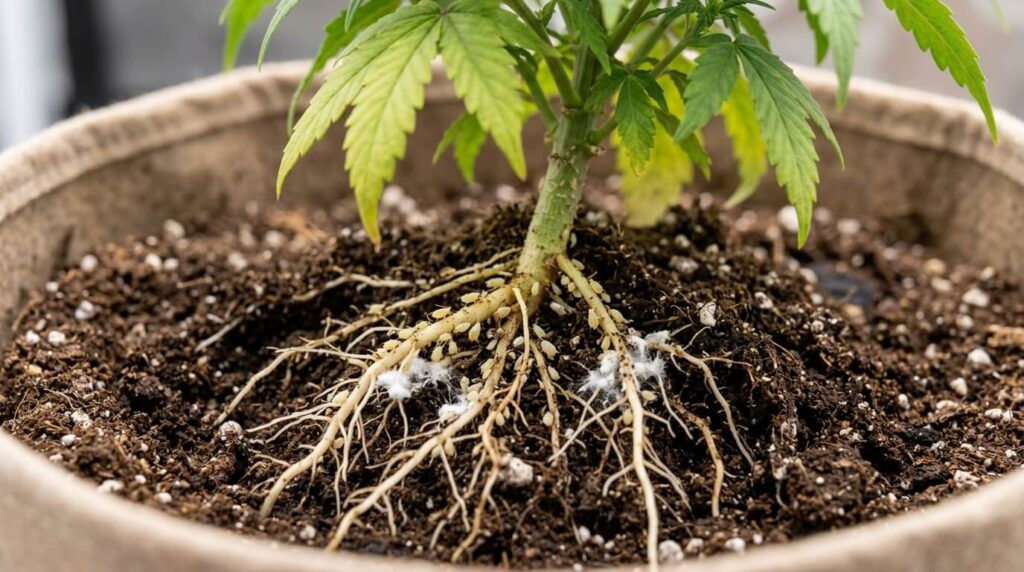
Root aphids are one of the most troublesome cannabis pests because they attack plants below the surface, often going unnoticed until growth problems become obvious. Unlike common aphids that feed on leaves and stems, root aphids live within the growing medium where they feed directly on roots and root hairs.
As root aphids feed, they damage the plant’s ability to absorb water and nutrients efficiently. This often results in symptoms that resemble nutrient deficiencies, overwatering, or general plant stress. Because the insects remain hidden around the root zone, many growers spend considerable time troubleshooting environmental or feeding issues before discovering the real cause.
Common signs of root aphid infestations include:
- Yellowing leaves
- Slow or stunted growth
- Wilting despite adequate watering
- Reduced nutrient uptake
- General loss of plant vigour
- Small aphid-like insects near the root zone
Root aphids can affect both indoor and outdoor cannabis cultivation, although they are particularly problematic in container-grown plants where populations can spread quickly between pots. In severe infestations, damaged roots struggle to support healthy vegetative growth and flowering development, resulting in weaker plants and reduced overall performance.
When I suspect root aphids, I inspect the growing medium carefully and look for signs of insects around drainage holes, container edges, and exposed root zones. Early identification is important because root aphids can multiply rapidly while remaining largely hidden beneath the surface.
Fungus Gnats
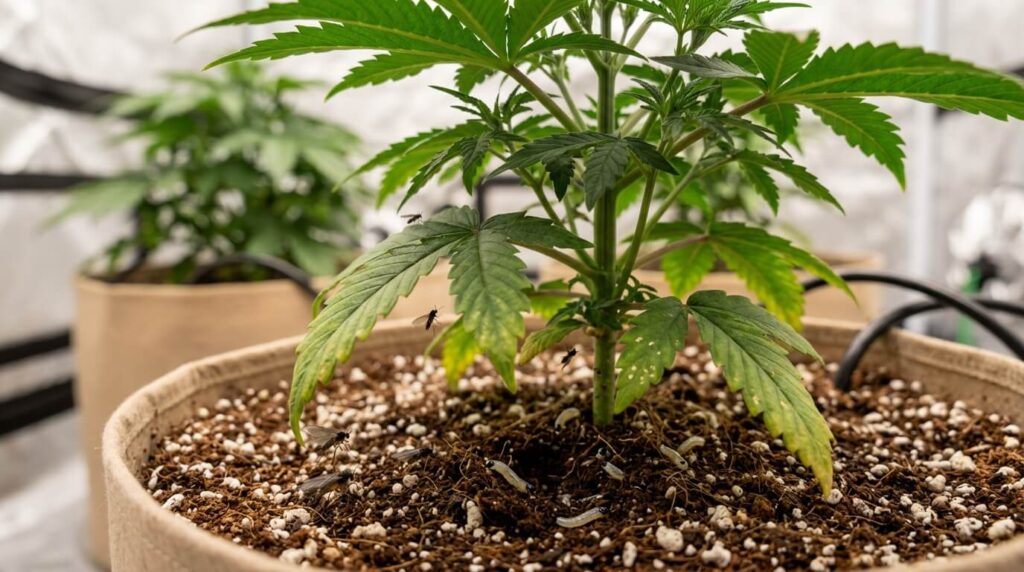
Fungus gnats are one of the most common root-zone pests found in cannabis cultivation.
Adult fungus gnats resemble tiny black flies that hover around pots and growing media. While the adults are mostly a nuisance, their larvae are responsible for the real damage.
Larvae feed on:
- Fine root hairs
- Young roots
- Organic matter within the growing medium
Damaged roots struggle to absorb water and nutrients effectively. As a result, plants may exhibit slower growth and reduced vigour.
Fungus gnats are particularly common in overwatered growing media. Maintaining proper watering practices is often one of the simplest ways to reduce their populations.
Leaf Miners
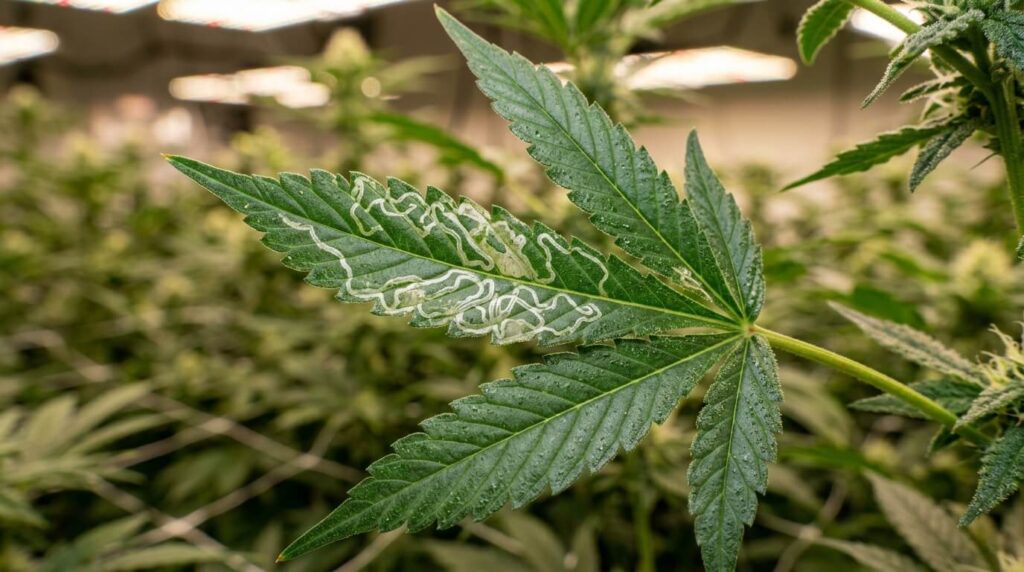
Leaf miners are the larvae of various insect species that feed inside leaf tissue.
As they tunnel between the upper and lower leaf surfaces, they create distinctive winding trails that are easy to recognise.
Symptoms include:
- White tunnels within leaves
- Irregular feeding patterns
- Reduced photosynthesis
- Cosmetic leaf damage
Although leaf miners rarely destroy cannabis plants outright, large infestations can reduce overall plant performance.
Learn how to identify leaf miner damage on cannabis and understand the symptoms these pests leave behind.
Caterpillars
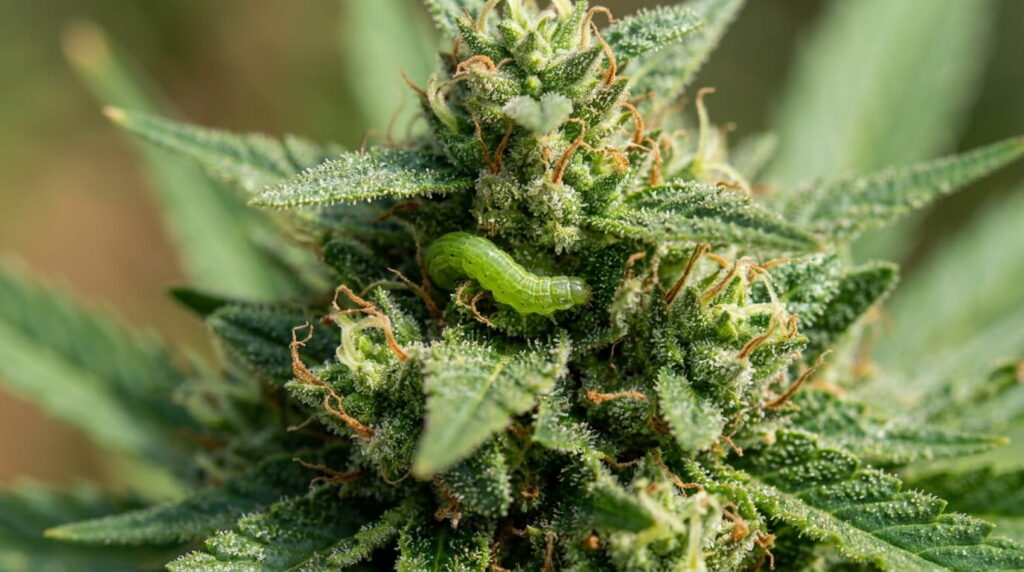
Caterpillars and inchworms are among the most destructive pests found in outdoor cannabis gardens.
Unlike sap-feeding insects, caterpillars consume plant material directly. They feed on leaves, stems, and flowers, leaving behind visible damage and waste.
Signs of caterpillar activity include:
- Chewed leaves
- Damaged buds
- Missing plant tissue
- Visible droppings
- Reduced flower quality
Flowering plants are particularly vulnerable because caterpillars often hide within dense buds where they are difficult to detect.
Explore our guide to caterpillars on cannabis and discover how these pests damage leaves and flowers.
Slugs and Snails
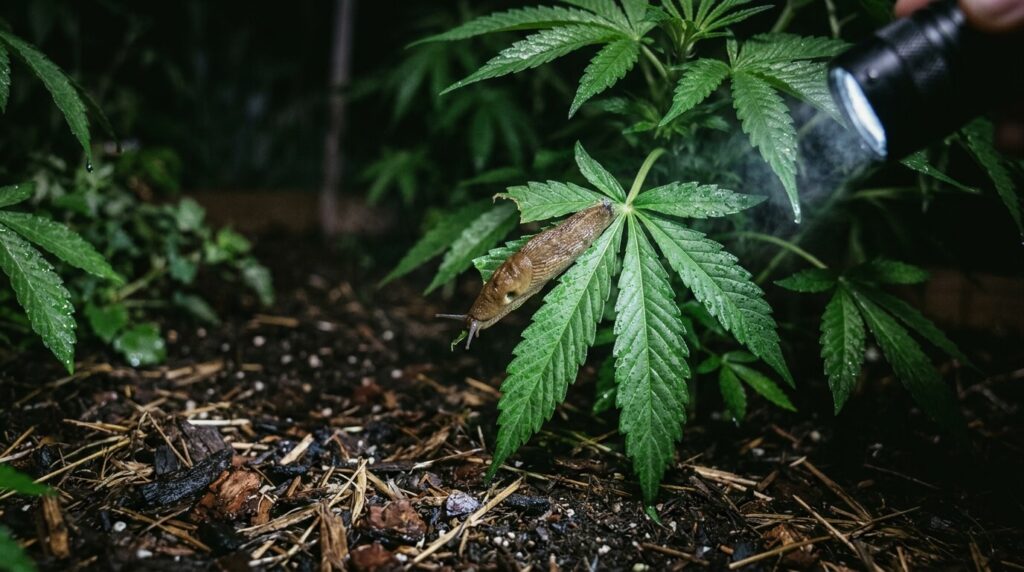
Slugs and snails are common outdoor pests that thrive in damp, shaded environments.
These soft-bodied creatures feed primarily during the evening and early morning hours, making them easy to miss during daytime inspections.
Typical signs include:
- Large irregular holes in leaves
- Missing seedling tissue
- Damaged stems
- Shiny slime trails
Young cannabis plants are particularly vulnerable because even minor feeding damage can significantly slow early growth.
Read our complete guide to slugs and snails on cannabis for tips on identifying and preventing feeding damage.
Cannabis Pest Identification by Symptoms
Many growers discover a pest problem through symptoms rather than by finding the pest itself. Learning to recognise these warning signs can dramatically improve your ability to identify infestations early.
One of the fastest ways to identify cannabis pests is by matching visible plant symptoms to the most likely pest. While a proper inspection should always be performed before making a diagnosis, the symptom guides below provide a useful starting point when troubleshooting pest problems in your grow room, greenhouse, or outdoor garden.
Quick Guide to Common Cannabis Pest Symptoms
| Symptom | Common Causes |
| Yellowing Leaves | Aphids, Whiteflies, Leafhoppers, Fungus Gnats |
| White or Yellow Speckling | Spider Mites, Thrips, Leafhoppers |
| Curled Leaves | Aphids, Broad Mites, Russet Mites |
| Stunted Growth | Broad Mites, Russet Mites, Fungus Gnats |
| Holes in Leaves | Grasshoppers, Caterpillars, Slugs, Snails |
| Sticky Residue (Honeydew) | Aphids, Whiteflies, Scale Insects, Mealybugs |
| Silver Streaks or Scarring | Thrips, Leafhoppers |
| Premature Leaf Drop | Whiteflies, Heavy Aphid Infestations |
| Visible Webbing | Spider Mites |
| Distorted New Growth | Broad Mites, Russet Mites |
| Weak Plant Vigour | Multiple Pest Infestations |
Quick Guide to Common Cannabis Mite Symptoms
| Symptom | Common Causes |
| Tiny White Feeding Spots | Spider Mites |
| Bronzed Leaves | Russet Mites |
| Twisted New Growth | Broad Mites, Russet Mites |
| Canoeing Leaves | Broad Mites |
| Stunted Flower Development | Broad Mites, Russet Mites |
| Reduced Resin Production | Russet Mites |
| Fine Webbing | Spider Mites |
| Deformed Buds | Broad Mites |
White Spots on Cannabis Leaves
White or yellow spots are among the most common symptoms found on cannabis plants.
Possible causes include:
- Spider mites
- Thrips
- Leafhoppers
These pests damage plant tissue while feeding, creating pale spots across leaf surfaces.
Whenever I notice white speckling, I immediately inspect the underside of leaves because that is where many pests prefer to hide.
Curled Cannabis Leaves
Curled leaves often indicate that a pest is interfering with normal plant growth.
Possible causes include:
- Aphids
- Broad mites
- Russet mites
The severity of curling can vary from mild distortion to severe deformation. New growth is often affected first because many pests target young, tender plant tissue.
Sticky Cannabis Leaves
Sticky leaves usually indicate the presence of sap-feeding pests that produce honeydew.
Common culprits include:
- Aphids
- Whiteflies
- Mealybugs
- Scale insects
Honeydew can create a shiny appearance on leaves and may attract additional insects to the growing area.
Webbing on Cannabis Plants
Fine webbing is one of the strongest indicators of spider mite activity.
As spider mite populations increase, they produce silk strands that stretch between leaves, stems, and flowers.
If you notice visible webbing, you should inspect the plant immediately because the infestation may already be advanced.
Stunted Cannabis Growth
Slowed or stunted growth can occur when pests interfere with nutrient uptake or damage developing plant tissue.
Possible causes include:
- Broad mites
- Russet mites
- Fungus gnats
- Heavy aphid infestations
Because many factors can contribute to stunted growth, it is important to inspect plants thoroughly before assuming the issue is nutritional or environmental.
Preventing Cannabis Pests and Bugs
Prevention is often far easier than dealing with an established infestation. The best growers focus on creating conditions that discourage pests while supporting healthy plant development.
Several practices help reduce the likelihood of pest problems:
- Regular plant inspections
- Good sanitation
- Proper airflow
- Environmental monitoring
- Quarantine procedures
- Integrated Pest Management (IPM)
I inspect my plants several times each week, even when they appear healthy. Early detection is one of the most effective pest management tools available.
When introducing new clones or plants into your grow space, always quarantine them first. Many infestations begin when pests hitch a ride into an otherwise clean environment.
Healthy cannabis plants also tolerate pest pressure better than stressed plants. Balanced nutrition, proper irrigation, and stable environmental conditions all contribute to stronger plant resilience.
Beneficial insects can also play an important role in prevention. Predatory species help suppress pest populations naturally while reducing the need for intervention.
A preventative mindset is one of the biggest differences between beginner growers and experienced cultivators.
Start With Strong Cannabis Genetics
While no cannabis strain is completely resistant to pests, healthy genetics often cope with environmental stress more effectively than weak or unstable plants. Strong root development, vigorous growth, and good overall plant health can help cannabis plants recover more effectively from minor pest damage and environmental challenges.
As a breeder, I have found that strong genetics and good cultivation practices work hand in hand. Healthy plants are often better equipped to maintain growth when faced with occasional pest pressure, while also recovering more quickly once the issue has been identified and addressed.
Many new growers choose autoflower seeds for beginners because they are often selected for ease of cultivation and reliable performance. Outdoor growers may also prefer outdoor autoflower seeds, which are bred to perform in changing environmental conditions. For growers seeking larger, more vigorous plants, super autoflower seeds are another popular option.
Frequently Asked Questions About Cannabis Pests
What are the most common cannabis pests?
Spider mites, thrips, aphids, whiteflies, fungus gnats, broad mites, and russet mites are among the most commonly encountered cannabis pests.
How do I identify cannabis pests?
Cannabis pest identification involves examining leaves, stems, roots, and flowers for insects, eggs, feeding damage, webbing, sticky residue, and other characteristic symptoms.
Are cannabis pests more common indoors or outdoors?
Pests can affect both indoor and outdoor cannabis cultivation. Outdoor gardens typically experience greater insect diversity, while indoor grow rooms often encounter recurring infestations of spider mites, fungus gnats, and thrips.
Why do cannabis pests target weak plants?
Pests often exploit stressed plants because weakened plants have fewer natural defences. Poor environmental conditions, nutritional imbalances, and inadequate care can all increase susceptibility.
Can cannabis plants recover from pest damage?
Many cannabis plants recover successfully when infestations are identified early and plant health is maintained. Recovery depends on the severity of the infestation and the overall condition of the plant.
How often should I inspect cannabis plants for pests?
I recommend inspecting cannabis plants at least several times per week. During flowering or periods of increased pest activity, daily inspections provide an additional layer of protection.
Conclusion
Cannabis pests are an unavoidable part of cultivation, but they do not have to become a serious threat to your harvest. By understanding the most common cannabis pests and learning how to identify their symptoms, you can spot problems early and take action before significant damage occurs.
From aphids, whiteflies, and thrips to spider mites, broad mites, and fungus gnats, each pest leaves behind clues that help you diagnose the issue. Careful observation, routine inspections, and a proactive growing approach allow you to recognise these warning signs before infestations become established.
As a cannabis breeder and grower, I have always found that successful pest management begins with awareness. The more familiar you become with pest behaviour, feeding patterns, and plant symptoms, the easier it becomes to protect your crop throughout every stage of growth.
Use this guide as a starting point for cannabis pest identification. Once you identify the pest affecting your plants, you can explore more detailed guides covering prevention strategies, treatment methods, and long-term management practices for each specific cannabis pest.
New to growing cannabis?
Understanding cannabis pests is only one part of successful cultivation. Browse our start growing guides covering germination, lighting, nutrients, watering, and strain selection to help you grow healthier plants from seed to harvest.


