
Autoflower Heat Stress: Symptoms, Causes & How to Fix It
Cannabis heat stress can slow growth, reduce flower development, and impact yields when temperatures remain too high for extended periods. For autoflower growers, managing heat stress is particularly important because autoflowers have a fixed lifecycle and limited time to recover from environmental setbacks. Heat stress during vegetative growth or flowering can affect plant size, bud development, resin production, and overall harvest quality. Whether you’re growing autoflowers indoors under LED lights or outdoors during summer heatwaves, recognising the warning signs early can help minimise damage and keep plants performing at their best.
This guide explains how to identify cannabis heat stress symptoms, understand the most common indoor and outdoor causes, and apply practical solutions to protect autoflower cannabis plants throughout the grow cycle.
Article Insights
- Cannabis heat stress commonly occurs when temperatures remain above 82–86°F (28–30°C) for extended periods.
- Early symptoms include leaf tacoing, drooping, dry foliage, bleaching, and slowed flower development.
- Autoflower heat stress can have a greater impact on plant size and yield because plants have less time to recover.
- Indoor heat stress is often caused by excessive light intensity, poor airflow, inadequate ventilation, or heat buildup around the canopy.
- Outdoor heat stress is commonly linked to heatwaves, prolonged sun exposure, and overheated root zones.
- Monitoring canopy temperatures, maintaining airflow, and protecting roots are among the most effective ways to prevent heat stress in autoflowers.
Understanding Autoflower Heat Stress and Why It Happens
Autoflower heat stress occurs when temperatures rise above the plant’s ideal growing range, disrupting essential processes such as photosynthesis, water uptake, and flower development. While all cannabis plants can suffer from excessive heat, autoflower heat stress can be particularly damaging because autoflowers operate on a fixed lifecycle and have less time to recover from environmental stress.
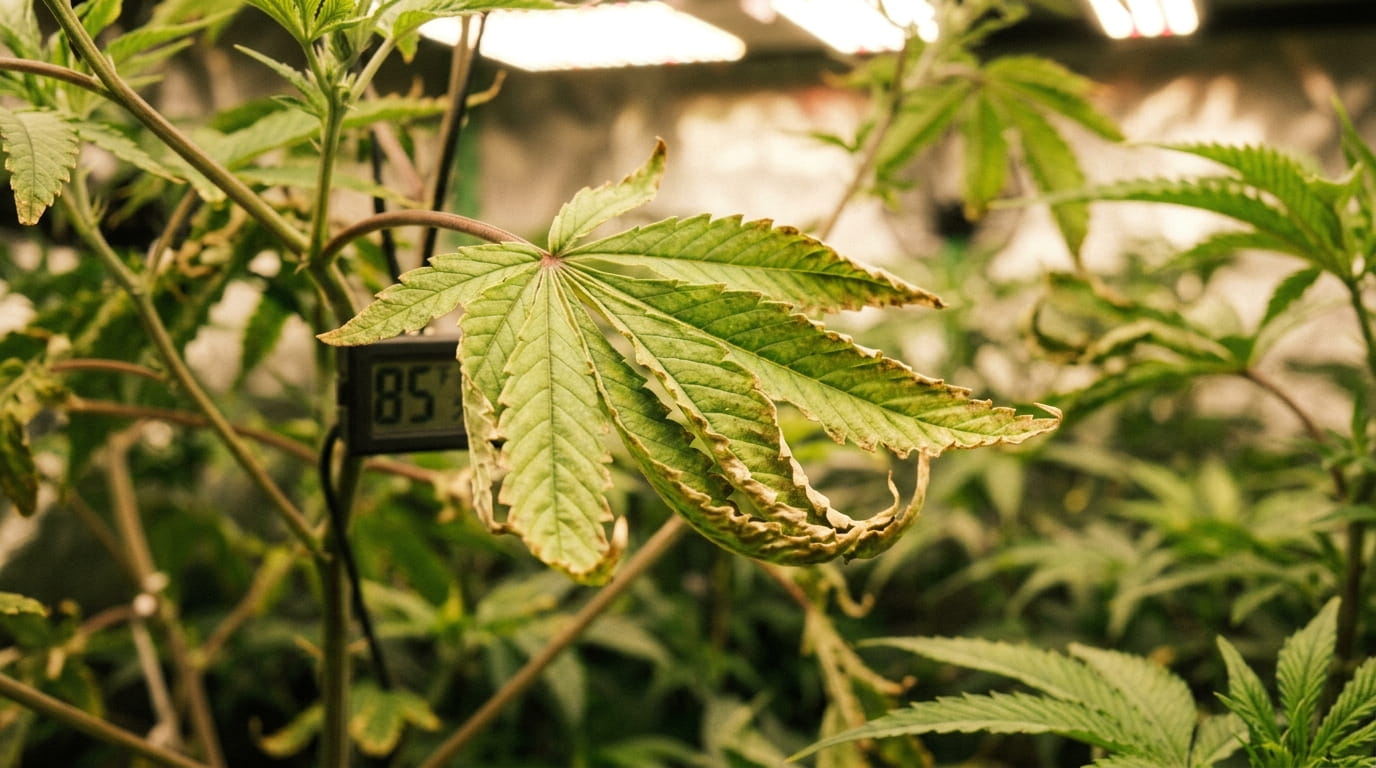
In most grows, cannabis heat stress symptoms begin to appear when temperatures consistently exceed 28–30°C (82–86°F). During prolonged periods of heat, plants divert energy away from growth and resin production, which can lead to reduced yields, lower terpene levels, and less potent flowers.
What Is Autoflower Heat Stress and How Does It Affect Plant Physiology?
Heat stress cannabis plants experience is a physiological response to excessive temperatures. As heat increases, the stomata—tiny pores on the leaves responsible for gas exchange—begin to close to reduce water loss.
While this helps the plant conserve moisture, it also limits carbon dioxide uptake, reducing photosynthetic efficiency. As a result, growth slows, nutrient uptake becomes less efficient, and flower development can suffer.
Common cannabis heat stress symptoms include:
- Upward leaf curling or “tacoing”
- Dry, brittle foliage
- Slowed vegetative growth
- Reduced bud density
- Bleaching near the canopy
- Lower terpene and cannabinoid production
For autoflower growers, these symptoms should never be ignored. Because autoflowering cannabis transitions through its lifecycle based on age rather than light schedules, there is little opportunity to extend vegetative growth and recover from stress-related setbacks.
Are Autoflowering Cannabis More Sensitive to Heat Stress Than Photoperiod Plants?
In many cases, yes.
While autoflower and photoperiod cannabis plants experience similar physiological responses to heat, the consequences are often greater for autoflowers. A photoperiod plant can remain in the vegetative stage for additional weeks if stress slows growth, giving the grower time to correct environmental issues and allow recovery.
Autoflowers do not have this advantage.
Once an autoflower begins flowering, the plant continues progressing through its lifecycle regardless of environmental conditions. Even a few days of severe heat stress during early growth or flowering can permanently reduce plant size, bud development, and final yield.
This is one of the main reasons why controlling temperatures is especially important when growing autoflower cannabis.
Ideal Temperature Ranges for Autoflower Cannabis Growth
Maintaining stable temperatures is one of the most effective ways to prevent heat stress cannabis problems.
| Growth Stage | Ideal Temperature °C | Ideal Temperature °F |
| Seedling | 20–25°C | 68–77°F |
| Vegetative | 22–28°C | 72–82°F |
| Flowering | 20–26°C | 68–79°F |
During flowering, slightly cooler temperatures help preserve terpene content, improve bud density, and support healthy resin production. Once canopy temperatures consistently exceed these ranges, cannabis heat stress symptoms become increasingly likely.
Why VPD Matters When Managing Autoflower Heat Stress
Temperature is only one part of the equation, and maintaining the best temperature and humidity for autoflowers is essential for preventing environmental stress. Vapour Pressure Deficit (VPD) measures the relationship between temperature and humidity, helping growers understand how hard a plant is working to move water through its leaves.
Many cases of apparent heat stress are actually caused by poor VPD conditions.
When temperatures rise but humidity remains too low, plants lose moisture faster than they can replace it. This can lead to symptoms such as:
- Leaf tacoing
- Excessive transpiration
- Wilting
- Reduced growth rates
- Nutrient uptake issues
For example, an autoflower growing at 29°C (84°F) with very low humidity may experience more stress than a plant growing at 31°C (88°F) with humidity levels properly balanced.
Maintaining an appropriate VPD for each growth stage helps reduce stress, improve water uptake, and support healthier flower development during periods of elevated temperature.
Common Causes of Heat Stress Cannabis Growers Face
Whether growing indoors or outdoors, most cases of cannabis heat stress result from excessive heat building around the canopy.
The most common causes include:
- Grow lights positioned too close to plants
- High-powered LEDs or HPS fixtures generating excess heat
- Poor ventilation and inadequate extraction systems
- Heatwaves and prolonged summer temperatures
- Overcrowded canopies restricting airflow
- Containers and root zones overheating in direct sunlight
For autoflower growers, these issues can have a greater impact because plants have a limited recovery window. Preventing stress is often more effective than trying to reverse it later in the grow cycle.
Why Cannabis Foxtailing Heat Stress Occurs in High Temperatures
Cannabis foxtailing heat stress occurs when flowers develop elongated, spire-like growth instead of forming dense, compact buds. This commonly happens when plants are exposed to excessive temperatures, intense light intensity, or a combination of both.
Although some cultivars naturally exhibit foxtailing as a genetic trait, heat-induced foxtailing is usually accompanied by reduced bud density, inconsistent flower structure, and lower overall quality.
Heat stress autoflower plants can be particularly vulnerable during late flowering because high temperatures interfere with bud development at a stage where recovery time is limited. Left unchecked, excessive heat can result in lighter harvests, reduced terpene expression, and diminished bag appeal.
Cannabis Heat Stress Symptoms to Watch For Early
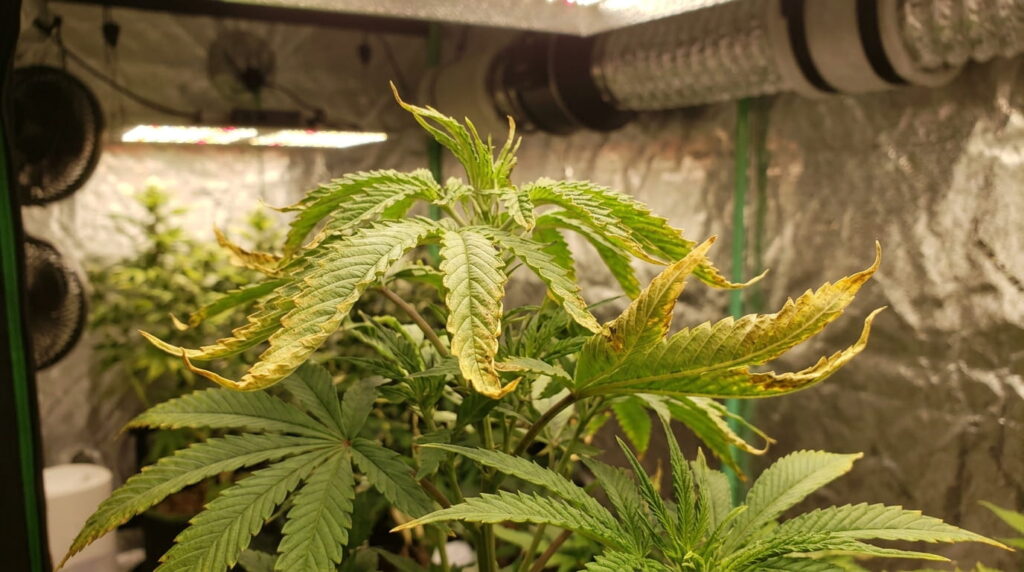
Identifying cannabis heat stress symptoms early is essential for autoflower growers. Because autoflowers develop quickly and transition into flowering on a fixed schedule, prolonged heat exposure can reduce plant size, flower quality, and final yields before the problem becomes obvious.
In most cases, the first signs appear on the leaves before affecting bud development.
Visual Signs of Heat Stress on Cannabis Leaves and Buds
The earliest symptoms typically develop in the upper canopy, where plants experience the highest temperatures and light intensity.
| Symptom | What It Means |
| Leaf tacoing | Plant attempting to reduce heat exposure and moisture loss |
| Dry, brittle leaves | Excessive transpiration and dehydration |
| Bleaching | Heat and light stress damaging chlorophyll |
| Airy buds | Reduced flower development |
| Slowed growth | Energy diverted away from plant development |
Leaf tacoing is one of the most common signs of heat stress. As temperatures rise, leaf edges curl upwards to reduce surface area exposed to heat.
For autoflowers, this is particularly concerning during the first few weeks of growth, when plants are building the structure that supports future bud production. Excessive heat at this stage can result in smaller plants and fewer flowering sites.
During bloom, heat stress may cause buds to develop more slowly or appear loose and airy rather than dense and compact.
Differences Between Heat Stress and Light Burn in Cannabis
Heat stress and light burn are often confused, especially in indoor grows using powerful LED fixtures.
Although both can cause bleaching near the canopy, heat stress affects the growing environment as a whole, while light burn is usually limited to areas closest to the light source.
| Heat Stress | Light Burn |
| Affects multiple areas of the plant | Usually localised beneath the light |
| Leaves curl upward or taco | Leaves bleach with minimal curling |
| Caused by excessive canopy temperatures | Caused by excessive light intensity |
| Often linked to poor airflow | Usually a fixture-distance issue |
To diagnose the issue accurately, measure temperatures at canopy level rather than relying solely on ambient room readings. Under LED grow lights, leaf surface temperatures can be noticeably higher than the surrounding air.
Heat Stress vs Overwatering vs Light Burn: How to Tell the Difference
Many autoflower growers mistake heat stress for overwatering or light burn because the symptoms can look similar at first glance. Identifying the correct issue is essential because each problem requires a different solution.
Heat stress and overwatering are two of the most common mistakes made by people growing autoflower seeds for beginners.
| Symptom | Heat Stress | Overwatering | Light Burn |
| Leaf Curling | Upward “tacoing” | Downward clawing | Minimal curling |
| Leaf Texture | Dry and brittle | Soft and swollen | Dry near canopy |
| Plant Appearance | Wilting during hottest periods | Constant drooping | Upper canopy only |
| Growth Impact | Slowed growth and airy buds | Root stress and nutrient issues | Bleached tops and reduced vigour |
| Main Cause | Excessive temperatures | Excess water in root zone | Excessive light intensity |
Heat stress symptoms often become worse during the hottest part of the day and improve as temperatures drop. Overwatered plants typically remain droopy regardless of temperature, while light burn usually affects only the parts of the plant closest to the grow light.
Checking canopy temperatures, soil moisture, and light distance can help determine the true cause before making adjustments.
How Cannabis Foxtailing Heat Stress Impacts Autoflower Bud Development
Heat-induced foxtailing occurs when buds produce elongated, spire-like growth instead of forming dense flowers.
Rather than stacking calyxes tightly, the plant continues producing irregular flower growth in response to environmental stress.
This can result in:
- Reduced bud density
- Lower overall yields
- Reduced terpene retention
- Less consistent cannabinoid production
- Poorer bag appeal
Some autoflower cultivars naturally display mild foxtailing, but heat-related foxtailing is often accompanied by leaf tacoing, bleaching, and slowed flower development.
Heat stress during mid-to-late flowering can reduce bud quality right through to harvest.
Secondary Issues Caused by Prolonged Heat Stress
The effects of heat stress extend beyond visible leaf and bud damage.
Prolonged exposure to excessive temperatures can lead to:
- Reduced terpene production and aroma
- Lower cannabinoid potential
- Increased water demand
- Greater susceptibility to spider mites and other pests
- Reduced overall plant vigour
For autoflower growers, these issues often result in smaller harvests and lower-quality flowers. Correcting heat stress quickly helps maintain healthy growth, resin production, and flower development.
Identifying and Fixing Indoor Cannabis Heat Stress Issues
Indoor growing gives you greater control over your environment, but it also creates conditions where heat can build up quickly. Most cases of indoor cannabis heat stress are caused by grow lights, inadequate airflow, poor extraction, or limited grow space.
For autoflower growers, identifying these issues early is especially important. Heat stress during the vegetative stage can reduce plant size before flowering begins, while prolonged heat during bloom can affect bud development and overall flower quality.
Identifying Heat Stress Caused by Grow Lights
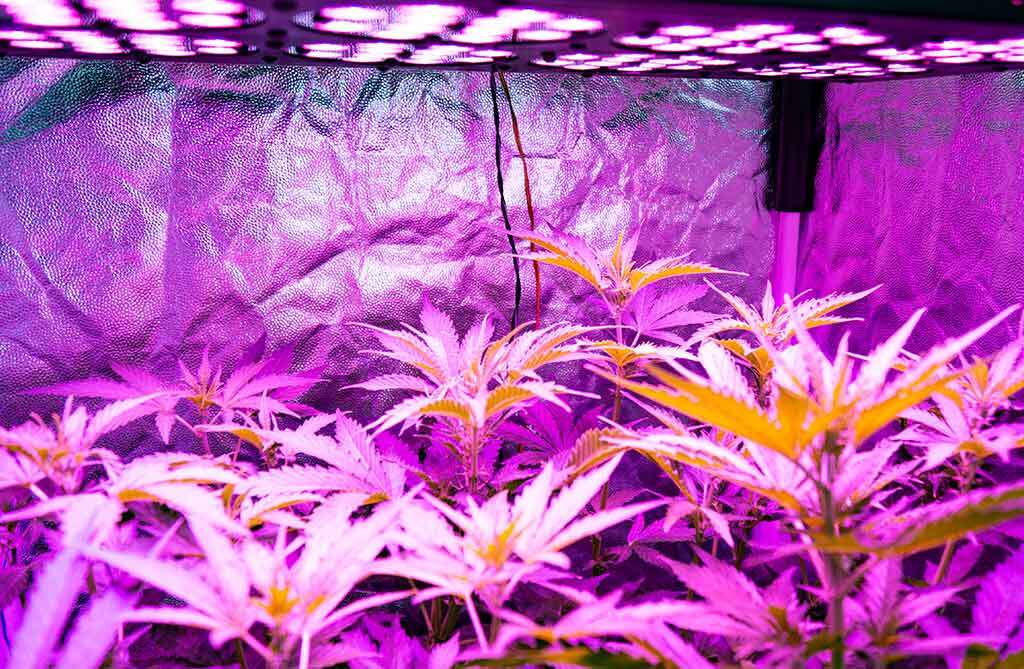
Modern LED grow lights are more efficient than older HPS systems, but excessive light intensity and incorrect PPFD for autoflowers can still contribute to heat stress symptoms, but they can still create excessive canopy temperatures if they are positioned too close to plants.
Signs your grow lights may be causing cannabis heat stress include:
- Leaf tacoing directly beneath the fixture
- Bleaching on upper leaves or bud sites
- Symptoms appearing only in the top portion of the canopy
- Higher leaf surface temperatures than room temperatures
This is particularly common in small grow tents where autoflowers can quickly grow into the recommended light zone.
How to Fix It
- Raise the light fixture where possible
- Reduce LED intensity using the dimmer function
- Improve airflow between the canopy and light
- Monitor canopy temperatures rather than relying solely on room readings
A simple grower test is to place the back of your hand at canopy height. If the light feels uncomfortable after 30 seconds, your plants may also be experiencing excessive heat.
In our autoflower test grows, leaf tacoing is usually the first reliable sign of heat stress under LED lighting. We’ve often seen plants continue growing normally for several days before bleaching appears, which is why canopy temperature monitoring is more useful than waiting for visible damage. Some cultivars also show heat stress sooner than others, even when grown under identical conditions.
Identifying Poor Ventilation and Airflow Problems
Even when room temperatures appear acceptable, poor airflow and inadequate cannabis grow room ventilation can create hot spots around the canopy.
Common signs of poor ventilation include:
- Leaves remaining completely still
- Warm air trapped around the tops of plants
- Uneven growth across the canopy
- Persistent heat stress symptoms despite moderate room temperatures
In autoflower grows, dense canopies and multiple plants in a small space can restrict airflow and create pockets of stagnant heat.
One issue we regularly encounter when troubleshooting heat stress is that room temperatures appear normal, but poor airflow allows heat to build up within dense canopies. In multi-plant autoflower runs, we’ve often found that improving air movement resolves symptoms even when ambient temperatures remain unchanged.
How to Fix It
- Install oscillating fans to keep air moving across the canopy
- Increase extraction fan speed
- Improve passive or active air intake
- Create more space between plants where possible
The goal is to maintain a consistent temperature throughout the entire grow space rather than allowing hot air to accumulate around the leaves and flowers.
Cooling Solutions for Indoor Autoflower Grows
If temperatures remain consistently high, environmental controls may need upgrading.
Effective cooling solutions include:
- Inline extraction fans to remove hot air
- Oscillating fans to improve circulation
- Air conditioning units for precise temperature management
- Additional intake fans for increased fresh air exchange
Maintaining stable temperatures also helps regulate humidity levels, reducing overall plant stress and creating a more favourable environment for healthy growth.
Adjusting Light Schedules to Reduce Heat Stress
One of the easiest ways to reduce indoor cannabis heat stress is to run lights during cooler periods of the day.
Many autoflower growers use 18/6 or 20/4 light schedules, which provide flexibility when managing temperatures. Running lights overnight rather than during the hottest part of the day can significantly reduce heat buildup inside tents and grow rooms.
Signs your lighting schedule may be contributing to heat stress include:
- Daily temperature spikes during lights-on periods
- Consistent leaf tacoing during peak temperatures
- Symptoms improving shortly after lights switch off
How to Fix It
- Move the light cycle to cooler nighttime hours
- Reduce fixture intensity during heatwaves
- Increase extraction rates during lights-on periods
- Monitor canopy temperatures throughout the day
By identifying the source of indoor heat stress and correcting it quickly, growers can prevent many of the issues that reduce autoflower growth, flower quality, and final yields.
Identifying and Fixing Outdoor Cannabis Heat Stress Issues
When growing autoflowering plants outdoors, environmental conditions cannot be controlled as precisely as they can indoors. However, by identifying the source of heat stress early, it is often possible to minimize damage and maintain healthy plant development.
When growing outdoor autoflower seeds, the biggest challenges typically come from heatwaves, intense afternoon sun, overheated root zones, and genetics that are poorly suited to hot climates.
Identifying Heat Stress Caused by Heatwaves and Direct Sun Exposure
Heatwaves are one of the most common causes of outdoor cannabis heat stress. Extended periods of high temperatures can place significant stress on plants, particularly during flowering.
Signs that excessive heat and sunlight may be causing problems include:
- Persistent wilting during the afternoon
- Leaf edges curling upward
- Dry or scorched leaf margins
- Increased water demand
- Slower flower development during hot weather
While some temporary wilting on extremely hot days is normal, plants should recover as temperatures drop. If symptoms persist into the evening, heat stress is likely affecting plant performance.
How to Fix It
- Install temporary shade during extreme heat events
- Water consistently during prolonged hot weather
- Avoid heavy pruning during heatwaves
- Monitor plants closely during flowering
For outdoor autoflowers, protecting plants during periods of extreme heat is particularly important because flowering often coincides with peak summer temperatures.
Identifying Root Zone Overheating
Many growers focus on air temperatures while overlooking the root zone. However, roots exposed to excessive heat struggle to absorb water and nutrients efficiently.
Container-grown autoflowers are especially vulnerable because pots can heat up rapidly in direct sunlight.
Signs of root zone overheating include:
- Growing media drying unusually fast
- Plants wilting despite adequate watering
- Reduced growth despite favorable conditions
- Frequent watering requirements
One of the most commonly overlooked causes of heat stress in container-grown autoflowers is root zone temperature. We’ve seen plants continue showing signs of stress despite increased watering, only for growth to improve once containers were shaded or moved away from heat-reflective surfaces.
How to Fix It
- Water early in the morning before temperatures rise
- Apply mulch to help regulate soil temperatures
- Move containers away from reflective surfaces such as concrete or walls
- Use fabric pots or light-colored containers where possible
- Position pots where roots receive some protection from afternoon sun
Maintaining stable root temperatures often improves plant performance more effectively than increasing water alone.
Identifying When Excessive Sunlight Is the Problem
Not all outdoor heat stress is caused by high air temperatures. In some gardens, direct afternoon sun places more stress on plants than the ambient temperature itself.
Signs excessive sunlight may be contributing to heat stress include:
- Plants showing symptoms only during afternoon sun exposure
- Buds or upper leaves bleaching on the sun-facing side
- Symptoms improving during cloudy periods
- Greater stress on plants growing in exposed locations
How to Fix It
- Use 30–50% shade cloth during heatwaves
- Provide temporary shade during the hottest part of the day
- Increase airflow around the canopy
- Relocate container plants where practical
The goal is to reduce heat load without significantly limiting light exposure or flower production.
Identifying Genetic Sensitivity to Heat
Some cannabis cultivars tolerate high temperatures better than others. If environmental conditions are well managed but plants continue to struggle, genetics may be contributing to the problem.
Signs genetics may be a factor include:
- Repeated heat stress issues despite preventive measures
- One cultivar struggling while others remain healthy
- Consistent heat-related foxtailing during warm seasons
One pattern we’ve observed during autoflower testing is that heat tolerance can vary significantly between cultivars, even when plants are grown in the same environment. Some genetics continue stacking flowers and maintaining vigor during hot weather, while others begin showing leaf stress and reduced flower density much sooner. This is one reason why selecting genetics suited to your climate can be just as important as managing the environment itself.
How to Fix It
When growing autoflowers outdoors in hot climates, select cultivars that are known for vigor, drought tolerance, and resilience in warmer conditions. Autoflowers with strong sativa ancestry often perform better in environments with prolonged heat and intense sunlight.
Choosing genetics suited to your local climate is one of the most effective long-term strategies for preventing outdoor cannabis heat stress.
Signs Heat Stress Is Affecting Outdoor Autoflower Development
Outdoor autoflowers often show the impact of prolonged heat through reduced plant performance rather than a single visible symptom.
Watch for:
- Smaller plants than expected entering flowering
- Reduced side branching
- Slower bud stacking during bloom
- Reduced flower density at harvest
These signs indicate that environmental conditions may be limiting the plant’s ability to reach its full genetic potential.
By identifying the specific source of outdoor heat stress and applying targeted solutions, growers can protect plant health, improve flower quality, and maximize autoflower yields even during challenging summer conditions.
When growers contact us about disappointing outdoor yields, prolonged heat stress is often a contributing factor. The most common pattern is not severe leaf damage, but smaller plants entering flower earlier than expected and producing less dense buds by harvest.
Step-by-Step Tips for Tackling Cannabis Heat Stress
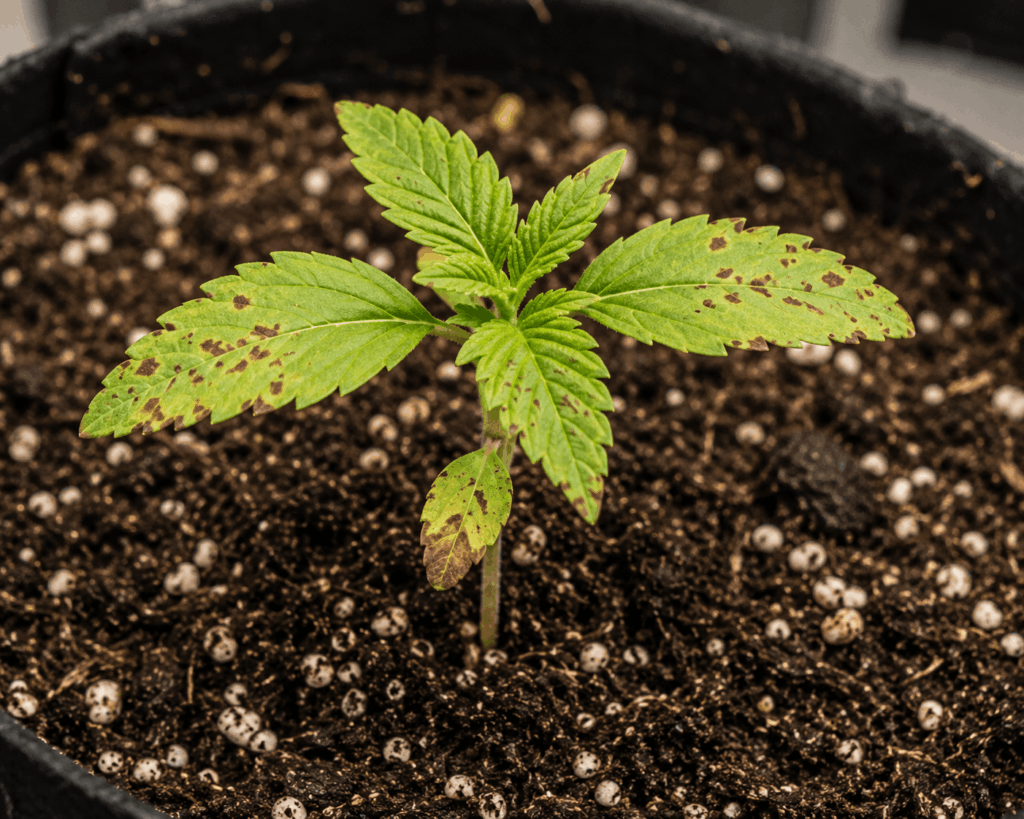
Managing cannabis heat stress is easier when growers follow a clear prevention and recovery plan. For autoflowers, this is especially important during vegetative growth and early flowering, when stress can affect final plant size and bud production.
Step 1: Check Canopy Temperatures Daily
Measure temperature at canopy level, not just room level. Leaf and canopy temperatures give a more accurate picture of what the plant is experiencing.
Step 2: Improve Airflow
Keep air moving around the canopy with oscillating fans, proper extraction, and enough space between plants. Good airflow prevents hot pockets from forming.
Step 3: Protect the Root Zone
Avoid letting pots or soil overheat. Use mulch outdoors, light-coloured containers, and consistent watering to help keep roots stable.
Step 4: Adjust Light and Heat Exposure
For indoor grows, raise or dim lights if temperatures rise. For outdoor autoflowers, use temporary shade during heatwaves or peak afternoon sun.
Step 5: Avoid Extra Stress During Recovery
If plants are already showing heat stress, avoid pruning, heavy training, or unnecessary defoliation. Let the plant stabilise first.
Step 6: Plan Ahead for Future Grows
Choose heat-tolerant autoflower genetics, improve ventilation, and plan outdoor autoflower runs around seasonal temperatures where possible.
By following these steps, growers can reduce heat stress cannabis problems before they affect resin production, flower quality, and final yield.
How Long Does It Take Autoflowers to Recover From Heat Stress?
Recovery time depends on how severe the heat stress was and how quickly environmental conditions are corrected.
| Severity | Typical Recovery Time |
| Mild leaf tacoing | 1–3 days |
| Moderate heat stress | 3–7 days |
| Severe heat stress with bleaching | 1–3 weeks |
| Heat stress during flowering | Recovery possible, but yield loss may remain |
Mild heat stress often improves quickly once temperatures return to the ideal range. Leaves may flatten out and new growth will appear healthy within a few days.
More severe cases can leave permanent damage on affected leaves and buds. While the plant may continue growing, heat-related reductions in bud density, terpene production, or yield are not always reversible.
For autoflowers, early intervention is particularly important because the plant continues progressing through its lifecycle even while recovering from stress.
A common mistake after heat stress is assuming plants will immediately resume normal growth once temperatures are corrected. In our cultivation trials, new growth is usually the most reliable indicator of recovery, while damaged leaves often show little improvement even after environmental conditions have been corrected.
Frequently Asked Questions
What temperature causes cannabis heat stress?
Cannabis heat stress commonly occurs when temperatures remain above 82–86°F (28–30°C) for extended periods. However, the exact threshold depends on factors such as genetics, humidity, airflow, and growth stage. Flowering plants typically show heat stress symptoms sooner than seedlings or vegetative plants.
What are the first signs of cannabis heat stress?
The earliest cannabis heat stress symptoms usually appear on the leaves. Common signs include leaf tacoing (upward curling), dry or brittle leaf texture, drooping during hot periods, and slowed growth. In more severe cases, bleaching may develop near the top of the canopy.
Can cannabis recover from heat stress?
Yes, cannabis plants can often recover from heat stress if environmental conditions are corrected quickly. Recovery depends on the severity and duration of the stress, as well as the plant’s growth stage. While healthy growth can resume, severe heat stress may still reduce flower density, terpene production, or final yields.
What is cannabis foxtailing heat stress?
Cannabis foxtailing caused by heat stress occurs when buds develop elongated, spire-like growth instead of forming dense, compact flowers. Unlike genetic foxtailing, heat-induced foxtailing is typically accompanied by other stress symptoms and often results in reduced bud density and flower quality.
Are autoflowering cannabis more sensitive to heat stress than photoperiod plants?
Autoflowering cannabis can be more affected by heat stress because plants have a shorter lifecycle and less time to recover from environmental setbacks. While the symptoms are similar to those seen in photoperiod plants, heat stress during early growth or flowering may have a greater impact on final plant size, flower development, and yield.
What temperature is too hot for autoflowers?
Most autoflowers perform best between 68–82°F (20–28°C). Temperatures consistently above 86°F (30°C) increase the risk of autoflower heat stress, particularly during flowering. Poor airflow and low humidity can further increase stress levels.
Can autoflowers recover from heat stress?
Yes, autoflowers can recover from mild heat stress if temperatures are corrected quickly. However, prolonged stress during vegetative growth or flowering may reduce plant size, bud density, and overall yield potential. Early intervention provides the best chance of a successful recovery.
How do you fix heat stress in indoor cannabis plants?
To fix indoor cannabis heat stress, improve ventilation, increase airflow, adjust light intensity or fixture height, and reduce canopy temperatures. Running lights during cooler periods of the day can also help reduce heat buildup in grow tents and grow rooms.
How do you prevent heat stress in outdoor cannabis plants?
Outdoor growers can reduce the risk of heat stress by maintaining consistent soil moisture, protecting roots from overheating, using shade cloth during heatwaves, and selecting genetics suited to their local climate. Monitoring plants during prolonged hot weather allows issues to be addressed before significant stress develops.
Can too much light cause heat stress in cannabis?
Yes. High-intensity grow lights can contribute to heat stress when fixtures are positioned too close to the canopy. Excessive light intensity may also be mistaken for light burn, which often produces similar symptoms such as bleaching and leaf damage near the top of the plant.
Does heat stress affect cannabis potency?
High temperatures can reduce terpene retention and may affect cannabinoid development. Over time, excessive heat can result in less aromatic flowers and potentially lower overall potency, particularly when stress occurs during flowering.
How long does it take for cannabis to recover from heat stress?
Recovery time depends on the severity of the stress and how quickly environmental conditions are corrected. Mild heat stress may improve within a few days, while more severe cases can take several weeks to recover and may still impact final flower quality and yield.
How can you tell the difference between heat stress and overwatering?
Heat stress typically causes leaves to curl upward or “taco” during the hottest part of the day, while overwatered plants often display downward drooping or clawing regardless of temperature. Checking canopy temperatures and soil moisture levels can help identify the true cause and prevent unnecessary corrections.


