
Fusarium in Autoflower Cannabis: Symptoms, Treatment & Prevention
Fusarium is one of the most challenging diseases autoflower growers can face. Unlike nutrient issues or environmental stress, it attacks the root system and vascular tissue, limiting the plant’s ability to absorb water and nutrients. By the time visible symptoms appear, significant root damage has often already occurred.
Autoflowers are especially vulnerable due to their fast, fixed life cycle. They have little time to recover from root stress, making early root health critical for strong growth and high yields. When Fusarium interferes with this process, the impact is often permanent.
In my experience growing and breeding autoflowers, prevention is far more effective than treatment. Growers who understand how Fusarium develops and protect root health from the start experience fewer problems.
In this guide, you’ll learn how to identify symptoms early, understand causes, manage infections, and prevent Fusarium throughout the entire autoflower life cycle.
Article Insights
- Fusarium is a soil-borne fungal disease that infects the roots and vascular system, restricting water and nutrient movement throughout autoflower cannabis plants.
- Autoflowers are especially vulnerable because their fixed life cycle leaves little time to recover from root damage, making early root health essential.
- Early symptoms often resemble overwatering or nutrient deficiencies, so reduced vigour, slowed growth, and persistent wilting should be investigated quickly.
- Overwatering, poor drainage, and root stress are the most common factors that allow Fusarium to establish and spread in the root zone.
- Prevention is the most effective strategy, with healthy root development, proper watering practices, clean equipment, and good growing conditions providing the best protection against Fusarium.
What Is Fusarium in Autoflower Cannabis?
Fusarium is a soil-borne fungal disease that infects autoflower cannabis through the roots. Once inside the plant, it spreads into the vascular system, particularly the xylem tissue responsible for transporting water and nutrients from the roots to the leaves.
This makes Fusarium more dangerous than many surface-level fungal issues. Instead of remaining on leaves or flowers, it spreads internally throughout the plant. By the time an autoflower begins to wilt or show slowed growth, the infection may already be established in the root system and lower stem.
Why Fusarium Is So Damaging to Autoflowers
Autoflowers are especially vulnerable to Fusarium because their life cycle is fixed. They do not pause development to recover from stress, extend vegetative growth, or compensate for early damage. If Fusarium affects the roots during early growth, the plant continues progressing toward flowering with reduced capacity to support healthy branching, leaf development, and bud formation.
This is why Fusarium can have such a significant impact on autoflower yields. Even when an infected plant survives, the damage often results in smaller plants, weaker structure, slower flower development, and reduced overall harvest quality.
In autoflower breeding and cultivation, strong root development during the early stages is one of the most reliable indicators of future performance. When Fusarium disrupts this process, the plant rarely reaches its full genetic potential.
How Fusarium Affects the Plant
Fusarium typically begins in the root zone, where fungal spores enter through natural openings or weakened root tissue. Once established, the fungus spreads into the xylem and restricts the plant’s ability to transport water upward.
As this internal blockage develops, the plant may appear dehydrated even when the growing medium is moist. While the roots may still absorb some water, the stem cannot efficiently deliver it to the leaves and growing tips.
The result is a gradual breakdown in plant function:
- roots become less effective
- water and nutrient flow slows
- leaves lose firmness and begin to wilt
- growth becomes stunted
- flower development declines
- severe infections can lead to complete plant collapse
For autoflowers, this internal damage is especially impactful because the plant cannot pause its life cycle to recover. Fusarium does not just weaken the plant temporarily; it can permanently limit the size, yield, and quality the autoflower is capable of producing.
Fusarium Symptoms in Autoflower Cannabis
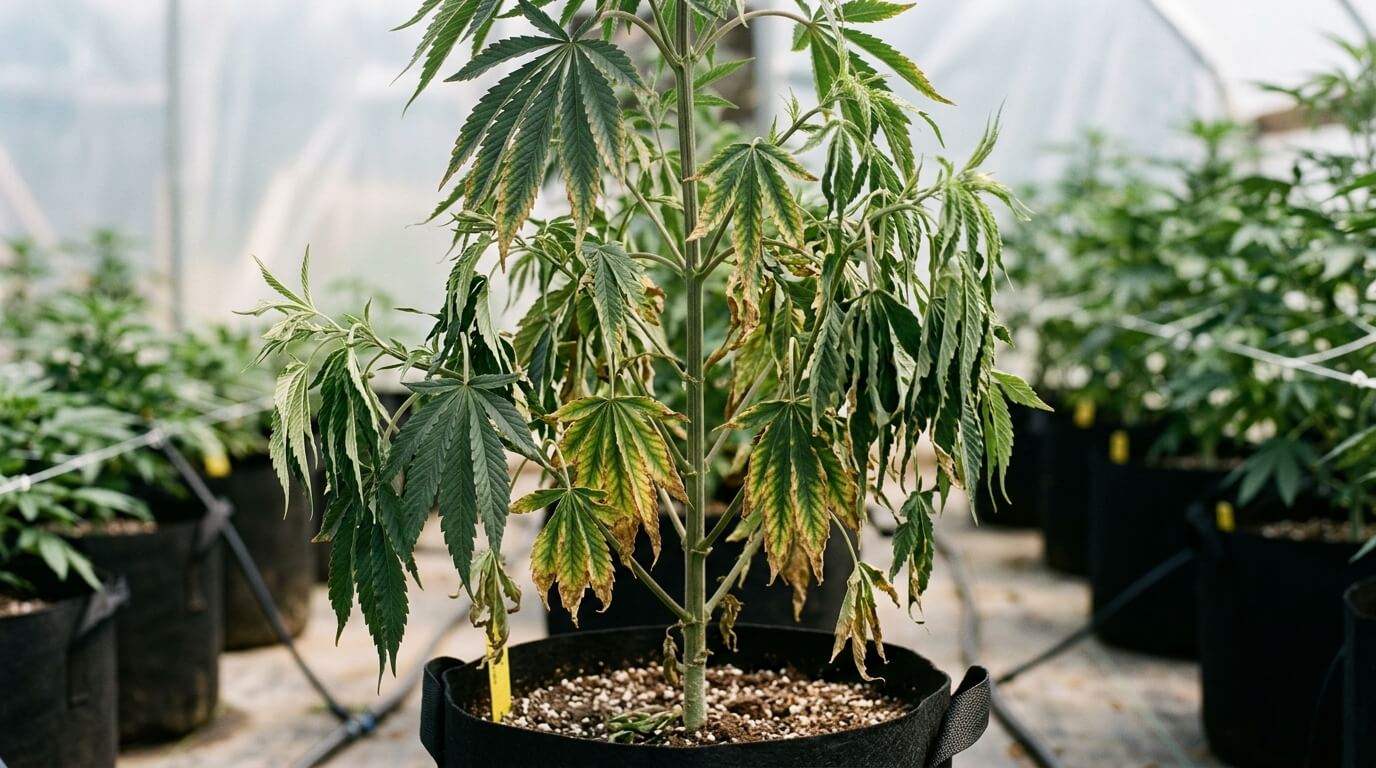
Recognizing Fusarium early gives autoflower growers the best chance of limiting crop losses. The difficulty is that the first symptoms often resemble common cultivation problems such as overwatered autoflowers or nutrient deficiencies, making Fusarium easy to misdiagnose during the early stages. Understanding how Fusarium develops in autoflowers makes it easier to identify the disease before significant root damage has occurred.
Early Fusarium Symptoms in Autoflowers
The earliest signs of Fusarium are usually subtle rather than dramatic. Instead of rapidly collapsing, an infected autoflower often begins falling behind the rest of the grow.
One of the first warning signs is reduced vigor. While neighboring autoflowers continue producing new leaves, branches, or flower sites, an infected plant may appear to stall despite receiving the same care and growing conditions.
One pattern I’ve noticed when reviewing customer grow reports is that many growers initially assume these early symptoms are caused by watering or nutrient issues. By the time those adjustments fail to improve the plant, Fusarium has often progressed beyond the earliest stages. Whenever a single autoflower consistently falls behind otherwise healthy plants growing under identical conditions, I recommend inspecting the root zone before making further changes to feeding or irrigation.
As the disease progresses, you may notice:
- slower vegetative growth
- reduced water uptake
- leaves drooping during the warmest part of the day
- slight yellowing of older leaves
- delayed flower development compared to healthy plants
| Symptom | What You’ll Notice in Autoflowers | Why It Matters |
| Reduced Vigor | Plant lags behind others in growth | Early sign of root stress or infection |
| Slower Vegetative Growth | Fewer new leaves and branches forming | Indicates reduced nutrient and water uptake |
| Reduced Water Uptake | Soil stays moist longer than expected | Roots are not functioning efficiently |
| Leaf Drooping | Leaves droop during heat but don’t fully recover | Suggests internal water transport issues |
| Lower Leaf Yellowing | Older leaves begin to fade or yellow | Early disruption in nutrient movement |
| Delayed Flowering | Bud sites develop slower than neighboring plants | Signals reduced overall plant performance |
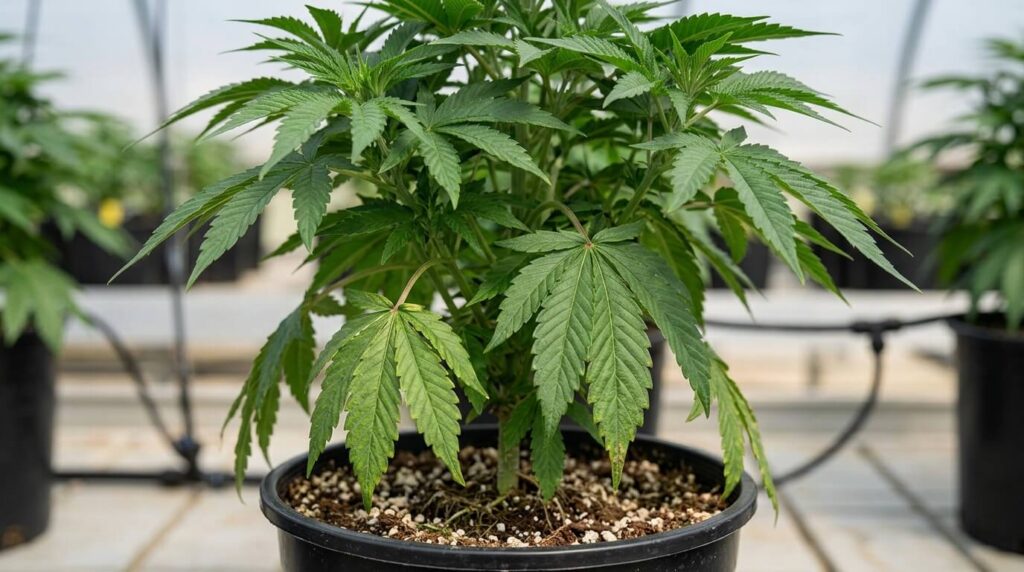
In my experience, one struggling autoflower surrounded by healthy plants is often a stronger indicator of disease than environmental stress. If every plant is showing the same symptoms, the cause is more likely to be related to watering, nutrition, or environmental conditions rather than Fusarium.
Advanced Fusarium Symptoms in Autoflowers
As Fusarium spreads through the vascular system, symptoms become increasingly obvious. Water movement throughout the plant becomes restricted, causing the entire autoflower to lose vigor.
Common advanced symptoms include:
- persistent wilting that does not improve after watering
- widespread yellowing followed by browning leaves
- severe stunted growth
- poor flower development
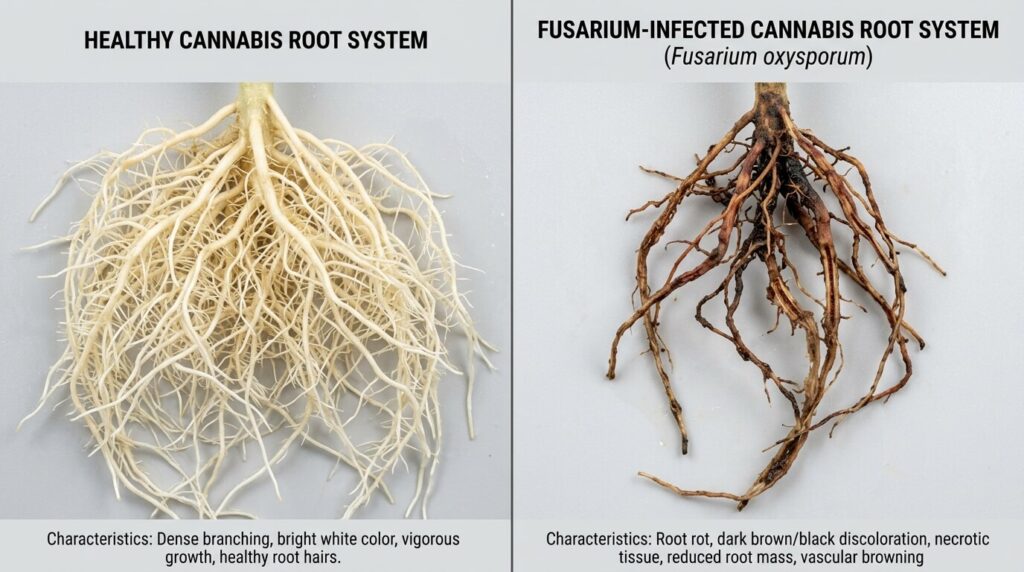
- discolored or deteriorating roots
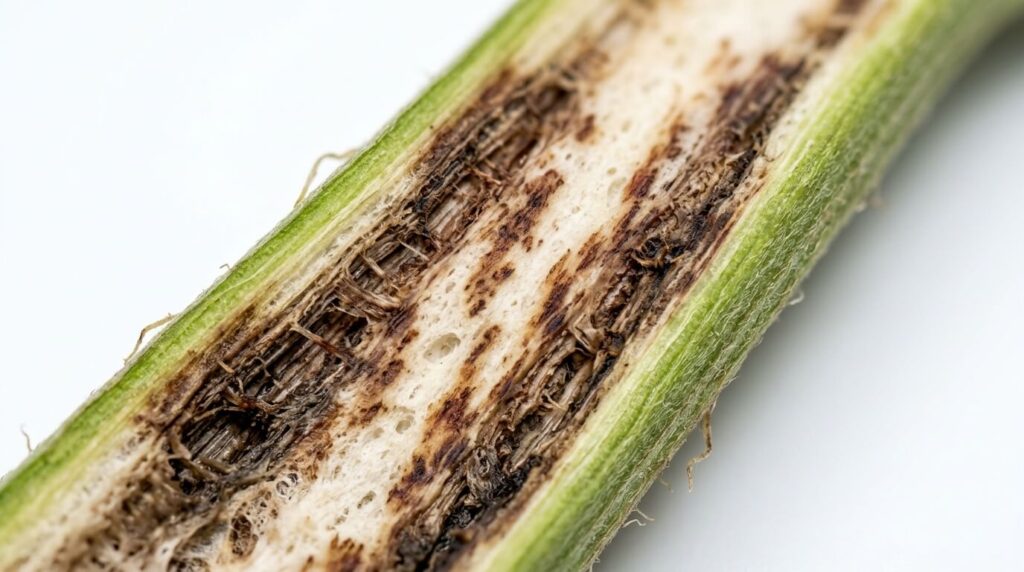
- brown streaking inside the stem’s vascular tissue
Brown vascular discoloration is one of the clearest indicators of Fusarium. When combined with progressive wilting and declining root health, it strongly suggests the fungus has spread beyond the root system.
| Symptom | Early Stage | Advanced Stage |
| Plant Growth | Slight slowdown | Growth stops completely |
| Leaf Appearance | Mild yellowing and drooping | Severe wilting, browning and collapse |
| Root Health | Minor discoloration | Extensive deterioration |
| Stem Tissue | No visible change | Brown vascular streaking |
How to Diagnose Fusarium in Autoflowers
No single symptom confirms Fusarium on its own. Instead, diagnosis relies on evaluating several signs together while ruling out more common cultivation problems.
When assessing an autoflower, I look for:
- a plant declining while neighboring plants remain healthy
- symptoms that continue despite correcting watering or nutrition
- declining root health
- brown vascular discoloration inside the stem
- progressive loss of vigor over several days
Where available, laboratory testing provides the most reliable confirmation and can identify the specific Fusarium species involved. For commercial growers or breeders, laboratory analysis is often worthwhile because accurate identification allows other diseases with similar symptoms to be ruled out.
Diseases and Deficiencies Commonly Mistaken for Fusarium
One of the biggest challenges when diagnosing fusarium in cannabis is that its symptoms overlap with several other cultivation problems. Wilting, yellowing leaves, and poor growth can all be caused by nutrient deficiencies, watering mistakes, nutrient lockout, or diseases such as root rot.
This is why I always recommend comparing symptoms carefully before assuming fusarium is responsible. The following table highlights some of the key differences between fusarium wilt cannabis and other common cultivation issues.
Table: Fusarium vs Other Cannabis Problems
| Problem | Key Symptoms | Affects Multiple Plants? | Vascular Discoloration? |
| Fusarium Wilt | Wilting, yellowing, stunting | Often starts with individual plants | Yes |
| Overwatering | Drooping leaves | Usually multiple plants | No |
| Nitrogen Deficiency | Uniform yellowing | Usually multiple plants | No |
| Root Rot (Pythium) | Wilting and root decay | Often multiple plants | Rare |
| Potassium Deficiency | Leaf edge burn | Multiple plants | No |
For autoflower growers, recognizing the difference between Fusarium and common cultivation mistakes is critical. Because autoflowers have such a limited recovery window, identifying the disease early provides the best opportunity to make informed management decisions before significant yield potential is lost.
The Stages of Fusarium Disease Development
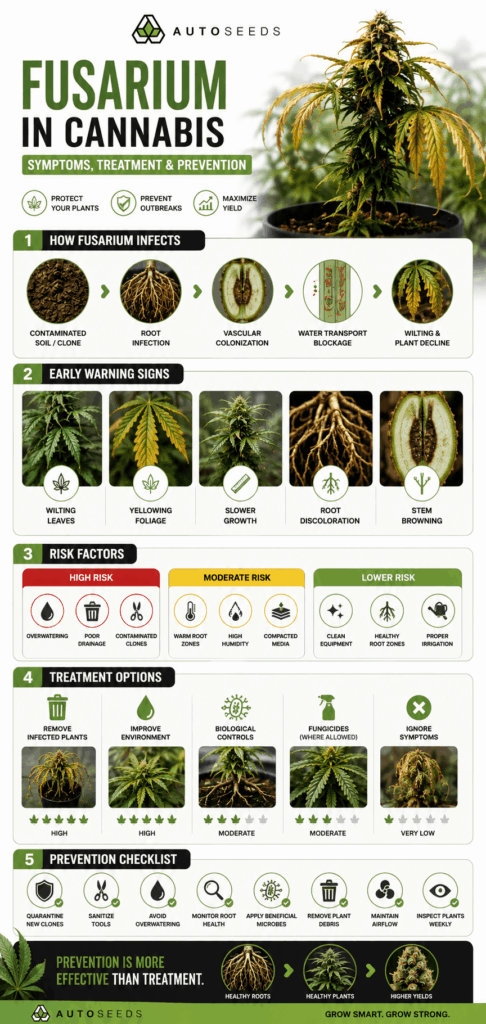
Fusarium develops gradually after infecting the roots, often remaining unnoticed during the early stages. As the fungus spreads through the plant’s vascular system, water and nutrient transport become increasingly restricted, causing reduced vigour, wilting, yellowing leaves, and slower growth. By the time severe stem discoloration and root deterioration appear, the infection is usually well established and recovery is unlikely. For autoflowers, recognising these changes early is essential because their short life cycle leaves little opportunity to recover from significant root damage.
What Causes Fusarium in Autoflower Cannabis?
Fusarium is naturally present in many growing environments, but the fungus only becomes a serious threat when conditions favor its development. In autoflower cannabis, the most common causes are not the fungus itself, but cultivation practices that weaken the root system and create an environment where fungal pathogens can thrive.
Because autoflowers have a short, predetermined life cycle, stress during the early stages of growth has a much greater impact than it does in photoperiod plants. When roots become stressed, oxygen-deprived, or damaged, Fusarium has a greater opportunity to establish itself before the plant has a chance to develop a strong root system.
The Most Common Causes of Fusarium in Autoflowers
While Fusarium spores can be introduced through contaminated soil, water, equipment, or plant material, outbreaks are usually triggered by environmental conditions rather than a single source of contamination.
The most common causes include:
Overwatering
Overwatering is one of the leading contributors to Fusarium in autoflowers. Constantly saturated growing media reduces oxygen around the roots, weakening root development and creating ideal conditions for soil-borne fungi. Young autoflowers are particularly vulnerable because their root systems are still establishing during the first few weeks of growth.
Poor Drainage
Heavy soils or poorly draining potting mixes trap excess moisture around the roots for extended periods. Without adequate aeration, healthy root growth slows while fungal pathogens become more active.
Root Stress
Autoflowers recover poorly from root disturbance. Transplant shock, root damage caused by pests, or physical injury during cultivation can all stress the root system and make it easier for Fusarium to establish itself.
Contaminated Growing Media and Equipment
Fusarium spores can survive for years in soil, containers, irrigation equipment, and plant debris. Reusing contaminated pots or growing media without proper cleaning can unintentionally introduce the fungus into an otherwise healthy grow.
Cool, Wet Outdoor Conditions
Outdoor autoflower seeds are often exposed to naturally occurring Fusarium species when grown in cold, damp soil before their root systems become fully established. Prolonged rainfall, poor drainage, and consistently wet conditions all increase disease pressure throughout the root zone.
| Cause | Why It Increases Fusarium Risk | Risk Level |
| Overwatering | Reduces oxygen around the roots | High |
| Poor Drainage | Keeps the root zone constantly wet | High |
| Root Stress | Weakens natural plant defenses | Moderate |
| Contaminated Soil or Pots | Introduces persistent fungal spores | High |
| Cool, Wet Soil | Encourages fungal development around young roots | High |
Can Fusarium Survive in Soil?
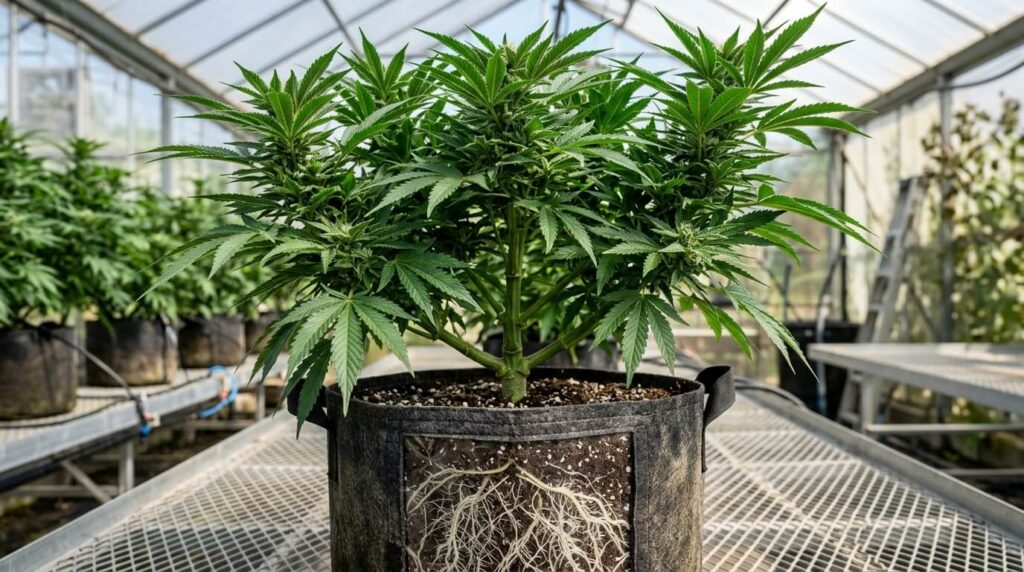
Fusarium is one of the few cannabis pathogens that can remain in soil long after an infected plant has been removed. Certain Fusarium species produce durable spores that survive for several years in contaminated growing media, plant debris, pots, and garden beds.
For autoflower growers, this means simply removing an infected plant does not eliminate the problem. Reusing contaminated soil or containers without proper sanitation can introduce the fungus into the next crop before seedlings have a chance to establish healthy roots.
Whether soil can be reused depends on how severe the infection was and how it will be treated. Outdoor beds are particularly difficult to sanitise because Fusarium naturally survives within the surrounding soil ecosystem. Indoor growers have greater control by replacing growing media, disinfecting containers thoroughly, and avoiding the reuse of heavily contaminated substrates.
In breeding rooms, I never reuse growing media from plants suspected of carrying Fusarium. Replacing soil costs very little compared to losing an entire run of autoflowers because dormant spores remained in the root zone. Over the years, I’ve found that treating contaminated media as disposable is one of the simplest ways to avoid repeating the same problem in future grows.
- Preventing Soil Contamination
- Remove infected roots completely.
- Never compost infected plant material.
- Disinfect pots, trays and tools before reuse.
- Replace heavily contaminated soil whenever practical.
- Avoid transferring soil between healthy and infected plants.
Does Coco Coir Reduce Fusarium Risk?
Many growers wonder whether switching from soil to coco coir—or selecting the best soil for autoflowers, can reduce the risk of Fusarium. While coco itself does not contain Fusarium naturally in the same way outdoor soil can, the disease can still develop whenever contaminated water, tools, containers, or plant material introduce fungal spores into the growing environment.
The biggest advantage of coco is not that it prevents Fusarium, but that it generally provides better drainage and oxygen around the roots. Healthy oxygen levels reduce root stress, making it harder for Fusarium to establish during the critical early weeks of an autoflower’s life.
Regardless of the growing medium, the same principles apply:
| Growing Medium | Fusarium Risk | Main Consideration |
| Outdoor soil | Higher | Naturally occurring spores may already be present |
| Potting soil | Moderate | Depends on quality and drainage |
| Coco coir | Lower environmental risk | Excellent drainage still requires correct watering |
| Rockwool | Moderate | Water management becomes critical |
Good watering practices remain far more important than the choice of growing medium alone. Overwatering coco can create many of the same root problems seen in poorly drained soil.
When Are Autoflowers Most Vulnerable to Fusarium?
Although Fusarium can infect autoflowers at any stage of growth, the greatest risk occurs during the seedling and early vegetative stages when the root system is still developing. During this period, young roots are more susceptible to damage from overwatering, poor drainage, transplant stress, or compacted growing media, creating ideal conditions for Fusarium to establish itself.
Once the fungus infects the root system, the disease often progresses unnoticed for several days before above-ground symptoms appear. By the time an autoflower begins to lose vigour or show signs of wilting, root development has often already been compromised.
As the plant continues into flowering, the impact of early root damage becomes more obvious. Plants may remain smaller than expected, produce fewer flowering sites, and develop less dense buds compared to healthy autoflowers grown under the same conditions.
| Growth Stage | Fusarium Risk | Why It Matters |
| Seedling | Very High | Young roots are easily stressed and vulnerable to infection. |
| Early Vegetative Growth | High | Rapid root development means damage has a lasting impact on plant size and yield. |
| Early Flowering | Moderate | Symptoms often become more noticeable as nutrient and water demand increases. |
| Late Flowering | Lower | New infections are less common, but plants infected earlier continue to decline. |
Understanding when autoflowers are most susceptible helps growers recognise why early root health is so important. The first few weeks of growth determine the strength of the entire plant, making this the period when Fusarium can have the greatest effect on final yield and flower quality.
Can Hydroponic Autoflowers Get Fusarium?
Although Fusarium is most commonly associated with soil-grown cannabis, hydroponic autoflowers are not immune. The fungus can spread through contaminated reservoirs, irrigation lines, growing cubes, or infected clones introduced into the system.
Hydroponic systems often provide ideal temperatures for rapid root growth, but they also allow root diseases to spread quickly if contamination occurs. Because every plant may share the same nutrient solution, a single infected root system has the potential to expose the entire crop.
Hydroponic growers can reduce risk by:
- Maintaining clean reservoirs.
- Sterilising irrigation equipment.
- Keeping nutrient solution well oxygenated.
- Monitoring root colour regularly.
- Removing infected plants immediately.
Healthy hydroponic roots should remain bright white throughout the grow. Any unexplained browning combined with declining plant vigour deserves immediate investigation.
One advantage I’ve noticed with hydroponic systems is that root health is much easier to monitor than in soil. Even subtle discoloration or reduced root mass can often be spotted before above-ground symptoms become obvious, giving growers a better chance of isolating the problem early.
Managing Fusarium in Autoflower Cannabis
Fusarium is one of the most difficult diseases to manage in autoflower cannabis because it develops inside the plant’s vascular system. By the time symptoms become obvious, the fungus has often already damaged the roots and restricted the movement of water and nutrients throughout the plant.
For autoflower growers, the goal is rarely to cure the infection. Instead, the priority is to assess whether the plant can realistically reach harvest while preventing the disease from affecting the rest of the grow.
Can an Autoflower Recover from Fusarium?
Recovery depends on how early the infection is detected and how severely the root system has been damaged.
An autoflower that is still producing healthy new growth, developing flowers, and showing only mild symptoms may continue to harvest, although reduced yield and flower quality should be expected.
However, if the plant has stopped growing, shows severe wilting despite correct watering, or has extensive vascular browning and root deterioration, recovery is extremely unlikely. Unlike photoperiod cannabis, autoflowers cannot extend their vegetative stage to rebuild damaged roots, so any growth lost during infection is usually permanent.
How Quickly Does Fusarium Progress?
Fusarium rarely causes an autoflower to collapse overnight. In most cases, the disease develops gradually over several days or even weeks as the fungus spreads through the vascular tissue and increasingly restricts water movement.
Early infections often begin with subtle slowing of growth before progressing to persistent wilting, yellowing leaves, and eventual root deterioration. Because autoflowers continue developing regardless of stress, even a short period of reduced root function can permanently limit final yield.
The speed of progression depends on several factors, including:
- Plant age.
- Root health.
- Temperature.
- Soil moisture.
- Overall plant vigour.
I’ve found that seedlings and young vegetative plants often decline much faster than mature flowering plants because their entire development depends on rapid root expansion during the first few weeks.
What to Do Immediately
Once you suspect Fusarium, treat it as though it has been present for several days. Acting quickly gives you the best chance of protecting neighbouring autoflowers.
Your first steps should be:
- Isolate the affected plant if possible.
- Inspect neighbouring autoflowers for early symptoms.
- Stop moving pots, growing media, or contaminated tools between plants.
- Examine the roots and stem to assess how advanced the infection has become.
- Disinfect scissors, stakes, and any equipment that has come into contact with the infected plant.
In my experience, growers often lose more plants by delaying action than by removing one infected autoflower too early. If you’re unsure, assume the fungus has already had time to spread through the root zone and act accordingly.
Can Biological Treatments Help?
Biological controls are best viewed as disease management tools rather than cures. They work by improving the microbial balance around the root system and competing with harmful fungi, making them most effective when infection is mild or detected early.
| Biological Treatment | How It Helps |
| Trichoderma spp. | Colonises the root zone and competes with Fusarium for space and nutrients. |
| Bacillus subtilis | Produces natural antifungal compounds while supporting healthy root development. |
| Bacillus amyloliquefaciens | Establishes beneficial bacteria around the roots and suppresses soil-borne pathogens. |
| Mycorrhizal fungi | Improves nutrient uptake and strengthens the overall root system. |
These products are unlikely to reverse severe vascular infections, but they may help slow disease progression and protect healthier plants growing nearby.
In my own grows, I use biological products as preventative tools rather than emergency treatments. I’ve consistently found they perform best when introduced before disease pressure becomes established, helping maintain a healthier root-zone environment rather than trying to rescue plants with advanced infections.
Are Fungicides Worth Using?
Many growers immediately look for a fungicide after diagnosing Fusarium, but expectations should remain realistic.
Because the fungus lives inside the plant rather than on its surface, fungicides have limited ability to eliminate established infections. Some products may help suppress disease activity where permitted, but they should be considered a supporting tool rather than a solution.
For most autoflower growers, improving root-zone conditions and preventing the disease from spreading will have a greater impact than relying on fungicides alone.
When Should You Remove an Infected Autoflower?
Removing an infected plant is never an easy decision, especially if it has already developed flowers. However, keeping a severely infected autoflower in the grow can increase the risk to neighbouring plants while providing very little chance of a worthwhile harvest.
I generally recommend removing an autoflower when it shows:
- persistent wilting that does not improve after watering
- complete loss of new growth
- extensive brown vascular discoloration inside the stem
- severe root deterioration
- rapid decline while neighbouring plants remain healthy
Once these symptoms are present, the plant has usually lost too much of its vascular function to recover.
| What You See | Recommended Action |
| Mild symptoms but continued healthy growth | Monitor closely and reassess daily. |
| One plant showing early symptoms | Isolate immediately and inspect neighbouring autoflowers. |
| Severe vascular browning and root damage | Remove the infected plant. |
| Multiple plants showing symptoms | Inspect the entire growing environment and reassess root-zone conditions before continuing the grow. |
How to Prevent Fusarium in Autoflower Cannabis
Preventing Fusarium in autoflowers starts with protecting the root system from germination through to harvest. Because autoflowers have little time to recover from root stress, every stage of growth influences their ability to resist soil-borne diseases like Fusarium.
In my experience growing and breeding autoflowers, successful Fusarium prevention isn’t about relying on a single product or treatment. It’s about consistently protecting the root zone from germination through to harvest.
Seedling Stage: Build Strong Roots From the Start
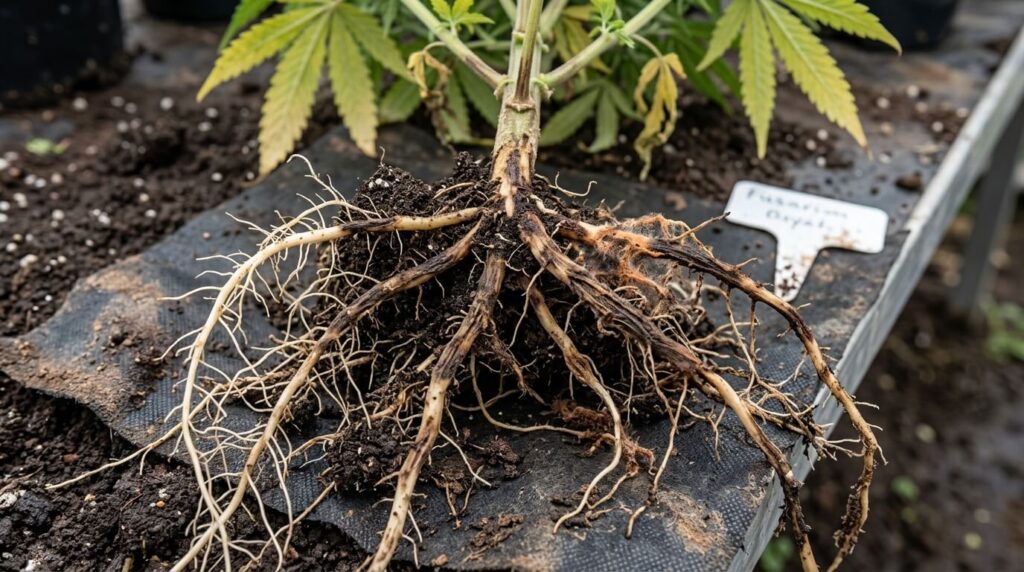
The first two to three weeks are often the most challenging stage for anyone growing autoflower seeds for beginners because this is when healthy root development is established. Strong roots during early growth greatly reduce the risk of diseases such as Fusarium later in the life cycle. This early growth determines how well the plant can resist diseases such as Fusarium throughout its life cycle.
To encourage strong root development:
- Water a small ring around the seedling instead of saturating the entire pot.
- Use a light, well-aerated growing medium with excellent drainage.
- Avoid compacting the soil when planting.
- Keep temperatures stable to encourage steady root growth.
- Check seedlings daily for excessive moisture or slow development.
One of the most common mistakes I see is growers soaking large containers immediately after germination. Watering only around the seedling encourages the roots to expand while preventing constantly saturated soil that can weaken young plants.
Seedling Stage Prevention Guide
| Risk Factor | What to Do | Why It Matters |
| Overwatering | Water lightly around the seedling | Prevents oxygen deprivation in young roots |
| Poor drainage | Use airy, well-draining media | Reduces fungal growth conditions |
| Soil compaction | Avoid pressing down growing medium | Maintains airflow around roots |
| Temperature fluctuations | Keep environment stable | Supports consistent root development |
| Early neglect | Inspect daily | Helps catch stress before it worsens |
Vegetative Growth: Protect the Root Zone
During vegetative growth, autoflowers rapidly expand both above and below the growing medium. Healthy root development during this stage directly influences final plant size, flower production, and resistance to soil-borne diseases like Fusarium.
Reduce the risk of Fusarium by:
- Watering only when the growing medium begins to dry.
- Using breathable pots and well-draining media.
- Avoiding unnecessary transplanting or root disturbance.
- Removing dead leaves and organic debris.
- Cleaning pots, trays, and cultivation tools regularly.
Rather than watering on a fixed schedule, I recommend lifting the pot before each irrigation. If it still feels heavy, wait another day. Allowing oxygen back into the root zone is one of the simplest ways to reduce prolonged moisture around the roots.
Vegetative Stage Prevention Guide
| Risk Factor | What to Do | Why It Matters |
| Overwatering | Allow medium to dry between watering | Maintains oxygen levels in root zone |
| Poor aeration | Use breathable pots and loose media | Encourages strong root expansion |
| Root disturbance | Avoid unnecessary transplanting | Prevents stress that weakens plant defenses |
| Organic debris buildup | Remove dead leaves and plant matter | Reduces pathogen presence |
| Contaminated tools | Clean tools and containers regularly | Prevents disease spread |
Flowering Stage: Maintain a Stable Growing Environment
By the time an autoflower reaches flowering, most prevention has already taken place. The priority now is maintaining stable growing conditions and preventing disease from spreading to healthy plants.
During flowering:
- Avoid prolonged waterlogging around the roots.
- Keep watering consistent without allowing the medium to remain constantly wet.
- Maintain good airflow throughout the grow area.
- Remove severely infected plants promptly.
- Disinfect tools after working with symptomatic plants.
Outdoor growers should pay particular attention after periods of prolonged rainfall, as saturated soil can quickly increase disease pressure around established root systems.
Flowering Stage Prevention Guide
| Risk Factor | What to Do | Why It Matters |
| Excess moisture | Avoid waterlogged conditions | Prevents fungal growth in mature root systems |
| Inconsistent watering | Maintain steady moisture levels | Reduces plant stress during high demand |
| Poor airflow | Ensure proper ventilation | Limits humidity and pathogen spread |
| Infected plants | Remove severely affected plants | Protects neighboring autoflowers |
| Contaminated equipment | Clean tools after use | Prevents cross-contamination |
Start With Healthy Genetics
Healthy genetics provide the foundation for a healthy crop. While no autoflower cultivar is completely resistant to Fusarium, vigorous and well-stabilized genetics generally establish stronger root systems and cope better with environmental stress.
Whether growing indoors or outdoors, always source autoflower seeds from reputable breeders and inspect any incoming plant material before introducing it into your growing area.
Fusarium Prevention Checklist for Autoflowers
| Growth Stage | Prevention Priority |
| Seedling | Avoid overwatering, encourage strong root development, use well-draining media. |
| Vegetative Growth | Maintain healthy root-zone oxygen, minimize root stress, keep the grow area clean. |
| Flowering | Maintain stable moisture levels, monitor for symptoms, remove heavily infected plants promptly. |
The healthiest autoflowers are usually the ones that never experience prolonged root stress. In my experience, Fusarium rarely appears because of a single mistake. It is more often the result of several small cultivation issues that gradually weaken the root system over time. By protecting your roots throughout every stage of growth, you give your autoflowers the best opportunity to complete their life cycle without disease limiting their genetic potential.
Conclusion
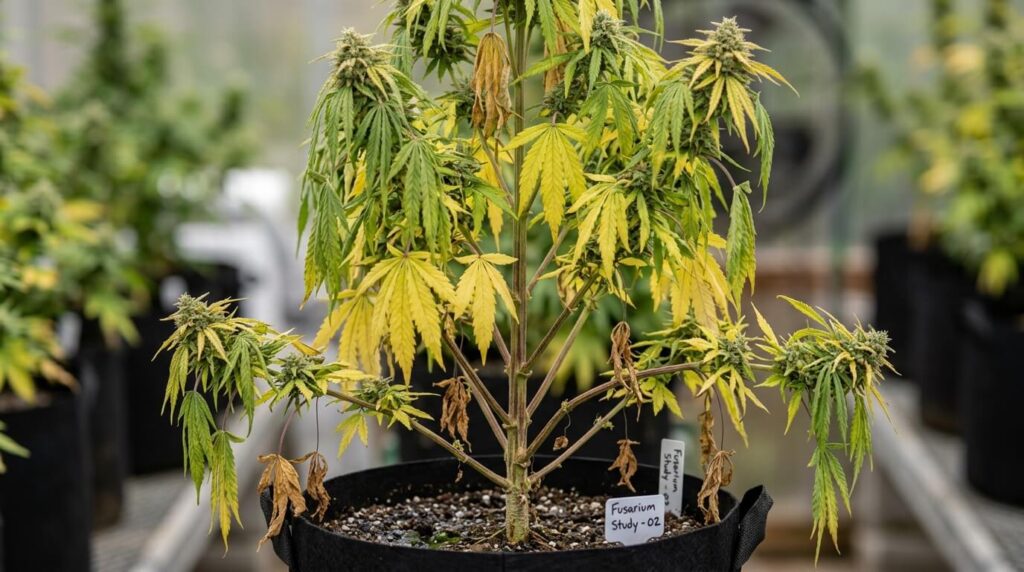
Fusarium is one of the few diseases that can permanently affect an autoflower before most growers realise there’s a problem. Because autoflowers have a fixed life cycle, they cannot recover from prolonged root stress in the same way as other cannabis plants. Every day of healthy root development contributes to the plant’s final size, flower production, and overall yield.
In my experience, successful autoflower growers rarely avoid Fusarium through luck. They avoid it by consistently building healthy roots from the very beginning. Careful watering during the seedling stage, maintaining a well-aerated root zone throughout vegetative growth, and keeping the growing environment clean during flowering all work together to reduce disease pressure long before symptoms appear.
If there is one lesson to take away from this guide, it is that Fusarium is far easier to prevent than it is to manage. By understanding how the disease develops, recognising the earliest warning signs, and protecting your autoflowers throughout every stage of their life cycle, you give your plants the best opportunity to reach their full genetic potential and produce healthy, high-quality harvests.
Frequently Asked Questions
Can an autoflower recover from Fusarium?
Recovery depends on how early the infection is detected. Autoflowers that continue producing healthy new growth and only show mild symptoms may still reach harvest, although reduced yield and flower quality are common. Once Fusarium causes extensive root damage, severe wilting, or brown vascular discoloration inside the stem, recovery is unlikely. Because autoflowers flower according to age rather than light cycle, they have very little time to replace damaged roots before flowering progresses.
What is the first sign of Fusarium in autoflowers?
The earliest symptom is often reduced vigour rather than obvious wilting. An infected autoflower may suddenly stop growing while neighbouring plants continue developing normally under the same conditions. As the disease progresses, leaves begin drooping, water uptake slows, and lower leaves may gradually yellow. Recognising these subtle changes early gives growers the best opportunity to manage the disease before significant root damage occurs.
Can overwatering cause Fusarium?
Overwatering does not create Fusarium, but it creates the conditions the fungus prefers. Constantly saturated growing media reduces oxygen around the roots, weakens root development, and increases the likelihood of infection if Fusarium spores are already present. Allowing the growing medium to partially dry between irrigations helps maintain a healthier root environment and reduces disease pressure.
Is Fusarium more common in outdoor autoflowers?
Outdoor autoflowers are generally exposed to a higher risk because Fusarium naturally occurs in many soils. Heavy rainfall, poor drainage, compacted ground, and consistently wet conditions all increase the chances of infection. Growing in raised beds or well-draining containers and avoiding waterlogged areas can significantly reduce the risk of soil-borne fungal diseases.
Can Fusarium spread to other autoflowers?
Yes. Fusarium can spread through contaminated soil, irrigation water, growing containers, plant debris, and cultivation tools. While it doesn’t spread through the air like powdery mildew, moving contaminated equipment or growing media between plants can introduce the pathogen to healthy autoflowers. Cleaning tools and removing heavily infected plants promptly helps reduce this risk.
Are some autoflower genetics more resistant to Fusarium?
No autoflower cultivar is completely resistant to Fusarium, but vigorous, well-stabilised genetics often establish stronger root systems and cope better with environmental stress. In my experience, healthy genetics combined with proper cultivation practices provide the greatest protection. Good root development, careful watering, and a well-managed growing environment have a far greater impact than relying on genetics alone.
Should I remove an autoflower with Fusarium?
If the plant has stopped growing, shows severe wilting despite correct watering, and has extensive vascular browning or root deterioration, removal is usually the best option. Keeping a severely infected autoflower in the grow increases the risk of contaminating neighbouring plants while offering little chance of a worthwhile harvest. Mildly affected plants that continue growing can sometimes be monitored, but they should be inspected regularly for signs of further decline.