
Copper Deficiency in Autoflowers: Symptoms, Causes and How to Fix It
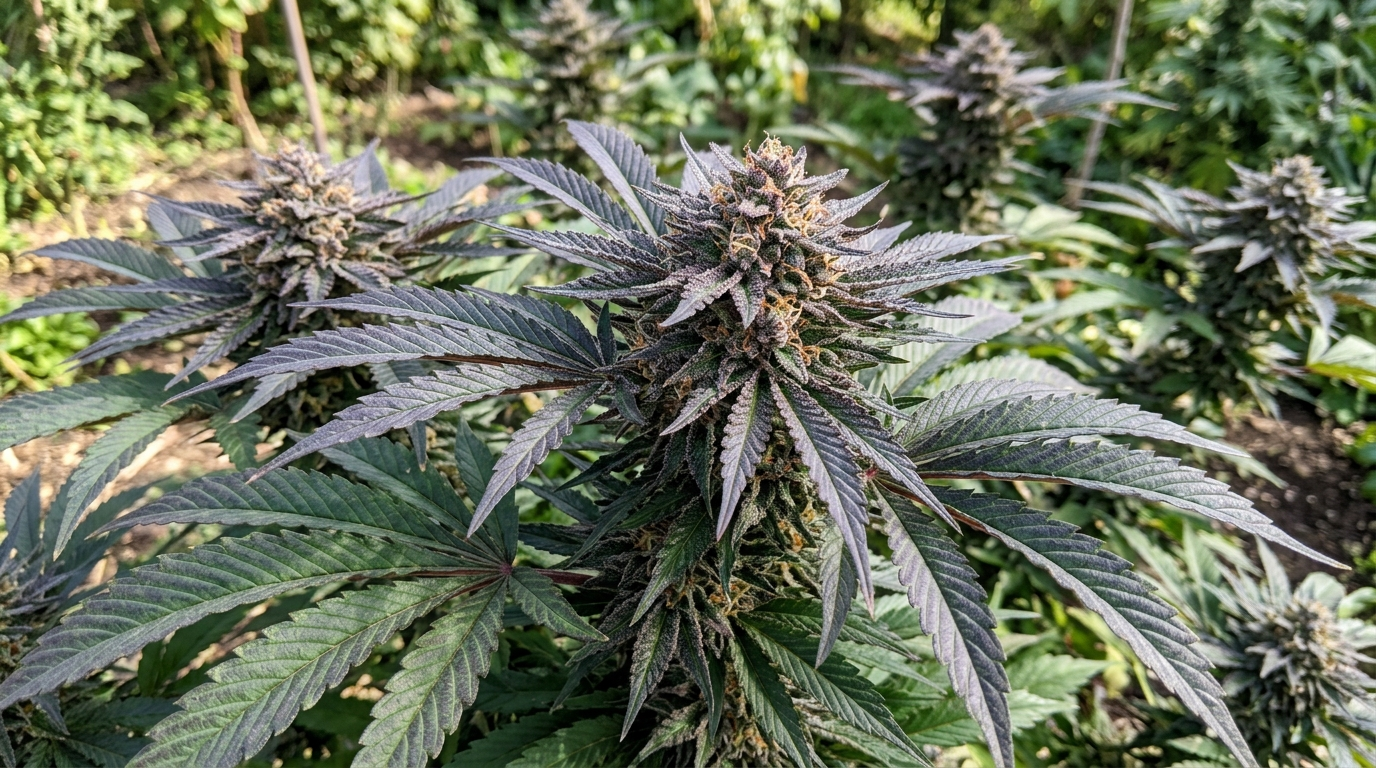
Copper deficiency in cannabis is a relatively uncommon nutrient problem, but it can be challenging to identify because the symptoms often resemble nutrient burn, light stress, or other nutrient deficiencies. Dark green leaves, a metallic sheen, distorted new growth, and slowed bud development are among the most common signs, especially during the flowering stage.
In most grows, copper deficiency is not caused by a lack of copper in the nutrient solution. Instead, issues such as pH imbalance, nutrient lockout, salt accumulation, or root-zone stress prevent plants from accessing the copper already available in the growing medium. This can be particularly impactful for autoflowering cannabis plants, which have a limited timeframe to recover from nutrient-related stress before harvest.
Fortunately, copper deficiency is usually manageable once the root cause is identified. Understanding the symptoms and correcting the underlying issue early can help restore healthy growth, support flower development, and protect overall yields.
Article Insights
- Copper deficiency is usually caused by nutrient lockout or pH imbalance rather than a true lack of copper.
- Autoflowers can be more affected by copper deficiencies because they have less time to recover before harvest.
- Early warning signs include dark green leaves, metallic-looking foliage, twisted growth, and downward-curling leaves.
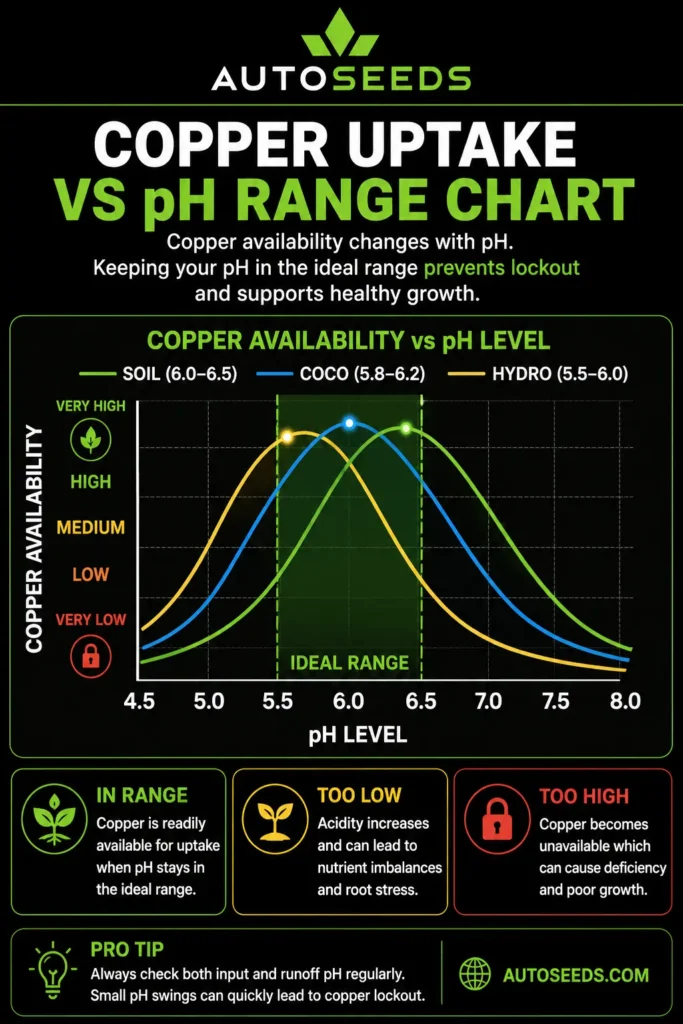
- Copper uptake is most efficient at a pH of 6.0–6.5 in soil and 5.5–6.0 in hydroponic systems.
- Slow bud growth, reduced resin production, and delayed flowering development are common symptoms during bloom.
Understanding Copper Deficiency in Autoflowers
Copper is a trace micronutrient, but your cannabis plant depends on it for several important biological processes. While your plant only needs small amounts of copper, deficiencies can still create major disruptions in growth, flowering, and overall vigor.
When copper becomes unavailable, your plant struggles to transport energy, process enzymes, and develop healthy flowers. This also affects resin production and structural growth, especially during bloom.
Fast-growing autoflower strains can be especially sensitive to nutrient imbalances during flower because they move through growth stages quickly. I’ve found that growing stable autoflower cannabis seeds with balanced feeding schedules and consistent pH management helps reduce many common micronutrient issues before they become severe.
Why Copper Is Essential for Cannabis Growth and Flowering
Copper is a trace micronutrient that plays a critical role in respiration, metabolism, and lignin production inside cannabis plants. Lignin helps strengthen cell walls, allowing stems and branches to remain sturdy enough to support developing flowers throughout the flowering cycle.
During bloom, copper contributes to healthy reproductive growth and efficient energy transfer within the plant. This becomes particularly important for autoflowering cannabis strains, which move from vegetative growth into flowering on a fixed schedule and rely on consistent nutrient uptake to maximize bud development. When I grow cannabis indoors, I pay close attention to micronutrient levels during early flower because deficiencies often appear as plants begin demanding more energy and resources.
Copper also supports:
- Enzyme activity
- Chlorophyll production
- Nutrient transport
- Terpene and cannabinoid development
Without enough available copper, plant metabolism begins to slow down. Buds may stop swelling properly, resin production can decline, and aromas may become less pronounced. In autoflowers, these effects can be more noticeable because there is less time to recover from nutrient-related stress before harvest. Even a brief disruption in copper uptake during flowering can reduce bud development and limit the plant’s ability to reach its full genetic potential.
How Copper Deficiency Develops Through Nutrient Lockout and pH Imbalance
In most cannabis grows, copper deficiency is not caused by a lack of copper in the feeding schedule. Instead, it usually occurs when roots cannot absorb available nutrients due to nutrient lockout.
Copper uptake is heavily influenced by pH. In soil, absorption typically declines above a pH of 6.5, while hydroponic and coco systems can develop deficiencies more quickly due to pH fluctuations, reservoir instability, and salt buildup.
Many growers respond by adding more nutrients, but if pH imbalance or lockout is the underlying issue, increasing feed strength often makes the problem worse.
This can be especially challenging for autoflowers. Because they progress through their life cycle on a fixed schedule, even a brief period of copper lockout during flowering can slow bud development and reduce final yields.
Recommended pH ranges include:
| Growing Medium | Ideal pH Range | Copper Uptake Efficiency |
| Soil | 6.0–6.5 | High |
| Coco Coir | 5.8–6.2 | High |
| Hydroponics | 5.5–6.0 | High |
| Soil Above 6.8 | Poor | Copper lockout likely |
| Hydro Above 6.2 | Reduced | Micronutrient absorption declines |
I always recommend monitoring both input and runoff pH because copper availability changes quickly when root zone conditions drift outside the ideal range. This also explains why cannabis plants can show deficiency symptoms even when nutrients are present in the medium.
Why copper uptake problems are more common in hydro and coco grows
Hydroponic and coco systems react faster to environmental changes than traditional soil grows. This means small pH swings or nutrient imbalances can quickly trigger micronutrient deficiencies.
In hydro setups, copper uptake problems usually come from:
- Excess phosphorus
- Reservoir instability
- Salt accumulation
- Incorrect EC levels
Coco growers also experience copper lockout because coco naturally binds certain minerals. If your feeding schedule lacks proper calcium and magnesium balance, other micronutrients like copper can become unavailable.
I’ve corrected many hydro deficiencies simply by flushing the system and stabilizing the reservoir rather than increasing nutrients.
Copper Deficiency in Autoflower Cannabis Plants
Copper deficiency can be particularly challenging in autoflowering cannabis plants because their rapid life cycle leaves little room for recovery. Unlike photoperiod strains, which can remain in the vegetative stage until problems are corrected, autoflowers continue progressing toward harvest regardless of nutrient stress.
This means that even a brief period of copper lockout can affect flower development, resin production, and final yields. If copper uptake becomes restricted during the transition into bloom, the plant may struggle to fully capitalize on its most productive growth period.
Why Autoflowers Are More Sensitive to Copper Deficiency
Several characteristics make autoflowers less forgiving when nutrient imbalances occur:
| Factor | Autoflower Impact |
| Short life cycle | Less time to recover from deficiencies before harvest |
| Rapid flowering transition | Nutrient issues during early bloom can affect final yields |
| Smaller root systems | More sensitive to pH fluctuations and nutrient lockout |
| Fast growth rate | Micronutrient imbalances can develop quickly |
| Limited vegetative period | Growth lost to stress cannot easily be regained |
Because autoflowers move through growth stages so quickly, deficiencies that might only slow a photoperiod plant can have a more noticeable effect on overall performance.
Common Causes of Copper Deficiency in Autoflowers
Most cases of copper deficiency in autoflowers are caused by nutrient availability issues rather than an actual lack of copper in the feeding schedule.
| Common Cause | How It Affects Copper Uptake |
| High root-zone pH | Copper becomes unavailable to roots |
| Excess phosphorus | Interferes with copper absorption |
| Salt buildup | Restricts micronutrient uptake |
| Overwatering | Reduces root oxygen and nutrient transport |
| Unstable feeding schedules | Creates nutrient imbalances and lockout |
These problems are especially common in coco and hydroponic systems, where nutrient availability can change rapidly if pH and EC levels are not monitored closely.
Preventing Copper Deficiency in Autoflowers
Maintaining a stable root-zone environment is usually more effective than increasing nutrient strength. Consistency is often the key to preventing micronutrient deficiencies throughout the grow cycle.
| Prevention Strategy | Benefit |
| Maintain stable pH levels | Maximizes copper availability |
| Avoid excessive bloom boosters | Reduces phosphorus-related lockout |
| Monitor runoff EC regularly | Helps identify salt accumulation early |
| Keep roots well oxygenated | Supports healthy nutrient uptake |
| Make gradual feeding adjustments | Prevents sudden nutrient imbalances |
In my experience, autoflowers respond best to small, proactive corrections rather than aggressive recovery attempts. When pH, watering practices, and nutrient levels remain stable, autoflower plants are far less likely to experience copper uptake problems and can maintain healthy flower development from seed to harvest.
Autoflower Grower Tip: In my experience, copper deficiency rarely develops because a feed schedule lacks copper. More often, the problem begins when pH drift, salt buildup, or root stress prevents the plant from accessing nutrients already present in the medium. Correcting those issues early is usually far more effective than increasing nutrient strength.
Copper Deficiency Cannabis Symptoms and Early Warning Signs
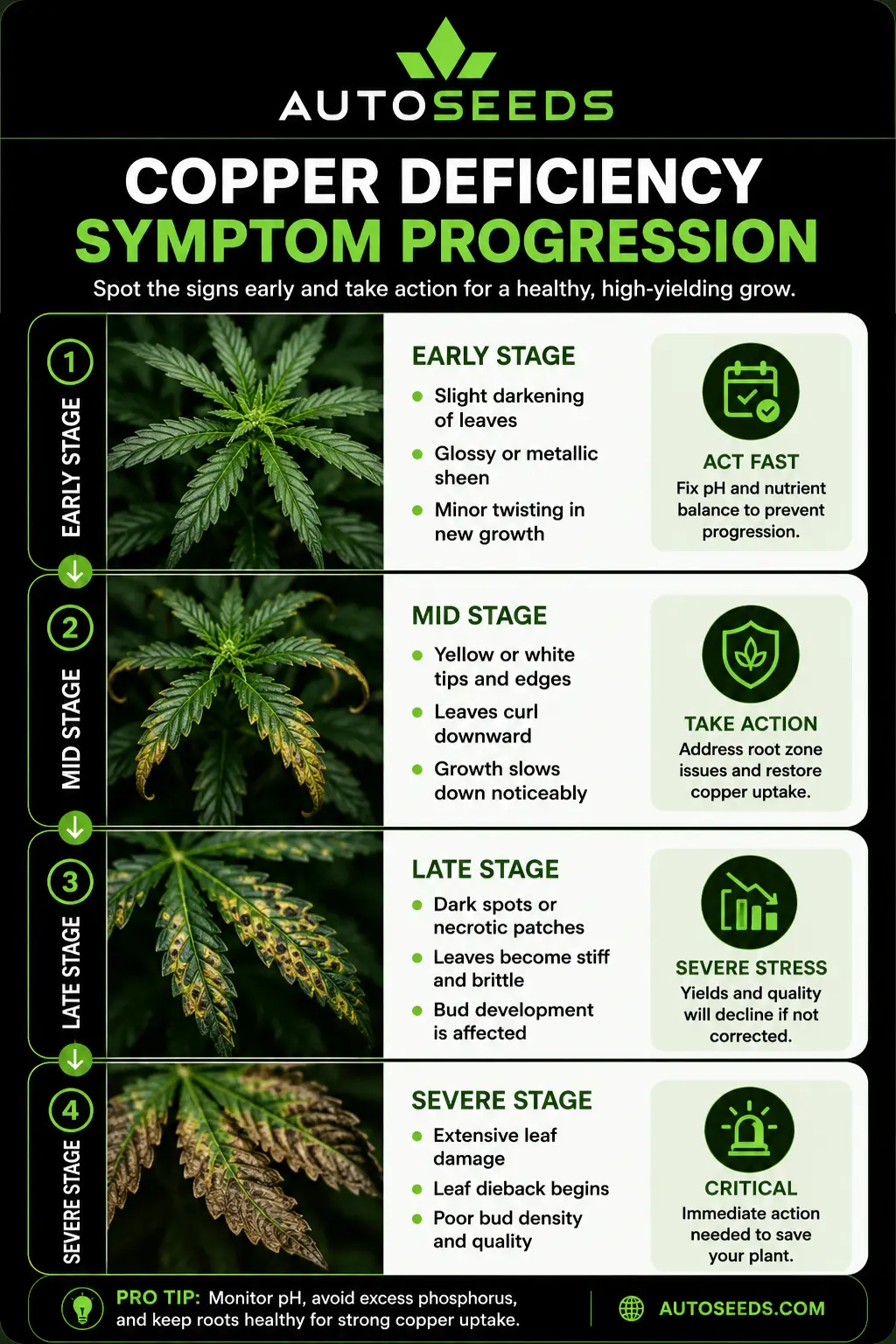
Copper deficiency symptoms often start subtly. Your plant may still appear healthy overall, but small visual changes begin appearing in the foliage and new growth.
The earlier you identify these warning signs, the easier the recovery process becomes.
| Growth Stage | Common Symptoms |
| Early stage | Slight darkening of leaves, glossy sheen, minor twisting |
| Mid stage | Yellow or white edges, downward curling leaves, slowed growth |
| Late stage | Necrotic spots, weak flowering, poor bud swelling, leaf dieback |
Dark green cannabis leaves with purple or blue undertones
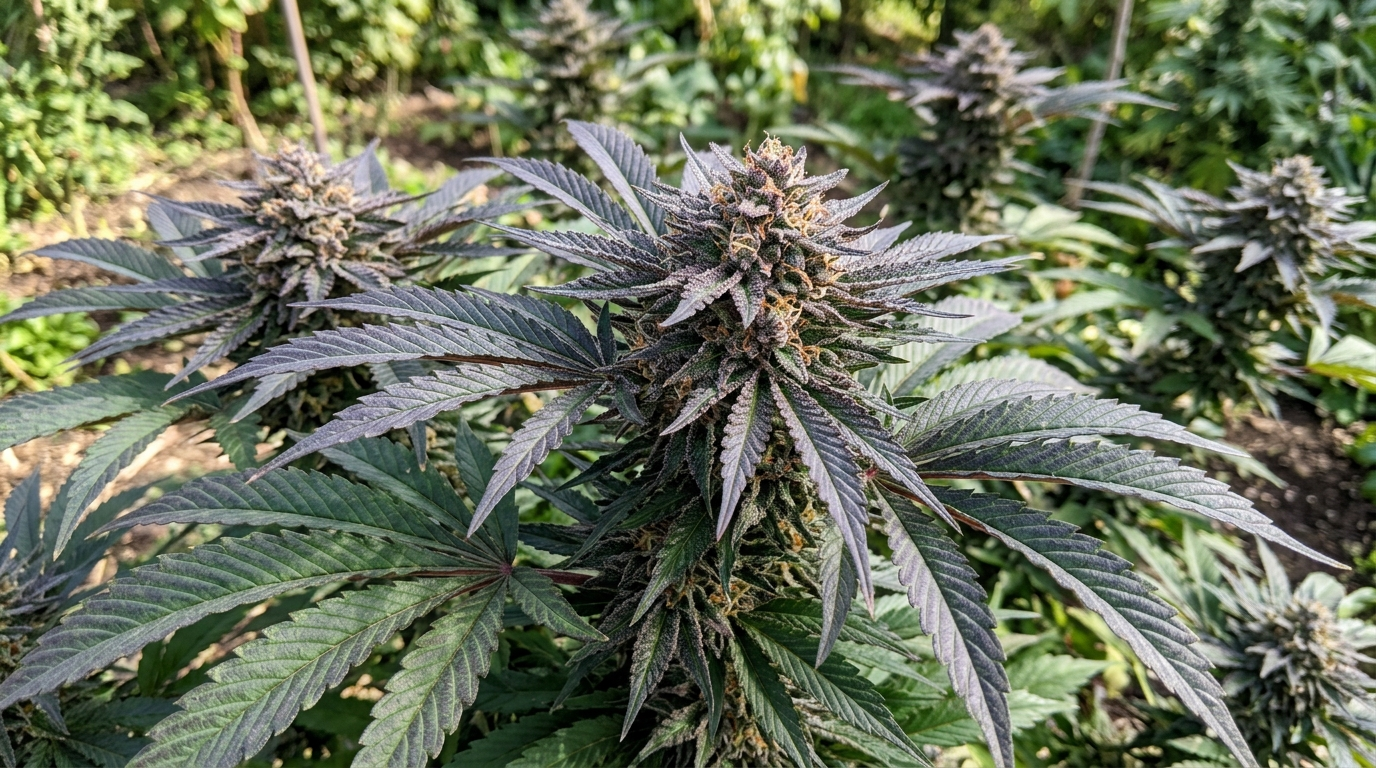
One of the first signs I notice is unusually dark green foliage. At first glance, the plant may actually look healthy because the leaves appear rich and vibrant. However, something feels slightly off.
As the deficiency progresses, purple or blue undertones begin developing across the leaves and stems. This coloration usually appears uneven rather than genetic.
Dark green cannabis leaves can sometimes indicate excess nitrogen, but copper deficiency often pairs the dark coloration with slowed growth and rigid leaf texture.
This also creates confusion for newer growers because the plant does not immediately look deficient.
Shiny or metallic looking cannabis leaves
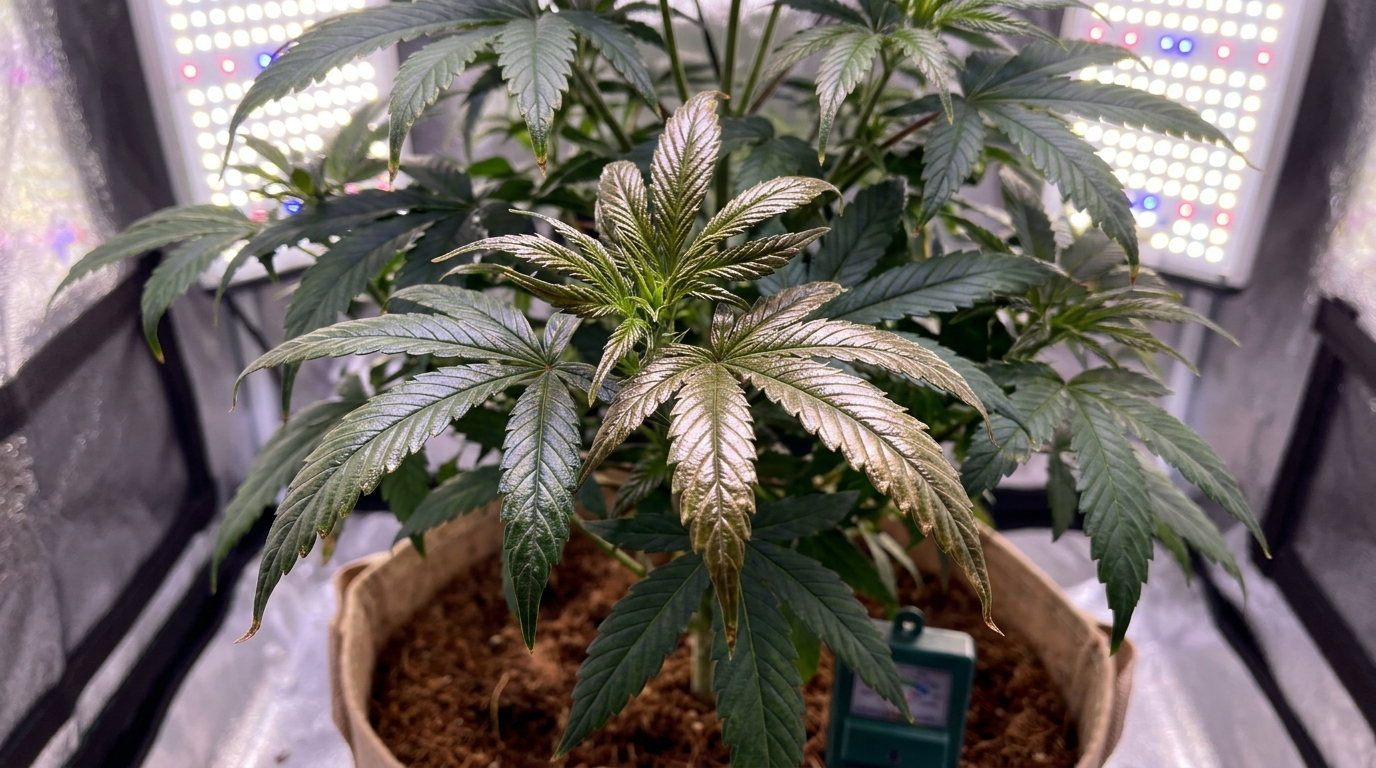
Copper deficiency frequently creates a glossy or metallic sheen on the leaf surface. The leaves almost look polished under grow lights.
When I see shiny foliage combined with dark green coloration, I immediately inspect the root zone and pH levels. This metallic appearance is one of the clearest indicators that the plant is experiencing internal stress rather than simple overfeeding.
In autoflower strains, these symptoms often appear during the transition into flowering, when nutrient demand begins increasing rapidly. Monitoring plants closely during this stage can help growers identify copper-related problems before bud development is affected.
Stiff leaves curling downward and distorted new growth
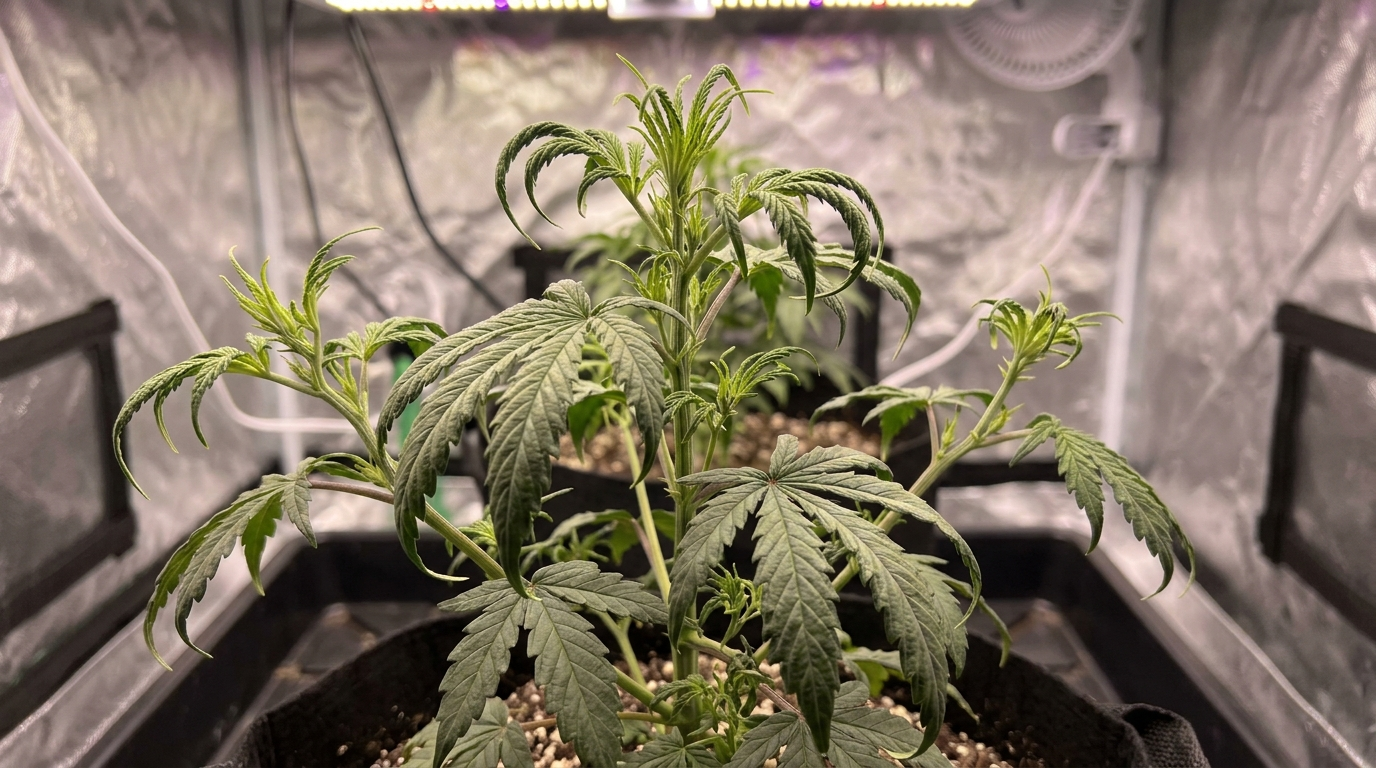
As copper uptake worsens, the plant’s new growth becomes distorted. Leaves begin curling downward while also developing a stiff or brittle texture.
Unlike overwatering, where leaves droop softly, copper deficiency creates rigid downward curling. The leaves almost feel dry even when the growing medium is moist.
New growth may also twist irregularly, while smaller leaves struggle to fully expand.
I often compare this symptom to a plant trying to grow while partially “locked up” internally. The structure becomes awkward and uneven.
Yellow or white leaf tips and edges
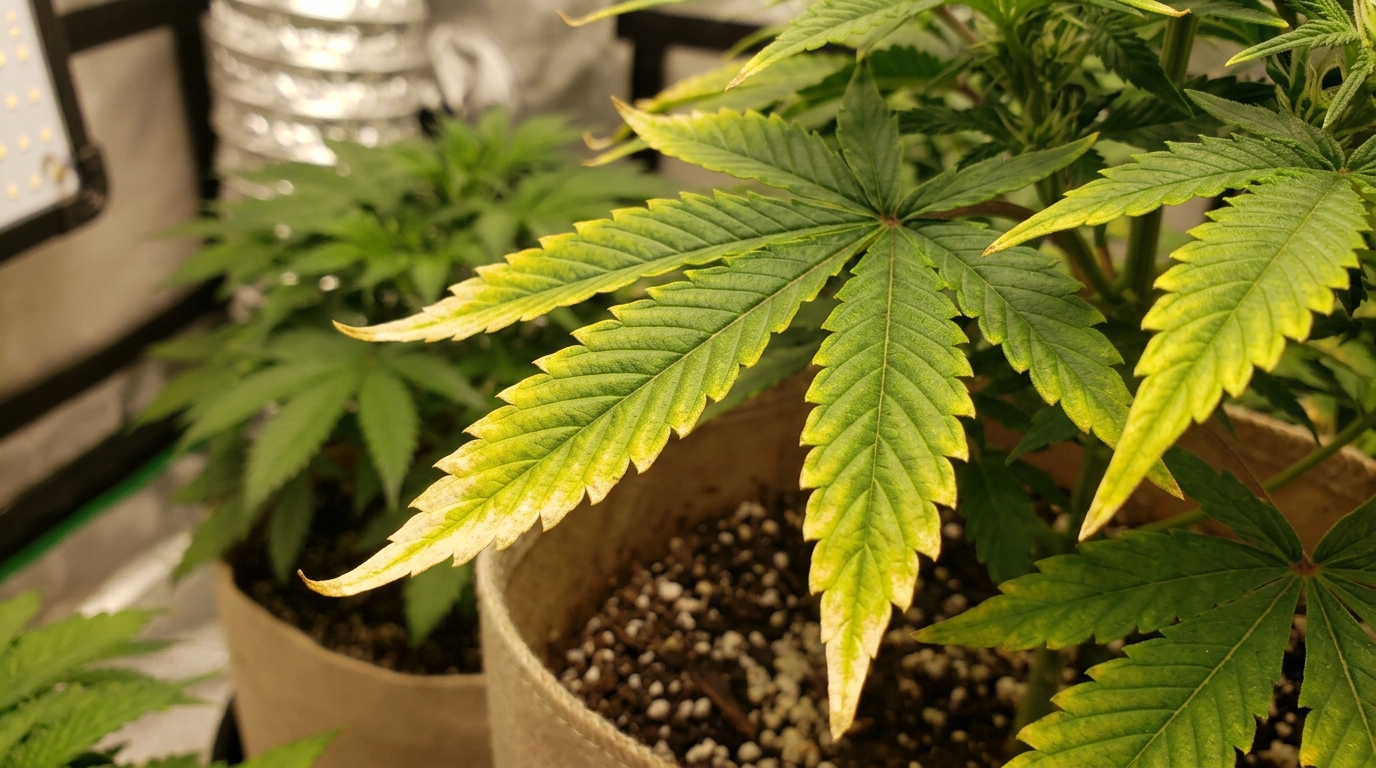
Another common symptom is discoloration along the leaf edges and tips. The affected areas may appear yellow, pale white, or lightly burned. Yellow leaves are more commonly linked to issues like nitrogen, magnesium, or sulfur deficiencies, which is why growers often misdiagnose copper problems in the early stages. If your plant is showing widespread yellowing, it may help to read our guide on yellow cannabis leaves and common nutrient deficiencies.
This pattern also resembles nutrient burn, leading some growers to flush too aggressively or increase feeding unnecessarily. With copper deficiency, the discoloration usually spreads unevenly rather than forming clean, uniform burnt edges.
The symptoms also tend to appear on newer growth first, while older fan leaves may remain relatively unaffected during the early stages of the deficiency.
Cannabis leaves with dark spots or necrotic patches
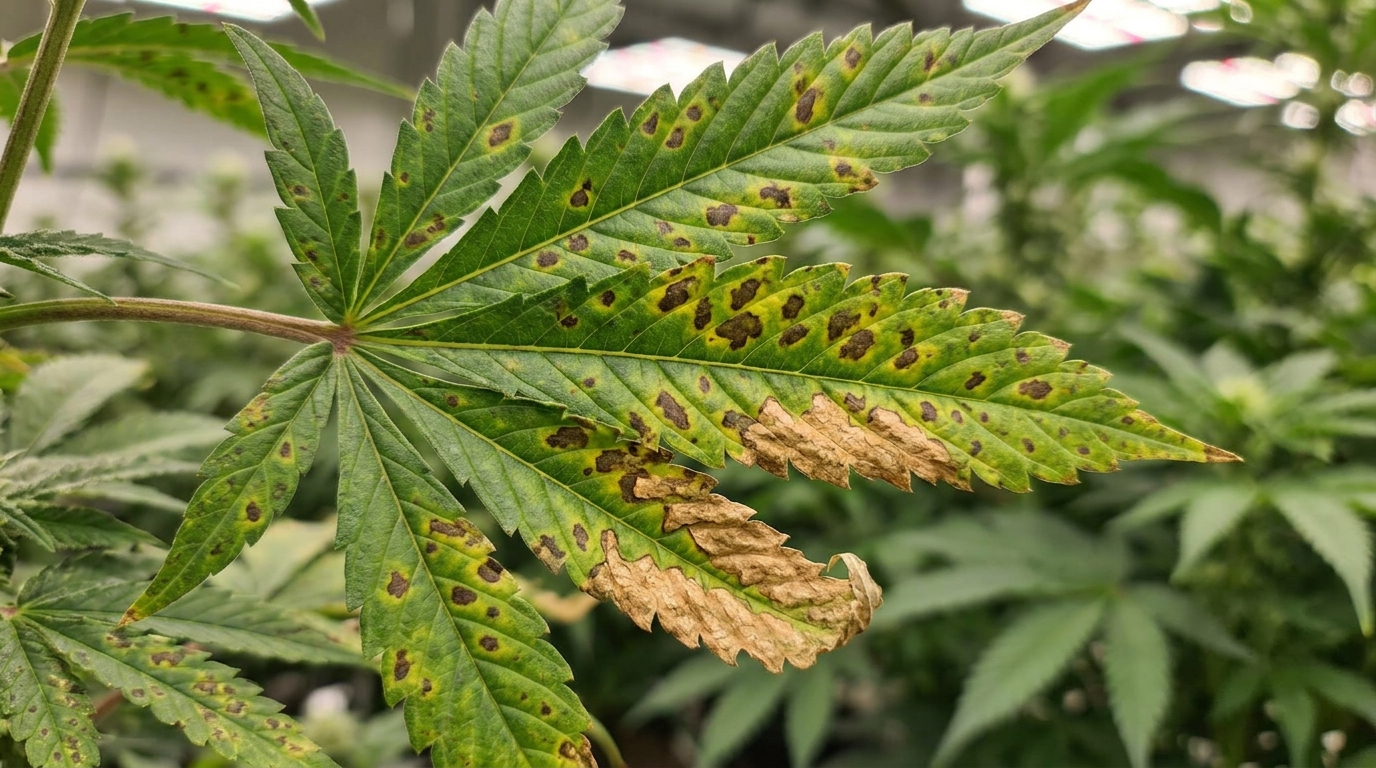
In more advanced cases, dark spots and necrotic patches begin forming across the foliage. These spots may appear bronze, brown, or nearly black as plant tissue dies.
I’ve seen growers mistake these symptoms for fungal infections or calcium deficiency. The difference is that copper-related spotting usually appears alongside glossy leaves, curling growth, and dark green coloration.
| Problem | What You Usually See |
| Copper deficiency | Dark green or bluish leaves, glossy surface, twisted growth, slow flowering. Dark spots are possible but less common. |
| Calcium deficiency | Rust-colored spots, weak stems, irregular patches, newer growth damage. |
| Phosphorus deficiency | Dark green or purple leaves, slow growth, possible dark blotches, poor root or cold-zone stress. |
| Leaf septoria | Round brown spots, yellow halos, spreading leaf damage, usually linked to humidity and fungal infection. |
Dark leaves are relatively uncommon in copper deficiency alone and may also appear due to genetics or environmental stress. This is why I always diagnose deficiencies using the full symptom pattern rather than focusing on leaf color by itself.
How Copper Deficiency Affects Cannabis Bud Development
Copper deficiency does not just affect leaves. It also impacts flower formation, bud density, and overall harvest quality.
During bloom, cannabis plants require stable nutrient uptake to support rapid energy production. When copper becomes unavailable, flower development slows noticeably.
Slow bud growth and delayed flowering development
One of the clearest flowering symptoms is slow bud growth. The plant enters bloom normally, but the buds fail to bulk up at the expected pace.
Pistils may remain white longer than normal, while also producing smaller flower clusters. In severe cases, buds appear airy and underdeveloped even late into flower.
Autoflowers are often more noticeably affected because they cannot extend their flowering period to compensate for lost development time. This makes early intervention particularly important when nutrient deficiencies appear during bloom.
I’ve noticed this especially in high-yielding hybrid strains that demand aggressive nutrient uptake during bloom.
Reduced resin, terpene, and cannabinoid production
Copper also contributes to enzyme systems involved in terpene and cannabinoid development. When deficiency disrupts these processes, your buds lose aroma, flavor, and resin production.
The plant may still finish flowering, but the final quality suffers.
This also impacts trichome development, which directly affects potency and bag appeal.
Healthy micronutrient balance is one reason experienced growers consistently produce louder aromas and frostier flowers.
Why copper deficiency can resemble light stress symptoms
Copper deficiency often mimics light stress because the plant struggles to process energy correctly.
Top leaves closest to grow lights may bleach, curl, or show edge damage. Many growers lower light intensity without realizing the true problem is nutrient uptake.
When a cannabis plant cannot regulate metabolic functions properly, intense light becomes stressful rather than productive.
I always check root conditions and pH before assuming the issue is lighting alone.
What Causes Copper Deficiency in Autoflowers?
Copper deficiency in autoflowers is rarely caused by a lack of copper in the nutrient solution. In most cases, the issue develops when environmental conditions or feeding practices prevent the roots from absorbing nutrients properly. Understanding the cause is important because adding more nutrients often fails to solve the problem and may worsen nutrient lockout.
Incorrect pH Levels in Soil, Coco, and Hydro Systems
The most common cause of copper deficiency is pH imbalance.
Copper is only available to roots within a specific pH range. When pH rises too high, the plant struggles to absorb copper even when adequate amounts are present in the growing medium. This is especially common in coco and hydro systems, where pH can fluctuate quickly.
Autoflowers are particularly vulnerable because they have a limited growth cycle. A few days of nutrient lockout during flowering can slow bud development and reduce overall performance.
To avoid problems, regularly check both your nutrient solution and runoff pH. Catching small fluctuations early is much easier than correcting a severe lockout later.
Nutrient Lockout Caused by Salt Buildup and Excess Phosphorus
Nutrient lockout is another common trigger for copper deficiency.
Many growers increase phosphorus during flowering, but excessive amounts can interfere with copper uptake. Salt buildup in the root zone can create similar issues by reducing the plant’s ability to absorb micronutrients efficiently.
This problem is most common in heavily fed coco and hydro grows where nutrients accumulate over time. Symptoms often appear suddenly, even when feeding schedules have not changed.
In my experience, autoflowers respond better to balanced feeding programs than aggressive nutrient schedules. Stable EC levels are usually more effective than pushing plants to their limits.
Overwatering and Root-Zone Stress
Healthy roots are essential for nutrient uptake.
When the root zone stays saturated for too long, oxygen levels drop and nutrient absorption slows. This can limit copper uptake and create multiple deficiency symptoms at the same time.
Common signs of root stress include:
- Slow growth
- Drooping leaves
- Weak nutrient uptake
- Reduced vigor
- Slowed flowering
Autoflowers can be especially sensitive to overwatering because they are often grown in smaller containers. Maintaining a proper wet-dry cycle helps keep roots healthy and nutrients available.
Copper Deficiency vs Calcium Deficiency and Nitrogen Toxicity
Copper deficiency can resemble other nutrient problems, making diagnosis challenging.
| Symptom | Most Likely Cause |
| Metallic-looking leaves | Copper deficiency |
| Dark green glossy leaves | Copper deficiency or nitrogen toxicity |
| Twisted new growth | Copper deficiency or calcium deficiency |
| Rust-colored spots | Calcium deficiency |
| Clawed leaves | Nitrogen toxicity |
| Slow flowering | Copper deficiency |
| Weak stems | Calcium deficiency |
Rather than focusing on a single symptom, assess the overall pattern of growth, leaf appearance, and flowering performance. This provides the most reliable way to distinguish copper deficiency from other nutrient-related issues.
How to Fix Copper Deficiency in Autoflowers Safely
Fixing copper deficiency in autoflowers is about restoring nutrient uptake quickly without creating extra stress. Because autoflowers grow on a fixed timeline, aggressive corrections can sometimes do more harm than good. The aim is to stabilize the root zone, correct pH, and allow the plant to resume healthy growth as smoothly as possible.
Correct pH Before Adding More Nutrients
The first step is checking your input and runoff pH. In many cases, copper is already present in the growing medium but the plant cannot absorb it because the root-zone pH has drifted too high.
For autoflowers, pH stability is especially important during early flowering. A short period of copper lockout can slow bud formation, so correcting pH should always come before increasing nutrient strength.
If runoff readings are high, flush the medium gently with properly pH-balanced water until the root zone begins to stabilize. In hydroponic systems, replace the reservoir, recalibrate pH, and restart with a lighter nutrient solution.
Use Micronutrients Carefully
If symptoms continue after pH has been corrected, a balanced micronutrient formula may help. Avoid using strong raw copper additives unless you are experienced, as autoflowers can react poorly to sudden changes in nutrient concentration.
Look for products containing:
- Chelated copper
- Balanced trace minerals
- Cannabis-specific micronutrients
Start with a mild dose and watch how the plant responds over the next few days. With autoflowers, gradual corrections are usually safer than heavy feeding because the plant has less time to recover from overcorrection.
Flush Lockout Without Over-Stressing the Plant
Flushing can help remove excess salts and restore nutrient availability, but autoflowers should be flushed carefully. A heavy flush late in flower can stress the root zone, slow bud development, and temporarily reduce nutrient uptake.
For soil or coco grows, use pH-balanced water and monitor runoff EC until levels begin to fall. After flushing, reintroduce nutrients at a lighter strength rather than returning immediately to a full feeding schedule. In hydro systems, a full reservoir reset is usually the cleanest way to correct lockout.
Watch New Growth and Flower Development
Damaged leaves rarely recover fully, so judge recovery by new growth and bud development rather than old foliage. Healthy signs of recovery include:
- New leaves growing without twisting
- Less downward curling
- Improved bud swelling
- More consistent leaf color
- Stronger flower development
Autoflowers continue maturing while they recover, so improvements may appear gradually rather than dramatically. If the plant is already deep into flowering, the goal is often to limit further damage and protect final bud quality.
Prevent Copper Deficiency in Future Autoflower Grows
Prevention is the best approach with autoflowers because they have less time to bounce back from nutrient problems. To reduce the risk of copper lockout:
- Keep pH stable throughout the grow
- Avoid overusing phosphorus-heavy bloom boosters
- Monitor runoff EC in soil and coco
- Let the root zone breathe between waterings
- Make feeding changes gradually
- Use a balanced nutrient schedule with trace minerals
Over time, you may also notice that some autoflower genetics handle feeding fluctuations better than others. Running several strains side by side can help you identify which plants perform best in your setup, which is why many growers use autoflower variety packs when refining their growing environment.
Autoflower Copper Deficiency Recovery Timeline
| Time After Correction | Expected Improvement |
| 24–48 hours | pH begins to stabilize and symptoms stop worsening |
| 3–5 days | New growth may appear healthier and less distorted |
| 1 week | Curling and discoloration usually slow down |
| 2+ weeks | Bud development, vigor, and flower quality may improve |
Autoflowers can recover from copper deficiency, but the final result depends on how early the issue is corrected. The sooner pH, lockout, or root stress is addressed, the better the plant’s chance of maintaining healthy flower development and yield potential.
Conclusion
Copper deficiency in cannabis is relatively uncommon, but when it does occur it can have a noticeable impact on plant health, flower development, and overall harvest quality. Because the symptoms often resemble other nutrient issues, successful treatment starts with accurate diagnosis rather than simply increasing nutrient levels.
In most cases, the problem stems from nutrient lockout, pH imbalance, or root-zone stress that prevents plants from accessing the copper already present in the growing medium. Correcting these underlying conditions usually restores nutrient uptake and allows new growth to develop normally.
Autoflowering cannabis plants require particular attention because their accelerated life cycle leaves less time to recover from deficiencies during flowering. Early intervention can make a significant difference to final yields, resin production, and bud quality.
By maintaining stable pH levels, avoiding excessive feeding, and monitoring plant health throughout the grow cycle, growers can prevent most copper-related problems before they affect performance. Understanding how your plants respond to changes in the root zone is one of the most valuable skills you can develop, helping you produce healthier plants and more consistent harvests year after year.
Frequently Asked Questions About Copper Deficiency in Autoflowers
Can autoflowers recover from copper deficiency?
Yes, autoflowering cannabis plants can recover from copper deficiency if the underlying cause is identified and corrected early. Most cases are caused by pH imbalance or nutrient lockout rather than a true lack of copper. Because autoflowers have a limited life cycle, prolonged deficiencies during flowering can permanently reduce growth and yields.
Are autoflowers more sensitive to copper deficiency than photoperiod plants?
Autoflowers are not necessarily more prone to copper deficiency, but they are often less forgiving when nutrient problems occur. Their rapid growth cycle gives them less time to recover from deficiencies, especially during the transition into flowering when nutrient demand increases.
Can copper deficiency reduce autoflower yields?
Yes. Copper plays an important role in energy production, enzyme activity, and flower development. When copper uptake is restricted, autoflowers may produce smaller buds, reduced resin content, and lower overall yields compared to healthy plants.
What is the best pH range for copper uptake in autoflowers?
For autoflowers grown in soil, copper is generally most available between pH 6.0 and 6.5. In coco coir, a pH of 5.8 to 6.2 is usually recommended, while hydroponic systems typically perform best between pH 5.5 and 6.0. Keeping pH stable is one of the most effective ways to prevent copper lockout.
Can overfeeding cause copper deficiency in autoflowers?
Surprisingly, yes. Excess nutrients, particularly phosphorus-heavy bloom boosters, can interfere with copper absorption and contribute to nutrient lockout. This is why copper deficiency often appears even when sufficient nutrients are present in the growing medium.
How can I prevent copper deficiency in autoflower cannabis plants?
The best prevention strategy is maintaining a stable growing environment. Consistent pH management, balanced nutrient schedules, proper watering practices, and regular monitoring of runoff EC can help ensure copper remains available throughout the autoflower’s life cycle.


