
Leafhoppers on Autoflower Cannabis: Identification, Treatment & Prevention
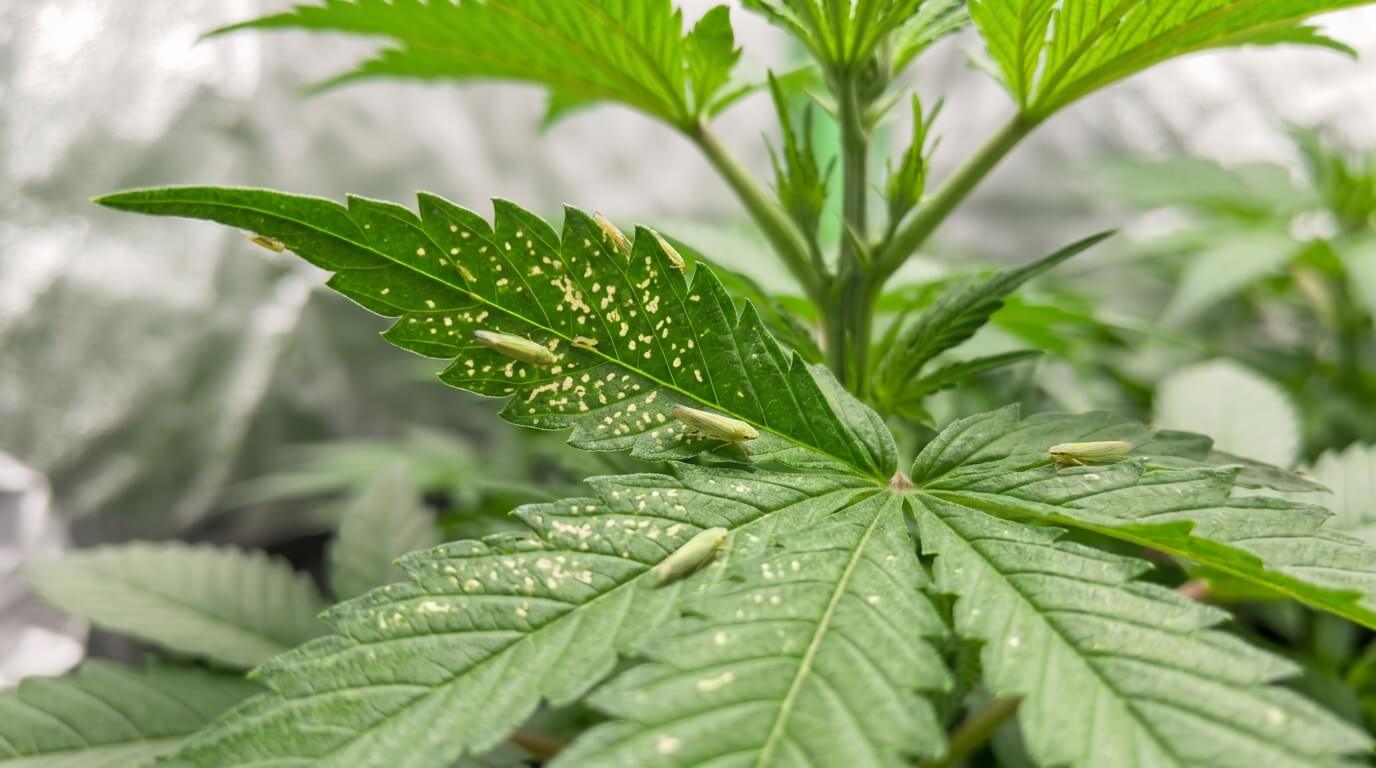
Leafhoppers are small sap-feeding insects that can quickly become a problem for outdoor autoflower cannabis. While they rarely kill healthy plants outright, their feeding weakens leaves, slows vegetative growth, and can reduce flower production if left unmanaged. Because autoflowers have a fixed lifecycle and limited time to recover from stress, even minor damage during early growth can have a lasting impact on plant size and final yields.
Most infestations begin when these mobile insects migrate from nearby grasses, weeds, or ornamental plants onto cannabis. Once established, they reproduce quickly and feed by piercing leaves and extracting sap, leaving behind stippling, yellowing, and, in severe cases, hopperburn. Some species can also transmit plant pathogens, increasing the risk to plant health.
In this guide, you’ll learn how to identify leafhoppers, recognize early damage, apply effective treatments, and use prevention strategies to protect autoflowers from seedling to harvest.
Article Insights
- Leafhoppers are sap-feeding insects that damage autoflower cannabis by piercing leaves, reducing photosynthesis, and weakening plant growth.
- Autoflowers are more vulnerable because their fixed lifecycle leaves little time to recover from pest damage before flowering begins.
- Early signs include stippling, yellowing, leaf curling, and hopperburn, making routine inspections essential during the seedling and vegetative stages.
- Organic controls such as insecticidal soap, beneficial insects, and manual removal can effectively manage most infestations when applied early.
- Long-term prevention relies on weed control, good airflow, balanced nutrition, and regular monitoring to keep leafhopper populations below damaging levels.
- Understanding Leafhoppers on Autoflower Cannabis
- How to Identify Leafhoppers on Autoflower Cannabis
- Leafhopper Damage on Autoflower Cannabis: Symptoms and Consequences
- How to Kill Leafhoppers on Autoflower Cannabis Effectively
- How to Prevent Leafhopper Infestations on Autoflower Cannabis
- Conclusion
- Frequently Asked Questions
Understanding Leafhoppers on Autoflower Cannabis
Leafhoppers are small sap-feeding insects from the Cicadellidae family that can become troublesome pests in outdoor autoflower grows. Although they feed on hundreds of plant species, they readily move onto cannabis when suitable host plants are nearby. Their wedge-shaped bodies, quick movements, and ability to jump or fly between plants allow populations to spread rapidly during the growing season.
Unlike slower-moving pests, leafhoppers rarely remain in one place for long. They feed by piercing leaf tissue with needle-like mouthparts and extracting sap from the plant’s vascular system. This feeding behavior is consistent across most leafhopper species and is the primary reason they are considered an important pest of cannabis.
Plants grown from outdoor autoflower seeds are especially likely to encounter leafhoppers because they are typically cultivated during late spring and summer, when these insects are most active. Plants cultivated in gardens, raised beds, patios, or greenhouses may all be exposed as leafhoppers migrate from nearby grasses, weeds, ornamental plants, and agricultural crops.
Why Leafhoppers Are Attracted to Autoflower Cannabis
Young autoflower plants produce tender new growth that contains abundant moisture and nutrients, making them an attractive food source for sap-feeding insects. Leafhoppers are most commonly drawn to vigorous vegetative growth, where fresh leaves are easier to penetrate and provide a consistent food source.
Warm, dry weather also encourages leafhopper activity by supporting faster reproduction and increased movement between host plants. Outdoor autoflowers grown during extended periods of sunshine often experience greater exposure than crops grown in cooler conditions.
Excessive nitrogen fertilization can make autoflower plants even more appealing. Overfeeding encourages lush, soft foliage that is easier for piercing insects to feed on, so maintaining balanced nutrition helps avoid creating overly attractive growth.
In our outdoor autoflower trials, leafhoppers are rarely interested in seedlings immediately after emergence. Activity usually increases once plants develop a dense canopy of fresh vegetative growth, especially during periods of warm, dry weather. That makes the third to fifth week from sprout one of the most important times to inspect plants closely.
Common Leafhopper Species Found on Cannabis
Several leafhopper species have been observed feeding on cannabis, although the exact species varies by region. Regardless of their appearance, most produce similar feeding patterns and require the same management approach.
| Leafhopper Species | Appearance | Potential Impact |
| Potato Leafhopper | Light green, wedge-shaped | Associated with leaf curling and hopperburn |
| Aster Leafhopper | Green to yellow | Can transmit certain plant pathogens |
| Beet Leafhopper | Pale green to brown | Weakens plants through prolonged sap feeding |
| Green Leafhopper | Bright green | Causes stippling and leaf discoloration |
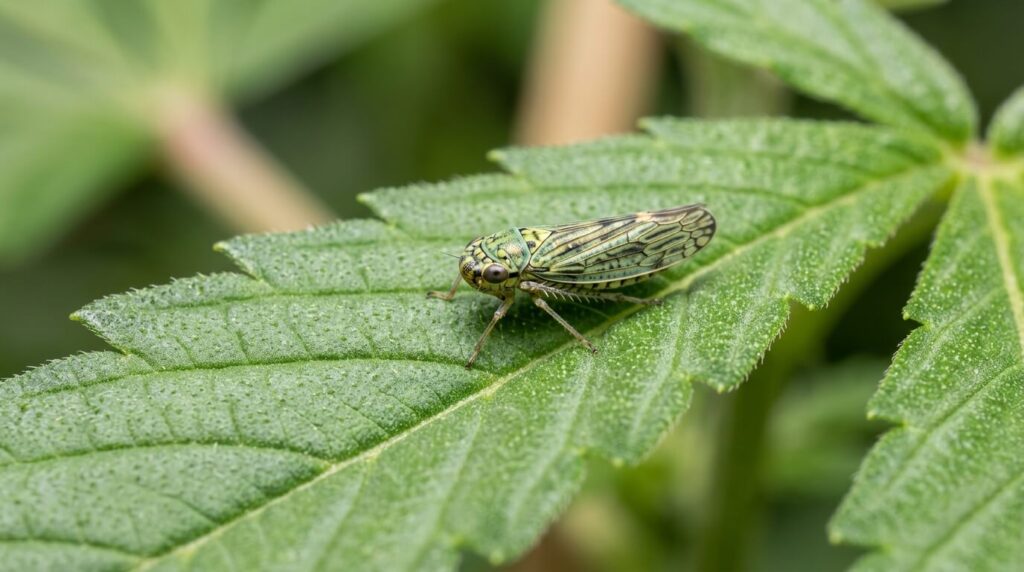
Leafhoppers range in color from pale green and yellow to brown or whitish, but they all share the same distinctive wedge-shaped body and powerful hind legs that allow them to leap away when disturbed.
How Leafhoppers Differ From Other Cannabis Pests
Because several cannabis pests feed on leaves, leafhoppers are sometimes mistaken for aphids, thrips, or whiteflies. The easiest way to distinguish them is by their behavior.
Leafhoppers react immediately when approached, jumping or flying to another leaf in a split second. Aphids usually remain clustered together and move slowly, while thrips are much smaller and leave silvery streaks rather than scattered feeding marks. Whiteflies resemble tiny white moths that flutter upward when plants are disturbed.
A simple field check is often enough to confirm their presence. Gently tap or shake a branch and watch for tiny wedge-shaped insects springing away from the foliage. That rapid escape response is one of the most reliable characteristics of a leafhopper infestation.
| Pest | Distinguishing Feature | Typical Feeding Pattern |
| Leafhoppers | Wedge-shaped body that jumps or flies when disturbed | Sap feeding that produces pale stippling |
| Aphids | Pear-shaped insects that gather in colonies | Honeydew production and leaf distortion |
| Thrips | Slender insects that scrape leaf surfaces | Silvery streaking and surface scarring |
| Whiteflies | Tiny white-winged insects that fly in clouds | Yellowing and gradual plant weakening |
How to Identify Leafhoppers on Autoflower Cannabis
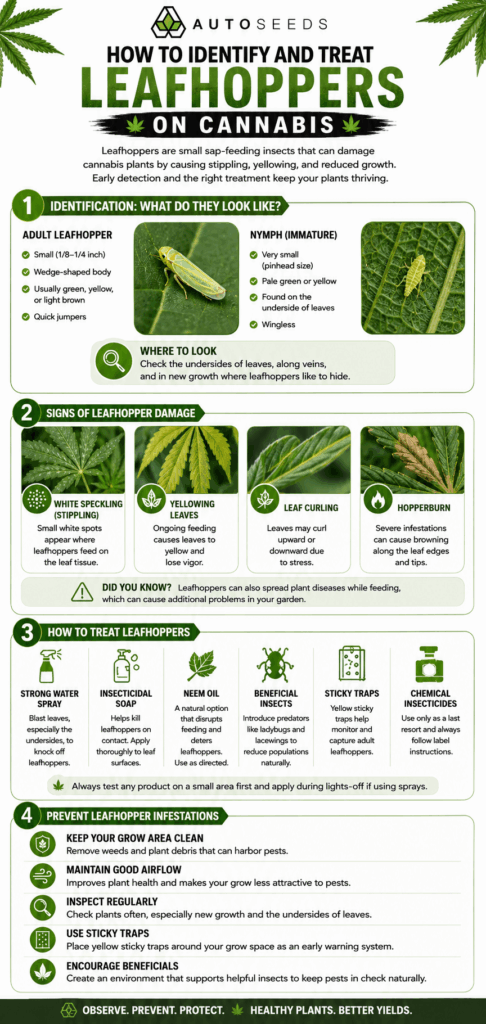
Correct identification is the first step toward managing leafhoppers on autoflower cannabis. Because these insects are highly mobile and often remain hidden until disturbed, growers should rely on a combination of physical characteristics, feeding patterns, and insect behaviour rather than a single symptom.
If you suspect leafhoppers, begin by looking for these five identifying features:
- Small wedge-shaped insects measuring approximately 2–5 mm (1/12–1/5 inch) long
- Green, yellow, pale brown, or whitish coloration
- Adults that jump or fly away as soon as foliage is disturbed
- Wingless nymphs hiding on the undersides of leaves
- Fine white or pale yellow stippling scattered across fan leaves
Checking for several of these signs together provides a much more reliable diagnosis than relying on leaf discoloration alone.
Physical Characteristics of Adult and Immature Leafhoppers
Adult leafhoppers have narrow, wedge-shaped bodies that taper toward the rear, with fully developed wings folded neatly over their backs when at rest. Their colour varies by species but is typically light green, yellow, pale brown, or whitish.
One of their most distinctive features is a pair of powerful hind legs that allow them to leap several times their body length. If disturbed, adults rarely crawl away—they immediately jump or fly to nearby foliage.
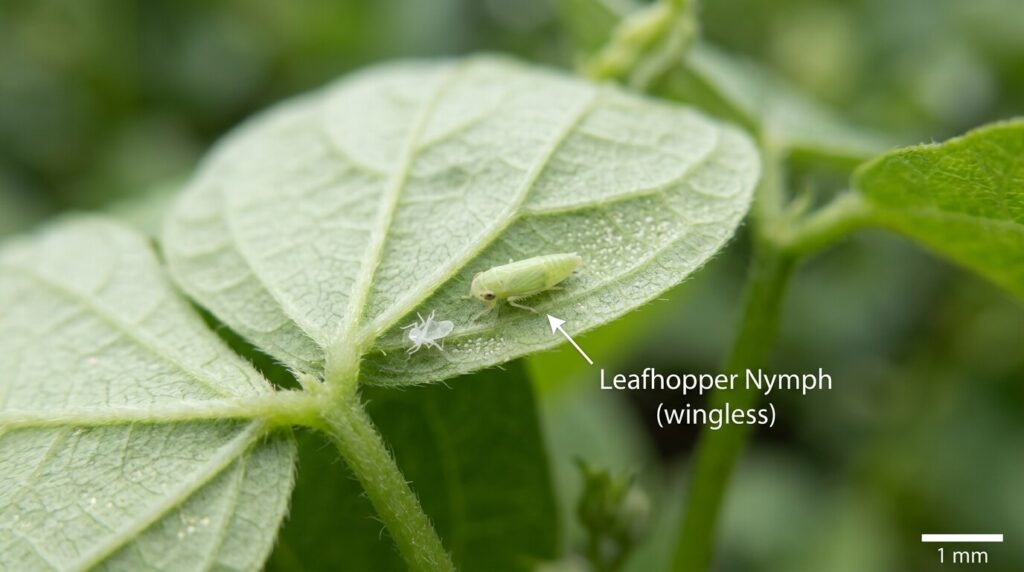
Immature leafhoppers, known as nymphs, resemble adults but are smaller and lack wings. They usually move sideways across leaf surfaces and remain close to leaf veins, where they feed before developing into winged adults.
Recognizing the Earliest Signs
Leafhopper activity often becomes noticeable before large numbers of insects are visible. The earliest indication is usually the appearance of tiny pale speckles scattered across fan leaves. Unlike nutrient deficiencies, these spots develop randomly rather than following the leaf veins or affecting the entire leaf evenly.
As you inspect your autoflowers, look for:
- Fine white or yellow stippling
- Small insects that leap when the plant is touched
- Pale wingless nymphs beneath leaves
- Multiple affected leaves rather than isolated spots
Examining both the insects and the feeding pattern provides the most accurate identification.
One mistake we regularly see is assuming early stippling is caused by a nitrogen deficiency before checking for insects. Before adjusting feeding, always inspect the undersides of several affected leaves. Finding jumping adults or pale nymphs confirms the problem is insect-related rather than nutritional.
Where to Look on Autoflower Plants
Begin your inspection with the lower fan leaves before working upward through the canopy. Turn each leaf over and carefully examine the midrib and major veins, where nymphs commonly gather. Continue checking newly developed foliage and the inner canopy, especially on plants growing close to grasses or unmanaged vegetation.
A 10× hand lens makes spotting young nymphs much easier, particularly during the early stages of an infestation when they blend into the foliage. Morning inspections are also helpful because cooler temperatures reduce leafhopper activity, allowing adults to remain on the plant longer before jumping away.
Don’t Confuse Leafhoppers With Other Cannabis Pests
Several common cannabis pests produce similar symptoms, but their appearance and behaviour differ considerably.
| Pest | How to Identify It |
| Leafhoppers | Wedge-shaped insects that jump or fly immediately when disturbed |
| Thrips | Slender insects that leave silvery streaks and tiny black feeding spots |
| Aphids | Pear-shaped insects that gather in colonies and produce sticky honeydew |
| Whiteflies | Tiny white-winged insects that flutter upward when foliage is disturbed |
| Spider Mites | Minute pests associated with fine webbing and dense yellow speckling |
Inspect autoflowers every two to three days during the first month of growth, particularly in outdoor gardens. Establishing whether leafhoppers are present before plants transition into flowering makes it much easier to manage future pest pressure while maintaining healthy plant development.
Leafhopper Damage on Autoflower Cannabis: Symptoms and Consequences
Leafhopper damage develops gradually, but on autoflower cannabis, even a relatively small infestation can have lasting consequences. These insects feed by piercing leaf tissue with needle-like mouthparts and extracting sap from plant cells. As feeding continues, healthy leaf tissue becomes less efficient at supporting photosynthesis, reducing the energy available for growth and flower production.
Unlike photoperiod cannabis, autoflowers follow a fixed lifecycle and cannot remain in the vegetative stage to recover from stress. Damage during the first few weeks of growth can permanently affect plant size, canopy development, and final yields.
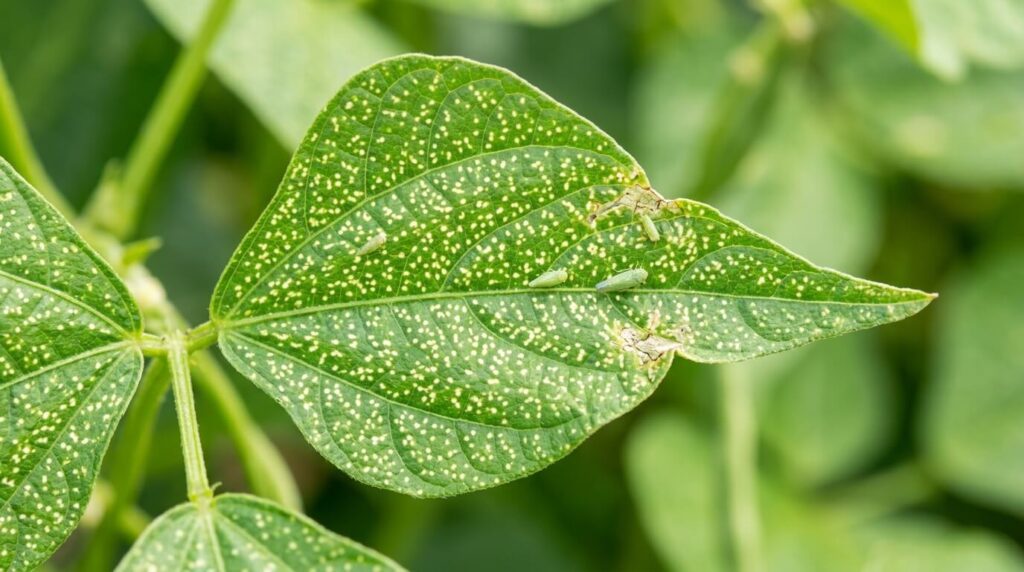
Common Signs of Leafhopper Damage on Autoflower Leaves
The earliest symptom of leafhopper feeding is stippling, tiny white or pale yellow dots scattered across leaf surfaces where sap has been removed. As infestations increase, these spots become more numerous, giving leaves a faded or mottled appearance.
Heavy feeding may eventually lead to hopperburn, where leaf margins turn yellow before becoming brown, dry, and brittle.
| Symptom | Cause | Severity |
| Fine white stippling | Individual feeding punctures | Mild |
| Yellow mottling | Progressive sap loss | Moderate |
| Leaf curling | Plant stress | Moderate |
| Hopperburn | Prolonged heavy feeding | High |
| Stunted development | Reduced photosynthetic capacity | High |
Leafhopper damage is often mistaken for nutrient deficiencies. However, nutrient problems usually follow leaf veins or affect older leaves first, while leafhopper feeding creates random stippling across multiple leaves.
How Leafhopper Damage Affects Autoflowers
Leafhopper feeding has the greatest impact during the seedling and vegetative stages, when autoflowers are building the structure that supports future flower production. Reduced photosynthesis during this period can slow canopy development and limit the number of flowering sites before the plant naturally enters bloom.
As damage progresses, growers may notice:
- Smaller fan leaves
- Reduced side branching
- Slower vegetative growth
- Less vigorous flower development
- Smaller buds and lower harvest potential
Photoperiod cannabis can often recover from early pest damage by extending its vegetative growth. Autoflowers transition into flowering automatically, leaving little opportunity to replace lost growth. Even moderate infestations can therefore have a greater impact on final plant size and yield.
During phenotype evaluations, we pay close attention to how well young plants maintain healthy leaf development after minor insect feeding. Even vigorous autoflower genetics perform best when early vegetative growth is protected, since lost leaf area during this stage is difficult to recover before flowering begins.
From a breeder’s perspective, protecting healthy fan leaves during early vegetative growth is far more important than trying to restore growth later. Once an autoflower begins flowering, it has very little opportunity to replace foliage that was damaged during the first few weeks of development.
Growers cultivating high yield autoflower seeds benefit from protecting healthy foliage throughout early development, as strong fan leaves provide the energy needed for vigorous flowering later in the lifecycle.
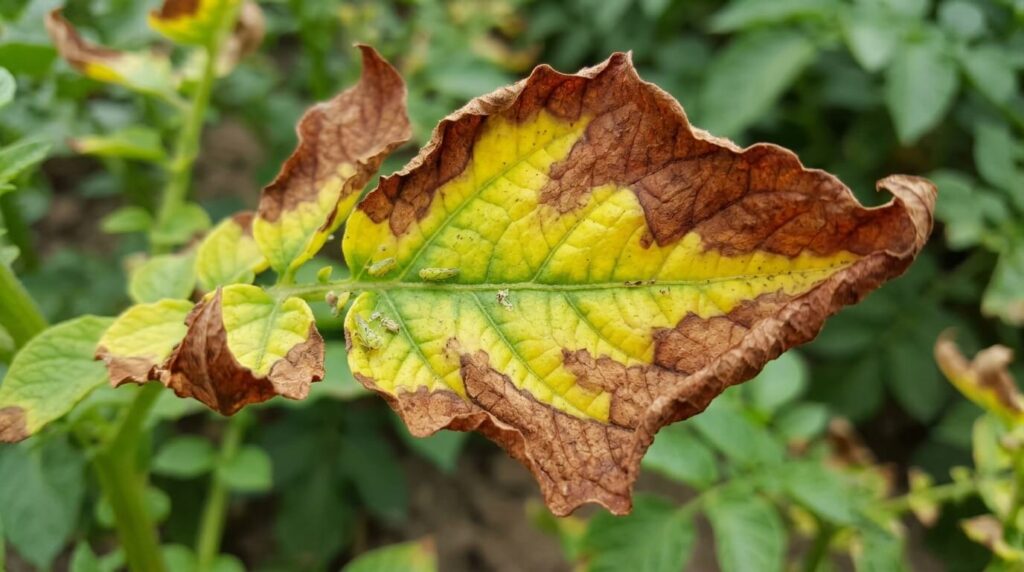
Can Leafhoppers Spread Diseases to Autoflower Cannabis?
In addition to direct feeding damage, certain leafhopper species are capable of transmitting plant pathogens while moving between host plants. Depending on the species, they have been associated with the spread of phytoplasmas, bacterial pathogens, and some plant viruses.
Although disease transmission is less common than feeding injury, outdoor autoflowers face a greater risk because leafhoppers frequently migrate between weeds, grasses, ornamental plants, vegetable crops, and cannabis. Plants already weakened by sap loss are also more susceptible to environmental stress and secondary infections, making early recognition of leafhopper damage an important part of maintaining healthy, productive autoflower crops.
How to Kill Leafhoppers on Autoflower Cannabis Effectively
The most effective way to control leafhoppers on autoflower cannabis depends on the size of the infestation and the plant’s stage of growth. Because autoflowers transition into flowering on a fixed schedule, treatments should remove pests quickly while minimizing stress to the plant and avoiding unnecessary residue on developing buds.
For most growers, combining mechanical, biological, and organic controls provides effective management without immediately resorting to chemical insecticides.
Manual and Mechanical Control
Small leafhopper populations can often be reduced without using sprays, particularly during the seedling and early vegetative stages.
Effective mechanical control methods include:
- Removing heavily infested leaves
- Hand-picking visible adults and nymphs
- Spraying the undersides of leaves with a firm stream of water
- Vacuuming insects from greenhouse-grown plants
Water sprays work by physically dislodging leafhoppers before they can continue feeding.
When using water sprays outdoors, focus on the undersides of the leaves early in the morning. Plants have time to dry as temperatures rise, while cooler conditions also make adult leafhoppers slower to escape.
Since adults are highly mobile, repeating this treatment every few days is often more effective than relying on a single application.
Organic Treatments for Autoflowers
Organic products remain the preferred option for most autoflower growers because they provide good control while reducing the risk of unwanted chemical residues.
| Treatment | Best Used During | Effectiveness |
| Water spray | Seedling / Vegetative | Moderate |
| Insecticidal soap | Active infestations before flowering | High |
| Neem oil* | Early vegetative growth only | High |
| Beneficial insects | Outdoor and greenhouse grows | High |
| Chemical insecticides | Severe infestations only | Very High |
*Avoid applying neem oil to flowering autoflowers, as oil residues can remain on developing buds and affect the quality of the finished harvest.
One advantage of catching leafhoppers early is that softer treatments such as insecticidal soap or beneficial insects are usually enough to keep populations below damaging levels. In our experience, growers who wait until flowering to act often have fewer treatment options because protecting developing buds becomes the priority.
Insecticidal soaps destroy the protective outer layer of soft-bodied insects, causing dehydration on contact. Thorough coverage of the leaf undersides is essential because this is where both adults and nymphs spend most of their time feeding.
Neem oil works by disrupting insect growth and feeding behaviour but is most appropriate before flowers begin forming.
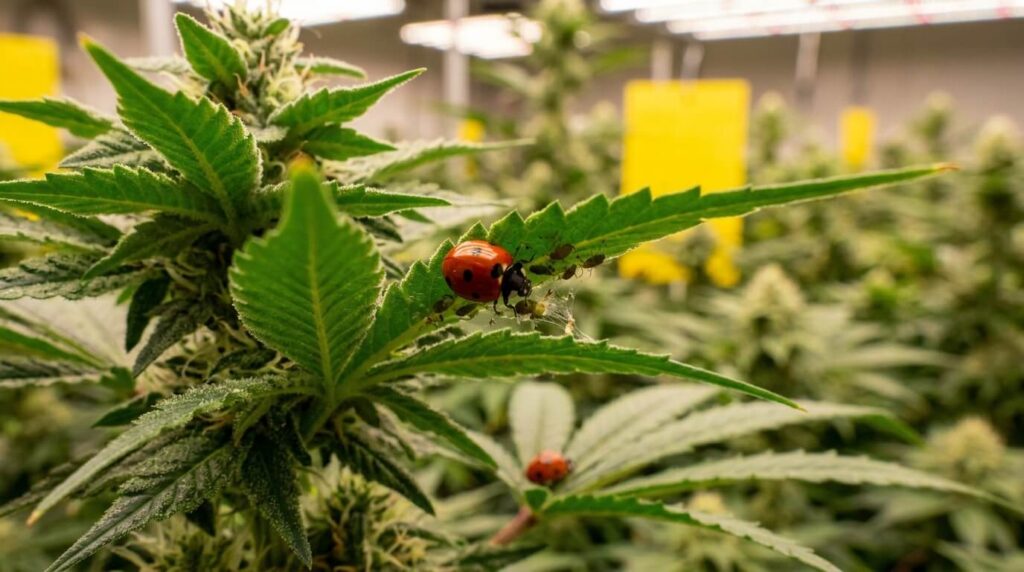
Using Beneficial Insects
Outdoor autoflowers benefit from natural predators that help suppress leafhopper populations throughout the growing season. Introducing beneficial insects early allows predator numbers to establish before leafhopper populations increase.
Common biological controls include:
- Ladybugs
- Green lacewings
- Minute pirate bugs
- Predatory spiders
Beneficial insects work best before leafhopper numbers become established. Waiting until plants are heavily infested often produces disappointing results because predators need time to build stable populations.
Because beneficial insects continue hunting after release, they provide longer-lasting biological control than contact sprays alone and fit well into low-input outdoor growing systems.
When Chemical Treatments Are Necessary
Chemical insecticides should only be considered when leafhopper populations are causing significant damage and lower-risk treatments have failed to provide adequate control.
If chemical control becomes necessary:
- Choose products approved for cannabis cultivation in your region.
- Follow all label instructions and harvest intervals.
- Rotate active ingredients to reduce the risk of resistance.
- Apply treatments during the early morning or evening to minimize plant stress and reduce exposure to pollinators.
Avoid spraying mature flowers whenever possible. Autoflowers often progress from vegetative growth to harvest in as little as 8–12 weeks, leaving relatively little time for spray residues to break down before harvest. Selecting the least invasive treatment that effectively controls the infestation helps protect both flower quality and the final harvest.
How to Prevent Leafhopper Infestations on Autoflower Cannabis
Preventing leafhoppers on autoflower cannabis is much easier than eliminating an established infestation. Because autoflowers have a short vegetative stage and transition into flowering automatically, they have less time to recover from pest pressure than photoperiod plants. The most effective strategy is to make your growing environment less attractive to leafhoppers before they reach your plants.
Start Prevention Before You Plant
Leafhoppers rarely appear without a nearby food source. Many species live on grasses, weeds, and ornamental plants before moving onto cannabis.
Before planting your autoflowers:
- Remove weeds and volunteer plants around the growing area.
- Clear away old plant debris that may shelter insects.
- Avoid placing containers next to long grass, hedgerows, or unmanaged vegetation.
- Choose an open, sunny location where good airflow keeps foliage dry and exposed.
Removing nearby host plants reduces the chances of leafhoppers migrating onto young autoflowers during the early growing season.
During outdoor breeding and seed production, we pay particular attention to weeds surrounding the crop rather than only the cannabis plants themselves. Leafhopper populations often build on nearby vegetation before moving onto autoflowers later in the season.
Protect Autoflowers Throughout Their Lifecycle
Preventing leafhoppers requires consistent monitoring rather than waiting for visible damage to appear. A simple routine carried out every few days is usually enough to catch changing pest pressure before it becomes a problem.
| Growth Stage | Prevention Priorities |
| Seedling | Keep the growing area weed-free and inspect nearby vegetation regularly. |
| Vegetative | Maintain balanced nutrition, encourage beneficial insects, and avoid overcrowding plants. |
| Pre-flower | Continue monitoring surrounding vegetation and minimize unnecessary plant stress. |
| Flowering | Preserve healthy foliage, maintain airflow, and keep weeds and plant debris under control. |
This routine helps reduce the likelihood of leafhopper populations becoming established during the autoflower’s short lifecycle.
Use Physical Barriers to Keep Leafhoppers Away
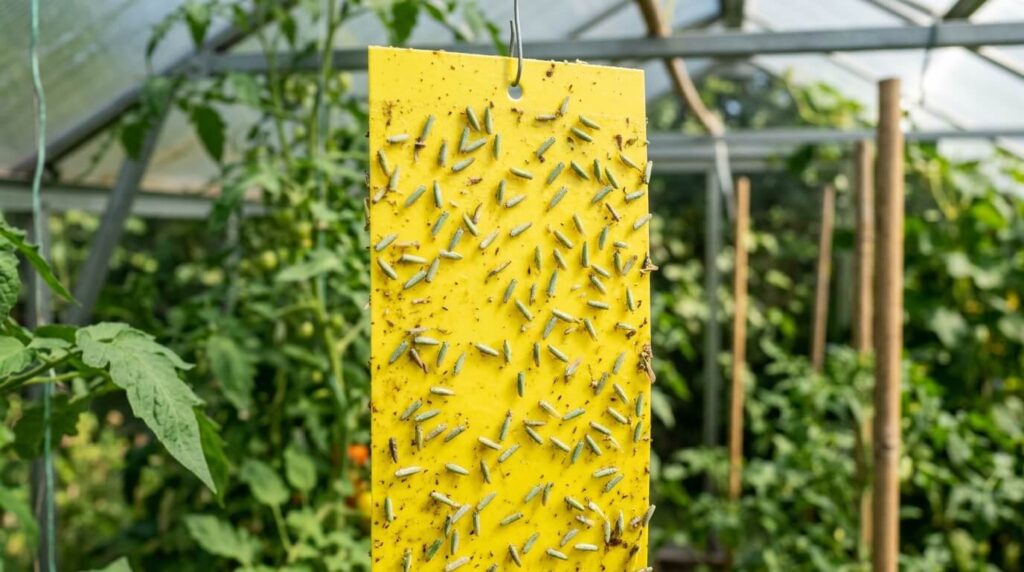
Physical barriers are one of the simplest ways to prevent leafhoppers from reaching autoflowers, particularly during periods of heavy insect activity.
Useful options include:
- Fine insect netting
- Row covers for young outdoor plants
- Greenhouse insect screens
- Yellow sticky traps to monitor adult activity
Sticky traps should be viewed primarily as an early warning tool. They help indicate when leafhopper numbers are increasing, allowing growers to act before larger populations develop.
Encourage Natural Predators
Creating a garden that supports beneficial insects provides ongoing protection throughout the season. Predators naturally feed on leafhopper eggs, nymphs, and adults, helping keep populations below damaging levels.
Growing companion plants such as sweet alyssum, dill, fennel, yarrow, and marigolds attracts lacewings, ladybugs, and minute pirate bugs while increasing overall garden biodiversity.
Reduce Conditions That Attract Leafhoppers
Healthy autoflowers are less likely to experience severe pest problems than plants already under stress.
To make your garden less attractive to leafhoppers:
- Avoid excessive nitrogen fertilization, which produces soft, nutrient-rich foliage favored by sap-feeding insects.
- Water consistently to reduce drought stress.
- Space plants so leaves are not touching, making it more difficult for insects to move between plants.
- Keep containers, beds, and surrounding areas free from weeds throughout the growing season.
For growers using fabric pots or containers, moving plants away from areas with heavy weed growth or nearby infestations can also reduce continued leafhopper pressure.
Combining clean growing practices, regular monitoring, physical barriers, and beneficial insects creates a prevention strategy that protects autoflowers from germination through harvest while reducing the need for repeated pest treatments later in the season.
Conclusion
Leafhoppers may be small, but they can significantly impact autoflower cannabis if left unmanaged. Their sap-feeding weakens foliage, slows growth, and can reduce flower production, especially when infestations occur early.
Because autoflowers have a fixed lifecycle, protecting plants from pests from germination through harvest is essential. Identifying leafhoppers early, recognizing symptoms, and applying appropriate treatments alongside consistent prevention helps maintain plant health and yield.
In our experience, leafhoppers rarely become a serious problem when plants are inspected consistently and early infestations are dealt with before flowering begins. For autoflowers, prevention is almost always more effective than recovery because every week of healthy vegetative growth contributes directly to final yield.
Frequently Asked Questions
Are Leafhoppers Harmful to Autoflower Cannabis?
Yes. Leafhoppers feed by extracting sap from leaves, reducing the plant’s ability to photosynthesize efficiently. While a few insects may cause only minor cosmetic damage, larger infestations can weaken autoflowers, limit plant development, and reduce flower production if left unmanaged.
Are Leafhoppers More Damaging to Autoflowers Than Photoperiod Cannabis?
They can be. Photoperiod cannabis often has additional time to recover from early pest damage by extending its vegetative growth. Autoflowers flower on a fixed schedule, meaning stress during the seedling or vegetative stage can have a greater impact on final plant size and yield.
What Does Leafhopper Damage Look Like on Autoflowers?
The earliest signs are small white or pale yellow speckles, known as stippling, scattered across fan leaves. As feeding continues, leaves may yellow, curl, or develop brown margins known as hopperburn. Heavy infestations can also slow overall plant growth.
How Do You Get Rid of Leafhoppers on Autoflowers Naturally?
Natural control methods include spraying plants with water, applying insecticidal soap during vegetative growth, and encouraging beneficial insects such as ladybugs and lacewings. Organic treatments are generally preferred because they reduce pest numbers without leaving significant residues on plants.
Can Autoflowers Recover From Leafhopper Damage?
Mild infestations are often recoverable if controlled quickly. However, because autoflowers have a limited vegetative period, severe or prolonged feeding during early growth can permanently reduce plant size and harvest potential.
Where Do Leafhoppers Hide on Autoflower Plants?
Leafhoppers are usually found on the undersides of fan leaves, particularly within sheltered areas of the canopy. Adults and wingless nymphs often gather along the leaf veins where they feed on plant sap.
Can Leafhoppers Spread Diseases to Autoflower Cannabis?
Some leafhopper species are capable of transmitting plant pathogens, including phytoplasmas and certain bacterial diseases, as they move between host plants. Although feeding damage is usually the primary concern, disease transmission can increase the overall impact of an infestation.
Can You Spray Neem Oil on Flowering Autoflowers?
Neem oil is generally best reserved for the seedling and vegetative stages. Once autoflowers begin producing flowers, oil-based sprays can leave residues on buds, so alternative treatments such as beneficial insects or insecticidal soap (where appropriate and according to the product label) are often preferred.
How Can You Prevent Leafhoppers on Autoflowers?
The best prevention strategy combines good garden hygiene, weed control, balanced nutrition, beneficial insects, and regular inspections throughout the growing season. Reducing nearby host plants and maintaining healthy growing conditions makes autoflowers less likely to experience severe infestations.
How Often Should You Inspect Autoflowers for Leafhoppers?
Outdoor autoflowers should be inspected every two to three days during the seedling and vegetative stages, especially during warm, dry weather when leafhopper activity is highest. Frequent inspections make it easier to spot early pest activity before populations become established.


