
How to Avoid Cannabis Nutrient Burn
Cannabis nutrient burn refers to when you over-fertilize your plants. Several variables can cause nutrient burn, so in this article, we explain in detail what cannabis nutrient burn is, why it happens in cannabis plants, how to prevent it, and the importance of pH and EC to allow you to achieve the ultimate nutrient feeding schedule and grow the healthiest crops possible!
What Is Cannabis Nutrient Burn?
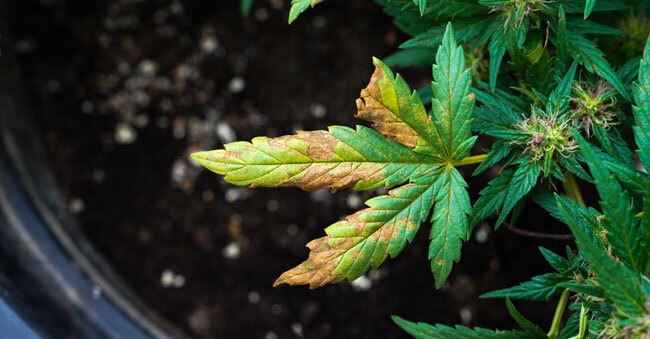
Have you ever noticed that one day, your plants look fine with a lush green vibrancy, and the next day, the leaves are discolored and have curly or crispy edges? Well, that is a result of overfeeding them. Below is a breakdown of what exactly causes nutrient burn in the first place and how you can avoid this situation.
Understanding the causes of nutrient burn in cannabis plants
Cannabis plants transpire water through their leaves. Nutrients contain dissolved salts; however, when there is a buildup of excess nutrients in the plant’s tissue, the leaves become damaged, affecting their health and vitality. So, when there is too much food for the plants to process, they become burnt and discolored.
How do excess nutrients damage your plant’s roots and leaves
Over-fertilizing a cannabis plant at any stage of its life cycle will have adverse effects. As the roots and leaves of a plant are where water is absorbed and transpired from, they become damaged.
This results in a negative impact on root growth and development, and can cause the appearance of leaves to become brittle, pale, feel paper-thin, and induce leaf chlorosis (yellowing of leaves).
Over-fertilization impacts pH levels and causes tip burn, causing the edges and sides of a healthy leaf to become rusty brown, dry, and crispy. Below is a short list of common signs associated with nutrient burn.
Common signs of nutrient burn: yellow or brown leaf tips, curling, and crispy edges
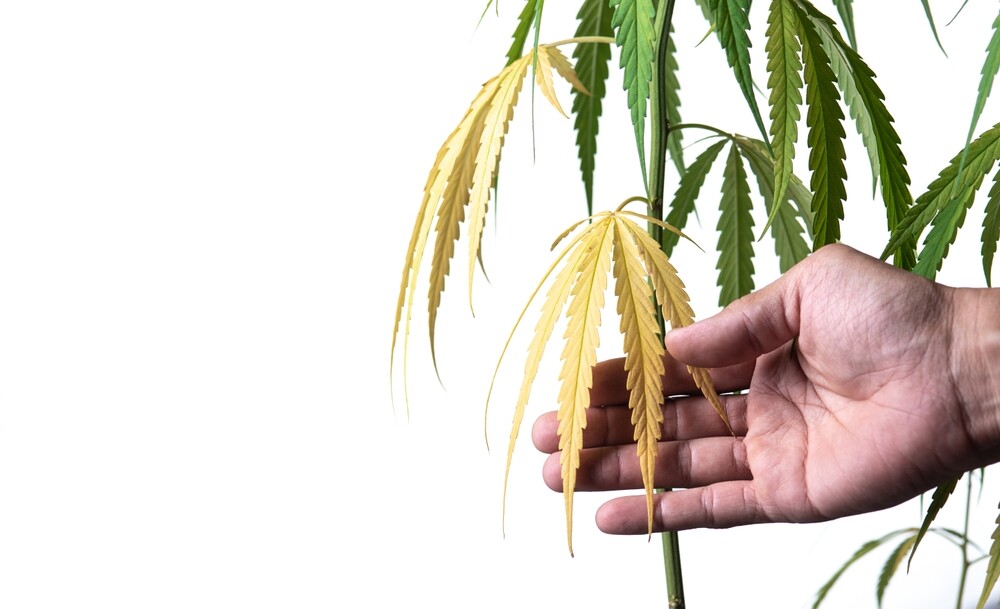
- Healthy green leaves slowly lose color, and the green pigment fades to a pale yellow.
- The tips and sides of the plant leaves will be metallic brown and rusty.
- Leaves begin to curl and claw downwards, which is also associated with overwatering.
- The ends of the leaves will become crispy to the touch and have a burnt characteristic.
- Nitrogen toxicity will result in the leaves having an overly dark and shiny appearance.
Why Nutrient Burn Happens
As a beginner-level grower, over-fertilizing your cannabis plants is easy to do, and sometimes the soil that you use can be too hot, meaning it contains too many nutrient salts. Below is an explanation of why nutrient burn happens and how to prevent it.
Overfeeding during different stages of growth (seedling, veg, flower)
We all want big, bushy and robust plants, and when it comes to growing cannabis, less is more! Unfortunately, an overzealous grower can unknowingly overfeed their plants. Chemical-based soils are the number one candidate for causing nutrient burn with seedlings or clones.
Cannabis plants are most sensitive and delicate during the seedling stage. They require only low PPFD levels, small amounts of primary and secondary nutrients, and trace elements. Aim for an EC level between 0.5 and 0.8 to stay in the comfort zone and avoid nutrient burn.
When cannabis plants enter the vegetation stage, increasing the EC to 0.8 – 1.2 is the sweet spot. Anything over this level will be the main culprit and cause nutrient burn symptoms to appear quickly. Another reason may be that the PPFD is below the optimal level, and cannabis plants simply cannot use the nutrients fast enough.
Inexperienced growers are most likely to over-fertilize their crop during the flowering stage. We all want big, fat, and frosty buds, but too many nutrients will promote nutrient burn. Based on my experience, the ideal EC level should be between 1.2 and 1.8 during the flowering stage.
Misuse of synthetic nutrients, boosters, and feeding schedules
Synthetic nutrients and flowering boosters are fast-acting; however, when an issue arises using them, cannabis plants can display irreversible damage, ultimately affecting the growth rate and development and significantly reducing yields. Feeding schedules are there for a reason, so discarding the recommended ratio of nutrient solution can cause a buildup of dissolved salts in the root zone, causing a ripple effect in the leaves.
Poor pH balance and nutrient lockout are contributing factors
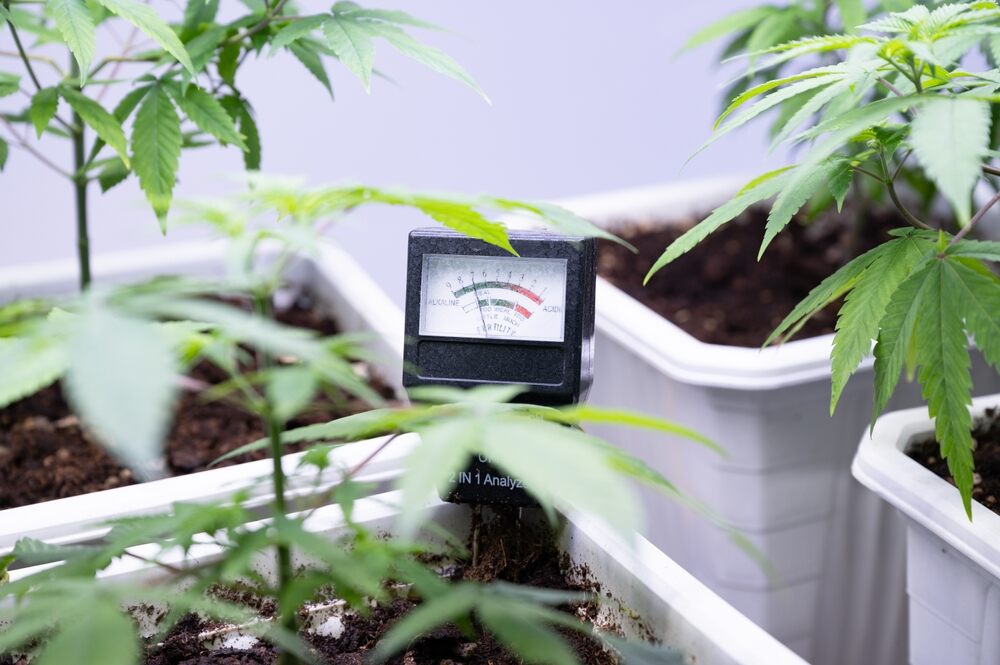
Proper pH management is the difference between cannabis plants having access to a full range of nutrients or being locked out and suffering from leaf burn and over-fertilization.
- Organically grown cannabis prefers a pH level of 5.0 – 7.0.
- Hydroponic cannabis plants require a lower PH range between 5.5 and 6.5.
How to Prevent Nutrient Burn Before It Starts
Watching your cannabis plants suffering from nutrient burn due to over-fertilization can be heartbreaking. Knowing how to prevent it from happening in the first place will be the best way to maintain a healthy and happy crop. Below is a breakdown of how prevention is the cure!
Start with light feeding: less is more, especially for seedlings and autoflowers
One of my favourite mottos when growing top-shelf cannabis is ‘less is more ‘. This is especially true when giving your plants the best start in life before they prepare for the marathon ahead. Stick with a low E.C level (0.5 and 0.8) with photoperiod and auto-flowering seedlings, and beware of chemical-based hot soils that will burn the roots of your plants.
Understand your plant’s specific needs at each stage of growth
Feeding your cannabis plants and second-guessing which amount of nutrient solution works best is one way to end up with nutrient burn. The easiest way to overcome this issue is to thoroughly understand a cannabis plant’s pH and EC requirements and follow the nutrient manufacturer’s feed chart guide exactly.
| Lifecycle Stage | Lighting hours | E.C Level | pH Level |
| The Seedling Stage (weeks 1-2) | 18/6 | 0.5 – 0.8 | Organic – 5.0 – 7.0Hydroponic – 5.5 – 6.5 |
| The Vegetation stage | 18/6 | 0.8 – 1.2 | Organic – 5.0 – 7.0Hydroponic – 5.5 – 6.5 |
| The Flowering Stage | 12/12 | 1.2 – 1.8 | Organic – 5.0 – 7.0Hydroponic – 5.5 – 6.5 |
Use EC and PPM meters to monitor nutrient concentration accurately
Using digital meters to check the pH and EC level of your water source or nutrient solution is the best way to know exactly where you stand. Digital meters will give you a decimal value reading, produce a consistent amount for every feeding, and provide your crop with an optimal feeding schedule, preventing nutrient burn and over-fertilization. pH Up and Down products should also be used to adjust the pH levels accordingly.
Flush your growing medium regularly to prevent salt buildup
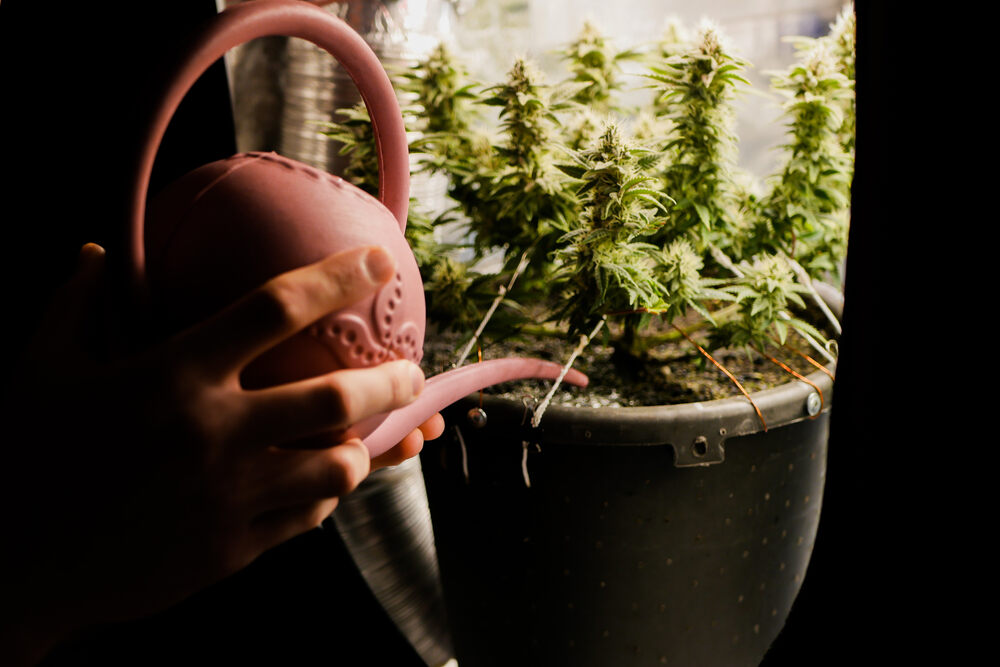
Flushing is the process of washing the growing medium with pH-adjusted water. This process breaks down undissolved salts that may have accumulated around the roots. Once your plants have recovered from overfertilization, try using half the nutrients as before until plant health and vigour have been restored.
My favourite way to speed up the flushing process is to use 5 ml per liter of enzymes. Good luck discovering the correct balance when feeding your plants, and always remember that less is more!