
Slugs and Snails on Autoflower Cannabis Plants: Identification, Prevention and Control
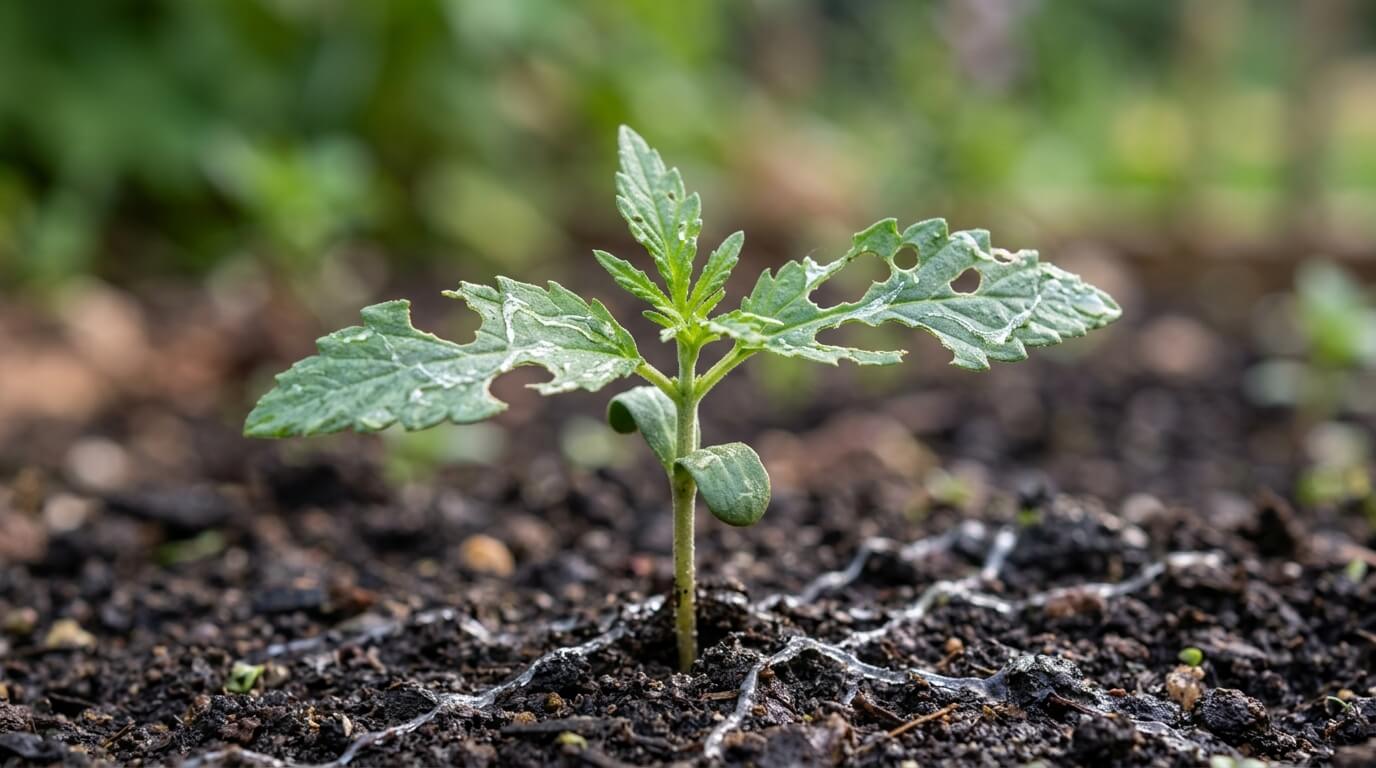
Slugs and snails can cause serious damage to autoflower cannabis plants, particularly during the seedling and early vegetative stages when leaves and stems are still soft and vulnerable. Because autoflowers have a limited lifecycle and less time to recover from stress, even a few nights of feeding damage can affect plant development and reduce final yields. These nocturnal pests are attracted to damp soil, excess moisture, and shaded growing conditions, often leaving growers wondering why seedlings have disappeared or holes have suddenly appeared in their leaves. While slugs and snails are most common in outdoor autoflower grows, they can also appear indoors through contaminated growing media or high humidity. Fortunately, with early identification, proper prevention, and a few simple organic control methods, most infestations can be managed before they become a serious problem.
Article Insights
- Slugs and snails typically feed on cannabis plants at night, with damage often appearing within a single evening.
- Young cannabis seedlings and vegetative plants are the most vulnerable because their tissue is softer and easier to chew.
- Irregular holes in leaves, slime trails, and missing seedlings are common signs of slug or snail activity.
- Damp soil, high humidity, excess mulch, and poor airflow commonly increase the risk of infestations.
- Organic controls such as beer traps, copper tape, and diatomaceous earth are commonly used to reduce slug populations.
- Watering cannabis plants earlier in the day and keeping grow areas clean can help prevent long-term infestations.
Understanding Slugs and Snails on Cannabis Plants
Slugs and snails are soft-bodied mollusks that thrive in cool, damp conditions where moisture levels remain consistently high. Cannabis plants, especially seedlings and young vegetative plants, provide an easy food source because the leaves are soft, nutrient-rich, and simple to chew through.
While most growers associate these pests with outdoor cannabis gardens, I have also seen infestations appear inside grow tents and greenhouse environments. Indoor conditions with excessive humidity, damp trays, and overwatered soil can quickly turn into ideal hiding spots for slugs and snails.
The challenge with these pests is that they are nocturnal feeders. During the day, they stay hidden beneath pots, under mulch, inside drainage trays, or beneath dead organic material. At night, they emerge and feed aggressively on cannabis foliage while also leaving behind visible slime trails.
Many beginner growers underestimate how quickly slug damage can affect autoflower cannabis plants during the seedling stage. Unlike photoperiod strains, autoflowers have a limited vegetative period and cannot simply be kept in veg longer to recover from early stress. When slugs remove cotyledons or damage young leaves, the reduction in photosynthesis can slow development during a critical growth window. This is why protecting autoflower seedlings from pests is especially important during the first few weeks after germination.
Are slugs and snails the same and why both target cannabis
Slugs and snails belong to the same mollusk family, but the key difference is that snails carry external shells while slugs do not. Their appearance differs slightly, although their feeding behavior is almost identical from a cannabis cultivation perspective.
Both pests target cannabis plants because:
- Cannabis leaves are soft and moisture-rich
- Young seedlings lack defensive strength
- Damp soil environments attract mollusks naturally
- Organic mulch and plant debris provide shelter
I personally treat slugs and snails as the same pest problem because the damage patterns, feeding habits, and prevention methods are nearly identical.
| Pest | Main Difference | Cannabis Threat Level |
| Slugs | No shell | Very high for seedlings |
| Snails | Protective shell | Moderate to high |
| Both | Nocturnal feeders | Capable of rapid overnight damage |
Do Do Slugs and Snails Eat Autoflower Cannabis Plants?
Yes. Slugs and snails readily feed on autoflower cannabis plants, particularly during early growth. Seedlings are most vulnerable because even minor feeding damage can affect development during a critical stage of the plant’s lifecycle.
The areas most commonly targeted include:
- Cotyledons
- Emerging seedling leaves
- Young vegetative growth
- Low-hanging fan leaves
- Freshly rooted clones
Several environmental factors increase the likelihood of an infestation:
| Attraction Factor | Why It Increases Risk |
| Overwatered soil | Creates damp feeding conditions |
| High humidity | Prevents dehydration |
| Dead leaves and mulch | Provides shelter |
| Poor airflow | Increases moisture retention |
| Dense vegetation | Creates shaded hiding areas |
I often describe slugs and snails as moisture hunters. When an autoflower grow remains damp for extended periods, conditions become increasingly attractive for feeding and reproduction.
When Are Slugs and Snails Most Active?
Slugs and snails are most active after sunset, when cooler temperatures and darkness reduce the risk of dehydration. This is why many growers discover damage seemingly overnight.
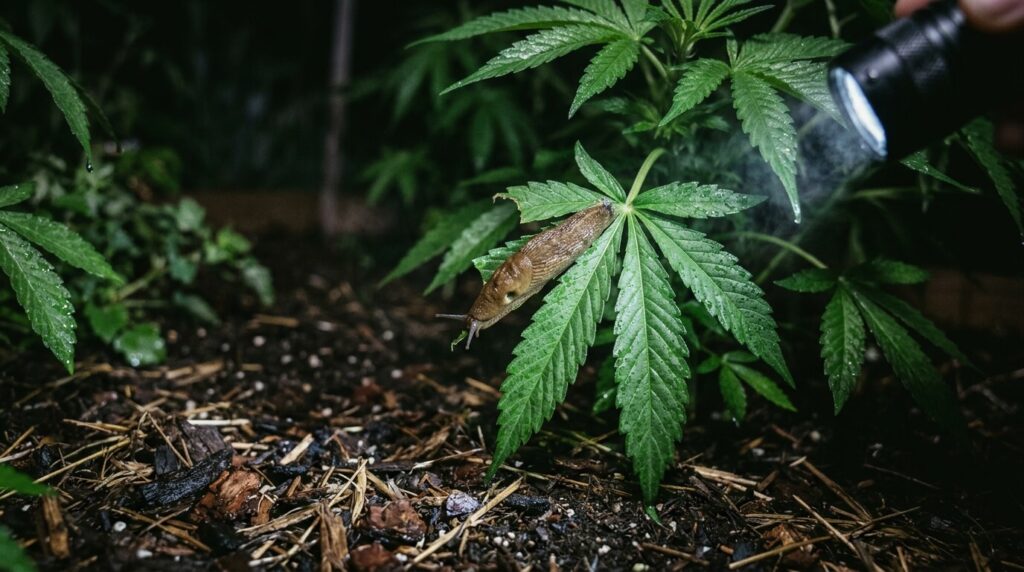
If you suspect slug activity, inspect your autoflower plants with a flashlight after dark. Nighttime inspections are often the fastest way to confirm an infestation before significant damage occurs.
These pests thrive in:
- Cool nighttime temperatures
- Humid grow environments
- Wet growing media
- Shaded or low-light areas
Watering practices can also influence pest activity. Watering autoflower plants late in the evening keeps the root zone damp throughout the night, creating ideal feeding conditions while increasing the risk of fungal problems. Watering earlier in the day allows excess moisture to dissipate before darkness arrives, making the grow environment less attractive to slugs and snails.
What Does Slug Damage Look Like on Autoflower Cannabis Plants?
One of the most common mistakes new growers make is confusing slug damage with other pest problems. Correct identification is important because treatment methods differ significantly between mollusks, insects, and mites.
On autoflower cannabis plants, slug and snail damage often appears suddenly after wet weather, heavy watering, or humid nights. Because young autoflowers have a limited window to establish healthy growth, even minor feeding damage can become more significant than many growers realize.
Common Signs of Slug Damage on Autoflowers
Slug damage is usually easy to identify once you know what to look for.
Common symptoms include:
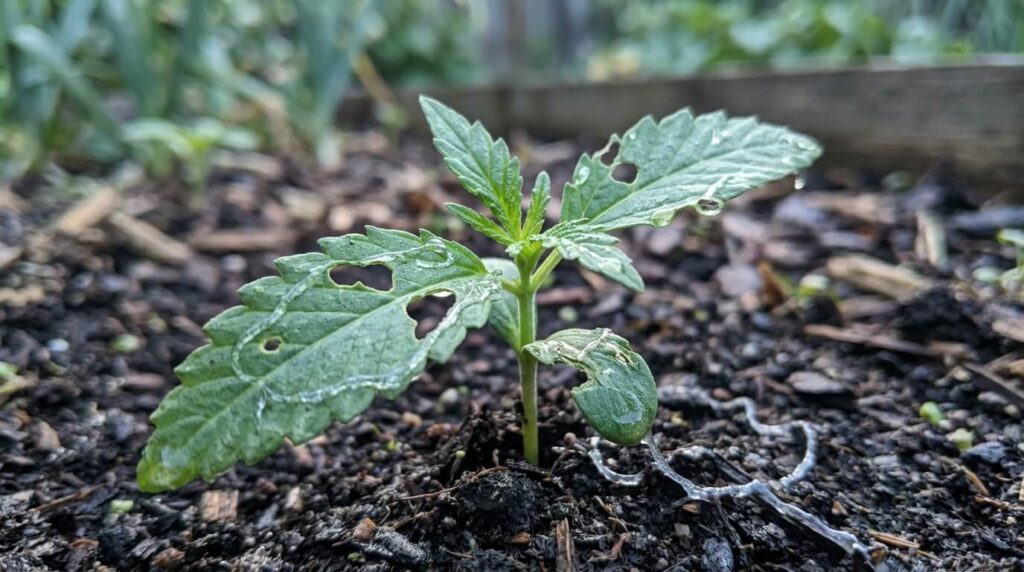
- Large irregular holes in leaves
- Ragged or chewed leaf edges
- Missing cotyledons on seedlings
- Silvery slime trails on leaves, pots, or growing media
- Damaged stems near the soil surface
The most reliable sign is the presence of slime trails. Unlike most cannabis pests, slugs and snails leave behind a visible mucus residue that often remains noticeable the following morning.
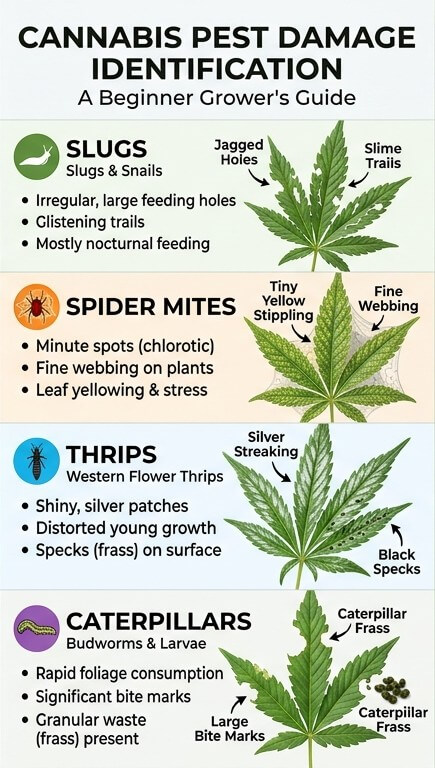
| Symptom | Likely Cause |
| Large jagged holes | Slugs or snails |
| Tiny stippling dots | Spider mites |
| Silver streaks | Thrips |
| Round bite marks with frass | Caterpillars |
| Slime trails | Slugs or snails |
In my experience, growers frequently mistake slug damage for caterpillar feeding. However, visible slime residue almost always points directly to slugs or snails.
How Serious Can Slug Damage Become?
Slugs can destroy autoflower seedlings surprisingly quickly. A single slug may only cause cosmetic damage, but larger populations can devastate young plants within a few nights.
I have seen autoflower seedlings completely stripped of their first leaves overnight, while others suffered enough stem damage to stunt growth for the remainder of their lifecycle.
Severe infestations may result in:
- Missing seedlings
- Collapsed stems
- Slowed vegetative development
- Reduced plant vigor
- Lower final yields
Autoflowers are particularly vulnerable because they do not have the luxury of extended vegetative recovery. While a photoperiod plant can often regain lost growth through additional veg time, an autoflower continues progressing toward flowering regardless of damage sustained during its early stages.
Can Slugs and Snails Spread Disease?
Physical feeding damage is only part of the problem. As slugs and snails move through a grow area, they can transfer fungal spores, bacteria, and contaminated mucus across plant surfaces.
This may increase the risk of:
- Powdery mildew
- Botrytis (bud rot)
- Root-zone contamination
- Stem infections
The wounds created by feeding also provide potential entry points for pathogens. Combined with the damp conditions that slugs prefer, this can create an environment where secondary problems develop alongside the infestation itself.
For autoflower growers, preventing slug damage early is often easier than trying to recover from both pest pressure and disease issues later in the grow cycle.
How to Identify Slugs and Snails in Indoor and Outdoor Autoflower Grows
Slugs and snails are most commonly associated with outdoor autoflower grows, where rainfall, damp soil, mulch, and nighttime moisture create ideal feeding conditions. However, indoor grow tents, greenhouses, and grow rooms can also develop infestations when humidity levels remain high or contaminated materials are introduced into the grow space.
From my experience, many growers do not realise they have a slug problem until significant damage has already occurred. Knowing what signs to look for can help you identify an infestation before young autoflower plants suffer serious stress.
Signs of Outdoor Slug and Snail Activity
Outdoor autoflower plants are particularly vulnerable during the seedling stage, especially after periods of rain or high humidity.
Common signs include:
- Fresh slime trails on leaves, pots, or surrounding surfaces
- New feeding damage appearing overnight
- Large holes in lower leaves
- Missing seedling leaves or cotyledons
- Slugs hiding beneath mulch, boards, or garden debris
If damage seems to appear suddenly after wet weather, slugs and snails should be among the first pests you investigate.
Signs of Indoor Slug Activity
Indoor infestations are less common but can still occur, particularly when slugs enter through contaminated potting soil, outdoor plants, drainage systems, or open grow room vents.
Signs of indoor slug activity include:
- Silvery slime trails around pots or trays
- Feeding damage concentrated near the base of plants
- Damage that worsens after watering
- Slugs hiding beneath saucers or drainage trays
- Unexplained seedling damage despite a sealed grow environment
Because indoor grow rooms often maintain warm temperatures and consistent moisture levels, even a small slug population can survive for extended periods if left unnoticed.
Common Hiding Places
Slugs and snails spend most of the day hiding in cool, damp locations before becoming active after sunset.
The first places I inspect during an infestation are:
- Beneath pots and saucers
- Inside drainage trays
- Under coco coir, mulch, or soil debris
- Around standing water
- Along shaded edges of grow spaces
How to Confirm a Slug or Snail Infestation
The easiest way to confirm slug activity is with a nighttime inspection.
I use the following process:
- Check autoflower plants after dark using a flashlight
- Look for fresh slime trails the following morning
- Inspect damp soil surfaces and container bases
- Place damp cardboard near plants overnight
If slugs are present, they often gather beneath the cardboard by morning. This simple method can quickly confirm an infestation and help estimate how many pests are present before damage becomes severe.mate population size.
How to Get Rid of Slugs on Autoflower Cannabis Plants Naturally
If slugs are already feeding on your autoflower cannabis plants, the goal is to stop the damage immediately while preventing new pests from returning. In my experience, the most effective approach combines manual removal, trapping, physical barriers, and environmental control. Relying on a single method rarely solves the problem long term.
Because autoflowers have a limited vegetative period, even a few nights of feeding damage can affect plant development. I recommend taking action as soon as you notice slime trails, missing seedling leaves, or holes appearing overnight.
Step 1: Remove Active Slugs and Snails
The fastest way to reduce damage is by physically removing slugs from your grow area.
I always start with a nighttime inspection because slugs are most active after sunset. Using a flashlight, check leaves, stems, containers, and the soil surface around your autoflower plants.
Pay particular attention to:
- Seedlings and young vegetative plants
- The base of pots and containers
- Under trays and saucers
- Mulch, coco debris, and garden waste
- Damp shaded areas
For small outdoor grows and indoor grow tents, manual removal can dramatically reduce feeding pressure within a few days.
Step 2: Use Traps to Reduce Populations
After removing visible slugs, I use traps to capture any remaining pests hiding nearby.
| Trap Method | How It Works |
| Beer traps | Attract and drown slugs |
| Fruit bait traps | Draw slugs away from plants |
| Damp boards | Create daytime hiding spots |
| Grapefruit halves | Act as natural shelter traps |
I usually place traps around the perimeter of the grow area rather than directly beside autoflower plants. This helps intercept slugs before they reach vulnerable seedlings.
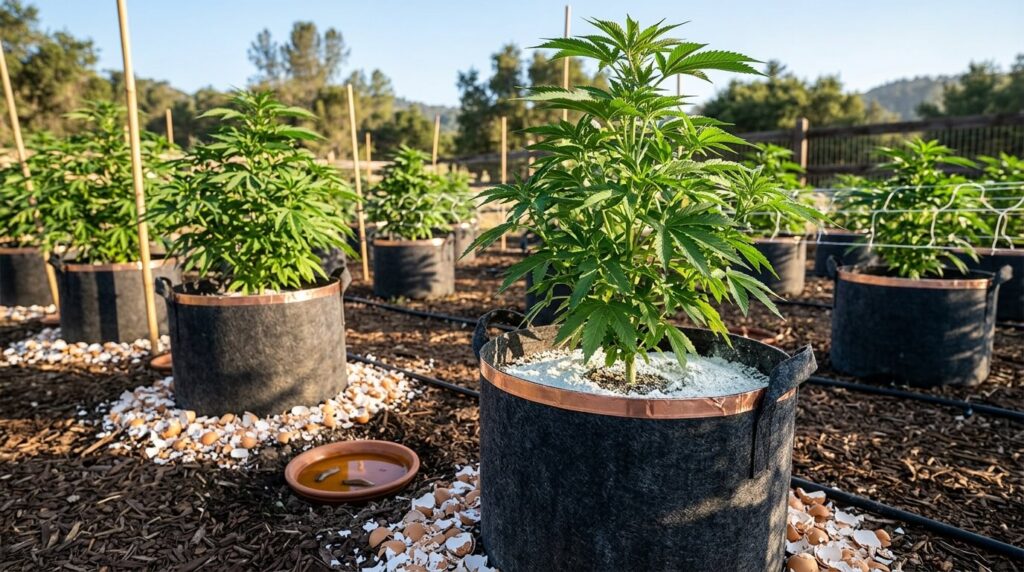
Step 3: Protect Autoflower Plants with Barriers
Once the active population is reduced, barriers help prevent further feeding.
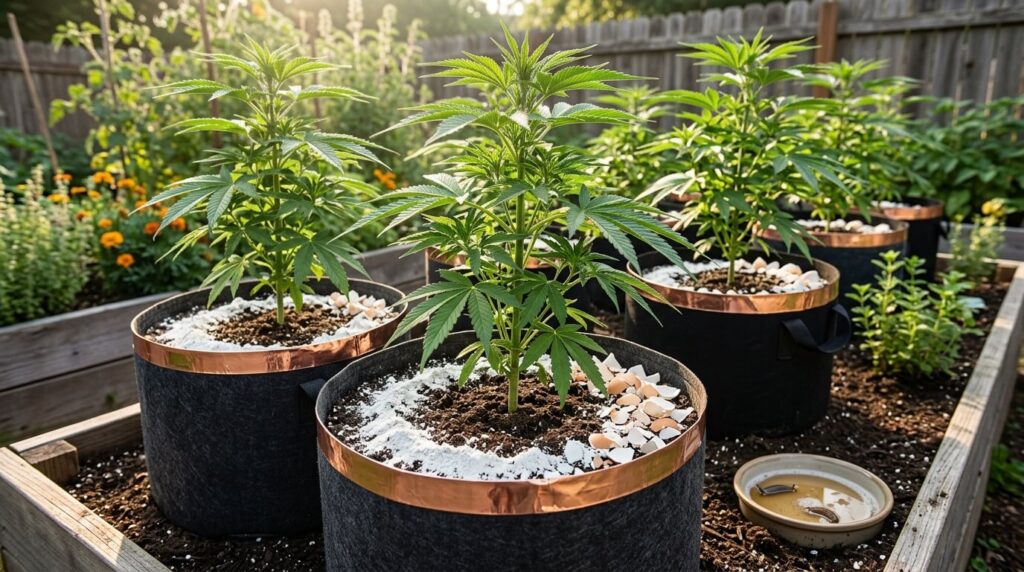
The most effective options I have used include:
| Barrier | Effectiveness | Notes |
| Copper tape | High | Excellent for pots and raised beds |
| Diatomaceous earth | Moderate | Works best when kept dry |
| Crushed eggshells | Moderate | Organic deterrent |
| Gravel borders | Moderate | Reduces movement |
| Wool pellets | Moderate | Absorb moisture and create obstacles |
For container-grown autoflowers, copper tape around pots combined with dry diatomaceous earth often provides the best protection.
Step 4: Remove Conditions That Attract Slugs
Many growers remove the pests but forget to remove the conditions that attracted them in the first place.
Slugs thrive in damp, sheltered environments. To make your grow less attractive, I recommend:
- Removing dead leaves and plant debris
- Improving airflow around plants
- Eliminating standing water
- Cleaning drainage trays regularly
- Avoiding excessive mulch around seedlings
- Watering earlier in the day
Reducing moisture levels is one of the most effective long-term controls because slugs depend on damp conditions to survive.
Step 5: Prevent Future Infestations
Preventing slugs is far easier than dealing with a large infestation later in the season.
For autoflower growers, I focus on prevention from germination onwards because seedlings are the most vulnerable stage of growth.
| Prevention Method | Main Benefit |
| Morning watering | Reduces overnight moisture |
| Improved airflow | Lowers humidity |
| Clean grow areas | Removes hiding places |
| Raised containers | Limits access |
| Proper drainage | Prevents soggy growing media |
Installing barriers before seedlings emerge can often prevent infestations before they start.y.
Are Slug Pellets Safe for Autoflower Cannabis Plants?
Slug pellets can be effective, but not all products are suitable for cannabis cultivation.
| Pellet Type | Safety Level | Recommendation |
| Metaldehyde | Low | Avoid |
| Iron phosphate | Higher | Use according to manufacturer instructions |
I avoid metaldehyde pellets because they can harm pets, wildlife, and beneficial organisms. For most autoflower growers, physical barriers, traps, and environmental management provide a safer and more sustainable solution.
Indoor vs Outdoor Autoflower Slug Prevention
Indoor and outdoor autoflower grows require slightly different approaches.
| Grow Type | Main Prevention Focus |
| Indoor grows | Sanitation and humidity control |
| Outdoor grows | Barriers and moisture management |
| Greenhouses | Ventilation and drainage |
Outdoor growers can also benefit from natural predators such as frogs, toads, ground beetles, and birds, while indoor growers should focus on cleanliness, drainage, and humidity reduction.
Conclusion
Slugs and snails can cause serious damage to autoflower cannabis plants, particularly during the seedling and early vegetative stages when growth is most vulnerable. Because autoflowers have a limited lifecycle and cannot be kept in vegetative growth to recover from setbacks, even a few nights of feeding damage can affect plant development and final yields.
From my experience as a grower, the most effective approach is to identify problems early and combine several control methods rather than relying on a single solution. Nighttime inspections, manual removal, traps, copper barriers, and proper moisture management can dramatically reduce slug pressure before it becomes a major issue.
The key to success is prevention. By keeping your grow area clean, reducing excess moisture, and protecting seedlings from the start, you can avoid most infestations altogether. Understanding how slugs behave and what attracts them makes it much easier to protect autoflower plants from germination through harvest.
Frequently Asked Questions
Are Slugs and Snails More Common in Outdoor or Indoor Autoflower Grows?
Slugs and snails are far more common in outdoor autoflower grows because rainfall, damp soil, mulch, and shaded areas create ideal feeding conditions. However, indoor infestations can still occur through contaminated potting soil, outdoor plants, drainage systems, or excessive humidity inside grow tents and grow rooms.
Are Autoflower Plants More Vulnerable to Slug Damage?
Slugs and snails are not necessarily more attracted to autoflower cannabis plants, but the damage they cause can be more significant. Because autoflowers progress through their lifecycle according to age rather than light schedules, they have less time to recover from early feeding damage. Seedling and vegetative-stage protection is therefore especially important.
Can Slugs and Snails Damage Autoflowers During Flowering?
Yes. Although slugs and snails prefer young vegetative growth, they can also feed on sugar leaves and lower buds during flowering. Outdoor autoflower plants growing in humid conditions are most at risk, particularly when dense foliage and damp soil create favourable feeding conditions.
How Do I Know if Slugs Are Eating My Autoflowers?
The most common signs include large irregular holes in leaves, ragged leaf edges, missing seedling leaves, and silvery slime trails on pots or foliage. Because slugs feed primarily at night, damage often appears suddenly between evening and morning inspections.
What Is the Fastest Way to Get Rid of Slugs on Autoflower Plants?
The quickest approach is to combine manual removal with trapping methods. Check plants after dark using a flashlight, remove any visible slugs, and place beer traps or shelter traps nearby. Following up with copper barriers and improved moisture control helps prevent the infestation from returning.
Is Salt Safe to Use Around Autoflower Cannabis Plants?
No. Although salt kills slugs and snails, it can also damage soil structure, harm beneficial microbes, and negatively affect plant roots. Organic control methods such as copper barriers, diatomaceous earth, and trapping systems are safer options for autoflower growers.
Are Slug Pellets Safe for Autoflower Cannabis Plants?
Iron phosphate slug pellets are generally considered safer than metaldehyde-based products and are less harmful to wildlife and pets. However, they should still be used carefully and according to the manufacturer’s instructions. Many growers prefer barriers and traps before resorting to pellet-based treatments.
Can Slugs and Snails Kill Autoflower Seedlings?
Yes. Severe infestations can destroy autoflower seedlings within a single night by consuming cotyledons, leaves, and stems. Because autoflowers have a limited vegetative period, early seedling damage can reduce plant size, slow growth, and impact final yields if not addressed quickly..


