
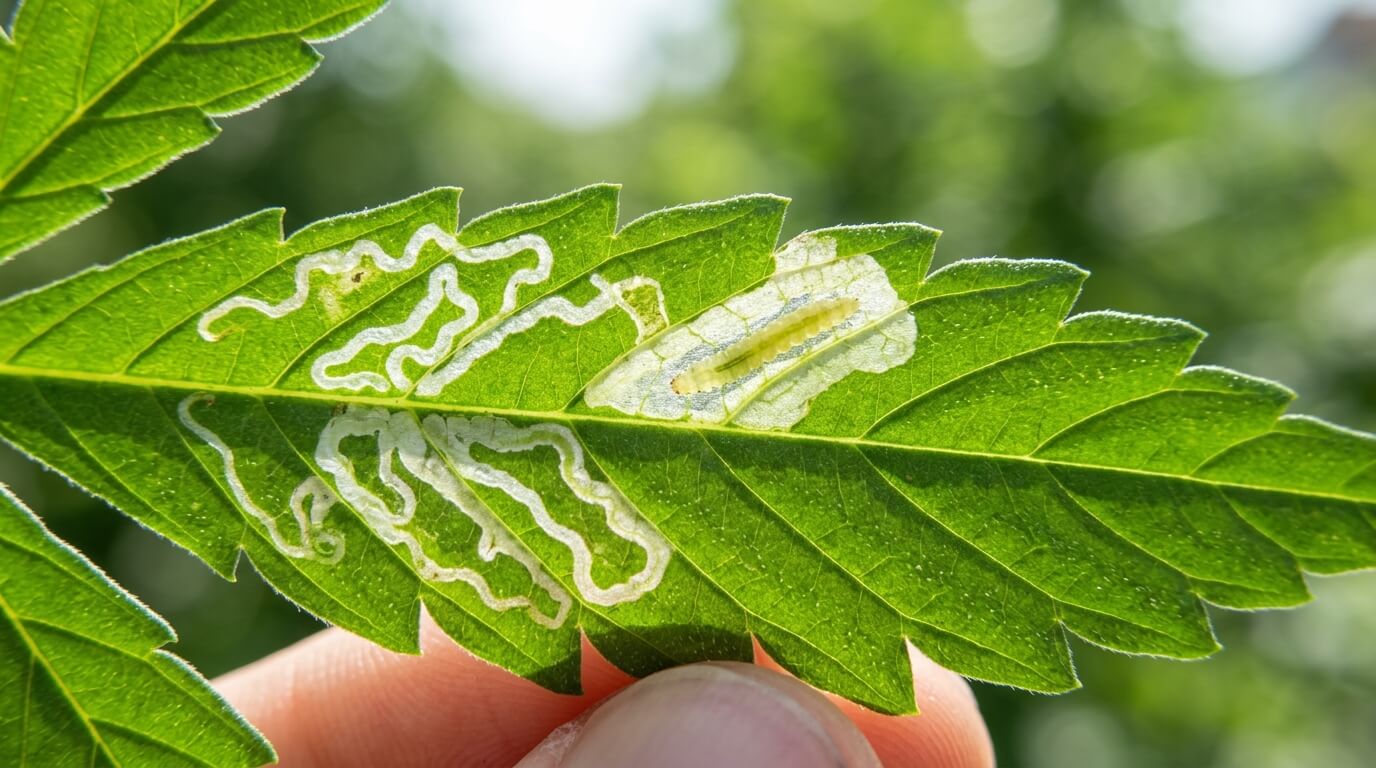
Cannabis Leaf Miners on Autoflowers: Signs, Damage, Treatment & Prevention
Cannabis leaf miners are small pests that tunnel inside leaves, leaving white trails and damaging tissue needed for photosynthesis. While damage may start as minor markings, infestations can spread quickly and reduce a plant’s ability to support healthy growth and flower development.
For autoflower growers, leaf miners can be especially problematic. Autoflowers have a fixed lifecycle and limited time to recover from stress, so damage during the seedling or early vegetative stage can slow development, reduce plant size, and impact final yields.
Early signs are often mistaken for nutrient deficiencies or environmental stress, allowing infestations to go unnoticed. The good news is that leaf miners are usually manageable when identified early.
In this guide, you’ll learn how to identify leaf miners on autoflowers, understand their impact on growth and yields, treat infestations effectively, and prevent them from becoming a recurring issue throughout your grow cycle.
Article Insights
- Cannabis leaf miners create thin white squiggly trails inside leaves as larvae feed within the plant tissue.
- Early infestations commonly appear on newer leaf growth and can spread quickly in warm growing conditions.
- Leaf miner damage reduces photosynthesis, which may slow vegetative growth and impact bud development.
- Removing heavily affected leaves early often helps limit infestation spread and lowers active larvae populations.
- Organic treatments such as neem oil, spinosad, and beneficial nematodes are commonly used to manage cannabis leaf miners.
- Regular plant inspections and integrated pest management practices help reduce the risk of recurring infestations.
What Are Cannabis Leaf Miners?
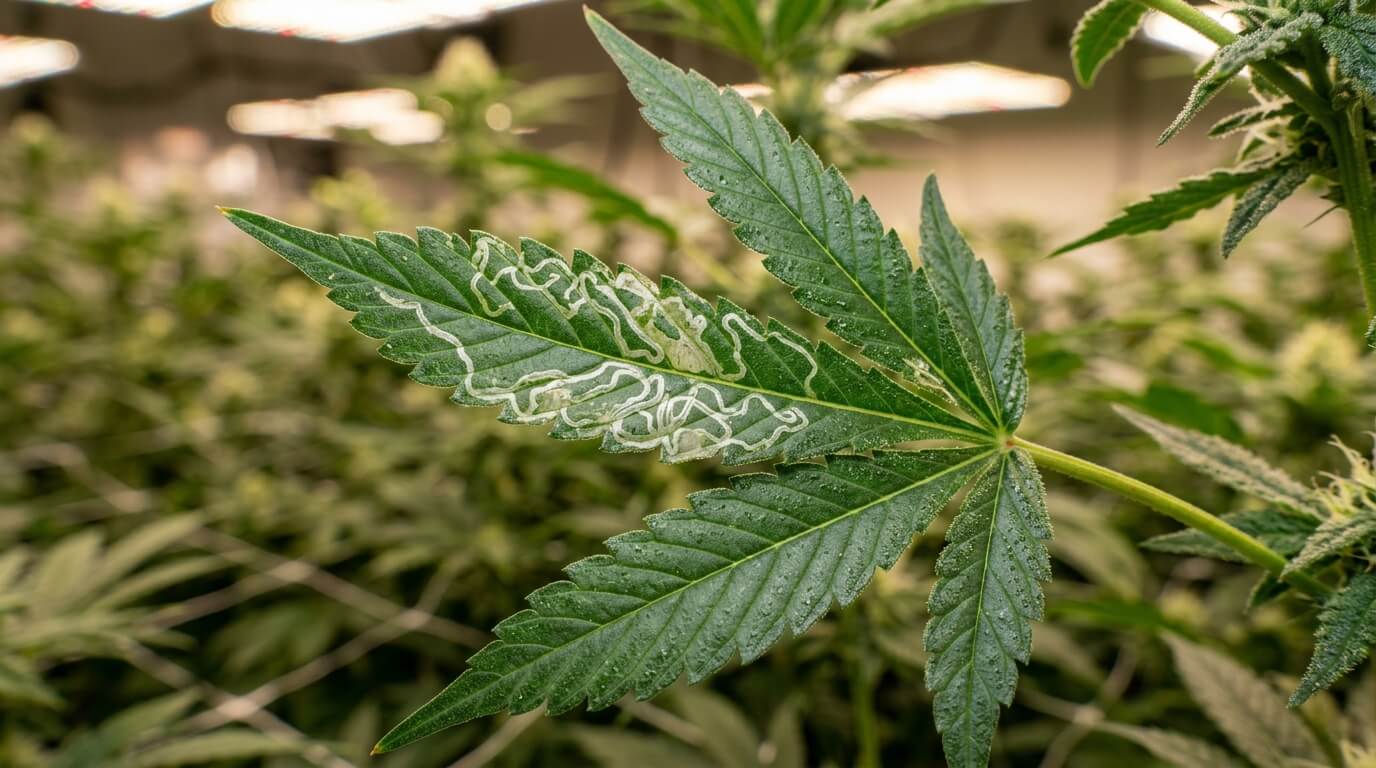
Cannabis leaf miners are small insect larvae that burrow inside cannabis leaves and feed between the upper and lower layers of plant tissue. As they move through the leaf, they create distinctive feeding tunnels known as leaf miner trails, which appear as thin white squiggly lines across the leaf surface.
Despite the name, leaf miners are not a single species. The term describes the feeding behaviour of several insect larvae, most commonly flies, moths, and beetles. After hatching, the larvae tunnel directly into the leaf where they remain protected from many predators and surface-applied treatments while they feed.
This hidden feeding habit makes leaf miners more difficult to control than many other common cannabis pests, as much of the damage occurs inside the leaf before growers realise there is a problem.
For autoflower growers, leaf miners can be particularly troublesome. Because autoflowering cannabis plants have a fixed lifecycle and limited recovery time, damage during the seedling or early vegetative stage can have a lasting impact on plant development. While photoperiod plants may have additional time to recover from stress, autoflowers often move into flowering before they have fully replaced lost growth, which can ultimately affect plant size and final yields.
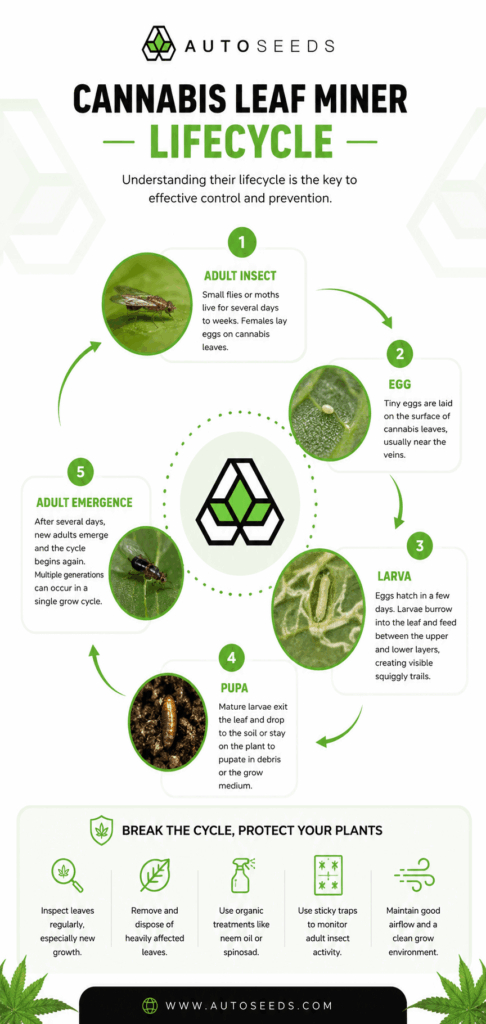
Many growers using autoflower seeds for beginners encounter leaf miner damage during their first outdoor grow because the early symptoms are often mistaken for nutrient deficiencies or minor environmental stress.
How Cannabis Leaf Miners Create Squiggly Leaf Trails
Leaf miners hatch from tiny eggs laid directly on cannabis leaves. Once the larvae emerge, they immediately burrow into the soft inner tissue of the leaf and begin feeding.
As they move through the leaf, they leave behind winding white trails that are easy to recognize once you know what to look for. These trails are the damaged pathways where chlorophyll and plant tissue have been consumed.
Autoflower growers should pay particular attention to new growth because leaf miners often target young leaves. Since autoflowers rapidly transition from vegetative growth into flowering, early leaf damage can have a greater impact on plant development than many growers realize.
I always inspect suspicious leaves by holding them up to the light. In active infestations, you can sometimes see the larvae moving inside the leaf itself. It looks a little like a tiny worm trapped between glass panes. Not exactly the kind of pet you want in your grow room.
| Leaf Miner Sign | What You Are Seeing |
| White squiggly trails | Larvae tunneling through leaf tissue |
| Thin translucent patches | Internal tissue consumed |
| Black specks | Larval waste known as frass |
| Yellowing leaves | Reduced chlorophyll production |
| Curling leaves | Structural damage and stress |
Lifecycle of Cannabis Leaf Miners
The lifecycle of cannabis leaf miners is relatively short, which is why infestations can spread quickly in warm growing conditions.
| Lifecycle Stage | What Happens |
| Egg stage | Adult insects lay eggs on cannabis leaves |
| Larval stage | Larvae hatch and tunnel into leaves |
| Feeding stage | White trails and blotches appear |
| Pupation stage | Larvae pupate in soil or debris |
| Adult stage | Adult insects emerge and reproduce |
The lifecycle usually follows these stages:
- Adult insects lay eggs on cannabis leaves
- Eggs hatch into larvae within days
- Larvae tunnel through leaf tissue while feeding
- Mature larvae pupate in soil or plant debris
- Adult insects emerge and repeat the cycle
For growers using autoflower seeds outdoors, understanding the leaf miner lifecycle is especially important. Because many autoflowers complete their entire lifecycle in as little as 8–12 weeks, even a single generation of leaf miners can affect a significant portion of the grow.
This also means that treating only the leaves is often not enough. If larvae pupate in your growing medium, new adults can emerge later and restart the infestation.
In my experience, outdoor cannabis grows face the highest risk because insects have easier access to plants. Indoor growers are not immune either, especially when bringing in clones, contaminated soil, or outdoor plants without proper quarantine procedures.
How Do Cannabis Leaf Miners Damage Plants?

Cannabis leaf miners damage plants by feeding internally within the leaves, reducing photosynthesis while also weakening overall plant health. The damage often starts small but can become severe if multiple generations develop unchecked.
On autoflowering cannabis plants, leaf miner damage often has a greater impact than growers expect. Unlike photoperiod plants, autoflowers cannot remain in vegetative growth for extended recovery periods. Damage that reduces photosynthesis during the first few weeks of growth may permanently limit plant size and bud production.
Squiggly White Trails and Leaf Miner Damage
The most obvious sign of cannabis leaf miners is the appearance of squiggly white trails across the leaves. These trails form as larvae tunnel through the internal tissue of the plant.
The damage often appears random at first, although experienced growers quickly recognize the pattern. Unlike nutrient deficiencies that usually affect leaves more evenly, leaf miner damage creates winding and irregular feeding paths.
When I spot these trails, I inspect surrounding leaves immediately because infestations rarely stay isolated to a single leaf for long.
Translucent Blotches and Visible Larvae in Leaves
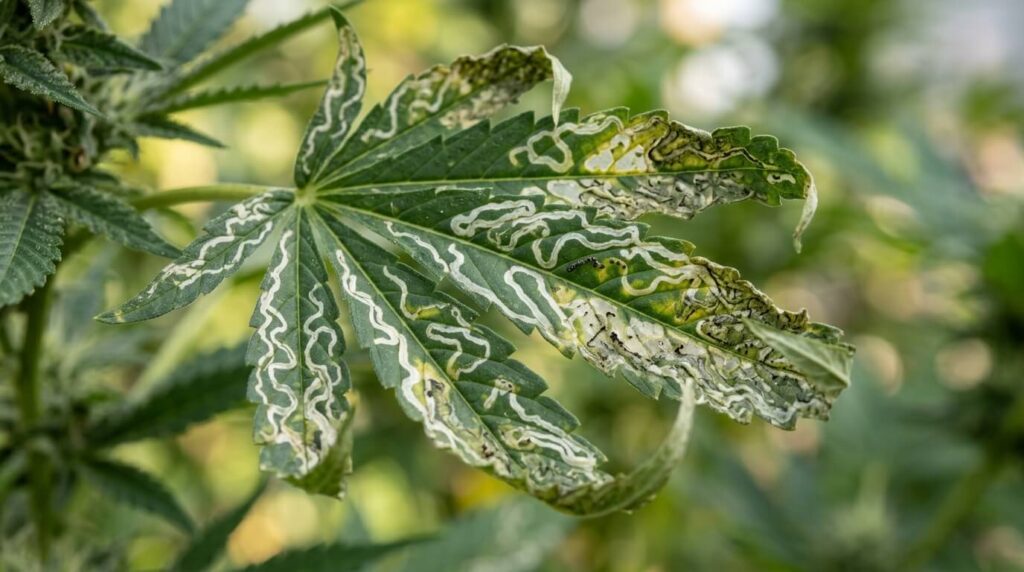
As leaf miners continue feeding, the trails can expand into larger translucent blotches where more tissue has been consumed.
Affected leaves may appear:
- Thin or papery
- Semi-transparent under light
- Discolored around feeding zones
- Structurally weakened
In severe infestations, visible larvae inside leaves become easier to spot. If you hold the leaf up to strong lighting, you may see the small larva moving within the tunnel.
Yellowing Leaves and Reduced Photosynthesis
Cannabis leaf miners reduce photosynthesis by destroying chlorophyll-rich tissue inside the leaf. This decreases the plant’s ability to convert light into usable energy.
As damage progresses, you may notice:
- Yellowing leaves
- Reduced vigor
- Slower vegetative growth
- Weak lateral branching
This also affects nutrient uptake because stressed cannabis plants redirect energy toward survival rather than aggressive growth.
For autoflower growers, reduced photosynthesis during early growth can have lasting effects. Because autoflowers follow a predetermined lifecycle, they have less time to recover from stress before flowering begins.
| Plant Function | Effect of Leaf Miner Damage |
| Photosynthesis | Reduced energy production |
| Vegetative growth | Slower canopy development |
| Nutrient uptake | Reduced efficiency |
| Flower production | Smaller buds and weaker growth |
| Resin production | Lower trichome output |
Leaf Curling, Distortion, and Premature Leaf Drop
Heavy infestations often cause physical leaf deformities. Damaged cannabis leaves may curl, twist, or become misshapen as internal tissue breaks down.
Severely affected leaves eventually dry out and fall away from the plant prematurely. Premature leaf drop is a sign that the plant is under stress and attempting to preserve resources.
When cannabis plants lose too many healthy fan leaves, bud development also suffers because the plant has less energy available during flowering.
Some sativa autoflower strains can become more vulnerable to environmental stress outdoors when plants develop large leafy canopies with reduced airflow, especially during warm and humid growing conditions where pests become more active.
Black Specks (Frass) as a Sign of Active Infestation
Tiny black specks along leaf trails are called frass, which is insect waste left behind by feeding larvae.
Frass is one of the clearest indicators of an active infestation. Old leaf miner damage may remain visible long after the pest has gone, although fresh frass tells you the larvae are still feeding.
Whenever I see frass combined with fresh white trails, I treat the infestation immediately before additional eggs hatch.
How can leaf miners affect autoflower yields?
Leaf miners are more than just a cosmetic pest. While the characteristic white squiggly trails may seem minor at first, the damage occurring inside the leaves can directly affect plant growth, flower development, and final yields.
For autoflowering cannabis plants, the impact can be even greater. Unlike photoperiod strains that can remain in the vegetative stage for additional recovery time, autoflowers follow a fixed lifecycle. This means every week of healthy growth is important, and any stress during the seedling or vegetative stage can have lasting effects on plant size and productivity.
Reduced photosynthesis and smaller buds
Leaf miners feed within the leaf tissue, damaging chlorophyll-rich areas that the plant relies on for photosynthesis. As the infestation progresses, affected leaves become less efficient at converting light into energy.
When autoflowers lose photosynthetic capacity, they have fewer resources available for flower production and resin development. In my experience, plants with untreated leaf miner infestations often struggle to reach their full genetic potential, particularly when damage occurs before flowering begins.
Common effects include:
- Smaller buds
- Reduced bud density
- Slower flower development
- Lower trichome production
- Reduced terpene expression
Because autoflowers have a relatively short growing cycle, they have less opportunity to compensate for lost growth compared to photoperiod plants.
Early vegetative damage and stunted autoflower growth
The first few weeks of an autoflower’s life are critical for establishing roots, branches, and future flowering sites. Healthy fan leaves play a major role during this period by supplying the energy needed for rapid development.
When leaf miners attack young autoflowers, growers may notice:
- Stunted overall growth
- Smaller plant size
- Weak stems and branches
- Reduced canopy development
- Fewer bud sites
- Lower final yields
One thing i have consistently observed is that autoflowers rarely recover completely from significant early stress. If a plant loses momentum during its vegetative stage, it will often enter flowering smaller than intended, which naturally limits its production potential.
This is why early detection is so important. Identifying leaf miners before populations become established can prevent long-term damage and help maintain healthy growth throughout the grow cycle.
Severe infestations and harvest losses
Large leaf miner infestations can significantly reduce autoflower yields when left untreated. As multiple generations develop, more leaves become damaged, reducing the plant’s ability to support vigorous growth and flower production.
| Yield impact | Potential result |
| Reduced photosynthesis | Smaller buds |
| Extensive leaf damage | Lower plant vigor |
| Excessive leaf loss | Fewer flowering sites |
| Increased plant stress | Reduced potency and terpene levels |
| Slower development | Reduced harvest weight |
Yield losses are often more severe when:
- Multiple generations of leaf miners overlap
- Warm conditions encourage rapid reproduction
- Plants are already stressed by environmental factors
- Significant leaf removal becomes necessary
Heavy infestations can also increase the risk of secondary problems. Weakened autoflowers are often less resilient to other common cannabis pests and environmental stressors, making early intervention one of the most effective ways to protect both plant health and final yields.
How to treat leaf miners on autoflowers
Successfully treating leaf miners on autoflowers requires quick action and a strategy that matches the plant’s stage of growth. Unlike photoperiod cannabis plants, autoflowers have a fixed lifecycle and limited recovery time. This means even a relatively minor infestation can affect plant size, flower development, and final yields if it is not addressed early.
In my experience, the most effective approach is to assess three things before taking action:
- The age of the plant
- The severity of the infestation
- Whether flowering has already begun
These factors will determine which treatment methods are most appropriate and how aggressively you should intervene.
Remove active leaf miner damage
When i discover leaf miners on autoflowers, the first step is reducing the active population as quickly as possible.
Leaves containing multiple feeding trails are usually removed immediately to eliminate developing larvae and prevent further spread. If the infestation is limited to only one or two trails, i often inspect the leaf closely and crush the larva directly inside the tunnel rather than removing the entire leaf.
This approach works particularly well on young autoflowers where preserving healthy foliage is important. Every fan leaf contributes to photosynthesis, and excessive leaf removal can create additional stress during critical growth stages.
The earlier leaf miners are removed, the easier they are to control before new generations begin emerging.
Choosing the best treatment for autoflowers
The most suitable treatment depends on both infestation severity and plant maturity.
| Treatment | Primary benefit | Best used during |
| Spinosad | Targets feeding larvae | Vegetative growth |
| Neem oil | Disrupts feeding and reproduction | Early infestations |
| Insecticidal soap | Targets eggs and adult insects | Preventative use |
| Beneficial nematodes | Controls pupae in growing media | Any stage |
| Sticky traps | Monitors adult activity | Throughout the grow |
For active infestations during vegetative growth, spinosad is often one of the most effective options because it targets larvae before they complete their lifecycle. Neem oil can also be useful during the early stages of an infestation, although it is generally best used before flowering begins.
Rather than relying on a single product repeatedly, i prefer combining physical removal, environmental controls, and targeted treatments as part of an integrated pest management strategy. This approach helps reduce recurring infestations while minimising unnecessary stress on the plant.
Treating leaf miners during different autoflower growth stages
Seedling stage
Young seedlings are particularly vulnerable because they have very little foliage available for photosynthesis.
At this stage, i focus on removing larvae quickly while avoiding excessive leaf removal. Even small amounts of damage can slow development if left unchecked.
Vegetative stage
The vegetative stage offers the best opportunity to eliminate leaf miners before flowering begins.
If an infestation is discovered during this period, treatments such as spinosad, beneficial nematodes, and physical removal are often highly effective. Controlling pests early allows the plant to continue building a healthy canopy before flower production begins.
Flowering stage
Once autoflowers enter flowering, the treatment approach changes.
At this stage, preserving flower quality becomes just as important as controlling the infestation. I avoid spraying developing buds whenever possible and focus on removing heavily affected leaves, monitoring pest activity, and preventing further spread.
Because autoflowers transition into flowering quickly, many growers do not discover leaf miner damage until bud development is already underway. This makes early inspections particularly important.
Helping autoflowers recover after treatment
Treating the infestation is only part of the solution. Once leaf miners have been controlled, the next priority is helping the plant recover.
After treatment, i focus on maintaining stable growing conditions by:
- Avoiding unnecessary stress
- Maintaining proper watering practices
- Providing balanced nutrition
- Ensuring strong light exposure
- Maintaining good airflow throughout the canopy
Minor infestations rarely cause long-term problems when addressed early. However, severe infestations can temporarily slow growth and reduce plant vigour, particularly if damage occurred during the first few weeks of development.
Healthy autoflowers can often recover surprisingly well, but preventing additional stress during recovery is essential for protecting final yields.
Monitor for recurring activity
Leaf miner control is rarely a one-time task. Eggs may continue hatching after treatment, and pupae developing in the growing medium can produce new adults later in the grow cycle.
During active infestations, i inspect plants daily and pay close attention to:
- Fresh feeding trails
- New growth at the top of the plant
- Lower canopy foliage
- Sticky trap activity
- Soil and container surfaces
When no new trails appear for several days and existing damage stops expanding, the infestation is usually under control.
Consistent monitoring remains one of the most effective ways to protect autoflowers from ongoing damage and prevent small pest problems from becoming yield-limiting infestations.
How to Prevent Cannabis Leaf Miner Infestations
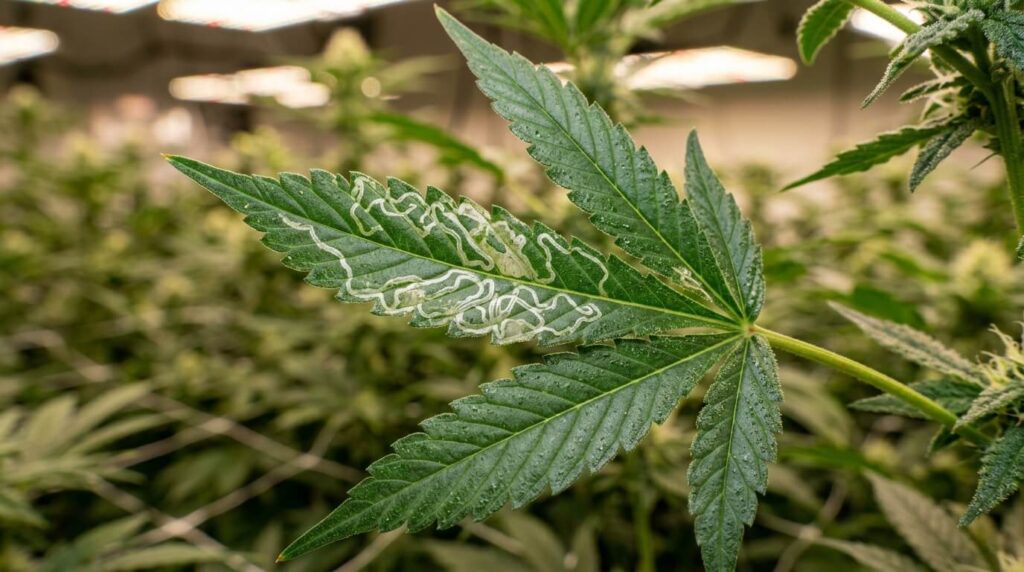
Preventing leaf miners is far easier than dealing with an active infestation after it becomes established. For autoflower growers, prevention is particularly important because autoflowers have a limited vegetative period and less time to recover from pest-related stress.
The most effective prevention strategy is to make your grow environment less attractive to leaf miners while reducing opportunities for adult insects to reach your plants in the first place.
Protect autoflower seedlings from the start
The best time to prevent leaf miners is before they ever appear.
Young autoflower seedlings have very little foliage available for photosynthesis, which means even minor pest damage can affect early development. Establishing preventative measures from the beginning of the grow helps reduce the risk of infestations becoming established during these critical early weeks.
For outdoor autoflowers, preventative measures may include:
- Installing sticky traps near plants
- Using fine mesh protection around young seedlings
- Keeping the growing area free from plant debris
- Monitoring nearby vegetation for pest activity
In my experience, growers who implement preventative measures early tend to encounter fewer pest problems later in the season than those who wait until damage becomes visible.
Remove nearby host plants and weeds
Many leaf miner species do not originate on cannabis plants. Instead, they often develop on weeds, ornamental plants, and other vegetation before moving onto nearby crops.
Keeping the area around autoflowers clear of unmanaged weeds can significantly reduce local pest pressure, especially in outdoor gardens where insects have access to multiple host plants.
Pay particular attention to:
- Overgrown weeds around containers
- Unmanaged garden borders
- Dense vegetation near grow areas
- Plant debris left from previous growing seasons
Reducing alternative host plants limits breeding opportunities and makes it less likely that adult insects will move onto your autoflowers.
Use companion planting to support beneficial insects
Companion planting can help create a healthier outdoor growing environment while encouraging beneficial insects that naturally suppress pest populations.
Plants commonly used around cannabis include:
- Marigolds
- Alyssum
- Dill
- Yarrow
- Fennel
These plants help attract predatory insects and pollinators that contribute to a more balanced garden ecosystem. While companion planting will not eliminate leaf miners completely, it can form an effective part of a wider pest prevention strategy.
Build an ipm system before you need it
One of the biggest mistakes new growers make is waiting until pests appear before thinking about pest management.
Integrated pest management (ipm) is most effective when preventative measures are already in place before an infestation develops.
| Prevention method | Benefit for autoflowers |
| Sticky traps | Detects adult insects early |
| Beneficial insects | Helps suppress pest populations |
| Good airflow | Creates less favourable conditions for pests |
| Clean growing areas | Reduces breeding and hiding locations |
| Quarantine procedures | Prevents introducing pests from outside sources |
| Regular crop checks | Identifies problems before populations increase |
Rather than relying on a single prevention method, combining several small preventative practices usually produces the most reliable results over the course of an autoflower grow.
My leaf miner prevention routine for autoflowers
Over the years, i have found that consistency is far more effective than reacting to pest problems after they appear.
For outdoor autoflowers, my prevention routine focuses on three priorities:
- Reducing insect pressure around the grow area
- Encouraging beneficial insects and natural predators
- Checking plants frequently during periods of rapid growth
By combining these simple habits throughout the growing season, most leaf miner problems can be identified before they have an opportunity to affect plant development or final yields.
The goal is not to create a completely pest-free environment, which is rarely realistic outdoors. Instead, the objective is to make conditions less favourable for leaf miners while giving autoflowers the best possible opportunity to grow without interruption.
Signs of Cannabis Leaf Miners at a Glance
If you need a quick diagnosis, these are the most common signs of cannabis leaf miners:
| Symptom | What It Means |
| Squiggly white trails | Larvae tunneling inside leaves |
| Yellow blotches | Chlorophyll damage |
| Visible larvae | Active infestation |
| Black frass specks | Feeding larvae present |
| Curling leaves | Structural leaf damage |
| Premature leaf drop | Severe plant stress |
| Slow growth | Reduced photosynthesis |
| Weak plant vigor | Ongoing infestation pressure |
These symptoms usually appear first on newer leaf growth, especially during warm growing conditions.
Frequently Asked Questions
Are Autoflowers More Vulnerable to Leaf Miners?
Autoflowers are not necessarily more attractive to leaf miners than photoperiod cannabis plants, but they can be more vulnerable to yield losses. Because autoflowers have a fixed lifecycle and limited recovery time, damage during the seedling or vegetative stage can have a greater impact on final plant size and harvest weight.
Can Leaf Miners Stunt Autoflower Growth?
Yes, leaf miners can stunt autoflower growth by damaging leaves and reducing photosynthesis. When infestations occur during the first few weeks of growth, plants may develop more slowly, produce fewer bud sites, and remain smaller throughout the grow cycle.
Do Leaf Miners Affect Autoflower Yields?
Leaf miners can reduce autoflower yields if left untreated. As larvae feed inside the leaves, they destroy chlorophyll-rich tissue that the plant relies on for energy production. Severe infestations may result in smaller buds, reduced trichome production, and lower overall harvests.
What Is the First Sign of Leaf Miners on Autoflowers?
The earliest sign of leaf miners is usually thin white squiggly trails appearing on the leaves. These trails are created as larvae tunnel through the leaf tissue. Autoflower growers should inspect new growth regularly, as early detection makes treatment much easier.
Should I Remove Leaves Damaged by Leaf Miners?
Heavily damaged leaves can often be removed to reduce active larvae populations and slow the spread of an infestation. However, avoid excessive defoliation, especially on smaller autoflowers, as healthy fan leaves are important for supporting growth and flower development.
Can I Use Neem Oil on Flowering Autoflowers?
Many growers avoid spraying neem oil directly onto developing buds during flowering because it can affect flower quality and leave unwanted residue. If leaf miners appear during flowering, focus on removing affected leaves and using treatments that are considered safe for flowering cannabis plants.
Are Outdoor Autoflowers More Likely to Get Leaf Miners?
Yes, outdoor autoflowers are generally at greater risk because they are exposed to natural insect populations throughout their entire lifecycle. Regular inspections, sticky traps, beneficial insects, and preventative pest management practices can help reduce the likelihood of infestations.
How Do I Prevent Leaf Miners on Autoflowers?
The best prevention strategy is a combination of regular inspections, good airflow, clean growing conditions, and integrated pest management practices. Checking leaves frequently for early signs of damage allows growers to act before infestations become established.
Can Autoflowers Recover from Leaf Miner Damage?
Autoflowers can recover from minor leaf miner damage when infestations are identified early and controlled quickly. While damaged leaves will not heal, healthy new growth can continue once the pests have been removed. The earlier treatment begins, the less impact there is likely to be on yield and plant development.
What Is the Fastest Way to Get Rid of Leaf Miners on Autoflowers?
The fastest approach is to remove heavily affected leaves, destroy visible larvae inside feeding tunnels, and apply an appropriate treatment such as spinosad during the vegetative stage. Continued monitoring is essential because eggs and pupae may still be present after the initial treatment.