
Mold on Autoflower Cannabis: How to Identify, Prevent, and Manage Common Cannabis Molds
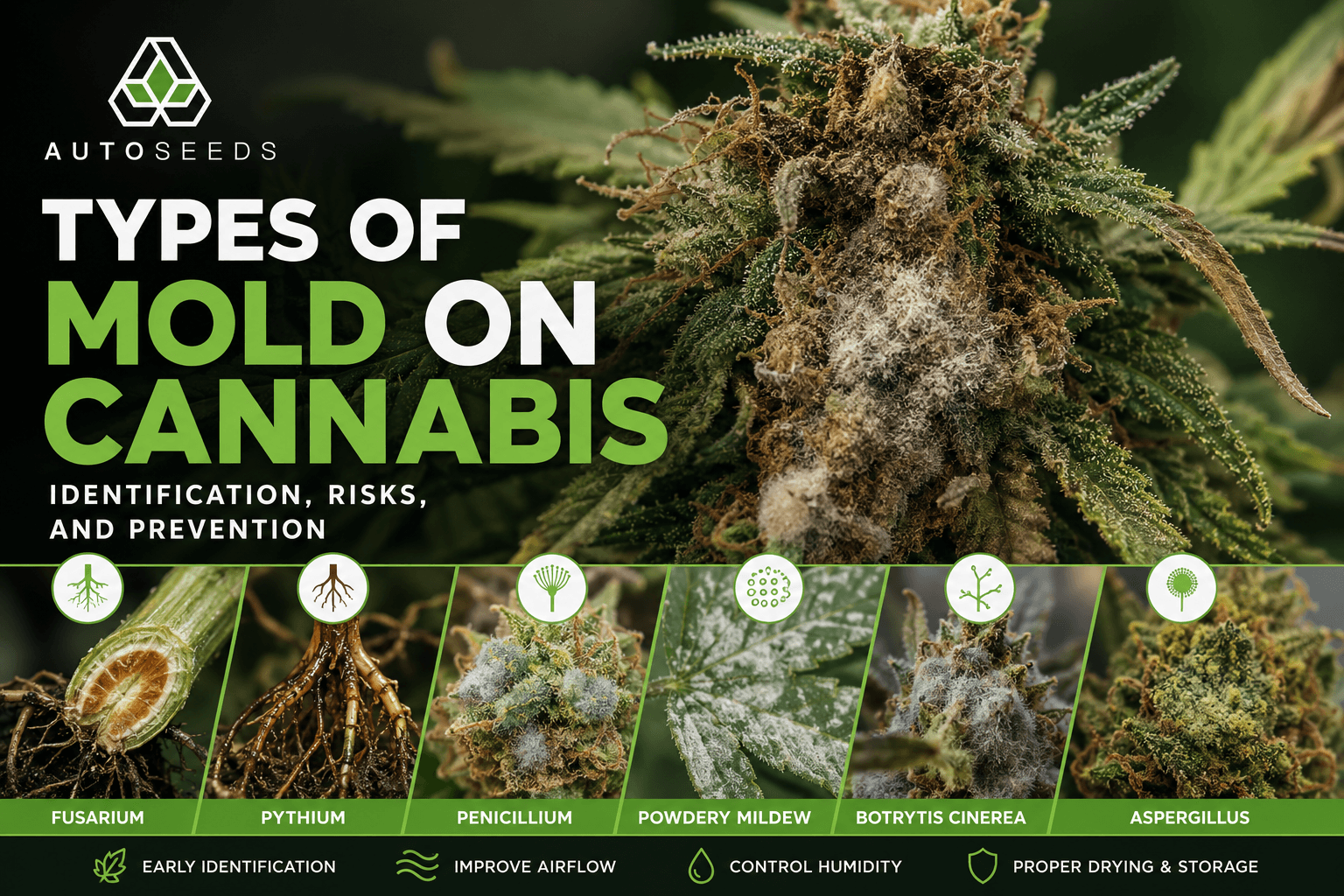
Mold on cannabis can quickly ruin an otherwise successful harvest. Whether you’re growing autoflowers indoors, outdoors in humid conditions, or drying freshly harvested buds, fungal pathogens can spread rapidly once conditions allow. By the time mold becomes visible, it has often been developing inside the plant for days, making early detection and prevention critical.
Modern autoflower strains produce dense, resin-rich flowers, but these traits also increase mold risk. Their rapid lifecycle leaves little time to correct environmental issues once flowering begins.
From years of growing autoflowers in both tents and outdoor gardens, I’ve learned that prevention isn’t about chasing perfect humidity. It’s about building strong plant structure, maintaining stable conditions, and inspecting plants regularly.
In this guide, you’ll learn how to identify common cannabis molds, understand why autoflowers are vulnerable, spot early warning signs, and follow a lifecycle-based prevention strategy from seedling to storage.
Article Insights
- Powdery mildew and Botrytis (bud rot) are among the most commonly reported mold issues affecting cannabis plants.
- High humidity, poor airflow, and excess moisture are the primary conditions that encourage mold growth.
- Fusarium and Pythium mainly affect roots and vascular tissue, while Botrytis, Penicillium, and Aspergillus commonly impact flowers and stored cannabis.
- White powdery patches, gray fuzzy growth, discolored roots, and musty odors are common signs of mold contamination.
- Cannabis affected by visible mold is generally considered unsafe to consume due to the presence of fungal spores and potential contaminants.
- Maintaining appropriate humidity levels, improving air circulation, and properly drying and storing cannabis can significantly reduce mold-related problems.
- What Is Mold on Cannabis?
- Why Autoflower Cannabis Plants and Buds Are More Vulnerable to Mold
- How Mold Affects Cannabis Quality, Potency, and Safety
- Environmental Conditions That Encourage Mold Growth
- Common Types of Mold Found on Cannabis
- Mold vs Other Cannabis Problems
- How Mold on Cannabis Impacts Consumer Safety
- Preventing Mold on Autoflower Cannabis Throughout Cultivation and Storage
- What to Do If You Find Mold on Cannabis
- Conclusion
- Frequently Asked Questions About Mold on Cannabis
What Is Mold on Cannabis?
Mold on cannabis is the growth of fungal organisms that thrive in moist environments. These fungi reproduce by releasing microscopic spores into the air. When conditions become favorable, those spores land on plant surfaces and begin colonizing tissue.
Cannabis plants naturally exist in environments where mold spores are present. The challenge is preventing those spores from gaining a foothold. Excess humidity, poor airflow, overcrowded canopies, and improper storage practices all increase the likelihood of contamination.
While many growers focus on pests and nutrient issues, mold often causes more extensive damage. Some molds attack roots and vascular tissue, while others consume leaves, stems, and flowers. Certain species also produce mycotoxins, which are harmful compounds that may pose health risks to humans.
Why Autoflower Cannabis Plants and Buds Are More Vulnerable to Mold
Modern autoflower cannabis plants are capable of producing dense, resin-rich flowers that rival many photoperiod cultivars. While this has dramatically improved yields and flower quality, it has also increased the risk of mold developing inside tightly packed buds.
Unlike older autoflower genetics, many modern cultivars produce large terminal colas with short internodal spacing. As flowers mature, the dense bud structure naturally restricts airflow, allowing pockets of humid air to develop deep within the canopy. If fungal spores are present, these protected areas provide ideal conditions for mold to establish before visible symptoms appear.
Another factor unique to autoflowers is their fixed lifecycle. Once flowering begins, plants continue progressing regardless of environmental conditions. Unlike photoperiod cannabis, growers cannot extend the vegetative stage to recover from stress or reshape the canopy before flowering. This means environmental issues that develop during early flower often remain throughout the rest of the plant’s life.
Why Modern Autoflowers Are More Susceptible
| Characteristic | Why It Matters |
| Dense central colas | Moisture can become trapped deep inside developing flowers. |
| Short internodal spacing | Leaves and buds overlap, reducing natural airflow. |
| Rapid flowering | Environmental problems can escalate quickly during bloom. |
| Fixed lifecycle | There is little opportunity to recover from stress before harvest. |
| Compact indoor cultivation | Smaller grow spaces are more prone to humidity fluctuations. |
Although mold can affect any cannabis plant, certain growing conditions significantly increase the likelihood of fungal pathogens becoming established.
| Risk Factor | Impact on Mold Development |
| High relative humidity | Encourages fungal spores to germinate. |
| Poor air circulation | Allows humid air to remain around flowers. |
| Overcrowded plants | Reduces ventilation throughout the canopy. |
| Wet flowers from rain or irrigation | Creates ideal conditions for fungal growth. |
| Rapid temperature changes | Can lead to condensation inside dense buds. |
One advantage of autoflowers is that outdoor crops often finish earlier than photoperiod plants, allowing growers in many climates to harvest before the prolonged cool, damp conditions of autumn arrive. However, early harvest timing does not eliminate mold risk. Dense modern autoflower genetics can still develop powdery mildew or bud rot whenever moisture remains trapped around developing flowers.
Understanding how autoflower plants grow and how modern breeding has changed their structure helps explain why mold prevention requires careful environmental management from the very beginning of the grow.
How Mold Affects Cannabis Quality, Potency, and Safety
Mold damages cannabis in several ways. First, it physically destroys plant tissue. Flowers affected by mold often become discolored, soft, or brittle. This degradation reduces the overall quality of the harvest.
Mold also impacts cannabinoid and terpene production. When fungal infections spread throughout a plant, energy that would normally support resin development is redirected toward stress responses. The result is often lower potency and reduced aroma.
From a consumer perspective, contaminated cannabis presents the greatest concern. Smoking or inhaling mold spores can irritate the respiratory system and may cause serious complications in individuals with weakened immune systems.
Environmental Conditions That Encourage Mold Growth
Fungal spores are naturally present in almost every cannabis growing environment. Healthy plants can be exposed to thousands of spores throughout their lifecycle without becoming infected. Mold only develops when environmental conditions remain favorable long enough for those spores to germinate and colonize plant tissue.
Although every fungal species has its own preferred conditions, most cannabis molds depend on the same combination of moisture, warmth, and limited air movement. When these environmental factors overlap, the likelihood of infection increases significantly.
Environmental Factors That Influence Mold Development
| Environmental Condition | Effect on Mold Development |
| High relative humidity | Increases the availability of surface moisture required for fungal growth. |
| Warm temperatures | Accelerates fungal reproduction and spore development. |
| Excess moisture on plant surfaces | Allows spores to germinate more easily. |
| Poor air movement | Slows evaporation and creates localized humid conditions. |
| Dense plant canopies | Produce shaded microclimates where moisture persists longer. |
| Prolonged periods of wet weather | Increase the duration of favorable conditions for fungal pathogens. |
Environmental conditions rarely work in isolation. Mold outbreaks are typically the result of multiple factors occurring simultaneously rather than a single environmental change. Understanding these conditions provides the foundation for identifying why different fungal pathogens develop and why certain molds become more common during specific stages of cultivation.
Common Types of Mold Found on Cannabis
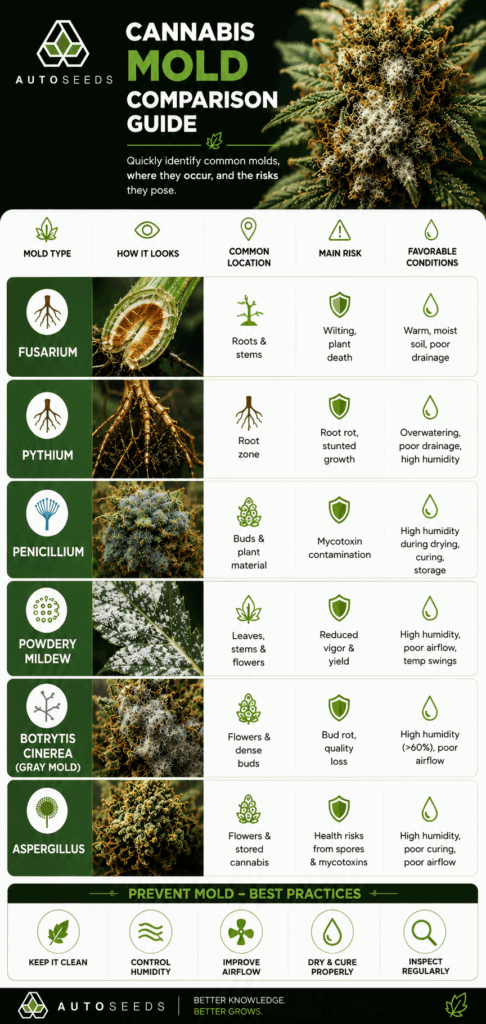
Not all cannabis molds are the same. Some affect roots, while others attack leaves and flowers. Understanding these differences helps you identify problems early and respond appropriately.
| Mold Type | Color | Texture | Most Common Location |
| Fusarium | Brown to reddish-brown | Internal discoloration | Roots and stems |
| Pythium | Brown | Slimy | Root zone |
| Penicillium | Blue-green | Fuzzy | Stored buds |
| Powdery Mildew | White | Powdery | Leaves and stems |
| Botrytis Cinerea | Gray-brown | Fuzzy and rotten | Buds and flowers |
| Aspergillus | Green, yellow, or black | Powdery | Buds and stored cannabis |
Fusarium on Cannabis
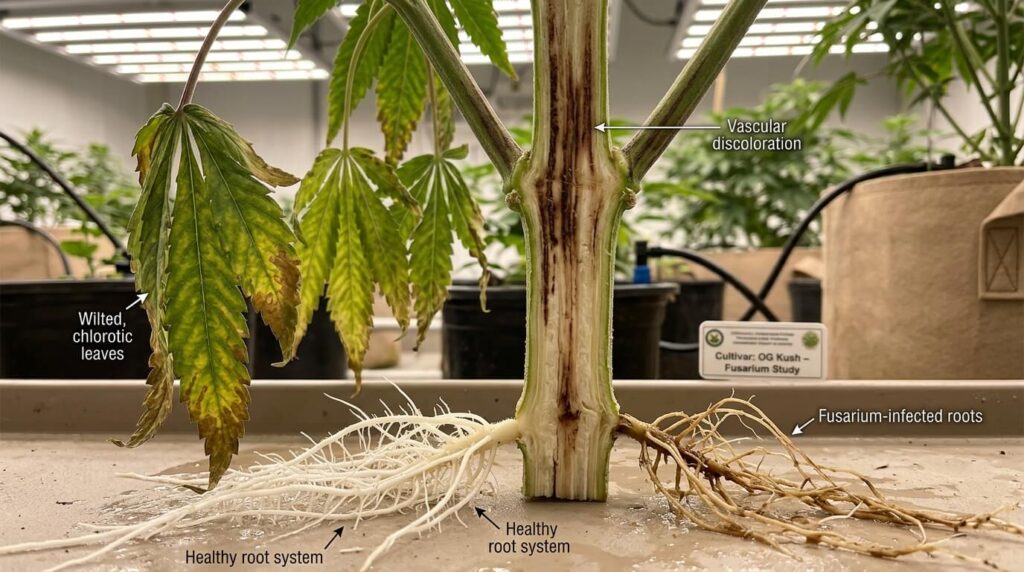
Fusarium is one of the most destructive soil-borne fungal pathogens that can affect cannabis plants. Unlike molds that develop on leaves or flowers, Fusarium attacks the plant internally by infecting the vascular system. This prevents water and nutrients from moving efficiently throughout the plant, often resulting in severe stress, stunted growth, and eventual plant death. Because symptoms can resemble nutrient deficiencies or watering issues, Fusarium is often misdiagnosed during the early stages of infection.
| Characteristic | Description |
| What It Is | Fusarium is a soil-borne fungal pathogen that infects the vascular system of cannabis plants, disrupting the movement of water and nutrients throughout the plant. |
| How It Develops | It develops when fungal spores enter through damaged roots, wounds, contaminated growing media, or infected soil. Warm, moist conditions encourage its spread. |
| What It Looks Like | Fusarium is often hidden inside the plant. When stems are cut open, the vascular tissue may appear brown, reddish-brown, or rust-colored. |
| Symptoms | Wilting despite adequate watering, yellowing leaves, stunted growth, branch dieback, and sudden plant collapse. |
| Risks to Plants | Severe infections can destroy the vascular system, reduce yields significantly, and kill entire plants. |
| Risks to Consumers | Although Fusarium primarily affects plant health, infected cannabis should not be consumed because diseased tissue may harbor additional microbial contaminants. |
Once Fusarium becomes established within a cannabis plant, treatment options are extremely limited. Prevention is typically the most effective strategy and involves maintaining healthy root zones, using clean growing media, and avoiding plant stress. Growers who understand how Fusarium develops can identify warning signs earlier and reduce the likelihood of widespread crop losses.
Learn more about Fusarium on cannabis, including the causes, symptoms, and prevention methods, in our complete Fusarium on cannabis guide.
Pythium on Cannabis (Root Rot)
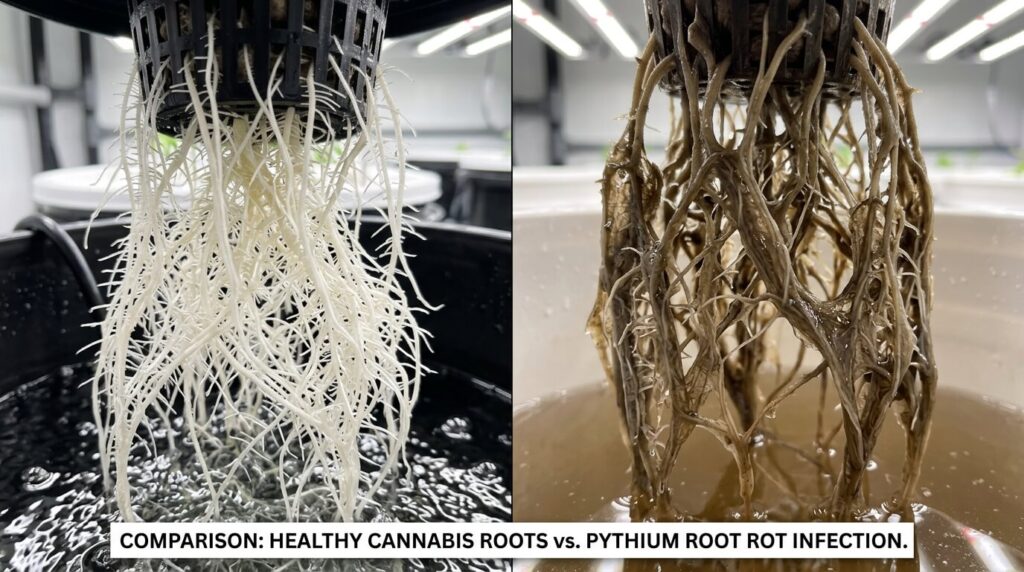
Pythium is commonly associated with root rot and is one of the most problematic pathogens in cannabis cultivation. Although it is technically classified as a water mold rather than a true fungus, its impact on cannabis can be devastating. Pythium primarily targets roots, reducing their ability to absorb water, oxygen, and nutrients. Seedlings and young plants are particularly vulnerable, making early detection essential for maintaining healthy growth.
| Characteristic | Description |
| What It Is | Pythium is a water mold that causes root rot and damping-off disease in cannabis plants, particularly affecting seedlings and young plants. |
| How It Develops | It develops in overly wet growing conditions with poor drainage, limited oxygen in the root zone, and excessive watering. |
| What It Looks Like | Infected roots become brown, soft, slimy, and discolored rather than healthy white and firm. |
| Symptoms | Drooping plants, yellowing foliage, slow growth, weak root systems, and seedling death. |
| Risks to Plants | Pythium severely damages root systems, limiting nutrient uptake and often resulting in plant death if left untreated. |
| Risks to Consumers | While Pythium mainly affects roots, infected plants are often weakened and more susceptible to additional pathogens that can affect harvested cannabis. |
Because Pythium thrives in wet, oxygen-poor environments, prevention often comes down to proper irrigation practices and environmental management. Well-draining growing media, healthy root development, and careful watering routines can significantly reduce the risk of infection. Regular root inspections also help identify issues before they spread throughout the crop.
For a detailed look at root rot on cannabis, including early warning signs and treatment options, explore our complete root rot guide.
Penicillium on Cannabis
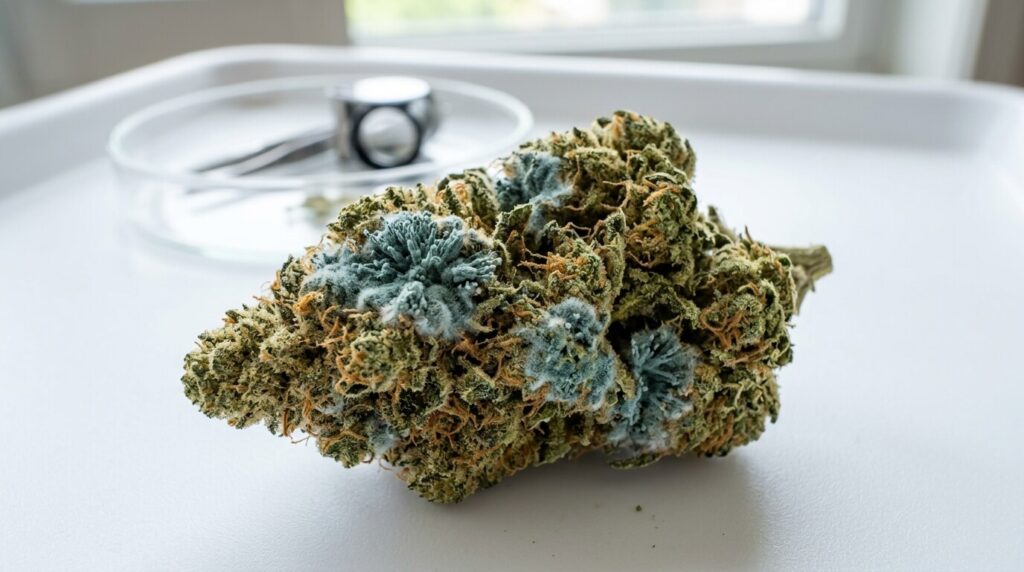
Penicillium is a widespread fungal genus that can contaminate cannabis during cultivation, drying, curing, or storage. While some Penicillium species are used in medicine and food production, others can negatively affect cannabis quality and safety. This mold is often encountered after harvest, making proper drying and storage procedures just as important as maintaining healthy growing conditions.
| Characteristic | Description |
| What It Is | Penicillium is a common fungal genus found in soil, decaying organic matter, and indoor growing environments that can contaminate cannabis flowers. |
| How It Develops | It develops when spores colonize cannabis exposed to excess humidity, poor storage conditions, or inadequate drying and curing practices. |
| What It Looks Like | Penicillium often appears as blue-green, green, or turquoise fuzzy patches on cannabis flowers. |
| Symptoms | Visible fungal growth, discoloration, musty odors, and gradual degradation of flower quality. |
| Risks to Plants | It reduces flower quality, accelerates bud degradation, and can spread throughout stored cannabis products. |
| Risks to Consumers | Certain Penicillium species produce mycotoxins that may trigger respiratory irritation, allergic reactions, and other health concerns. |
When Penicillium develops on cannabis flowers, it can quickly reduce aroma, flavor, and overall quality. In some cases, contamination may also result in the production of mycotoxins that pose additional health concerns. Careful moisture management and routine inspections of stored cannabis are among the most effective ways to prevent Penicillium outbreaks.
Discover how Penicillium on cannabis develops during drying, curing, and storage in our complete Penicillium on cannabis guide.
Powdery Mildew Cannabis
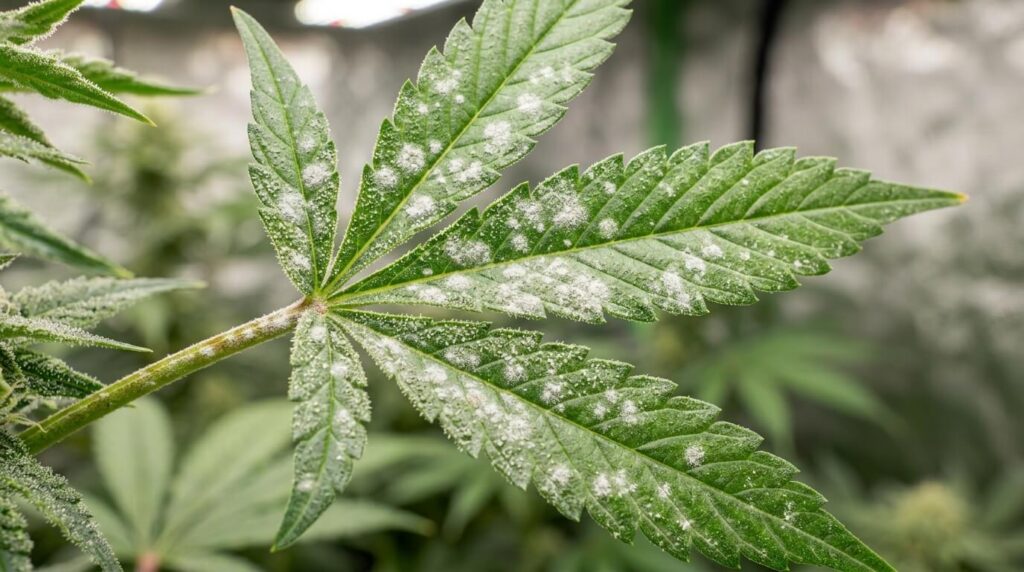
Powdery mildew cannabis infections are among the most common fungal issues encountered by growers. This disease typically appears as a white powder-like coating on leaves and stems and can spread rapidly under favorable environmental conditions. While powdery mildew may initially seem harmless, severe infections can weaken plants, reduce photosynthesis, and negatively affect flower production if left untreated.
| Characteristic | Description |
| What It Is | Powdery mildew is one of the most common fungal diseases affecting cannabis plants, colonizing leaves, stems, and occasionally flowers. |
| How It Develops | It develops in humid environments with poor airflow, overcrowded canopies, and fluctuating temperatures. |
| What It Looks Like | White powder-like patches resembling flour, chalk dust, or powdered sugar on plant surfaces. |
| Symptoms | White spots on leaves, yellowing foliage, reduced photosynthesis, slowed growth, and premature leaf death. |
| Risks to Plants | Powdery mildew weakens plants, reduces yields, and can eventually spread into developing flowers. |
| Risks to Consumers | Smoking cannabis contaminated with powdery mildew may cause respiratory irritation and should be avoided. |
One of the biggest challenges with powdery mildew is how easily spores spread throughout a grow room or outdoor garden. Early intervention is often the difference between a minor issue and a widespread outbreak. Maintaining proper airflow, reducing humidity, and routinely inspecting plants are some of the most effective ways to keep powdery mildew under control.
Learn how to identify, treat, and prevent powdery mildew cannabis infections in our complete powdery mildew cannabis guide.
Botrytis Cinerea (Gray Mold Cannabis and Bud Rot Cannabis)
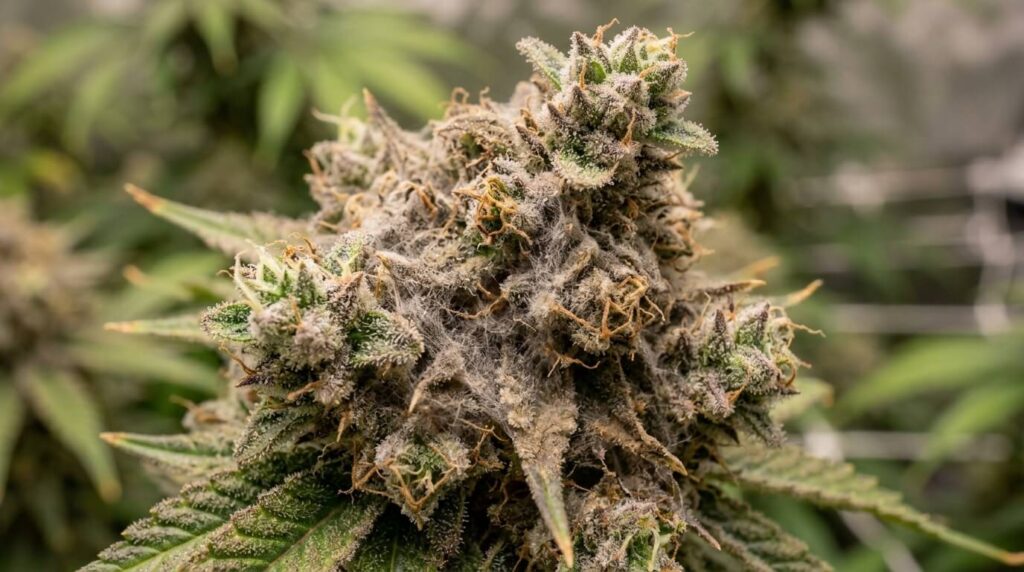
Botrytis cinerea, commonly known as gray mold or bud rot, is one of the most feared fungal pathogens in cannabis cultivation. Unlike powdery mildew, which typically develops on the surface of leaves, Botrytis attacks flowers directly. It often begins deep within dense buds where moisture becomes trapped, making early detection difficult and increasing the risk of significant crop losses.
| Characteristic | Description |
| What It Is | Botrytis cinerea is a destructive fungal pathogen commonly known as gray mold or bud rot that attacks cannabis flowers. |
| How It Develops | It develops in humid conditions where moisture becomes trapped inside dense buds, particularly during late flowering. |
| What It Looks Like | Gray fuzzy growth, brown dead tissue, and rotting flower material that often begins inside buds before becoming visible externally. |
| Symptoms | Browning buds, dead sugar leaves, soft flower tissue, gray fungal masses, and hollow or decaying flowers. |
| Risks to Plants | Botrytis can spread rapidly through a crop and destroy large portions of a harvest within days. |
| Risks to Consumers | Bud rot cannabis should never be consumed because it contains mold spores and decomposing plant material that may negatively affect respiratory health. |
Because bud rot frequently develops inside flowers before becoming visible externally, growers should inspect plants carefully during late flowering. Dense indica-dominant cultivars are often at greater risk due to their tightly packed bud structure. Effective humidity control and proper airflow are the most reliable ways to reduce the likelihood of Botrytis infections.
Discover how to identify bud rot cannabis and prevent it from damaging your harvest in our complete bud rot cannabis guide.
Aspergillus on Cannabis
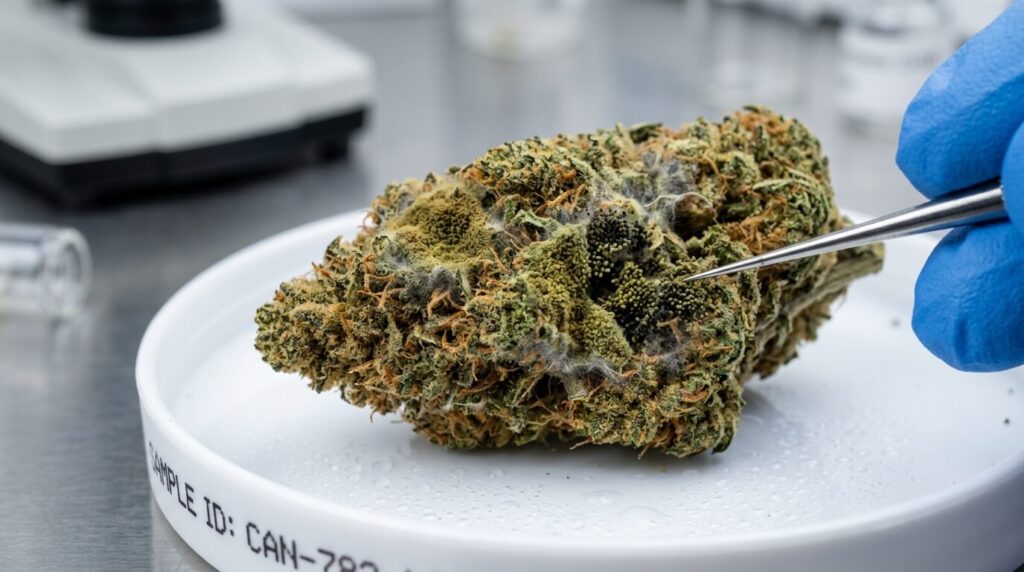
Aspergillus is one of the most concerning molds that can be found on cannabis due to its potential impact on human health. This fungal genus includes several species that are commonly tested for in regulated cannabis markets. While Aspergillus may develop during cultivation, contamination frequently occurs during drying, curing, or storage when moisture levels are not properly controlled.
| Characteristic | Description |
| What It Is | Aspergillus is a genus of mold that commonly contaminates cannabis and is considered one of the most significant health concerns for consumers. |
| How It Develops | It develops when spores colonize cannabis during cultivation, drying, curing, or storage, particularly in humid environments. |
| What It Looks Like | Depending on the species, Aspergillus may appear green, yellow, black, or powdery and can be difficult to identify visually. |
| Symptoms | Discolored flowers, unusual odors, visible spore growth, and gradual deterioration of bud quality. |
| Risks to Plants | Aspergillus reduces flower quality, contaminates harvested cannabis, and may continue spreading during storage. |
| Risks to Consumers | Aspergillus poses serious health risks and may contribute to allergic reactions, respiratory infections, and complications in immunocompromised individuals. |
The challenge with Aspergillus is that contamination is not always obvious to the naked eye. In some cases, infected cannabis may show only subtle visual symptoms despite harboring significant levels of spores. This is one reason why laboratory testing plays such an important role in commercial cannabis production, particularly for products intended for inhalation.
Explore our complete Aspergillus on cannabis guide to learn how to identify contamination, understand the risks, and prevent future outbreaks.
Mold vs Other Cannabis Problems
One of the biggest challenges for new growers is distinguishing mold from other cannabis issues. Mold symptoms often resemble nutrient deficiencies, pest infestations, environmental stress, or even healthy trichome development. Misidentifying the problem can delay treatment and allow fungal pathogens to spread throughout your crop.
Whenever I inspect plants, I look beyond a single symptom. Cannabis problems rarely reveal themselves through one sign alone. Instead, I evaluate the entire plant, including leaves, stems, flowers, root health, environmental conditions, and recent cultivation practices.
| Issue | Appearance | Key Difference From Mold |
| Trichomes | Sparkling crystal-like glands | Uniform and resinous, not fuzzy |
| Nutrient Deficiencies | Yellowing or discoloration | No fungal growth present |
| Pest Damage | Bite marks, spots, webbing | Insects or feeding damage visible |
| Heat Stress | Leaf curling and burnt edges | Environmental pattern, not fungal |
| Mold | Fuzzy, powdery, or rotting growth | Active fungal colonization |
This comparison helps growers avoid one of the most common mistakes in cannabis cultivation: confusing mold with other plant issues.
Mold vs Trichomes
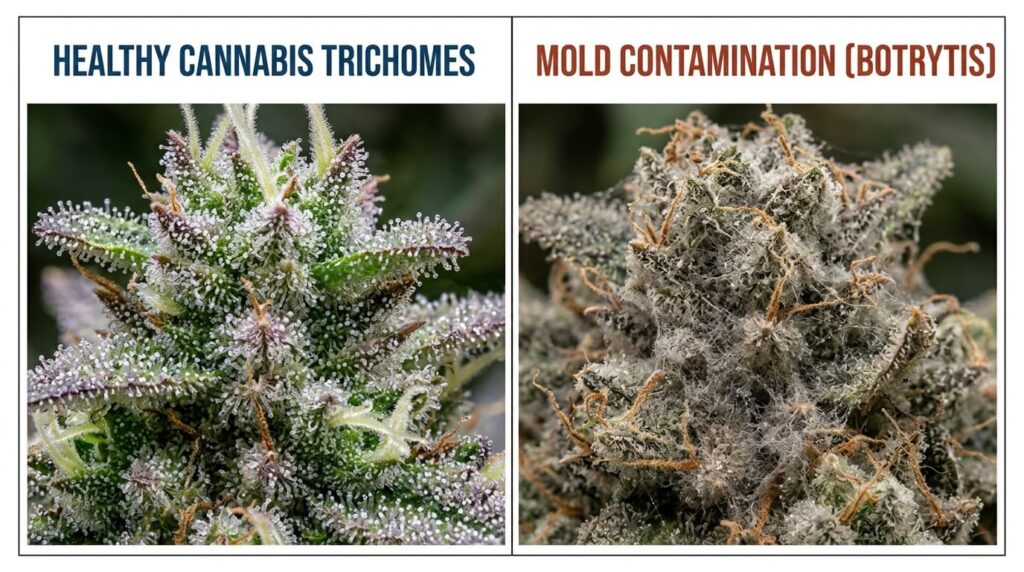
Many beginner growers mistake trichomes for mold, especially during late flowering when resin production reaches its peak.
Trichomes are the resin glands responsible for producing cannabinoids and terpenes. They appear as tiny crystal-like structures covering flowers and sugar leaves. Healthy trichomes look uniform, sparkling, and evenly distributed.
Mold behaves differently. White mold on cannabis often appears fuzzy, cotton-like, or powdery. Instead of sparkling under light, mold typically creates a dull appearance and forms irregular patches.
Key differences include:
- Trichomes have a crystal-like appearance
- Mold appears fuzzy or powdery
- Trichomes are evenly distributed
- Mold develops in isolated patches
- Trichomes remain attached to plant surfaces
- Mold may spread across leaves, stems, and flowers
If you use a jeweler’s loupe or microscope, distinguishing between the two becomes much easier.
Mold vs Nutrient Deficiencies
Nutrient deficiencies can create symptoms that resemble fungal infections. Yellowing leaves, browning tissue, and reduced growth are common examples.
The major difference is that nutrient deficiencies usually follow recognizable patterns. Nitrogen deficiencies often begin on lower leaves, while calcium deficiencies frequently affect new growth.
Mold infections typically create localized damage alongside visible fungal growth. When discoloration appears alongside fuzzy, powdery, or rotting tissue, mold becomes a more likely explanation.
Mold vs Pest Damage
Insects and mites can also create symptoms that mimic mold problems. Spider mites, thrips, and aphids damage plant tissue and weaken overall plant health.
The difference is that pests usually leave evidence behind. You may see:
- Insects on leaves
- Feeding damage
- Webbing
- Eggs
- Black droppings
Mold does not chew plant tissue. Instead, it colonizes and consumes plant material directly.
Mold vs Environmental Stress
Environmental stress can produce symptoms that look alarming but are not caused by pathogens.
Heat stress, overwatering, underwatering, and light burn may result in:
- Wilting
- Curling leaves
- Browning leaf edges
- Stunted growth
While these symptoms may resemble disease, environmental stress alone does not produce visible fungal colonies. However, stressed plants often become more susceptible to mold infections later.
When to Seek Laboratory Testing for Cannabis Contamination
Visual inspections are useful, but they are not always definitive. Certain molds, particularly Aspergillus, may be difficult to identify accurately without laboratory analysis.
Commercial cultivators routinely use microbial testing to verify product safety. If you suspect contamination in harvested cannabis and cannot identify the source with confidence, laboratory testing is the safest option.
How Mold on Cannabis Impacts Consumer Safety
Mold is not only a cultivation problem. It is also a consumer safety issue. While growers often focus on yield loss and crop damage, the potential health consequences deserve equal attention.
The risks vary depending on the mold species, the amount of contamination present, and the health of the individual consuming the cannabis.
The Risks of Smoking Mold on Cannabis
Smoking moldy cannabis introduces fungal spores directly into the respiratory system.
Many consumers assume combustion destroys all contaminants. While heat may reduce some microbial activity, it does not eliminate every risk associated with mold contamination.
Potential short-term effects include:
- Coughing
- Throat irritation
- Chest discomfort
- Respiratory irritation
- Allergic reactions
The severity of symptoms depends on the individual and the extent of contamination.
Respiratory Health Concerns Linked to Cannabis Mold
The lungs are highly sensitive organs. When fungal spores enter the respiratory system, they can trigger inflammatory responses.
Healthy individuals may experience mild symptoms, while people with asthma, allergies, or compromised immune systems face greater risks.
Some individuals report:
- Wheezing
- Shortness of breath
- Sinus irritation
- Increased allergy symptoms
This is one reason why regulated cannabis markets emphasize microbial testing before products reach consumers.
Mycotoxins and Other Harmful Compounds Produced by Mold
Certain molds produce secondary metabolites known as mycotoxins. These compounds are naturally produced during fungal growth and can remain present even after visible mold disappears.
Not every mold species produces dangerous mycotoxins, but several cannabis-associated fungi are capable of doing so.
Potential concerns include:
- Respiratory irritation
- Immune system stress
- Toxic exposure
- Long-term health complications
Because mycotoxins are difficult to detect visually, prevention remains the best strategy.
Why Moldy Cannabis Should Never Be Consumed
Some growers wonder whether contaminated flowers can be salvaged. In most situations, the answer is no.
Visible mold growth usually indicates a broader contamination issue. Fungal networks often extend beyond the areas you can see with the naked eye.
Removing one affected section rarely eliminates the entire problem.
As a grower, I treat moldy cannabis the same way I treat spoiled food. If contamination is present, disposal is generally safer than attempting to save the product.
Preventing Mold on Autoflower Cannabis Throughout Cultivation and Storage
Preventing mold is far easier than trying to save infected flowers. Once fungal pathogens establish themselves inside a cannabis bud, treatment options become extremely limited, particularly with Botrytis (bud rot) and Aspergillus. For autoflower growers, prevention is even more important because plants have a fixed lifecycle and very little time to recover from environmental stress.
After growing autoflowers in a range of indoor and outdoor environments, I’ve found that successful mold prevention isn’t about maintaining one perfect humidity level. It’s about making small decisions throughout the entire grow that prevent moisture from accumulating where fungi thrive.
| Growth Stage | Recommended Humidity Range | Mold Risk Level |
| Seedling | 65-70% | Low |
| Vegetative Stage | 50-70% | Moderate |
| Early Flowering | 45-55% | Moderate |
| Late Flowering | 40-50% | High |
| Drying | 50-60% | Moderate |
| Storage | 55-62% RH | Low |
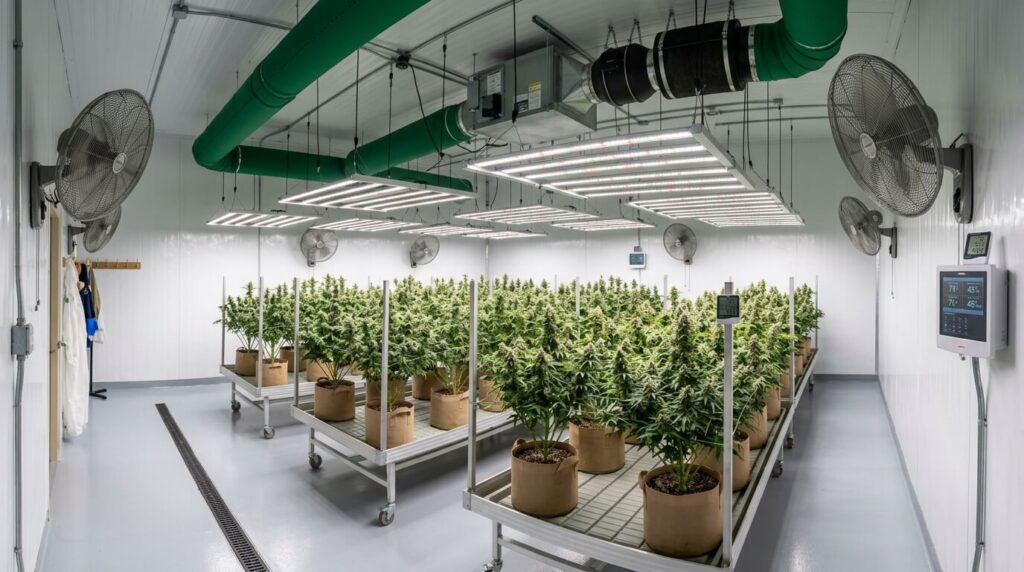
Weeks 1–2: Build an Open Plant From the Start
The first two weeks determine how your autoflower will develop for the rest of its life. Strong airflow at this stage isn’t about preventing mold on seedlings. It is about encouraging sturdy stems and balanced growth that can support an open canopy later.
Avoid placing fans directly on young plants. Instead, use gentle, indirect airflow that keeps fresh air moving throughout the grow space without drying out seedlings.
I also avoid crowding seedlings together. Even though they appear small, mature autoflowers can quickly fill a tent, and poor spacing during the first two weeks often leads to overcrowding later in the grow.
| Early Growth Priority | Why It Matters Later |
| Gentle airflow | Encourages stronger stems and healthier plant structure. |
| Proper plant spacing | Prevents overlapping canopies during flowering. |
| Consistent watering | Reduces stress and supports healthy root development. |
| Clean grow environment | Limits the buildup of fungal spores and decaying organic matter. |
Weeks 3–4: Manage Rapid Vegetative Growth
This is when modern autoflowers often grow surprisingly fast. Healthy plants can double in size within days, producing new branches and foliage that quickly fill available space.
Rather than waiting until flowering begins, I focus on creating an even canopy while stems are still flexible. Early low-stress training (LST) improves light distribution, opens the center of the plant, and reduces the dense foliage that can later trap moisture around developing flowers.
This is also the best time to identify plants that may eventually become too crowded. Once flowering starts, opportunities to reshape the canopy become much more limited.
Weeks 5–7: Prepare the Canopy Before Dense Buds Form
By early flowering, the structure of the plant is largely established. My goal during this stage isn’t aggressive defoliation but improving airflow around future bud sites.
I remove only leaves that block significant airflow or shade multiple flowering sites. Heavy defoliation can stress autoflowers because they don’t have extra vegetative time to recover. Instead, I make small, selective adjustments over several days rather than removing large amounts of foliage at once.
One mistake I often see is growers waiting until flowers become dense before improving airflow. By then, humidity may already be building inside the canopy.
| Week 5–7 Checklist | Purpose |
| Open crowded areas | Improves airflow around developing flowers. |
| Remove damaged leaves | Eliminates tissue where pathogens can establish. |
| Inspect branch spacing | Prevents flowers from growing into one another. |
| Monitor canopy density | Identifies potential problem areas before buds swell. |
Weeks 8–10: Protect Swelling Colas
This is the stage where most mold problems begin.
Large autoflower colas can look perfectly healthy from the outside while developing excess moisture deep inside the flower. Instead of simply checking environmental readings, I inspect the buds themselves every day during the final weeks before harvest.
One of the earliest warning signs I look for isn’t visible mold. It is a sugar leaf that suddenly browns, curls inward, or pulls free from the bud with almost no resistance. Those subtle changes often appear before external signs of Botrytis become obvious.
Avoid squeezing buds during inspections. Gentle visual checks preserve delicate trichomes while helping you spot problems early.
Outdoor Autoflowers Require Different Prevention Strategies
Outdoor autoflowers benefit from finishing earlier than most photoperiod plants, allowing many growers to harvest before prolonged autumn rainfall begins. However, that doesn’t eliminate mold risk.
Morning dew, consecutive rainy days, coastal humidity, and sheltered garden locations can all keep flowers damp for hours after sunrise. Dense autoflower cultivars are especially vulnerable because moisture remains trapped inside large colas long after the outer leaves appear dry.
Whenever prolonged wet weather is forecast near harvest, I increase inspections rather than assuming the plants will dry naturally.
| Outdoor Condition | Why It Matters |
| Morning dew | Keeps flowers wet during the coolest part of the day. |
| Consecutive rainfall | Prevents dense buds from drying completely. |
| Sheltered growing locations | Reduce natural airflow around mature plants. |
| Late-season humidity | Extends the amount of time flowers remain damp. |
Drying Autoflowers Requires Patience
Harvest doesn’t end mold risk.
Modern autoflowers often produce extremely dense, resin-rich flowers that release internal moisture more slowly than many growers expect. Buds that feel dry on the outside can still contain significant moisture deep inside the flower.
Rather than trying to dry flowers as quickly as possible, I focus on consistency. Even drying across the entire plant produces better terpene retention while reducing the chance of hidden moisture creating ideal conditions for fungal growth.
| Drying Priority | Why It’s Important |
| Gentle airflow | Removes moisture without overdrying flower surfaces. |
| Even branch spacing | Allows flowers to dry consistently. |
| Stable drying environment | Prevents moisture fluctuations that encourage mold. |
| Daily inspections | Detects problems before they spread through the harvest. |
Successful mold prevention isn’t built around one humidity number or one environmental setting. It’s the result of understanding how an autoflower changes from week to week and adjusting your cultivation practices before problems have an opportunity to develop. In my experience, growers who treat mold prevention as part of the entire lifecycle, not just something to worry about during flowering, consistently produce healthier plants and cleaner harvests.
What to Do If You Find Mold on Cannabis
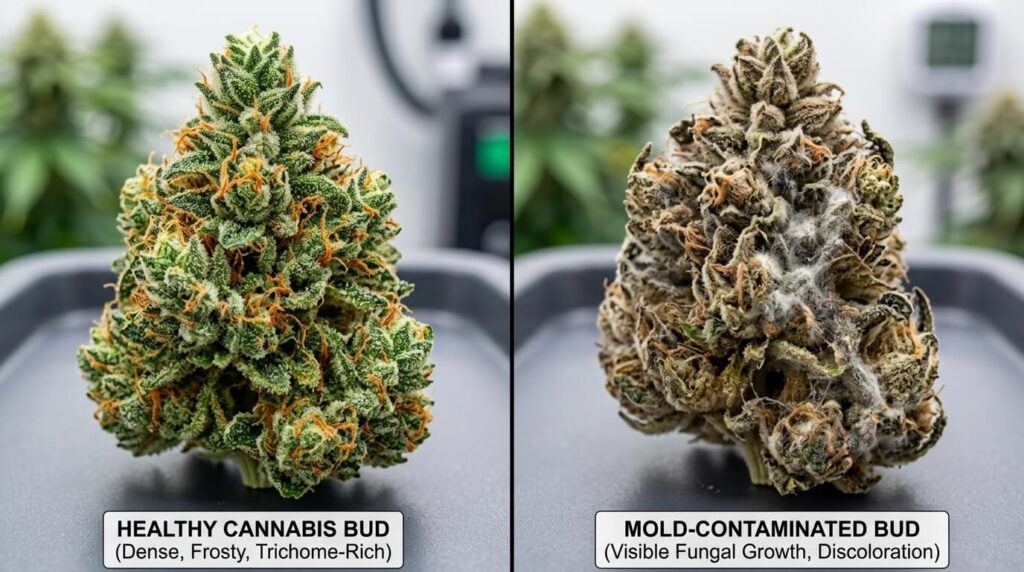
Finding mold on cannabis can be frustrating, but responding quickly can help limit the damage.
The appropriate response depends on the mold type, severity of contamination, and stage of growth.
Can Moldy Cannabis Be Saved?
In some situations, infected plants can be managed if the problem is detected early.
For example, localized powdery mildew infections may be controlled before they spread extensively.
However, severe infections involving flowers and buds are far more difficult to address.
The sooner you identify a problem, the greater your chances of limiting losses.
When Cannabis Should Be Discarded
Certain situations warrant immediate disposal.
Cannabis should generally be discarded when:
- Bud rot is present
- Extensive mold growth affects flowers
- Aspergillus contamination is suspected
- Harvested cannabis shows visible fungal growth
- The extent of contamination cannot be determined
Protecting consumer safety should always take priority over preserving yield.
Preventing Future Mold Outbreaks
After an outbreak, identifying the underlying cause becomes essential.
Ask yourself:
- Was humidity too high?
- Was airflow insufficient?
- Were plants overcrowded?
- Was sanitation overlooked?
- Did drying conditions contribute to contamination?
Correcting these issues reduces the likelihood of future problems.
Conclusion
Mold on cannabis is one of the most common challenges growers face, yet it is also one of the most preventable. Understanding the differences between Fusarium, Pythium, Penicillium, Powdery Mildew, Botrytis cinerea, and Aspergillus allows you to identify problems early and take appropriate action before significant damage occurs.
Whether you grow cannabis at home or operate on a commercial scale, successful mold management starts with environmental control, routine inspections, and proper post-harvest handling. By maintaining healthy growing conditions and learning the warning signs associated with each mold type, you can protect your plants, preserve cannabinoid and terpene content, and produce safer cannabis for consumption.
The best growers are not the ones who never encounter mold. They are the ones who recognize it quickly, understand its causes, and create cultivation practices that make future outbreaks far less likely.
Frequently Asked Questions About Mold on Cannabis
Can you smoke mold on cannabis?
No, you should never smoke moldy cannabis. Inhaling mold spores may irritate the respiratory system and could increase the risk of allergic reactions or other health complications, particularly for individuals with asthma, allergies, or weakened immune systems.
What is the most common mold on cannabis?
Powdery mildew and Botrytis cinerea (bud rot) are among the most common molds found on cannabis plants. Powdery mildew typically affects leaves and stems, while Botrytis commonly develops inside dense flowers during late flowering.
What does mold on cannabis look like?
Mold on cannabis can appear as white powdery patches, fuzzy gray growth, blue-green spots, black discoloration, or rotting flower tissue. The appearance depends on the type of mold involved and the stage of infection.
How can you tell the difference between mold and trichomes?
Trichomes appear as sparkling crystal-like resin glands that are evenly distributed across flowers and sugar leaves. Mold usually appears fuzzy, powdery, cotton-like, or patchy and lacks the reflective appearance of healthy trichomes.
Can mold spread between cannabis plants?
Yes. Most cannabis molds reproduce by releasing microscopic spores into the air. These spores can spread through ventilation systems, fans, tools, clothing, and direct plant-to-plant contact, allowing infections to move quickly throughout a grow space.
What causes mold on cannabis plants?
High humidity, poor airflow, overcrowded canopies, excessive watering, temperature fluctuations, and improper drying or storage conditions are some of the most common causes of mold on cannabis.
Can mold grow on cannabis after harvest?
Yes. Mold can develop during drying, curing, or long-term storage if moisture levels remain too high. Proper humidity control and storage practices are essential for preventing post-harvest contamination.
What humidity level causes mold on cannabis?
While the exact threshold varies between mold species, humidity levels above 60% significantly increase the risk of fungal growth. During flowering, many growers aim to keep relative humidity between 40% and 50% to reduce mold pressure.
Can moldy cannabis be saved?
In some cases, minor powdery mildew infections can be managed if caught early. However, cannabis affected by bud rot, Aspergillus, or extensive mold growth should generally be discarded to protect consumer safety.
What is the most dangerous mold found on cannabis?
Aspergillus is often considered one of the most concerning cannabis molds because certain species can cause serious respiratory issues in susceptible individuals. This is why many regulated cannabis markets require laboratory testing for Aspergillus contamination before products can be sold.
How do commercial cannabis growers prevent mold?
Commercial cultivators use environmental controls such as humidity management, air circulation systems, sanitation protocols, routine plant inspections, and laboratory testing to minimize the risk of mold outbreaks and ensure product safety.
Can mold grow inside cannabis buds without being visible?
Yes. Botrytis cinerea, commonly known as bud rot, often develops deep inside dense flowers before any external symptoms become visible. Regular inspections and proper environmental management help reduce the risk of hidden infections.