
Barnacles on Cannabis Plants: How to Identify, Treat & Prevent Scale Insects
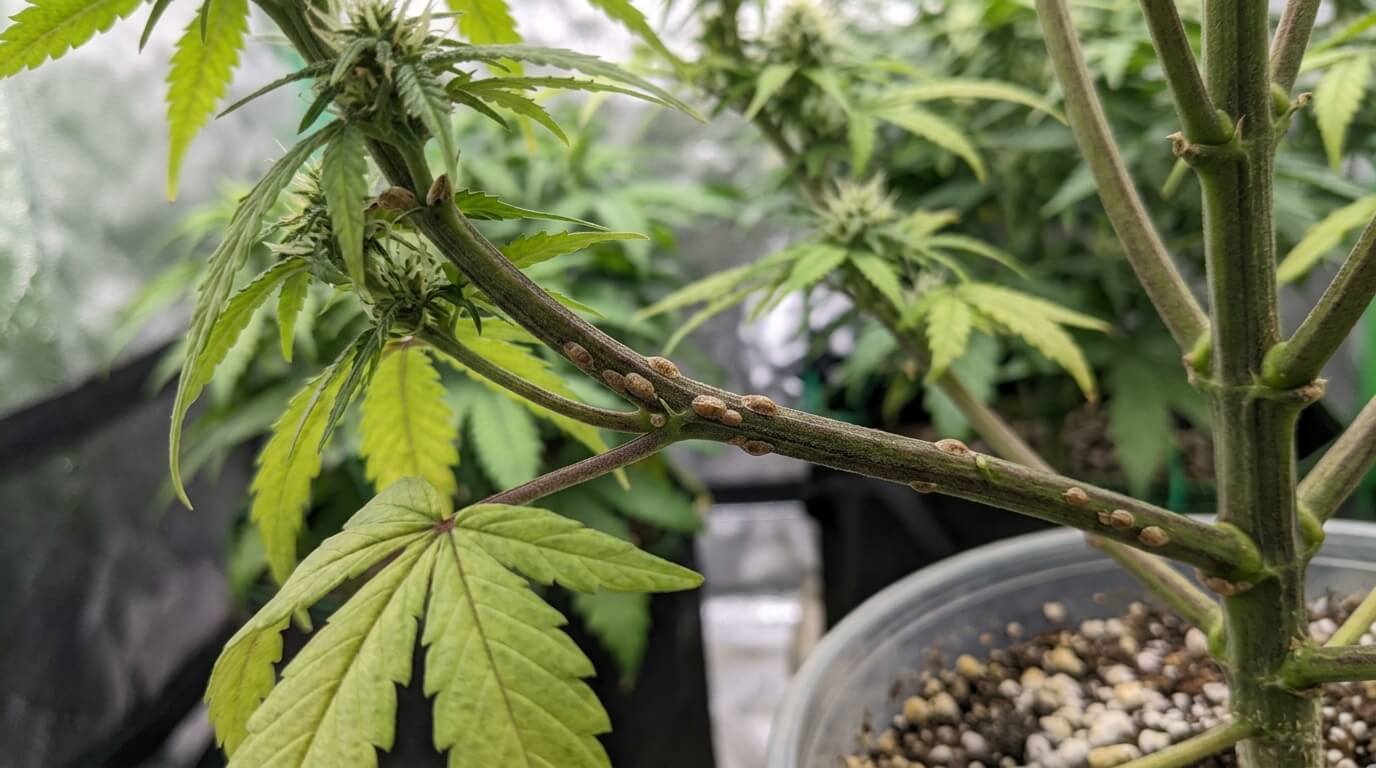
Scale insects, often called “barnacles on cannabis,” are small sap-feeding pests that attach themselves to stems and leaves where they slowly weaken cannabis plants over time. Many growers mistake them for harmless blemishes or residue during the early stages, which allows infestations to spread unnoticed through the canopy. If left untreated, cannabis scale insects can reduce plant vigor, slow flower development, and create secondary issues such as mold and ant activity. The good news is that early identification, proper environmental control, and consistent treatment methods can usually keep infestations manageable and protect overall plant health.
Article Insights
- Barnacles on cannabis are typically scale insects that attach to stems and leaves while feeding on plant sap.
- Early infestations are commonly found on lower branches and leaf undersides where airflow is limited.
- Heavy cannabis scale insect infestations can slow growth, weaken flower production, and increase the risk of mold issues.
- Organic treatments such as neem oil, horticultural oils, and insecticidal soap often require repeated applications every 5–7 days.
- Regular inspections during both vegetative growth and flowering help identify infestations before they spread through the canopy.
- Poor airflow, overcrowded plants, and high humidity levels are commonly associated with increased pest pressure indoors.
- Article Insights
- Cannabis Scale Insects at a Glance
- What Are Scale Insects on Cannabis?
- How to Identify Barnacles on Cannabis Plants Early
- Damage Caused by Scale Insects on Cannabis Plants
- How to Get Rid of Barnacles on Cannabis
- Preventing Future Cannabis Barnacle Infestations
- Frequently Asked Questions
- Conclusion
Cannabis Scale Insects at a Glance
| Problem | Description |
| Common Names | Barnacles on cannabis, cannabis barnacles, scale insects |
| Pest Type | Sap-sucking insect |
| Common Locations | Stems, nodes, leaf undersides |
| Appearance | Hard brown, tan, amber, or white bumps |
| Main Damage | Weak growth, reduced yields, mold risk |
| Common Treatments | Neem oil, insecticidal soap, horticultural oil |
| Difficulty Level | Moderate |
| Prevention Focus | Airflow, hygiene, inspections |
Many new growers start with autoflower seeds for beginners because resilient genetics can make environmental management and pest prevention easier indoors.
What Are Scale Insects on Cannabis?
Scale insects are parasitic pests that feed on cannabis plant sap while remaining attached to plant tissue. Unlike mobile pests such as aphids or spider mites, mature scale insects stay fixed in one location beneath a waxy or armored shell. This protective covering is why growers often refer to them as cannabis barnacles.
These pests weaken your plants gradually. While also draining nutrients and moisture, they stress your cannabis plants and reduce their ability to focus energy on vegetative growth and flower production.
What Are Scale Insects and Why They’re Called Cannabis Barnacles
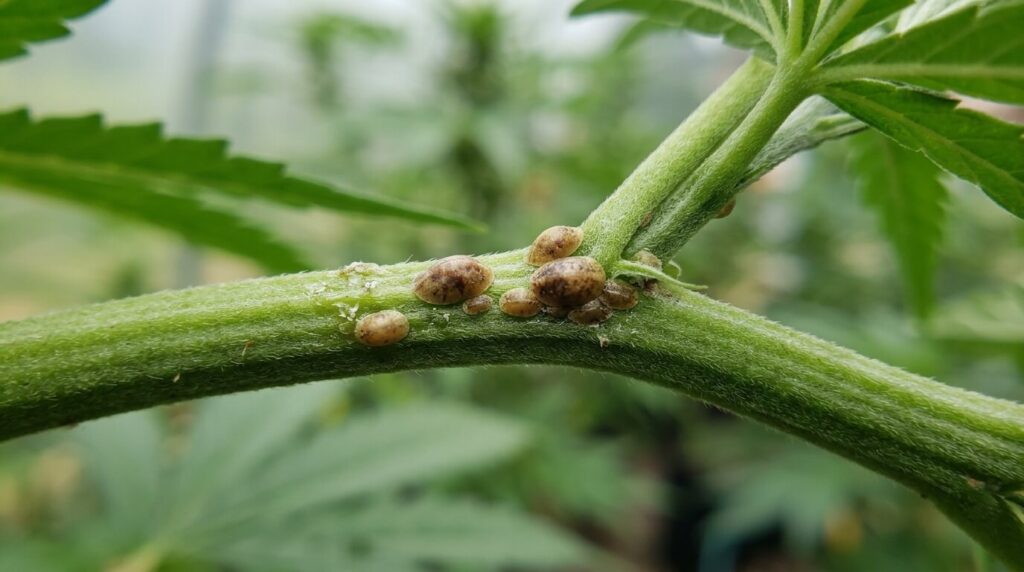
Scale insects resemble tiny barnacles because they latch onto stems and leaves in the same way marine barnacles attach to rocks or boats. Once attached, they create a hard shell that protects them from predators and many foliar sprays.
You will commonly notice:
- Hard dome-shaped bumps
- White, tan, or brown shells
- Clusters forming along branches
- Immobile insects attached to stems
- Sticky residue on surrounding leaves
I often tell growers that scale insects are like freeloaders camping on your plant while draining its energy one sip at a time. The problem is that they do it slowly enough that many people do not notice until the infestation becomes serious.
Types of Scale Insects Affecting Cannabis Plants
Cannabis plants are mainly affected by two forms of scale insects.
| Type | Characteristics | Main Risk |
| Soft Scale | Waxy coating, produces honeydew | Mold and ant infestations |
| Armored Scale | Hard shell, more treatment resistant | Persistent infestations |
Soft scale insects are common in humid grow rooms because moisture encourages honeydew buildup and fungal growth. Armored scale insects are more difficult to eliminate because their shells protect them from many treatments.
Barnacle Scale Cannabis: Why They Appear on Stems and Leaves
Scale insects prefer protected areas with stable environmental conditions. You will usually find them attached to:
- Lower branches
- Stem joints
- Leaf veins
- Undersides of fan leaves
- Dense canopy zones with low airflow
In my experience, poor air circulation and overcrowded canopies create perfect conditions for cannabis scale insects to establish themselves unnoticed.
How to Identify Barnacles on Cannabis Plants Early
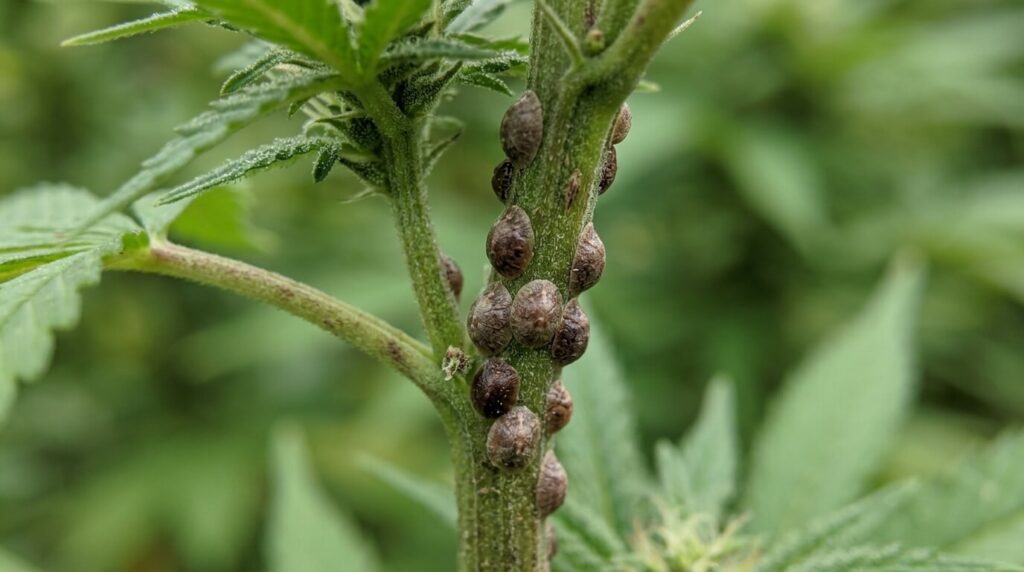
Early identification is the difference between a manageable pest issue and a full infestation. The crawler stage is the only mobile phase of the scale insect lifecycle, and this is when treatment is most effective.
Quick Identification Guide
You are likely dealing with barnacles on cannabis if you notice:
- Hard bumps attached to stems
- White or amber shell-like spots
- Sticky honeydew residue
- Yellowing leaves without nutrient deficiencies
- Ant activity around branches
- Slowed vegetative growth
Immediate action should include:
- Isolating infected plants
- Removing visible scale insects
- Applying organic treatments
- Repeating applications every 5–7 days
Visual Signs of Barnacles on Cannabis
Scale insects vary in appearance depending on species and maturity.
| Visual Sign | Description |
| Brown domes | Mature armored scale |
| White waxy bumps | Soft scale insects |
| Sticky residue | Honeydew secretion |
| Black mold patches | Sooty mold growth |
| Yellow leaves | Nutrient and moisture loss |
When I inspect cannabis plants, I gently scrape suspicious bumps with my fingernail. If the shell lifts away and reveals a soft insect underneath, it is scale.
Where to Look for Cannabis Scale Insects
You should always inspect:
- Lower canopy branches
- Fan leaf undersides
- Main stems near nodes
- Areas with poor airflow
- Dense vegetative growth
I usually start inspections from the bottom of the plant because infestations commonly begin there before spreading upward.
Difference Between Scale Insects, Aphids, and Mealybugs
Growers often confuse scale insects with other common cannabis pests.
| Pest | Movement | Appearance |
| Scale Insects | Immobile | Hard shell bumps |
| Aphids | Mobile | Soft pear-shaped insects |
| Mealybugs | Slow-moving | Cotton-like residue |
| Spider Mites | Highly mobile | Tiny dots with webbing |
The easiest way to identify cannabis barnacles is by observing movement. Mature scale insects do not move when disturbed.
Damage Caused by Scale Insects on Cannabis Plants
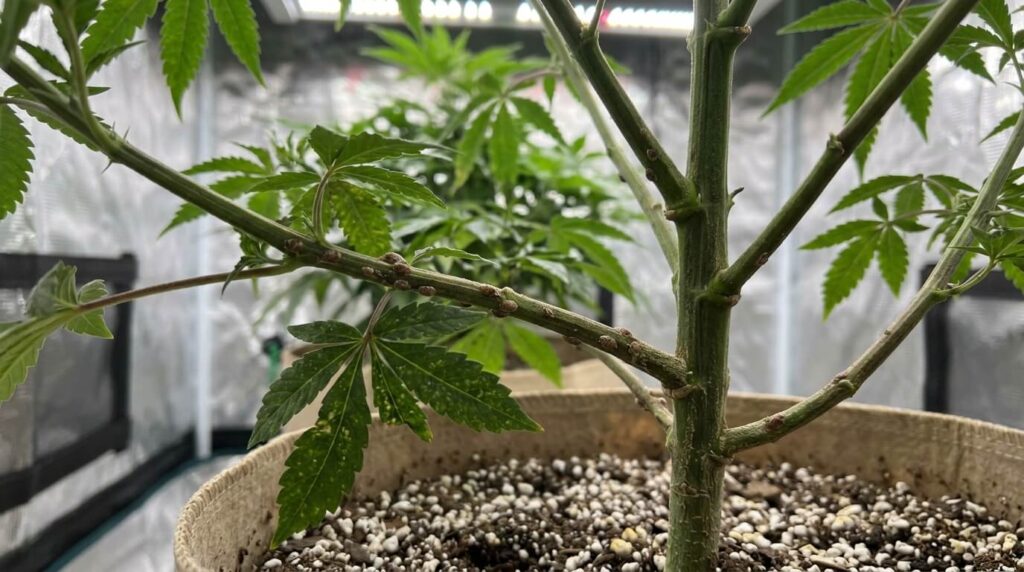
Scale insects damage cannabis slowly but consistently. Heavy infestations can reduce yields significantly while also stressing your plants throughout the grow cycle.
How Scale Insects Feed on Cannabis Plants
Scale insects use piercing mouthparts to feed directly on plant sap. This process removes:
- Water
- Nutrients
- Sugars
- Energy reserves
Your cannabis plant becomes weaker because it constantly redirects resources toward survival instead of growth and resin production.
Impact on Cannabis Growth and Yields
Cannabis scale insects commonly cause:
- Slowed vegetative growth
- Reduced bud density
- Lower terpene production
- Reduced trichome development
- Weak stems and branches
- Premature leaf yellowing
I have seen flowering plants lose both potency and aroma because severe infestations reduced overall plant health.
Unchecked infestations can reduce branch development and overall flower production, limiting the performance commonly associated with high yield autoflower seeds.
Secondary Problems Caused by Honeydew
Soft scale insects produce honeydew, which is a sticky sugary substance that creates additional problems.
| Secondary Problem | Cause |
| Sooty mold | Honeydew buildup |
| Ant infestations | Ants feed on honeydew |
| Reduced photosynthesis | Mold blocks light |
| Airflow issues | Sticky leaf surfaces trap debris |
This also creates a cycle where ants begin protecting scale insects from predators in exchange for honeydew.
How to Get Rid of Barnacles on Cannabis
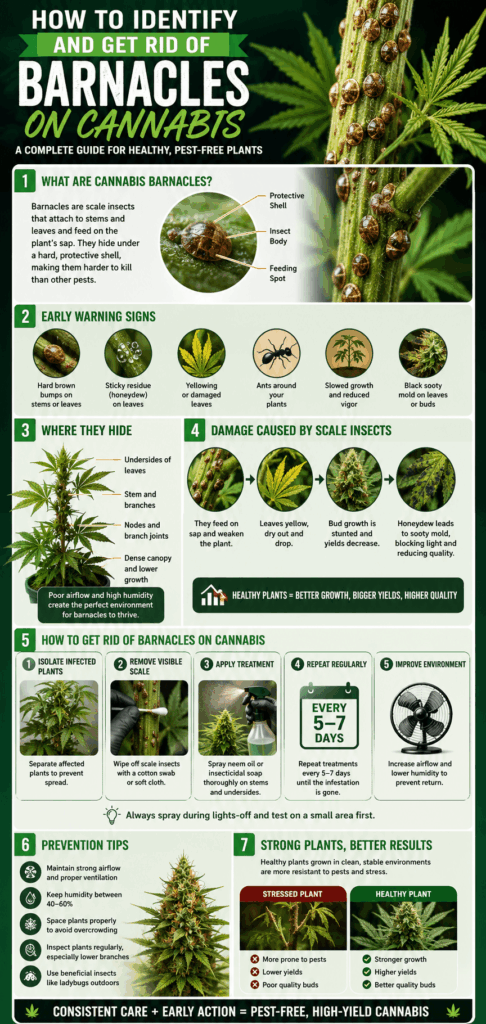
If you want to know how to get rid of barnacles on cannabis effectively, you need to combine physical removal, repeated organic treatments, and environmental corrections.
Manual Removal Methods
For light infestations, I begin with direct removal.
My process is simple:
- Gently scrape scale insects from stems
- Wipe affected areas with diluted alcohol
- Remove heavily infested leaves
- Repeat inspections every few days
Manual removal works well because it immediately reduces the pest population before treatment begins.
Organic Treatments for Cannabis Scale Insects
Organic treatments are effective when applied consistently.
| Treatment | How It Works |
| Neem Oil | Disrupts insect lifecycle |
| Insecticidal Soap | Breaks down protective coating |
| Horticultural Oil | Suffocates insects |
| Alcohol Solution | Dissolves waxy shell |
I always spray during lights-off periods because this reduces the risk of leaf burn under grow lights.
For best results:
- Spray stems thoroughly
- Cover leaf undersides
- Repeat every 5–7 days
- Rotate treatments to avoid resistance
Consistency is the real trick here. One spray and a prayer will not solve a scale infestation.
Chemical Controls and Safety Considerations
Systemic insecticides can kill scale insects effectively, but I avoid using them during flowering because residues may remain in the final product.
If you decide to use chemical controls:
- Use them only during vegetative growth
- Follow label instructions carefully
- Avoid spraying developing buds
- Monitor plants closely afterward
Clean medicine starts with clean cultivation practices.
Integrated Pest Management for Long-Term Control
Integrated Pest Management, or IPM, combines prevention and treatment into a long-term strategy.
A strong cannabis IPM program includes:
- Regular inspections
- Environmental control
- Biological predators
- Treatment rotation
- Grow room sanitation
IPM is not just reacting to pests. It is preventing them from establishing themselves in the first place.
Preventing Future Cannabis Barnacle Infestations
Prevention is easier than fighting a full outbreak halfway through flowering.
Environmental Control and Grow Room Hygiene
Scale insects thrive in stagnant environments with poor airflow.
You should maintain:
- Strong canopy airflow
- Moderate humidity levels
- Clean grow surfaces
- Sterilized trimming tools
- Proper plant spacing
I clean my grow room regularly because pests love neglected corners and dirty equipment.
Regular Inspection Routines
Routine inspections help you catch infestations during the crawler stage before mature shells develop.
| Inspection Area | Frequency |
| Lower branches | Every 2–3 days |
| Leaf undersides | Weekly |
| Incoming clones | Before introduction |
| Dense canopies | Twice weekly |
You should treat inspections like feeding schedules. They become part of your normal cultivation routine.
Natural Predators and Biological Controls
Several beneficial insects feed on scale insects naturally.
| Predator | Benefit |
| Ladybugs | Consume soft-bodied pests |
| Parasitic wasps | Attack scale insects directly |
| Lacewings | Feed on crawler stages |
I mainly use biological controls outdoors or inside greenhouse environments where predator populations remain stable.
When an Infestation Is Too Severe to Save
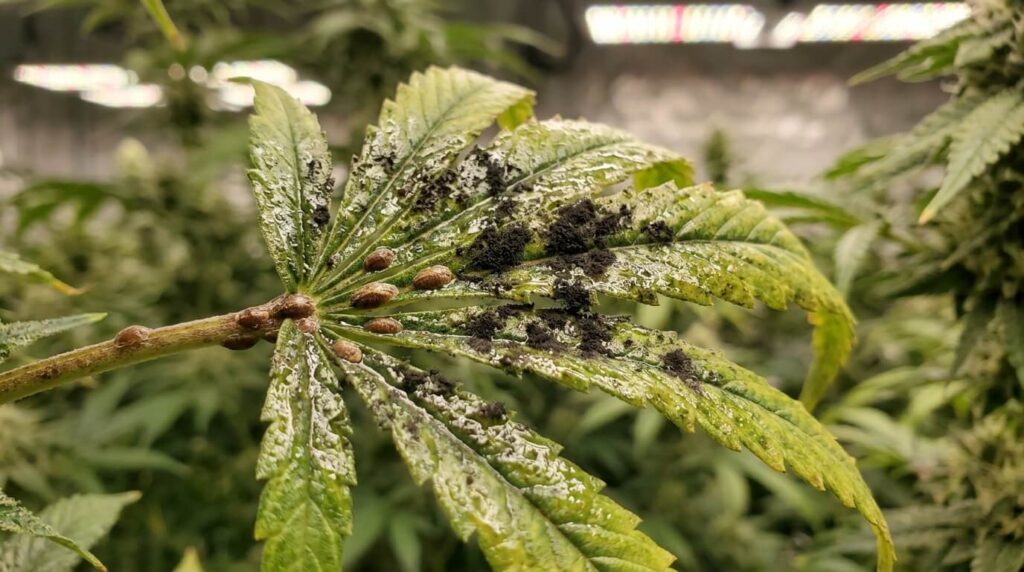
Sometimes the best decision is removing a heavily infected plant.
You should consider disposal if:
- Stems are heavily coated
- Mold is spreading rapidly
- Growth has stalled completely
- Treatments repeatedly fail
- Nearby plants are becoming infected
It is frustrating to sacrifice a plant, but protecting the rest of your grow is often the smarter move.
Frequently Asked Questions
What causes barnacles on cannabis plants?
Barnacles on cannabis are usually introduced through contaminated clones, infected tools, poor sanitation, or outdoor exposure. Stable indoor temperatures and poor airflow also encourage infestations.
Are cannabis scale insects harmful to yields?
Yes. Scale insects feed directly on plant sap, which weakens the plant and reduces energy available for flower production, terpene development, and resin formation.
Can you remove cannabis barnacles by hand?
Yes. Manual removal is highly effective for small infestations. You can scrape them away carefully and combine removal with organic sprays for better long-term control.
How long does it take to eliminate scale insects on cannabis?
Mild infestations may clear within one to two weeks, while severe infestations can require several weeks of repeated treatment and monitoring.
Do neem oil and organic treatments work on barnacle scale cannabis infestations?
Yes. Neem oil, horticultural oils, and insecticidal soaps work well when applied consistently and thoroughly over multiple treatment cycles.
How do you stop cannabis barnacles from returning?
Prevention focuses on cleanliness, airflow, regular inspections, quarantining new plants, and maintaining a strong integrated pest management routine.
Healthy environmental conditions and consistent pest management help high THC autoflower seeds maintain strong terpene expression, resin production, and overall flower quality.
Conclusion
Barnacles on cannabis plants may look harmless at first, but scale insects can slowly drain plant energy, reduce yields, and create serious secondary problems if left untreated. The good news is that you can control them effectively through early identification, proper environmental management, and consistent treatment routines.
I always tell growers that successful pest management comes down to discipline. If you inspect your plants regularly, maintain proper airflow, and react quickly when problems appear, cannabis scale insects rarely become catastrophic.
Healthy cannabis cultivation is not just about feeding plants and chasing yields. It is about building a clean, balanced environment where your plants can thrive without unnecessary stress. When you stay proactive and consistent, your grow room stays productive, your flowers stay resinous, and those little cannabis barnacles never get the upper hand.