
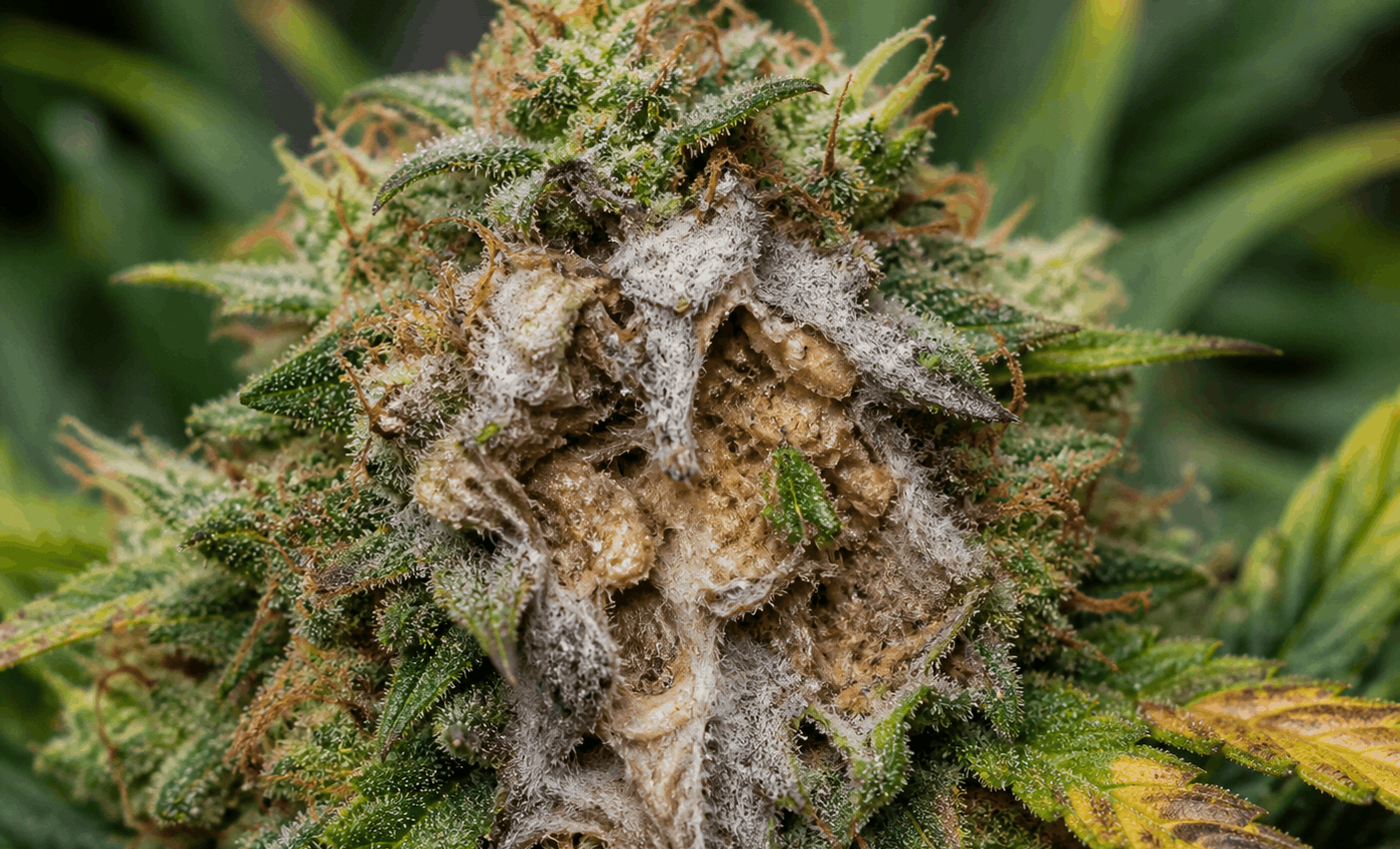
Autoflower Bud Rot: Signs, Causes, Treatment & Prevention
Autoflower bud rot is a destructive fungal disease caused by Botrytis cinerea. It develops when moisture becomes trapped inside dense buds, allowing the fungus to spread through the flower. Because infections often start deep within a cola, growers may not notice the problem until visible damage appears.
High humidity, rainfall, and poor airflow can all increase the risk of bud rot, especially during late flowering. If left untreated, it can quickly spread and reduce both yield and quality.
In this guide, you’ll learn how to identify autoflower bud rot, what causes it, how to remove infected buds safely, and the best ways to protect your harvest.
Article Insights
- Autoflower bud rot is caused by Botrytis cinerea, a fungus that thrives in humid conditions during flowering.
- Early signs include brown sugar leaves, soft buds, grey mould, and a musty smell.
- Humidity above 55%, poor airflow, rainfall, and temperature swings can increase the risk of infection.
- Remove infected buds immediately using sterilised tools to prevent spores from spreading.
- Maintaining 40-50% humidity during late flowering helps reduce the risk of bud rot.
- Regular inspections can help catch infections early and protect your harvest.
What Is Bud Rot and Why It’s a Serious Problem for Growers
Bud rot is a destructive fungal disease caused by Botrytis cinerea, a pathogen that attacks cannabis flowers during the flowering stage. The infection typically starts deep inside dense buds where trapped moisture creates the perfect environment for fungal growth. Because it develops from the inside out, growers often do not notice a problem until visible damage has already occurred.
One of the reasons cannabis bud rot is so dangerous is how quickly it can spread through healthy flowers once an infection becomes established. A single infected cola can release microscopic spores that contaminate nearby flowers, turning healthy buds brown, soft, and unusable within a short period. Although this guide focuses on autoflower plants, bud rot can significantly reduce yield, potency, and harvest quality when infections are not caught early.
Understanding what causes bud rot in cannabis and recognising the earliest warning signs can help growers act quickly and prevent widespread losses.
Why does bud rot (Botrytis) spread so quickly
Botrytis spreads by releasing airborne spores that can easily move between cannabis plants. Once the fungus gains access to a flower, it feeds on plant tissue and continues expanding throughout the bud structure. Because the infection often begins in the centre of a cola, it can remain hidden until advanced symptoms appear.
Several factors can accelerate the spread of bud rot:
- Airborne spores can travel between plants through natural airflow and ventilation systems.
- Rainfall and water droplets may transfer spores onto surrounding flowers outdoors.
- Insects and pests can carry fungal spores from one plant to another.
- Handling infected buds without cleaning tools or gloves can spread contamination.
- Dense flowers, including some modern autoflower cultivars, can trap moisture and create favourable conditions for fungal development.
- Sudden environmental stress can weaken flowers and increase their susceptibility to infection.
For growers dealing with autoflower bud rot, regular inspections during late flowering are especially important, as fast-maturing plants can deteriorate quickly once an infection takes hold.
Is bud rot dangerous to smoke or consume?
Yes. Cannabis affected by bud rot should never be smoked, vaporised, processed into extracts, or consumed in any form.
Botrytis-infected buds contain fungal growth and mold spores that can irritate the respiratory system when inhaled. Some contaminated flowers may also contain other harmful fungi associated with aspergillus contamination. Smoking contaminated cannabis may lead to coughing, throat irritation, chest discomfort, and other respiratory issues. Individuals with allergies, asthma, or weakened immune systems may face an even greater risk.
If a bud shows visible signs of mold, discoloration, soft tissue, or a sour, musty smell, it should be discarded immediately, particularly when fungal growth resembles penicillium mold or other harmful contaminants. Even proper techniques for drying and curing autoflowers cannot make mold-contaminated flowers safe to consume.
What Does Bud Rot Look Like and Smell Like?
Bud rot often develops silently inside dense autoflower buds before any obvious symptoms appear on the outside. This is why many growers discover the infection only after opening a cola or noticing dead sugar leaves protruding from an otherwise healthy-looking bud.
Learning to recognise the earliest cannabis bud rot signs can mean the difference between removing a single infected flower and losing a significant portion of your harvest. For autoflower growers, regular inspections during the final weeks before harvest are essential for catching Botrytis before it spreads.
Early signs of bud rot most growers miss
The first stage of bud rot usually begins deep within the centre of a flower where moisture becomes trapped. At this point, the infection may not be visible from the outside.
Common early warning signs include:
- Sugar leaves turning brown, yellow, or dry while surrounding foliage remains healthy.
- Small dark grey or brown patches appearing inside dense buds.
- Flowers feeling unusually soft, airy, or hollow when gently squeezed.
- A faint musty smell replacing the strain’s normal terpene profile.
- Fine grey fungal growth beginning to develop within the flower structure.
Early Autoflower Bud Rot Symptoms
When autoflower bud rot develops, the first signs often appear in the largest top colas during the final weeks before harvest. Modern autoflower genetics can produce dense flowers that trap moisture in the same way as photoperiod plants.
In my experience growing autoflowers outdoors, the earliest warning sign is usually a cluster of sugar leaves turning brown and pulling away from the bud with almost no resistance.
Once Botrytis becomes established, the damage progresses rapidly and becomes much easier to identify.
Advanced cannabis bud rot signs include:
- Entire sections of a cola turning dark brown or grey.
- Buds becoming soft, wet, or mushy when touched.
- Branches supporting infected flowers becoming weak and discolored.
- Buds shrinking as plant tissue breaks down.
- Visible grey web-like fungal growth spreading through the flower.
- Complete loss of the strain’s natural aroma and resin production.
Mid to Late-Stage Autoflower Bud Rot
During the middle stages of bud rot autoflower plants may appear healthy from a distance, but infected flowers will quickly deteriorate when examined closely. As the fungus spreads, the cola can collapse internally, leaving behind dry, crumbly plant material covered in spores.
In severe cases, an autoflower that looked harvest-ready one day can lose multiple colas within a week if environmental conditions continue to favour fungal growth.
What Does Bud Rot Smell Like?
One of the easiest ways to identify bud rot is through smell. Healthy cannabis flowers produce a rich terpene profile unique to the cultivar, while infected buds develop a distinctly unpleasant odour.
Growers commonly describe bud rot as:
- Sour and fermented
- Musty or damp
- Earthy like wet forest soil
- Ammonia-like
- Similar to rotting vegetation or mushrooms
If a flower smells unpleasant or significantly different from the rest of the plant, inspect it immediately for hidden signs of infection.
How to Tell the Difference Between Bud Rot and Other Mold
Bud rot caused by Botrytis cinerea is particularly dangerous because it develops inside dense autoflower buds before spreading outward. Unlike many fungal diseases, including some fusarium infections, Botrytis often develops deep inside the flower before visible symptoms appear.
| Fungal Problem | Appearance | Common Location | Key Difference |
| Bud Rot (Botrytis) | Brown, gray, or black decaying buds | Inside dense flowers | Starts inside the cola and destroys the flower from within |
| Gray Mold | Thin gray fuzzy growth | Surface of buds | Usually remains external and is easier to spot |
| Powdery Mildew | White powder-like coating | Leaves and stems | Appears on foliage rather than inside buds |
Gray Mold vs Bud Rot
Gray mold can look similar to bud rot but typically remains on the surface of buds and is easier to detect. It often produces a damp, musty smell and commonly appears during drying or curing.
Powdery Mildew vs Bud Rot
Powdery mildew appears as white, powder-like patches on leaves and stems. Unlike Botrytis, it rarely develops inside flowers and is usually identified before affecting buds.
Why Bud Rot Is More Dangerous
The main difference is where the infection begins. While most molds appear on leaves or the surface of flowers, Botrytis develops inside the bud, where trapped moisture allows it to spread unnoticed. By the time symptoms become visible, much of the cola may already be infected, making bud rot one of the most destructive fungal threats to autoflower harvests.
What Causes Autoflower Bud Rot?
Autoflower bud rot is caused by Botrytis cinerea, a fungal pathogen that infects cannabis flowers when environmental conditions allow spores to germinate and spread. These microscopic spores are naturally present in the environment and are one of several causes of mold on cannabis when moisture accumulates inside dense autoflower flowers.
Once Botrytis spores land on an autoflower bud and absorb sufficient moisture, they begin germinating and producing fungal threads that penetrate the flower. The fungus then feeds on plant tissue from the inside out, gradually breaking down the bud’s structure. This is why bud rot often remains hidden until visible symptoms appear on the outside of the flower.
It is easy to assume autoflowers are less likely to develop bud rot because they have shorter life cycles than photoperiod plants. While a shorter flowering period can reduce exposure to poor weather conditions, modern autoflower genetics are capable of producing dense, resinous flowers that can be just as susceptible to fungal infections when growing conditions are not properly managed.
Understanding what causes bud rot in autoflowers allows growers to identify risk factors early and reduce the likelihood of losing valuable flowers during the final weeks before harvest.
High Humidity and Moisture Buildup in Autoflower Buds
High humidity is one of the leading causes of autoflower bud rot, which is why maintaining the best temperature and humidity for autoflowers is so important during flowering. When relative humidity remains elevated during flowering, moisture becomes trapped inside dense buds where airflow is limited. This creates the perfect environment for Botrytis spores to germinate and spread.
Conditions that commonly contribute to moisture buildup include:
- Humidity levels above 60% during flowering.
- Rainfall soaking outdoor autoflower plants.
- Morning dew settling on mature buds.
- Condensation caused by day and night temperature fluctuations.
- Excess moisture trapped inside large, dense colas.
From my own experience growing autoflowers outdoors, the highest-risk period is usually the final two to three weeks before harvest. At this stage, flowers are at their largest size, resin production is peaking, and moisture can become trapped deep within the buds following periods of rain or humid weather.
Why Dense Autoflower Genetics Increase Bud Rot Risk
Modern autoflower strains have evolved significantly over the years. Many cultivars now produce dense flowers that rival photoperiod plants in both size and quality. While this is excellent for yields, it also increases the likelihood of moisture becoming trapped within the flower structure.
Dense buds create small pockets where humidity can accumulate and airflow becomes restricted. Once fungal spores establish themselves in these areas, the infection can spread through the cola before any obvious symptoms become visible.
This is particularly common in some high yield autoflower seeds, where large central colas may retain moisture long after the surrounding environment appears dry.
Through breeding and field testing autoflower cultivars, we’ve found that flower density is one of the biggest factors influencing bud rot susceptibility. Some high-yielding lines can produce exceptionally dense colas, but those same traits may increase risk in humid environments. When evaluating new genetics, we pay close attention to flower structure, airflow between bud sites, and outdoor performance before selecting breeding stock.
Poor Airflow and Stagnant Conditions Around Autoflowers
Even when humidity levels are relatively low, poor airflow can create localized pockets of moisture around developing flowers. Without sufficient air movement, moisture cannot evaporate efficiently from leaves and buds, increasing the likelihood of fungal growth.
Common airflow issues include:
- Overcrowded grow tents.
- Plants positioned too closely together.
- Large fan leaves restricting air circulation.
- Insufficient extraction systems.
- Lack of oscillating fans within the grow space.
One of the most common mistakes growers make is focusing solely on humidity while overlooking airflow. In reality, humidity and air circulation work together, and poor airflow can create favorable conditions for bud rot even when environmental readings appear acceptable.
One recurring issue we see when helping customers diagnose bud rot is relying on a single fan pointed above the canopy. The upper leaves may appear to be moving, but dense flowers lower in the canopy can still sit in stagnant air. Air movement through the bud sites themselves is usually more important than simply having a fan running in the grow space.
Outdoor Autoflower Bud Rot Causes
Outdoor autoflowers are often exposed to environmental conditions that growers cannot fully control. Rainfall, humidity, fog, and morning dew can all contribute to fungal development during flowering.
Common outdoor causes of bud rot autoflower growers encounter include:
- Extended periods of rainfall.
- High humidity during late flowering.
- Morning dew remaining on buds for long periods.
- Limited airflow between neighboring plants.
- Dense flowers drying slowly after wet weather.
Because many autoflowers finish during late summer, growers sometimes underestimate the risk of fungal infections. However, several consecutive days of humid weather can create ideal conditions for Botrytis development, particularly when flowers are approaching harvest.
Indoor Autoflower Bud Rot Causes
Indoor growers have greater control over the environment, but bud rot can still occur when humidity and airflow are not properly managed.
The most common indoor causes include:
- Humidity spikes during flowering.
- Inadequate ventilation systems.
- Overwatering increasing ambient humidity.
- Dense plant canopies restricting airflow.
- Large temperature fluctuations between lights-on and lights-off periods.
I’ve found that indoor growers often focus heavily on temperature while underestimating the impact of humidity. Healthy-looking autoflowers can develop hidden fungal infections when moisture levels remain elevated inside dense flowers for extended periods.
Are Autoflowers More Resistant to Bud Rot?
A common misconception is that autoflowers are naturally resistant to bud rot because they flower and mature faster than photoperiod plants. While shorter life cycles can reduce exposure to adverse weather conditions, autoflowers are not immune to fungal infections.
In reality, susceptibility depends far more on environmental conditions and flower structure than whether a plant is autoflowering or photoperiod. Dense buds, poor airflow, and excessive moisture can cause bud rot in any cannabis plant.
Some autoflower strains may display greater resistance due to their open flower structure, but even the most resilient genetics can develop bud rot when conditions favor fungal growth.
Environmental Triggers That Accelerate Bud Rot
Once Botrytis spores are present, several environmental triggers can dramatically increase the speed at which an infection spreads.
These include:
- Heavy rainfall close to harvest.
- Prolonged periods of high humidity.
- Significant temperature drops overnight.
- Excessive watering practices.
- Stagnant air within the canopy.
- Poorly ventilated grow rooms and greenhouses.
In most cases, bud rot develops when multiple risk factors occur simultaneously. High humidity alone may not cause problems, but when combined with dense flowers and poor airflow, the risk of infection increases significantly.
For this reason, experienced autoflower growers monitor environmental conditions closely throughout late flowering, when plants are most vulnerable to fungal infections and harvest losses.ed. Side branches and smaller-sized buds are not as heavily affected as the chunky top colas.
How to Stop Autoflower Bud Rot Once It Appears
When autoflower bud rot appears, immediate action is essential. Botrytis spreads through fungal spores that can quickly move from one flower to another, especially during late flowering when buds are at their largest and densest. While infected buds cannot be saved, acting quickly can prevent the fungus from spreading and help protect the remaining harvest.
Step 1: Remove Infected Buds Immediately
Before handling affected flowers, gather the following equipment:
| Equipment | Purpose |
| Disposable gloves | Prevent cross-contamination |
| Sharp trimming scissors | Make clean, precise cuts |
| Isopropyl alcohol | Sterilise tools between cuts |
| Sealable plastic bag | Safely dispose of infected material |
Inspect the entire autoflower carefully and identify all affected buds. Once located, remove the infected flowers by cutting 2-3 inches (5-8 cm) below the visible signs of mould. Place all contaminated material directly into a sealed bag and never leave infected buds inside the grow space.
From my experience, growers often remove only the visibly damaged section. However, if mould is visible on the outside, the infection has often spread further inside the flower than expected.
Step 2: Stop Bud Rot From Spreading
After removing infected buds, focus on changing the environment to slow further fungal development.
| Immediate Action | Why It Helps |
| Lower humidity below 50% | Reduces fungal activity |
| Increase airflow around buds | Helps remove trapped moisture |
| Remove dead plant material | Reduces areas where spores can spread |
| Avoid foliar spraying | Prevents additional moisture buildup |
| Sterilise tools and gloves | Minimises cross-contamination |
These adjustments will not cure infected buds, but they can significantly reduce the chances of the fungus spreading to healthy flowers.
Step 3: Monitor the Plant Daily
For the next several days, inspect every cola closely for new signs of infection. Pay particular attention to large top buds, as they are often the first areas affected by autoflower bud rot.
One lesson we’ve learned from dealing with bud rot in large autoflower runs is that secondary infections often appear within 48-72 hours of the first discovery. Even after removing the obvious damage, we continue checking neighboring colas daily because small infected areas are easy to miss during the initial inspection. Catching those early usually determines whether the issue stays isolated or spreads further through the plant.
Can You Save an Autoflower With Bud Rot?
The infected buds should always be discarded and never smoked or consumed. However, catching bud rot early does not necessarily mean losing the entire plant.
| Plant Area | Chance of Recovery |
| Infected bud | None |
| Adjacent flowers | Moderate |
| Side branches | Good |
| Healthy lower buds | High |
If the infection is identified early and contaminated tissue is removed promptly, many growers can still harvest unaffected flowers from the same autoflower plant.
How to Prevent Autoflower Bud Rot and Protect Your Harvest
Preventing autoflower bud rot is far easier than dealing with an active infection. Once Botrytis establishes itself inside a flower, there is no cure, making prevention the most effective strategy for protecting your harvest.
Successful prevention comes down to controlling moisture, maintaining airflow, selecting suitable genetics, and creating an environment where fungal spores struggle to develop. For newer growers, choosing easier strains can also help reduce cultivation mistakes that increase the risk of fungal problems during flowering.
Control Humidity Throughout the Autoflower Life Cycle
Humidity plays a major role in preventing bud rot, especially during flowering when buds begin increasing in size and density.
As autoflowers progress through their life cycle, humidity levels should be adjusted accordingly:
| Growth Stage | Recommended Humidity |
| Seedling | 65-70% |
| Vegetative Growth | 55-65% |
| Early Flowering | 45-55% |
| Late Flowering | 40-50% |
Once humidity rises above 55% during late flowering, the risk of autoflower bud rot increases significantly. Personally, I aim for around 45% relative humidity during the final weeks before learning when to harvest an autoflower, regular inspections become especially important., as it helps minimize moisture buildup while encouraging resin production.
A digital hygrometer should be used to monitor both humidity and temperature fluctuations throughout the day and night.
During autoflower trials, we’ve found that short humidity spikes are usually less problematic than consistently elevated humidity over several days. Plants can often tolerate occasional increases after watering or weather changes, but when dense flowers remain exposed to 60%+ humidity day after day, the risk of hidden moisture buildup inside the buds increases significantly.
Improve Airflow Around Developing Buds
Even with perfect humidity levels, poor airflow can create pockets of stagnant air, making proper cannabis grow room ventilation essential for mold prevention.
| Airflow Strategy | Benefit |
| Oscillating fans | Constant air movement around buds |
| Proper plant spacing | Reduces trapped humidity |
| Extraction systems | Removes warm, humid air |
| Canopy management | Improves airflow through flowers |
| Branch support | Prevents buds from touching walls or each other |
In my own grow tents, I use multiple oscillating fans positioned at different heights to ensure air circulates through both the upper canopy and lower growth.
Choose Autoflower Genetics With Good Mold Resistance
As breeders, we’ve found that mold resistance is often linked to flower structure rather than yield alone. During selection and testing, some autoflower lines consistently handle humid conditions better because they develop more open flowers, improved airflow between bud sites, and stronger resistance to environmental stress.
Dense flowers often retain more moisture than open, airy bud structures. While modern autoflower strains can produce exceptional yields, some cultivars are naturally more resistant to fungal issues than others.
When growing in humid climates, look for autoflower strains known for:
- Open flower structures.
- Strong outdoor performance.
- Mold resistance.
- Fast finishing times.
- Good airflow between bud sites.
Shorter flowering periods can help reduce exposure to prolonged periods of wet weather, particularly for outdoor growers.
One observation we’ve made during autoflower breeding projects is that resistance is rarely determined by autoflower genetics alone. Flower structure, internodal spacing, and environmental adaptation often have a much greater influence on mold resistance than whether a plant is autoflowering or photoperiod.
Indoor vs Outdoor Autoflower Bud Rot Prevention
| Indoor Prevention | Outdoor Prevention |
| Monitor humidity daily | Protect plants from prolonged rainfall |
| Maintain strong ventilation | Improve spacing between plants |
| Avoid overwatering | Use supports to spread branches apart |
| Keep humidity below 55% in flower | Remove excess foliage blocking airflow |
| Use oscillating fans | Choose a sunny, breezy location |
| Maintain stable temperatures | Inspect plants after periods of wet weather |
Outdoor autoflower growers should pay particular attention during the final three weeks before harvest. This is when flowers are at their densest and most vulnerable to moisture-related fungal problems.
By controlling humidity, improving airflow, selecting suitable genetics, and maintaining a clean growing environment, growers can dramatically reduce the risk of autoflower bud rot and finish the season with healthy, high-quality flowers.
Frequently Asked Questions About Autoflower Bud Rot
What causes autoflower bud rot?
Autoflower bud rot is caused by Botrytis cinerea, a fungal pathogen that develops when moisture becomes trapped inside dense flowers. High humidity, poor airflow, rainfall, and temperature fluctuations can all increase the risk of infection during flowering.
What are the first signs of autoflower bud rot?
The earliest signs of autoflower bud rot include brown sugar leaves, grey or brown patches inside the buds, a soft or hollow flower structure, and a musty smell. In many cases, the infection begins inside the cola before visible symptoms appear on the outside.
What does bud rot look like on an autoflower?
Bud rot typically appears as brown, grey, or black discoloured areas within the flower. As the infection progresses, buds become soft, mushy, or dry and crumbly, often accompanied by fuzzy grey fungal growth.
Can you save an autoflower with bud rot?
You cannot save infected buds once bud rot has developed. However, if the infection is caught early, healthy flowers on the same plant can often be protected by removing contaminated buds and improving environmental conditions.
How do you trim bud rot on an autoflower?
When trimming bud rot from an autoflower, use sterilised scissors and remove the infected bud along with several inches of surrounding plant tissue. Place contaminated material into a sealed bag and sterilise tools between cuts to prevent spreading fungal spores.
Can autoflowers get bud rot indoors?
Yes. Indoor autoflowers can develop bud rot when humidity levels are too high, airflow is restricted, or dense flowers retain excess moisture. Grow tents with poor ventilation are particularly vulnerable during late flowering.
Are autoflowers more resistant to bud rot than photoperiod plants?
Not necessarily. While autoflowers often finish faster, modern genetics can produce dense flowers that are just as susceptible to fungal infections as photoperiod plants. Environmental conditions remain the biggest factor in determining bud rot risk.
What humidity prevents autoflower bud rot?
Most growers aim to maintain humidity between 40-50% during late flowering. Keeping humidity below 55% helps reduce the risk of moisture buildup inside developing buds.
Can rain cause bud rot on outdoor autoflowers?
Yes. Prolonged rainfall, morning dew, and humid weather can create ideal conditions for Botrytis development. Outdoor autoflower growers should pay close attention to weather conditions during the final weeks before harvest.
Can you smoke buds affected by bud rot?
No. Buds affected by bud rot should never be smoked, vaporised, or consumed. Fungal spores can irritate the respiratory system and may pose health risks when inhaled.
Which autoflower strains are most resistant to bud rot?
Autoflower strains with open flower structures and strong outdoor performance tend to be more resistant than extremely dense cultivars. Genetics with shorter flowering times may also reduce exposure to prolonged periods of wet weather.
How quickly does autoflower bud rot spread?
Bud rot can spread surprisingly fast under favourable conditions. In warm, humid environments, a single infected bud can contaminate neighbouring flowers within a matter of days if left untreated.


