
Autoflower Root Rot: Symptoms, Causes, Treatment & Prevention
Autoflower root rot is a serious disease that damages the root system and limits a plant’s ability to absorb water, nutrients, and oxygen. Often caused by Pythium, overwatering, poor drainage, or low oxygen levels, it can lead to yellowing leaves, stunted growth, and reduced yields.
Because autoflowers have a short lifecycle, early root damage can affect growth for the rest of the plant’s life. This guide covers the causes, symptoms, treatment, and prevention of autoflower root rot in soil, coco, and hydroponic systems.
Article Insights
- Pythium is the pathogen most commonly linked to autoflower root rot.
- Early symptoms include drooping leaves, yellowing foliage, slow growth, and brown or slimy roots.
- Overwatering and poor drainage are the leading causes of root rot in soil-grown autoflowers.
- Hydroponic systems are at greater risk when reservoir temperatures exceed 75°F (24°C) or oxygen levels drop.
- Beneficial microbes such as Trichoderma can help support root health.
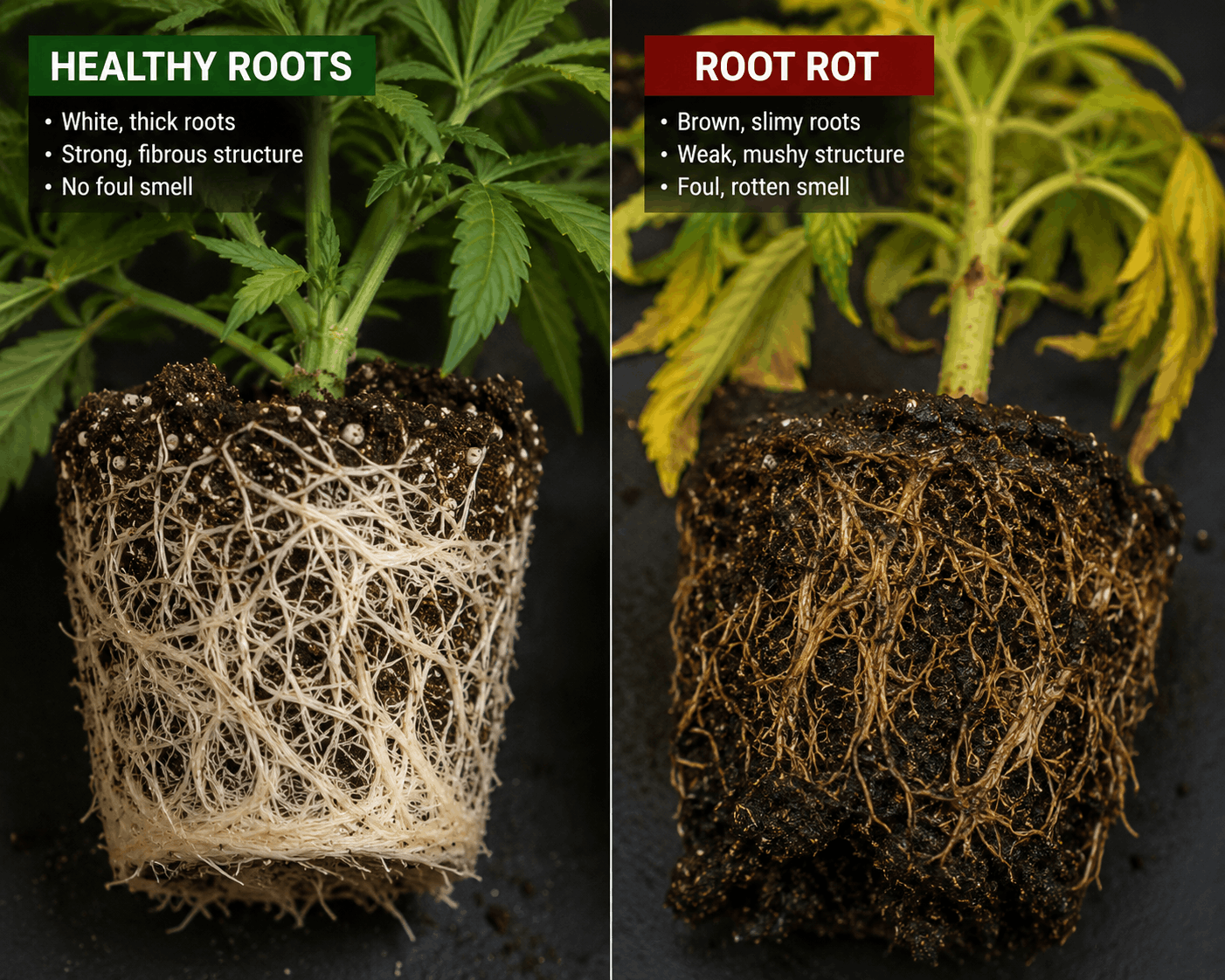
- Healthy roots should be white, firm, and free from unpleasant odours.
- Early treatment improves recovery chances and helps protect yields.
- Proper watering, good drainage, and strong root-zone oxygenation are the best forms of prevention.
What Is Autoflower Root Rot and Why Does It Happen?
Autoflower root rot is a root-zone disease that damages roots and prevents plants from absorbing water, oxygen, and nutrients properly. It is most commonly caused by Pythium, a water mould that thrives in wet, low-oxygen conditions.
Healthy roots should be bright white and firm. When root rot develops, roots become brown, soft, and unable to support healthy growth. Common signs include yellowing leaves, drooping, nutrient deficiencies, and stunted development.
Because autoflowers have a short lifecycle, root damage can quickly reduce plant size and final yields.
What Is Autoflower Root Rot? (Quick Answer)
| Question | Answer |
| What is root rot? | A disease that damages roots and restricts water and nutrient uptake. |
| What causes it? | Overwatering, poor drainage, low oxygen levels, and Pythium. |
| First signs? | Yellowing leaves, drooping growth, slow development, and brown roots. |
| Most vulnerable stage? | Seedlings and early vegetative growth. |
| Can autoflowers recover? | Yes, if treated early. |
Healthy Roots vs Root Rot Symptoms
| Healthy Roots | Root Rot Symptoms |
| Bright white | Brown or dark roots |
| Firm texture | Soft or slimy texture |
| Fresh earthy smell | Sour or rotten smell |
| Vigorous growth | Stunted growth |
| Strong nutrient uptake | Nutrient deficiencies |
How Root Rot Develops in Soil-Grown Autoflowers
Most soil-based root rot problems start with overwatering. When soil stays wet for too long, oxygen levels drop and pathogens such as Pythium can spread.
Common causes include:
- Poor drainage
- Heavy, waterlogged soil
- Overwatering seedlings
- Insufficient drainage holes
- Pots sitting in runoff water
- High humidity
- Watering too frequently
Using the best soil for autoflowers, with plenty of aeration and added perlite, can help prevent root rot.
How Root Rot Develops in Hydroponic Autoflowers
In hydroponic systems, root rot typically develops when oxygen levels in the root zone fall or reservoir temperatures become too high. Warm, poorly oxygenated water creates ideal conditions for pathogens such as Pythium to spread and damage healthy roots.
Common causes include:
- Reservoir temperatures above 24°C (75°F)
- Low dissolved oxygen levels
- Failing air pumps or air stones
- Poor system hygiene
- Light leaks that encourage algae growth
- Organic debris accumulating in the reservoir
In our experience, some of the most severe cases occur after equipment failures that go unnoticed for even a short period of time. A failing air pump, blocked air stone, or rising reservoir temperature can quickly reduce oxygen availability, allowing root pathogens to establish themselves before visible symptoms appear above the canopy.
Keeping reservoirs cool, clean, and well-oxygenated remains the most effective way to prevent root rot in hydroponic autoflowers.
Root Rot Risk Factors in Soil vs Hydroponics
| Soil Grows | Hydroponic Grows |
| Overwatering | Warm reservoir temperatures |
| Poor drainage | Low dissolved oxygen |
| Compacted soil | Air pump failure |
| Standing runoff water | Reservoir contamination |
| High humidity | Algae growth |
Why Root Rot Is So Damaging to Autoflowers
Root rot attacks the root system responsible for water and nutrient uptake. As roots become damaged, growth slows and the plant struggles to develop properly.
Common effects include:
- Slow growth
- Yellowing and drooping leaves
- Reduced nutrient uptake
- Smaller root systems
- Fewer bud sites
- Lower yields
The earlier root rot develops, the greater the impact on plant growth and harvest potential. Preventing overwatering and maintaining an oxygen-rich root zone are the most effective ways to avoid the problem.
Why Root Rot Is Especially Dangerous for Autoflower Seedlings
Root rot can affect autoflowers at any stage of growth, but seedlings are often the most vulnerable. During the first few weeks after germination, the plant relies on a small and developing root system to establish itself. Many people starting with beginner-friendly autoflower seeds are surprised by how easily overwatering can damage young roots. Any damage at this stage can slow development and limit future growth.
Unlike mature plants, seedlings have very little root mass available to absorb water, nutrients, and oxygen. As a result, even minor root damage can have a noticeable impact on plant health. Growth may slow dramatically, leaves can lose colour, and overall vigour often declines.
| Growth Stage | Impact of Root Rot |
| Seedling | High risk of stunting and poor establishment |
| Vegetative Growth | Reduced growth rate and branch development |
| Flowering | Reduced nutrient uptake and flower production |
Because autoflowers have a predetermined lifecycle, time lost during the seedling stage cannot be fully recovered later. A seedling that spends its first weeks struggling with root health will often remain smaller than a healthy plant throughout the rest of its life.
For this reason, the seedling stage is often considered the most important period for maintaining a healthy root zone. Early detection and intervention can prevent minor root problems from affecting the plant’s long-term growth and yield potential.
How Root Rot Affects Autoflower Yields
Root rot does not just damage roots; it can significantly reduce the size, quality, and productivity of an autoflower cannabis plant. Because roots are responsible for absorbing water and nutrients, any damage to the root zone directly impacts the plant’s ability to support vigorous growth and flower production.
The extent of yield loss depends largely on when the infection develops.
| Growth Stage | Potential Impact on Yield |
| Seedling | Severe stunting and dramatically reduced plant size |
| Early Vegetative Growth | Reduced branching and fewer future bud sites |
| Late Vegetative Growth | Smaller canopy and reduced flower potential |
| Early Flowering | Reduced bud development and slower flower formation |
| Late Flowering | Lower nutrient uptake and reduced final weight |
When root rot develops during the seedling or vegetative stage, autoflowers often remain permanently smaller than healthy plants. Since autoflowers have a fixed lifecycle, lost growth time cannot be recovered later in the grow.
In breeding and cultivation trials, plants affected by root rot during early vegetative growth typically produce fewer secondary branches and a noticeably smaller canopy by the start of flowering. Because bud sites develop from this structure, even mild root damage early in life often results in smaller harvests than growers expect.
Healthy roots are one of the foundations of strong harvests. Even the highest yielding autoflowers rely on vigorous root development during the first few weeks of growth to reach their full potential. When root health is compromised early, the plant often enters flowering with less branching, a smaller canopy, and fewer productive bud sites.
Why Root Damage Reduces Yield
Healthy roots perform several critical functions that directly influence harvest size:
- Absorbing water and nutrients
- Supporting microbial activity
- Driving vigorous vegetative growth
- Fueling flower production
- Maintaining plant health during environmental stress
When roots become infected, nutrient uptake declines and the plant must divert energy towards survival rather than growth. This often results in fewer bud sites, smaller flowers, and lower overall yields.
Can Yield Loss Be Prevented?
If root rot is detected early, many autoflowers can recover enough to produce a worthwhile harvest. The appearance of fresh white roots and renewed growth are positive signs that the plant is rebuilding its root system.
However, severe infections that occur during the first few weeks of life often have the greatest impact on final yield potential. This is why prevention, early diagnosis, and rapid treatment are so important for maintaining healthy, productive autoflowers.
Autoflower Root Rot Symptoms to Watch For
Identifying root rot early can make the difference between saving an autoflower and losing a significant portion of its yield. Because the infection begins below the surface, the first warning signs often appear in the leaves and overall plant growth before the roots are inspected.
Root rot symptoms can also resemble other cannabis seedling problems, overwatering issues, nutrient deficiencies, or pH imbalances. For this reason, it is important to assess both the plant’s appearance and the condition of the root zone before making a diagnosis.
Early Signs of Root Rot in Autoflowers
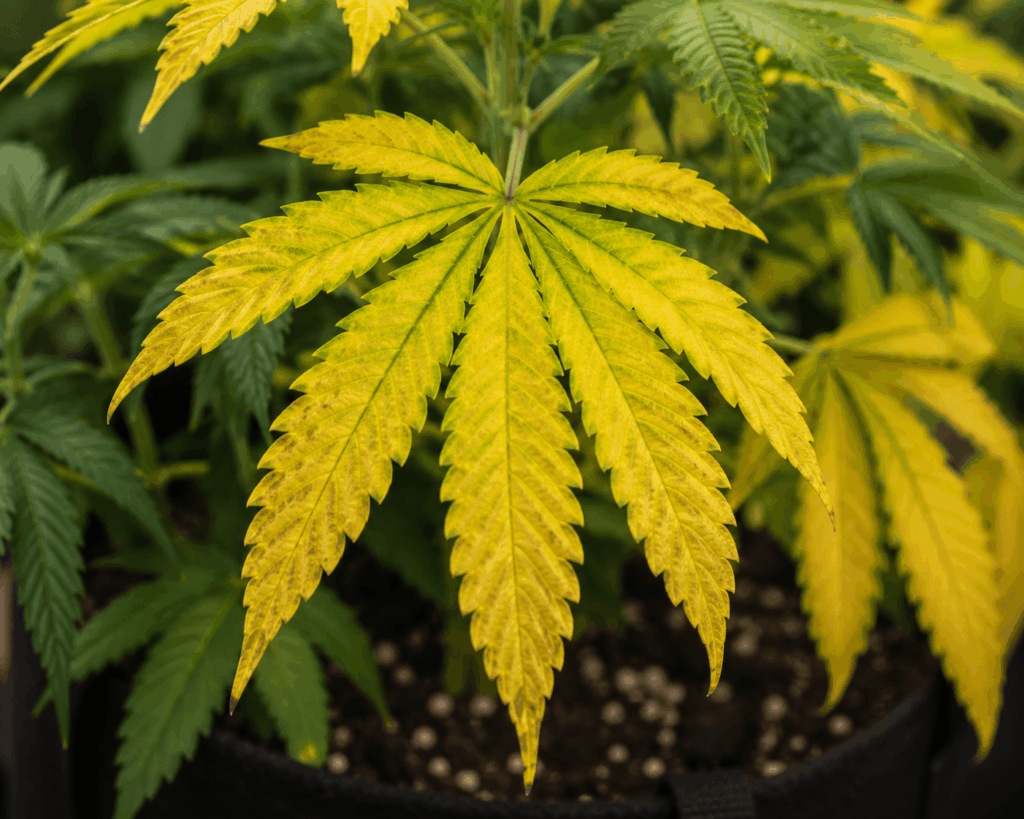
When growing in soil, it can be difficult to see how your roots are doing, especially if you have plants outdoors.
Common early warning signs include:
- Slower than expected growth
- Drooping leaves despite adequate moisture levels
- Yellowing lower leaves
- Reduced vigour and branch development
- Smaller foliage growth compared to healthy plants
- Delayed recovery after watering
As the roots lose their ability to absorb water and nutrients efficiently, the plant may begin to display multiple deficiency-like symptoms even when the feeding schedule and pH are within the correct range.
Root Rot Symptoms Above and Below the Root Zone
| Above-Ground Symptoms | Root Zone Symptoms |
| Yellowing leaves | Brown or discoloured roots |
| Persistent drooping | Soft or slimy root texture |
| Slow growth | Roots sticking together |
| Reduced foliage development | Loss of fine root hairs |
| Nutrient deficiency symptoms | Sour or rotten smell |
| Wilting despite watering | Dark, unhealthy root mass |
Healthy autoflower roots should be bright white, firm, and evenly distributed throughout the growing medium. Any significant discolouration, softness, or unpleasant odour is often a strong indication that root health has deteriorated.
How to Inspect Roots for Root Rot
If you suspect root rot, examining the roots directly is the most reliable way to confirm the problem.
For soil-grown autoflowers, carefully slide the root ball from the container and inspect the outer roots. Hydroponic growers should inspect both the root mass and reservoir conditions.
Look for:
- Brown, yellow, or dark-stained roots
- Soft, mushy, or brittle root tissue
- Roots that appear slimy or clumped together
- A sour, stagnant, or rotting smell
Healthy roots should feel firm, appear bright white, and have a fresh earthy scent.
Root Rot vs Nutrient Deficiencies
One of the most common mistakes growers make is confusing root rot with a nutrient deficiency. Both issues can cause yellow leaves, poor growth, and a generally unhealthy appearance.
The key difference is that nutrient deficiencies usually occur because the plant lacks access to a specific element, whereas root rot can create symptoms similar to nutrient lockout by preventing roots from absorbing nutrients efficiently.
| Root Rot | Nutrient Deficiency |
| Brown or slimy roots | Healthy white roots |
| Sour or rotten smell | No unusual odour |
| Wilting despite watering | Leaves remain structurally healthy |
| Multiple deficiency symptoms appearing at once | Deficiency symptoms follow recognisable patterns |
| Growth continues to decline despite feeding adjustments | Symptoms often improve after correcting nutrition |
If the roots appear healthy and white, the issue is more likely related to nutrition, pH, or environmental conditions. If the roots are discoloured, soft, or foul-smelling, immediate action should be taken to prevent further root damage.
When to Act
Root rot rarely improves without intervention. Once symptoms become visible above the soil line, the infection is often already affecting nutrient uptake and plant development.
The sooner root rot is identified, the better the chances of limiting damage to plant growth and preserving final yields. Regularly monitoring watering practices, drainage, and root health is the most effective way to catch the problem before it becomes severe.
What Causes Root Rot in Autoflowers?
Root rot develops when environmental conditions allow harmful pathogens to attack the root zone. In most cases, the problem begins when the growing medium remains too wet for too long, reducing the amount of oxygen available to the roots.
As oxygen levels fall, roots become stressed and more vulnerable to pathogens such as Pythium, a water mold commonly associated with root diseases in cannabis.
Pythium is one of several fungal and fungal-like pathogens that can affect cannabis plants under the right environmental conditions. Understanding the different types of mold and plant pathogens can make it easier to identify problems early and prevent them from spreading throughout the grow environment.
While Pythium may be present in many growing environments, it typically only becomes a serious problem when roots are exposed to prolonged periods of excess moisture, poor drainage, or low oxygen levels.
One of the most common causes of root rot in autoflowers is overwatering, particularly during the seedling and early vegetative stages. Because autoflowers are often started in their final container, it’s easy to apply too much water before the root system has fully established itself.
Common causes of root-zone stress include:
- Overwatering
- Heavy or compacted soil
- Insufficient aeration amendments such as perlite
- Containers with inadequate drainage
- Standing runoff water beneath pots
- Watering too frequently
One of the most common mistakes we see with new autoflower growers is watering the entire container when the seedling only has a small root zone beneath it. While the plant may only be using moisture from a small area around the stem, the rest of the pot can remain saturated for days, creating the damp, low-oxygen conditions that root rot pathogens thrive in.
Environmental factors can also increase the risk of root rot, including:
| Risk Factor | Impact on Root Health |
| Soil temperatures above 24°C (75°F) | Encourages pathogen activity |
| High humidity | Slows drying of the growing medium |
| Poor airflow | Creates damp, stagnant conditions |
| Warm hydro reservoirs | Reduce dissolved oxygen levels |
| Air or water pump failures | Rapidly increase root rot risk |
Hydroponic growers should pay particular attention to reservoir temperatures and oxygen levels, as even a short equipment failure can create conditions that allow root pathogens to establish quickly.
Maintaining a healthy balance of moisture and oxygen in the root zone is one of the most effective ways to prevent root rot and support healthy root development throughout the grow.

How to Fix and Prevent Root Rot in Autoflowers
Root rot can be one of the most damaging issues an autoflower grower encounters, but it does not always mean a plant is beyond saving. Because autoflowers have a short life cycle and limited recovery time, identifying and correcting root rot early is especially important. Recovery depends on how quickly the problem is detected, how much root damage has occurred, and whether the growing environment is corrected before the infection spreads.
The primary goal when treating root rot is to eliminate the conditions that allowed it to develop. This means reducing excess moisture, increasing oxygen around the roots, improving drainage, and supporting a healthy microbial population in the root zone.
Can Autoflowers Recover From Root Rot?
Many autoflowers can recover from root rot if treatment begins early. However, because autoflowers transition from vegetative growth to flowering automatically, severe root damage can have a greater impact on final yields than it would in photoperiod plants.
| Root Condition | Recovery Potential |
| Slight root staining with healthy white roots present | High |
| Brown roots with mild slime | Good |
| Extensive discoloration and root loss | Moderate |
| Black, foul-smelling roots throughout the root zone | Low |
| Roots collapsing or disintegrating | Very Low |
The sooner treatment begins, the better the chances of preserving healthy growth, bud development, and overall yield.
How Long Does Recovery Take?
Recovery times vary depending on the severity of the infection and the stage of growth.
| Severity | Expected Recovery Time |
| Mild root stress | 3–7 days |
| Moderate root rot | 1–3 weeks |
| Severe root rot | Recovery may not be possible |
One of the best signs of recovery is the appearance of fresh white roots. New root growth indicates the plant is rebuilding a healthy root system and restoring nutrient uptake.
Treating Root Rot in Autoflower Seedlings
Seedlings are especially vulnerable to root rot because their root systems are still small and fragile. This is a common issue with autoflowers started in large final containers, where growers may water the entire pot before the seedling has enough roots to use that moisture.
When the growing medium stays wet for too long, oxygen levels around the roots drop and young roots become more vulnerable to pathogens.
To help seedlings recover:
- Allow the growing medium to partially dry before watering again.
- Water only around the seedling’s root zone.
- Improve airflow around containers.
- Avoid heavy nutrient feeding until healthy growth resumes.
- Keep temperatures and humidity stable.
In many cases, early root stress improves once watering practices are corrected. We often see people assume a struggling seedling needs more water or additional autoflower nutrients, when the real issue is that the root zone has stayed wet for too long, when the real issue is that the root zone has stayed wet for too long. Letting the medium dry slightly and encouraging fresh root growth usually does more good than adding supplements too early.
Treating Root Rot During Vegetative Growth
The vegetative stage is when autoflowers rapidly expand their root systems to support future flowering. Root rot during this period can stunt growth and reduce the plant’s ability to produce large yields later on.
For soil-grown autoflowers:
- Allow the medium to dry before watering again.
- Remove standing runoff water immediately.
- Improve drainage and aeration.
- Apply enzyme products to break down dead root material.
- Introduce beneficial microbes such as Trichoderma.
Trichoderma is especially useful because it colonizes the root zone and competes with harmful pathogens for space and resources. Many autoflower growers use it as both a preventative measure and a treatment during the early stages of root rot.
If your soil feels dense or compacted, consider increasing the amount of perlite or using a lighter growing mix in future grows to improve oxygen availability around the roots.
Treating Root Rot During Flowering
Root rot discovered during flowering should be handled carefully. Unlike photoperiod plants, autoflowers cannot simply be kept in the vegetative stage longer to recover from stress.
At this point, the goal is to stabilize the root zone and maintain nutrient uptake for the remainder of the grow cycle.
Focus on:
- Improving drainage.
- Adjusting watering frequency.
- Removing excess runoff.
- Supporting roots with beneficial microbes.
- Maintaining stable environmental conditions.
- Avoiding unnecessary stress or transplanting.
If flowering is already well underway, stabilizing the root system may be more realistic than attempting a complete recovery.
Treating Root Rot in Hydroponic Autoflowers
Hydroponic autoflowers can develop root rot quickly because pathogens spread easily through water. When growing autoflowers hydroponically, systems such as DWC, RDWC, and drip-fed reservoirs require close monitoring of water temperature and dissolved oxygen levels.
If roots become brown, slimy, or foul-smelling:
- Replace the nutrient solution.
- Clean and sanitize the reservoir.
- Remove dead root material.
- Increase dissolved oxygen levels.
- Lower reservoir temperatures below 75°F (24°C).
- Check pumps, airlines, and air stones for proper operation.
Hydrogen peroxide can be used as an emergency treatment because it helps reduce pathogen populations and temporarily increases oxygen availability around the roots.
However, hydrogen peroxide should only be viewed as a short-term solution. It can also destroy beneficial microbes living in the root zone, which is why many growers reintroduce beneficial bacteria and fungi after treatment.
Should You Prune Infected Roots?
If roots are heavily infected, pruning may help remove dead tissue and slow the spread of disease.
Use sterile scissors and remove only roots that are:
- Brown
- Slimy
- Mushy
- Clearly decaying
Avoid removing healthy white roots, as excessive pruning can increase stress and slow recovery in autoflowers.
Root Rot Prevention for Autoflowers
Preventing root rot is far easier than treating it, especially with autoflowers that have limited time to recover from setbacks.
Successful prevention comes down to maintaining a root zone that stays oxygen-rich while avoiding prolonged periods of saturation.
During cultivar testing, we have consistently found that growers are more likely to overwater than underwater autoflowers. Healthy plants generally tolerate slightly dry conditions far better than constantly saturated root zones. Learning container weight and allowing an appropriate wet-dry cycle remains one of the most effective ways to prevent root problems throughout the grow.
Watering Practices That Prevent Root Rot
Overwatering remains the leading cause of root rot in autoflowers.
To reduce the risk:
- Water only when containers feel noticeably lighter.
- Rather than following a rigid autoflower watering schedule, adjust watering frequency based on container weight, plant size, and environmental conditions.
- Adjust watering frequency based on plant size and environmental conditions.
- Water seedlings sparingly in large containers.
- Allow the growing medium to experience a healthy wet-dry cycle.
This approach encourages stronger root development and improves oxygen availability throughout the root zone.
Improving Drainage and Growing Media
Autoflowers perform best in growing media that retain moisture while allowing excess water to drain freely.
Many growers improve drainage by:
- Adding perlite to soil mixes.
- Using coco-based growing media.
- Incorporating hydroton clay pebbles.
- Growing in fabric pots or air pots.
A healthy growing medium should feel light, airy, and well-draining rather than dense or compacted.
Increasing Oxygen Around the Root Zone
Healthy autoflower roots thrive when oxygen is readily available.
Ways to improve oxygen levels include:
- Using fabric pots.
- Growing in air pots.
- Increasing airflow around containers.
- Upgrading air stones and air pumps in hydroponic systems.
- Maintaining cool reservoir temperatures.
Higher oxygen levels not only support vigorous root growth but also create conditions that are less favorable for pathogens such as Pythium.
Root Rot Prevention Checklist
| Soil Grows | Hydroponic Grows |
| Water only when pots feel light | Keep reservoirs below 75°F (24°C) |
| Use perlite-rich growing media | Maintain high dissolved oxygen |
| Grow in fabric pots | Use quality air stones |
| Remove standing runoff | Prevent light leaks |
| Avoid overwatering seedlings | Clean systems between grows |
| Improve airflow around pots | Keep backup pumps available |
The healthiest autoflower roots receive a consistent balance of moisture, oxygen, and beneficial microbial activity. By maintaining proper watering practices, strong drainage, and a well-aerated root zone, growers can dramatically reduce the risk of root rot and keep their autoflowers growing vigorously from seedling through harvest.
Frequently Asked Questions About Autoflower Root Rot
Does Root Rot Stunt Autoflowers?
Root rot can significantly stunt autoflowers because damaged roots are unable to absorb water, oxygen, and nutrients efficiently. When root problems occur during the seedling or vegetative stage, plants may remain smaller than expected throughout their entire lifecycle.
Should I Transplant an Autoflower With Root Rot?
Transplanting is not usually recommended unless the growing medium is severely waterlogged or contaminated. Autoflowers are sensitive to stress, particularly once established, so correcting watering practices and improving drainage is often a safer solution than disturbing the root system.
Can Hydrogen Peroxide Kill Root Rot?
Hydrogen peroxide can help reduce pathogen populations and temporarily increase oxygen levels around infected roots. However, it should be considered a short-term treatment rather than a permanent solution because it can also destroy beneficial microbes living in the root zone.
Is Root Rot Worse in Soil or Hydroponics?
Root rot can occur in both soil and hydroponic systems. Soil-grown autoflowers are most commonly affected by overwatering and poor drainage, whilst hydroponic systems become vulnerable when dissolved oxygen levels fall or reservoir temperatures become too high.
Can Beneficial Microbes Prevent Root Rot?
Beneficial microbes such as Trichoderma and certain species of beneficial bacteria can help create a healthier root environment and compete with harmful pathogens. Whilst they are not a guaranteed cure, many growers use them as part of a preventative root health programme.


