
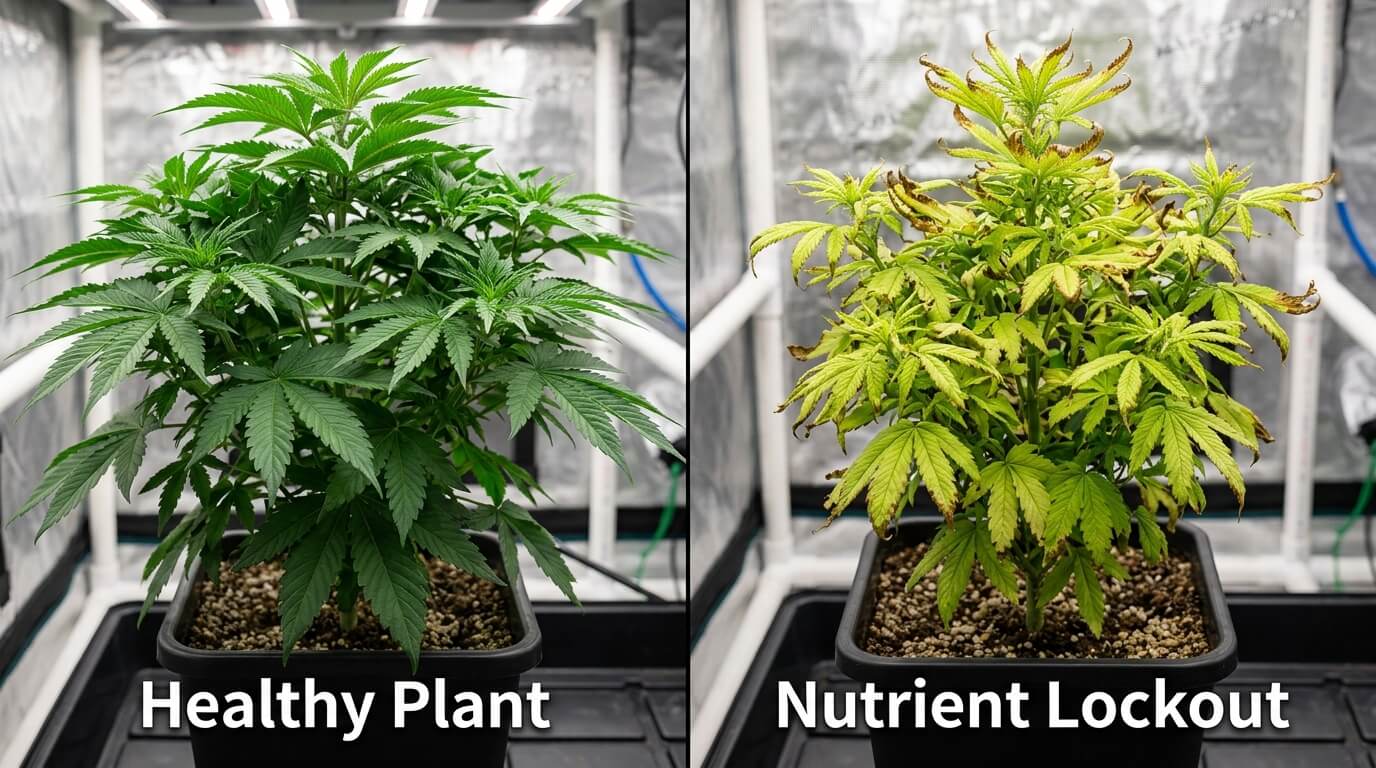
Autoflower Nutrient Lockout: Symptoms, Causes, Prevention and Recovery
Autoflower nutrient lockout is one of the most frustrating problems growers can face. You may be feeding your plants correctly and using quality nutrients, yet…
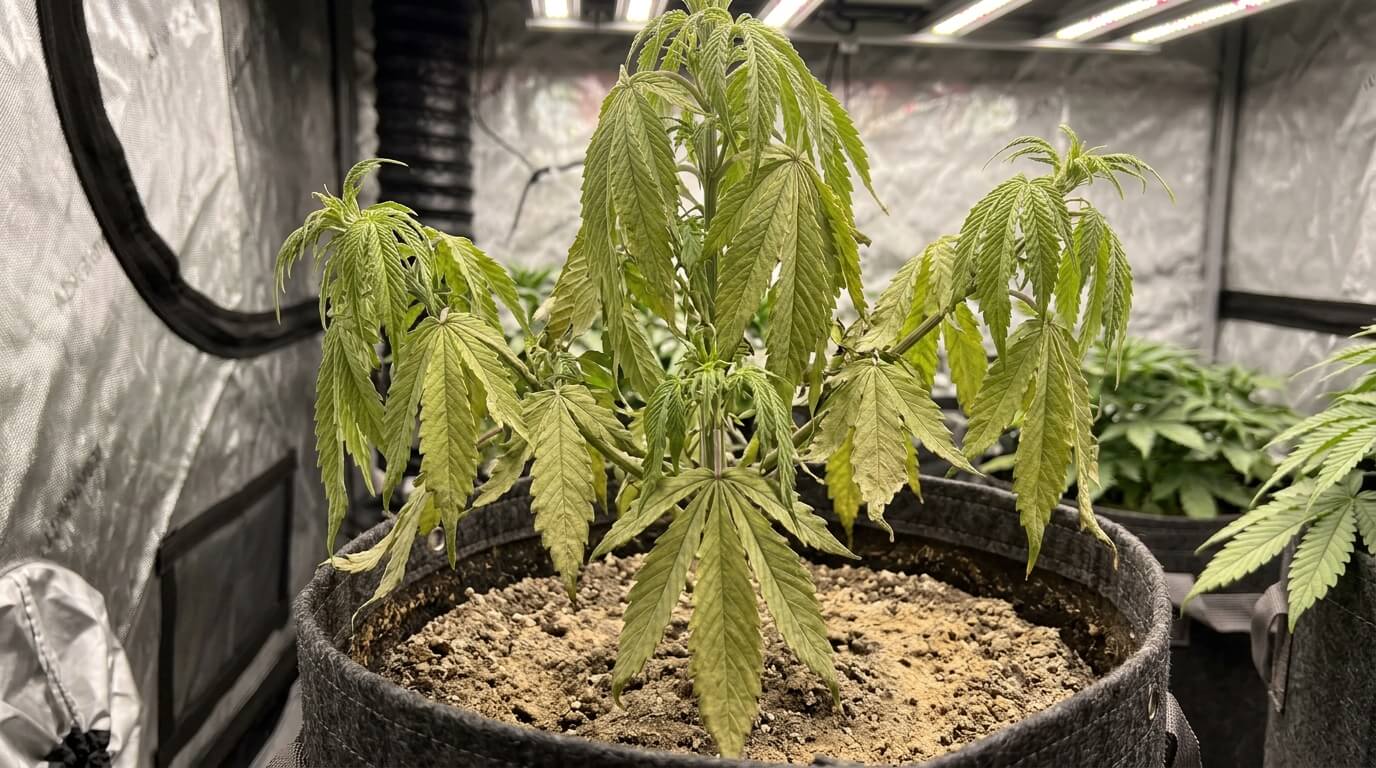
Overwatered vs Underwatered Autoflower Cannabis Plants: Signs, Differences and How to Fix Them
Watering cannabis plants correctly means finding the perfect balance between under- and overwatering. You do not want to give your plants too little water, causing…
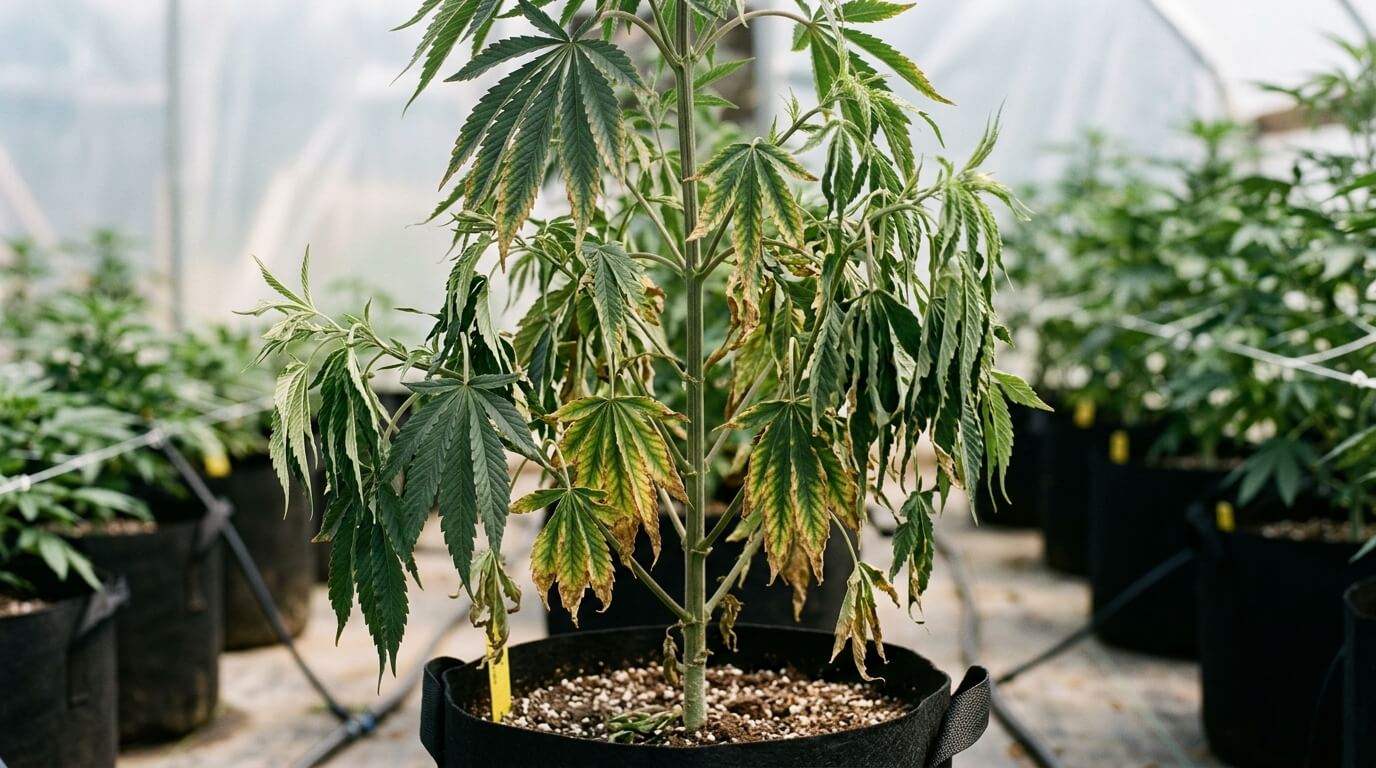
Fusarium in Autoflower Cannabis: Symptoms, Treatment & Prevention
Fusarium is one of the most challenging diseases autoflower growers can face. Unlike nutrient issues or environmental stress, it attacks the root system and vascular tissue, limiting the plant’s ability to absorb water and nutrients. By the time visible symptoms…
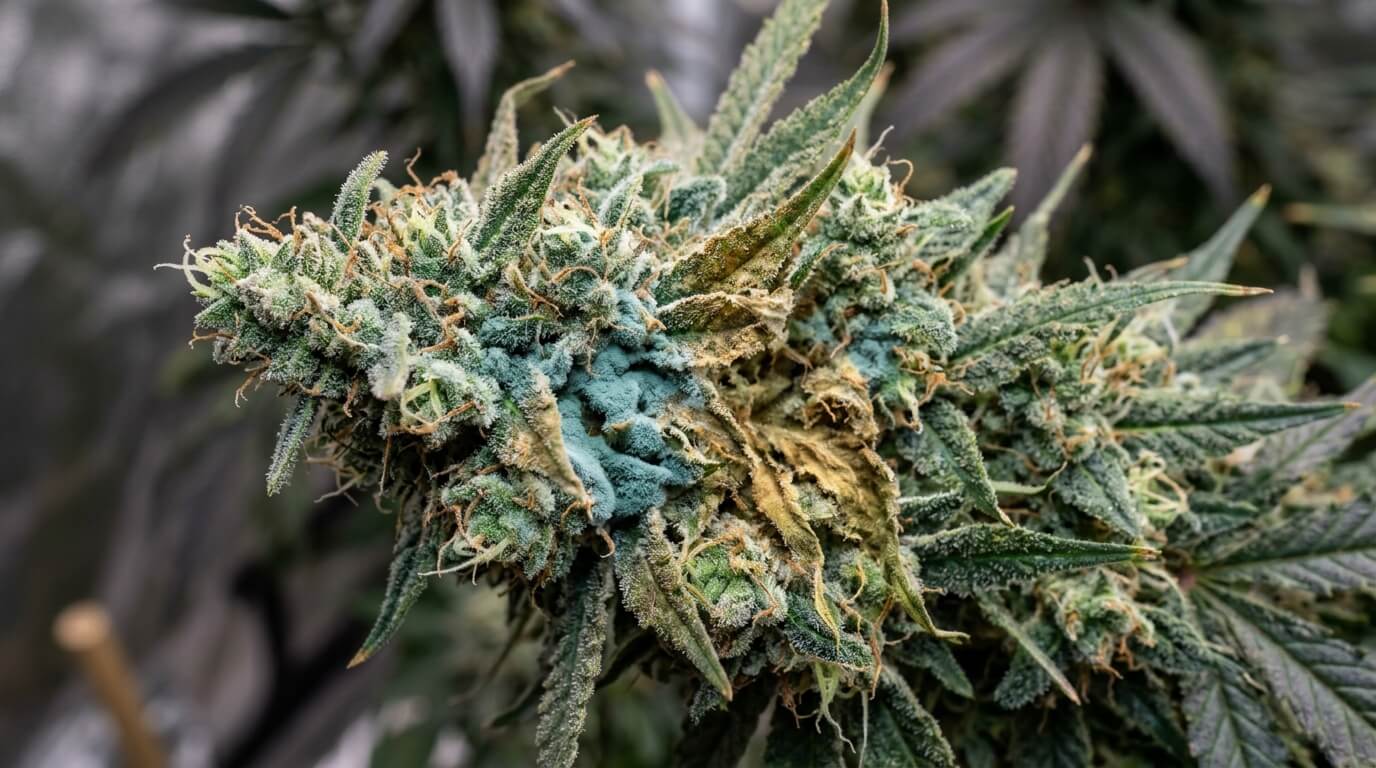
Penicillium Cannabis: How to Identify, Eliminate and Prevent It on Autoflowers
Penicillium is one of the most destructive fungal contaminants that can affect autoflower cannabis, capable of turning healthy, resin-covered buds into unusable flower in a matter of days. While Penicillium spores are naturally present in the environment, they only become…
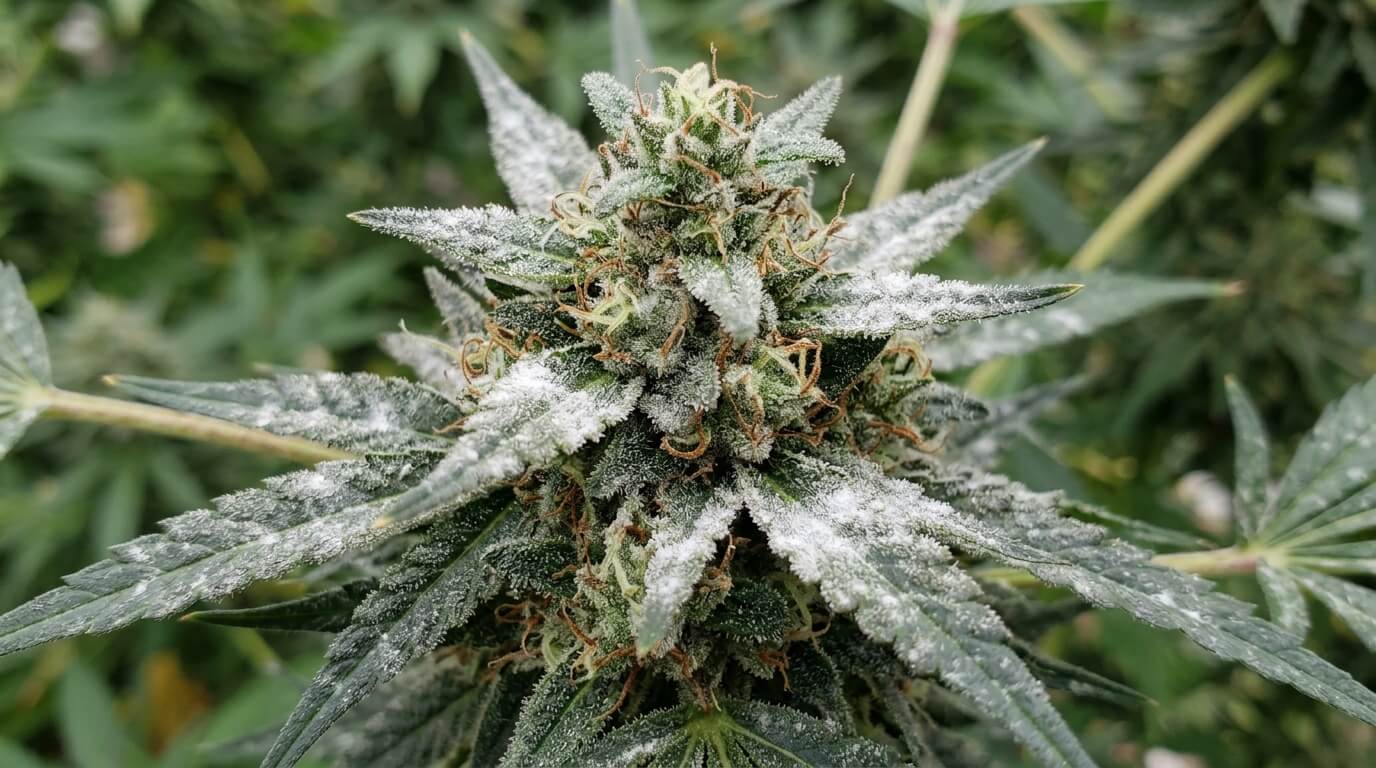
Powdery Mildew on Autoflowers: Causes, Symptoms, and Prevention
Powdery mildew is one of the most common fungal diseases affecting cannabis plants, and if left untreated, it can reduce plant vigor, lower yields, and contaminate developing buds. The good news is that powdery mildew on cannabis is often manageable…
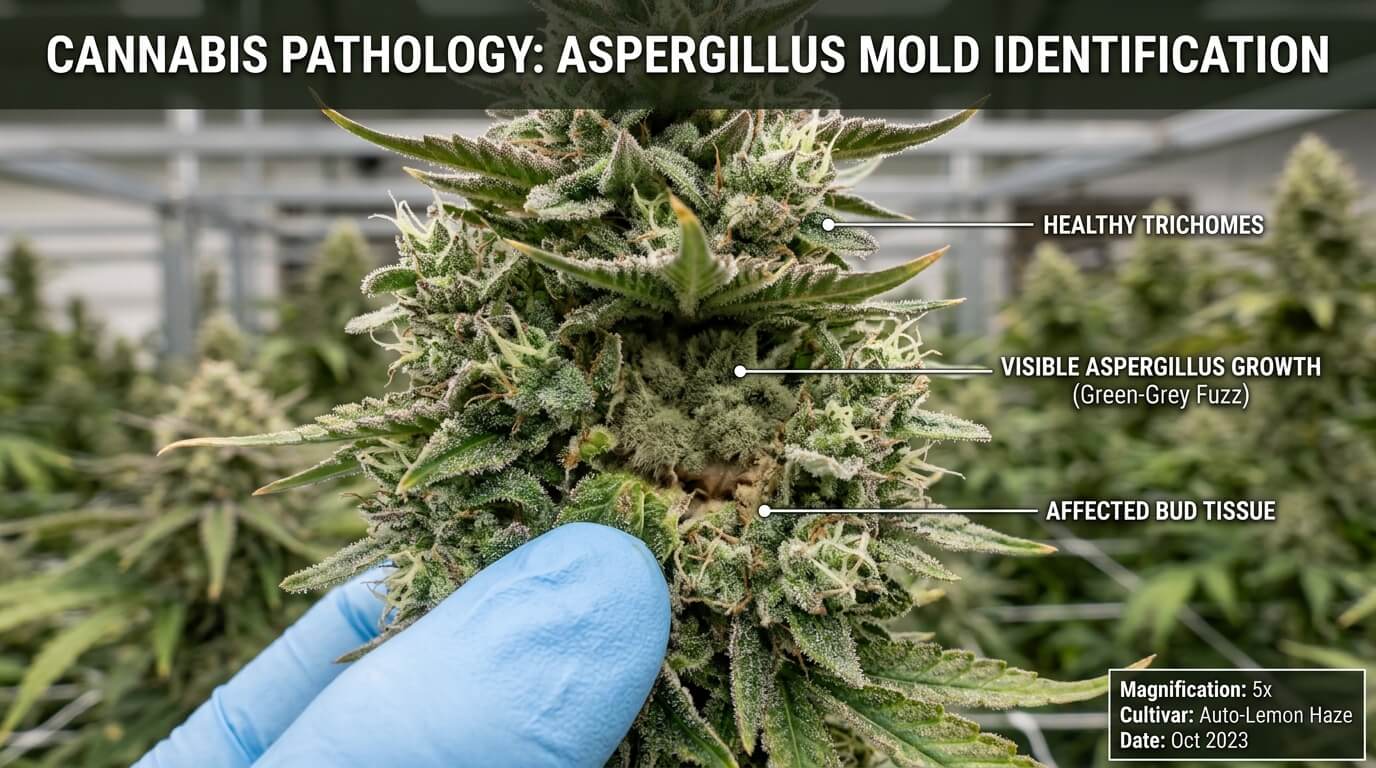
Aspergillus Mold in Autoflowers: How to Identify, Prevent, and Protect Your Harvest
Aspergillus mold on cannabis is one of the more serious fungal issues growers can run into, mainly because it can develop inside the buds before you notice anything is wrong. Unlike powdery mildew, which shows up on leaf surfaces, Aspergillus…
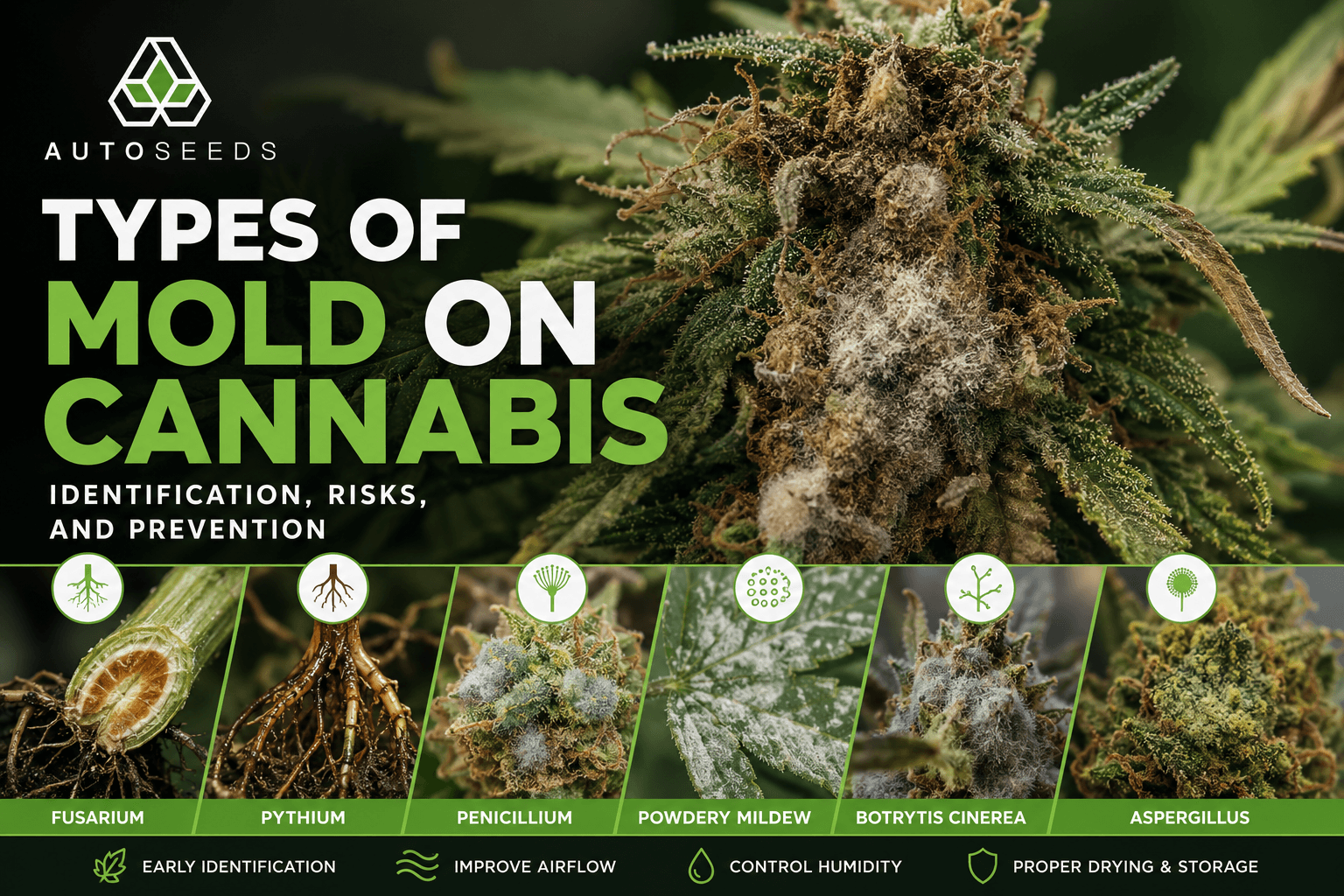
Mold on Autoflower Cannabis: How to Identify, Prevent, and Manage Common Cannabis Molds
Mold on cannabis can quickly ruin an otherwise successful harvest. Whether you're growing autoflowers indoors, outdoors in humid conditions, or drying freshly harvested buds, fungal pathogens can spread rapidly once conditions allow. By the time mold becomes visible, it has…
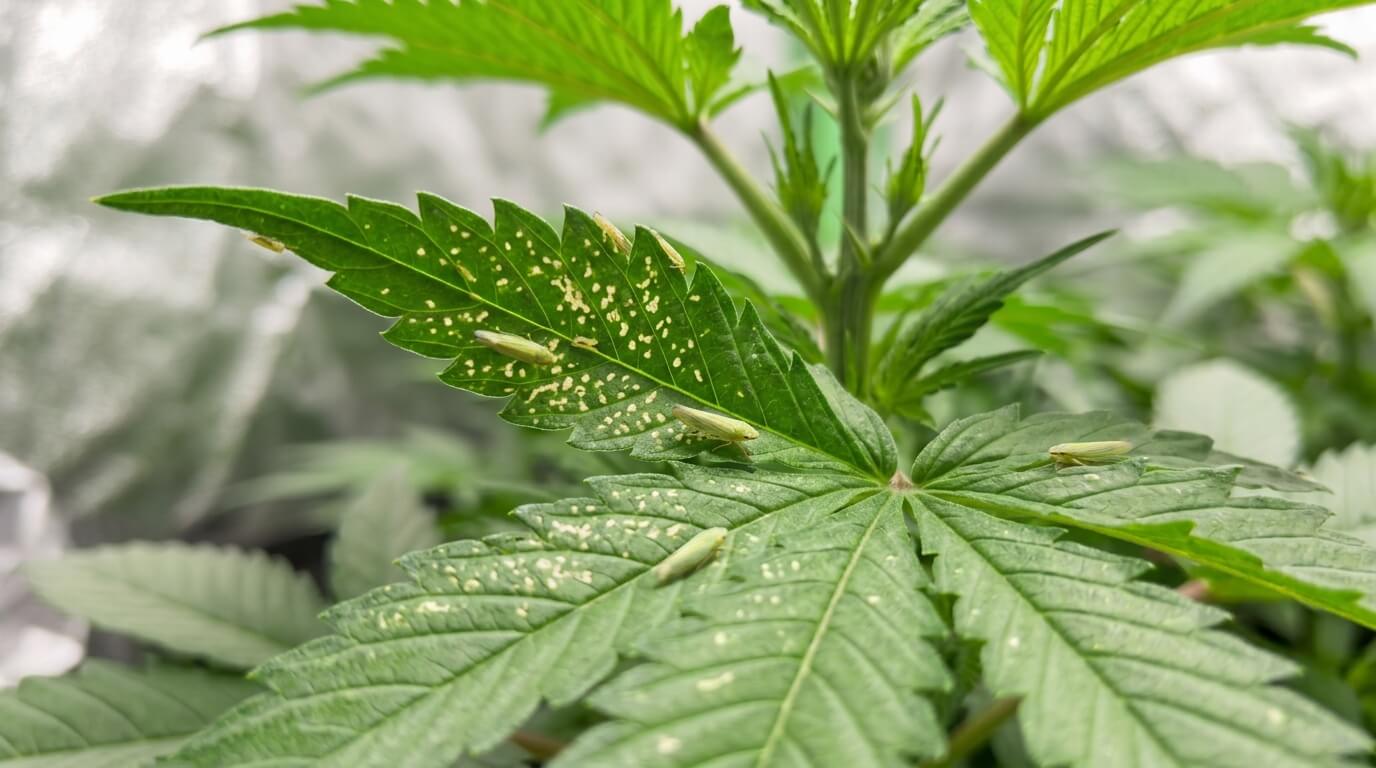
Leafhoppers on Autoflower Cannabis: Identification, Treatment & Prevention
Leafhoppers are small sap-feeding insects that can quickly become a problem for outdoor autoflower cannabis. While they rarely kill healthy plants outright, their feeding weakens leaves, slows vegetative growth, and can reduce flower production if left unmanaged. Because autoflowers have…
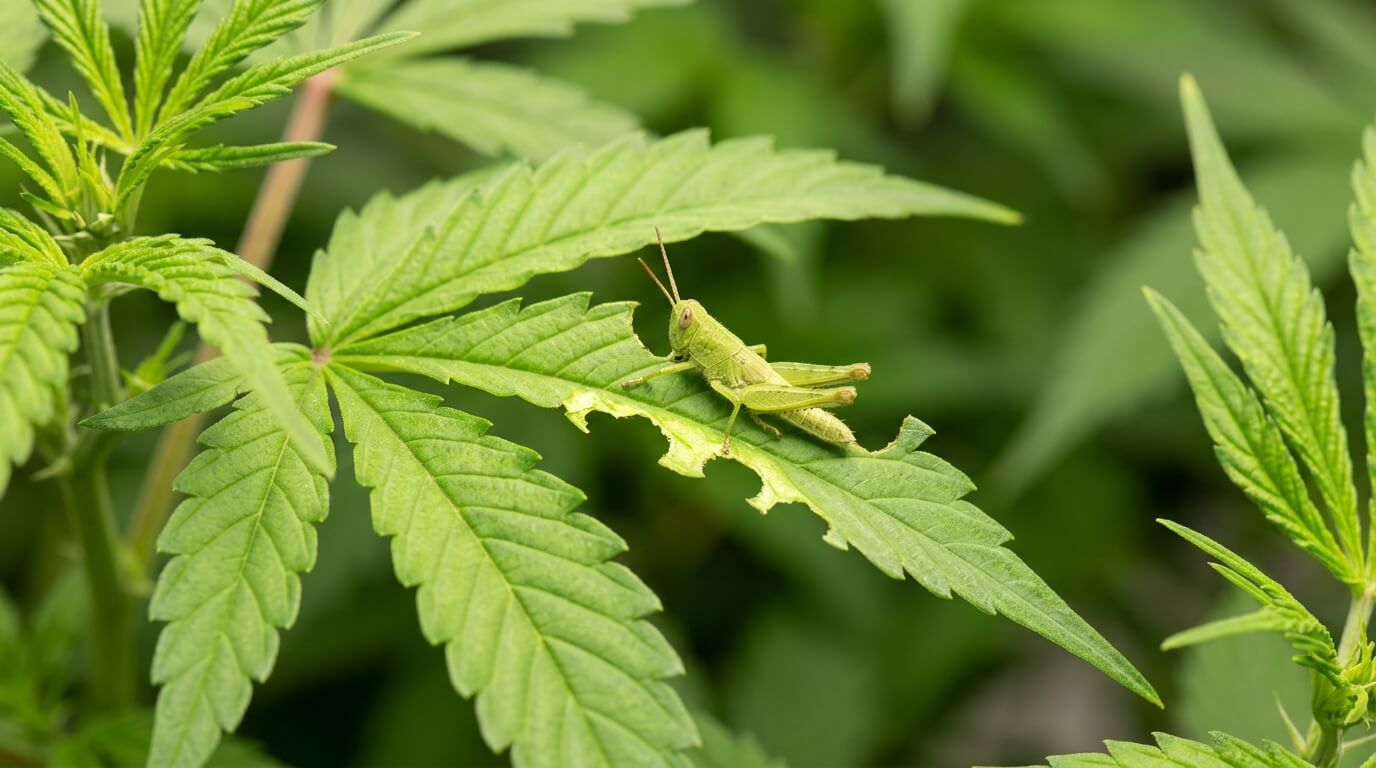
Grasshoppers on Outdoor Autoflowers: How to Protect Your Plants
Grasshoppers do eat outdoor autoflowers, feeding on leaves, tender stems, and new growth throughout the growing season. While established plants can tolerate occasional chewing, seedlings and young autoflowers are especially vulnerable because their short vegetative stage leaves little time to…