
Phosphorus Deficiency in Autoflower Plants: Symptoms, Causes, Treatment, and Prevention
Phosphorus deficiency is a common cannabis nutrient issue, especially during flowering when plants need more phosphorus for bud development and resin production. When phosphorus becomes unavailable, growth can slow, buds may remain small, and harvest quality can decline.
The problem is often caused by pH imbalance, nutrient lockout, overwatering, cold root temperatures, or root stress rather than a lack of nutrients. Autoflower cannabis plants can be particularly affected because their shorter life cycle leaves less time for recovery.
This guide explains how to identify phosphorus deficiency, understand its causes, fix it effectively, and prevent it from affecting future harvests.
Article Insights
- Phosphorus deficiency is most common during flowering and can reduce bud growth and resin production.
- Common symptoms include dark leaves, purple or red stems, slow growth, and smaller buds.
- Incorrect pH is one of the leading causes of phosphorus lockout in cannabis plants.
- Overwatering, cold root temperatures, poor drainage, and root stress can limit phosphorus uptake.
- Most plants begin recovering within 3–7 days after pH and nutrient issues are corrected.
- Autoflowers may be affected more severely due to their shorter growth cycle.
- Severe deficiencies during flowering can reduce bud density, resin production, and overall yield.
- Stable pH, proper watering, and balanced bloom nutrients help prevent phosphorus deficiency.
What Is Phosphorus Deficiency in Cannabis and Autoflower Plants?
Phosphorus is one of the three primary macronutrients cannabis plants need throughout their life cycle. Alongside nitrogen and potassium, phosphorus drives several critical biological functions inside the plant. When phosphorus levels become too low, growth slows down and flower production suffers.
Cannabis plants use phosphorus for:
- Root development
- Energy transfer through ATP production
- Flower formation
- Resin production
- Nutrient transport
- Cell division
I always pay close attention to phosphorus during the flowering stage because this is when cannabis plants demand higher levels of PK nutrients. If your plants cannot access enough phosphorus during bloom, bud development often stalls and the flowers remain airy instead of dense and swollen.
The Role of Phosphorus in Cannabis Growth and Flowering
Phosphorus plays a major role in how cannabis plants process and store energy. During vegetative growth, it supports strong root expansion and healthy branch development. A healthy root zone allows the plant to absorb more water and nutrients while also improving resistance to environmental stress.
Once your plants enter flowering, phosphorus becomes even more important. The plant redirects energy toward bud production, terpene synthesis, and trichome development. This is why bloom nutrients usually contain higher phosphorus and potassium ratios compared to vegetative feeds.
For autoflower cannabis plants, phosphorus management is especially important because they transition into flowering automatically and have a much shorter life cycle than photoperiod varieties. Since autoflowers have less time to recover from nutrient stress, phosphorus deficiencies that develop during early flowering can impact bud development more quickly and reduce overall yield potential if left uncorrected.
I often compare phosphorus to fuel inside a race car. Without enough fuel, the engine still runs, but performance drops dramatically. Cannabis behaves the same way when phosphorus becomes unavailable.
How Phosphorus Impacts Root Development, Bud Growth, and THC Production
Autoflower strains rely on rapid root establishment during the first few weeks of growth. When phosphorus availability becomes limited, root development can slow significantly, reducing the plant’s ability to absorb water and nutrients throughout the remainder of its life cycle. Because autoflowers have a limited vegetative period, early phosphorus deficiencies often have a greater impact on final bud size and flower production than they do in photoperiod plants.
Healthy roots create healthy flowers. Cannabis plants with strong phosphorus uptake usually produce:
- Faster root growth
- Thicker stems
- Better nutrient absorption
- Larger flower sites
- Increased resin production
Phosphorus also contributes to cannabinoid and terpene production during bloom. While genetics ultimately determine potency, nutrient deficiencies can reduce the plant’s ability to reach its full potential.
When phosphorus deficiency appears during flowering, I often notice:
- Smaller buds
- Reduced trichome coverage
- Lower aroma intensity
- Slower flower swelling
- Weak lower branches
This also affects harvest quality because underfed flowers rarely achieve maximum density or resin output.
Symptoms of Phosphorus Deficiency in Cannabis and Autoflower Plants
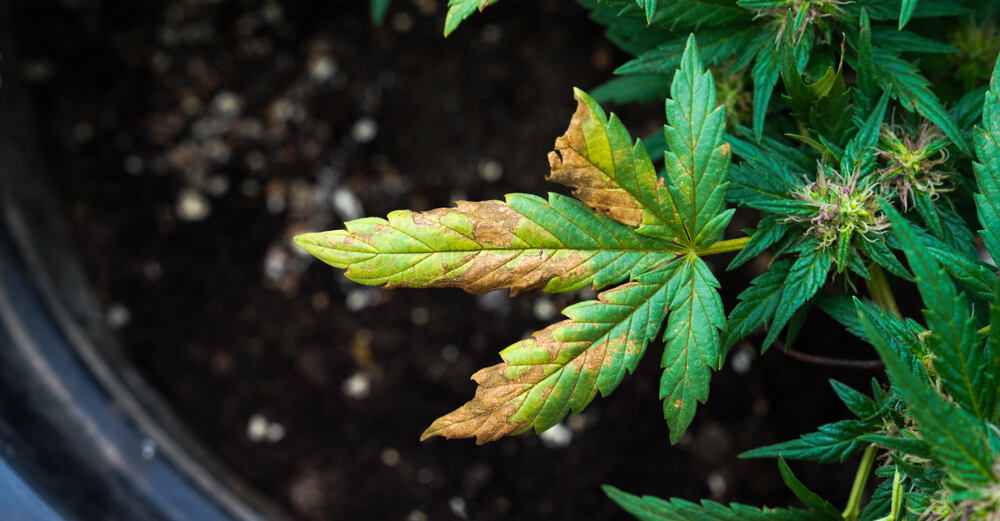
Phosphorus deficiency can look different depending on the grow environment, strain genetics, and stage of growth. Some cultivars naturally display purple stems, so you should never diagnose phosphorus deficiency from one symptom alone.
I always look for several warning signs appearing together before confirming the issue.
Early Signs of Phosphorus Deficiency in Cannabis Leaves
The first signs usually appear on older fan leaves because phosphorus is a mobile nutrient. This means the plant moves phosphorus from older growth toward newer growth when supplies become limited.
In autoflower plants, these symptoms may appear sooner than many growers expect, particularly once flowering begins. Since autoflowers transition into bloom based on age rather than light schedules, nutrient demand can increase rapidly, making phosphorus deficiencies more noticeable during weeks 3 to 6 from seed.
Early symptoms often include:
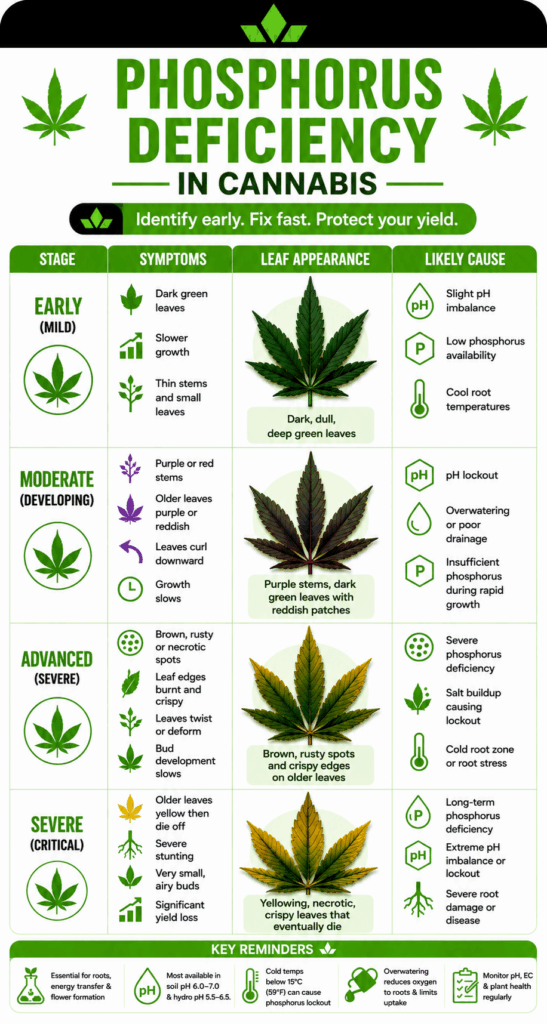
- Dark green leaves
- Dull or bluish foliage
- Slow vertical growth
- Reduced vigour
- Thin stems
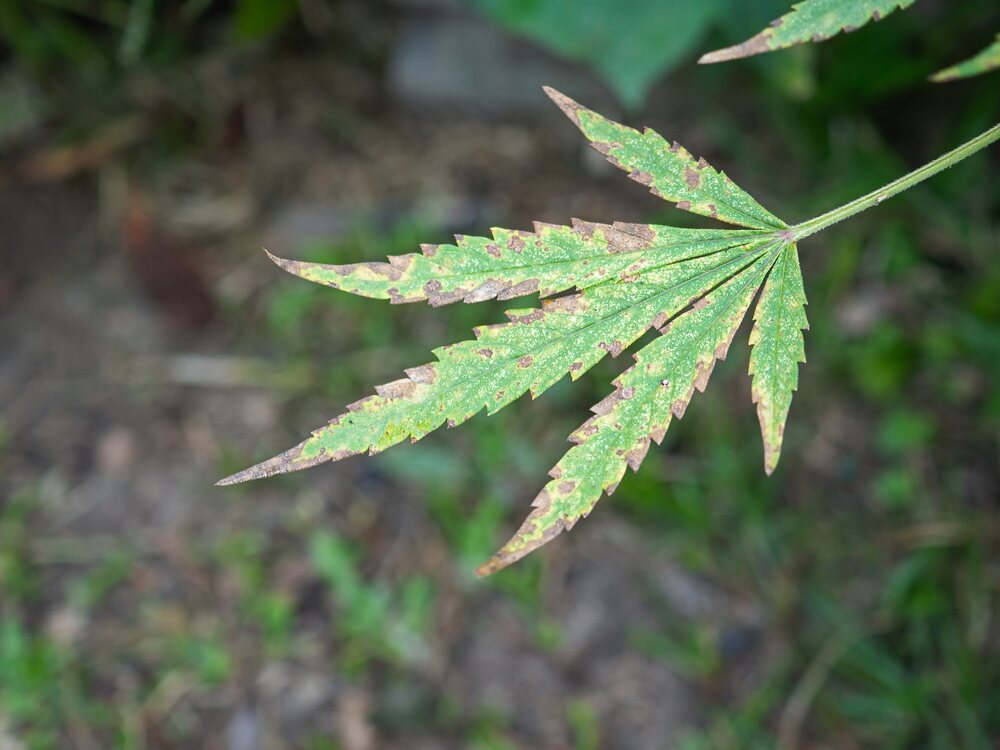
As the deficiency progresses, the leaves may begin developing bronze, brown, or rusty patches. The edges often curl downward while also becoming dry and brittle.
Many beginners confuse phosphorus deficiency with overwatering or natural leaf fade. The difference is that phosphorus deficiency usually develops alongside slowed growth and weak flower formation.
Purple Stems, Dark Leaves, and Other Common Warning Signs
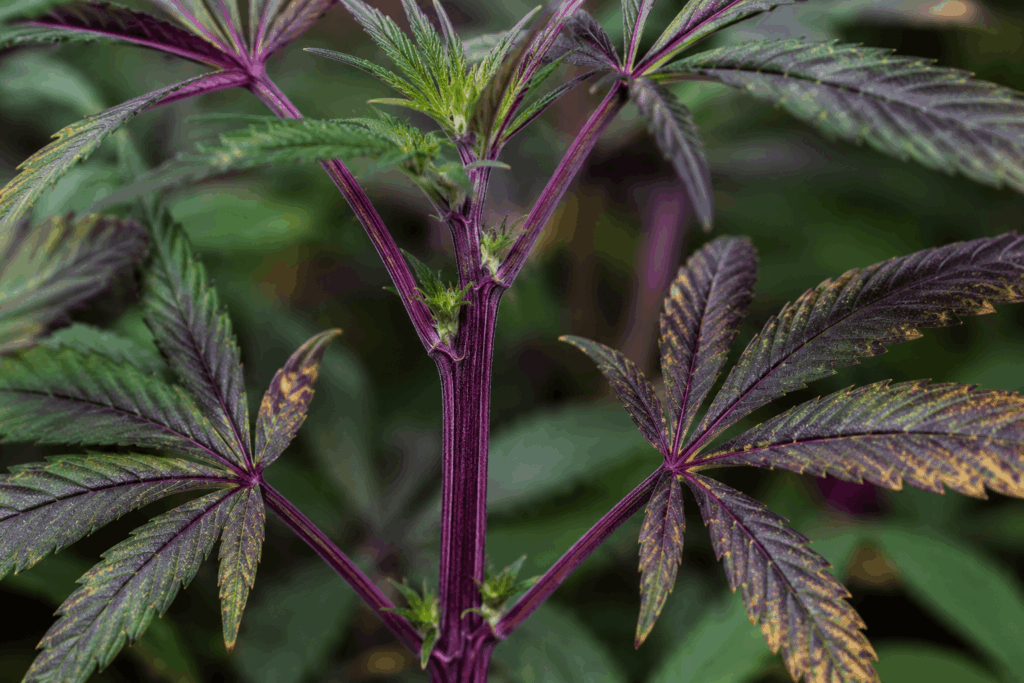
Purple stems are one of the most discussed cannabis deficiency symptoms online, but they are not always linked to phosphorus problems. Some strains naturally produce purple pigmentation due to anthocyanin expression.
However, when purple stems appear alongside dark leaves and stunted growth, phosphorus deficiency becomes more likely.
Other common symptoms include:
- Red or purple petioles
- Brown spotting
- Dry leaf edges
- Twisted leaves
- Weak side branching
In severe cases, older leaves eventually die off completely. Flower production also slows dramatically while buds remain loose and underdeveloped.
| Symptom | Likely Cause | How to Fix |
| Dark green or bluish leaves | Early phosphorus deficiency | Check pH levels and begin feeding with balanced bloom nutrients |
| Purple or red stems | Phosphorus deficiency, cold temperatures, or genetics | Confirm pH is within range and increase root zone temperatures if needed |
| Brown or rusty spots on older leaves | Advanced phosphorus deficiency | Flush excess salts, correct pH, and resume feeding with phosphorus-rich nutrients |
| Slow growth during veg | Poor phosphorus uptake or root stress | Improve drainage, avoid overwatering, and maintain healthy root temperatures |
| Small or airy buds during flowering | Low phosphorus availability during bloom | Increase bloom nutrients or PK boosters gradually during flowering |
| Leaves curling downward with dry edges | Nutrient lockout or root zone stress | Test runoff pH and reduce salt buildup in the growing medium |
| Weak side branching and thin stems | Nutrient imbalance or phosphorus deficiency | Feed balanced nutrients and improve overall environmental conditions |
| Slow bud stacking in mid flower | Insufficient phosphorus during peak bloom | Increase phosphorus availability using bloom fertilizers or bloom boosters |
| Yellowing lower leaves with purple stems | Combined nutrient deficiency or lockout | Check EC and pH levels before increasing nutrient strength |
| Symptoms appearing after overwatering | Oxygen-starved roots reducing nutrient uptake | Allow the medium to dry properly between waterings and improve aeration |
| Deficiency symptoms during cold weather | Low root temperatures reducing phosphorus mobility | Keep root zone temperatures above 60°F (15°C) |
| Deficiency symptoms in hydroponics | Incorrect reservoir pH or nutrient imbalance | Maintain hydroponic pH between 5.5–6.5 and refresh nutrient solution if needed |
Phosphorus Deficiency During the Flowering Stage
Flowering cannabis plants require significantly more phosphorus than plants in vegetative growth. This is why phosphorus deficiencies often appear during weeks 3 to 6 of bloom when nutrient demand increases rapidly.
During flowering, phosphorus deficiency can cause:
- Slow bud stacking
- Airy flowers
- Delayed maturation
- Reduced resin production
- Lower terpene levels
I have seen growers lose a large percentage of their final yield simply because phosphorus lockout went untreated during peak flowering.
The plant may still survive, but the harvest quality drops noticeably. Flowering phosphorus deficiencies can be particularly damaging in autoflowers because there is less time available for recovery before harvest. While photoperiod growers can sometimes extend the vegetative stage to address nutrient issues, autoflower growers must act quickly to restore proper phosphorus uptake and minimize the impact on flower development.
Phosphorus Deficiency vs Other Cannabis Nutrient Deficiencies
Phosphorus deficiency sometimes overlaps with other nutrient issues, especially potassium deficiency and magnesium deficiency.
Here is how I normally separate them:
- Phosphorus deficiency causes dark leaves and purple stems.
- Magnesium deficiency causes yellowing between leaf veins.
- Potassium deficiency causes burnt leaf edges.
- Nitrogen deficiency causes pale yellow lower leaves.
Environmental stress can also mimic nutrient deficiencies, making accurate diagnosis essential before adjusting nutrients. Cold root temperatures often reduce phosphorus uptake even when nutrients are present in the medium.
This is why checking pH and root conditions is always my first step before adding more nutrients.
What Causes Phosphorus Deficiency in Cannabis and Autoflowers?
Most phosphorus deficiencies are not caused by underfeeding alone. In many grow rooms, the nutrient exists in the medium but becomes unavailable due to lockout conditions.
This distinction matters because adding more nutrients without fixing the real issue can make the problem worse.
Incorrect pH Levels and Nutrient Lockout
Improper pH is the most common cause of phosphorus deficiency in cannabis plants.
Phosphorus becomes difficult for roots to absorb when pH drifts outside the optimal range:
- Soil grows: 6.0–7.0.
- Hydroponics: 5.5–6.5
Autoflower growers should pay especially close attention to pH management because even short periods of nutrient lockout can affect growth during critical stages of development. Maintaining a stable root-zone pH throughout the entire life cycle helps ensure phosphorus remains available when flowering begins and nutrient demand increases.
When pH falls too low or rises too high, nutrient salts bind inside the root zone and become unavailable. This process is known as nutrient lockout.
I always recommend checking runoff pH before increasing feeding strength. Many growers accidentally overfeed their plants while chasing deficiencies caused by poor pH management.
Overwatering, Cold Temperatures, and Root Zone Stress
Healthy roots require oxygen, warmth, and proper drainage. Overwatering saturates the medium and limits oxygen availability around the roots. This slows nutrient uptake while also creating ideal conditions for root diseases.
Autoflower plants are often more sensitive to root stress because of their rapid growth rate and shorter recovery window. Overwatering, poor drainage, or cold root temperatures can quickly reduce phosphorus uptake and may slow growth at a stage when the plant cannot afford significant setbacks.
Cold temperatures also reduce phosphorus mobility inside the plant. Root zones below 15°C can trigger phosphorus deficiency symptoms even when nutrient levels are correct.
Common environmental causes include:
- Overwatering
- Cold grow rooms
- Compacted soil
- Poor drainage
- Salt buildup
- Root damage
I often notice phosphorus deficiencies increase during winter grows because cold nighttime temperatures slow nutrient uptake dramatically.
Low Phosphorus Nutrient Levels in Soil and Hydroponic Grows
Sometimes the issue genuinely is low phosphorus availability. This usually happens when:
- Bloom nutrients are too weak.
- Feeding schedules are inconsistent.
- Soil nutrients become depleted.
- Plants outgrow their container nutrients.
Hydroponic systems can also develop phosphorus deficiencies quickly because nutrient uptake occurs faster in water-based environments.
Fast-growing cultivars often require heavier bloom feeding during peak flowering. If you run aggressive LED lighting setups, your plants may consume nutrients even faster.
This issue is commonly seen in autoflower grows when nutrient schedules are not adjusted to support the increased phosphorus demand that occurs during flowering. While autoflowers generally require lighter feeding than many photoperiod strains, they still need adequate phosphorus levels to support healthy bud formation and resin production.
How to Fix Phosphorus Deficiency in Cannabis and Autoflower Plants
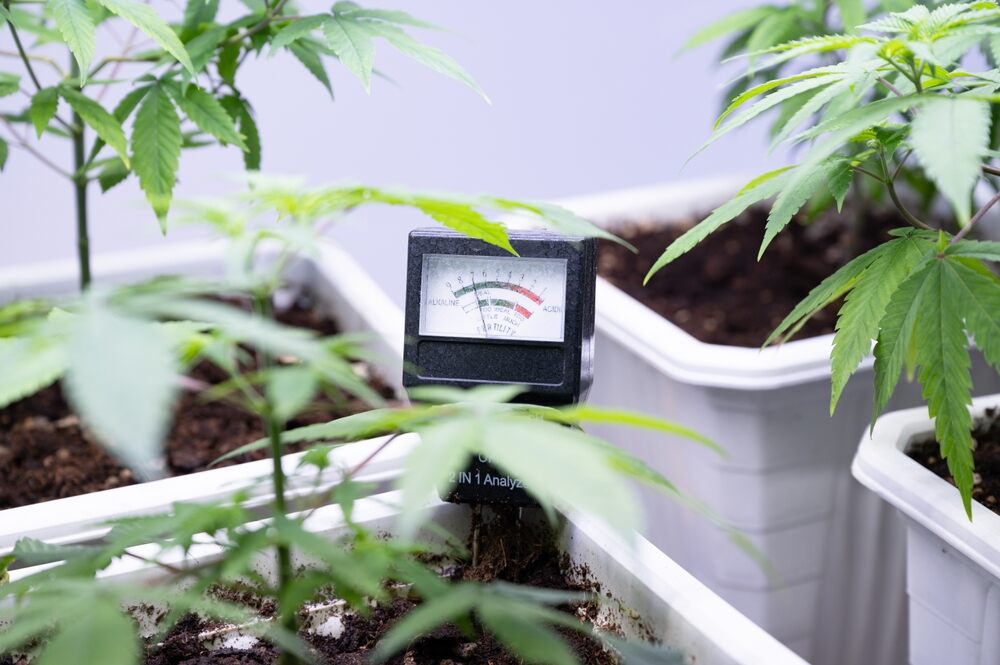
The fastest way to fix phosphorus deficiency is to identify the root cause before making adjustments. Adding extra nutrients without correcting environmental problems rarely works long term.
How to Correct pH and Improve Phosphorus Uptake
I always start with pH testing because nutrient lockout is so common.
If runoff pH falls outside the correct range:
- Flush the medium with pH-balanced water.
- Remove excess nutrient salts.
- Resume feeding with balanced nutrients.
Once pH stabilises, phosphorus uptake usually improves within several days.
I also recommend monitoring:
- Root zone temperatures
- Humidity levels
- Drainage quality
- Watering frequency
When correcting phosphorus deficiencies in autoflowers, gradual adjustments are usually the safest approach. Because autoflower plants can be more sensitive to sudden changes in nutrient strength, growers should focus on restoring proper pH and root health before significantly increasing fertilizer concentrations. Healthy roots absorb nutrients far more efficiently than stressed roots.
The Best Nutrients and Bloom Boosters for Cannabis Plants
Bloom nutrients contain elevated phosphorus and potassium ratios designed for flower development.
Popular phosphorus sources include:
- PK boosters
- Bone meal
- Bat guano
- Bloom fertilisers
- Mono potassium phosphate
Autoflower growers should avoid the temptation to use excessive amounts of bloom boosters when deficiency symptoms appear. In many cases, correcting pH levels and improving root conditions resolves the issue more effectively than aggressively increasing phosphorus inputs, which can create additional nutrient imbalances.
I personally prefer balanced bloom feeds instead of extremely aggressive PK boosters. Overfeeding phosphorus can create nutrient imbalances while also damaging root health.
Less is often more when correcting deficiencies.
Organic vs Synthetic Solutions for Phosphorus Deficiency
Organic growers often use:
- Worm castings
- Bone meal
- Bat guano
- Fish meal
These release nutrients more slowly while also improving soil biology.
Synthetic nutrients work faster because they provide immediately available phosphorus salts. Hydroponic growers usually rely on synthetic bloom nutrients for quicker correction times.
Both approaches work well when managed correctly. The best option depends on your growing style and medium.
How Long Cannabis Plants Take to Recover
Cannabis plants usually begin recovering within 3 to 7 days after the issue is corrected. Recovery timelines for autoflowers are generally similar, but the impact of the deficiency may be more noticeable because the plant continues progressing toward maturity while recovering. This makes early diagnosis particularly important in autoflower cultivation.
You should look for:
- Healthier new growth
- Faster flower development
- Improved leaf colour
- Better vigour
Damaged leaves rarely recover completely, so focus on observing new growth instead of expecting old leaves to repair themselves.
How Much Does Phosphorus Deficiency Reduce Cannabis Yield?
Many growers underestimate how heavily phosphorus deficiency impacts final harvest size. Mild deficiencies may only reduce yields slightly, but severe flowering deficiencies can dramatically reduce both quality and quantity.
The Impact on Bud Size, Resin Production, and THC Levels
Phosphorus deficiency directly affects flower development and resin production.
Severe deficiencies can cause:
- Smaller buds
- Loose flower structure
- Reduced trichome production
- Lower terpene levels
- Reduced THC potential
I have seen flowering plants lose 20–30% of their potential yield when phosphorus deficiencies remain untreated during mid bloom.
In autoflower varieties, phosphorus deficiencies that occur during mid-flowering often have a greater effect on final yield because the plants have limited time to compensate for slowed bud development. Even short periods of nutrient stress during peak bloom can influence flower density and overall harvest quality.
Yield Loss During Vegetative Growth vs Flowering.
Vegetative deficiencies slow plant development, but flowering deficiencies usually cause greater harvest losses.
During vegetative growth:
- Plants stay smaller.
- Branching slows.
- Root systems weaken.
During flowering:
- Bud growth stalls
- Resin production drops.
- Flowers remain airy.
- Ripening slows.
This is why phosphorus management becomes especially important once your plants begin stacking flowers.
How to Prevent Phosphorus Deficiency in Future Grows
Preventing phosphorus deficiency is much easier than fixing severe nutrient stress late in bloom.
I always focus on:
- Maintaining stable pH
- Avoiding overwatering
- Using quality bloom nutrients
- Monitoring runoff EC and pH
- Keeping root zones warm
- Increasing airflow around containers
Healthy environmental conditions allow cannabis plants to absorb nutrients efficiently while also reducing stress.
For autoflower growers, prevention is particularly important because there is little opportunity to recover lost growth once flowering begins. Consistent pH monitoring, proper watering practices, and balanced bloom nutrition help ensure autoflowers maintain healthy phosphorus uptake throughout their short life cycle.
Conclusion
Phosphorus deficiency is one of the most damaging nutrient issues cannabis growers faces during flowering. While the symptoms often begin subtly, the long-term impact on bud growth, resin production, and overall yield can become severe if the issue goes untreated.
The good news is that phosphorus deficiencies are usually fixable when you respond quickly. In my experience, stable pH levels, healthy root conditions, and balanced bloom feeding solve most phosphorus-related problems before they seriously affect harvest quality.
Learning to read your plants is part of becoming a skilled cannabis grower. Once you understand how phosphorus deficiency develops and what causes nutrient lockout, you can correct problems faster and protect your yields more effectively.
Healthy roots, balanced nutrients, and proper environmental control always produce better cannabis. Keep those fundamentals dialled in, and your plants will reward you with dense flowers, heavy resin production, and a much stronger final harvest.
Frequently Asked Questions About Phosphorus Deficiency
What is phosphorus deficiency in cannabis plants?
Phosphorus deficiency occurs when cannabis plants cannot absorb enough phosphorus to support healthy growth, root development, and flower production. It most commonly develops during flowering when phosphorus demand increases.
What are the first signs of phosphorus deficiency in cannabis plants?
Early symptoms often appear on older fan leaves and may include dark green or bluish foliage, slowed growth, thin stems, and reduced vigor. As the deficiency progresses, leaves can develop brown or rusty spots, while stems and petioles may turn red or purple.
Can cannabis recover from phosphorus deficiency?
Yes. Most cannabis plants recover successfully when the underlying cause is identified and corrected early. New growth is usually the best indicator that phosphorus uptake has improved.
What causes phosphorus lockout in cannabis plants?
Phosphorus lockout is typically caused by incorrect pH levels, overwatering, cold root temperatures, salt buildup, or poor root health. Even when phosphorus is present in the growing medium, these conditions can prevent plants from absorbing it effectively.
Does phosphorus deficiency reduce cannabis yields?
Yes. Phosphorus deficiency can reduce bud size, flower density, resin production, and overall harvest weight. Deficiencies that occur during flowering generally have the greatest impact on final yields.
What pH range is best for phosphorus uptake in cannabis?
Cannabis plants generally absorb phosphorus most efficiently within the following pH ranges:
- Soil: 6.0–7.0
- Hydroponics: 5.5–6.5
Allowing pH to drift outside these ranges can contribute to nutrient lockout and reduced phosphorus availability.
Why are my cannabis stems turning purple?
Purple stems can sometimes indicate phosphorus deficiency, especially when accompanied by dark leaves and slowed growth. However, genetics, temperature fluctuations, and environmental stress can also cause purple pigmentation, so this symptom alone should not be used to diagnose a deficiency.
How long does it take to fix phosphorus deficiency in cannabis?
Most plants begin showing signs of improvement within 3–7 days after pH, root conditions, and nutrient availability are corrected. Damaged leaves may not recover, but healthy new growth typically appears shortly afterward.
Is phosphorus deficiency more common during flowering?
Yes. Cannabis plants require higher levels of phosphorus during flowering to support bud development, energy transfer, and resin production, making deficiencies more common during this stage.
Can overwatering cause phosphorus deficiency in cannabis?
Yes. Overwatering reduces oxygen availability around the roots, which can limit nutrient uptake and contribute to phosphorus deficiency symptoms even when sufficient nutrients are present.
What nutrients help fix phosphorus deficiency in cannabis?
Bloom nutrients, PK boosters, bone meal, fish bone meal, mono potassium phosphate, and other phosphorus-rich fertilizers can help correct phosphorus deficiencies. The best option depends on the growing medium and whether you are using organic or synthetic nutrients.