
Root Aphids on Autoflowers: Symptoms, Root Damage & How to Control
Growing healthy autoflower cannabis begins below the surface, where root health plays a critical role in overall plant performance. While many pests target leaves and stems, root aphids attack the root system directly, limiting the plant’s ability to absorb water and nutrients. Because they remain hidden in the growing medium for most of their lifecycle, infestations often go unnoticed until plants show signs such as slowed growth, yellowing leaves, and reduced vigour.
For autoflower growers, protecting the root zone is especially important. With a short vegetative stage and a fixed lifecycle, there is little time for plants to recover once root damage occurs. In this guide, you’ll learn how to identify cannabis root aphids early, recognise symptoms often mistaken for nutrient deficiencies, understand effective treatment options, and prevent infestations throughout the entire autoflower growing cycle.
What Are Root Aphids?
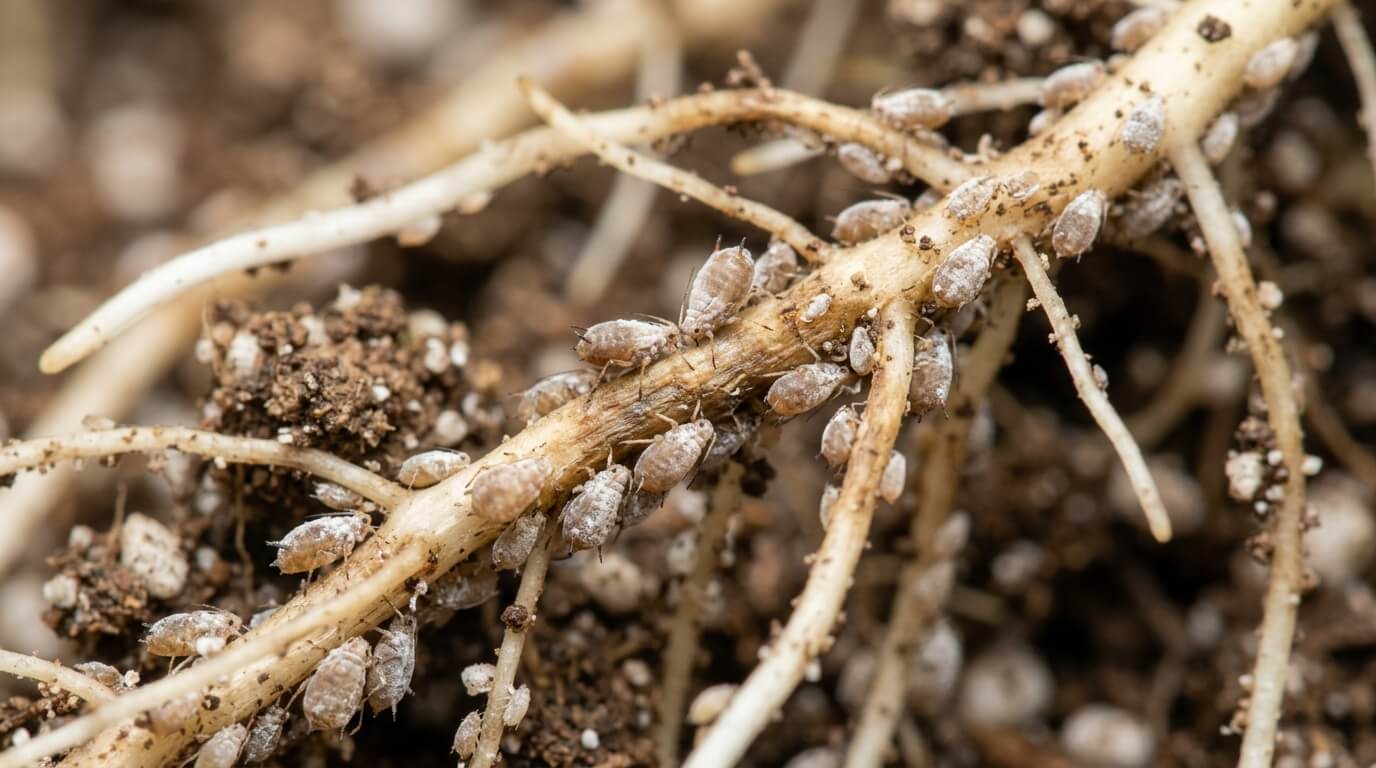
Root aphids may sound like harmless, tiny creatures. Unfortunately, they can cause serious damage to your plants and live inside the growing medium, feeding on the roots, making them a difficult target to eradicate compared to other pests that live on the leaves and stems. Below covers why aphids spread so quickly, their lifecycle and why they are so difficult to get rid of.
Root aphids are especially problematic for autoflower cannabis because they attack the root system during the plant’s short vegetative stage. Unlike photoperiod plants, autoflowers cannot simply be kept in vegetative growth for an extra week or two to recover from root damage. Even a minor infestation during weeks 2–4 can permanently reduce plant size and final yields.
Why Root Aphids Spread Quickly in Grow Rooms, Soil, and Hydro Systems
When it comes to pests that have the capacity to spread fast in a short time, spider mites and root aphids are both in the same class. Root aphids reproduce quickly, doubling their population. The newborn only requires 7-10 days to fully mature and repeat the process.
- Females give birth to identical female daughters without needing a mate
- Root aphids are asexual, so they can reproduce independently
- They can fly from plant to plant, finding new soil to inhabit
- Root aphids thrive in wet and humid environments, such as hydroponics
- They can be transferred from pot to pot via the runoff when feeding
- They can build a resistance to pesticides, making them difficult to kill
Many autoflower growers run perpetual harvests with plants of different ages sharing the same grow tent. This makes it easier for winged root aphids to move between containers before an infestation is noticed. Regular inspections of runoff trays, drainage holes, and yellow sticky traps become even more important when growing multiple autoflowers in the same environment.
The Lifecycle of Root Aphids and How Infestations Develop
Root aphids can reproduce quickly and only take 7-10 days to mature into adults. There are four stages of a root aphid’s lifecycle.
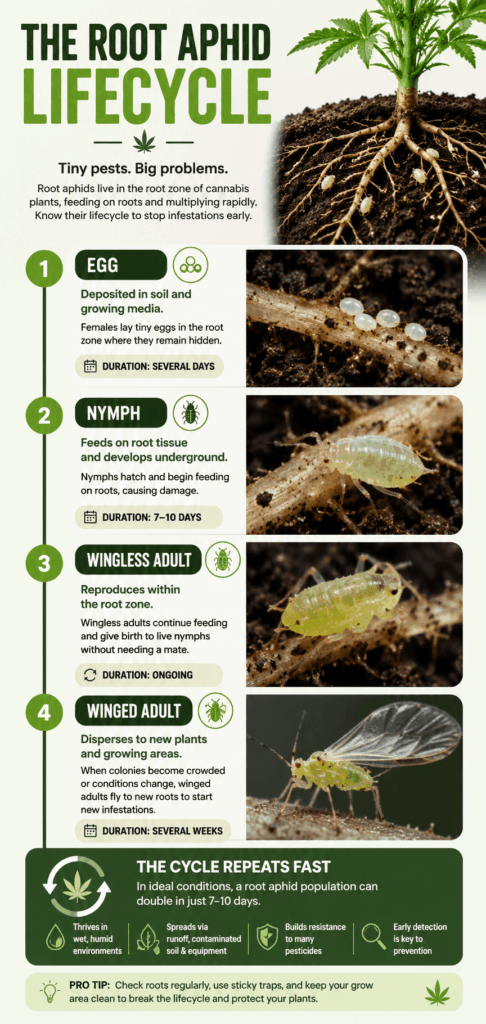
| Life Stage | Description | Duration |
| Egg | Deposited in soil and growing media | Several days |
| Nymph | Feeds on root tissue and develops underground | 7–10 days |
| Wingless Adult | Reproduces within the root zone | Ongoing |
| Winged Adult | Disperses to new plants and growing areas | Several weeks |
Why Root Aphids Are Difficult to Eliminate Once Established
A well-established root aphid population can create a challenge for a cannabis grower. In soil or coco coir, they live in clusters on the root fibres deep down in the soil. However, whilst feeding on the roots, the wounds they leave behind create the ideal environment for plant diseases such as Pythium and Fusarium. This means you cannot give them a spray as you would with other pests!
Root damage is particularly damaging in autoflower cannabis because plants have a limited amount of time to establish a healthy root system before flowering begins automatically. Any interruption to root development during early growth can reduce nutrient uptake throughout the rest of the plant’s life.
On top of the fact that they live underground, similar to mealybugs on cannabis, root aphids possess a protective outer coating that can make treatment more challenging. This means that conventional treatments that may have been effective on thrips or aphids may not kill the root aphids. In grow rooms with autoflower hydroponic systems, root aphids can move freely through the water, making them difficult to prevent.
As with cannabis scale insects, controlling root aphids often requires multiple treatments and careful monitoring.
Root Aphid Symptoms in Autoflower Cannabis Plants
Cannabis root aphids often remain hidden beneath the growing medium, making them one of the most difficult pests to identify before visible damage appears. By the time symptoms develop above the soil, the insects have usually been feeding on the root system for several weeks, reducing the plant’s ability to absorb water and nutrients efficiently.
For growers cultivating autoflower cannabis, recognising these symptoms early is essential. Root damage during the short vegetative stage can reduce plant vigour, limit growth, and ultimately affect harvest size. The following signs will help you distinguish cannabis root aphids from common problems such as nutrient deficiencies, overwatering, or poor feeding practices.
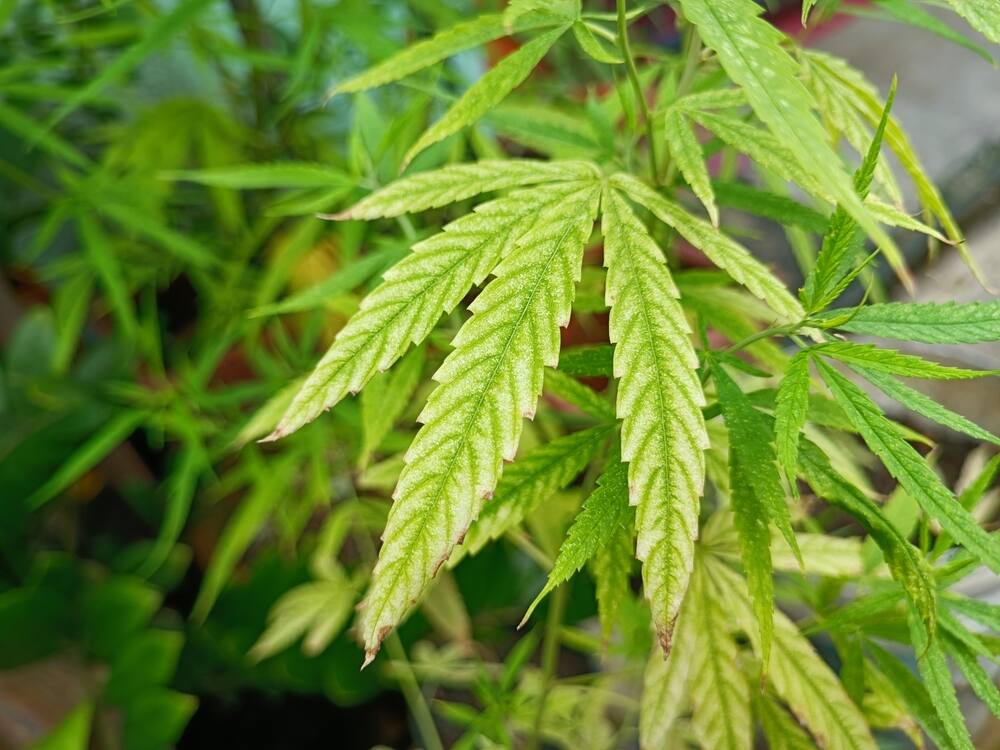
Like broad mites on cannabis, root aphids often go unnoticed until plants begin showing obvious signs of stress.. Below are the different visual signs to pay close attention to help you identify a potential root aphid problem and eliminate a potential nutrient- or watering-related issue.
Cannabis Yellowing and Drooping Leaves Explained
The earliest symptoms of root aphids cannabis growers usually notice appear on the oldest fan leaves. As feeder roots become damaged, the plant struggles to move water and mobile nutrients throughout the canopy, causing foliage to lose colour and vitality.
Typical symptoms include:
- Lower fan leaves gradually turning yellow.
- Leaves developing pale green, reddish, or purple tones.
- Persistent drooping despite correctly watered growing media.
- Overall loss of vigour compared with healthy plants of the same age.
Because these symptoms closely resemble common cultivation problems, they are often overlooked during the early stages of an infestation.
Why Root Aphids Permanently Stunt Autoflower Growth
Healthy root development is one of the biggest contributors to a productive autoflower harvest. When root aphids feed on fine root hairs and feeder roots, plants redirect valuable energy away from producing new shoots and flowering sites to cope with underground stress.
Unlike photoperiod cannabis, autoflowers cannot simply remain in the vegetative stage for an extra week or two to recover. Growth lost during the first few weeks is often permanent, resulting in:
- Slower vegetative development.
- Reduced side branching.
- Smaller overall plant size.
- Fewer flowering sites.
- Lower final yields.
In my experience, early root damage has a far greater impact on autoflowers than many growers expect. Even after the infestation has been controlled, plants rarely regain the vigour or structure they would have achieved with a healthy root system.
Cannabis Nutrient Deficiency Signs That Mimic Feeding Problems
One of the most frustrating aspects of cannabis root aphids is that the symptoms closely resemble nutrient deficiencies. Many growers increase nutrient strength or change their feeding schedule, believing the plant is hungry, when the real problem is damaged roots preventing nutrient uptake.
Before making adjustments to your nutrient programme, compare the symptoms carefully.
| Symptom | Root Aphids | Nutrient Deficiency | Overwatering | Underwatering |
| Yellow lower leaves | ✓ | ✓ | Sometimes | Rare |
| Drooping leaves | ✓ | Rare | ✓ | ✓ |
| Stunted growth | ✓ | ✓ | Sometimes | Sometimes |
| Root damage | ✓ | ✗ | Possible root rot | ✗ |
| Visible pests | ✓ | ✗ | ✗ | ✗ |
| Poor nutrient uptake | ✓ | ✓ | ✓ | ✓ |
| Slow flowering transition | ✓ | Rare | Rare | Rare |
One of the most common mistakes I see is growers increasing nutrient strength when the roots are physically unable to absorb what is already available. Inspecting the root zone before changing your feeding routine can save valuable time and prevent additional stress.
Cannabis Leaf Curling and Clawing Caused by Root Aphid Stress
As the infestation progresses, damaged roots become less efficient at transporting water throughout the plant. Even when the growing medium contains adequate moisture, leaves may begin curling downwards and lose their natural firmness.
Common signs include:
- Fan leaves curling into a claw shape.
- Wilted foliage despite regular watering.
- Slower recovery after irrigation.
- Weak, soft growth throughout the canopy.
Unlike nutrient toxicity, leaf clawing caused by root aphids is usually accompanied by yellowing lower leaves and noticeably slower growth.
Why Cannabis Plants May Look Overwatered or Constantly “Hungry”
Root aphids often create symptoms that appear contradictory. Plants may look overwatered one day and nutrient deficient the next, even though your pH, irrigation schedule, and nutrient strength are all correct.
This happens because damaged roots cannot efficiently absorb the water and nutrients already present in the growing medium. As a result, healthy cultivation practices fail to produce healthy growth.
Before increasing feed strength or changing your watering schedule, inspect drainage holes, sticky traps, and the root zone for evidence of root aphids. Identifying the true cause early gives you the best chance of controlling the infestation before it severely impacts plant performance.
How Root Aphid Symptoms Progress Throughout an Autoflower Grow
The symptoms of cannabis root aphids become more pronounced as autoflowers move through their lifecycle. Knowing when these changes typically appear can help you identify an infestation before it significantly reduces yields.
Early Vegetative Growth (Weeks 2–4)
During early vegetative growth, root aphids begin feeding on newly developing feeder roots. Plants may appear healthy at first, but subtle signs soon become noticeable.
- Lower leaves gradually lose colour.
- Growth slows compared with healthy plants.
- Side branches remain underdeveloped.
- Root establishment is noticeably weaker.
Early Flowering (Weeks 5–7)
As autoflowers transition into flowering, nutrient demand increases while damaged roots struggle to keep pace.
- Stretch is reduced.
- Plants produce fewer flowering sites.
- Nutrient deficiency symptoms become more obvious.
- Overall plant vigour declines.
Mid to Late Flowering (Weeks 8+)
By this stage, root damage has usually been affecting the plant for several weeks, making recovery unlikely.
- Bud development slows.
- Flowers remain smaller and less dense.
- Yellowing spreads through the canopy.
- Harvest weight and overall yield are significantly reduced.
For autoflower growers, symptoms appearing during flowering usually indicate the infestation has been established since the vegetative stage. Regular inspection of the root zone remains the most effective way to detect root aphids before irreversible damage occurs.
How to Identify Root Aphids Early Before Plants Decline
Learning how to identify root aphids before plants begin to decline is one of the most valuable skills an autoflower grower can develop. Unlike foliar pests that leave visible feeding damage, root aphids spend almost their entire lifecycle beneath the growing medium, attacking fine feeder roots where they often go unnoticed. By the time obvious symptoms appear above the soil, the infestation has usually been developing for several weeks.
Because autoflower cannabis has a short vegetative stage, I don’t recommend disturbing healthy root systems as part of routine inspections. Every unnecessary interruption to the root zone can slow growth during the period when autoflowers are establishing their final structure. Instead, I follow a simple inspection routine that starts with the least invasive checks before progressing to closer examinations only when multiple warning signs point towards root aphids.
Step 1: Compare Plants Before Inspecting the Roots
When several autoflowers are growing in the same environment, compare the suspect plant with the others before touching the growing medium. If one plant suddenly becomes smaller, loses vigour, or begins yellowing while neighbouring plants remain healthy under the same lighting, feeding, and watering schedule, there is a good chance the problem originates below the soil surface.
Before investigating further, ask yourself:
- Is only one plant affected?
- Are temperature, humidity, pH, and EC all stable?
- Has the growing medium remained wetter than usual?
- Have growth and leaf colour declined despite consistent care?
If the answer is yes to several of these questions, continue with a closer inspection.
Step 2: Inspect the Growing Medium and Drainage Holes
Rather than immediately removing the plant from its container, inspect the surface of the growing medium and the drainage holes first. This approach is far less stressful for autoflowers and often provides enough evidence to confirm an infestation.
Look for:
- Small white, pale yellow, or light green insects moving across the soil.
- White waxy deposits around exposed feeder roots.
- Winged adults near the surface of the growing medium.
- Clusters of insects around drainage holes, particularly in fabric pots or air pots.
In my experience, checking drainage holes every few days is one of the easiest ways to detect root aphids early without disturbing the root ball.
Step 3: Confirm Identification With Magnification
If you discover suspicious insects, examine them with a 30x jeweller’s loupe or hand lens. Accurate identification is important because several harmless soil insects are commonly mistaken for root aphids.
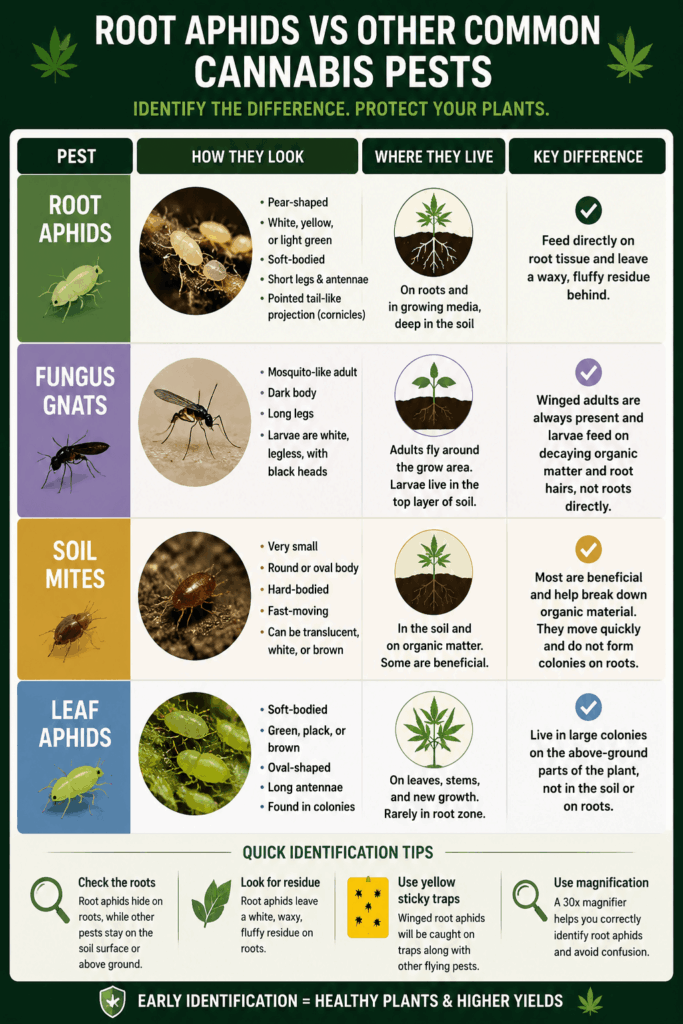
Root aphids usually have:
- A pear-shaped body.
- White, pale green, yellow, or light brown colouring.
- Short legs and antennae.
- Two small cornicles (tail-like projections) at the rear.
- Slow movement while feeding around the roots.
Avoid confusing them with fungus gnats, springtails, or beneficial soil mites, which require completely different management strategies.
Monitor Sticky Traps as an Early Warning System
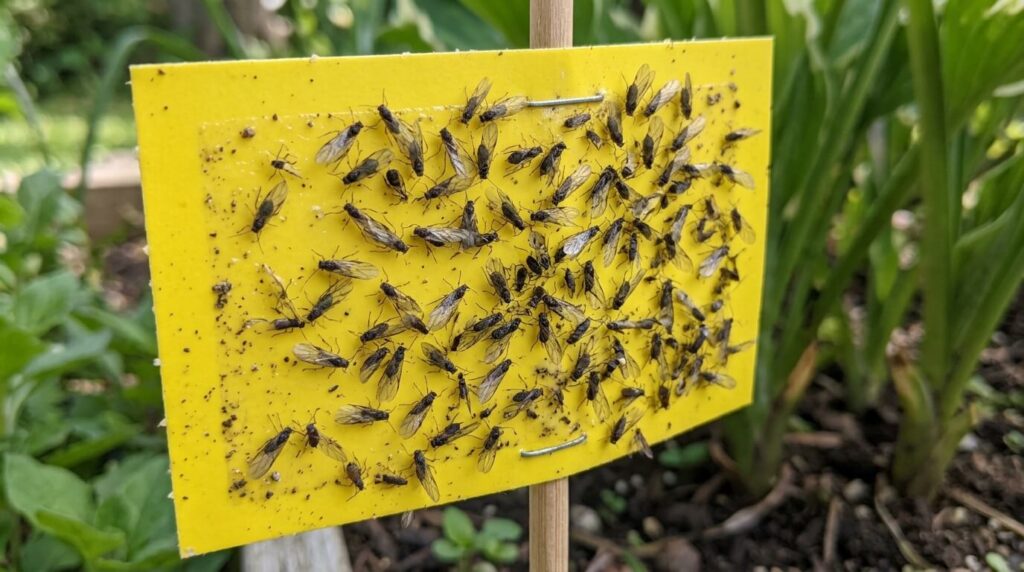
Yellow sticky traps should be positioned close to the base of each pot to monitor winged adult root aphids. Although they will not catch insects feeding underground, they provide an excellent early warning that a colony may already be established beneath the growing medium.
If you begin catching small winged aphids on the traps, inspect the affected container before changing your feeding schedule or assuming a nutrient deficiency.
Distinguishing Root Aphids From Similar Cannabis Pests
| Pest | Appearance | Where Found | Key Difference |
| Root Aphids | Pear-shaped, white, yellow, green, or light brown | Feeding on roots and within the growing medium | Two small cornicles at the rear of the body |
| Fungus Gnats | Slender, mosquito-like adults | Flying above the soil, larvae near the surface | Adults fly readily and larvae have black heads |
| Soil Mites | Small, hard-bodied, fast-moving | Throughout the growing medium | Most species are beneficial predators or decomposers |
| Springtails | Tiny white or grey insects | Damp soil surface | Jump when disturbed and feed on organic matter |
| Leaf Aphids | Soft-bodied colonies | Leaves and stems | Rarely found below the soil surface |
Before deciding how to get rid of root aphids cannabis growers should always confirm the pest first. In my experience, many growers lose valuable time treating nutrient deficiencies or overwatering problems that don’t actually exist. A careful inspection takes only a few minutes and gives you the confidence to choose the correct treatment before root damage begins affecting the rest of your autoflower crop.
How to Get Rid of Root Aphids on Autoflowers
Once you have confirmed root aphids are present, choosing the right treatment depends on two things: how severe the infestation is and what stage your autoflower has reached. Unlike photoperiod plants, autoflowers have very little time to recover from root damage, so acting early is far more important than applying the strongest treatment available.
In my experience, the most effective approach is to reduce the aphid population quickly while protecting healthy roots and preventing the infestation from spreading. Successful control usually requires repeated monitoring rather than a single treatment.
Seedling Stage (Weeks 1–2)
Seedlings have delicate root systems, so gentle biological controls are the safest option. At this stage, your priority is protecting new root growth rather than using aggressive treatments.
I recommend:
- Beneficial nematodes to target root aphid larvae.
- Beauveria bassiana to infect nymphs and adults.
- Yellow sticky traps to monitor winged aphids.
Avoid harsh soil drenches or systemic insecticides whenever possible, as unnecessary stress can slow early root development.
Early Vegetative Growth (Weeks 2–4)
This is the best opportunity to stop root aphids cannabis growers commonly encounter before flowering begins. Healthy roots developed during this period directly influence plant size and final yields.
For light infestations, continue using beneficial nematodes and Beauveria bassiana, while keeping sticky traps around each pot to monitor adult activity.
If populations continue increasing, a labelled soil drench suitable for cannabis may be necessary. Soil drenches work by reaching insects feeding around the root zone where foliar sprays cannot. Because eggs may survive the first application, follow-up treatments and regular inspections are often required.
Flowering Stage (Weeks 5+)
Once flowering begins, the focus changes from encouraging growth to protecting bud development. Biological controls remain the safest choice because they suppress root aphids without causing unnecessary stress to flowering plants.
Continue:
- Monitoring sticky traps.
- Inspecting drainage holes regularly.
- Maintaining excellent hygiene around pots and runoff trays.
If the infestation is discovered late in flowering, complete eradication before harvest is often unrealistic. Instead, concentrate on limiting further damage and preventing aphids spreading to neighbouring plants.
Choosing the Right Treatment
| Treatment | How It Works | Best For | Notes |
| Beneficial Nematodes | Hunt and infect root aphid larvae in moist growing media, preventing them from maturing | Seedlings, vegetative plants, soil and coco grows | Safe for young plants and works best with repeat applications |
| Beauveria bassiana | Fungal pathogen that infects and kills nymphs and adult aphids after contact | Organic growers, vegetative growth, early infestations | Works well alongside nematodes as part of an integrated approach |
| Sticky Traps | Capture winged adult aphids before they spread to other plants | All stages as a monitoring tool | Does not eliminate underground colonies |
| Hydrogen Peroxide Products | Sanitises the root zone and can temporarily reduce pest populations | Soil and hydro systems when used correctly | May reduce beneficial microbes; always follow manufacturer instructions |
| Chemical Treatments (Imidacloprid, Dinotefuran, IGRs) | Systemic or growth-disrupting insecticides that target feeding adults or reproduction cycles | Severe infestations where permitted | Use as a last resort and follow all label and legal guidelines |
Treatment by Growing Medium
- Soil: Beneficial nematodes, Beauveria bassiana, labelled soil drenches and sticky traps provide an effective integrated approach.
- Coco Coir: Combine biological controls with careful runoff management to reduce the spread between containers.
- Hydroponics: Inspect root systems frequently, isolate affected reservoirs where possible, and thoroughly sanitise equipment between grows.
Preventing Reinfestation
Once the crop has been harvested, remove contaminated growing media, clean pots, trays and irrigation equipment thoroughly, and disinfect the grow area before starting again. In my experience, consistent sanitation and regular monitoring are far more effective than relying on a single product. Combining biological controls, good hygiene and early detection gives autoflower growers the best chance of preventing future root aphid infestations.
Preventing Root Aphids in Future Cannabis Grows
Preventing cannabis root aphids is far easier than trying to eliminate an established infestation. Once these pests become established below the growing medium, complete eradication can take multiple treatments and valuable growing time. For autoflower growers, prevention is even more important because plants have a limited opportunity to recover from root damage before flowering begins.
In my experience, successful growers don’t rely on a single preventative product. They build good habits throughout every stage of the autoflower lifecycle, creating an environment where root aphids struggle to establish while healthy roots continue to thrive.
| Prevention Method | Soil | Coco | Hydroponics |
| Inspect drainage holes regularly | ✓ | ✓ | ✓ |
| Use yellow sticky traps | ✓ | ✓ | ✓ |
| Sterilise pots and equipment | ✓ | ✓ | ✓ |
| Introduce beneficial biology | ✓ | ✓ | Limited |
| Monitor runoff and irrigation | ✓ | ✓ | ✓ |
| Clean systems between crops | ✓ | ✓ | ✓ |
Preventing Root Aphids Throughout the Autoflower Lifecycle
Before Germination
Prevention begins before the seed is planted. Always start with clean pots, fresh growing media and disinfected equipment. Reusing contaminated soil or poorly cleaned trays is one of the easiest ways to introduce root aphids into a new crop.
I also place yellow sticky traps around the grow space before seedlings emerge. They provide an early warning if winged aphids or other flying pests enter the environment.
Seedling Stage (Weeks 1–2)
Healthy seedlings establish strong root systems quickly, making them less vulnerable to early pest pressure. Avoid overwatering during this stage, as constantly saturated growing media creates favourable conditions for root pests.
Rather than disturbing the roots, inspect the soil surface and sticky traps every few days. A two-minute inspection is usually enough to detect unusual insect activity without stressing young autoflowers.
Vegetative Growth (Weeks 2–4)
This is the most important stage for prevention. As roots rapidly expand, inspect drainage holes and runoff trays weekly for signs of insects or waxy residue. Healthy root development now supports the entire flowering cycle, so early intervention prevents small problems becoming major infestations.
For growers using soil or coco, beneficial nematodes or Beauveria bassiana can be introduced as preventative biological controls where appropriate, particularly if previous grows have experienced root aphid problems.
Flowering Stage (Weeks 5+)
Once flowering begins, avoid unnecessary disturbance around the root zone. Continue checking sticky traps, keep runoff trays clean, and avoid moving contaminated pots or tools between plants.
Good hygiene during flowering often prevents winged adults spreading throughout the grow room and starting new colonies.
Maintain a Healthy Root Zone
Healthy roots are naturally more resilient to environmental stress. Allowing sufficient oxygen into the root zone, watering appropriately for your chosen growing medium and avoiding standing runoff all help create conditions that are less favourable for root aphids.
In my experience, growers who consistently monitor root health notice problems much earlier than those who only react once leaves begin yellowing.
Sterilise Equipment Between Every Grow
After harvest, remove all used growing media from the grow room and thoroughly clean pots, trays, irrigation lines and tools before starting another crop. Fabric pots should be replaced or disinfected carefully, as insects and eggs can remain trapped within the fibres. Hydroponic systems should be dismantled and cleaned thoroughly between cycles.
Build an Integrated Pest Management Routine
The most effective way to prevent root aphids autoflower growers encounter is through Integrated Pest Management (IPM). Rather than waiting until symptoms appear, combine regular monitoring, biological controls where appropriate, good sanitation and routine inspections throughout every grow.
In my experience, growers who spend a few minutes inspecting sticky traps, drainage holes and irrigation systems each week rarely experience severe infestations. Prevention isn’t about eliminating every pest—it’s about identifying problems early enough that they never have the opportunity to establish and reduce the potential of your autoflower harvest.
Frequently Asked Questions About Root Aphids on Cannabis
How do I know if my autoflower has root aphids?
Root aphids are difficult to spot because they live beneath the growing medium, so the first signs usually appear above the soil. Yellowing lower leaves, slow growth, drooping despite correct watering, and poor nutrient uptake are all common symptoms. If one autoflower begins declining while others grown under the same conditions remain healthy, inspect the drainage holes, sticky traps and root zone before assuming a nutrient deficiency.
What is the best way to get rid of root aphids on cannabis?
The best way to control cannabis root aphids is by combining early detection with an integrated treatment plan. Beneficial nematodes, Beauveria bassiana and sticky traps are effective biological options for light infestations, while labelled soil drenches or other approved treatments may be required if populations become established. Successful control usually involves repeated monitoring rather than a single application.
Can root aphids kill autoflower cannabis plants?
Yes. Severe infestations can kill young autoflowers by destroying feeder roots and preventing the plant from absorbing enough water and nutrients. Even when plants survive, root damage during the vegetative stage often results in smaller plants, reduced flowering sites and lower yields because autoflowers cannot extend their vegetative growth to recover.
How do root aphids get into a grow room?
Root aphids are commonly introduced through contaminated growing media, infected clones, reused pots or unclean grow equipment. Winged adults may also enter through open doors, windows or ventilation. Starting every autoflower grow with clean equipment, fresh growing media and carefully inspected plants significantly reduces the risk of introducing an infestation.
How can I prevent root aphids from coming back?
The most effective prevention strategy is maintaining a healthy root zone throughout the entire autoflower lifecycle. Use clean growing media, disinfect pots and irrigation equipment between grows, monitor sticky traps regularly, inspect drainage holes for early signs of activity and introduce biological controls where appropriate. In my experience, growers who make prevention part of their routine rarely experience severe root aphid infestations because problems are identified long before they become established.