
How to Fix Magnesium Deficiency in Autoflower Cannabis Plants
Magnesium deficiency is one of the most common nutrient problems autoflower growers face, particularly when growing in coco coir, hydroponic systems, or under powerful LED grow lights. Because autoflower cannabis plants have a short, fixed lifecycle, nutrient deficiencies can have a much greater impact on growth and yields than they do in photoperiod varieties.
As magnesium is essential for photosynthesis, chlorophyll production, and nutrient transport, even a mild deficiency can cause yellowing leaves, slowed growth, reduced bud development, and lower resin production. If left untreated, magnesium deficiency in autoflowers can quickly affect plant health during critical stages of development, especially throughout flowering.
The good news is that magnesium deficiency in autoflower cannabis plants is usually easy to identify and correct once you understand the symptoms and underlying causes. In this guide, you’ll learn how to spot the early warning signs, diagnose magnesium lockout, and use proven treatments to restore healthy growth while preventing future deficiencies from affecting your harvest
Understanding Magnesium Deficiency in Autoflower Cannabis Plants
Magnesium is one of the secondary macronutrients cannabis plants needs throughout every stage of growth. While growers tend to focus heavily on nitrogen, phosphorus, and potassium, magnesium quietly plays a massive role behind the scenes in keeping plants vigorous, green, and productive.
What Is Magnesium Deficiency in Autoflower Cannabis?
Magnesium deficiency in cannabis happens when the plant cannot absorb or use enough magnesium to support healthy growth. This can happen because the nutrient is missing from the root zone, but more commonly, it occurs because environmental conditions or pH problems are preventing uptake.
Magnesium is considered a mobile nutrient. This means the plant can move magnesium from older leaves to newer growth when supplies become limited. Because of this, symptoms always begin on the lower fan leaves before progressing upward through the canopy.
In my experience, magnesium deficiencies are especially common under powerful LED grow lights. Modern LEDs increase photosynthesis rates, which also increases magnesium demand. If your feeding schedule is slightly underpowered or your pH drifts out of range, deficiencies can show up surprisingly quickly.
Magnesium deficiency can be particularly problematic in autoflower cannabis plants because their short lifecycle leaves little room for recovery. While photoperiod plants can often be given extra vegetative time to recover from nutrient stress, autoflowers continue progressing through their growth stages regardless of deficiencies, making early detection especially important.
The Role of Magnesium in Cannabis Plant Growth and Development
Magnesium acts like the engine room of a cannabis plant. It drives photosynthesis, supports enzyme activity, and helps regulate nutrient transport throughout the plant structure.
Without magnesium, cannabis plants struggle to convert light energy into usable energy. This directly impacts:
- Growth speed
- Root development
- Bud production
- Resin formation
- Overall plant health
I always tell beginner growers that magnesium is one of those nutrients you rarely think about until it disappears. Once levels drop, your plants lose vigour fast.
Magnesium also helps transport phosphorus and other nutrients throughout the plant. This also means magnesium deficiencies can sometimes trigger secondary nutrient issues that confuse growers during diagnosis.
Fast-growing autoflower strains often have higher nutrient demands than many growers expect, especially during the transition from vegetative growth into flowering. Maintaining adequate magnesium levels during this period helps support vigorous growth and maximises the plant’s limited vegetative window.
Why Magnesium Is Essential for Autoflower Growth and Flowering
One of magnesium’s most essential functions is chlorophyll production. Chlorophyll is the pigment responsible for giving cannabis leaves their green colour while also allowing photosynthesis to happen.
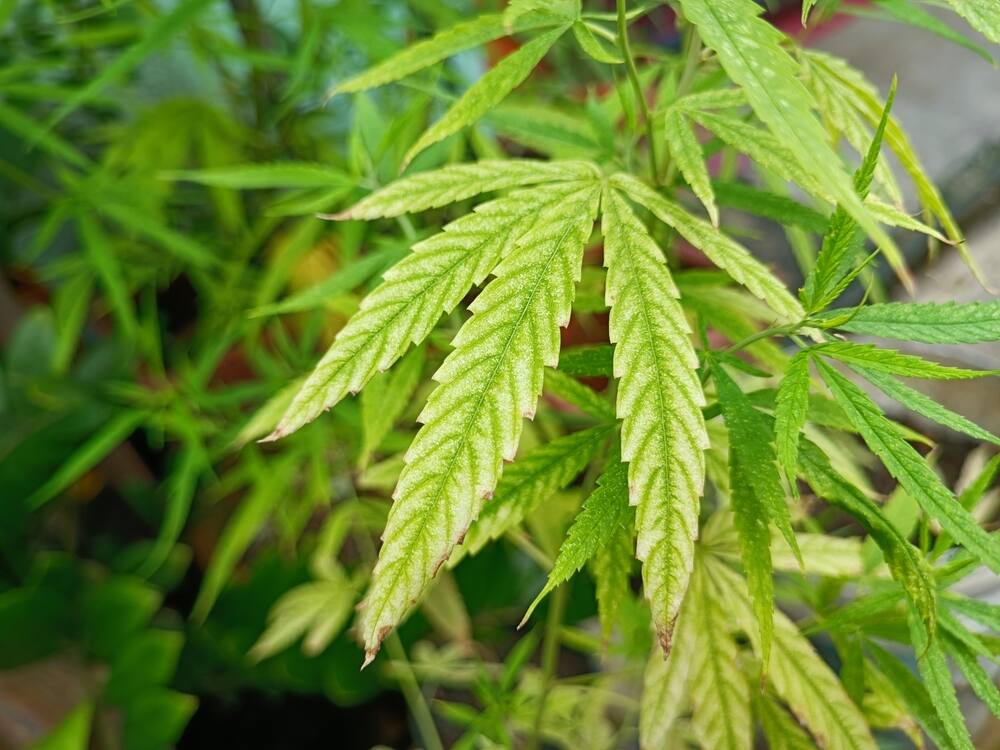
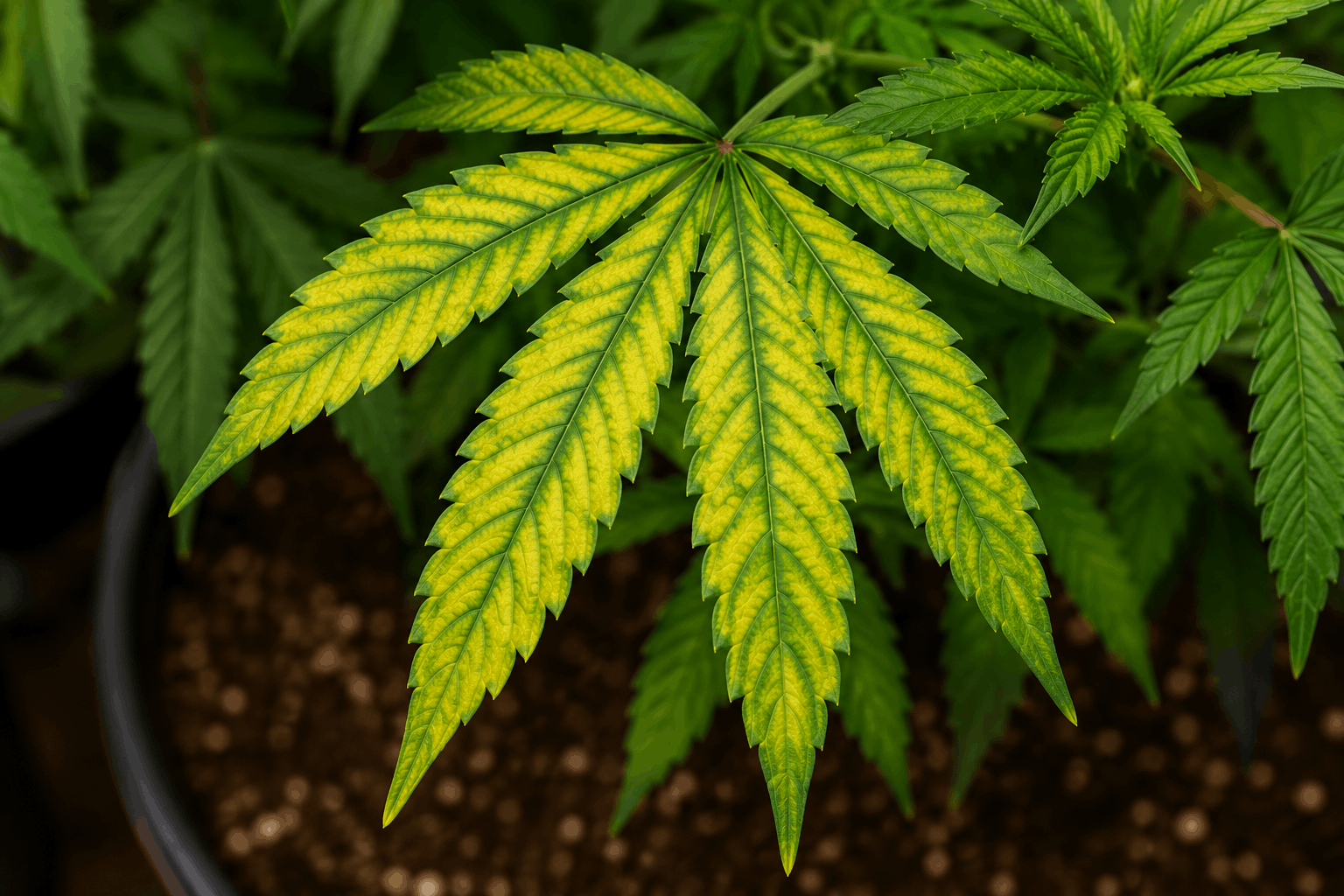
Without enough magnesium, chlorophyll production drops and leaves begin yellowing between the veins. This symptom is known as interveinal chlorosis and is one of the clearest indicators of magnesium deficiency in cannabis.
Magnesium also supports:
- Protein synthesis
- Enzyme activation
- Water regulation
- Cell development
- Nutrient metabolism
Healthy magnesium levels lead to stronger growth, faster development, and healthier flowers. Poor magnesium levels lead to weak plants that struggle to perform efficiently.









Symptoms of Magnesium Deficiency in Autoflower Cannabis Plants
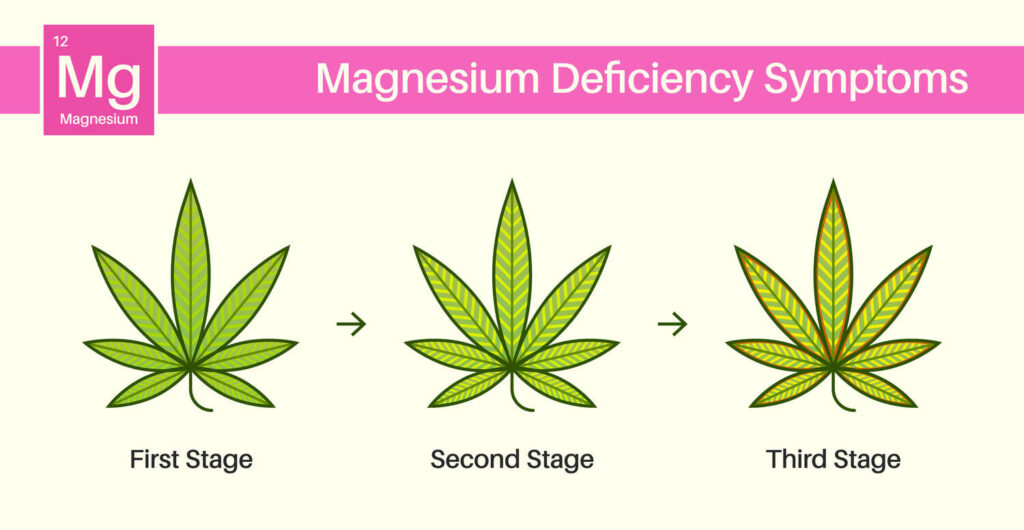
Magnesium deficiency symptoms tend to appear gradually. The problem usually begins subtly before becoming severe enough to damage overall plant performance.
Understanding the stages of magnesium deficiency in cannabis makes diagnosis much easier.
Early Signs of Magnesium Deficiency in Autoflowers
The earliest symptoms usually appear on older fan leaves near the bottom of the plant.
You may notice:
- Yellowing between the leaf veins
- Lower leaves fading from dark green to pale green.
- Veins remaining darker than surrounding tissue.
- Slight leaf discolouration near edges
At this stage, the plant is still functioning well. Growth may continue normally for a brief period while the plant redistributes magnesium internally.
I often compare early magnesium deficiency to a warning light on your dashboard. The plant is telling you something is wrong before major damage happens.
In autoflowers, early-stage magnesium deficiency can sometimes appear sooner than expected, particularly when growing in coco coir under LED lighting. Because autoflowers develop rapidly, even mild deficiencies can begin affecting growth rates within a matter of days if left uncorrected.
Mid-Stage Magnesium Deficiency Symptoms in Autoflowers
If the deficiency continues, symptoms become much more aggressive.
At this stage you may see:
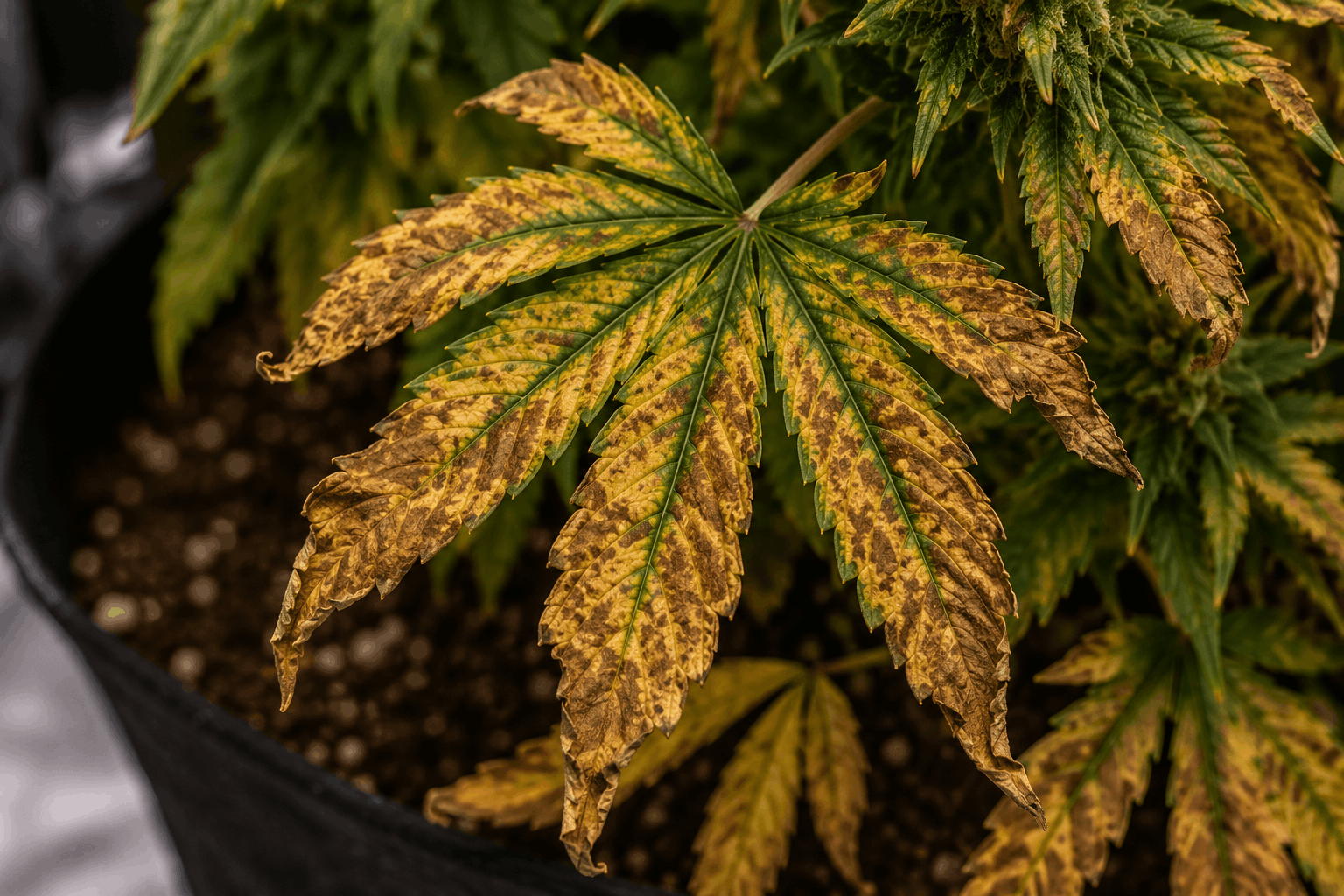
- Rust-coloured spots forming on leaves.
- Curling leaf edges
- Increased yellowing across larger sections of foliage
- Leaves becoming brittle or dry.
- Slower vegetative growth
This is usually the point where newer growers begin panicking because the plant suddenly looks much worse within a few days.
During flowering, magnesium deficiencies can rapidly affect bud production. The plant begins redirecting energy toward survival rather than flower development.
Late-Stage Magnesium Deficiency in Autoflower Cannabis Plants
Late-stage magnesium deficiency can become devastating if left untreated.
Common symptoms include:
- Severe necrosis
- Dead or crumbling leaves
- Significant leaf drop
- Weak stems
- Reduced bud density
- Slowed trichome production
- Overall stunted growth
At this stage, damaged leaves rarely recover. Your goal shifts toward protecting healthy new growth and preventing further decline.
The good news is that cannabis plants are resilient. Even heavily stressed plants can bounce back if the issue is corrected quickly enough.
Magnesium Deficiency During Autoflower Flowering
Magnesium deficiency can be especially damaging during the flowering stage of autoflower cannabis plants. As buds begin developing, plants require more energy to support flower formation, resin production, and nutrient transport throughout the canopy. Because magnesium plays a key role in photosynthesis and energy production, deficiencies often become more noticeable during this period.
When magnesium levels are insufficient, autoflowers may produce smaller buds, slower flower development, and reduced trichome production. Leaves affected by deficiency become less efficient at converting light into energy, limiting the plant’s ability to maximise bud growth during its most important stage.
Unlike photoperiod strains, autoflowers have very little time to recover from nutrient stress once flowering begins. Since they continue progressing through their lifecycle regardless of plant health, a magnesium deficiency that develops during flowering can impact final yields before corrective measures have time to fully take effect. This makes early detection and prevention particularly important for autoflower growers.
Early Stage Before picture and Late Stage After Picture
What Causes Magnesium Deficiency in Autoflower Cannabis Plants
Magnesium deficiencies are not always caused by low nutrient levels. In many cases, growers are feeding enough magnesium, but the plant cannot access it properly.
Poor Soil Composition and Low Magnesium Availability
Low-quality growing media is one of the most common causes of magnesium deficiency in cannabis plants.
Cheap soils often lack enough magnesium-rich organic material to support long-term growth. Coco coir and hydroponic systems contain almost no natural magnesium reserves, which means you must provide it through feeding schedules or supplements.
I often see deficiencies develop when growers switch nutrient brands without checking magnesium content. Not all nutrient lines contain enough magnesium for heavy-feeding cultivars.
Fast-growing strains, particularly indica-dominant hybrids, can burn through magnesium quickly during vegetative growth and flowering.
pH Imbalances and Nutrient Lockout in Cannabis Plants
pH problems are one of the biggest causes of nutrient lockout in cannabis cultivation.
Many growers mistake nutrient burn in cannabis for magnesium deficiency because both issues can cause leaf discoloration and damaged foliage.
If your pH drifts outside the proper range, magnesium becomes difficult or impossible for roots to absorb. This can happen even when magnesium is present in the root zone.
Recommended pH ranges include:
- Soil: 6.0–7.0
- Coco coir: 5.8–6.2
- Hydroponics: 5.5–6.0
I always recalibrate my pH pen regularly because inaccurate readings cause endless problems inside grow rooms.
Many growers immediately increase feeding strength when deficiencies appear. This often worsens nutrient lockout and creates even more stress.
Autoflower growers should pay particularly close attention to pH management because nutrient lockout can have a larger impact on final yields. Since autoflowers have a fixed lifespan, prolonged magnesium lockout during flowering may reduce bud development before the plant has time to fully recover.
Watering Issues, Hard Water, and Nutrient Leaching
Poor watering practices can severely impact nutrient uptake.
Overwatering creates oxygen-poor conditions around the roots, reducing nutrient absorption efficiency. Underwatering stresses the root zone and disrupts nutrient transport throughout the plant.
Hard water can also create issues. Water with excessive mineral content may interfere with magnesium uptake while also causing salt buildup inside the growing medium.
Excessive runoff and nutrient leaching can wash magnesium away from the root zone entirely. This is especially common in outdoor grows exposed to heavy rainfall.
I prefer using filtered or soft water whenever possible because it gives me better control over nutrient levels and pH stability.
Reverse Osmosis Water and Magnesium Deficiency in Autoflowers
Reverse osmosis (RO) water contains very few dissolved minerals, including calcium and magnesium. While this gives growers greater control over nutrient levels, it also means autoflower cannabis plants may become deficient if these essential nutrients are not replaced through feeding schedules.
Many growers using RO water supplement with a Cal-Mag product throughout the entire grow cycle to prevent deficiencies from developing. This is particularly important for autoflowers grown in coco coir or hydroponic systems, where natural magnesium reserves are already limited. Regular monitoring of pH and nutrient levels can help ensure magnesium remains available throughout the plant’s lifecycle.
How to Fix Magnesium Deficiency in Autoflower Cannabis Plants
Treating magnesium deficiency requires identifying the root cause before adding supplements blindly.
How to Confirm and Diagnose Magnesium Deficiency in Autoflowers
Before treating any deficiency, you need to confirm with what you are dealing.
Magnesium deficiency can resemble:
The main difference is that magnesium deficiencies usually begin on older leaves first because magnesium is mobile within the plant.
I always inspect:
- pH levels
- EC or PPM readings
- Root health
- Water source
- Feeding schedule
- Environmental conditions
This process helps eliminate guesswork and prevents unnecessary overfeeding.
Using Cal-Mag Supplements, Epsom Salt, and Foliar Feeding
Cal-Mag supplements are the fastest and easiest way to correct magnesium deficiency in cannabis plants.
Most commercial Cal-Mag products contain:
- Magnesium
- Calcium
- Iron
I usually begin with a moderate feeding strength before monitoring plant response over several days.
Epsom salt is another excellent option. Magnesium sulfate provides a quick magnesium source that works particularly well in soil and coco grows.
A common approach is:
- One tablespoon of Epsom salt per gallon of water
Foliar spraying can also provide rapid relief because nutrients absorb directly through leaf tissue. However, I avoid excessive foliar spraying during flowering because excess moisture around buds can encourage mould development.
| Deficiency Type | Where Symptoms Start | Main Symptoms | Leaf Appearance | Common Cause |
| Magnesium Deficiency | Older/lower leaves | Yellowing between veins, rust spots, curling | Interveinal chlorosis with dark green veins | pH lockout, coco coir, low magnesium levels |
| Calcium Deficiency | New growth/top leaves | Brown spots, twisted growth, weak stems | Irregular rust spots and malformed leaves | Low calcium, incorrect pH, RO water |
| Potassium Deficiency | Leaf edges and older leaves | Burnt edges, yellowing, weak flowering | Crispy leaf margins and browning | Nutrient imbalance or lockout |
| Nitrogen Deficiency | Older/lower leaves | Pale green or yellow leaves | Uniform yellowing across entire leaf | Underfeeding or depleted soil |
| Iron Deficiency | New growth/top leaves | Bright yellow new leaves | Yellowing with green veins on newer growth | High pH and micronutrient lockout |
If you are unsure which nutrient issue your plants are showing, check out our full cannabis nutrient deficiency guide for a complete breakdown of common deficiencies, symptoms, and treatment methods.
When treating magnesium deficiency in autoflowers, it is often best to start with lighter doses of Cal-Mag supplements and monitor plant response closely. Many autoflower cultivars can be more sensitive to nutrient concentrations than photoperiod varieties, making gradual adjustments the safest approach.
How Long Cannabis Plants Take to Recover from Magnesium Deficiency
Recovery speed depends on how severe the deficiency became before treatment.
In mild cases, you may notice improvement within several days. New growth should appear healthier while yellowing slows down significantly.
Heavily damaged leaves rarely recover completely. Instead, focus on monitoring healthy new growth.
In severe cases, recovery may take:
- 1–2 weeks for stabilisation
- Several weeks for full vigour restoration
Patience matters here. Cannabis plants need time to rebuild healthy tissue and rebalance nutrient uptake.
How to Prevent Magnesium Deficiency in Autoflower Cannabis Plants
Preventing deficiencies is always easier than fixing them halfway through flowering.
Best pH and Feeding Practices for Preventing Magnesium Lockout
Maintaining proper pH is one of the best ways to prevent magnesium problems entirely.
I recommend:
- Testing runoff regularly
- Calibrating pH meters often
- Avoiding overfeeding
- Monitoring EC levels carefully
Balanced nutrient schedules help maintain stable root zone chemistry while also reducing nutrient competition.
Consistency matters more than aggressive feeding.
Preventing Magnesium Deficiency in Soil, Coco, and Hydro Grows
Different growing methods require different approaches. Magnesium deficiencies are especially common when growing autoflowers in coco coir because smaller root zones can become depleted more quickly.
For soil grows:
- Use high-quality organic soil.
- Add dolomite lime if needed.
- Avoid overwatering.
For coco grows:
- Supplement Cal-Mag regularly.
- Buffer coco before use
- Monitor runoff EC closely.
For hydroponics:
- Check reservoir pH daily.
- Replace nutrient solution regularly.
- Monitor plant response constantly.
Hydro systems move quickly, which also means deficiencies appear faster than in soil.
Preventative magnesium supplementation is especially beneficial when growing autoflowers in coco coir. Since autoflower root systems are generally smaller and have less time to establish themselves, maintaining consistent magnesium availability throughout the grow can help avoid deficiencies during critical flowering periods.
Best Cal-Mag Products and Grower Tips for Long-Term Plant Health
There are many quality Cal-Mag supplements available, but consistency matters more than brand loyalty.
I look for products with:
- Balanced calcium-to-magnesium ratios
- Minimal fillers
- Good compatibility with base nutrients
I also pay close attention to environmental conditions because heat stress, poor airflow, and excessive light intensity can increase magnesium demand dramatically.
One trick I use under high-powered LEDs is slightly increasing magnesium during heavy flowering weeks. Plants under intense light often consume magnesium faster than many feeding charts suggest.
Healthy cannabis cultivation always comes down to balance. Stable roots, balanced nutrients, proper watering, and correct pH create strong plants capable of producing dense flowers and heavy resin production.
Frequently Asked Questions About Magnesium Deficiency in Autoflower Cannabis Plants
Why do autoflowers get magnesium deficiency?
Autoflower cannabis plants can be more prone to magnesium deficiency because of their rapid growth cycle and limited recovery time. Deficiencies commonly occur when growing in coco coir, hydroponic systems, or with reverse osmosis (RO) water, which contain little to no natural magnesium. Incorrect pH levels and nutrient lockout can also prevent autoflowers from absorbing magnesium effectively.
What are the first signs of magnesium deficiency in autoflowers?
The earliest signs of magnesium deficiency in autoflowers usually appear on older fan leaves. Growers often notice yellowing between the leaf veins, known as interveinal chlorosis, while the veins remain dark green. If left untreated, rust-coloured spots and leaf curling may develop.
Can magnesium deficiency reduce autoflower yields?
Yes. Magnesium plays a critical role in photosynthesis, energy production, and flower development. If an autoflower experiences a magnesium deficiency during flowering, bud growth may slow, resin production can decrease, and final yields may be significantly reduced.
How do I fix magnesium deficiency in autoflowers?
The most common treatment is adding a Cal-Mag supplement to your feeding schedule while ensuring pH levels remain within the correct range. Epsom salt can also provide a fast source of magnesium. Before increasing nutrients, always check for pH-related nutrient lockout, as this is often the underlying cause.
Are autoflowers more sensitive to magnesium deficiency than photoperiod plants?
Autoflowers are not necessarily more sensitive to magnesium itself, but they generally have less time to recover from nutrient stress. While photoperiod plants can remain in the vegetative stage until they regain health, autoflowers continue progressing through their lifecycle, making early diagnosis and treatment more important.
Can LED grow lights cause magnesium deficiency in autoflowers?
High-intensity LED grow lights can increase magnesium demand by boosting photosynthesis rates. If nutrient levels or pH are not properly managed, autoflowers grown under powerful LEDs may show magnesium deficiency symptoms more quickly than plants grown under less intense lighting.
Should I use Cal-Mag when growing autoflowers in coco coir?
In most cases, yes. Coco coir naturally binds calcium and magnesium, making deficiencies more common if these nutrients are not supplemented. Many growers include a Cal-Mag product throughout the entire grow cycle to help prevent deficiencies and maintain healthy plant development.
How long does it take autoflowers to recover from magnesium deficiency?
Mild magnesium deficiencies often begin improving within a few days after treatment. New growth should appear healthy, and symptoms should stop spreading. More severe deficiencies may take one to two weeks to stabilise, although damaged leaves are unlikely to fully recover.